Best Budget Spinning Reel for Panfish
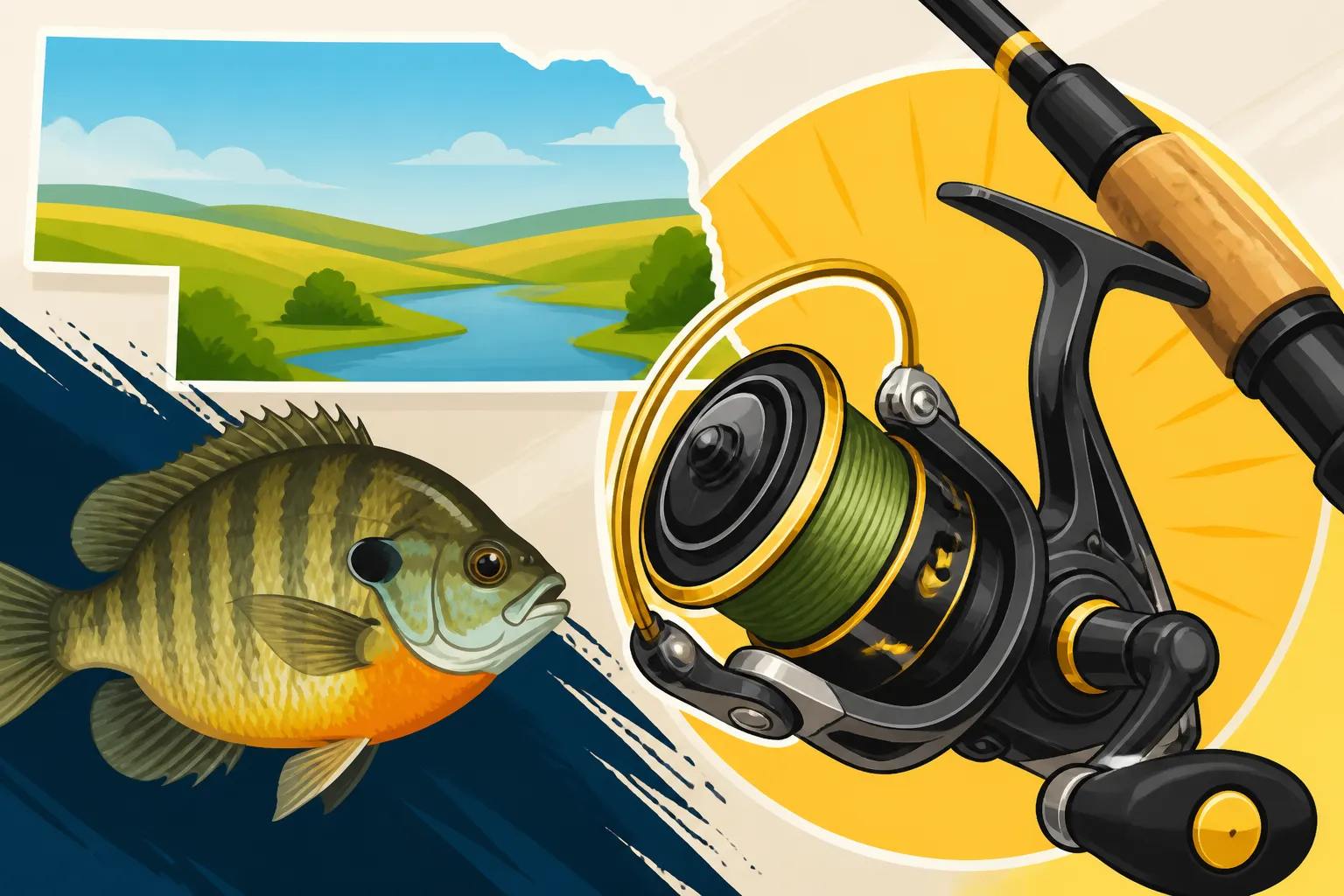
There's nothing quite like the joy of panfish fishing in Nebraska—the quick bites, the vibrant colors, and the sheer accessibility of it all. But let's be real, diving into a new hobby, or even just upgrading your gear, can feel like a daunting financial commitment, especially when you're just looking for a simple, reliable setup to chase bluegill and crappie. This guide is here to cut through the noise, showing you exactly how to choose the best budget spinning reel for panfish without sacrificing performance or breaking the bank, ensuring you get on the water with confidence.
Why a Budget Spinning Reel is Perfect for Panfish Anglers in Nebraska
When you're targeting panfish like bluegill, crappie, or even smaller perch in Nebraska's numerous ponds, lakes, and reservoirs, you really don't need to empty your wallet on high-end, heavy-duty gear. Panfish, while abundant and feisty, aren't typically known for long, drag-screaming runs that require super-smooth, complex drag systems found in more expensive reels. They're often caught on lighter lines and smaller baits, making a well-chosen budget spinning reel not just acceptable, but often the perfect tool for the job.
Think about it: a simpler, more affordable reel often means fewer complex parts that can go wrong, and it leaves more room in your budget for other essentials like a variety of panfish jigs, bobbers, and live bait. For many anglers, especially those just starting out or teaching kids to fish, the investment in a beginner-friendly setup makes the sport much more approachable. Plus, if you're like me and sometimes find yourself fishing from the bank in an urban pond or a small farm pond, you don't always need gear built for battling the elements of Lake McConaughy.
The Low-Cost Entry Point to a Rewarding Hobby
One of the biggest advantages of budget spinning reels is that they offer an incredibly low barrier to entry into the sport of fishing. Many folks might shy away from fishing because they perceive it as an expensive pastime, requiring thousands of dollars in boats and specialized equipment. But with a solid, budget-friendly spinning reel, a matching light rod, and some basic tackle, you can be out on the water catching fish for a minimal initial investment. This makes it an ideal option for families looking to introduce their children to the outdoors or for anyone wanting to try fishing without a significant upfront commitment.
For instance, if you're planning a weekend trip to one of Nebraska's fantastic urban fishing program ponds, where bluegill and channel catfish are frequently stocked, a high-performance reel designed for trophy walleye might be overkill. A simple, reliable spinning reel will handle those eager panfish bites perfectly, allowing you to focus on the experience rather than worrying about expensive gear. The satisfaction of catching fish on an affordable setup is just as great, if not greater, than on a costly one.
Durability and Simplicity for Common Panfish Scenarios
Modern budget spinning reels have come a long way. Gone are the days when "budget" automatically meant "junk." Today, many affordable reels are constructed with surprisingly durable materials and incorporate technology that was once exclusive to higher-priced models. While they might not boast the silkiest retrieves or the most advanced corrosion resistance, they are more than capable of handling the demands of panfish fishing in Nebraska's diverse waters.
Consider a day spent fishing for crappie around brush piles at Branched Oak Lake or drifting a minnow under a bobber in a quiet cove. These scenarios don't put extreme stress on your reel. A budget spinning reel, designed with simplicity in mind, is often robust enough for years of enjoyment, especially if you commit to some basic maintenance. It's about finding the sweet spot where cost meets functionality, and for panfish, that sweet spot is often found in the budget category. This allows you to spend more time enjoying the tug on your line and less time fretting over a costly reel getting scratched or wet.
Essential Features to Prioritize in a Budget Panfish Spinning Reel
Choosing a budget spinning reel doesn't mean you have to settle for something subpar. It simply means you need to be smart about which features you prioritize. For panfish, certain aspects of a reel's design and mechanics are far more important than others. Focusing on these core elements will ensure you get the most bang for your buck and a reel that performs reliably cast after cast.
When you're sifting through options, whether online at places like Amazon or browsing the aisles at Bass Pro Shops, remember that shiny aesthetics or a long list of features you won't use aren't nearly as important as the practical components that make the reel function well for its intended purpose: catching panfish.
Smooth Drag System for Light Lines
Perhaps the most critical feature on any panfish reel, budget or otherwise, is a smooth and consistent drag system. Panfish, though small, can be surprisingly feisty, and you'll often be using very light lines (2-6 lb test monofilament or fluorocarbon) to get more bites. A jerky or sticky drag can easily lead to snapped lines and lost fish, especially when a bigger crappie or bluegill makes an unexpected dash.
While budget reels won't have the multi-disc carbon fiber drag systems of their high-end counterparts, many now feature perfectly adequate felt or oiled felt washers that provide smooth resistance. When you're checking out a reel, gently pull line off the spool by hand. It should come off without any catches or sudden jerks. This ensures that when a fish pulls, the line peels off steadily, protecting your light leader and preventing break-offs. A reliable drag means you can confidently fight a spirited bluegill without fear of it snapping your line right at the boat or bank.
Gear Ratio and Retrieve Speed
The gear ratio of a spinning reel tells you how many times the bail rotates around the spool with one full turn of the handle. For panfish, a moderate gear ratio, usually in the range of 5.0:1 to 6.2:1, is ideal. This range provides a versatile retrieve speed that's suitable for most panfish presentations.
- Slower Ratios (e.g., 5.2:1): These are great for slower retrieves, which can be beneficial when fishing with live bait or small jigs that you want to keep in the strike zone for longer. They also offer a bit more cranking power, though panfish rarely require significant power.
- Faster Ratios (e.g., 6.2:1): A quicker retrieve is handy for taking up slack line quickly after a bite or when you need to make repeated casts and retrieves, such as when targeting actively feeding crappie.
For general panfish duty, a middle-of-the-road ratio like 5.2:1 or 5.7:1 is often a great choice, offering a good balance of speed and control. You'll be able to work small jigs, retrieve bobbers, and manage light lines effectively, which is exactly what you need when pursuing panfish in Nebraska's waters.
Number of Bearings and Overall Smoothness
The number of ball bearings in a spinning reel contributes to its overall smoothness. While a high bearing count often signifies a smoother, more refined reel, for a budget panfish reel, quality often trumps quantity. Don't fall for reels that boast 10+ bearings at an incredibly low price—these often use cheap, low-quality bearings that won't last.
Look for a reel with at least 3-5 good quality ball bearings (often listed as 'BB' in specifications). This typically provides a sufficient level of smoothness for panfish fishing. You want a reel that feels relatively smooth when you turn the handle, without excessive wobble or grinding. A good anti-reverse bearing (often called an instant anti-reverse or one-way clutch bearing) is also a huge plus, as it eliminates back play in the handle, allowing for solid hooksets, which is crucial for the often subtle bites of panfish.
Material and Construction
Budget reels will primarily feature graphite bodies and rotors, with aluminum spools. This is perfectly acceptable and often preferable for panfish applications.
- Graphite: Lightweight and corrosion-resistant, graphite bodies keep the reel's overall weight down, which is important when pairing it with a lightweight panfish rod. While not as rigid as metal, for the light forces involved in panfish fishing, graphite is plenty strong.
- Aluminum Spool: An aluminum spool is a non-negotiable. It's more durable than plastic, allows for smoother line lay, and helps with casting performance. Plastic spools are a definite sign of a very low-quality reel.
- Handle: Look for a comfortable handle, preferably with a rubber or EVA foam knob. Handles can be plastic or metal. A metal handle provides more durability, but even a sturdy graphite handle can be fine. Ensure it feels solid when cranked.
By focusing on these core features, you can confidently select a budget spinning reel that will perform admirably for your panfish adventures across Nebraska, from the smallest creek to the larger reservoirs.
| Feature | Ideal for Budget Panfish Reel | Why it Matters |
|---|---|---|
| Drag System | Smooth, consistent | Prevents line breaks on light line, handles feisty panfish runs |
| Gear Ratio | 5.0:1 to 6.2:1 (moderate) | Versatile for various retrieve speeds and bait presentations |
| Bearings | 3-5 quality ball bearings | Provides sufficient smoothness and reliable performance |
| Anti-Reverse | Instant/One-way clutch | Eliminates handle back-play for solid hooksets |
| Body Material | Graphite | Lightweight, corrosion-resistant, adequate strength for panfish |
| Spool Material | Aluminum | Durable, better line lay, improved casting (avoid plastic!) |
| Handle | Comfortable knob, solid feel | Ergonomics for long fishing sessions, durability |
Matching Your Budget Reel with the Right Rod and Line for Nebraska Panfish
A spinning reel, no matter how good (or budget-friendly), is only one part of the equation. To truly optimize your panfish setup, you need to pair it with the right rod and spool it with the correct line. This synergy ensures balance, casting efficiency, and sensitivity, all crucial for maximizing your success when chasing Nebraska's abundant panfish. Getting this combination right makes a huge difference, turning a simple budget setup into a highly effective tool.
You wouldn't put truck tires on a compact car, and the same principle applies here. A tiny, lightweight panfish reel on a heavy bass rod would be cumbersome and unbalanced, just as a large, heavy reel on a flimsy ultralight rod would feel awkward and limit sensitivity.
Selecting the Perfect Panfish Rod to Complement Your Reel
For panfish, you'll generally want to look for an ultralight or light action spinning rod. These rods are designed to cast tiny lures and baits, absorb the fight of smaller fish, and provide excellent sensitivity to detect those often subtle panfish bites.
- Length: A rod between 5'6" and 6'6" is a great all-around choice. Shorter rods (5' to 5'6") are excellent for tight quarters, like fishing from a dock or kayak in a small pond, offering more precision casting. Longer rods (6'6" to 7') can provide more casting distance, which might be beneficial on larger bodies of water like Lake Wanahoo, and offer a bit more leverage when fighting fish.
- Action: Look for a "fast" or "moderate-fast" action. This refers to where the rod bends. A fast action rod bends mostly in the tip, offering excellent sensitivity for detecting light bites and quick hooksets. A moderate-fast action bends a bit further down, providing a good balance of sensitivity and forgiveness, which can be helpful when fighting panfish on light lines.
- Power: Ultralight or Light power. This rating indicates how much force it takes to bend the rod. Ultralight is perfect for tiny jigs and baits, providing maximum fun with even small bluegill. Light power rods offer a bit more backbone if you expect to occasionally encounter slightly larger fish or need to cast heavier panfish rigs.
Pairing a budget spinning reel (often smaller, like a 500-1000 size) with an ultralight rod creates a wonderfully balanced setup that is light in the hand, reducing fatigue during long fishing sessions, especially useful when teaching kids how to fish. You can find excellent budget-friendly ultralight rods from many manufacturers that complement an affordable reel beautifully.
Spooling Up: Best Line Choices for Panfish
The line you choose is the direct connection between you and the fish, so it's critical to pick one that matches your reel and target species. For panfish, lighter is almost always better.
-
Monofilament (Mono): This is the classic choice for panfish, and for good reason.
- Stretch: Mono has a good amount of stretch, which acts as a shock absorber, helping to prevent hooks from tearing out of a panfish's soft mouth and reducing break-offs on light lines.
- Visibility: It's more visible than fluorocarbon, which can be an advantage for seeing line bites or managing tangles.
- Cost: Generally the most affordable option, fitting perfectly with a budget setup.
- Recommendations: 2-6 pound test is ideal. For general bluegill and crappie fishing in ponds and smaller lakes, 4-pound test is an excellent all-around choice.
-
Fluorocarbon (Fluoro): While often more expensive, a fluorocarbon leader can be a game-changer.
- Invisibility: Nearly invisible underwater, which can be crucial in clear water bodies or when fishing for skittish fish.
- Sensitivity: Less stretch than mono, offering more direct feel for subtle bites.
- Recommendations: Consider spooling your reel with 4-6 pound monofilament for its castability and cost, and then tying on a 2-4 pound fluorocarbon leader (12-24 inches) for stealth.
-
Braided Line: Less common for pure panfish setups due to its high visibility and lack of stretch, but it can be used for its incredible strength and sensitivity.
- Recommendations: If you do use braid, opt for 5-10 pound test (which is incredibly thin) and always tie on a fluorocarbon or monofilament leader of 2-6 pound test. The lack of stretch in braid means you'll need to be very gentle when setting the hook to avoid ripping hooks out.
When you're ready to spool your new budget reel, remember to fill it adequately but not overfill it. Most reels have a line capacity guide on the spool. Overfilling can lead to frustrating tangles and wind knots, especially with light line. Getting the right line on your Best Spinning Reels for Panfish is just as important as the reel itself!
Smart Shopping and Maintenance Tips for Your Affordable Panfish Reel
Even with a budget-friendly spinning reel, you want to make sure you're getting the best value and ensuring it lasts as long as possible. A little bit of savvy shopping and consistent maintenance can turn an inexpensive reel into a reliable workhorse for many seasons of panfishing fun in Nebraska. Don't let the low price tag fool you into thinking it's disposable; with proper care, your budget reel can serve you well.
Finding good deals and then taking care of your equipment is a hallmark of a smart angler. It's not just about saving money upfront, but about maximizing the lifespan and performance of your gear.
Where to Find the Best Deals on Budget Reels
The beauty of budget fishing gear is its widespread availability. You don't have to hunt far and wide to find excellent options that fit your price range.
- Online Retailers: Websites like Amazon are treasure troves for budget spinning reels. You can often find a vast selection, compare specifications, and read reviews from other anglers who have used the reels in real-world conditions. Look for reels with consistently high ratings and specific mentions of smooth drag and retrieve. Pay attention to the "Customers also bought" or "Frequently bought together" sections for complementary items like line or small tackle.
- Sporting Goods Stores: Larger chains like Bass Pro Shops are fantastic for getting hands-on with reels. You can feel the weight, turn the handle, and test the drag to get a real sense of its quality before buying. Their staff are usually knowledgeable and can offer advice tailored to local fishing conditions in Nebraska. Don't be afraid to ask for recommendations on Beginner Fishing Gear Guide for Nebraska for panfish.
- Discount Retailers and General Stores: Many big-box stores also carry a selection of budget-friendly fishing gear. While the selection might be smaller, you can sometimes stumble upon great basic reels that are perfectly adequate for panfish. Keep an eye out for seasonal sales or clearance events.
- Used Market: Sometimes, local classifieds or online marketplaces can yield great deals on lightly used reels. Just be sure to inspect them thoroughly for any damage or excessive wear before purchasing.
When shopping, especially online, always read reviews focusing on common complaints or praises about the drag, smoothness, and durability. Sometimes spending just a few dollars more within your "budget" can make a significant difference in quality and longevity.
Essential Maintenance to Extend Your Reel's Lifespan
A budget reel might not have the sealed bearings or advanced corrosion protection of a high-end model, but that just means basic maintenance is even more important. A few simple steps after each trip can keep your reel running smoothly for years.
- Rinse After Use: If you've been fishing in saltwater (less common in Nebraska, but important if you travel) or if your reel has gotten dirty or sandy, a quick rinse with fresh water is crucial. Use a gentle spray, never a high-pressure jet, and avoid directing water directly into the gears.
- Wipe Down and Dry: After rinsing, gently wipe down the reel with a soft cloth to remove any excess water, dirt, or fish slime. Pay attention to the line roller and the exterior of the spool. Allow the reel to air dry completely before storing.
- Lubricate Moving Parts (Occasionally): Every few trips (or at least once a season), add a tiny drop of specialized reel oil to the bail arm pivots, handle knob, and any external screw heads. For the internal gears, a very thin layer of reel grease might be applied, but this often requires partial disassembly, which beginners might prefer to avoid. Many budget reels are designed to be relatively maintenance-free for a while.
- Check Your Line: Before and after each trip, inspect your fishing line for nicks, fraying, or twists. Light line used for panfish can be easily damaged. Cut off any compromised sections or, if necessary, replace the entire spool of line. Remember, even the best reel can't compensate for bad line.
- Store Properly: Store your reel in a clean, dry place, away from extreme temperatures and direct sunlight. Avoid storing it with tension on the drag, which can compress the drag washers over time.
By following these simple steps, your Best Budget Spinning Reel for Panfish will be ready for countless hours of enjoyable fishing, whether you're targeting crappie at Pawnee Lake or bluegill in a quiet river backwater. A little care goes a long way in ensuring your gear performs reliably trip after trip.
Disclaimer
This article is for general informational purposes only and does not constitute professional advice. Laws, prices and regulations vary by location and change over time. Consult a qualified professional for guidance on your specific situation.