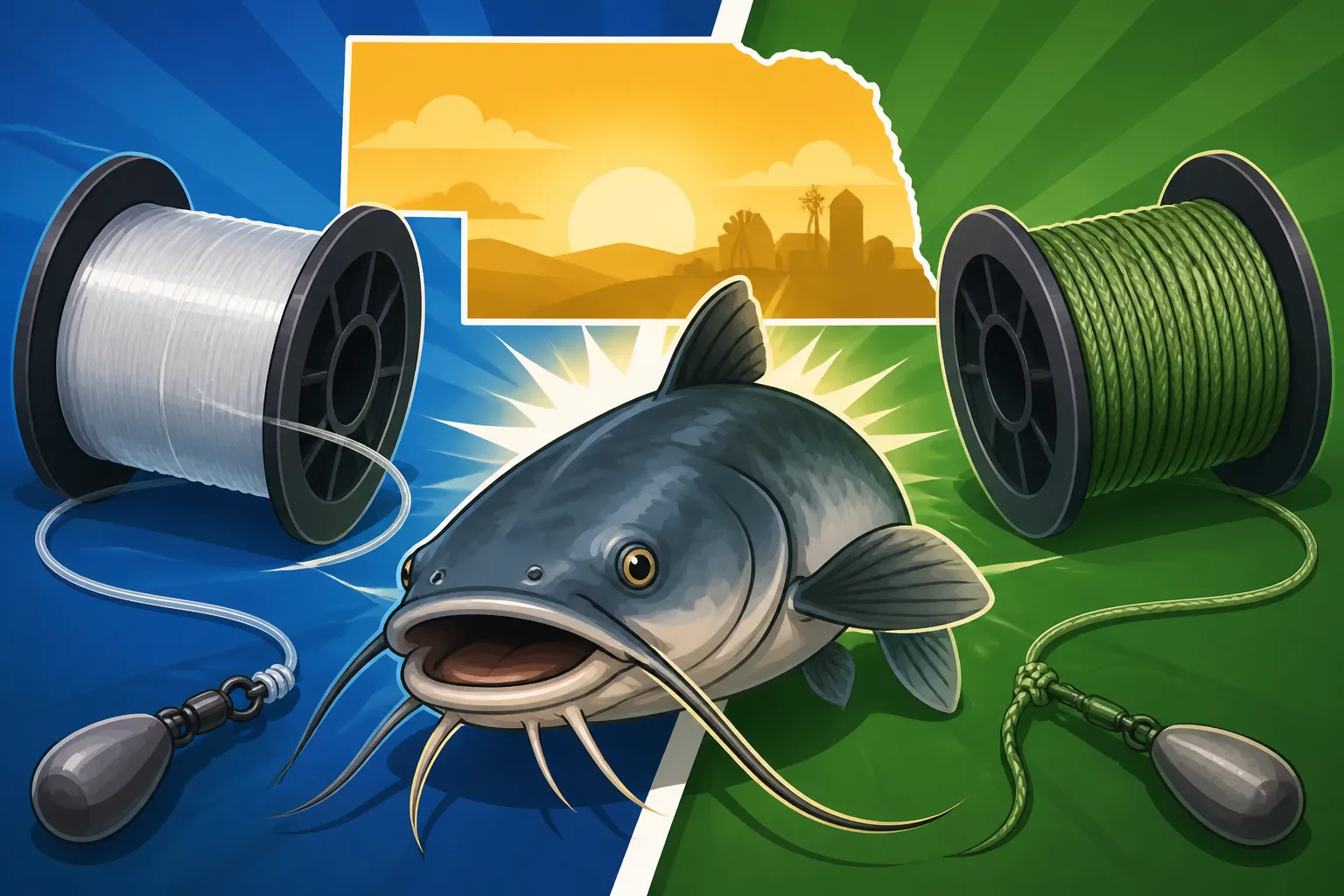
Monofilament Versus Braided Line for Catfish
One of the most common dilemmas I hear from fellow anglers, especially those new to chasing whiskers in Nebraska, is the agonizing choice between fishing lines. You stand there in the tackle aisle, staring at spools of monofilament and braided line, wondering which one is truly going to help you land that monster channel cat or flathead from the murky depths of the Platte River. It's a real head-scratcher, because each type promises different benefits, and honestly, the wrong choice can lead to lost fish, frustration, and a ruined fishing trip. This guide is here to untangle that confusion, breaking down the pros and cons of monofilament and braided line specifically for catfishing in the diverse waters of our beloved Cornhusker State.
Decoding Your Line Choices: Monofilament vs. Braided for Nebraska Catfish Anglers
Choosing the right fishing line can feel like picking the perfect outfit for a fickle Nebraska day—you need something versatile, durable, and suited to the conditions. When it comes to catfishing, your line is your direct connection to the fish, and understanding the fundamental differences between monofilament and braided lines is crucial for maximizing your success. It's not just about strength; it's about feel, visibility, stretch, and how it interacts with your rod, reel, and the environment.
Monofilament: The Time-Tested Workhorse
Monofilament, or "mono" as most of us call it, has been the backbone of fishing for decades. It's made from a single strand of nylon, which gives it a certain characteristic that many anglers, especially those targeting catfish, have come to rely on. It's like that old, reliable pickup truck—not fancy, but it gets the job done without fuss, and sometimes, that's exactly what you need.
One of the biggest advantages of monofilament for catfishing is its stretch. When a big channel cat slams your bait, mono acts like a shock absorber, helping to prevent the hook from tearing out of the fish's mouth and reducing the chances of your line snapping on a sudden surge. This forgiveness is particularly beneficial when you're battling a powerful fish near cover, where every head shake and run could mean a break-off. Furthermore, mono tends to be more abrasion resistant than braid against rough objects like submerged logs, rocks, and zebra mussels, which are common culprits for line damage in many Nebraska reservoirs and rivers. It can slide over these obstacles better without fraying immediately, offering a bit of extra protection.
Another appealing factor, especially for those of us who appreciate a good value, is the cost. Monofilament is generally much more affordable than braided line, making it a great option for spooling multiple reels or if you're just starting out and don't want to invest a huge amount of cash right off the bat. Plus, it's easier to tie knots with, and those knots tend to cinch down more reliably, giving beginners confidence that their rig won't come undone at a critical moment. You can pick up spools of excellent monofilament from any local bait shop or online retailers like Amazon, often at a very reasonable price.
However, mono isn't without its drawbacks. That stretch we just praised can also be a disadvantage. It reduces sensitivity, making it harder to feel those subtle "taps" or "mouthing" bites that big flatheads are famous for, especially at longer distances or in deeper water. Imagine trying to feel a feather landing on a trampoline—that's sometimes what it feels like with stretchy mono. It also has what we call "memory," meaning it tends to retain the shape of the spool, leading to coils and tangles, particularly if it's been on your reel for a while. This memory can affect casting distance and lead to frustrating backlashes for baitcasting enthusiasts.
Braided Line: The Modern Powerhouse
Braided line, on the other hand, is the sleek, high-performance sports car of fishing lines. It's made by weaving together multiple strands of synthetic fibers, typically Spectra or Dyneema, resulting in a super-strong, incredibly thin, and virtually stretch-free line. This makes it a formidable choice for many catfishermen looking for an edge, especially when fishing some of the larger, more challenging waters like the Missouri River or Lake McConaughy.
The biggest game-changer with braided line is its incredible strength-to-diameter ratio and lack of stretch. You can use a much thinner diameter braid with a significantly higher breaking strength compared to monofilament. This means more line on your reel and less water resistance, allowing for longer casts, deeper dives for crankbaits, and a direct, unyielding connection to the fish. That zero stretch transmits even the slightest nibble right up your rod blank, giving you an immediate advantage in detecting bites, especially when fishing current or deep channels where sensitivity is paramount. When a big blue cat decides to take your bait, there's no mistaking it—you'll feel every head shake and tail kick instantly.
Braided line's thin diameter also helps it cut through vegetation and current with less resistance, which is a huge benefit when fishing in areas like the weedy bays of Branched Oak Lake or the strong flows of the Platte River. It's also exceptionally durable in terms of its overall lifespan, often lasting several seasons with proper care. You can find a fantastic selection of braided lines, including popular brands, at retailers such as Bass Pro Shops, which often have knowledgeable staff to help you choose the right test for your target species.
However, braid has its own set of quirks. Its high cost can be a deterrent for some, as a spool of quality braided line can easily cost two to three times that of monofilament. The lack of stretch, while great for sensitivity, offers no forgiveness; sudden shocks can snap your line or tear hooks from a fish's mouth if your drag isn't set perfectly. Braid is also notorious for being more visible in clear water, which can spook wary fish, although many argue that catfish aren't as line-shy as other species. Its slick, limp nature can make knot-tying a bit trickier, requiring specific knots that bite into the slick surface to prevent slippage. Furthermore, it's not as abrasion resistant as monofilament; while it's incredibly strong, a sharp edge can cut through it more easily than mono.
| Feature | Monofilament (Mono) | Braided Line (Braid) |
|---|---|---|
| Material | Single strand of nylon | Woven strands of synthetic fibers (e.g., Spectra) |
| Stretch | High (15-25%) | Very Low (0-5%) |
| Sensitivity | Low | High |
| Strength-to-Diameter | Good (Thicker diameter for given strength) | Excellent (Much thinner for given strength) |
| Abrasion Resistance | Good (Slides over obstacles) | Moderate (Can cut on sharp edges) |
| Visibility | Low (Clear, green, brown options) | High (Opaque, often green, yellow, or multi-color) |
| Knot Tying | Easy, reliable, good knot strength | Can be challenging, requires specific knots, can slip |
| Memory | High (Tends to coil) | Very Low (Limp, no coiling) |
| Cost | Low to Moderate | Moderate to High |
| Casting Distance | Good, can be affected by memory and diameter | Excellent (Thinner diameter, less friction) |
| Ideal Use Cases | Beginners, shock absorption, clear water | Heavy cover, long casts, maximum sensitivity, powerful fish |
Matching Your Line to Nebraska's Catfishing Challenges
The best line isn't always the strongest or the most sensitive. It's the one that best suits the specific conditions you're fishing and the techniques you're using. Nebraska's waters offer a wide array of catfishing environments, from the swift currents of the Missouri River to the snag-filled depths of larger reservoirs and the quiet calm of farm ponds. Understanding where and how each line type excels will significantly increase your odds of success. When considering your setup, always remember that local Nebraska Fishing Regulations Explained can impact your choices, especially concerning things like the number of lines you can use.
Optimal Scenarios for Monofilament
Despite the rise of braid, monofilament holds a special place in the tackle boxes of many seasoned catfishermen, and for good reason. For those just getting their feet wet in the world of catfishing, monofilament is often the easiest and most forgiving line to start with. Its ease of handling, knot-tying simplicity, and lower cost make it an ideal choice for learning the ropes without breaking the bank. There's nothing quite like the satisfaction of landing your first few channel cats on a simple mono setup.
If you're primarily bank fishing with static baits, like punch bait or cut bait, monofilament can be an excellent choice. Its inherent stretch helps keep bait on the hook even through aggressive casts and provides a cushion when a fish hits hard, minimizing the chances of the bait ripping off. This is particularly true when you're targeting Nebraska Channel Catfish Fishing in urban ponds or smaller lakes where long casts aren't always necessary. When you're dropping a line into a calm eddy on the Elkhorn River or setting up for a relaxing evening at Wagon Train Lake, monofilament shines by absorbing the initial shock of a strong bite and allowing the fish to take the bait more naturally.
Furthermore, monofilament's abrasion resistance against common underwater debris can be a lifesaver. While it can still get nicked, it tends to hold up better than braid when dragged across the occasional submerged branch or rock pile. If you're fishing relatively clear water where catfish might be a bit more finicky, the lower visibility of monofilament can also give you an edge. While catfish are often thought of as not being line-shy, in certain conditions, a less visible line can still make a difference.
When Braided Line Truly Shines
For more aggressive catfishing tactics or in challenging environments, braided line steps up to the plate. Its superior strength-to-diameter ratio means you can pack a heavy-duty line onto a smaller reel, allowing for incredible pulling power when you hook into a truly big fish. If you're out there chasing those elusive Nebraska Flathead Catfish Fishing in snag-filled timber or probing the deep channels of the Missouri River, braid is your best friend. Its ability to slice through thick vegetation and cover, where monofilament might get bogged down or fray, is unmatched.
The virtually zero stretch of braided line provides unparalleled sensitivity, which is a huge advantage when trying to detect subtle bites from wary fish or when fishing at long distances. Imagine fishing the vast expanses of Lake McConaughy for trophy cats; being able to feel that faint "tick" on your line, even hundreds of feet away, allows for quicker hooksets and fewer missed opportunities. This sensitivity is also crucial when actively How to Catch Flathead Catfish at Night, as their bites can be incredibly soft at times. When the fish are playing coy, braid lets you know exactly what's happening at the business end of your line.
Braided line also excels when you need to make incredibly long casts, whether from shore or boat. Its thin diameter and slick surface reduce friction through your rod guides, allowing your bait to fly further. This is invaluable when trying to reach that distant channel edge on the Platte River or when casting across a wide river for migrating catfish. For those using powerful Best Rod Setup for Nebraska Catfish rigs, pairing them with braided line can create a formidable combination for tackling the biggest fish Nebraska has to offer. When it comes to fishing the powerful currents of the Missouri River Fishing in Nebraska or the snag-ridden areas of the Platte River Catfish Fishing, the strength and sensitivity of braid truly pay off.
The Smart Angler's Secret: Leaders and Hybrid Setups
Okay, so we've talked about monofilament's forgiving nature and abrasion resistance, and braided line's incredible strength and sensitivity. But what if you could have the best of both worlds? That's where the smart angler's secret comes in: using leaders. A leader is a shorter section of line, typically 2-6 feet, tied to the end of your main line. This hybrid approach allows you to tailor your rig to the precise conditions you're facing, maximizing your advantages while minimizing the drawbacks of any single line type.
Understanding the Power of a Leader
The primary reason to use a leader, especially with braided main line, is to overcome some of braid's inherent weaknesses while still leveraging its strengths. For instance, if you're fishing clear water and want the sensitivity of braid but are concerned about spooking fish with its visibility, a monofilament or fluorocarbon leader provides that invisible connection to your bait. Fluorocarbon, in particular, has a refractive index very similar to water, making it nearly invisible underwater, a huge plus for wary fish.
Leaders also offer excellent abrasion resistance right where it counts—near your hook and bait. This is incredibly important when you're fishing around jagged rocks, submerged timber, or shell beds, which are common culprits for frayed lines in many Nebraska waterways. Imagine a monster flathead taking your bait deep into a submerged logjam; that short, tough leader can take the brunt of the abuse, protecting your expensive main line from fraying and breaking. This is why many experienced anglers targeting big cats will always add a fluorocarbon or heavy monofilament leader. For more comprehensive tips on this, check out How to Catch Catfish in Nebraska.
Using a leader also helps to mitigate the lack of stretch in braided line. While a leader isn't going to give you the same shock absorption as a full spool of monofilament, a short mono leader can add just enough elasticity to cushion sudden strikes and head shakes, helping to prevent hooks from pulling out of a fish's mouth. This is particularly useful when you're using circle hooks, which are designed to catch in the corner of the fish's mouth and require a firm but not overly aggressive hookset.
Knotting it All Together: Leader Connections
The effectiveness of your leader setup hinges entirely on the knots you use to connect it to your main line. A weak knot means a lost fish, plain and simple. For connecting braided main line to a monofilament or fluorocarbon leader, there are a few tried-and-true knots that consistently perform well.
The FG Knot is often considered the gold standard for braid-to-mono/fluoro connections. It's incredibly strong, very slim, and passes through rod guides smoothly, which is a huge advantage for casting. However, it can be a bit challenging to learn and tie, especially in windy conditions or with cold fingers. Once mastered, though, it's a knot you can rely on for just about any situation. Many anglers practice this at home until they can tie it quickly and correctly.
Another popular choice is the Double Uni Knot. It's easier to tie than the FG and still offers excellent strength. While it creates a slightly larger knot profile, it's generally reliable for most catfishing applications. Just make sure to pull both knots down tightly and moisten the line before cinching to ensure maximum strength. For those using Best Catfish Gear for Nebraska Rivers, having a reliable knot is as important as the gear itself.
For lighter leader connections, or if you're simply connecting two sections of monofilament, the Blood Knot is a classic. It's strong and forms a relatively smooth connection. Whichever knot you choose, practice it until you can tie it flawlessly. Your confidence in your knots will directly translate to your confidence on the water.
When considering leader length and strength, think about the conditions. In clear water, a longer, lighter leader might be beneficial. In snaggy, abrasive conditions, a shorter, heavier leader (like 30-50lb test fluorocarbon) is often preferred to withstand the abuse. Don't be afraid to experiment to find what works best for your specific spots and techniques in Nebraska.
Practical Tips for Choosing and Caring for Your Catfish Line
Beyond the technical differences and specific applications, there are some practical considerations that every Nebraska catfisherman should keep in mind. The right line choice is just the first step; proper selection of line strength and diligent maintenance are equally important to ensure your fishing line is always ready for action. These details can often be the difference between a successful outing and a day filled with frustration.
Selecting the Right Line Strength
Choosing the correct line strength, or "test," is critical. Too light, and you risk breaking off on a big fish or in heavy cover. Too heavy, and you might limit your casting distance, reduce sensitivity, and have trouble tying effective knots. It's a balance, and it often depends on the species you're targeting and the environment you're fishing in.
For general Nebraska Channel Catfish Fishing in ponds, smaller lakes, or medium-sized rivers with lighter currents, a 12-20 lb test monofilament or a 20-30 lb test braided line is usually a good starting point. This provides enough strength to handle most channel cats while still offering decent casting performance. If you're using baitcasting reels, don't be afraid to go a bit heavier on the braid, as these reels handle thicker lines well.
When you're stepping up to target bigger fish like trophy channel cats, flatheads, or even blue cats (where they exist and are legally targeted), you'll want to increase your line strength. For flatheads lurking in heavy cover along the Platte River Catfish Fishing banks or big blues in the Missouri River Fishing in Nebraska, 25-40 lb test monofilament or 40-80 lb test braided line might be more appropriate. Remember, braided line of similar breaking strength will have a much thinner diameter, which can be an advantage when trying to cast heavier baits or fight strong currents. Always check Nebraska Fishing Daily Bag and Possession Limits and other regulations, as some areas might have specific gear requirements or restrictions.
For trotlines or set lines (always check local regulations as these can be highly restricted or illegal in certain areas or for certain species, and there can be severe Nebraska Fishing Violation Penalties for misuse), even heavier line is often used due to the constant abrasion and the need to hold multiple large fish. However, for rod and reel, match your line strength not only to the fish but also to your rod and reel's specifications. Don't put 80lb braid on a light panfish rod; it's a recipe for disaster.
Keeping Your Line in Top Shape
Your fishing line is a consumable item, but with proper care, you can extend its life and ensure it performs optimally when you need it most. One of the most important aspects of line care is knowing when to re-spool. Monofilament, especially, can degrade over time due to UV exposure and age, losing its strength and developing excessive memory. As a general rule, if you fish frequently, consider replacing the first 50-75 yards of your monofilament line annually, or the entire spool every 1-2 years. If you don't fish often, it might last longer, but always check it for nicks and abrasions before each trip.
Braided line is much more durable against UV rays and doesn't suffer from memory in the same way mono does. However, it can fray and weaken, especially if dragged over sharp objects. Regularly inspect the first few feet of your braid for any signs of damage. If you notice fraying or discoloration, cut off the damaged section and re-tie your leader or rig. Many anglers simply "flip" their braided line after a few seasons, meaning they unspool it completely and re-spool it with the unused end now becoming the working end, effectively doubling its lifespan.
After each fishing trip, especially if you've been in muddy or sandy conditions, it's a good idea to lightly rinse your reel spool with fresh water to remove any dirt or debris from your line. Avoid using harsh chemicals. Store your rods and reels out of direct sunlight in a cool, dry place. By taking these simple steps, you'll ensure your line is strong, supple, and ready to help you land that next big Nebraska catfish, whether you're using monofilament, braided, or a smart combination of both.
Disclaimer
This article is for general informational purposes only and does not constitute professional advice. Laws, prices and regulations vary by location and change over time. Consult a qualified professional for guidance on your specific situation.