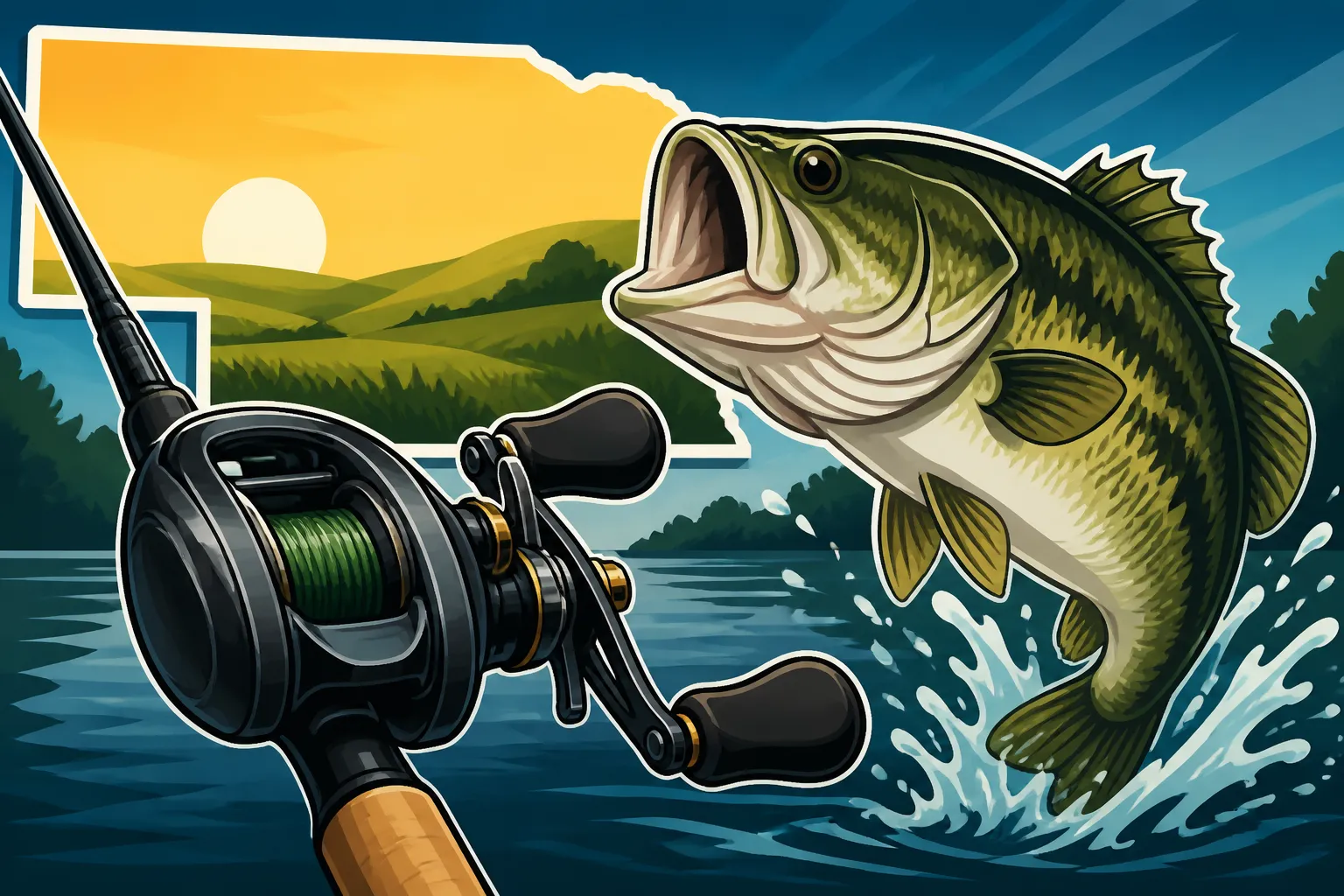
Best Baitcaster for Nebraska Largemouth Bass
Oh, the quest for the perfect baitcaster for Nebraska largemouth bass! It's a journey many of us anglers embark on, often feeling overwhelmed by the sheer number of options out there. Picking the right reel isn't just about grabbing the shiny new model; it's about finding a tool that genuinely enhances your fishing experience, especially when you're targeting those feisty Nebraska largemouths hiding in submerged timber or thick lily pads. This guide is here to cut through the confusion and help you understand what truly matters when selecting a baitcaster that will perform admirably on our local waters, giving you the confidence to cast effectively and land more fish.
Understanding What Makes a Great Baitcaster for Nebraska Bass
A baitcasting reel is a marvel of engineering, but what exactly makes one stand out for largemouth bass fishing, particularly in Nebraska? It's a combination of factors that contribute to casting distance, accuracy, retrieve power, and overall durability. Understanding these components will empower you to make an informed decision rather than just relying on marketing hype. We're talking about reels that can handle the specific demands of fishing our state's reservoirs like Branched Oak Lake or farm ponds where big bass lurk.
Gear Ratio: The Heartbeat of Your Retrieve
The gear ratio of a baitcaster tells you how many times the spool rotates with one full turn of the handle. This number, like 6.4:1 or 8.1:1, is absolutely critical because it dictates how fast you can retrieve your lure. For largemouth bass in Nebraska, having the right gear ratio can be the difference between an enticing retrieve and a missed opportunity.
Think about it this way: a lower gear ratio (e.g., 5.X:1) means more power and a slower retrieve. This is fantastic for lures that need a slower, more deliberate presentation, or for cranking in big, heavy baits that create a lot of drag, like deep-diving crankbaits or big swimbaits. You get more torque, making it easier to grind those fish out of dense cover. On the flip side, a higher gear ratio (e.g., 7.X:1 or 8.X:1) means a faster retrieve, allowing you to quickly pick up slack line, burn spinnerbaits, or rapidly work topwater lures. This speed is invaluable for quickly setting the hook when a bass blows up on a frog or for rapidly reeling in to make another cast after a missed strike. Many anglers, myself included, often carry multiple rods with different gear ratios to adapt to various techniques throughout the day.
Spool Capacity and Line Management
When you're fighting a strong Nebraska largemouth, especially one that's trying to bury itself in brush, you need enough line to handle the runs. Spool capacity dictates how much fishing line your reel can hold. While bass typically don't make long, screaming runs like saltwater species, having ample line ensures you're not going to get spooled if you hook into a monster or make a particularly long cast across a wide flat at Lake Maloney.
Beyond just capacity, how the line comes off and goes back onto the spool is crucial. Baitcasters are known for their casting efficiency, but improper line management can lead to frustrating backlashes – that tangled mess of line that can ruin a fishing trip. Modern baitcasters incorporate features designed to lay line evenly on the retrieve and minimize friction during the cast, contributing to smoother, longer, and more accurate presentations. This is particularly helpful when you're trying to hit a small opening in the reeds or skip a jig under an overhanging tree.
Braking Systems: Taming the Backlash Beast
Ah, the dreaded backlash! If you're new to baitcasters, this is probably your biggest fear. But fear not, modern reels come equipped with sophisticated braking systems designed to prevent this messy occurrence. These systems control the speed of the spool during the cast, essentially acting as a governor to ensure the line doesn't come off faster than your lure is flying.
There are generally two main types: centrifugal and magnetic. Centrifugal brakes use pins that extend outwards as the spool spins, rubbing against a ring inside the reel to create friction. Magnetic brakes use magnets that move closer or further from the spool to create resistance. Many reels now combine both systems or offer advanced dual-braking systems for maximum adjustability. The beauty of these systems is their adjustability. You can fine-tune them based on your lure weight, casting style, and even wind conditions. For instance, a windy day at Lewis and Clark Lake might require a bit more braking to avoid wind knots and backlashes, while a calm morning might let you loosen it up for maximum casting distance. Don't be afraid to experiment with your braking system; it's your best friend against tangles!
Bearings and Smoothness: Feel the Difference
The number and quality of bearings in a baitcaster significantly impact its smoothness and overall performance. Bearings reduce friction, making for a smoother retrieve, easier casting, and a more durable reel. While a higher number of bearings often indicates a smoother reel, the quality of those bearings is just as, if not more, important. A reel with fewer high-quality, corrosion-resistant stainless steel bearings will often outperform one with many cheap, low-quality ones.
When you're cranking a lure back to the boat or fighting a bass, you want a reel that feels fluid and effortless. Good bearings contribute to that buttery smooth feel, reducing fatigue during long days of casting and retrieving. This smooth operation also helps you detect subtle bites, as there's less "grind" to mask the feel of a fish picking up your lure. You'll often find baitcasters described with a bearing count like "7+1" (7 ball bearings and 1 roller bearing), which gives you a good idea of its internal mechanics.
Matching Your Baitcaster to Nebraska Bass Techniques
Nebraska offers a diverse range of largemouth bass fishing opportunities, from shallow farm ponds to vast reservoirs. Each scenario and technique often benefits from a slightly different baitcaster setup. Thinking about how you typically fish for bass will guide you toward the ideal reel.
Heavy Cover and Punching Rigs
If you're one of those anglers who loves to tackle the thick stuff – flipping jigs into dense cattails, punching heavy weights through matted vegetation, or dragging big creature baits out of submerged timber – then power and strength are paramount. These techniques require a baitcaster with a low to mid-range gear ratio (e.g., 6.X:1 to low 7.X:1) to give you the leverage needed to pull stubborn bass out of their sanctuary.
A reel designed for heavy applications will also feature robust internal components, a strong drag system, and a comfortable power handle. You'll be using heavy braided line, so a reel that can withstand the strain of powerful hooksets and drag-screaming battles is essential. When a bass hits a jig in thick cover, it's often an immediate battle of wills, and your reel needs to be up to the task of quickly gaining line and controlling the fish. Best Braided Line for Catfish Fishing might seem like a topic for a different species, but the principles of strong line for heavy cover certainly apply here too.
Jig Fishing and Worms
Finesse jigs, Texas-rigged worms, and Carolina rigs are staples for many Nebraska bass anglers, especially when fish are pressured or holding in deeper water. These techniques often require a good balance of sensitivity, moderate retrieve speed, and casting accuracy. A versatile mid-range gear ratio (e.g., 6.X:1 to 7.X:1) often shines here, allowing for a controlled retrieve that lets you feel every bump and tick on the bottom.
Accuracy is key with these baits, as you're often trying to place them precisely around structure like stumps, rock piles, or dock pilings. A baitcaster with an easily adjustable braking system will allow you to dial in your cast for pinpoint accuracy, minimizing splashdowns and maximizing stealth. The retrieve should feel smooth enough that you can detect even the most subtle bites.
Topwater and Jerkbaits
There's nothing quite like a bass blowing up on a topwater lure or aggressively attacking a jerkbait. These exciting techniques often benefit from a faster gear ratio (7.X:1 or higher). The speed helps you quickly pick up slack line after a twitch or pause, ensuring you're ready to set the hook when a bass commits. For walking-the-dog with a topwater plug, a slightly slower retrieve might be preferred by some, but for quick, erratic movements, speed is your friend.
When fishing jerkbaits, that faster gear ratio allows you to quickly reel down to the bait after a jerk, maintaining control and keeping tension on the line for instant hooksets. The ability to cast light topwater lures accurately, even against a breeze, also means looking for a reel with an excellent, finely tunable braking system. Casting to specific targets on the surface, like pockets in emergent vegetation at Bluestem Lake, demands precision.
Crankbaits and Reaction Baits
Crankbaits, spinnerbaits, and chatterbaits are designed to elicit a reaction strike from bass. For deep-diving crankbaits, which create significant drag, a lower gear ratio (5.X:1 or low 6.X:1) is often preferred. This "winch" like power allows you to retrieve these baits with less effort, reducing fatigue and making it easier to maintain a consistent retrieve speed. When you hit a piece of cover and the lure deflects, that lower gear ratio helps you feel it and react accordingly.
For faster reaction baits like shallow crankbaits, spinnerbaits, or even some chatterbaits, a mid to high-speed reel (6.X:1 to 7.X:1) can be excellent. This allows you to burn baits quickly across flats or parallel to weed lines, covering water efficiently. It really boils down to how much resistance the lure creates and the retrieve speed you want to maintain. Some anglers even use super fast reels for burning spinnerbaits and then slow down their retrieve cadence. Best Lures for Nebraska Bass goes into more detail about which baits work best, but your reel choice can significantly impact how effectively you present them.
Key Considerations When Buying Your Baitcaster
Beyond the technical specifications, there are some practical considerations that will influence your satisfaction with a baitcaster, especially when you're going to spend hours on the water chasing Nebraska's largemouth.
Durability and Construction
A fishing reel is an investment, and you want it to last. Look for baitcasters constructed from high-quality materials that can withstand the rigors of fishing. Frames made from aluminum or a strong carbon composite are generally preferred for their rigidity and light weight. Components like gears, main shafts, and worm shafts should be made from durable, corrosion-resistant alloys. This is especially important if you're fishing in varied conditions, from dusty bank fishing spots to a humid summer day on the boat.
While Nebraska isn't saltwater, extended exposure to humidity, occasional rain, and general wear and tear can take its toll. A well-built reel will maintain its smooth performance and drag consistency over many seasons. Brands often highlight their frame materials and gear construction, so pay attention to these details. A reel from a reputable manufacturer, available at places like Bass Pro Shops or online at Amazon, usually comes with a certain level of assurance regarding its construction quality.
Ergonomics and Comfort for Long Days
Imagine spending eight to ten hours repeatedly casting and retrieving. If your reel isn't comfortable to hold and operate, fatigue will set in quickly, diminishing your enjoyment and effectiveness. Ergonomics play a huge role here. Consider the size and shape of the reel, how it sits in your hand, and the design of the handle and knobs.
A compact, low-profile baitcaster often fits more comfortably in the palm of your hand, reducing strain. The handle length and knob material (cork, EVA foam, rubber) also contribute to comfort and grip, especially when wet. Some reels feature more tapered designs, while others might have slightly wider frames. What feels good to one angler might not feel right to another, so if possible, try holding a few different models in your hand before committing. This is one area where handling a reel in a store like Bass Pro Shops can really help, allowing you to get a feel for its balance and contours.
Budgeting for Your Baitcaster
Baitcasters come in a wide range of prices, from entry-level models to high-end, tournament-grade machines. It's easy to get caught up in the allure of the most expensive reel, but the truth is, you can find an excellent, dependable baitcaster for Nebraska largemouth bass without breaking the bank. Your budget will largely determine the materials, number of features, and overall refinement of the reel.
Entry-level baitcasters are great for beginners or those on a tight budget, offering solid performance for basic techniques. Mid-range reels strike a fantastic balance between features, durability, and cost, often providing excellent value for serious anglers. High-end reels push the boundaries of technology, offering the lightest weights, smoothest retrieves, and most advanced braking and drag systems. Decide what features are most important to you and how frequently you'll be using the reel. Remember, a good mid-range reel from a reputable brand will serve you well for many years. You can often find great deals on reliable models, sometimes even through online retailers like Amazon.
Here's a quick look at how different price points often correspond to features:
| Feature Category | Entry-Level ($50-$100) | Mid-Range ($100-$250) | High-End ($250+) |
|---|---|---|---|
| Construction | Graphite/Composite frame, basic gears | Aluminum/Hybrid frame, durable alloy gears | Magnesium/Aluminum frame, precision-cut brass/duralumin gears |
| Bearings | 4-6 basic bearings | 6-10 quality stainless steel bearings | 8-12+ high-grade, corrosion-resistant bearings |
| Braking System | Basic magnetic or centrifugal | Advanced magnetic/centrifugal, dual systems | Highly refined, micro-adjustable dual systems |
| Drag System | Decent, functional | Smooth, consistent, wider range | Ultra-smooth, highly consistent, powerful, precise |
| Ergonomics | Functional, sometimes bulky | Comfortable, low-profile | Ultra-light, ergonomic, custom handles/knobs |
| Longevity | Good with care | Very good, durable | Excellent, built for extended heavy use |
Pairing Your Baitcaster with the Right Rod and Line
A baitcaster is only half the equation. To truly get the most out of your setup for Nebraska largemouth bass, you need to pair it with a rod that complements its strengths and the techniques you'll be employing. The rod and reel work in harmony to deliver casts, fight fish, and transmit vibrations.
Rod Power and Action for Bass
Rod power refers to the rod's strength or its ability to lift weight. For largemouth bass, you'll typically be looking at Medium, Medium-Heavy, or Heavy power rods.
- Medium Power: Great for lighter lures like smaller crankbaits, spinnerbaits, or topwater, offering more play and sensitivity.
- Medium-Heavy Power: The workhorse for bass fishing, capable of handling a wide array of lures from jigs and worms to heavier spinnerbaits. This is often the go-to power for most Nebraska bass situations.
- Heavy Power: Reserved for the heaviest cover, punching, flipping big jigs, or throwing large swimbaits, providing maximum leverage to extract big bass from dense vegetation.
Rod action refers to where the rod bends when pressure is applied.
- Fast Action: Bends mostly in the tip, offering excellent sensitivity for detecting subtle bites and quick hooksets, perfect for jigs and worms.
- Moderate-Fast Action: Bends in the top third to half, versatile for a wide range of lures.
- Moderate Action: Bends more towards the middle of the rod, providing a parabolic bend that's great for keeping treble hooks buttoned in with crankbaits or spinnerbaits, absorbing head shakes without pulling hooks.
A balanced setup is key. For example, a Medium-Heavy, Fast Action rod paired with a mid-range gear ratio baitcaster is a fantastic all-around setup for targeting largemouth bass in Nebraska's numerous lakes and rivers. Best Rod Setup for Nebraska Bass offers more detailed advice on matching your rod and reel for various scenarios.
Choosing the Right Line Type and Test
Your fishing line is the final connection between you and the fish, and selecting the right type and test for your baitcaster is critical. For largemouth bass, you'll primarily be choosing between monofilament, fluorocarbon, and braided line, or a combination.
- Monofilament (Mono): Affordable, easy to cast, and has stretch, which can be forgiving with aggressive fish. It floats, making it ideal for topwater lures. However, its stretch reduces sensitivity, and it can suffer from memory.
- Fluorocarbon (Fluoro): Nearly invisible underwater, very sensitive, and sinks, which is great for bottom-contact baits. It has less stretch than mono, providing better feel, but can be stiffer and harder to cast for beginners. It's fantastic for jigs and worms.
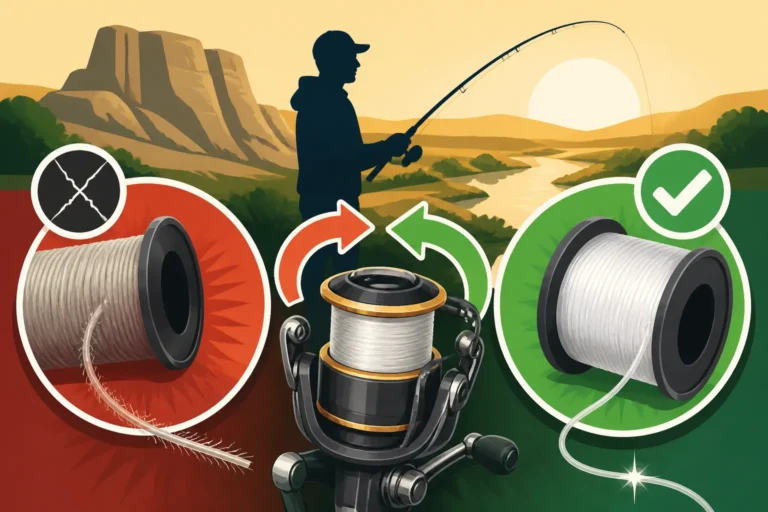
- Braided Line: Extremely strong for its diameter, virtually no stretch, and highly sensitive. It's excellent for heavy cover applications, punching, and flipping, allowing for powerful hooksets and cutting through vegetation. The lack of stretch can be a disadvantage for treble hook baits, as fish can tear off. Often, anglers will tie a fluorocarbon leader to braided mainline for added stealth.
The "test" refers to the breaking strength of the line. For Nebraska largemouth bass, common line tests range from 10 lb to 20 lb for mono/fluoro, and 30 lb to 65 lb for braid, depending on the technique and cover. For example, 12-15 lb fluorocarbon is a great choice for pitching jigs, while 50 lb braid might be preferred for flipping heavy cover. Consider the habitat you'll be fishing in—are you in open water, or are you pulling fish out of thick cattails at Wagon Train Lake? That will heavily influence your line choice. Best Fishing Line for Nebraska Walleye can also provide insights into line choices, even though it's for a different species, the principles of line strength and diameter are universally applicable.
Ultimately, choosing the best baitcaster for Nebraska largemouth bass comes down to understanding your fishing style, the techniques you prefer, and the conditions you typically encounter. Don't be afraid to try different setups until you find what feels right for you. A well-chosen baitcaster, paired with the right rod and line, will not only make your time on the water more enjoyable but significantly increase your chances of landing that next trophy bass.
Disclaimer
This article is for general informational purposes only and does not constitute professional advice. Laws, prices and regulations vary by location and change over time. Consult a qualified professional for guidance on your specific situation.