Best Rod Holder for the Bank of a Reservoir
There’s nothing quite as frustrating as getting to your favorite fishing spot along a Nebraska reservoir bank, casting out your line with anticipation, and then realizing you have nowhere secure to rest your rod. You try leaning it against a tackle box, or wedging it into a patch of dirt, only for it to slip, tumble, and potentially snap a tip or, even worse, get dragged into the water by an unexpected bite. This guide is all about helping you avoid those headaches by choosing the absolute best rod holder to keep your gear safe, your hands free, and your focus on the fish.
Why a Good Rod Holder is a Bank Angler's Best Friend
Bank fishing is an incredible way to enjoy the peace and quiet of Nebraska's beautiful reservoirs, but it comes with its own unique set of challenges. One of the biggest? Managing your fishing rods, especially if you like to fish with multiple lines out or need to tend to other tasks like baiting hooks, preparing a snack, or just enjoying the view. A quality rod holder isn't just a luxury; it's a fundamental piece of gear that transforms your entire bank fishing experience.
The Frustrations of Fishing Without One
Think back to those moments when you've been forced to improvise. Maybe you leaned your expensive rod against a bucket, only for a gust of wind to knock it over, sending your reel clattering against the rocks. Or perhaps you were distracted by your kids for just a second, and when you turned back, your rod was gone, pulled into the depths by a lurking channel catfish. It's a tale as old as time for bank anglers everywhere. Tangled lines from rods too close together, missed bites because you weren't holding the rod, or constantly adjusting its precarious position—these are all common frustrations that can quickly turn a relaxing day into a stressful one. Nobody wants to spend their precious fishing time worrying about their gear, especially when the solution is so simple.
Safety and Convenience Benefits
Investing in a proper rod holder brings a cascade of benefits that far outweigh its modest cost. First and foremost, it protects your valuable equipment. Rods and reels aren't cheap, and keeping them securely off the ground and stable reduces the risk of accidental damage from falls, being stepped on, or getting scratched by abrasive surfaces. Secondly, it offers unparalleled convenience. Imagine being able to cast out two or three lines, each with a different bait or at a different depth, and then sit back, relax, and truly observe the water. Your hands are free to do whatever you need, whether it's rigging up another rod, tying a new knot, or simply enjoying a cup of coffee. It also makes it much easier to detect bites. When a fish strikes, the rod holder provides a stable anchor, making the sudden pull or twitch of the rod much more noticeable, helping you react quickly to set the hook. This hands-free approach is especially great for those longer fishing sessions or when you're fishing with family and need to assist others. Having a reliable spot to rest your rod allows you to truly immerse yourself in the experience. You might also want to check out Best Rod and Reel Combo for Beginners in Nebraska for other essential gear.
Types of Rod Holders Perfect for Nebraska Reservoir Banks
Nebraska’s reservoirs offer a variety of bank terrains, from rocky shores to soft, sandy beaches and grassy slopes. Because of this diversity, no single rod holder design is universally perfect. Understanding the different types available will help you pick one that best suits your preferred fishing spots and methods. Each type has its own strengths and is designed to tackle specific bank conditions and angling needs.
Spike/Stake Rod Holders
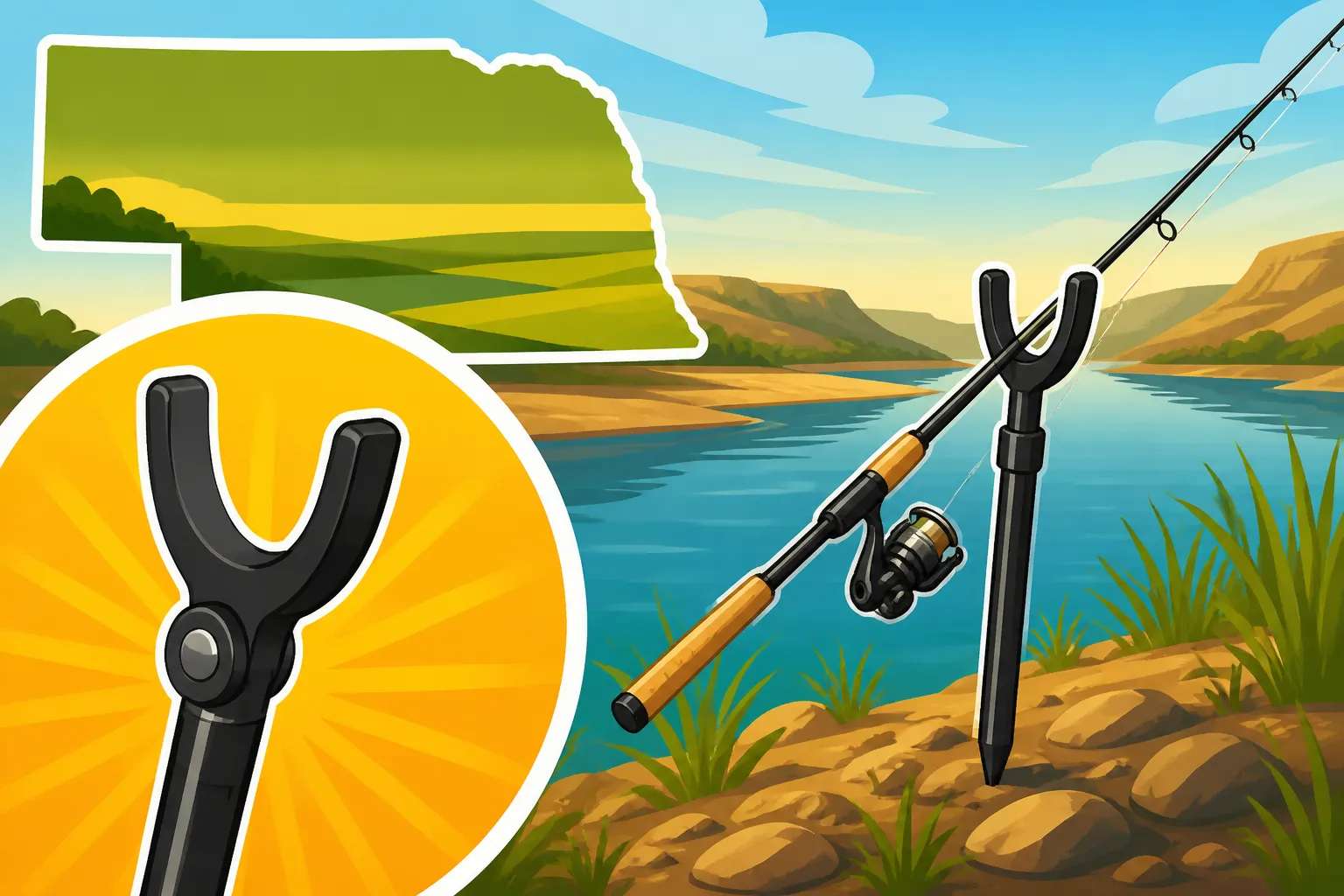
These are arguably the most common and simplest type of rod holder. They consist of a single metal or heavy-duty plastic spike that you push or drive into the ground, with a "Y" shaped or tube-like top designed to hold the rod. They are incredibly popular for a reason: they're lightweight, portable, and generally very affordable. They're excellent for fishing areas with softer soil, like the banks of many state recreation areas or the muddier edges of a river, where they can be easily inserted and provide a solid anchor. If you're targeting species like channel catfish with stout rods and heavier lines, a sturdy metal spike can handle the sudden, powerful strikes.
However, their effectiveness largely depends on the ground composition. On harder, rocky ground or heavily compacted clay, it can be nearly impossible to drive a spike in, or they might bend under pressure. They also typically only hold one rod, so if you're a multi-rod angler, you'll need several of them, which can clutter your bank space. Despite these limitations, for many, the simplicity and ease of use of a good spike rod holder makes it an essential piece of their bank fishing kit. Look for models with a footrest or a wide top for easier ground penetration.
Tripod/Bank Stick Systems
Moving up in versatility, tripod or bank stick systems offer more stability and adjustability, making them ideal for a broader range of Nebraska reservoir banks. A bank stick is essentially a more robust, often adjustable, single rod holder that can be pushed into the ground, similar to a spike, but often with better locking mechanisms for height and angle. Tripod systems, as the name suggests, feature three legs, providing excellent stability on uneven or hard surfaces where a spike simply won't work. They stand freely on their own, making them perfect for concrete dams, rocky outcroppings, or even sturdy boat docks.
Many bank stick systems come with features like adjustable angles and quick-release mechanisms, allowing you to fine-tune your rod's position for optimal bite detection and easy grab-and-go action. Tripods often have telescopic legs, allowing for height adjustments and compact storage. While generally more expensive and sometimes bulkier than simple spikes, their enhanced stability and adaptability are well worth it for anglers who frequent diverse locations. They are particularly useful when you need to keep your rod tip high to clear shoreline vegetation or low to keep your line out of the wind. When considering various Best Bank Fishing Rigs for Nebraska Reservoirs, having a stable tripod makes all the difference.
Multi-Rod Bank Pods
For the serious bank angler who likes to deploy multiple rods, multi-rod bank pods are the ultimate solution. These systems are designed to hold two, three, or even four rods securely in one compact unit. They typically feature a central bar or frame with adjustable supports for multiple rod rests and often have telescopic legs or spikes that provide exceptional stability. Imagine having two rods out for walleye with different lures, and a third rod soaking a piece of cut bait for a monster flathead – all neatly organized and easily accessible.
Bank pods are fantastic for minimizing clutter on the bank, keeping your lines separated, and allowing you to set up a true "fishing station." Many high-end models offer extreme adjustability, allowing you to change the angle, height, and spread of each rod independently. They are generally heavier and more expensive than single rod holders, but the convenience and professionalism they bring to your bank setup are unmatched. They excel on flat, open banks, but some designs are surprisingly adaptable to uneven terrain thanks to independently adjustable legs. If you plan on long sessions targeting multiple species, or simply enjoy the peace of mind that comes with a highly organized setup, a multi-rod bank pod is a game-changer. You can find robust options for these systems on marketplaces like Amazon or specialized fishing retailers.
Key Features to Look For When Choosing Your Rod Holder
Selecting the right rod holder for your Nebraska bank fishing adventures goes beyond just picking a type. You need to consider several key features that will impact its performance, durability, and overall suitability for your needs. Think about the conditions you typically fish in and the fish you’re targeting.
Material and Durability
The material your rod holder is made from directly impacts its longevity and resistance to the elements. You’re going to be exposing this gear to sun, rain, dirt, and potentially even saltwater if you fish the lower Missouri River.
- Aluminum: Lightweight and rust-resistant, aluminum holders are great for portability. They are strong enough for most freshwater applications but might bend if subjected to extreme force or if you try to jam them into very hard ground. They're a solid all-around choice.
- Stainless Steel: This is the heavy-duty option. Stainless steel rod holders are incredibly strong, highly resistant to rust and corrosion, and can withstand serious abuse. If you frequently fish for large catfish that hit like a freight train, or if you're rough on your gear, stainless steel offers maximum durability. The trade-off is often increased weight and a higher price point.
- Heavy-Duty Plastics/Composites: Many lighter-duty or more economical spike holders are made from tough plastics. These are excellent for panfishing, trout fishing, or for beginners, as they are very light and don't rust. However, they can become brittle in extreme cold or degrade over long periods of UV exposure, and they're generally not suitable for wrestling with big, aggressive fish.
Always look for materials that are explicitly stated as rust-proof or corrosion-resistant, especially if you leave your gear outside or fish frequently. The Nebraska weather can be tough on gear, so choosing wisely here will save you money and headaches in the long run.
Adjustability and Stability
A rod holder that can't be adjusted to suit your fishing spot or provide a stable base is practically useless. This feature is paramount for effective bank fishing.
- Angle Adjustment: The ability to change the angle of your rod is crucial. Sometimes you want the rod tip high to keep your line over snags or to see subtle bites against the sky. Other times, you want it low to keep your line out of strong wind or close to the water for certain presentations. Look for holders that offer multiple angle settings or a smooth, infinitely adjustable tilt mechanism.
- Height Adjustment: Telescopic legs or adjustable spikes allow you to set the rod at the perfect height, whether you're sitting in a chair or standing. This is particularly useful on uneven banks where one side might be higher than the other. It also helps in keeping your reel clear of the dirt and splashes.
- Footing/Base Design: How the holder contacts the ground determines its stability. Spike holders need a sharp, strong point for penetration. Tripods and bank pods benefit from wide, flat feet or adjustable feet that can pivot to conform to uneven surfaces. Some even have small "spurs" on the feet for extra grip on loose soil. A stable base means your rod won't wobble or tip over, even when a powerful fish slams your bait. This is especially vital when fishing for species with strong initial runs.
Portability and Ease of Setup
Bank fishing often involves a bit of walking to reach that perfect secluded spot. Your gear needs to be easy to carry and quick to deploy.
- Weight: Lighter is generally better if you plan on hiking a distance. Aluminum or durable plastic options shine here. However, don't sacrifice stability for extreme lightness, especially if you're targeting bigger fish.
- Compactness: Can it break down easily? Does it fold flat? Many bank sticks and even some tripods collapse into a surprisingly small footprint, making them easy to strap to a backpack or store in a tackle bag. Avoid bulky, unwieldy designs if you value convenience.
- Quick Setup: When you arrive at your spot, you want to get lines in the water, not wrestle with complicated gear. Look for rod holders with intuitive designs, quick-release levers, or simple push-button adjustments. The quicker you can set it up, the more time you have for actual fishing. Think about how many components need to be assembled. Less is usually more for bankside efficiency. You can find many portable options at fishing stores like Bass Pro Shops or by browsing selections online.
Rod Protection and Security
While the primary job is to hold the rod, how it holds it is also important. You don't want the holder to damage your rod or allow it to be easily dislodged.
- Rod Rest Design: Look for a soft, non-abrasive material inside the "Y" rest or tube where your rod sits. EVA foam, rubber, or flexible plastic inserts prevent scratches and dings to your rod blank. Some rests are designed to gently grip the rod, preventing it from sliding out accidentally.
- Security Features: For those extra-aggressive bites, some rod holders include a small strap or a spring-loaded arm that helps hold the rod in place, preventing it from being pulled free by a fish. This is particularly useful if you're stepping away from your rod for a moment or fishing in an area known for violent strikes. While not common on all models, it's a feature worth considering for peace of mind.
Setting Up Your Rod Holder for Success on Nebraska's Reservoir Banks
Having the best rod holder is only half the battle; knowing how to properly set it up can make or break your fishing success. There's a subtle art to positioning your rod and holder to maximize bite detection and ensure your gear is secure. This is where local knowledge of Nebraska's diverse banks truly comes into play.
Choosing the Right Spot
The "right spot" isn't just about where the fish are; it's also about where you can effectively and safely deploy your rod holder.
- Bank Composition: Before you even unpack, assess the ground. Is it soft sand at Lake McConaughy Fishing Guide? Hard clay at Branched Oak Lake? Rocky shale along the Missouri River? This will dictate which type of holder will work best. Spike holders thrive in softer soils, while tripods are kings on hard, uneven, or rocky terrain. Trying to force a spike into concrete is a recipe for broken gear and frustration.
- Proximity to Water: You want your rod holder close enough to the water's edge to easily cast and retrieve, but far enough back to avoid wave action or rising water levels. Also, consider the slope. A steeper bank might require a holder with more adjustability to keep your rod level. Ensure there's clear space behind you for a proper casting arc, especially when learning How to Cast Farther From Shore.
- Casting Lanes and Structure: Look for clear casting lanes without overhead branches or dense shoreline vegetation. If you're targeting submerged structure like brush piles or rock formations, position your holder so your line has a direct, unimpeded path to the target area. Keep an eye out for potential snags directly in front of where your line enters the water, and adjust your rod holder's position accordingly. Always consider potential hazards for your line.
Proper Angle and Depth
The angle and depth at which you position your rod in the holder are critical for detecting bites and managing your line effectively.
- Sensitivity to Bites: For light-biting fish like walleye or crappie, a more horizontal rod angle, with the rod tip just barely above the water, can make subtle taps more visible. The line has less resistance against the wind and current, allowing the fish to take the bait more naturally. For aggressive fish like catfish, a slightly higher angle can keep your line out of floating debris and provide a clearer visual of a strong strike as the rod bends over. Experiment with different angles based on the species you're targeting and the prevailing conditions.
- Keeping Line Clear: In windy conditions, angling your rod tip lower to the water helps reduce the amount of line exposed to the wind, minimizing bow in your line and improving bite detection. Conversely, if you're fishing over submerged weeds or rocks, a higher rod tip can help keep your line elevated and out of potential snags. Always ensure your line isn't rubbing against the holder itself, which can cause wear and tear, or compromise your line strength. You can also gain insight into general conditions by looking at Nebraska Fishing Weather and Barometric Pressure Tips.
Multi-Rod Strategies
If you’re setting up multiple rods in a bank pod or with several individual holders, thoughtful placement can prevent tangles and enhance your chances.
- Spacing: Give each rod enough space to allow for easy casting and retrieving without interfering with its neighbors. A good rule of thumb is to place them at least 3-4 feet apart, especially if you're using longer rods. This also ensures that when a fish hits, you have room to grab the rod and fight the fish without bumping into other setups.
- Different Baits and Depths: One of the advantages of multi-rod fishing is the ability to present different offerings simultaneously. You could have one rod with a bottom rig for catfish, another with a slip bobber for crappie, and a third with a jigging spoon for walleye. Adjust the rod angles and depths accordingly. For instance, a rod fishing a bobber for crappie might be set with a higher tip to keep the line off the water, while a bottom-fishing rig for catfish would be more horizontal.
- Bait Presentation: Think about how each setup presents your bait. If you have lines going to different depths or distances, ensuring they don't cross each other can be tricky, especially in current. Angle your rod holders slightly outwards from your central position to create a wider fan of baits, reducing the chance of crossed lines. For more tips on maximizing your shore fishing experience, check out How to Fish From Shore in Nebraska.
| Rod Holder Type | Ideal Bank Condition | Portability | Stability Rating | Multi-Rod Capability | Typical Use Cases |
|---|---|---|---|---|---|
| Spike/Stake Holder | Soft soil, sand, grass | High | Moderate | No (individual) | Panfishing, light to medium catfish, general shore |
| Tripod/Bank Stick System | Varied, hard ground, uneven | Medium | High | Limited (single) | Walleye, bass, medium catfish, diverse terrain |
| Multi-Rod Bank Pod | Flat, open, stable ground | Low | Very High | Yes (2-4+ rods) | Catfish tournaments, dedicated multi-species, long waits |
Popular Brands and Where to Find Them
When it comes to fishing gear, a few names consistently rise to the top for their quality, innovation, and reliability. This holds true for rod holders as well. Knowing which brands to look for can simplify your search, and understanding where to purchase them will ensure you get the right gear for your needs.
Trusted Names in Bank Fishing Gear
Several companies have earned a solid reputation for producing durable and effective rod holders that stand up to the rigors of bank fishing. Brands like Berkley, Cabela's, and Fish-N-Mate are often cited by anglers for their reliable spike and tripod designs, offering a range of options from basic, no-frills models to more advanced, adjustable units. Rod holders from these brands are typically well-constructed, with a focus on ease of use and durability in various conditions. If you're looking for something sturdy and dependable, starting with these names is a good bet. They understand the demands placed on bank fishing gear and engineer their products to meet those challenges, often incorporating features that improve stability and protect your valuable fishing rods. For example, some offer specialized coatings for rust prevention or ergonomic designs for easier handling and ground insertion.
When you're out looking for a new rod holder, take the time to physically inspect the construction. Feel the weight, check for any flimsy parts, and test the adjustability mechanisms. A good rod holder should feel solid and capable of standing up to both the elements and the powerful tug of a hard-fighting Nebraska fish.
Online vs. In-Store Shopping
Deciding where to buy your rod holder depends on your preference for hands-on inspection versus convenience and selection.
- In-Store Experience: Visiting a physical store like Bass Pro Shops or a local tackle shop gives you the undeniable advantage of seeing and feeling the product before you buy. You can handle different models, assess their construction quality, test the adjustability, and even get advice from experienced staff who might have personal recommendations for Nebraska fishing conditions. This hands-on approach is invaluable, especially if you're unsure about the differences between materials or designs. Plus, supporting local bait and tackle shops helps foster the fishing community.
- Online Convenience and Selection: Online retailers, such as Amazon, offer an incredibly vast selection, often at competitive prices, with the convenience of shopping from home. You can browse countless models, read extensive customer reviews, and compare specifications side-by-side. This is particularly useful if you have a very specific type of rod holder in mind or are looking for a less common brand. However, you miss out on the tactile experience of inspecting the product, and relying solely on pictures and descriptions can sometimes be misleading. Be sure to check return policies before making a purchase online, just in case the holder doesn't meet your expectations when it arrives. No matter where you decide to shop, remember to consider your specific needs: the type of bank you usually fish, the fish species you target, and your personal preferences for portability and adjustability. Thinking through these factors will ensure you make a purchase that enhances your time on the water.
Disclaimer
This article is for general informational purposes only and does not constitute professional advice. Laws, prices and regulations vary by location and change over time. Consult a qualified professional for guidance on your specific situation.