Branched Oak Lake Crappie Fishing
One of the most common frustrations for anglers hitting a new lake, or even a familiar one, is the sheer mystery of where the fish are hiding, especially when you're after a specific species like crappie. Branched Oak Lake near Lincoln, Nebraska, is a fantastic crappie fishery, but knowing the ins and outs of its waters can make all the difference between a sparse catch and a cooler full of slabs. This comprehensive guide will equip you with the knowledge, strategies, and local insights to consistently find and catch crappie at Branched Oak Lake, no matter the season.
Getting to Know Branched Oak Lake and Its Crappie
Branched Oak Lake, Nebraska's largest lake, is a true gem in the eastern part of the state, especially for crappie enthusiasts. Its sprawling waters and varied underwater terrain create a dynamic environment for these popular panfish. Understanding the lake's unique characteristics and the crappie that call it home is the first step toward consistent success.
The Lake's Layout and Crappie Habitat
Branched Oak Lake isn't just a big bowl of water; it's a complex ecosystem with numerous coves, fingers, submerged humps, standing timber, and artificial fish structures. Originally formed by damming Camp Creek, its old creek channels still run through the lakebed, acting like underwater highways for fish. Crappie, being structure-oriented fish, will gravitate towards these features. You'll find them holding tight to flooded timber, brush piles, rock formations, and even the riprap along the dam face and causeways. These areas provide both ambush points for feeding and protection from predators. Many anglers, especially those new to the lake, get overwhelmed by its size. They might spend hours just cruising, hoping to stumble upon a school. But with a good understanding of the bottom contours and available cover, you can narrow down your search considerably. Think of it like this: if you were a crappie, where would you hide from a pelican or a larger predator, and where would you find an easy meal of minnows or insects? That's precisely where you should be looking.
The lake also features several bays and arms, such as the Northeast Arm and the South Shore, which offer different types of cover and depths. The shallower, murkier waters in the upper arms can warm up faster in the spring, making them prime early-season spots. Conversely, the deeper, clearer main lake areas and near the dam provide cooler, more stable conditions during the heat of summer. Knowing these distinctions can save you a lot of fruitless searching. For example, if you're out in the spring, don't waste your time looking for crappie in the main lake's deepest sections; they'll be pushing into those shallow, sun-warmed coves getting ready to spawn.
Identifying Branched Oak's Crappie Species
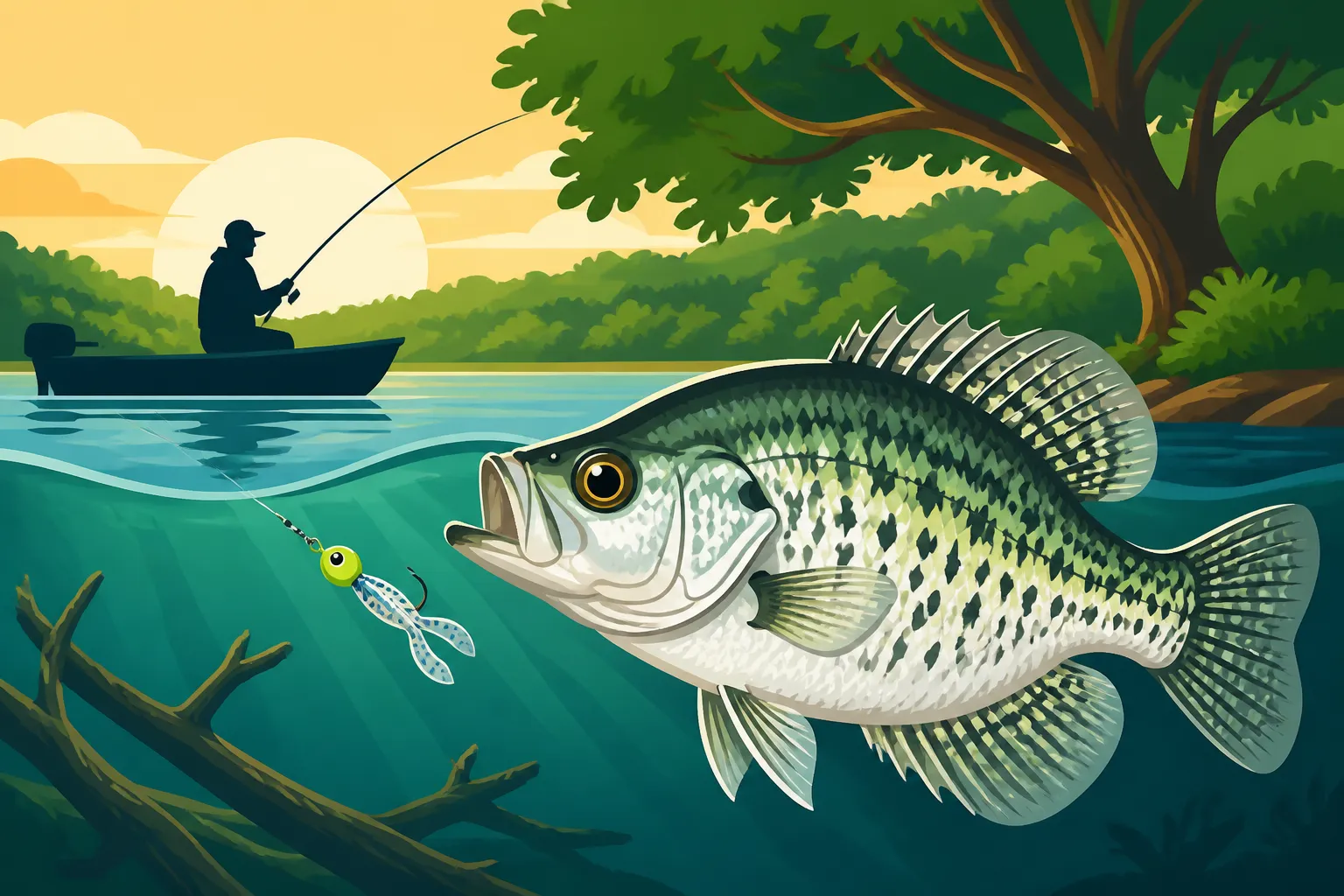
When you're pulling crappie from Branched Oak, you're primarily targeting two species: black crappie and white crappie. While they share similar habits and can often be found together, there are subtle differences in their preferences and appearances that savvy anglers might notice. White crappie tend to be more tolerant of murky or turbid water and are often found in the shallower, silty back bays or areas with less cover. They typically have a more elongated body and distinct vertical bars on their sides. Black crappie, on the other hand, usually prefer clearer water and are more tightly associated with heavy cover, like dense brush piles or standing timber. They have a rounder, deeper body shape and more irregular, scattered dark spots rather than distinct bars. Both species are excellent table fare and put up a fun fight on light tackle.
Sometimes, anglers might even confuse a crappie with a rock bass, but there are clear differences. The key is to look at the dorsal fin. Crappie have a dorsal fin with 5-7 spines, whereas rock bass have a much larger dorsal fin with 10-12 spines. While both species are present, the crappie are definitely the star attraction at Branched Oak. Understanding which species you're catching can sometimes help you refine your location and technique. If you're consistently catching white crappie in a particular area, it might signal that the water is a bit more turbid or less structured than where you'd find black crappie, allowing you to adjust your approach for better results.
Mastering Seasonal Crappie Fishing Strategies
Crappie behavior is heavily dictated by the seasons, water temperature, and spawning cycles. What works in spring won't necessarily work in summer, and vice-versa. To consistently catch crappie at Branched Oak Lake, you need to adapt your strategies throughout the year.
Spring Spawning Frenzy
Spring is arguably the most anticipated time for crappie anglers at Branched Oak. As ice recedes and water temperatures begin to climb, crappie, especially the females, start migrating towards shallower water, typically when temperatures hit the low 50s Fahrenheit. The main event, the spawn, usually kicks off when water temperatures reach the upper 50s to low 60s. During this time, they'll seek out protected coves, flooded timber, brush piles, and shallow flats with firm bottoms to create their nests. This is when crappie are most accessible to shore anglers and those in smaller boats. You'll often find them in water as shallow as 1-5 feet, sometimes even less. The frustration here is that everyone knows this, so these popular spots can get crowded. However, the lake is big enough that you can still find quieter pockets.
Focus your efforts on the northern and western coves of the lake, as these tend to warm up faster due to more direct sunlight exposure. Look for visible cover such as submerged cedar trees, cattail edges, or docks. Small jigs (1/32 to 1/16 ounce) tipped with a soft plastic grub (like a Bobby Garland Baby Shad or a small tube jig) are incredibly effective, especially in bright colors like chartreuse, pink, or white. Fishing them under a fixed or adjustable bobber allows you to keep your bait in the strike zone longer. Live minnows, fished under a bobber or on a small jig head, are also deadly. Remember, during the actual spawn, crappie can be very aggressive defending their nests, but after the spawn, they may become a bit more lethargic. You might need to slow down your presentation or downsize your baits slightly in the post-spawn period. This is often the best time to bring the kids out, as the action can be fast and furious, providing a great opportunity to teach a kid to fish in Nebraska.
Summer Deepwater Tactics
Once the scorching Nebraska summer heat sets in and water temperatures rise into the 70s and 80s, crappie retreat from the shallows and move to deeper, cooler waters. They'll typically suspend over submerged brush piles, timber, humps, and the edges of old creek channels in 10-25 feet of water, often relating to the thermocline if one forms. This transition often frustrates anglers who were crushing them in the spring, as their old spots go cold. The key to summer crappie fishing at Branched Oak is to think vertically and target structure. This is where a good fish finder becomes invaluable. You'll want to locate these submerged features and then present your baits directly to the suspended fish.
Spider rigging or slow trolling with multiple rods is a highly effective technique during summer. You can cover more water and present various baits at different depths until you find what the crappie are responding to. Small crankbaits, jigs, or live minnows rigged on a crappie rig (two hooks with weights) are excellent choices. Another productive method is vertical jigging directly over brush piles or timber. Drop a 1/8 to 1/4 ounce jig, tipped with a soft plastic or a minnow, right into the cover and work it slowly. Pay close attention to your electronics, looking for baitfish schools and arcs of crappie holding tight to structure. Often, they'll be just above the structure, waiting for an easy meal. If you're struggling to locate specific spots, consider booking a trip with a local guide on FishingBooker; they often have extensive knowledge of these submerged summer hotspots.
Fall Turnover and Feeding Patterns
As autumn arrives and water temperatures begin to drop, Branched Oak Lake undergoes a natural phenomenon called "fall turnover." This occurs when the cooler surface water sinks, mixing with the deeper, warmer water, equalizing the temperature and oxygen levels throughout the water column. This can sometimes make fishing challenging for a week or two, as fish scatter. However, once the lake stabilizes, crappie go on a serious feeding binge in preparation for winter. They become incredibly active, often suspending at mid-range depths (8-15 feet) or moving back into shallower bays during stable weather. This time of year offers some of the most consistent and enjoyable crappie fishing.
During the fall, crappie will aggressively hit a variety of baits. Jigs and minnows remain staples, but don't shy away from small crankbaits or even blade baits, which can mimic the baitfish they're actively pursuing. Look for crappie on the edges of main lake points, submerged humps, and brush piles. Trolling or drifting with jigs and minnows is a great way to cover water and find active schools. The colors of soft plastics can become more natural, mirroring the forage, such as greens, browns, and natural minnow patterns. It's a fantastic time for a day trip, enjoying the cooler weather and vibrant fall foliage while reeling in plenty of crappie.
Winter Ice Fishing for Crappie
When winter truly sets in and Branched Oak Lake freezes over, it transforms into a popular ice fishing destination. Crappie can be found in deeper areas, often suspending off the bottom or relating to prominent underwater structure like creek channels, humps, and large brush piles. The good news is that they tend to school up tightly in winter, so once you find them, you can often catch quite a few. However, finding that initial school can be the biggest challenge, especially with the vastness of Branched Oak. Many anglers focus their efforts on the main lake basin near the dam or deeper sections of the larger coves.
To succeed at ice fishing for crappie, specialized gear is key. A portable ice fishing shelter for Nebraska winters can make a huge difference in comfort, especially on windy days. Small jigs (1/32 to 1/8 ounce) tipped with a wax worm, a small minnow, or a soft plastic micro-grub are standard. Colors like glow-in-the-dark, chartreuse, or even subtle natural patterns can be effective. A sensitive ice fishing rod, a quality flasher or fish finder, and an ice auger are essential. Drill multiple holes, and use your electronics to scan for schools of fish before settling in. Crappie in winter can be finicky; sometimes a slight twitch of the wrist is all it takes to entice a bite. Patience and portability are your best friends during the hardwater season. Be sure to check ice thickness needs to be to fish safely in Nebraska before heading out!
Essential Gear and Tackle for Branched Oak Crappie
You don't need to break the bank to catch crappie, but having the right tools for the job can significantly improve your experience and success rate. From the rod in your hand to the lures in your tackle box, each piece plays a role in putting more crappie on the stringer at Branched Oak Lake.
Rods, Reels, and Line Choices
For crappie fishing, a lightweight, sensitive setup is paramount. You want to feel those subtle crappie bites, which can sometimes be nothing more than a slight tap or the line going slack.
- Rods: A 6 to 7-foot light to medium-light action spinning rod is ideal for most crappie applications. The softer tip allows for easy casting of light jigs and provides excellent sensitivity, while the backbone helps you handle larger slab crappie or even incidental catches like bass or catfish. Some anglers prefer longer rods (up to 10-14 feet) for spider rigging or for reaching out from the bank, like when targeting spots from the shoreline fishing access at Branched Oak Lake. The extra length gives you more control over your presentation and can help keep multiple lines separated.
- Reels: Pair your rod with a small, lightweight spinning reel (500 to 1000 size). These reels are designed for light lines and offer smooth drag systems, which are crucial when fighting a good-sized crappie on thin line.
- Line: For main line, 4 to 6-pound monofilament or fluorocarbon is generally sufficient. Monofilament offers good knot strength and stretch, acting as a shock absorber. Fluorocarbon is less visible underwater and has less stretch, providing more direct feel. Many experienced crappie anglers opt for a braided mainline (6-10 lb test) for its incredible sensitivity and strength, then tie on a 4 to 6-pound fluorocarbon leader (2-3 feet long). This combination gives you the best of both worlds: extreme sensitivity to detect subtle bites and invisibility where it matters most, right at the lure.
When considering your overall setup, remember that crappie fishing is often about finesse. A balanced rod and reel combo reduces fatigue and enhances your ability to detect those light bites that make all the difference.
Baits, Lures, and Jig Selection
The world of crappie baits and lures is vast, but keeping it simple and versatile will cover most scenarios at Branched Oak.
- Live Bait: Minnows are the undisputed king of live bait for crappie. Fathead minnows are readily available at local bait shops and are highly effective. You can rig them through the lips or just behind the dorsal fin on a small hook (size 4 to 8) under a bobber or on a crappie rig. During certain times, particularly in colder water, live bait can often outperform artificials.
- Soft Plastic Jigs: Small soft plastic grubs, tubes, and "shad" style bodies (like the aforementioned Bobby Garland Baby Shad, Crappie Buster Shad, or Panfish Assassin) are incredibly popular and effective. They come in a dizzying array of colors, but chartreuse, white, black/chartreuse, pink, and various natural minnow patterns are consistently productive. Sizes range from 1 inch to 2.5 inches.
- Jig Heads: Pair your soft plastics with appropriately sized jig heads. For shallow water and slow retrieves, 1/32 or 1/16 ounce jig heads are perfect. In deeper water or when there's current, you might need to go up to 1/8 or even 1/4 ounce to get down to the fish quickly. A variety of colors, especially those with painted eyes, can also make a difference.
- Crankbaits and Blade Baits: While not as common for crappie, small diving crankbaits (like Bandit 200 series or Rapala Shad Raps) can be very effective when crappie are aggressive or suspending at a consistent depth during summer and fall. Blade baits (like Johnson ThinFisher) can also trigger reaction strikes when vertically jigged. These are more often used when trolling or covering large areas to find active schools.
Having a diverse selection of jig colors and styles, along with a good supply of minnows, will prepare you for almost any condition you encounter at Branched Oak. The best jig color for Nebraska crappie can vary day to day, so having options is key.
Electronics and Boat Setup
While shore fishing is popular, a boat dramatically expands your access and effectiveness at Branched Oak.
- Boat: From a small Jon boat to a full-sized bass boat, nearly any watercraft can be adapted for crappie fishing. Jon boats are often a good choice for smaller budgets or for navigating shallower coves. Larger boats offer more comfort and stability on the main lake, especially if the wind picks up. Remember, if you're bringing a boat, make sure to understand Nebraska boat registration and equipment requirements.
- Trolling Motor: A bow-mounted electric trolling motor with GPS capabilities (like spot-lock) is a game-changer for crappie fishing. It allows you to precisely control your boat's position, hold over brush piles, or slowly troll contours, freeing your hands for fishing.
- Fish Finder/Sonar: This is perhaps the most critical piece of equipment for boat anglers targeting crappie. A quality fish finder with down imaging and side imaging (like those from Humminbird or Lowrance) will allow you to locate submerged brush piles, standing timber, and even schools of crappie and baitfish. Being able to see the depth, bottom contours, and fish activity is invaluable. You can easily spot a school of crappie suspending near a brush pile, allowing you to drop your bait right on their heads. This takes the guesswork out of finding productive water and makes your time on the lake far more efficient.
Investing in good electronics might seem like a luxury, but for serious crappie anglers, it's an essential tool that pays dividends in increased catches. Even a basic fish finder for a small boat can provide significant advantages over fishing blind.
Locating Crappie Hotspots on Branched Oak Lake
Finding crappie in a large reservoir like Branched Oak can feel like searching for a needle in a haystack if you don't know what to look for. Crappie are creatures of habit and structure, so understanding their preferred haunts is crucial.
Targeting Submerged Structure
The secret to crappie fishing at Branched Oak often lies beneath the surface, hidden in plain sight. Submerged structure acts as a magnet for crappie, offering shelter, ambush points for feeding, and spawning grounds. This can include natural features, but also artificial ones.
- Flooded Timber and Brush Piles: These are quintessential crappie cover. When Branched Oak was impounded, many trees were left standing, and countless brush piles have been intentionally sunk over the years by anglers and the Nebraska Game and Parks Commission. These dense areas provide perfect homes for crappie. Look for these near old creek channels, points, and sudden depth changes. If you're seeing a lot of "Christmas tree" looking structures on your sonar, you're in the right spot! Anglers who dedicate time to mapping these out, perhaps even with a guide service found on FishingBooker, often have the most consistent success.
- Rock Piles and Riprap: The rocky banks of the dam, causeways, and natural rock outcroppings can hold crappie, especially during cooler water periods. These rocks absorb heat, and their irregular surfaces provide small pockets for minnows and insects, which in turn attract crappie. When you're fishing these areas, cast your jig parallel to the riprap, letting it sink along the face of the rocks.
- Artificial Fish Habitat: The Nebraska Game and Parks Commission and local angling groups have deployed various types of artificial habitat in Branched Oak. These can include PVC structures, discarded Christmas trees, or specially designed fish attractors. These are often marked on lake maps or can be found using your fish finder. These habitats are designed to concentrate fish, so they are always worth exploring.
Don't be afraid to probe new areas with your electronics. Even subtle changes in bottom composition, like a patch of gravel among mud, can attract crappie seeking spawning beds or feeding opportunities.
Understanding Depth and Cover
Crappie are masters of relating to specific depths and types of cover, and these preferences change with the seasons and even throughout the day. What might be a hotspot in the morning might be barren by afternoon due to changing light conditions or boat traffic.
- Seasonal Depth Changes: As discussed earlier, spring means shallow water (1-5 feet), summer pushes them deeper (10-25 feet, often suspended), fall finds them at mid-depths (8-15 feet), and winter sees them often in the deepest parts of the lake, still relating to structure, but potentially suspended. Your ability to adjust your fishing depth is critical. Many anglers fail because they stick to one depth zone all year, rather than adapting to the fish's movements.
- Cover Density: Crappie often prefer dense cover. A lone stump might hold a fish or two, but a massive brush pile or a cluster of standing timber will likely hold a whole school. The denser the cover, the more secure crappie feel, and the more likely they are to congregate there. This is why when you do find a good brush pile, you can often pull multiple fish from it. However, fishing dense cover also means getting snagged more often, so be prepared to lose a few jigs. Using weedless jigs or techniques like "pitching" a jig gently into openings can help mitigate this.
- Shade and Light: Crappie have large eyes and are sensitive to bright light. They often position themselves in the shade of structures or deeper water during sunny days. On cloudy days, they might roam more freely or suspend higher in the water column. During evening or early morning, they might move into shallower areas to feed under low light conditions. Observing light penetration and shadows can give you clues as to where crappie might be positioned relative to cover.
Thinking about depth and cover dynamically, rather than as static variables, will greatly enhance your ability to pinpoint crappie at Branched Oak Lake.
Utilizing Maps and Sonar
Modern technology has revolutionized crappie fishing, making it easier than ever to locate productive spots. However, it's not enough to just have the gear; you need to know how to use it.
- Lake Maps: High-definition contour maps (available on many GPS units or online) are your best friend. They show depth changes, old creek channels, humps, and points – all prime crappie real estate. Before you even launch your boat, spend time studying the map, identifying potential areas based on the time of year and crappie behavior. Look for sudden drops, bottlenecks in creek channels, or large flats adjacent to deep water. These maps often show subtle features that are hard to discern visually. The Nebraska Fishing Regulations Explained booklet also often includes basic maps or points you in the right direction.
- Side Imaging and Down Imaging Sonar: These technologies are invaluable for crappie fishing.
- Down Imaging provides a photographic-like view directly beneath your boat, making it easy to distinguish a brush pile from a rock pile, and even see individual fish relating to structure.
- Side Imaging allows you to scan wide swaths of water to either side of your boat (up to 200 feet or more), revealing submerged cover and schools of fish that you might otherwise miss. You can slowly cruise an area, marking brush piles and fish schools as waypoints on your GPS for later fishing. This is incredibly efficient for covering large areas of Branched Oak.
- Traditional 2D Sonar: Still useful for showing fish arches and bait schools in the water column directly below your boat, especially when actively fishing a spot. Many fish finders combine all three technologies.
Learning to interpret what you see on your screen takes practice. Those blobs, lines, and arches aren't just random static; they're telling you a story about the underwater world. Pay attention to how crappie appear on your screen – often as distinct arches or as "clouds" of smaller fish when tightly schooled. Once you find a promising spot with your sonar, drop a waypoint, then position your boat to present your bait effectively.
Proven Techniques for Catching More Crappie
Knowing where the crappie are is half the battle; the other half is knowing how to make them bite. Crappie can be finicky, so having a repertoire of techniques will serve you well at Branched Oak.
Jigging and Vertical Presentation
Jigging is perhaps the most fundamental and versatile technique for crappie fishing, particularly when targeting schools around vertical structure or suspended fish.
- Vertical Jigging: This technique is deadly when you've pinpointed crappie on your fish finder, whether they're holding tight to a brush pile or suspended in open water. Position your boat directly over the fish, drop a small jig (tipped with a minnow or soft plastic) down to their depth, and gently lift and drop your rod tip. The goal is to make the jig dance enticingly without pulling it away from the fish. Sometimes a subtle quiver is all it takes; other times, a more aggressive snap might trigger a bite. The "How to Jig for Walleye in Nebraska" article might give you some transferable insights on jigging presentation, although crappie generally prefer a much more subtle action.
- Pitching and Skipping: When crappie are hiding deep within dense cover, casting directly into it can lead to snags. Pitching involves making a short, accurate cast underhand, allowing the jig to enter the cover with minimal splash. Skipping, often done with a spinning reel, involves bouncing the jig across the water's surface to get it under docks, overhanging trees, or deep into submerged brush where crappie feel safe. This requires practice but can unlock fish that other anglers can't reach.
- Spider Rigging (Long-lining): While often used for trolling, spider rigging can also be a form of vertical presentation. Using multiple rods extended out from the boat, anglers slowly move over a brush pile or contour, allowing jigs or minnows to drift vertically through the strike zone. This covers a narrow path but presents baits at varying depths, increasing your chances of intercepting a school.
The key to successful jigging is finesse and presentation. Experiment with different jig weights, colors, and retrieval speeds until you find what the crappie want on any given day.
Trolling and Drifting Methods
When crappie are scattered or you're trying to locate schools in a large area of Branched Oak Lake, trolling and drifting are incredibly effective ways to cover water.
- Slow Trolling with Jigs/Minnows: This involves moving your boat slowly (0.5 to 1.5 mph) while dragging jigs or minnows behind it. You can use multiple rods, setting baits at different depths and distances from the boat. This is particularly effective during summer and fall when crappie are often suspended. You can troll along creek channels, over submerged humps, or follow contour lines. Experiment with adding a small split shot or a light bottom bouncer to help your bait maintain depth.
- Trolling with Crankbaits: During periods of aggressive feeding, particularly in summer and fall, small crankbaits can be highly effective. These lures dive to specific depths, making it easier to target suspended fish. Match the crankbait's diving depth to where you're seeing crappie on your fish finder. Colors that mimic baitfish or bright, attention-grabbing colors often work best. The vibrations and erratic action of a crankbait can draw crappie in from a distance.
- Drifting with Wind/Current: Sometimes, Mother Nature does the work for you. If there's a gentle breeze or a slight current, you can let your boat drift naturally, presenting your baits as you go. This is a very natural presentation and can be highly effective, especially when crappie are pressured or wary. Use a drift sock or sea anchor to control your speed if the wind is too strong. This technique allows you to remain hands-on, actively working your rod and feeling for bites as you cover ground.
The advantage of trolling and drifting is efficiency. You're covering more water in less time, increasing your odds of finding active crappie schools. Once you get a bite, you can then focus your efforts more intensively on that specific area, perhaps switching to vertical jigging.
Slip Bobber and Live Bait Rigs
For a more relaxed approach, or when crappie are particularly finicky, slip bobber and live bait rigs are classic crappie catchers.
- Slip Bobber Rig: A slip bobber is a float that slides freely up and down your fishing line, allowing you to set your bait at any desired depth, even in very deep water. This is incredibly useful when crappie are suspended. You simply slide a bobber stop up your line to the desired depth, cast out, and let your bait (typically a minnow or small jig) sink to that exact level. The bobber then holds it there, suspending it perfectly in the strike zone. This rig is fantastic for shore anglers or when fishing around heavy cover where you want to avoid snags on the bottom. It allows for precise depth control and a very natural presentation.
- Standard Live Bait Rigs: A simple hook (size 4-8) with a minnow, a small split shot or two, and a bobber (fixed or slip) is often all you need. You can vary the amount of weight to control the sink rate and how quickly the minnow gets to the desired depth. This setup is particularly effective in spring when crappie are shallow or when fishing around docks and brush piles. The natural movement of a live minnow is often irresistible to crappie, especially when they're not actively chasing lures.
A useful table comparing these techniques:
| Technique | Best Season(s) | Preferred Depth | Primary Bait/Lure | Advantages | Considerations |
|---|---|---|---|---|---|
| Vertical Jigging | All, esp. Summer, Winter | Varied, structure-focused | Small jigs (plastic/minnow) | Precise, good for dense cover/suspended fish | Requires good electronics, slower coverage |
| Trolling (Jigs/Minnows) | Summer, Fall | Mid-deep (suspended) | Jigs (plastic/minnow), small crankbaits | Covers large areas, finds scattered fish | Requires boat and trolling motor, less precise |
| Slip Bobber | Spring, Fall, Summer (deep) | Varied | Minnows, small jigs | Precise depth control, good for beginners | Can be slow, difficult in heavy wind |
| Pitching/Skipping Jigs | Spring, Fall | Shallow-mid (cover) | Small jigs (plastic) | Accesses hard-to-reach cover | Requires practice, potential for snags |
Regardless of your chosen method, always pay attention to the details: the subtle twitch of your line, the way your bobber behaves, or how your lure feels on the retrieve. These small clues can tell you a lot about what the crappie are doing and how to improve your approach.
Regulations and Responsible Angling at Branched Oak
Part of being a responsible angler at Branched Oak Lake, and anywhere in Nebraska, is knowing and following the rules. This ensures the fishery remains healthy and enjoyable for everyone for years to come.
Nebraska Crappie Bag and Length Limits
The Nebraska Game and Parks Commission sets specific regulations to manage fish populations. For crappie at Branched Oak Lake, it's crucial to be aware of the daily bag limits and any length restrictions that may be in place. While regulations can change, typically the statewide daily bag limit for crappie is 15, and there might be a minimum length limit in some specific waters. However, sometimes there are special regulations for certain lakes, like Branched Oak. For instance, specific lakes might have a 10-inch minimum length limit for crappie or a reduced daily bag limit to help grow bigger fish. It's always your responsibility to check the most current Nebraska Fishing Regulations Explained booklet or the Nebraska Game and Parks website before you head out. These details can change year to year, so don't rely on old information. Getting caught with over the limit or undersized fish can result in a fine for fishing without a license in Nebraska or other penalties, which no one wants.
Understanding the why behind these limits is also important. Length limits help protect younger fish, allowing them to grow to spawning size and contribute to the population before being harvested. Bag limits prevent overharvesting, ensuring there are enough fish left in the lake to sustain a healthy crappie fishery for future generations. When you see anglers diligently measuring their fish or releasing smaller ones, they're not just following the rules; they're contributing to the long-term health of Branched Oak Lake.
Practicing Catch and Release Safely
While it's certainly rewarding to take home a mess of crappie for a delicious meal, practicing responsible catch and release is vital, especially for smaller fish or if you've already met your bag limit. Safely releasing fish ensures that the population thrives and that those fish can grow larger and provide future angling opportunities.
Here are some tips for safely releasing crappie:
- Handle Fish Gently: Avoid squeezing fish, especially around their belly. Use wet hands to minimize the removal of their protective slime coat.
- Minimize Air Exposure: Keep the fish in the water as much as possible. If you must remove it for a quick photo, do so quickly and return it to the water immediately. Fish cannot breathe air, and prolonged exposure can cause severe stress and damage.
- Use the Right Tools: A pair of needle-nose pliers or a hook remover can make it easier to extract hooks quickly and cleanly, especially if the fish has swallowed the bait. If the hook is deeply set and difficult to remove without causing significant damage, it's often better to cut the line as close to the hook as possible; the hook will usually rust out over time.
- Revive If Necessary: If a fish appears lethargic after release, hold it gently upright in the water, facing into any current, and move it back and forth to force water over its gills until it swims away under its own power. This is particularly important for fish caught from deeper water, which might suffer from barotrauma (a condition caused by rapid pressure changes).
By following these simple practices, you contribute directly to the sustainability of the crappie fishery at Branched Oak Lake. It's about respecting the resource and ensuring that everyone can enjoy the thrill of catching these fantastic panfish for years to come.
Disclaimer
The information provided in this guide is for general informational purposes only and is subject to change. Fishing regulations, conditions, and fish behavior can vary. Always consult the official Nebraska Game and Parks Commission regulations prior to fishing and exercise caution and good judgment when on the water. Fishing is an inherently risky activity, and personal safety is your responsibility.