Loup River Fishing
Navigating the diverse and often overlooked waters of Nebraska's Loup River system can be a real head-scratcher for many anglers. Unlike the more popular reservoirs, this dynamic river presents unique challenges with its fluctuating flows, varied bottom structures, and sometimes tricky access. This comprehensive guide is designed to cut through the confusion, offering practical, in-depth advice on where to fish, what species to target, and the most effective techniques to help you unlock the fantastic fishing opportunities that the Loup River truly offers.
Understanding the Loup River System
The Loup River system is a fascinating network of waterways in central Nebraska, comprising the North, Middle, and South Loup Rivers, which eventually converge to form the mainstem Loup River before joining the Platte River. Each fork, and the main river itself, offers distinct characteristics that significantly influence fishing conditions and the types of fish you'll encounter. It’s not just one river; it’s a whole family of rivers, each with its own personality, and understanding these nuances is your first step to success.
Navigating the North, Middle, and South Forks
The North, Middle, and South Loup Rivers each have their own charm and challenges. The North Loup, often clearer and with a more defined channel in its upper stretches, can be excellent for smallmouth bass and channel catfish. Its narrower confines sometimes make it more approachable for wading, especially during lower flows. You'll find sections that meander through pastures and brush, providing plenty of cover.
The Middle Loup, historically known for its strong currents and sand-bottomed stretches, tends to be wider and shallower in many areas. While it holds excellent numbers of channel catfish, flathead catfish often prefer the deeper holes and log jams found in its bends. Anglers often face more limited public access on the Middle Loup, making local knowledge or a good map crucial for finding prime spots. The South Loup, generally the smallest of the three, is often characterized by its intimate setting and can be quite productive for channel catfish and occasionally some panfish in slower backwaters. It's often overlooked, which can be an advantage for those seeking solitude.
Mainstem Loup River Characteristics
Once these forks converge near Columbus, they form the larger mainstem Loup River. This section typically carries more water, is wider, and has a more pronounced current, especially after rain events. The mainstem Loup is a powerhouse for catfish, particularly channel catfish, which are abundant throughout. Flathead catfish also grow to impressive sizes here, lurking in the deeper scour holes, undercut banks, and around large timber that collects in the river's bends.
The mainstem’s bottom composition can vary from sand and gravel to areas with more silt, especially in slower pools. Understanding these transitions is key to locating fish. During periods of stable flow, the river can offer incredible fishing, but it's equally prone to rapid changes in water level and clarity, which can affect fish behavior and make fishing tricky. Always check local river gauges before heading out, as conditions can change quickly, impacting safety and fishing prospects.
Flow and Water Level Considerations
The Loup River system is incredibly dynamic when it comes to water levels, which are heavily influenced by rainfall and snowmelt. High water, especially in spring, can make the river muddy and fast, scattering fish and making them harder to find. However, high water can also push baitfish into calmer eddies and backwaters, creating feeding opportunities for predatory species. Conversely, low water periods, common in late summer and fall, can concentrate fish in deeper pools and runs, making them easier targets but also more susceptible to angling pressure.
Monitoring stream gauges is paramount for successful Loup River fishing. Websites like the USGS often provide real-time data for various points along the Loup. A dropping and clearing river after a high-water event can be phenomenal for catfish and bass. A steadily rising river might signify challenging conditions, but also a chance to target fish moving into newly flooded cover. Always prioritize safety; fast, high water can be dangerous for wading and boating.
Prime Species to Target
The Loup River system is a treasure trove for several popular game fish, offering exciting opportunities for anglers who know what to look for. While the river is perhaps most famous for its robust catfish population, it also harbors spirited smallmouth bass and provides habitat for other interesting species. Understanding the habits and preferred habitats of these fish will greatly improve your catch rates.
Chasing Channel and Flathead Catfish
When you talk about fishing the Loup River, catfish are almost certainly the first species that come to mind. Both channel catfish and flathead catfish thrive in these waters, offering distinct challenges and rewards. Channel catfish are incredibly abundant and aggressive, found throughout the entire system. They prefer areas with moderate current, often holding near structure like log jams, undercut banks, or deeper scour holes. You’ll find them actively feeding on a variety of baits, from cut bait and stink bait to worms and prepared baits. Look for them in areas where current brings food to them, or in calmer eddies adjacent to faster flows. A 2-3 paragraph breakdown of Nebraska Channel Catfish Daily Limit might be helpful to review.
Flathead catfish, on the other hand, are a different beast entirely. These solitary predators prefer live bait and will often station themselves in the deepest, snaggiest cover they can find – sunken trees, large rock piles, and deep undercut banks are prime real estate. They are less tolerant of swift current and will seek out slower, deeper pools or eddies where they can ambush prey. Targeting flatheads often means using heavier gear, larger live baits like bluegill or shad, and being prepared for a serious fight. Night fishing is particularly effective for flatheads, as they become more active hunters under the cover of darkness. Many experienced anglers find success by using a sturdy rod setup, like the recommendations in Best Rod Setup for Nebraska Catfish, to handle these powerful fish.
Smallmouth Bass in the Currents
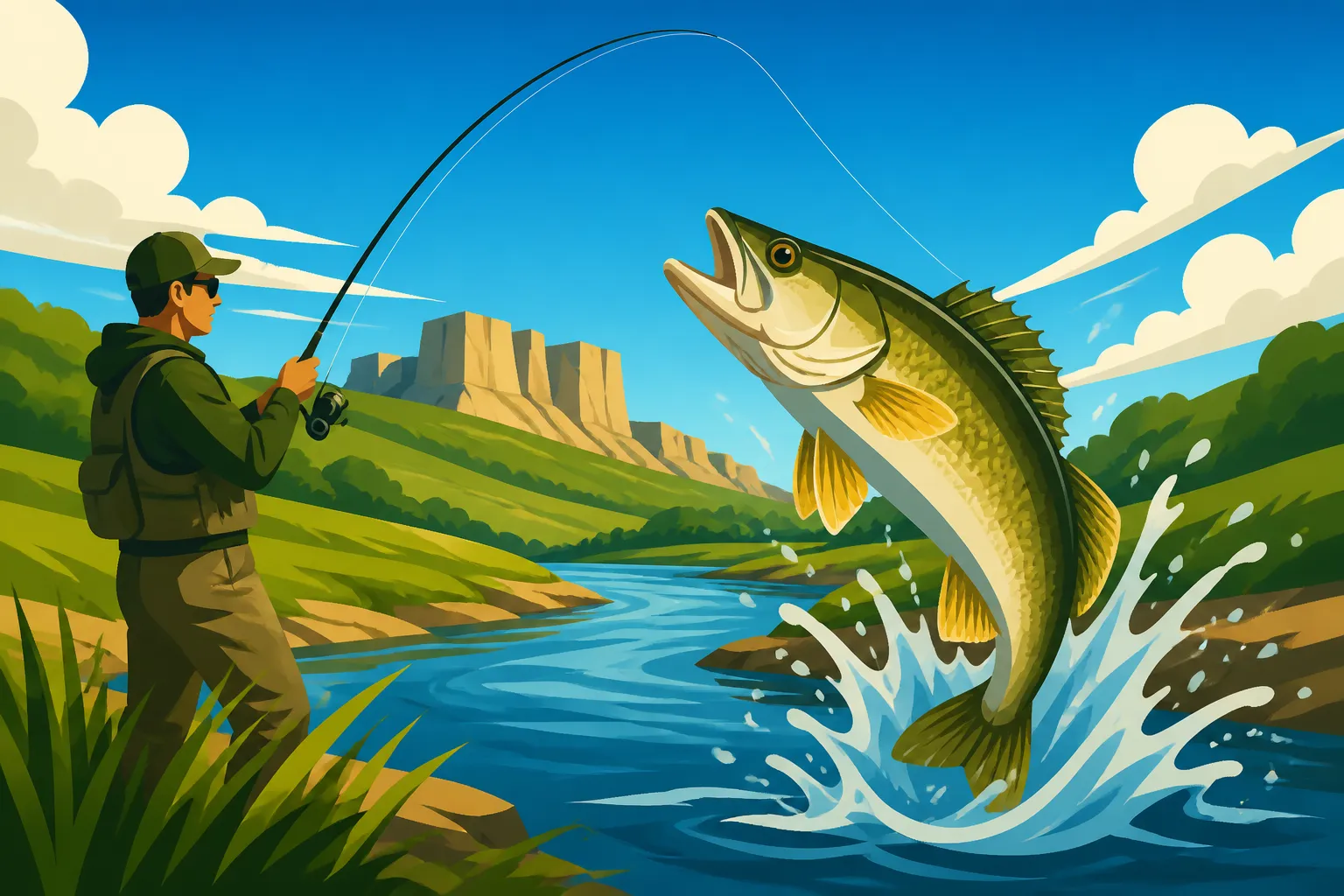
While not as widespread as their largemouth cousins, smallmouth bass offer thrilling action in certain sections of the Loup River system, particularly in areas with clearer water, rocky bottoms, and a good current. The North Loup River, with its gravel and rock features, is often a hotspot for smallmouth. These bronze-backed fighters are ambush predators, often hiding behind rocks, logs, or current breaks, waiting for an unsuspecting meal to drift by.
Smallmouth bass are incredibly fun to catch on light tackle, offering acrobatic jumps and powerful runs. They readily strike a variety of lures, including small crankbaits, spinnerbaits, tube jigs, and soft plastics that mimic crawfish or baitfish. Early mornings and evenings are often the most productive times, especially during warmer months. Look for areas with a mix of current, structure, and depth changes. Understanding Nebraska Smallmouth Bass Habitat is key to locating these elusive fish, as they favor specific conditions that aren't uniformly present throughout the entire Loup system.
Occasional Panfish and Other Species
Beyond the main stars, the Loup River can also provide opportunities for other species, especially in its calmer stretches and backwater eddies. Various panfish, such as bluegill and sunfish, can be found, particularly in oxbows or slow-moving side channels that mimic pond-like conditions. While not the primary target for most river anglers, they can provide fun action, especially for families or beginners. Simple baits like worms under a bobber work wonders for these smaller species.
Occasionally, anglers might also encounter common carp, which are abundant in the Loup and can offer a surprisingly strong fight on appropriate tackle. These bottom feeders are often overlooked but can be a blast to catch, especially on corn or dough balls. Northern pike, though less common, might be present in some of the deeper, slower pools, particularly in the lower mainstem Loup, having moved in from connected waters. While not a primary fishery, these "bonus" catches can add an exciting element to a day on the river.
Best Fishing Techniques for the Loup
The diverse nature of the Loup River demands a variety of fishing techniques. What works well in a calm, deep pool might be useless in a fast, shallow riffle. Mastering a few key methods will not only increase your success but also enhance your overall appreciation for river fishing. It’s all about adapting to what the river is giving you on any given day.
Successful Wading and Bank Fishing Strategies
Wading and bank fishing are arguably the most accessible and intimate ways to experience the Loup River. For bank anglers, identifying prime locations is crucial. Look for outside bends in the river where the current has scoured out deeper holes and undercut banks – these are natural hiding spots for catfish and bass. Areas downstream of log jams or bridge pilings also create current breaks and eddies, concentrating fish. Using a sturdy rod holder and multiple lines can be effective when allowed by Nebraska Rules on Number of Fishing Poles Per Angler, especially when targeting catfish with various baits.
Wading offers the advantage of covering more water and reaching spots inaccessible from the bank. However, safety is paramount. Always use a wading staff, wear appropriate footwear with good grip, and never wade alone or in unfamiliar, swift currents. Focus on slowly working upstream or downstream, casting to current seams, eddies, and submerged structure. Polarized sunglasses are invaluable for spotting subtle depth changes and hidden cover. Learning to read the river current and identifying fish-holding lies, similar to what you'd find in Platte River Wading Access Points, will significantly boost your success.
Effective Float Fishing and Kayak Approaches
Float fishing, whether by canoe, kayak, or small jon boat, opens up vast stretches of the Loup River that are difficult or impossible to reach on foot. This method allows you to systematically present baits and lures to various types of structure as you drift downstream. For catfish, drifting cut bait or live worms through deeper runs and around wood cover can be incredibly effective. For smallmouth bass, casting spinnerbaits, crankbaits, or jigs towards current breaks and rocky banks as you float by is a productive strategy.
Kayaks have become increasingly popular for river fishing due to their maneuverability and ability to navigate shallower water. They offer a stealthy approach that can get you right into the fish. When planning a float trip, always arrange for a shuttle at your takeout point and be acutely aware of river hazards like log jams, shallow riffles, and submerged rocks. Check out Nebraska Kayak Fishing Techniques for more detailed advice on getting started with paddlecraft on rivers. Many anglers even consult resources like FishingBooker to find local guides who can provide shuttle services or offer guided float trips on lesser-known river sections.
Trotlining and Setline Regulations
For anglers focused on harvesting a good number of catfish, trotlining and setlines can be very productive on the Loup River, but they come with strict regulations you must follow. A trotline consists of a main line with multiple baited hooks attached at intervals, anchored across a river or in a large pool. Setlines are similar but typically involve a single line anchored to the bank or a fixed object. These methods allow you to fish multiple baits simultaneously, increasing your chances, especially for channel and flathead catfish overnight.
Before deploying any trotlines or setlines, it is absolutely essential to familiarize yourself with Nebraska Trotline Fishing Rules. There are specific requirements regarding length, number of hooks, tagging with your name and permit number, and how often lines must be checked. Neglecting these rules can result in hefty fines and equipment confiscation. Choose locations with good current flow but enough depth to ensure fish aren't easily spooked or exposed. Always use strong, sharp hooks and durable line, as large flatheads can put up an incredible fight and quickly break weaker tackle.
Key Access Points and Hotspots
One of the biggest hurdles for new anglers on the Loup River is simply knowing where to get in and out, and where the most productive water lies. The river flows through a mix of private and public land, so understanding access points is crucial. While I can’t list every bend and hole, I can point you towards general areas and strategies for finding your own honey holes.
Public Access Near St. Paul and Fullerton
Areas around towns like St. Paul and Fullerton, located along the mainstem Loup River, often offer some of the most consistent public access. In St. Paul, you'll find various bridge crossings and county roads that provide entry points, sometimes with designated public access sites or adjacent public lands. These areas can be excellent for bank fishing, particularly for channel catfish, especially in the deeper runs and eddies near bridge structures. Local bait shops in these towns are invaluable resources; they often have the most up-to-date information on current river conditions and which spots are producing.
Fullerton, a bit further downstream, also provides good public access. Here, the river starts to broaden, offering a mix of wider runs and deeper holes. These sections are prime for both channel and flathead catfish. Kayak and canoe launches might be available at certain points, allowing anglers to float fish downstream. Always check with local officials or the Nebraska Game and Parks Commission website for definitive public access maps, as private landowners’ willingness to allow access can change. When the river levels are moderate, these spots can be very productive.
Bridge Crossings and Underexplored Sections
Bridge crossings are almost universally good starting points for river fishing. They often provide immediate bank access, and the structure itself creates current breaks, scour holes, and shade that attract fish. On the Loup, seek out bridges along state highways and county roads. Even if there isn't a designated parking area, there's often enough shoulder space to park safely and walk down to the water. Remember to respect private property boundaries; if there’s a fence or "No Trespassing" sign, find another spot.
Beyond the well-known bridge areas, the Loup River system has countless underexplored sections, especially on the North, Middle, and South Forks. These often require a bit more effort to reach, perhaps a longer walk or permission from landowners, but they can yield incredible results for anglers seeking solitude and unpressured fish. Utilize satellite maps (like Google Earth) to identify potential access points, remote bends, and promising stretches of river that might hold big fish away from the crowds. Sometimes, reaching out to landowners directly can grant you access to incredible, untouched water.
Understanding Private Land Access
A significant portion of the Loup River system flows through private land, which can be frustrating for anglers looking for new spots. While some landowners are generous and permit fishing, it's never safe to assume. Always, always seek explicit permission before stepping foot on private property. A friendly knock on the door, a polite request, and a promise to leave no trace often go a long way. Many farmers and ranchers appreciate the courtesy and may even share tips about where the fish are biting.
If permission isn't granted, respect their wishes and move on. Trespassing can lead to legal trouble and damage the reputation of all anglers, making it harder for others to gain access in the future. The Nebraska Game and Parks Commission also works to establish public access easements; these are marked and provide legal fishing access through private land. Keep an eye out for these signs, as they represent guaranteed, legal access to some fantastic fishing. For those who prefer the convenience of pre-arranged access or want to explore unique private stretches with an expert, a guided trip booked through platforms like FishingBooker can bypass these access hurdles.
Seasonal Approaches to Loup River Fishing
The Loup River is a year-round fishery, but how you approach it needs to change dramatically with the seasons. Fish behavior is heavily influenced by water temperature, flow, and food availability, meaning the tactics that produced big bites in spring might fall flat in summer. Understanding these seasonal shifts is key to consistent success. This is especially important for adhering to the broader Nebraska Fishing Season Dates and Limits.
Springtime Opportunities and High Water
Spring on the Loup River can be a period of immense potential but also significant challenge. As snow melts and spring rains begin, water levels often rise, and the river can become swift and muddy. This high-water period can push fish out of the main current into calmer eddies, backwaters, and flooded shoreline vegetation. Targeting these slack water areas with scented baits or brightly colored lures can be very effective. Catfish, in particular, become highly active as water temperatures begin to climb into the 50s and 60s Fahrenheit, signaling a pre-spawn feeding frenzy.
While high water can make fishing tough, a dropping and clearing river after a flood event is often prime time. The receding water concentrates baitfish, and game fish move back into the main channel, actively feeding. This is an excellent time to target channel catfish with cut bait or worms, and even flatheads might be more willing to move for a live bait presentation. Smallmouth bass will also begin to stage for their spawn, becoming more aggressive. Be mindful of cooler water temperatures early in the spring, which can make fish more lethargic, requiring slower presentations.
Summer's Productive Low-Water Periods
Summer is often when the Loup River settles into lower, more stable flows, especially by late July and August. While the scorching heat can make midday fishing tough, early mornings, late evenings, and night fishing can be incredibly productive. As water levels drop, fish tend to concentrate in the deeper holes, undercut banks, and around major log jams. This is prime time for big flathead catfish, which become very active at night, especially when live baits are presented in their deep, woody lairs.
Channel catfish remain abundant throughout the summer. They'll often be found in moderate current seams, especially where riffles transition into deeper pools. Using stink baits, cut bait, or even chicken livers can yield great results. For smallmouth bass, target shaded areas, current breaks, and rocky sections during low light hours. Topwater lures can be exciting at dawn and dusk. During the heat of the day, they might retreat to deeper, cooler water. Remember that heavy recreational use like tubing and kayaking can increase during summer, so seek out quieter stretches of the river to avoid disturbances.
Fall Patterns for Aggressive Bites
Fall brings a renewed sense of urgency to the Loup River as fish begin to feed heavily in preparation for winter. As water temperatures cool, many species become incredibly aggressive. This is an excellent time for targeting channel catfish, which will gorge themselves on almost anything you offer. Flatheads will also be active, especially in the early fall before water temperatures drop significantly.
Smallmouth bass fishing can be exceptional in the fall. They often school up and actively chase baitfish, providing some fantastic action on crankbaits, spinnerbaits, and soft plastics. Look for them in areas where baitfish are abundant, often around deeper rock piles and current breaks. The cooling water and typically stable flows of early to mid-fall create comfortable conditions for anglers, with fewer crowds than in summer. As winter approaches, fish will slow down and retreat to the deepest, most stable pools, but opportunities for a trophy fall bite remain if you’re willing to brave the chillier weather.
Gear and Tackle Recommendations
Having the right gear makes all the difference when fishing the dynamic Loup River. You wouldn’t bring a fly rod to a flathead fight, nor would you use a surf rod for smallmouth. Matching your equipment to your target species and the river conditions will not only increase your success but also make your time on the water more enjoyable and less prone to equipment failures.
Rods, Reels, and Line for River Fishing
For general Loup River fishing, especially if you’re targeting the abundant channel catfish, a medium-heavy action spinning or baitcasting rod, around 7 to 8 feet in length, is a versatile choice. This length provides good casting distance from the bank or boat and enough backbone to handle strong currents and fighting fish. Pair this with a reliable spinning reel in the 3000-4000 series or a sturdy baitcaster, spooled with 15-20 lb monofilament or braided line. Braided line offers superior sensitivity and strength for pulling fish out of snags, which is common in river environments. For those targeting larger flathead catfish, you'll want to beef things up considerably. A heavy or extra-heavy action catfish rod, 7.5 to 9 feet long, paired with a stout baitcasting reel capable of holding 50-80 lb braided line, is essential. These setups provide the power needed to muscle big flatheads out of heavy cover. You might find a good overview in Best Rod Setup for Nebraska Catfish.
When it comes to smallmouth bass, lighter tackle is often preferred to enhance the fight and sensitivity. A medium-light to medium action spinning rod, 6.5 to 7 feet long, with a 2000-2500 series spinning reel spooled with 6-10 lb monofilament or fluorocarbon, or even light braid with a fluorocarbon leader, is ideal. This setup allows for precise casts of smaller lures and provides excellent feel for subtle bites.
Essential Baits and Lures for Loup River Species
The Loup River is a place where both natural and artificial baits shine, depending on what you’re chasing. For channel catfish, the classics are hard to beat: cut bait (shad, carp, perch), chicken livers, nightcrawlers, and various prepared "stink baits" are all highly effective. Fishing them on a Carolina rig or a simple bottom rig with an egg sinker is a proven method. For the elusive flathead catfish, live bait is almost always the key. Small live bluegill, sunfish, or shad, fished on a strong circle hook with a heavy weight, are irresistible to flatheads. Information on the Best Bait for Nebraska Catfish can give you further ideas.
Smallmouth bass in the Loup will readily strike a variety of artificial lures. Small to medium-sized crankbaits that dive to match the depth of the water you're fishing, spinnerbaits (especially those with tandem blades), tube jigs, and soft plastic grubs or crawfish imitations are all excellent choices. Varying your retrieve speed and presentation is often key to triggering strikes. In clearer water sections, natural colors tend to work best, while brighter colors can be effective in stained or muddy conditions. Don't forget to pack a selection of jigs and soft plastics, as these are incredibly versatile for bass and even incidental panfish.
Safety Gear for River Anglers
Fishing on a river, especially one as dynamic as the Loup, comes with inherent risks. Prioritizing safety is non-negotiable. Whether you’re wading or floating, always wear a U.S. Coast Guard-approved personal flotation device (PFD). Even strong swimmers can get into trouble in strong currents or after an unexpected fall. Wading anglers should always carry a wading staff for balance and to probe depths ahead, especially in unfamiliar territory or murky water. Sturdy wading boots with good ankle support and felt or studded soles are essential for navigating slippery, rocky, or sandy bottoms.
Beyond personal flotation and wading gear, a basic first-aid kit is crucial for any fishing trip, covering everything from minor cuts to hook removals. A sharp knife, pliers (for hook removal), and a headlamp or flashlight (for early morning or evening trips) are also indispensable. If float fishing, always have a whistle or air horn for signaling in emergencies, and ensure your cell phone is charged and stored in a waterproof bag. It’s also wise to let someone know your float plan – where you’re putting in, where you’re taking out, and your estimated return time – especially when exploring less-traveled sections of the river.
Disclaimer
Fishing regulations, license requirements, and local access rules can change frequently. While we strive to provide the most accurate and up-to-date information, it is ultimately the angler's responsibility to verify all current Nebraska Game and Parks Commission regulations before heading out. Always check official sources for the latest updates.