Nebraska Boat Safety Equipment Requirements
Navigating the beautiful waterways of Nebraska, whether it's the mighty Missouri River or the serene expanse of Lake McConaughy, offers unparalleled peace and adventure. However, for every moment of enjoyment, there's a responsibility to ensure everyone on board is safe. Far too often, boaters, especially new ones or those with smaller vessels, find themselves scratching their heads over exactly what safety gear is legally required and, more importantly, what’s genuinely smart to have. This comprehensive guide is here to untangle the confusion, helping you understand Nebraska's boat safety equipment requirements so you can hit the water with confidence and peace of mind.
Understanding Nebraska's Boating Safety Laws
When you're out on the water, the rules of the road are just as important as they are on land, and sometimes even more so because the environment is less forgiving. Nebraska takes boating safety seriously, and for good reason. These laws aren't designed to be a hassle; they're there to protect lives and prevent accidents. Ignoring them can lead to fines, but far worse, it can lead to preventable tragedies.
Why Safety Regulations Exist
Think about it: a sunny day can turn stormy in a blink, a submerged hazard can appear out of nowhere, or an engine can unexpectedly quit. In these moments, having the right safety equipment isn't just about avoiding a ticket; it's about making sure you and your passengers can get home safely. These regulations are born from years of experience and unfortunate incidents, identifying the common factors that contribute to boating accidents. They ensure a minimum standard of preparedness, whether you're cruising on a pontoon, zipping around on a bass boat, or paddling a quiet kayak. It’s about creating a predictable and safer environment for everyone sharing the water.
Beyond the immediate safety of your own vessel, adhering to these regulations also contributes to the overall safety of Nebraska’s waterways. When every boater is properly equipped and understands the rules, it reduces the risk of collisions, aids in search and rescue operations, and minimizes environmental impacts. It's a collective effort, and your compliance plays a vital role in keeping our lakes and rivers enjoyable for all. These rules often go hand-in-hand with broader requirements, such as those outlined in the Nebraska Boat Registration and Fishing Rules for all vessels.
General Principles of Nebraska Boating Law
At its core, Nebraska's boating law operates on the principle of personal responsibility. The operator of the vessel is ultimately accountable for the safety of their passengers and the proper operation of the boat. This includes having all required safety equipment on board, ensuring it's in good working condition, and knowing how to use it. The specific equipment you need will depend largely on the type and size of your vessel, as well as whether it has a motor.
Another key principle is visibility. Being seen by other boaters, especially during low light or inclement weather, is crucial. This is why navigation lights and visual distress signals are so important. Similarly, the ability to alert others to your presence or a potential hazard through sound is also a fundamental safety measure. It's not just about what you have on board, but how you use it proactively to prevent dangerous situations. For those curious about the administrative side, understanding Nebraska Boat Titling Requirements is also part of being a responsible boat owner.
Essential Life Jackets (Personal Flotation Devices – PFDs)
If there's one piece of safety equipment that absolutely cannot be overlooked, it's the life jacket, or Personal Flotation Device (PFD). Drowning is a silent and swift danger, and a properly worn PFD is your best defense. Nebraska law is very clear on PFD requirements, and for good reason—they save lives.
Types of PFDs and When to Wear Them
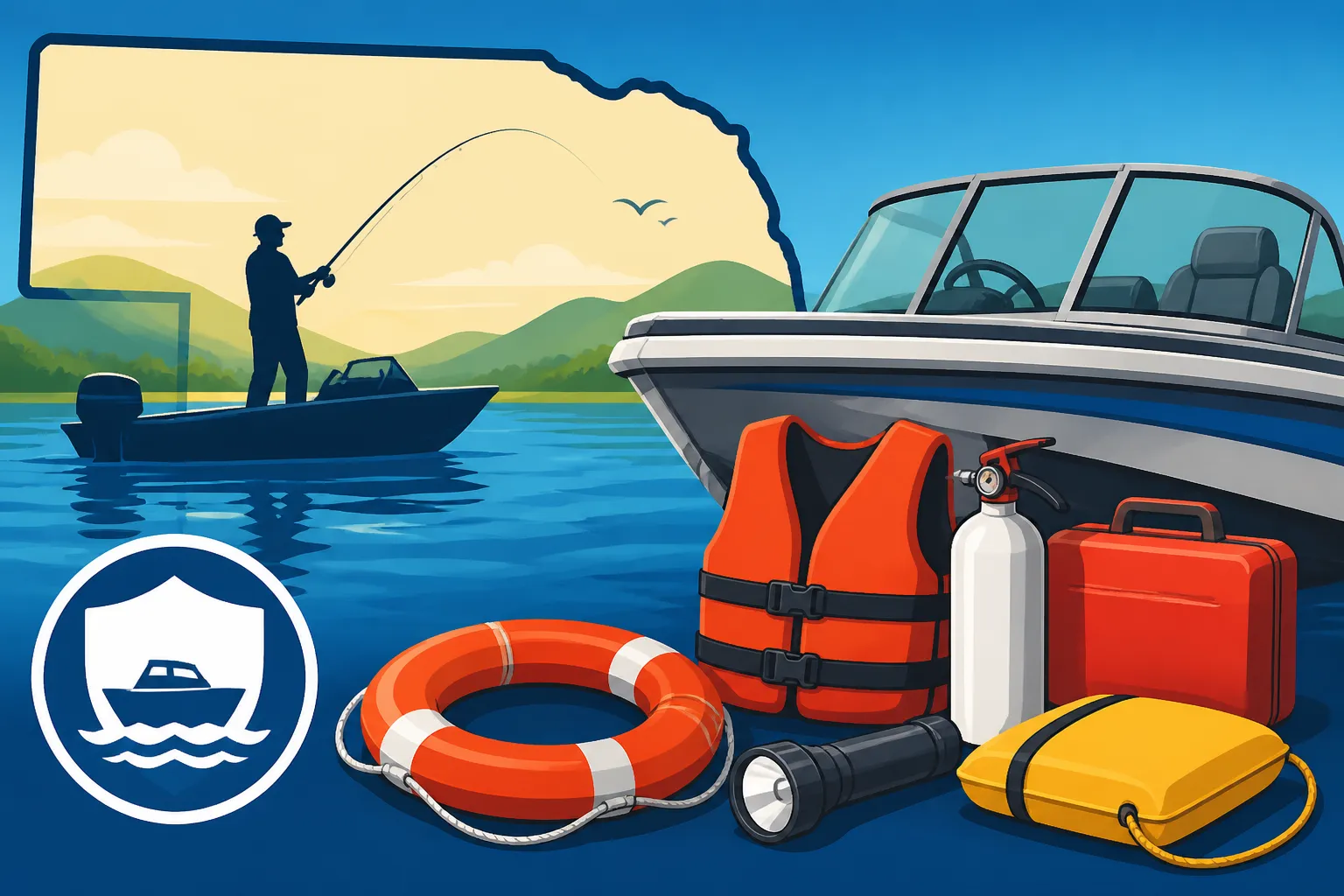
Not all PFDs are created equal, and understanding the different types is crucial for compliance and effective safety. The U.S. Coast Guard classifies PFDs into various types, with Nebraska following these guidelines. Generally, you must have at least one wearable PFD (Type I, II, III, or V) for each person on board or being towed. Additionally, boats 16 feet or longer (excluding canoes and kayaks) must also carry one throwable PFD (Type IV).
- Type I (Off-Shore Life Jackets): These are designed for extended survival in rough, remote waters where rescue may be delayed. They turn unconscious wearers face-up and offer the most buoyancy.
- Type II (Near-Shore Vests): Good for calm, inland waters or where a quick rescue is likely. They will turn some unconscious wearers face-up but may not work in rough water.
- Type III (Flotation Aids): These are commonly used for general recreational boating and watersports. They are comfortable and allow for freedom of movement but usually won't turn an unconscious person face-up.
- Type IV (Throwable Devices): Ring buoys, boat cushions, or horseshoe buoys. These are not designed to be worn but are thrown to a person in the water. Remember, these are in addition to wearable PFDs for boats 16 feet or longer.
- Type V (Special Use Devices): These are designed for specific activities, like kayaking, waterskiing, or sailboarding, and must be used for their approved activity. They are only acceptable if worn and if they are approved for the activity in which they are engaged.
Beyond the legal requirement to have them, Nebraska law requires children 12 years of age and younger to wear a U.S. Coast Guard-approved PFD at all times when on any vessel. This is a critical rule that parents and guardians must enforce without exception. Additionally, anyone being towed by a boat (waterskiing, tubing, wakeboarding) must wear an approved PFD. While adults are not always required to wear them, it's a wise practice, especially in rough water, when alone, or if you're not a strong swimmer. Think about where you pick up your gear—places like Bass Pro Shops or even online retailers like Amazon offer a wide selection of PFDs. For more specific details on who needs to wear what, check out How Many Life Jackets Are Required on a Nebraska Boat?.
Sizing and Fit for All Ages
Having a PFD isn't enough; it must fit correctly to be effective. A PFD that is too large can ride up around your ears, hindering your ability to breathe, while one that is too small won't provide adequate buoyancy. Each PFD will have a label indicating the user's weight range and chest size. Always check these specifications before purchasing or using a PFD.
For children, this is particularly important. A child's PFD should fit snugly but comfortably, allowing for full range of motion while ensuring it won't slip over their head if they enter the water. Never substitute an adult PFD for a child, or vice versa. In Nebraska, infant PFDs are available for babies under a certain weight; ensure you have one that specifically matches your child's size and weight. A well-fitting PFD is paramount, as even a Coast Guard-approved device is useless if it doesn't do its job in an emergency.
Maintenance and Inspection of PFDs
PFDs are not "set it and forget it" equipment. They need regular inspection and proper maintenance to remain effective. Over time, UV exposure, saltwater, and general wear and tear can degrade the materials, reducing their buoyancy and structural integrity. Before each outing, take a few minutes to inspect every PFD on your boat. Look for tears, punctures, mildew, or signs of deterioration. Check that all zippers, buckles, and straps are in working order and can be easily adjusted.
If a PFD is damaged, it should be repaired by a certified professional or, more commonly, replaced entirely. Do not try to patch tears with tape, as this can compromise its approved rating. Store PFDs in a dry, well-ventilated area, out of direct sunlight, to prolong their lifespan. Never use PFDs as kneeling pads or seat cushions unless they are specifically designed as throwable devices (Type IV), as compressing the flotation material can reduce its effectiveness in an emergency. A little preventative care goes a long way in ensuring these critical safety items are ready when you need them most.
Visual and Audible Signaling Devices
Being able to communicate your presence or signal for help is another cornerstone of boating safety. Nebraska, like all states, has clear requirements for visual and audible signaling devices to ensure boaters can be seen and heard, especially when conditions are less than ideal.
Navigation Lights for Safe Operation
If you plan to operate your vessel from sunset to sunrise, or during periods of restricted visibility (fog, heavy rain), proper navigation lights are absolutely non-negotiable. These lights tell other boaters your position and direction of travel, preventing collisions. The specific type and placement of lights depend on the size and type of your vessel.
- Red and Green Sidelights: These are visible from the front and sides. The red light is on the port (left) side, and the green light is on the starboard (right) side. They help other boaters determine if you are approaching them head-on, crossing their path, or moving away.
- Masthead Light: A white light placed over the fore and aft centerline of the vessel, showing an unbroken light over an arc of the horizon of 225 degrees (from directly ahead to 22.5 degrees abaft the beam on either side).
- Sternlight: A white light placed near the stern, showing an unbroken light over an arc of the horizon of 135 degrees (from directly astern to 67.5 degrees on either side).
On smaller vessels, a combination masthead/sternlight might be used. For manually propelled vessels like canoes or kayaks, while not always required to have fixed navigation lights, it is highly recommended to carry a white light that can be displayed in time to prevent a collision if operating after dark. Always ensure your lights are clean, functional, and properly aimed before heading out.
Sound-Producing Devices for Warning
Just as important as being seen is being heard. Sound-producing devices are crucial for signaling intentions, warning other vessels of your presence, and alerting them to potential dangers, especially in conditions where visibility is reduced. The type of device required depends on the length of your boat.
- Boats Less Than 40 Feet: Must carry some means of making an efficient sound signal. This could be a horn, whistle, or even a mouth-blown horn. The key is that it must be capable of producing a four-second blast audible for at least half a nautical mile.
- Boats 40 Feet or Longer: Must have a whistle or horn and a bell. The whistle/horn must be audible for at least one nautical mile, and the bell must be capable of producing a clear, sharp tone.
Even if you have a larger boat with a built-in horn, it's a good idea to have a backup, like a hand-held air horn, in case of electrical failure. Knowing the correct signals (e.g., one short blast for "I intend to pass you on my port side," five short blasts for danger) is also a vital part of using these devices effectively. Don't let your "horn" be just for celebratory toots; it's a critical safety tool. If you have specific questions about smaller crafts, you might wonder Do You Need a Whistle or Horn on a Nebraska Kayak?, which provides more tailored answers.
Visual Distress Signals for Emergencies
When things go seriously wrong, and you need immediate assistance, visual distress signals (VDS) are your way of crying for help. Nebraska generally follows federal requirements for VDS, meaning that certain vessels must carry them if operating on federally controlled waters, which includes many of Nebraska's larger reservoirs and rivers.
- Daytime and Nighttime Signals: You must carry approved VDS for both day and night use. Common examples include:
- Daytime: Orange smoke signals (handheld or floating), orange distress flag.
- Nighttime: Red flares (handheld or aerial), electric distress lights (like an SOS signal).
- Quantity and Expiration: You need at least three combination (day/night) signals or one of each type. Flares and smoke signals have expiration dates, so make sure yours are current and readily accessible. Old flares are useless and dangerous.
Even if not legally required for your specific vessel or operating area, carrying VDS is a smart move. They can mean the difference between a quick rescue and a prolonged wait for help. When using flares, always be mindful of wind direction and potential fire hazards. Only use them when you genuinely need assistance.
Fire Extinguishers and Ventilation
Fire on a boat, especially one powered by gasoline or diesel, is an incredibly dangerous situation. With flammable liquids, electrical systems, and confined spaces, a small spark can rapidly escalate. Nebraska's regulations on fire extinguishers and ventilation are designed to mitigate this risk.
When a Fire Extinguisher is Required
Not every boat needs a fire extinguisher, but many do. The requirement typically depends on the boat's construction, engine type, and fuel system. Generally, vessels are required to have a U.S. Coast Guard-approved fire extinguisher if any of the following conditions exist:
- Inboard engines: If your boat has an enclosed engine compartment.
- Enclosed fuel tank compartments: Any storage area with a permanently installed fuel tank.
- Double bottoms: Not sealed to the hull or deck.
- Enclosed living spaces: Such as a cabin.
- Closed compartments: Where flammable or combustible materials are stored.
Extinguishers are categorized by type (B-I, B-II) and size, which dictate the amount of extinguishing agent they hold. Most recreational boats will require a B-I extinguisher. It's not enough to just have one; it must be fully charged, in good working order, and easily accessible. Avoid storing it in a locker that's difficult to open in a panic.
Proper Placement and Inspection
The placement of your fire extinguisher is almost as important as having one. It should be mounted in a readily accessible location, away from direct sunlight, and not obstructed by gear or passengers. Common locations include near the helm, in the engine compartment (if accessible from outside), or near the galley if you have one. The idea is that you should be able to grab it and deploy it quickly in an emergency.
Regular inspection is vital. Check the pressure gauge on your extinguisher monthly to ensure it's in the "green" zone, indicating it's fully charged. Inspect the nozzle for blockages and ensure the safety seal is intact. Shake it periodically to prevent the extinguishing agent from compacting. Like PFDs, fire extinguishers degrade over time, and some have expiration dates or require hydrostatic testing after a certain number of years. If you're unsure, consult a marine fire safety professional or replace it. For many boaters, finding suitable marine-grade extinguishers is as easy as browsing online at Amazon or visiting a local Bass Pro Shops.
Understanding Ventilation Requirements for Fuel Spaces
Vapor explosions are one of the most insidious dangers on a boat. Gasoline fumes, being heavier than air, can settle in bilge compartments and enclosed engine spaces. A single spark, from an electrical connection or even static electricity, can ignite these fumes with devastating results. This is why proper ventilation is a critical, though often overlooked, safety requirement for boats with enclosed engine or fuel tank compartments.
- Natural Ventilation: Most small boats rely on natural ventilation systems, which include intake and exhaust ducts that allow fresh air to circulate through fuel and engine compartments, expelling heavy fumes. These ducts must be unobstructed and designed to draw air from different levels.
- Forced Ventilation (Blowers): Boats with enclosed gasoline engines generally require a power-operated exhaust blower. This blower must be run for at least four minutes before starting the engine and after fueling to evacuate any lingering fumes. There's usually a warning sticker at the helm to remind the operator.
Regularly check your ventilation system to ensure all ducts are clear of debris, insect nests, or kinks. Test your blower before each trip to ensure it's functioning correctly. These systems are your first line of defense against a catastrophic vapor explosion, and maintaining them is a fundamental part of responsible boating.
Additional Critical Safety Equipment
While life jackets, lights, and fire extinguishers cover the major legal requirements, there's a host of other equipment that, while perhaps not universally mandated for every single vessel, are undeniably critical for safe and enjoyable boating on Nebraska’s waters. These items are about preparation for common scenarios and unexpected challenges.
Anchors and Anchor Lines for Stability
An anchor might seem like a convenience for swimming or fishing, but it's a vital safety device. Imagine your engine dies in a strong current, or you drift too close to a rocky shore; an anchor is your immediate lifeline to stability. Most Nebraska waters, from the deep reservoirs to the flowing rivers, present situations where an anchor is indispensable.
The type and weight of the anchor should be appropriate for your boat size and the typical bottom conditions you'll encounter (sand, mud, rock). Equally important is having enough anchor line, often referred to as 'rode.' A general rule of thumb is to have at least 7:1 scope (seven parts line to one part depth), plus additional length for retrieval. This means for 10 feet of water, you'd want 70 feet of line, minimum, to ensure your anchor sets properly and holds your boat securely. Don't forget a chain leader between the anchor and the rope; it helps the anchor set better and prevents chafing. An anchor is a key piece of gear for Best Boats for Nebraska Reservoir Fishing, especially for battling windy conditions.
Oars, Paddles, or Auxiliary Propulsion
What happens if your main engine fails, your trolling motor battery dies, or the wind pushes you away from shore faster than you can manage? Having a backup means of propulsion is incredibly important, particularly for smaller vessels or those with single engines.
For kayaks, canoes, and paddleboards, a paddle is your primary propulsion, and often a backup is recommended too. For larger motorboats, carrying at least one oar or paddle, even if it feels clumsy, can save you from a predicament. In an ideal world, many boaters with larger vessels opt for a small kicker motor as true auxiliary propulsion, but for basic compliance and emergency situations, paddles or oars can be invaluable. Even if you're close to a dock, trying to drift in without any control can be dangerous and costly.
First Aid Kits and Emergency Preparedness
Accidents happen, even with the best precautions. A well-stocked first aid kit should be a permanent fixture on your boat. Beyond minor cuts and scrapes, consider items for seasickness, sunburn, insect bites, and more serious injuries. Ensure the kit is waterproof and kept in an easily accessible location.
Beyond the kit itself, consider your overall emergency preparedness. Do you have a working marine radio or fully charged cell phone (in a waterproof bag) for communication? Do you know basic CPR or first aid? Having a float plan filed with a trusted friend or family member, letting them know where you're going and when you expect to return, is also a highly recommended safety practice, especially for longer trips or remote areas. It’s all about anticipating what could go wrong and having a plan.
Bailing Devices and Bilge Pumps
Water inside your boat that isn't supposed to be there is a problem. Whether it's from a leak, a wake washing over the bow, or heavy rain, excess water can swamp a vessel and compromise its stability.
- Bailing Device: Every boat, regardless of size, should have a manual bailing device such as a bucket or a hand-operated bilge pump. This is especially critical for smaller boats without electrical systems.
- Bilge Pumps: Most motorboats are equipped with electric bilge pumps, often with an automatic float switch. It's crucial to regularly test these pumps to ensure they are functioning correctly. Check the wiring, hoses, and float switch before each trip.
Having a functioning bilge pump or an effective bailing device can buy you precious time to address a leak or get back to shore if your boat starts taking on water. Don't underestimate the power of a simple bucket in an emergency.
Specific Requirements for Different Boat Types
Nebraska's safety equipment requirements, while sharing common themes, do vary based on the size and type of your vessel. Understanding these nuances is key to full compliance.
Motorboats Under 16 Feet
These are often smaller fishing boats, runabouts, or utility boats.
They must carry:
- PFDs: One wearable PFD (Type I, II, III, or V) for each person on board.
- Sound-Producing Device: An efficient sound-producing device (e.g., whistle or horn).
- Navigation Lights: If operated between sunset and sunrise or in restricted visibility.
- Fire Extinguisher: Only if the boat has an enclosed engine compartment, an enclosed permanently installed fuel tank area, or other specific conditions mentioned earlier.
- Bailing Device: A bucket or hand pump.
Many smaller fishing vessels fall into this category. It's easy to assume less gear is needed for a smaller boat, but safety remains paramount. Remember, children 12 and under must always wear a PFD.
Motorboats 16 Feet to Under 26 Feet
This is a very common category for recreational boaters, including many bass boats, ski boats, and smaller pontoon boats.
They must carry:
- PFDs: One wearable PFD for each person on board, plus one throwable Type IV PFD.
- Sound-Producing Device: An efficient sound-producing device (e.g., whistle or horn).
- Navigation Lights: If operated between sunset and sunrise or in restricted visibility.
- Fire Extinguisher: Required if the boat has an enclosed engine compartment, an enclosed permanently installed fuel tank area, or other specific conditions.
- Bailing Device: A bucket or hand pump.
The addition of the throwable PFD is a significant difference for this class of vessel. This is particularly useful for quickly aiding someone who has fallen overboard without risking further entanglement or capsizing. Many new boat owners in Nebraska fall into this category, and understanding their Nebraska Boat Registration and Fishing Rules for this size is crucial.
Motorboats 26 Feet to Under 40 Feet
Larger cruisers, cabin boats, and larger pontoons typically fall into this category. The increased size and complexity of these vessels often mean more stringent safety requirements.
They must carry:
- PFDs: One wearable PFD for each person on board, plus one throwable Type IV PFD.
- Sound-Producing Device: A whistle or horn and a bell.
- Navigation Lights: If operated between sunset and sunrise or in restricted visibility.
- Fire Extinguisher: At least one B-I or specific larger extinguishers, depending on the number of enclosed engine or fuel compartments.
- Visual Distress Signals (VDS): If operating on federally controlled waters (includes many major Nebraska lakes/rivers).
- Ventilation System: If gasoline-powered with enclosed engine or fuel compartments.
- Bailing Device: A bucket or hand pump, and typically an electric bilge pump.
These boats often have more amenities, which also means more potential hazards (e.g., galley equipment, heaters). The bell requirement, while seemingly antiquated, is still a legal necessity for signaling in certain situations.
Canoes, Kayaks, and Stand-Up Paddleboards
These manually propelled vessels, while often perceived as simpler, still have important safety requirements in Nebraska.
They must carry:
- PFDs: One wearable PFD for each person on board. Children 12 and under must wear them.
- Sound-Producing Device: An efficient sound-producing device (e.g., whistle or horn).
- Navigation Lights: If operated between sunset and sunrise or in restricted visibility, a white light (flashlight or lantern) must be carried and ready to display in time to prevent a collision. While not usually required to have fixed nav lights, many choose to install them for better visibility.
While these vessels don't require fire extinguishers or complex ventilation, the PFD requirement is strictly enforced and critically important. Capsizing in a kayak or canoe can happen quickly, and having a PFD on and properly fitted is your primary defense. Remember that paddling alone can increase risk, and always check the weather. Even the simplest vessels have regulations, so be sure to refer to detailed guides like Do Canoes Need to Be Registered in Nebraska? for complete information.
Sailboats and Other Non-Motorized Vessels
Sailboats, especially those with auxiliary engines, will often follow the motorboat requirements for their length. However, non-motorized sailboats or unpowered barges will have distinct rules.
Generally, unpowered vessels will need:
- PFDs: One wearable PFD for each person on board, plus one throwable Type IV PFD if 16 feet or longer.
- Sound-Producing Device: An efficient sound-producing device (whistle/horn) for vessels under 40 feet; whistle/horn and bell for vessels 40 feet or longer.
- Navigation Lights: If operated between sunset and sunrise or in restricted visibility.
The key takeaway is that virtually every vessel operating on Nebraska waters has some form of safety equipment requirement. Ignorance of the law is not an excuse. Taking the time to understand and properly equip your boat ensures not only compliance but, more importantly, a safer and more enjoyable experience for everyone.
| Equipment Type | Boats Under 16 ft (Motorized/Sail) | Boats 16 ft to <26 ft (Motorized/Sail) | Boats 26 ft to <40 ft (Motorized/Sail) | Canoes, Kayaks, SUPs (Non-Motorized) |
|---|---|---|---|---|
| Wearable PFDs | 1 per person | 1 per person | 1 per person | 1 per person |
| Throwable PFD (Type IV) | Not required | 1 (must be readily accessible) | 1 (must be readily accessible) | Not required |
| Sound-Producing Device | Whistle/Horn | Whistle/Horn | Whistle/Horn & Bell | Whistle/Horn |
| Navigation Lights | Required if night/restricted visibility | Required if night/restricted visibility | Required if night/restricted visibility | White light to display if night/restricted visibility |
| Fire Extinguisher | Required if specific conditions* | Required if specific conditions* | Required if specific conditions* | Not required |
| Visual Distress Signals (VDS) | Not generally required | Required if federally controlled waters | Required if federally controlled waters | Not generally required |
| Bailing Device | Required | Required | Required | Required |
| Ventilation System (Powered) | Required if gasoline engine enclosed | Required if gasoline engine enclosed | Required if gasoline engine enclosed | Not applicable |
*Specific conditions for fire extinguishers include enclosed engine compartments, permanently installed fuel tanks, double bottoms not sealed to the hull, enclosed living spaces, or closed compartments where flammable materials are stored.
Disclaimer
This article is for general informational purposes only and does not constitute professional advice. Laws, prices and regulations vary by location and change over time. Consult a qualified professional for guidance on your specific situation.