Nebraska Crappie Bag Limits
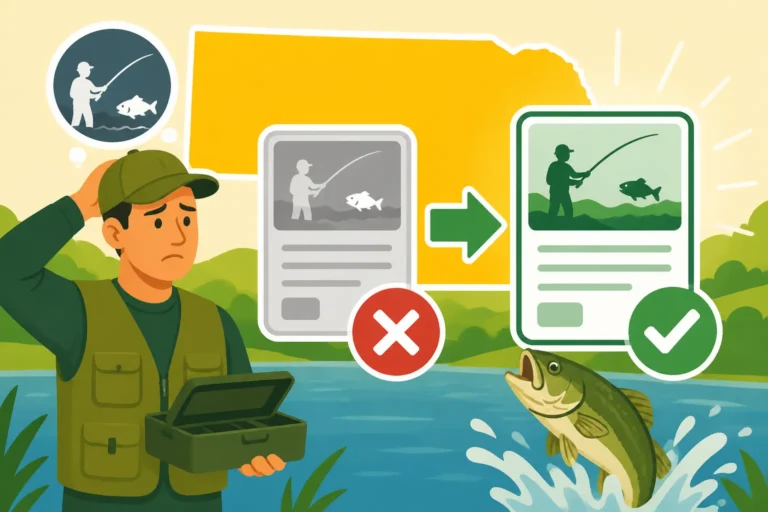
There’s nothing quite like a mess of pan-fried crappie after a successful day on the water, but navigating Nebraska's fishing regulations can feel like trying to untangle a bird's nest of fishing line. Many anglers, new and seasoned alike, struggle to keep up with the specific rules for different species and water bodies. This comprehensive guide is here to untangle those knots for you, focusing specifically on Nebraska crappie bag limits so you can fish confidently and legally.
Understanding Nebraska's Crappie Regulations
Fishing in Nebraska is a fantastic pastime, but it comes with a responsibility to understand and abide by the rules. The Nebraska Game and Parks Commission (NGPC) works hard to ensure our fisheries remain healthy and productive for generations to come, and that’s where regulations like crappie bag limits come into play. Ignoring these rules isn't just a risk; it's a disservice to the resource and fellow anglers.
Why Bag Limits Exist for Crappie
Crappie, both black and white, are incredibly popular sportfish in Nebraska. They’re abundant, fun to catch, and absolutely delicious. This popularity, however, means they can be susceptible to overfishing if not properly managed. Bag limits are a crucial conservation tool designed to prevent overharvesting, which can severely impact crappie populations and the overall health of an aquatic ecosystem. Think about it this way: if everyone kept every crappie they caught, regardless of size or number, it wouldn't be long before our favorite crappie lakes became barren.
The NGPC uses scientific data to set these limits, considering factors like crappie spawning success, growth rates, and natural mortality in specific lakes and reservoirs. These limits ensure that enough fish remain to reproduce, maintaining a sustainable population. Without these safeguards, the delicate balance of predator and prey, as well as the food chain, could be disrupted, leading to a decline in fishing quality for everyone. It's about more than just having fish for dinner; it's about preserving a treasured natural resource.
General Statewide Crappie Bag Limit
For most waters in Nebraska, the general statewide crappie bag limit is pretty straightforward: you can keep a daily bag of 15 crappie, and your possession limit is 30. Now, let's break down what "daily bag" and "possession limit" truly mean, because these are two distinct concepts that often trip people up.
The "daily bag limit" refers to the maximum number of fish of a particular species (in this case, crappie) that an individual angler can harvest and retain in a single calendar day, from midnight to midnight. So, if you hit the lake first thing in the morning and catch 15 crappie by lunchtime, you've reached your daily limit. You can continue fishing, but any additional crappie you catch must be immediately released back into the water unharmed.
The "possession limit" is the total number of fish an angler can have in their actual possession at any given time, regardless of when or where they were caught. This includes fish stored at home, in a cooler, or at a cabin. For crappie, this limit is typically double the daily bag limit. So, if you go on a two-day trip and catch 15 crappie on Monday, you can store them. Then, on Tuesday, you can catch another 15, bringing your total possession to 30. However, once you have 30 crappie in your possession, you cannot legally harvest any more until some of those fish are consumed or given away, reducing your total possession to below the limit. You can find detailed explanations of these concepts in the broader Nebraska Fishing Daily Bag and Possession Limits guide.
Locating the Official Regulations
Trying to remember every rule for every species and every lake is nearly impossible. That's why it's absolutely critical to consult the official sources provided by the Nebraska Game and Parks Commission. These are the most accurate and up-to-date resources for all fishing regulations.
The primary resource is the annual "Nebraska Fishing Guide," which is available both online and in print. You can usually pick up a physical copy at bait shops, outdoor retailers, and NGPC offices throughout the state. I always recommend having a physical copy in your tackle box or boat, especially when cell service might be spotty. The NGPC's website is also an invaluable tool, offering PDF versions of the guide and often having real-time updates or alerts about specific water bodies. Additionally, the GoOutdoorsNE Online Permit System, where you purchase your fishing license, also provides access to the full regulations. Always take a few minutes before heading out to double-check the rules for the specific body of water you plan to fish. You don't want to get caught off guard, especially with different rules for various lakes.
Specific Waterbody Regulations for Crappie
While the statewide crappie limits offer a good baseline, Nebraska is unique in that many of its popular crappie fisheries have special regulations. These aren't arbitrary rules; they are carefully implemented management strategies designed to improve crappie fishing quality, protect specific populations, or address unique ecological conditions in those particular lakes. Knowing these nuances can make or break your fishing trip.
Key Lakes with Special Crappie Rules
It's a common scenario: you’re at your favorite bait shop, chatting with another angler, and they mention a crappie limit that’s different from what you remembered. You probably weren't mistaken; it’s likely that particular lake has a special regulation. Several prominent lakes and reservoirs across Nebraska operate under different crappie limits than the statewide standard. For many of these waters, the daily bag limit is reduced to 10 crappie, and often, there's a length restriction where only one fish 10 inches or longer can be kept as part of that 10-fish limit.
Some of the key Nebraska lakes and reservoirs that commonly feature these special crappie regulations include:
- Branched Oak Lake: Known for its diverse fishing, it often has the 10 crappie/1 over 10-inch rule to manage population density and foster larger fish.
- Lake McConaughy: While famous for walleye, "Big Mac" also holds crappie, and its sheer size and popularity necessitate tighter controls to maintain a healthy fishery.
- Merritt Reservoir: A stunning Sandhills gem, Merritt often has specific regulations to protect its quality crappie population amidst high angling pressure.
- Sherman Reservoir: Another major reservoir, Sherman also frequently falls under the 10 crappie/1 over 10-inch rule, aiming for better trophy potential.
- Sutherland Reservoir: This large western Nebraska reservoir is a popular spot, and its crappie limits are often tailored to its specific ecosystem.
- Wagon Train Lake: A popular spot near Lincoln, Wagon Train is actively managed for quality crappie fishing.
- Glenn Cunningham Lake and Czechland Lake also often share these regulations.
These special rules are usually in place because crappie populations in these specific water bodies are either under heavy fishing pressure, or the NGPC is trying to encourage the growth of larger, more desirable fish. By limiting the number of bigger crappie an angler can keep, it allows more of those larger, reproductively valuable fish to remain in the lake, contributing to future generations. Always check the current Nebraska Fishing Regulations Explained booklet or the NGPC website before heading out to any specific lake to confirm the exact rules in place.
Understanding Length Limits for Crappie
Beyond just the number of fish you can keep, many special regulations also include length limits. This typically means there's a minimum length a fish must be to be kept, or, as is common with crappie in Nebraska, a slot limit or a "no more than one over a certain length" rule. For crappie, the "no more than one fish 10 inches or longer" rule is prevalent in several managed lakes. This essentially means if you catch 10 crappie, only one of them can measure 10 inches or more. The other nine must be under 10 inches.
Correctly measuring your fish is paramount. To measure a fish, place it on a flat surface, close its mouth, and pinch the tail fin lobes together to get the maximum overall length. Don't eyeball it! A ruler or measuring board is essential. If you're unsure if a fish makes the cut, it's always best to release it. Trying to squeeze a borderline fish into the "legal" category can lead to a violation if a game warden measures it differently. Carrying a small, clear measuring board is a great investment for any crappie angler, many of which you can find on Amazon. It removes all doubt and helps you make quick, responsible decisions on the water.
Impact of Special Regulations on Angler Experience
You might think special regulations, especially length limits, make fishing more difficult or less rewarding. In reality, they are often put in place to enhance the angling experience in the long run. When implemented effectively, these rules lead to healthier fish populations, more consistent catches, and ultimately, a better chance at landing those bigger, "slab" crappie that everyone dreams about.
For anglers, these regulations mean being more mindful of every fish caught. It encourages selective harvesting, where you might keep a limit of smaller, pan-sized crappie for a meal while releasing the larger ones, knowing they'll contribute to the fishery's future. This approach fosters a more sustainable mindset and helps distribute the harvest among more anglers over time. While it might mean releasing a few more fish than you'd like on a given day, the reward is a lake that consistently produces quality crappie year after year. It's a trade-off that benefits everyone who loves to fish.
Practical Application of Crappie Bag Limits
Knowing the rules is one thing; actually applying them correctly while you're out on the water is another. There are several practical considerations that can help you avoid accidental violations and ensure you're fishing responsibly. These details can often be overlooked in the excitement of a hot crappie bite.
Daily Bag vs. Possession Limit Explained
Let's dive a bit deeper into the daily bag versus possession limit with some real-world examples, as this is where most anglers get confused, especially on multi-day trips.
Imagine you're fishing at Lake McConaughy, which has a 10 crappie daily bag limit with no more than one over 10 inches.
- Scenario 1: Single Day Trip. You head out Saturday morning, catch 10 crappie (with only one being 10 inches or longer), and head home that evening. You are well within the daily bag limit and also the possession limit (since it's typically 30 statewide, and you only have 10).
- Scenario 2: Weekend Trip with Lodging. You arrive Friday afternoon, fish until evening, and catch 10 crappie, which you clean and put in the cooler at your cabin. Saturday morning, you go out again and catch another 10 crappie (again, adhering to the one over 10-inch rule for each day). You now have 20 crappie in your possession (10 from Friday, 10 from Saturday). You're still within the statewide possession limit of 30. You could theoretically fish again on Sunday and catch your third daily limit of 10, bringing your total possession to 30. However, once you have 30 crappie (which would be the general possession limit), you cannot harvest any more until some of those fish are consumed, given away, or otherwise disposed of, reducing your total possession. Even if you haven't fished for the current day, if you already have 30 crappie from previous days, you cannot keep any more. This rule applies to everyone, so make sure all anglers in your party understand the individual limits.
Keeping Track of Your Catch
When the crappie are biting, it's easy to lose count. But losing count can quickly lead to an over-limit violation, which carries significant penalties. Being prepared with a system to track your catch is a simple but effective strategy.
- Stringers or Livewells: If you're keeping fish, using a stringer or a well-maintained livewell is standard practice. This keeps your fish alive and contained, making it easy to see how many you've accumulated. Just be sure not to overcrowd your livewell, especially on warm days, as this can stress or kill fish you might intend to release later.
- Clicker Counters: A small, handheld clicker counter (like those used for golf scores or attendance) is an inexpensive and highly effective tool. Each time you keep a crappie, just click it. This provides an immediate, accurate tally. You can find these easily on Amazon for just a few dollars.
- Individual Accountability: If you're fishing with friends or family, remember that limits are per person, not per boat or group. Ensure everyone is tracking their own catch, especially if some anglers have a Nebraska Youth Fishing License Rules or other special permits. Don't mix fish in a single cooler or livewell until you're absolutely sure everyone is within their individual limits.
Filleting Crappie and Evidence of Species
This is a critical point that many anglers overlook, leading to unintended violations. While it's tempting to fillet your crappie right on the boat to save time later, Nebraska regulations require that certain species, including crappie, be kept in a condition where they can still be identified and measured until you reach your permanent residence or a processing facility.
For crappie, this typically means:
- Keeping the Skin On: If you fillet your fish, you usually need to leave a patch of skin on the fillet for identification of the species.
- Keeping the Entire Fish: Some regulations might require the fish to be kept whole until off the water, especially if there's a length limit in place.
The specific rule in Nebraska is that if you're filleting fish that have length limits (like crappie on special regulation lakes), the fillets must remain traceable to their original length by keeping a portion of the skin on each fillet until you've reached your final destination. For crappie on waters with the "no more than one over 10 inches" rule, you would need to be able to demonstrate that only one of your fillets came from a fish of that size. The safest bet is often to keep crappie whole until you are back at your permanent residence. If you're at a campsite or cabin for several days, ensure you understand the specific rules about possessing filleted fish. A quick check in the Nebraska Fishing Regulations Explained booklet will clarify these nuanced rules for specific species and locations. Failing to comply with these rules can result in significant fines, even if you were otherwise within your bag limit.
Common Questions and Misconceptions about Crappie Limits
Fishing regulations can sometimes feel like a labyrinth, and it’s natural to have questions or fall prey to common misconceptions. Let's tackle some of the most frequent queries and clarify misunderstandings surrounding crappie limits in Nebraska. This way, you can focus on catching fish, not worrying about the rulebook.
Fishing with Multiple Anglers
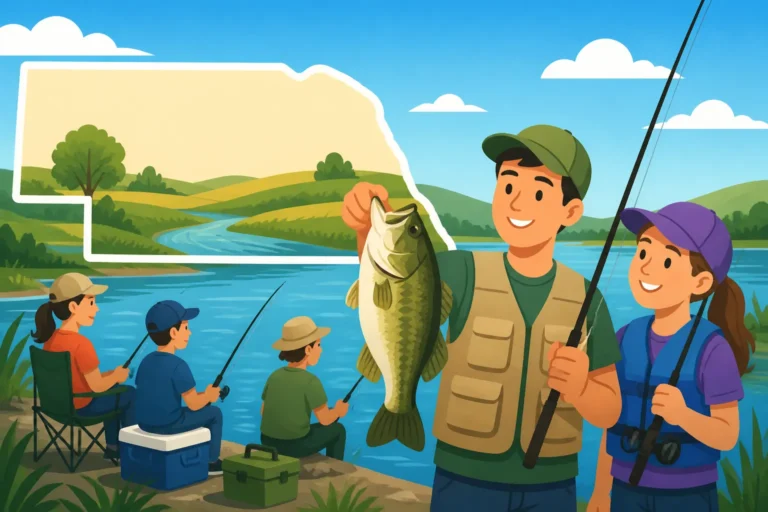
One of the most common areas of confusion arises when multiple anglers are fishing from the same boat or shore. The rule is simple: bag limits are always per person, per day, not per boat or per group.
Let's say you and two friends are crappie fishing on a lake with a statewide daily limit of 15 fish. Even though there are three of you, you cannot pool your limits to catch 45 crappie for the day. Each individual angler is allowed to keep 15 crappie. If one person catches their 15 fish by noon, they must stop harvesting crappie for the day, even if their friends haven't caught their limits yet. They can continue to fish, but any crappie they catch after reaching their limit must be immediately released. This is crucial for fairness and conservation.
This applies even when fishing with children. If a child is of an age that requires a fishing license (which in Nebraska starts at age 16), or if they are actively participating in the harvest, their catch counts towards their individual limit. For very young children simply having fun, the lines can be a little blurrier, but generally, if they are reeling in and keeping fish, it's prudent to assume they have an individual limit. Always confirm the specific rules for kids in the Nebraska Fishing License Rules for Kids and Seniors guide.
Catch and Release Considerations
Many anglers practice catch and release, either voluntarily or when they've reached their daily limit. Understanding how catch and release interacts with bag limits is important for responsible angling.
When you catch a crappie and immediately release it unharmed, that fish does not count towards your daily bag limit. This is why anglers who have reached their limit can continue fishing for sport, as long as they release all subsequent catches. However, the operative word here is "unharmed." If you keep a fish in a livewell for hours, then decide to release it, that fish has counted towards your limit for the period it was retained. If it dies in your livewell and you discard it, it still counts towards your limit.
Practicing responsible catch and release is vital. Use appropriate tackle, handle fish minimally with wet hands, and use tools like de-hookers to quickly remove hooks. Avoid dragging fish on rough surfaces. By minimizing stress, you give the released crappie the best chance of survival, contributing to a healthier fishery.
What Happens if You Exceed the Limit?
Exceeding the crappie bag limit in Nebraska is not a minor infraction; it's a serious violation of state law. Nebraska Game and Parks Commission conservation officers take these violations very seriously, and the consequences can be significant.
Penalties typically include substantial fines, often on a per-fish basis for each fish over the limit. For example, if the fine is $50 per fish over the limit and you have 5 extra crappie, you're looking at a $250 fine, plus court costs. In addition to monetary penalties, violating bag limits can also lead to the confiscation of your catch, fishing equipment, and even the suspension of your fishing privileges for a period of time. Repeated or egregious violations can result in even harsher penalties, potentially including jail time in extreme cases.
It’s not worth the risk. The rules are in place for a reason – to protect the resource and ensure fair access for all. Always double-check the regulations, keep accurate count of your catch, and if in doubt, release the fish. The Nebraska Fishing Violation Penalties article provides more detail on the potential consequences of such infractions. Conservation officers are out there to enforce these rules, and they are trained to identify violations. Ignorance of the law is generally not considered a valid defense.
Enhancing Your Crappie Fishing Experience
Beyond just adhering to the rules, understanding the "why" behind crappie regulations can help you become a more effective and ethical angler. By embracing sustainable practices and optimizing your gear and techniques, you can not only stay legal but also enjoy more rewarding days on the water chasing those elusive slabs.
Best Practices for Sustainable Crappie Fishing
Sustainable fishing is about more than just not exceeding your bag limit. It’s a mindset that contributes to the long-term health of our fisheries. For crappie, which can reproduce prolifically but also be overharvested quickly, selective harvesting is a key practice.
Instead of keeping every crappie you catch, consider what fish you actually need for a meal. Often, keeping the smaller, "pan-sized" crappie (those under 9-10 inches) can actually benefit the population by thinning out overly abundant year classes, allowing the remaining fish to grow larger. Release the bigger crappie, especially those 10 inches or more. These larger fish are often the most productive spawners, contributing significantly to future generations. They are also the "trophies" that many anglers aspire to catch. Using single, barbless hooks or crushing the barbs on your hooks can also make catch and release easier and less traumatic for the fish. By adopting these practices, you're not just fishing; you're helping manage the resource.
Gear and Techniques to Target Crappie
To really get into crappie fishing and enjoy it to the fullest, having the right gear and techniques makes a huge difference. Crappie are often found in brush piles, around docks, or near submerged timber, and they can be finicky eaters.
- Rods and Reels: An ultralight spinning rod and reel combo, spooled with 4-6 pound test monofilament or fluorocarbon line, is ideal for crappie. This lighter setup allows you to feel the subtle bites of crappie and makes even smaller fish feel like a fun fight. You can find excellent budget-friendly options for these combos on Amazon.
- Baits and Lures: Live minnows are often irresistible to crappie, especially when fished under a small bobber. Small jigs (1/32 to 1/16 ounce) tipped with a small plastic grub, tube, or a piece of minnow are also incredibly effective. The color can make a difference; I've had great success with chartreuse, white, and black/chartreuse combos. For more tips on this, check out Best Jig Color for Nebraska Crappie.
- Presentation: Crappie often suspend at specific depths. A slip bobber rig is perfect for presenting your bait at a precise depth, especially around brush piles or standing timber. Vertically jigging small spoons or jigs directly over submerged structure is also a killer technique, particularly when the fish are concentrated. In spring, when crappie move shallow to spawn, small jigs cast around emergent vegetation can be deadly. If you're looking for more specific tactics, articles like How to Catch Crappie in Spring or How to Catch Crappie Around Brush Piles can provide invaluable insights.
Finding Productive Crappie Waters
Finding where crappie are biting consistently can be the biggest challenge, but there are some general principles that hold true across Nebraska's lakes and reservoirs. Crappie are structure-oriented fish, meaning they like to hang around cover.
- Spring: During the pre-spawn and spawn, crappie will move into shallower waters, often in bays, coves, and areas with submerged brush, reeds, or fallen trees. Look for water temperatures in the mid-50s to low-60s Fahrenheit.
- Summer: As waters warm, crappie often retreat to deeper, cooler water. They'll relate to submerged brush piles, old creek channels, humps, and standing timber in the main lake body. Using a fish finder to locate these deeper structures is a huge advantage.
- Fall: Crappie begin to move back shallower as water temperatures cool, often feeding aggressively before winter. They might be found around drop-offs, points, and remaining green vegetation.
- Winter (Ice Fishing): Under the ice, crappie will typically be found suspended over deeper basins, often near transition areas or deep brush piles. Small jigs and minnows are effective.
For specific locations, consider looking at the best places to fish in Nebraska, as many of those reservoirs are known for good crappie populations. Local bait shops are also a goldmine of information about current conditions and hot spots. Don't be afraid to try new spots and experiment with different depths and presentations until you find what the crappie are biting on!
Crappie Bag Limit Comparison Table
To give you a clear overview, here's a table comparing the general statewide crappie regulations with specific examples from some popular Nebraska lakes. Always remember to double-check the current "Nebraska Fishing Guide" for the most up-to-date and complete regulations.
| Water Body | Daily Bag Limit (Crappie) | Possession Limit (Crappie) | Length Regulations | Common Reasoning |
|---|---|---|---|---|
| Statewide General Rules | 15 fish | 30 fish | No specific length limits (unless otherwise stated) | General conservation for healthy populations |
| Branched Oak Lake | 10 fish | 20 fish | No more than one fish 10 inches or longer | Promote growth of larger crappie, manage density |
| Lake McConaughy | 10 fish | 20 fish | No more than one fish 10 inches or longer | Quality fishing management, high angler pressure |
| Merritt Reservoir | 10 fish | 20 fish | No more than one fish 10 inches or longer | Trophy potential, sustainable harvest in remote area |
| Sherman Reservoir | 10 fish | 20 fish | No more than one fish 10 inches or longer | Enhance crappie size and overall fishery quality |
Note: These are common examples and regulations can change annually. Always refer to the most current Nebraska Fishing Guide.
Disclaimer
The information provided in this guide is for general informational purposes only and is not a substitute for the official regulations published by the Nebraska Game and Parks Commission. Fishing regulations can change, and it is the angler's responsibility to review and comply with all current federal, state, and local laws and regulations before engaging in any fishing activities.