How to Catch Crappie in Spring
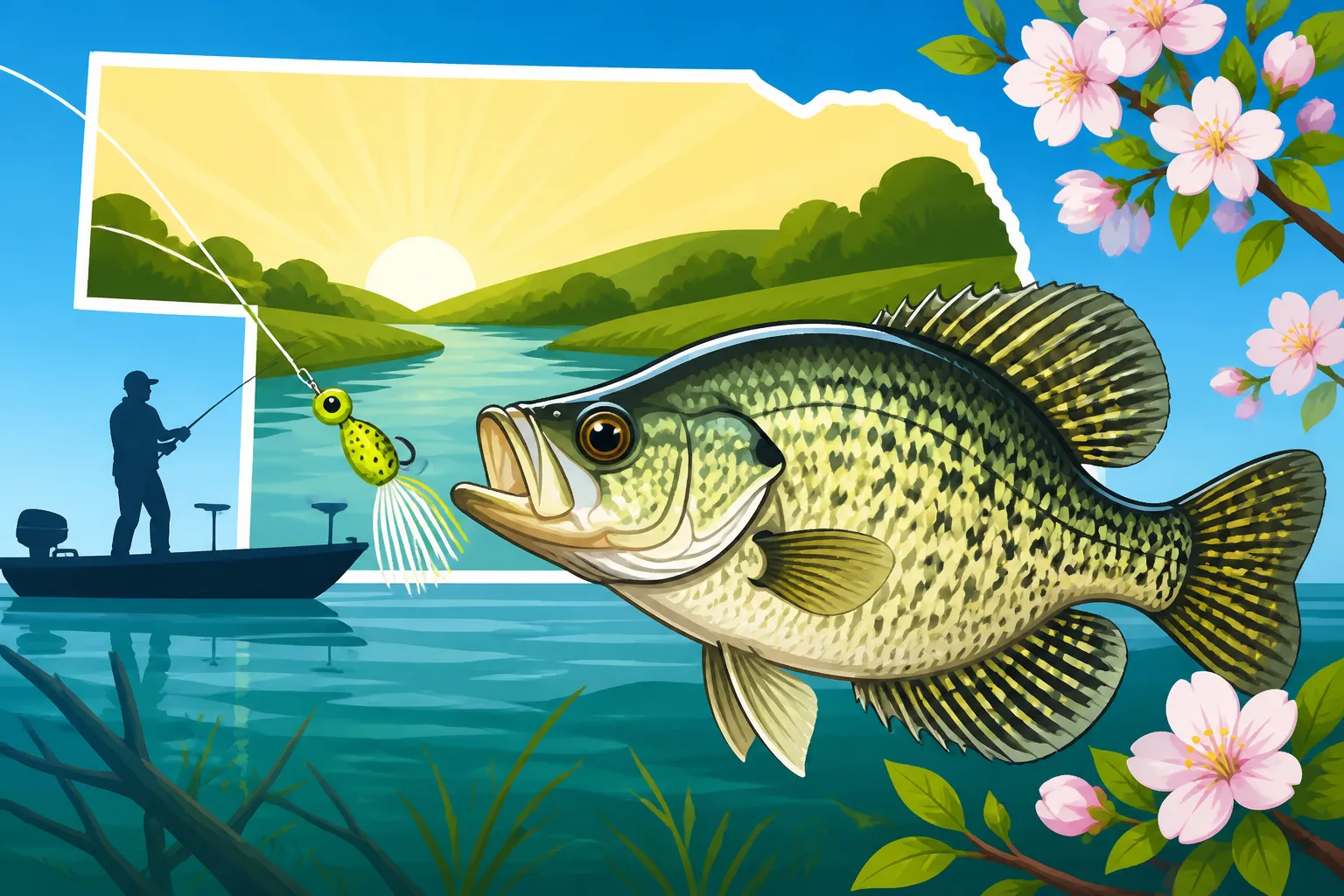
Ah, spring! The air starts to warm, the ice finally releases its grip on our beloved lakes, and every angler's thoughts turn to one thing: crappie. But let's be honest, spring crappie fishing in Nebraska can be a real head-scratcher. One day they're shallow, the next a cold front pushes them back deep, leaving many of us scratching our heads and wondering where the fish went. This comprehensive guide is here to unravel the mysteries of spring crappie behavior, providing you with battle-tested strategies and local insights to consistently fill your livewell with those delicious papermouths across Nebraska's diverse fishing spots.
Understanding Spring Crappie Behavior and Movements
Spring is a time of incredible transition for crappie, driven almost entirely by water temperature and the biological imperative to spawn. It's not a static period; crappie will move significantly throughout the spring months, making them both exciting and frustrating to target. Knowing what stage they're in and what influences their movements is key to finding them.
The Pre-Spawn Crappie Rush
As the ice retreats and water temperatures begin to climb into the low to mid-40s, crappie start to shake off their winter lethargy. This is the pre-spawn period, often characterized by fish staging in deeper water adjacent to shallower spawning flats. They're feeding heavily now, bulking up for the energy-intensive spawn ahead. Think of them like hungry teenagers raiding the fridge before a big project. They'll often be found in creek channels, along sharp breaks, or near main lake points that offer quick access to both deep water safety and shallower feeding grounds.
During this phase, they're not quite in the thick cover yet, but they're definitely thinking about it. They might be suspended over open water or relating to submerged timber and brush piles in slightly deeper areas. Their metabolism is increasing, and they'll be more aggressive than they were in the dead of winter. Finding these fish can be a treasure hunt, but once you locate a school, you can often catch several in one spot. It's a fantastic time for anglers who enjoy fishing with electronics, as schools might be suspended at various depths.
The Energetic Crappie Spawn
The magic really happens when water temperatures consistently reach the upper 50s to low 60s Fahrenheit. This is prime spawning time for crappie in Nebraska, and it's when they'll push into the extreme shallows to build nests and reproduce. They're looking for firm bottoms, often gravel or sand, typically around protected coves, shallow brush, fallen trees, docks, or even emergent vegetation like cattails. These areas offer shelter from predators and strong winds.
During the spawn, male crappie are particularly aggressive as they guard the nests. They'll readily strike at anything that invades their space. The females will move in, lay their eggs, and then often retreat to slightly deeper water to recover, while the males stay to protect the eggs. This period can be a feast or famine scenario – you might find them stacked up in inches of water, or they could be spread out depending on the extent of suitable spawning habitat. It's often when the biggest slabs are caught, as they're highly visible and active. Knowing the specific types of shallow cover to target, as highlighted in our guide on How to Catch Crappie Around Brush Piles, can be incredibly beneficial.
Post-Spawn Dispersion
Once the spawning ritual is complete, crappie often disperse and move back towards deeper water as they recover. This post-spawn period can be a bit trickier, as the fish aren't as concentrated. They're often tired and hungry, but they might not be as aggressive as they were during the pre-spawn or spawning peaks. They'll still relate to structure, but perhaps deeper brush piles, submerged roadbeds, or ledges where they can ambush baitfish.
The post-spawn period can last several weeks, with crappie slowly resuming their normal feeding patterns. You might find them suspended over deeper water column, particularly if there's an abundance of baitfish. They're still catchable, but it often requires a bit more searching and perhaps a more subtle presentation. Anglers need to adapt their strategies from targeting shallow cover to exploring deeper holding areas. Monitoring Nebraska Fishing Seasons Explained will give you a broader understanding of when these transitions typically occur.
Essential Gear for Spring Crappie Fishing
Having the right tools for the job can make all the difference, especially when crappie are being finicky. Spring crappie fishing doesn't necessarily require a boatload of expensive equipment, but some specialized gear can certainly boost your success rate.
Rods, Reels, and Line Choices
For crappie, light tackle is the name of the game. A sensitive rod helps you detect those subtle bites, which are common with crappie, especially in colder water.
- Rods: A 6 to 7-foot light or ultralight action spinning rod is ideal. The softer tip allows crappie to inhale the bait without feeling too much resistance, and it provides enough backbone to handle decent-sized slabs. Many anglers prefer a fast action tip for better sensitivity and hook sets. For spider rigging or trolling multiple lines, longer rods (8-14 feet) are often used to spread baits out. You can find excellent options for Best Spinning Reels for Panfish online, often bundled with a matching rod.
- Reels: Pair your rod with a small spinning reel (500 to 1000 size). It should have a smooth drag system, which is crucial when fighting a surprisingly strong crappie on light line. Reliability is key here; you don't want a sticky drag costing you a trophy fish.
- Line: Monofilament line in 4 to 6-pound test is a classic choice, offering good stretch (which can be forgiving) and knot strength. Fluorocarbon in similar pound test provides less stretch and better sensitivity, plus it's nearly invisible underwater, which can be an advantage in clear Nebraska waters. Some anglers opt for thin braided line (6-10 lb test) for ultimate sensitivity and casting distance, usually adding a 2-4 foot fluorocarbon or monofilament leader to combat visibility concerns.
Baits, Lures, and Jig Heads
Crappie aren't overly picky, but certain presentations definitely shine in the spring.
- Jigs: Small jigs are arguably the most popular and effective crappie lure. Think 1/32 to 1/16 ounce for most situations, going up to 1/8 ounce in deeper water or heavy wind.
- Plastic Bodies: Soft plastic bodies in various shapes like tubes, grubs, tiny minnow imitations, or small paddle tails are deadly. Popular colors often include chartreuse, white, pink, black, and natural baitfish patterns. Experiment with glow-in-the-dark options in dingy water or low light.
- Marabou Jigs: These offer a lifelike breathing action in the water, even when barely moved, making them fantastic for finicky fish.
- Live Bait: Minnows are a perennial crappie favorite, especially in spring. Hooked through the lip or dorsally, they can be fished under a bobber, on a plain hook with a split shot, or tipped on a jig. Small shiners or fathead minnows are ideal. Worms, particularly small pieces of nightcrawler, can also be effective.
- Small Crankbaits: As water warms, tiny crankbaits or jerkbaits designed for panfish can be incredibly productive, especially when casting for active, suspended crappie. Look for models that dive to the depth where fish are holding. Brands like Berkley and Rapala make excellent ultralight options readily available on Amazon.
- Bobbers: Both fixed and slip bobbers are indispensable. Fixed bobbers are great for shallow water (under 6-8 feet), allowing for quick depth changes. Slip bobbers are perfect for presenting bait at precise depths in deeper water or when casting a long distance.
Essential Accessories
Don't forget the small things that make a big difference in comfort and efficiency.
- Pliers/Forceps: For easily removing hooks from delicate crappie mouths.
- Clippers: For quickly tying and retying knots.
- Net: A small, fine-mesh landing net helps protect the crappie's delicate fins and scales, especially if you plan on releasing them.
- Cooler/Livewell: To keep your catch fresh if you're keeping them. Remember Nebraska's daily bag and possession limits; you can check the latest rules under Nebraska Fishing Daily Bag and Possession Limits.
- Depth Finder/Sonar: Even if you're fishing from the bank, a portable depth finder can help locate drop-offs, submerged cover, and schools of fish. For boat anglers, a good fish finder is invaluable for scanning creek channels and brush piles.
| Gear Category | Item | Recommended Size/Type | Spring Application |
|---|---|---|---|
| Rods | Spinning Rod | 6-7 ft, Light to Ultralight action | Sensitivity for light bites, fighting delicate crappie. |
| Reels | Spinning Reel | 500-1000 series | Smooth drag, balance with ultralight rods. |
| Line | Monofilament/Fluorocarbon | 4-6 lb test | Low visibility (fluoro), good knot strength, forgiving stretch (mono). |
| Live Bait | Minnows | Small fatheads, shiners | Irresistible to hungry crappie, especially pre-spawn. |
| Soft Plastics | Jigs | 1/32 – 1/16 oz (up to 1/8 oz) | Versatile, imitates baitfish, various colors. |
| Hard Baits | Micro Crankbaits | Small, shallow-diving | Effective for active, suspended crappie as water warms. |
| Terminal Tackle | Jig Heads | Small, weighted (matched to plastics) | Provides weight for casting and depth control. |
| Floats | Slip Bobbers | Adjustable depth | Precise depth control in deeper water. |
| Floats | Fixed Bobbers | Small, clip-on | Ideal for shallow water presentations. |
Top Techniques for Spring Crappie Success
Once you understand crappie behavior and have the right gear, it's time to put it all into action. Spring crappie fishing often involves slowing down your presentation and being patient, but there are several reliable techniques to employ.
The Art of Jigging
Jigging is perhaps the most versatile and effective method for spring crappie. It allows you to present a small bait at a precise depth, which is critical when crappie are suspended or holding tight to structure.
- Vertical Jigging: This is incredibly effective when you've located a school of crappie on your electronics, or know they are holding directly under your boat in a brush pile. Drop a small jig (1/32 – 1/8 oz) directly down to the depth of the fish. Use subtle lifts and drops, barely moving the rod tip. The key is to let the jig do the work, fluttering and enticing strikes. Often, crappie will hit the jig on the fall, so pay close attention to any slack in your line. Tipping your jig with a small minnow can significantly increase your bites.
- Casting and Retrieving: When crappie are in shallower areas or around visible cover like docks, fallen trees, or riprap, casting a jig is the way to go. Make accurate casts to the edge of the cover, let the jig sink to the desired depth, and retrieve it with a slow, steady retrieve or a series of small twitches and pauses. Vary your retrieve until you find what the fish prefer on that particular day. Sometimes a straight retrieve works, other times it's a "lift-fall" presentation that triggers a strike.
Mastering the Slip Bobber Rig
When crappie are scattered or holding at a specific depth over open water or along a weed line, a slip bobber rig is your best friend. It allows you to suspend a bait (either a minnow or a small jig) at any depth you choose, from a few inches to many feet deep.
- Setting Up: Thread your line through the bobber stop, then a small bead, followed by the slip bobber itself. Tie on a small jig or a plain hook with a split shot a foot or two above it. Adjust the bobber stop to the depth where you believe the crappie are holding.
- Presentation: Cast your rig out, and as the bait sinks, the line slips through the bobber until it hits the bobber stop, suspending your bait perfectly. This is particularly effective for targeting the specific depths where fish are cruising. It's also great for bank anglers or when fishing around docks, as you can cast further and cover more water than with a fixed bobber. The subtle motion of the bobber in a light breeze can be all the action needed to tempt a crappie.
Slow Trolling and Spider Rigging
For covering large areas and locating scattered schools of crappie, especially during pre-spawn or post-spawn when they are deeper, slow trolling or spider rigging can be highly effective.
- Slow Trolling: This involves moving your boat at a very slow speed (often less than 1 mph) while dragging jigs or minnow rigs behind the boat. You can use one rod or multiple rods set at different depths and distances from the boat to cover a wide swath of water. This is excellent for working along creek channels, contour lines, or over submerged humps. The constant movement helps you find active fish quickly.
- Spider Rigging: This takes slow trolling to the next level, often involving specialized crappie fishing setups with multiple long rods (sometimes 6-8 rods or more) fanned out around the boat, giving it the appearance of a spider. Each rod presents a different bait (jigs, minnows, or a combination) at varying depths and distances. This technique is designed to maximize coverage and present many offerings to scattered fish. It's popular on large reservoirs like Lake McConaughy or Harlan County Reservoir where crappie can be nomadic. The key is to find the right speed and depth combination that triggers strikes.
Finding the Best Spring Crappie Spots in Nebraska
Nebraska offers a fantastic array of lakes and reservoirs that come alive with crappie activity in the spring. Knowing where to focus your efforts can save you a lot of time and lead to a more successful outing.
Targeting Shallow Cover and Structures
During the peak spawn, crappie are highly associated with shallow cover. Look for these key features:
- Brush Piles and Fallen Trees: These are crappie magnets. The submerged branches offer protection and ambush points. In many Nebraska lakes, brush piles are intentionally sunk by wildlife agencies or local fishing clubs to enhance habitat. Look for these along shallow banks, in coves, or near creek channels. Places like Branched Oak Lake, for instance, are known for their abundant submerged structures. Our specific guide on How to Catch Crappie Around Brush Piles offers even more insights.
- Docks and Piers: The shaded areas and submerged pilings of docks provide excellent cover and spawning sites. Crappie will often suspend directly under or next to them. If you're fishing from the bank, public fishing piers are prime targets.
- Cattails and Emergent Vegetation: In shallower areas, especially protected bays, look for stands of cattails or other emergent weeds. Crappie will often move right into these dense areas to spawn, as they provide both cover and food sources.
- Riprap and Rocky Banks: The rocks absorb and radiate heat, warming the water faster, and provide crevices for spawning and forage. Riprap found along causeways, dam faces, or bridge abutments can be excellent early spring crappie spots.
Exploring Creek Channels and Ledges
In the pre-spawn and post-spawn periods, or during sudden cold snaps, crappie will often retreat to deeper water adjacent to their spawning grounds.
- Creek Channels: These underwater highways provide crappie with a path to and from deeper wintering grounds to shallow spawning areas. Look for the bends and deeper holes within these channels, especially where they intersect with points or humps. Crappie will often stage here, suspended in the channel or relating to any timber or cover present.
- Ledges and Drop-offs: Any sharp change in depth can hold crappie. These ledges provide access to different temperature zones and allow crappie to move up and down in the water column easily. Use your electronics to scan these areas for signs of fish or baitfish schools. A great example of this is the varying depths found in Lewis and Clark Lake, which also has fantastic Walleye Fishing.
Top Nebraska Crappie Destinations
Nebraska boasts numerous crappie hotspots that truly shine in the spring.
- Branched Oak Lake: Located near Lincoln, this large reservoir is a perennial crappie favorite. Its numerous coves, submerged timber, and brush piles offer prime spring habitat. Anglers regularly find success around the dam, various points, and in the calmer bays. You'll definitely want to check out our detailed guide on Branched Oak Lake Crappie Fishing for local tips.
- Merritt Reservoir: Up in the Sandhills, Merritt offers incredible crappie fishing, particularly in its many fingers and coves. The clear water here means crappie can be a bit spooky, but they're often larger. Look for them in shallow flooded timber.
- Lewis and Clark Lake: Straddling the Nebraska-South Dakota border, this massive reservoir on the Missouri River system provides vast opportunities. Crappie will concentrate in protected bays and around submerged structures. The sheer size means exploring is key, but the rewards can be immense.
- Lake McConaughy: While famous for its walleye and wipers, "Big Mac" also holds a healthy population of crappie. Focus on the bays and shallower structures in the early spring, especially around submerged cedars.
- Harlan County Reservoir: This south-central Nebraska gem consistently produces good numbers of crappie. Its numerous coves and standing timber make for excellent spring fishing.
- Fremont Lakes State Recreation Area: A fantastic collection of sandpit lakes that offer accessible crappie fishing, often with plenty of shallow cover like docks and emergent vegetation. These lakes are great for shore anglers and those with smaller boats or kayaks. You can find more details in our list of Best Fishing Spots Near Omaha, as Fremont is a popular choice for many from the metro.
Dealing with Spring Weather and Water Challenges
Nebraska spring weather can be notoriously unpredictable, swinging from warm, sunny days to cold, blustery conditions in a matter of hours. These changes directly impact crappie behavior, so understanding how to adapt is crucial.
The Impact of Cold Fronts
A sudden drop in air temperature, especially after a warm spell, can send crappie into a funk. This is a common frustration for anglers. When a cold front moves in, several things happen:
- Water Temperature Drop: Shallow water cools quickly, pushing crappie out of their comfortable spawning zones.
- Fish Become Lethargic: Their metabolism slows down, making them less aggressive and their bites incredibly subtle.
- Movement to Deeper Water: Crappie will often retreat to the nearest available deeper water, often suspending over creek channels, along ledges, or in the deepest parts of brush piles.
When a cold front hits, don't give up! Slow down your presentation even further. Use smaller jigs, lighter line, and retrieve your bait almost imperceptibly. A live minnow under a slip bobber, kept perfectly still at the depth where fish are observed, can often coax a bite when nothing else will. Focus on the deeper ends of coves or the main lake points that offer quick access to deep water.
Wind, Rain, and Water Levels
Spring weather often brings wind and rain, both of which can significantly affect your crappie fishing.
- Wind: A steady, moderate breeze can actually be your friend. It creates a "crappie chop" on the water's surface, breaking up light penetration and making fish feel more secure in shallower water. It also pushes baitfish, concentrating them, and thus the crappie, on wind-blown banks. Cast into the wind and retrieve with it, or fish the calmer, leeward side of points and islands if the wind is too strong. Strong, sustained winds can make boat control and casting difficult, so sometimes finding protected coves is the only option.
- Rain: Light rain can also be beneficial, as it darkens the water and washes terrestrial insects into the lake. Crappie can become more active. Heavy rains, however, can cause rapid water level rises and significant turbidity (muddy water), especially in reservoirs fed by rivers.
- Rising Water: During a rapid rise, crappie might push into newly flooded cover like grass or bushes, seeking out new food sources and spawning sites.
- Muddy Water: In very muddy water, crappie rely more on their lateral line system to detect vibrations. Use larger, bulkier jigs that displace more water, or incorporate scents into your baits. Bright, contrasting colors like chartreuse, orange, or black-and-chartreuse can also improve visibility.
- Fluctuating Water Levels: Especially on reservoirs with power generation or irrigation demands, water levels can fluctuate. Stable water levels are generally preferred, but rising water can draw crappie into new areas, while rapidly falling water can push them out of shallow cover and make them uneasy. Pay attention to local lake reports and recent weather patterns before heading out.
Advanced Tips for Finicky Spring Crappie
Sometimes crappie just aren't cooperating, no matter how perfectly you present your bait. This is where a few advanced tactics and a willingness to experiment can turn a slow day into a memorable one.
Reading Your Electronics More Critically
Modern fish finders are powerful tools, but truly understanding what they're telling you can be game-changing. It's not just about seeing arches; it's about interpreting patterns and structure.
- Identifying Crappie Schools: Crappie often show up as tight balls or clusters of arches, especially when schooled up during pre-spawn or post-spawn. Learn to differentiate them from baitfish schools, which typically appear as dense, amorphous clouds. Pay attention to the depth at which these schools are holding.
- Locating Submerged Cover: Use your side imaging and down imaging to pinpoint brush piles, submerged timber, old roadbeds, and creek channels that aren't visible on the surface. Mark these waypoints on your GPS and return to them. Even a seemingly barren stretch of water might hide a crappie hotspot on the bottom.
- Interpreting Baitfish Presence: If you see large schools of baitfish, crappie are likely nearby. Crappie are ambush predators, so they'll often be found just below or to the side of baitfish schools, waiting for an opportune moment to strike. Understanding how to use fish finders for species like Walleye, as detailed in our Lewis and Clark Lake Walleye Fishing guide, can also apply to crappie in similar deep-water scenarios.
Finesse Presentations and Subtle Adjustments
When crappie are "lockjawed," a tiny change can make all the difference.
- Downsizing: If you're using a 1/16 ounce jig, drop down to a 1/32 or even a 1/64 ounce. Reduce your line size from 6-pound test to 4-pound test. Smaller, lighter presentations often tempt hesitant fish.
- Slower Retrieve, Longer Pauses: Seriously, slow down. Crappie in cold or post-frontal conditions often want a bait that barely moves. Use longer pauses between twitches, or let a minnow under a slip bobber sit completely still for extended periods. Sometimes, the only "action" they want is the natural wiggle of a live minnow.
- Scent Applications: Crappie have an excellent sense of smell. Adding a crappie-specific scent to your jigs or minnows can provide an extra enticement, especially in murky water or when fish are inactive. Gels, sprays, or even pre-scented soft plastics are widely available.
- Color Experimentation: While chartreuse and white are classics, sometimes crappie prefer something different. Try natural colors like brown, green pumpkin, or smoke in clear water. In stained water, experiment with brighter colors or even black to create a strong silhouette. Don't be afraid to try pink, orange, or purple on a whim – sometimes it's the unexpected color that saves the day.
Understanding Daily Patterns
Crappie, like most fish, have daily patterns that can change with light conditions, water temperature fluctuations, and pressure.
- Low Light Periods: Early morning and late evening are often prime times, especially during the spawn. The reduced light makes crappie feel more secure in the shallows.
- Mid-day Heat: On bright, sunny days, crappie might retreat to deeper, shadier cover during the middle of the day. Target the shady sides of docks, dense brush piles, or deeper submerged structure.
- Warmest Water of the Day: As the sun warms the water throughout the day, crappie might move shallower or become more active in the warmest parts of the water column. This could be a brief window in the afternoon where they feed aggressively before settling down again.
- Pressure Changes: Keep an eye on the barometer. Stable or rising barometric pressure often corresponds with more active fish, while rapidly falling pressure (often indicating an approaching storm) can make them tougher to catch.
By paying attention to these subtle cues and adapting your approach, you'll be well on your way to cracking the code of Nebraska's spring crappie and enjoying some of the finest panfishing the state has to offer.
Disclaimer
Please remember that fishing regulations, including bag and possession limits, can change. Always consult the latest Nebraska Game and Parks Commission regulations before heading out on the water. This guide is for informational purposes only, and adherence to all local, state, and federal laws is the angler's responsibility.