Nebraska Fishing License Violation Penalties
It’s a scenario many of us dread: you’re out on the water, enjoying a perfect day of fishing, only to have a Nebraska Game and Parks Commission Conservation Officer approach and discover a discrepancy with your fishing license. Whether you forgot it, it expired, or you simply never purchased one, facing a fishing license violation can turn a relaxing day into a stressful and costly ordeal. This guide will walk you through the various penalties for Nebraska fishing license violations and explain how to avoid them, ensuring your angling adventures stay on the right side of the law.
Understanding Why Fishing Licenses Matter in Nebraska
Before diving into the specifics of violations, it’s really helpful to understand why these regulations exist in the first place. It’s not just about bureaucrats wanting your money; there’s a much bigger picture that benefits all of us who love to fish. These licenses are the backbone of sustainable fisheries management in the state.
The Importance of Conservation and Funding
Think about all those beautiful lakes, rivers, and streams across Nebraska that hold thriving fish populations. The health of these waters, and the fish within them, doesn’t happen by accident. A significant portion of the funds generated from selling fishing licenses goes directly back into conservation efforts. This includes everything from stocking programs to ensure a robust supply of fish like walleye and trout, to habitat restoration projects that create better environments for all aquatic life. It also supports scientific research to monitor fish populations and manage diseases, ensuring future generations can enjoy the same opportunities we do today. Without these funds, our beloved fishing spots would quickly decline. It’s a vital investment in our natural resources, directly benefiting the very activity we cherish.
Beyond fish management, a portion of these funds also supports law enforcement. Our Nebraska Game and Parks Commission officers are out there protecting our resources from poaching and illegal activities, which helps maintain fair access and healthy ecosystems for everyone. If you've ever wondered about the ins and outs of what your permit covers, our comprehensive guide on Nebraska Fishing License Costs and Types breaks it all down.
How Regulations Protect Fish Populations
It’s not just about the money; it’s also about the rules. Nebraska fishing regulations are carefully designed to protect fish populations from overharvesting and ensure species can reproduce and thrive. This includes things like daily bag limits, which prevent individuals from taking too many fish, and length limits, which protect juvenile fish so they can grow to maturity and spawn, or safeguard large, trophy-sized breeding stock.
Consider specific species like the prized walleye or the majestic catfish. Without regulations, it would be all too easy for a few individuals to deplete local populations, impacting everyone else's ability to catch these fish. These rules help maintain a delicate balance, ensuring that our lakes and rivers remain vibrant ecosystems. Ignoring these regulations isn't just breaking a rule; it's actively undermining the health of our fisheries for everyone. If you're curious about all the rules in play, check out our in-depth article on Nebraska Fishing Regulations Explained to get the full scoop.
Common Nebraska Fishing License Violations
Let's face it, nobody wants to get a ticket while they’re out enjoying nature. But ignorance of the law is rarely an excuse. Understanding the most common violations is the first step toward avoiding them entirely.
Fishing Without a Valid License
This is perhaps the most straightforward and common violation, but it encompasses a few different scenarios. The most obvious is simply never having purchased a fishing license at all. Maybe you're new to the area, or you just decided on a whim to try fishing, thinking it's not a big deal. However, unless you fall under specific exemptions, like during Nebraska's annual Nebraska Free Fishing Day or if you're very young, a license is almost always required.
Then there's the issue of an expired license. Time flies, and it's easy to forget that your annual permit runs out. You might think, "Oh, I bought one last year, I'm good!" But if that calendar year has rolled over, you're technically fishing without a valid permit. Another common mistake is not having the correct type of license for what you're doing. For instance, if you're a non-resident, you need a Nebraska Nonresident Fishing License Guide, not a resident one. Or if you live here, you need to meet all the Nebraska Resident Fishing License Requirements. Even if you bought a license, if it's the wrong one for your status, it's still a violation. Always double-check your dates and residency status before you head out.
Failing to Carry Your License
Okay, so you bought your license, fantastic! But did you bring it with you? This is another common pitfall. Many anglers purchase their license online through the GoOutdoorsNE Online Permit System and then forget to print it or save the digital copy to their phone. A Game and Parks Commission officer needs to verify your license, and if you can't produce it, it can lead to a citation.
Imagine you're out on Lake McConaughy, miles from cell service, and you realize your phone battery died, taking your digital license with it. Or perhaps you left your physical permit on the kitchen table. While officers often have discretion, they are well within their rights to issue a citation for failure to display a valid license upon demand. My personal tip? After I buy mine online, I always print a physical copy and also save a screenshot on my phone. Sometimes I even laminate a copy and keep it in my tackle box. You can find waterproof pouches on Amazon, for instance, that are perfect for protecting your paper license from the elements while you’re out on the boat or bank. It’s a small extra step that can save you a lot of hassle.
Misrepresenting Residency or Age
Attempting to save a few bucks by claiming to be a Nebraska resident when you're not, or claiming to be younger than you actually are, is a serious offense. Resident licenses are typically significantly cheaper than non-resident ones, and certain age groups, particularly young children, don't need a license at all. However, falsely claiming residency or age constitutes fraud.
For example, a college student from out of state might be tempted to buy a resident license, but unless they meet specific criteria, they are legally a non-resident. The criteria for what constitutes a "resident" for fishing license purposes in Nebraska are quite clear, and officers are trained to identify inconsistencies. If you're caught misrepresenting this information, the penalties can be more severe than a simple "fishing without a license" ticket, potentially involving fraud charges in addition to the fishing violation itself. This isn't just a minor technicality; it's a deliberate attempt to circumvent the system.
Violating Stamp Requirements Aquatic Habitat, Trout
Nebraska requires more than just a basic fishing permit for certain activities. For instance, if you're 16 years or older, you need an Aquatic Habitat Stamp in addition to your fishing license. This stamp supports vital programs that protect and improve aquatic habitats across the state. Similarly, if you plan to fish for trout, particularly in designated trout waters, you’ll need a special Nebraska Trout Stamp Requirements.
Many anglers, especially those new to Nebraska or who only fish occasionally, might overlook these additional stamp requirements. They buy their basic fishing license and assume they're all set. However, a Game and Parks officer checking your license will also verify if you have the necessary stamps for your activities. Forgetting or intentionally omitting these can lead to a separate citation, compounding your troubles. It’s always best to check the current regulations or the Nebraska Fishing License Guide each year to make sure you're fully covered. Sometimes, these stamps are included with certain permits, but it's essential to confirm, especially if you get your license through a third-party vendor or an online portal like GoOutdoorsNE, where you manually add them to your cart.
What Happens When You're Caught: Nebraska Fishing License Violation Penalties
So, what actually happens when a Nebraska Game and Parks Conservation Officer finds you in violation? It’s not just a slap on the wrist. These are legal infractions, and they carry real consequences.
Initial Encounter with a Game Warden
When a conservation officer approaches you, they are typically doing their job to ensure compliance and protect Nebraska’s natural resources. They will usually ask to see your fishing license and may inquire about your catch, tackle, or methods. If they discover a violation, such as you not having a valid license, the process will escalate from there.
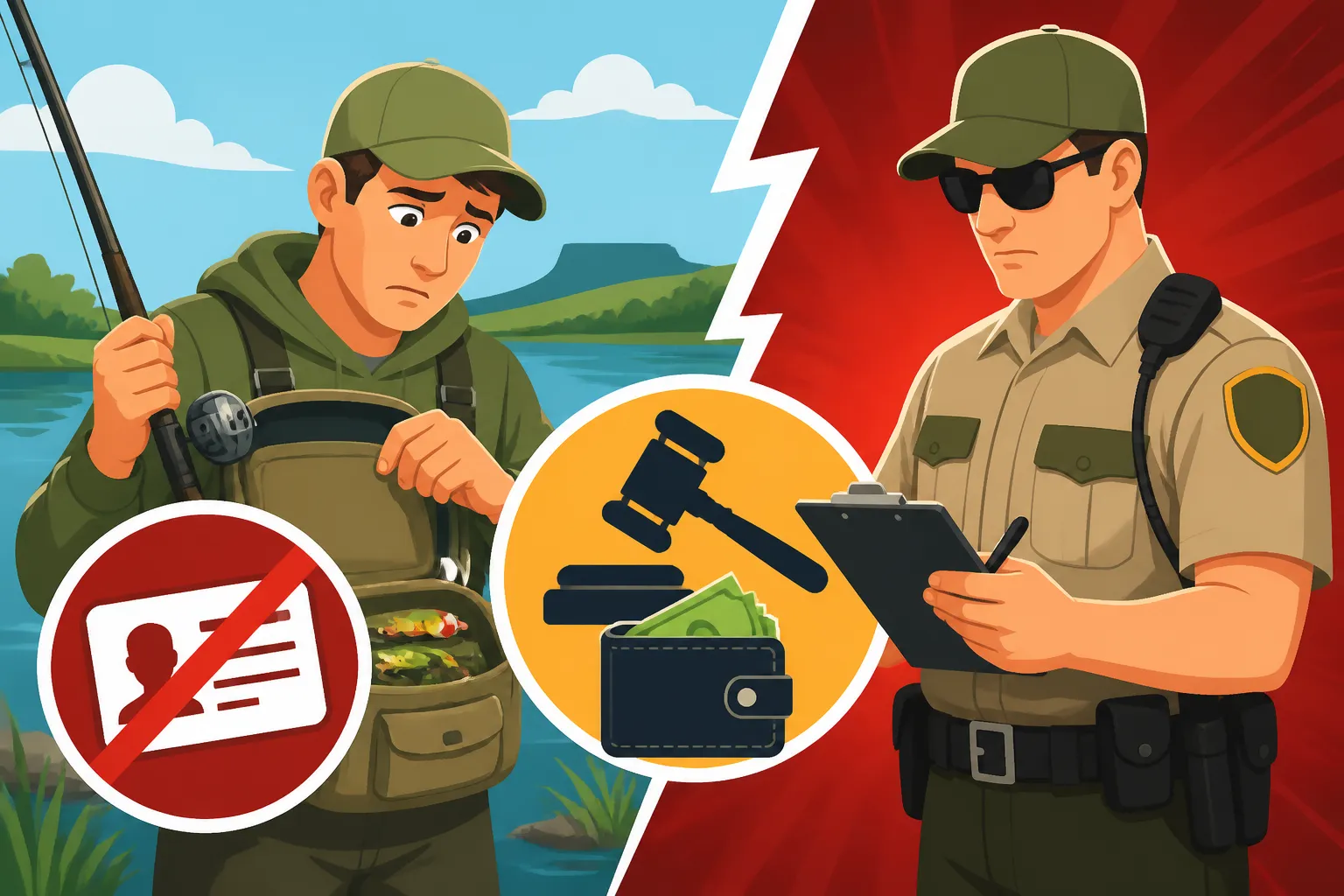
The officer will usually explain the violation to you and issue a citation, which is essentially a ticket. This citation will detail the specific offense, the date, time, and location, and often include information about your court appearance or how to pay the fine. It's crucial to remain calm and respectful during this encounter. Arguing or being uncooperative can lead to additional charges, such as obstructing an officer, which will only make your situation worse. Answer their questions honestly and comply with their instructions. Remember, they are enforcing state law. If you feel there's a misunderstanding, you'll have an opportunity to present your case in court.
Fines and Court Costs
The most immediate and common penalty for a fishing license violation in Nebraska is a monetary fine. These fines can vary depending on the severity of the offense, whether it's a first-time violation, and the specific regulation broken. For a basic "fishing without a license" charge, the fines can range from several hundred dollars. For example, a quick search often indicates fines for fishing without a license can be in the range of $100-$200, but these amounts are subject to change and can be higher depending on the specific circumstances and judicial discretion.
Beyond the fine itself, you’ll almost always be responsible for court costs. These are administrative fees associated with processing your case through the legal system. These costs can add another significant amount to your total bill, sometimes even exceeding the original fine. For instance, a $150 fine could easily become a $300-$400 total bill once court costs are factored in. This can feel like a real punch to the gut, especially when you consider that an annual Nebraska fishing license is usually much less expensive than even the lowest fine.
Here’s a simplified breakdown of typical penalties for common violations:
| Violation Type | Typical Outcome (First Offense) | Notes |
|---|---|---|
| Fishing Without a Valid License | Fine ($100-$500) + Court Costs | Misdemeanor offense. Amount depends on discretion/circumstances. |
| Failing to Possess/Display License | Fine ($50-$200) + Court Costs | May be reduced if valid license is proven after the fact. |
| Misrepresenting Residency/Age | Fine (Higher, $200-$1000+) + Court Costs | Can lead to fraud charges; potential license revocation. |
| No Aquatic Habitat/Trout Stamp | Fine ($50-$200) + Court Costs | Separate violation, in addition to fishing license requirements. |
| Over Bag Limit / Length Violation | Fine (Variable, often per fish) + Court Costs | Can also include civil damages for illegally taken fish. |
| Using Prohibited Gear/Method | Fine (Variable) + Court Costs | May involve confiscation of gear. |
Note: These are typical ranges and outcomes. Actual penalties can vary significantly based on individual circumstances, judicial discretion, and changes in state law.
License Revocation and Future Implications
Fines and court costs are just the beginning. One of the most impactful penalties for repeat offenders or serious violations is the potential revocation or suspension of your fishing privileges. The Nebraska Game and Parks Commission has the authority to suspend your fishing license for a period, meaning you cannot legally fish in Nebraska (or sometimes in other states with reciprocity agreements) for months or even years.
Imagine not being able to cast a line during the prime walleye run or missing an entire ice fishing season. For passionate anglers, this can be a devastating consequence. Moreover, a violation can be recorded on your record. If you are cited again in the future, these past violations can lead to even harsher penalties, longer suspensions, and higher fines. It's a cumulative system designed to deter repeated offenses. This record could also affect your ability to purchase other hunting or trapping permits. Serious violations can even lead to misdemeanor charges on your criminal record, which has broader implications beyond just fishing.
Understanding Civil Damages
Beyond the fines and potential license revocation, some violations carry an additional layer of financial penalty: civil damages. This primarily applies when you illegally take fish, especially protected species or those with high conservation value, or if you exceed bag limits significantly. The state views these fish as a public resource, and by illegally taking them, you've caused a loss to the state.
The Nebraska Game and Parks Commission can assess civil damages for each illegally harvested fish, with specific values assigned to different species. For instance, a single trophy walleye or a paddlefish could have a civil damage value of hundreds of dollars, separate from any fines. These civil damages are intended to compensate the state for the ecological value and management costs associated with the lost resource. This means you could be looking at fines, court costs, license suspension, and a civil damage claim, all stemming from one poor decision. It really drives home the point that taking fish illegally isn’t just a minor infraction; it’s an act that diminishes a public resource.
Avoiding Violations and Staying Legal
Nobody sets out to break the law, but sometimes, a little oversight can lead to big problems. The good news is that avoiding these penalties is usually quite simple with a bit of proactive effort.
Proactive Steps to Ensure Compliance
The absolute best way to avoid a fishing license violation is to be prepared and informed. First and foremost, purchase your license well in advance of your fishing trip. Don't wait until the last minute, as unforeseen issues with online systems or vendor hours could leave you scrambling. You can easily purchase them online through the GoOutdoorsNE system, or in person at numerous vendors across the state. Remember, you might need a separate Nebraska Aquatic Habitat Stamp Explained or Nebraska Trout Stamp Requirements depending on what and where you plan to fish.
Secondly, always carry your valid license with you. If you have a digital copy on your phone, make sure your phone is charged and consider having a backup printout. A waterproof case, readily available on Amazon, can keep your physical license safe from water damage. I keep one clipped to my fishing vest for easy access. Thirdly, make it a habit to review the current year's Nebraska fishing regulations. These can change annually, so what was legal last year might not be this year. You can usually find the most up-to-date regulations booklet on the Nebraska Game and Parks website or pick up a physical copy wherever licenses are sold.
Resources for Checking Regulations and Buying Licenses
Nebraska Game and Parks has made it quite convenient to stay legal. Their official website is a treasure trove of information. You can access the full Nebraska Fishing Regulations Explained and often download a PDF version of the current fishing guide. This guide outlines everything from season dates and bag limits to tackle restrictions and special area rules. It's a must-read for any serious angler.
When it comes to purchasing licenses, the GoOutdoorsNE online platform is incredibly user-friendly. You can buy your Nebraska Annual Fishing Permit or even a short-term Nebraska 1-Day Fishing Permit from the comfort of your home. If you prefer to buy in person, there are hundreds of licensed vendors across the state, including bait shops, sporting goods stores, and even some convenience stores. You can find a list of these locations on the Game and Parks website or by searching "Where to Buy a Nebraska Fishing License." It's a simple process that typically takes just a few minutes, far less time and stress than dealing with a violation. Being prepared is truly your best defense against unexpected fines and legal trouble.
Disclaimer
Please remember that this article provides general information and guidance regarding Nebraska fishing license violations and penalties. It is not intended as legal advice. Laws and regulations can change, and interpretations may vary. Always consult the most current Nebraska Game and Parks Commission regulations and, if facing a legal issue, seek advice from a qualified legal professional.