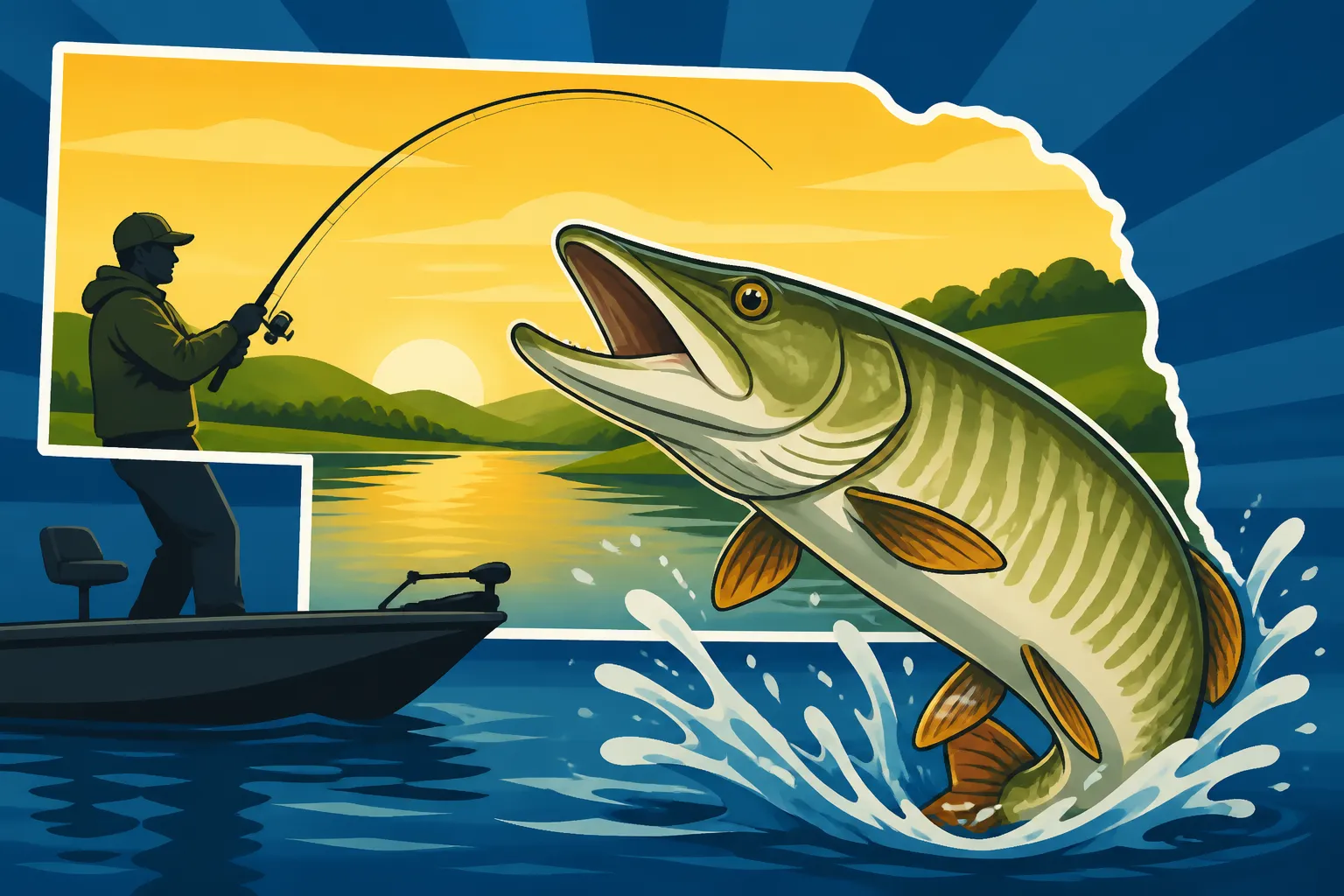
Best Nebraska Lakes for Muskie
Finding muskie in Nebraska can feel like trying to catch a ghost – they're notoriously elusive, require specialized gear, and demand a lot of patience. If you've spent countless hours casting without success or simply don't know where to begin your quest for "the fish of 10,000 casts," you're in the right place. This comprehensive guide will zero in on the best Nebraska lakes for muskie, detailing where to find them, what techniques work, and how to maximize your chances of hooking into one of these freshwater titans.
Understanding Muskie Fishing in Nebraska
Muskellunge, or "muskie" as they're more commonly known, represent the pinnacle of freshwater predatory fish. For many anglers, catching a muskie is a lifelong pursuit, a true badge of honor. But what makes them so special, especially here in Nebraska?
Why Muskie Are Elusive and Highly Sought After
Muskie have earned their nickname, "the fish of 10,000 casts," for good reason. They are apex predators with an incredibly discerning palate and a tendency to follow lures without striking, often disappearing at the last second. This behavior can be incredibly frustrating, yet it's precisely what fuels the obsession for many anglers. In Nebraska, where they aren't native, their presence is entirely due to dedicated stocking programs by the Nebraska Game and Parks Commission, making every encounter feel even more special. The sheer size they can achieve—often pushing into the 40-50 inch range and beyond—means battling one is an unforgettable experience. It’s not just about the catch; it’s about the challenge, the strategy, and the respect for such a magnificent creature.
Nebraska's Muskie Stocking Program
Unlike some of Nebraska's more prevalent species like walleye or catfish, muskie populations are entirely maintained through stocking. The Nebraska Game and Parks Commission invests significant effort into raising and releasing muskie fingerlings into select waters to create these trophy fisheries. This isn't a random endeavor; it's a carefully managed program designed to provide unique angling opportunities for those dedicated to pursuing these freshwater giants. Understanding that these fish are stocked helps us appreciate their scarcity and the importance of responsible angling, especially catch and release practices, to sustain these limited populations for future generations. Without this proactive stocking, muskie fishing in Nebraska simply wouldn't exist as it does today.
Key Characteristics of Muskie Habitat
If you want to catch a muskie, you need to think like a muskie. These ambush predators prefer certain types of cover and structure that allow them to hide and surprise their prey. They are incredibly wary fish and will often relate to the edges of dense vegetation, submerged timber, rock piles, and sharp drop-offs. Imagine yourself as a muskie, lurking in the shadows, waiting for an unsuspecting walleye or white bass to swim by. This means focusing your efforts on areas where these structures meet open water, creating perfect ambush points. In Nebraska's reservoirs, this often translates to searching out the deeper weed lines, old creek channels, and areas with standing timber or brush. Understanding these preferences is key to narrowing down your search on what can often feel like vast, daunting bodies of water.
Top Nebraska Lakes for Muskie Fishing
When it comes to muskie fishing in Nebraska, one name stands head and shoulders above the rest, consistently producing trophy-sized fish and drawing dedicated muskie anglers from across the region.
Merritt Reservoir: The Premier Muskie Destination
Merritt Reservoir, nestled in the heart of the Sandhills near Valentine, Nebraska, is unequivocally the premier muskie fishery in the state. If you're serious about catching a muskie in Nebraska, this is where you need to be. The Nebraska Game and Parks Commission has maintained a robust purebred muskie stocking program here for decades, creating a strong population of large, healthy fish.
What makes Merritt so ideal for muskie? First, its pristine Sandhills environment offers incredibly clear water, allowing muskie to utilize their keen eyesight effectively. More importantly, the reservoir boasts an abundance of crucial muskie habitat. You'll find extensive weed lines, especially coontail and sago pondweed, particularly in the northern arms and bays like Boardman Creek, Powder Horn, and Beaver Creek. These weed edges provide perfect ambush points for muskie. Beyond the vegetation, Merritt also features numerous submerged humps, rock piles, and deep channels, especially near the dam and in the main lake basin, where larger muskie will often suspend or relate to deeper structure during hotter months.
Anglers targeting muskie at Merritt Reservoir often focus on casting large bucktails, jerkbaits, and crankbaits along these weed edges, over humps, and through areas of standing timber. Trolling large deep-diving crankbaits can also be effective in open water or along contours, especially when fish are suspended. While muskie can be caught throughout the open water season, early summer (June) and late fall (October-November) often offer the most productive fishing, as fish are more active and aggressive. Remember, patience is paramount here. Even on a good day, you might make thousands of casts before a muskie shows itself. However, the reward of hooking into a 40-inch-plus muskie from Merritt is an experience you won't soon forget.
Other Promising Muskie Waters in Nebraska
While Merritt Reservoir is undoubtedly the king for purebred muskie, Nebraska has had limited success with other muskie or hybrid tiger muskie fisheries over the years. Historically, places like Box Butte Reservoir in the panhandle have been stocked with tiger muskie, a sterile hybrid cross between a muskie and a northern pike. While these programs have seen varying levels of success and are not as consistently productive as Merritt for pure muskie, Box Butte occasionally yields a tiger muskie, offering a potential, albeit rarer, opportunity.
It's crucial to stay updated with the latest stocking reports and fisheries surveys from the Nebraska Game and Parks Commission. Programs change, and while Merritt remains the stronghold, new opportunities might emerge or older ones might be revitalized. For instance, anglers often wonder, "Can you catch muskie at Merritt Reservoir?" and the answer is a resounding yes, it's the spot. However, if you're exploring other reservoirs, don't necessarily expect dedicated muskie populations; any catches outside of Merritt are often incidental or from older, less robust stocking efforts. When planning a trip to a less known muskie spot, checking the current regulations for that specific body of water is vital, as rules can vary. For those planning a more general fishing trip to see what else is out there, our guide on the Best Places to Fish in Nebraska can offer broader insights.
To illustrate the current landscape:
| Lake Name | Primary Muskie Type | Stocking Status | Habitat Features | General Fishing Difficulty |
|---|---|---|---|---|
| Merritt Reservoir | Purebred Muskie | Active, Consistent | Clear water, extensive weed lines, submerged timber | High (but rewarding) |
| Box Butte Reservoir | Tiger Muskie | Historical/Limited | Stained water, rocky areas, some vegetation | Very High (incidental) |
This table really drives home that if a muskie is your target, Merritt Reservoir should be your primary focus.
Essential Techniques and Gear for Nebraska Muskie
Landing a muskie requires more than just luck; it demands specialized techniques and heavy-duty gear to handle these powerful, toothy predators. Don't show up with your crappie rod expecting success!
Mastering Muskie Lures and Presentations
Muskie are big fish, and they require big baits. Forget your finesse tactics; this is about making a statement with your lure. The most common and effective muskie lures generally fall into a few categories:
- Bucktails: These are often considered a muskie angler's bread and butter. Large, flashy blades and pulsing bucktail hair create a lot of vibration and visual appeal. Sizes range from 8 to 14 inches. Retrieve them with a steady, fast pace, occasionally pausing or snapping the rod to create erratic movements.
- Jerkbaits: These long, slender lures are designed to be "ripped" or "jercked" by the angler, creating a wounded baitfish action. They come in various diving depths and can be highly effective when fish are holding deeper or when you need to cover water.
- Crankbaits: Large lipped crankbaits that dive to specific depths are excellent for trolling or casting over deeper structure. Look for models that mimic the larger baitfish in Merritt, such as walleye, suckers, or white bass.
- Soft Plastics: Giant soft plastic baits, often rigged on heavy jig heads or weighted hooks, can be incredibly versatile. They offer a more subtle presentation when muskie are finicky but still provide a substantial profile.
- Topwater Lures: During low-light conditions or when muskie are actively feeding near the surface, large walk-the-dog baits, prop baits, or even large poppers can trigger explosive strikes. Seeing a muskie blow up on a topwater is truly unforgettable!
The key to presentation is often speed and erratic action. Muskie are triggered by what appears to be an escaping or injured prey. Don't be afraid to experiment with retrieve speeds, pauses, and sudden changes in direction. And always, always perform a "figure-eight" at the boat! This technique involves sweeping your lure in a figure-eight pattern beside the boat at the end of every retrieve. Many muskie will follow a lure all the way to the boat and strike only when they perceive it's about to escape.
Recommended Rods, Reels, and Line
Muskie fishing is not for the faint of heart, and your gear needs to reflect that. You're not just casting heavy lures; you're battling a powerful, often massive fish.
- Rods: Think heavy-duty. Muskie rods are typically 7'6" to 9' in length, with a heavy or extra-heavy power rating and a fast action. This length helps with casting heavy lures long distances and provides leverage to control a hooked muskie. Look for rods specifically labeled "muskie rod" from brands like St. Croix, G. Loomis, or Shimano.
- Reels: A high-quality baitcasting reel with a robust drag system is essential. You'll want a reel with a high line capacity (at least 150 yards of heavy braid) and a strong retrieve. Gear ratios can vary, with some anglers preferring faster reels for bucktails and others opting for slower reels for jerkbaits or deep-diving crankbaits. Ensure it's capable of handling the constant strain of casting heavy lures.
- Line: Braided line is the standard for muskie fishing. It offers superior strength, sensitivity, and minimal stretch, which is crucial for setting hooks in a muskie's bony mouth. Opt for braid in the 65-100 lb test range. You'll also need a heavy-duty leader, typically 100-150 lb test fluorocarbon or steel, to prevent bite-offs from their razor-sharp teeth. Never skimp on the leader!
Having the right gear isn't just about making the catch; it's about safety for you and the fish. Trying to land a muskie on inadequate tackle can lead to lost fish, broken gear, and potentially injured hands from trying to handle a wild, thrashing predator. For more insights on specific gear, our guides on Best Rods and Reels for Nebraska Fishing and Best Tackle for Nebraska Walleye Fishing (many principles overlap for big fish) can offer additional perspective. If you're looking for guidance beyond Muskie, finding a local guide can be invaluable. Websites like FishingBooker can help you connect with experienced guides in the Merritt Reservoir area who specialize in muskie.
Best Times to Target Muskie in Nebraska
Timing is everything in muskie fishing. While they can be caught throughout the open water season, certain periods and conditions tend to be more productive.
- Spring (Post-Spawn, Late May – June): After muskie have completed their spawning rituals, they enter a post-spawn feeding frenzy to regain energy. Water temperatures are rising, and baitfish are abundant. This can be an excellent time to target them around shallower weed beds and newly emerging vegetation.
- Summer (July – August): As water temperatures climb, muskie often move to deeper, cooler water. Look for them around deeper points, submerged humps, thermoclines, and where deep water meets weed edges. Early mornings, late evenings, and overcast days tend to be most productive during summer. Night fishing can also be surprisingly effective for large muskie.
- Fall (September – November): Many muskie anglers consider fall the absolute prime time for trophy muskie. As water temperatures drop, muskie go on a major feeding binge, packing on weight for the winter. They become incredibly aggressive and will readily chase large baits. Focus on major points, deep weed lines, and structural elements. The fish are often shallower than you might expect, especially on sunny days.
Beyond the seasons, pay attention to weather patterns. Stable weather conditions for a few days can often lead to more active muskie. Overcast days with a light chop on the water can also be fantastic, as the reduced light penetration makes muskie less wary and the chop breaks up their vision, making them more likely to strike. Always check the local weather before heading out, and consider our broader guide on Nebraska Fishing Seasons Explained for how conditions change throughout the year.
Muskie Regulations and Conservation
Fishing for muskie in Nebraska isn't just about the thrill of the chase; it's also about being a responsible steward of this unique fishery. Because these fish are stocked and represent a significant investment by the state, strict regulations and ethical angling practices are crucial for their long-term survival.
Nebraska's Strict Muskie Regulations
The Nebraska Game and Parks Commission enforces specific, often very stringent, regulations for muskie and tiger muskie. These rules are designed to protect the limited population and allow fish to reach trophy sizes. Currently, for Merritt Reservoir, the regulation typically allows for a very low daily bag limit (often one fish) and a substantial minimum length limit, sometimes as high as 40 or 50 inches. This means that most muskie caught will need to be released.
It is absolutely paramount that you consult the most current Nebraska Fishing Guide or the Nebraska Game and Parks Commission website before every fishing trip, especially if you're targeting muskie. Regulations can change annually, and knowing the precise length limits, bag limits, and any special restrictions for Merritt Reservoir or any other body of water is your responsibility. Failure to adhere to these rules can result in significant fines and penalties, which is the last thing any angler wants. These strict rules are a testament to the fact that muskie fishing in Nebraska is a special privilege, not a given. Our Nebraska Fishing Regulations Explained article provides a general overview, but always check the specifics for muskie.
Practicing Catch and Release for Muskie
Given the high length limits and the dedication required to maintain Nebraska's muskie fisheries, catch and release is not just encouraged—it's practically mandatory for most muskie encounters. Releasing a muskie properly is just as important as catching it, ensuring that these incredible fish survive to fight another day and grow even larger.
Here are critical catch and release practices for muskie:
- Minimize Fight Time: Use heavy tackle to land the fish as quickly as possible, reducing stress and exhaustion.
- Keep the Fish in the Water: Whenever possible, avoid removing the fish from the water entirely. This supports its weight and protects its slime coat.
- Use Proper Tools: Have long-nosed pliers, bolt cutters (for cutting hooks if necessary), and a large, knotless rubber landing net or a cradle specifically designed for muskie. Never use a gaff.
- Handle with Care: Support the muskie horizontally with both hands—one under the belly and one firmly gripping the base of the tail. Avoid holding it vertically by the jaw, which can damage its spine.
- Quick Hook Removal: If hooks are deeply set, use bolt cutters to snip the hooks close to the shank, leaving the barb in the fish. This is often less damaging than trying to extract a deeply embedded hook.
- Revive the Fish: If the muskie is exhausted, hold it gently in the water, facing into the current (or move it back and forth if there's no current) until it regains its strength and can swim away under its own power. Do not release it until it vigorously kicks its tail.
- Take Photos Quickly: If you must take a photo, do so quickly with the fish mostly in the water. Get your camera ready before the fish is out of the water.
Remember, muskie are tough but delicate. Their high metabolism means they can succumb to stress quickly, especially in warmer water. By practicing careful catch and release, you contribute directly to the health and future of Nebraska's trophy muskie fishing.
Disclaimer
The information provided in this guide is for general informational purposes only. Fishing regulations, stocking programs, and conditions can change rapidly. Always consult the official Nebraska Game and Parks Commission website or their current fishing guide for the most up-to-date and accurate regulations and information before planning your fishing trip. Adherence to all local, state, and federal laws is the responsibility of the angler.