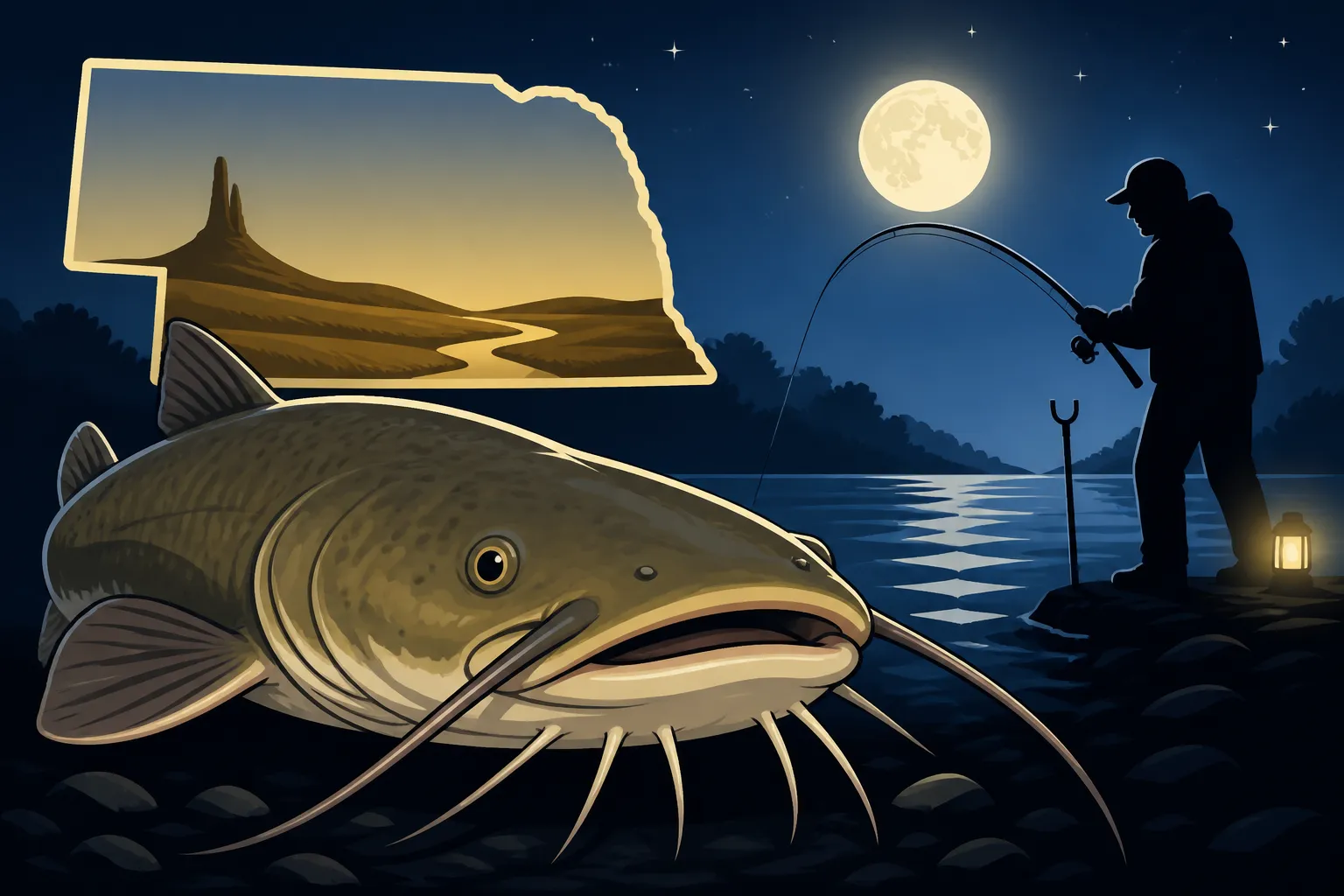
How to Catch Flathead Catfish at Night
There's nothing quite like the thrill of chasing flathead catfish in Nebraska, but if you've ever spent a sunny afternoon casting endlessly with little to show for it, you know the frustration. These powerful, elusive fish often become active once the sun dips below the horizon, turning night into prime fishing time. This guide is your comprehensive walkthrough to mastering the art of catching flathead catfish after dark, ensuring you're prepared, strategic, and ready to land that trophy Nebraska whisker fish.
Why Night Fishing for Flathead Catfish is a Game-Changer
When it comes to flathead catfish, understanding their nocturnal nature is the first step to success. These big, solitary predators are built for hunting under the cover of darkness, and trying to catch them during the bright light of day can feel like swimming upstream against their natural instincts.
Flathead Catfish: The Nocturnal Predator
Unlike their channel cat cousins who might nibble on a variety of baits day or night, flatheads are ambush predators with a strong preference for live bait, and they do most of their serious feeding when the sun goes down. Think of it from their perspective: the low light conditions give them an advantage over their prey, and the cover of night helps them avoid being prey themselves to larger animals, or even the general commotion of daytime boat traffic. This shift in behavior means they become bolder, moving out of their daytime lairs in heavy cover to actively forage in more open areas.
During the day, flatheads often hunker down in dense submerged timber, deep holes, or undercut banks, conserving energy and waiting. But as dusk turns to dark, a switch flips. They start cruising ledges, current breaks, and creek channels, looking for an easy meal. This aggressive feeding pattern makes night fishing not just a viable option, but often the most effective strategy for targeting larger flatheads. Plus, let's be honest, there's a certain peacefulness, a unique solitude that comes with being out on the water under a canopy of stars, waiting for that tell-tale thump on your rod. It’s a completely different experience than fishing during the bustling daytime hours.
Beating the Heat and the Crowds
Nebraska summers can get scorching hot, making daytime fishing not only uncomfortable but also less productive as fish become sluggish. Night fishing offers a welcome reprieve from the heat, making for a much more pleasant experience for the angler and often a more active bite from the fish. Cooler water temperatures can also increase the oxygen levels, further stimulating fish activity.
Beyond the temperature, there's the crowd factor. Many popular fishing spots in Nebraska can get pretty busy during the day, especially on weekends. By venturing out at night, you'll often find yourself with far less competition, allowing you to access prime spots that might be constantly pressured during daylight hours. This reduced pressure can mean more natural feeding behavior from the fish and a better chance for you to present your bait effectively without constant disturbances from other boats or bank anglers. Whether you're targeting the Platte River, the Missouri River, or one of our great reservoirs like Branched Oak Lake, having a bit more space can make all the difference.
Essential Gear for Your Night Flathead Catfish Excursion
Night fishing for flatheads isn't just about showing up in the dark; it requires specific gear to ensure safety, efficiency, and success. You'll want to be well-prepared, from your rod and reel setup to your lighting and other creature comforts.
Heavy-Duty Rods, Reels, and Line
When you're battling a hard-fighting flathead, especially one that could easily break the 30-pound mark, you need serious tackle. This isn't the time for your lightweight bass setup.
- Rods: Look for heavy to extra-heavy action rods, typically 7 to 9 feet long. A longer rod helps with casting heavier baits and rigs, and provides better leverage when fighting a big fish, especially if you're fishing from the bank or a boat in tight quarters. A robust backbone is crucial to turn a flathead away from submerged timber or other snags. Many dedicated catfish rods from brands like Ugly Stik or Rippin Lips are perfect for this.
- Reels: Baitcasting reels are almost universally preferred for flathead fishing due to their power, durability, and line capacity. Look for models with a strong drag system and a retrieve ratio that can handle the heavy pull of a large fish. A good quality conventional reel can also be a fantastic choice.
- Line: Braided line is king for flatheads. It offers superior strength, sensitivity, and resistance to abrasion. Opt for 50-80 lb test braid. While mono or fluorocarbon can work for leaders, the main line should be braid. This strength is vital when a big flathead tries to bury itself in a log jam. For specific guidance, check out our guide on the best braided line for catfish fishing. You can find a wide array of reliable braided lines and reels on Amazon that will stand up to the challenge.
Lighting the Way: Safety and Practicality
Fishing in the dark requires careful planning for illumination. You'll need more than just your phone's flashlight.
- Headlamps: A good LED headlamp is indispensable. It keeps your hands free for baiting hooks, rigging, and handling fish. Look for models with adjustable brightness settings and a red-light option. Red light helps preserve your night vision and is less likely to spook fish or attract as many bugs as a bright white light. Many anglers swear by the Petzl or Black Diamond brands for their reliability.
- Lanterns/Area Lighting: For setting up camp, preparing bait, or just general ambient light in your boat or bank spot, a battery-powered LED lantern is invaluable. Avoid anything too bright that creates harsh shadows or disrupts the natural darkness of the environment. Some anglers even use glow sticks attached to their rod tips to easily spot bites, especially if they're running multiple lines.
- Boat Lights: If you're on the water, ensure your boat's navigation lights are fully functional and properly displayed. Additionally, consider portable LED floodlights or stern lights for task lighting, always being mindful not to blind other boaters or yourself. Safety should always be paramount when navigating Nebraska's waters after dark.
Essential Accessories for Comfort and Safety
Beyond the core fishing tackle, a few extra items will make your night fishing trip safer and more enjoyable.
- Rod Holders: Heavy-duty rod holders are a must, whether you're fishing from the bank or a boat. Flathead bites can be sudden and violent, and a proper holder will prevent your rod from being pulled into the water. Adjustable models that allow you to set the rod tip high are great for detecting subtle bites.
- Comfortable Seating: A sturdy, comfortable chair or boat seat makes those long waits much more bearable. You'll be spending hours out there, so invest in something supportive.
- Bug Repellent: Nebraska nights, especially near water, often come with an abundance of mosquitoes and other biting insects. Don't forget a strong bug spray to keep them at bay.
- First-Aid Kit: Accidents happen, especially in the dark. A well-stocked first-aid kit for minor cuts, scrapes, or hook mishaps is absolutely essential.
- Communication Device: Always have a fully charged cell phone or, even better, a marine radio if you're on a larger body of water, in case of emergencies. Let someone know where you're going and when you expect to return.
- Waders and Rain Gear: Even on a clear night, dew can be heavy, and unexpected showers can roll in. If you're bank fishing, waders can help you get to those slightly deeper spots. If you plan to be out for an extended period, investing in good rain gear is wise. You can find a wide range of dependable outdoor gear, including headlamps and waders, on platforms like Amazon.
Locating Flathead Hotspots After Dark in Nebraska
Knowing where flatheads like to hang out is arguably more important than any fancy gear. These fish are creatures of habit, often relating to specific structures and current breaks that offer both shelter and ambush opportunities.
River Systems: Current Breaks and Structure
Nebraska's rivers, particularly the Platte and the Missouri, are prime flathead territory. Understanding how flatheads use current is key to finding them.
- Deep Holes and Eddies: Flatheads love deep, slow-moving holes adjacent to faster currents. These spots allow them to conserve energy while waiting for prey to be swept by. Look for eddies behind islands, sandbars, or bridge pilings where the current slows down, creating a natural holding spot. On the mighty Missouri River, these can be especially productive.
- Submerged Timber and Log Jams: These are flathead magnets. Wood provides cover, structure, and often food sources for baitfish. Flatheads will hide within these snags during the day and move out to the edges or slightly upstream/downstream to feed at night. Fishing directly into these snarls can be risky for your tackle, but fishing the seams where the current meets the timber can be deadly.
- Wing Dams and Rock Piles: Man-made structures like wing dams along the Missouri River create excellent current breaks and scour out deep pockets. Flatheads will position themselves on the downstream side of these structures, out of the main current, ready to ambush unsuspecting baitfish. Rock piles provide similar cover and feeding opportunities.
Reservoirs and Lakes: Old River Channels and Submerged Cover
Nebraska's many reservoirs, like Lake McConaughy or Merritt Reservoir, also hold impressive flathead populations. While they lack the strong, consistent current of a river, they have their own unique underwater topography that attracts flatheads.
- Old Creek and River Channels: When these reservoirs were flooded, old creek and river channels became submerged highways for fish. Flatheads will often patrol these deeper channels, especially those with an abundance of submerged timber or rock piles along their edges. Look for bends in these old channels where fish might congregate.
- Submerged Timber and Brush Piles: Just like in rivers, wood is gold in reservoirs. Flatheads will relate heavily to standing timber, fallen trees, and artificial brush piles that provide cover and attract baitfish. Often, the biggest flatheads are found in the nastiest cover.
- Points and Humps: Points extending into the lake and submerged humps can be excellent ambush points for flatheads, especially if they have nearby deep water access or some form of cover like rocks or timber. As night falls, flatheads might move up onto these structures from deeper water to feed.
- Dam Faces and Riprap: The riprap along dam faces can hold a surprising number of flatheads. The rocks provide cover, and often, there's a deeper drop-off nearby. These areas can be particularly productive after dark when flatheads move shallower to feed on baitfish that are drawn to the warmer surface water or insect hatches. For more general advice on locating fish without electronics, check out our piece on how to locate fish without electronics.
Best Baits and Rigging for Night Flathead Catfish
Flatheads are known for their preference for live, struggling bait. While they can sometimes be coaxed into biting cut bait, especially smaller ones, a lively offering is almost always your best bet for a true trophy.
Live Bait: The Undisputed King
When it comes to flathead catfish, live bait isn't just a suggestion; it's practically a requirement. These fish are predators, and they want a meal that's swimming and struggling.
- Preferred Baitfish: In Nebraska, common and highly effective live baits include:
- Bluegill/Sunfish: Readily available in most waters, these are a flathead staple. Check local regulations for size and possession limits, and ensure you're legally acquiring them.
- Crappie: Another excellent choice, offering a good profile and lively action. Again, be mindful of fishing regulations for using game fish as bait.
- Bullheads: Tough and resilient, bullheads can withstand being fished in heavy cover and stay alive for a long time. They are a top choice for serious flathead anglers.
- Suckers: Larger suckers can be incredibly effective, especially for targeting bigger flatheads.
- Goldfish/Shiners: While not native to all waters, these can be good bait options where legal, and their flashy scales can attract attention in low light.
- Keeping Bait Lively: The key to live bait is keeping it alive and active. A good aerated livewell or bait bucket is crucial. The more active your bait, the more scent and vibration it sends out, drawing in flatheads from a distance. Change water frequently, especially in warmer temperatures, and don't overcrowd your bait. For more on this, our guide on the best bait for Nebraska catfish offers additional insights.
Rigging for Success: The Carolina Rig and Beyond
Once you have your lively bait, proper rigging is essential to present it effectively and land the fish.
- The Carolina Rig (Slip Sinker Rig): This is perhaps the most popular and effective rig for flatheads.
- Components: You'll need an egg sinker (1-4 oz, depending on current and bait size), a bead to protect your knot, a heavy-duty barrel swivel (at least 100 lb test), and a monofilament or fluorocarbon leader (30-60 lb test, 18-36 inches long).
- Assembly: Thread the sinker onto your main line, followed by the bead. Tie the main line to one end of the barrel swivel. Tie your leader to the other end of the swivel, and then tie your hook to the end of the leader.
- Why it Works: The slip sinker allows the line to move freely after a bite, letting the flathead pick up the bait without immediately feeling the weight of the sinker. This often results in a more confident take.
- Three-Way Swivel Rig: Useful in heavier current or when you want to suspend your bait slightly off the bottom. One eye of the swivel goes to your main line, another to a short dropper line with a sinker, and the third to your leader with the hook and bait.
- Hook Selection: Circle Hooks are Key: For flathead fishing, circle hooks are highly recommended, especially when using live bait. They are designed to hook fish in the corner of the mouth, which is much safer for the fish if you plan to release it, and it reduces the chance of gut hooking.
- Size: Use large, stout circle hooks (5/0 to 10/0, depending on bait size and target fish). The hook point should be exposed once the bait is rigged.
- Setting the Hook: With circle hooks, you don't "set the hook" in the traditional sense. Instead, let the fish take the bait, then slowly reel down until the line tightens, and the rod loads up. The fish will essentially hook itself.
Presenting Your Bait in the Dark
Accuracy and stealth are important, even at night. Cast your bait strategically to areas where you expect flatheads to be holding. If fishing near heavy cover, try to place your bait just on the edge, or in a nearby open pocket, to entice the flathead out. Avoid casting directly into impenetrable snags unless you're prepared to lose some tackle.
When you cast, aim for a gentle entry into the water to avoid spooking any nearby fish. Once your bait is out, keep your line relatively taut to feel for bites, but not so tight that it restricts your bait's movement. You want that live bait to do its job, creating commotion and attracting attention.
Techniques for Successful Night Flathead Angling
Catching flathead catfish at night requires a blend of patience, strategy, and understanding of their behavior. It's not always about frantic casting, but more about precise placement and letting the fish come to you.
Anchoring and Positioning Your Boat or Bank Spot
Your chosen location is paramount for night flathead fishing. Once you've identified a promising spot—be it a deep hole on the Platte River, a log jam on the Missouri, or a submerged channel in Lake McConaughy—the way you position yourself can make or break your trip.
- Boat Anchoring: If you're in a boat, use two anchors (one off the bow, one off the stern) to securely hold your position against any current or wind. This prevents your boat from swinging and tangling lines, or worse, drifting into dangerous submerged obstacles in the dark. Position yourself slightly upstream or upwind of your target structure, allowing you to cast down into it and let your bait naturally drift into the strike zone. Make sure your anchor lines are strong and long enough for the depth and conditions.
- Bank Setup: For bank anglers, select a spot with clear casting lanes, safe footing, and good access to the water. Look for natural current breaks or points that extend into the river or lake. A sturdy rod holder is crucial here, as a flathead strike can be powerful enough to rip an unattended rod into the water. Consider setting up multiple rods, fanned out to cover different depths and sections of your chosen area. This maximizes your chances and helps you pinpoint exactly where the fish are active.
The Art of the Wait and the Strike
Night flathead fishing is often a game of patience, punctuated by moments of intense action. It's not uncommon to wait an hour or more between bites, but when a flathead decides to hit, it's usually unmistakable.
- Patience is a Virtue: Resist the urge to constantly check your bait or reel in. Let your live bait do its work. Flatheads are solitary and meticulous hunters; they'll often stalk their prey before committing to a strike. Excessive reeling or disturbance can spook them.
- Detecting the Bite: With a Carolina rig and live bait, a flathead bite typically starts with a slow, deliberate pull on the rod. It might feel like a slow, steady increase in pressure, or a series of rhythmic thumps. The rod tip will steadily bend down as the fish takes the bait and starts to swim away. Do not immediately yank on the rod! This is where the circle hook comes into play.
- Engaging the Circle Hook: When you feel that steady pressure, slowly and smoothly reel down to take up the slack in your line until your rod tip loads up. The circle hook will pivot and embed itself in the corner of the fish's mouth. Once the rod is fully bent, you can lift and begin the fight. This slow, steady engagement prevents gut hooking and ensures a solid connection. It takes practice, but once you get the feel for it, it's incredibly effective. For more on various techniques, check out our guide on how to catch catfish in Nebraska.
Fighting the Fish in the Dark
Landing a large flathead in daylight is a challenge, but doing so in the dark adds another layer of complexity.
- Stay Composed: When that rod doubles over, it's easy to get excited. Stay calm and focus on the fight. Flatheads are powerful, and they will try to run into any nearby cover.
- Leverage and Drag: Use the strong backbone of your rod to turn the fish away from snags. Your reel's drag should be set tight enough to tire the fish but loose enough to prevent line breakage. Let the fish make runs when it wants to, but regain line whenever you can.
- Lighting and Netting: As you get the fish close to the boat or bank, use your headlamp to illuminate the water but avoid shining it directly into the fish's eyes, which can cause it to make another desperate run. Have a large, sturdy landing net ready. Flatheads have thick bodies and powerful tails, so a net with a wide hoop and deep basket is essential. Never try to lift a large flathead by the line alone. When you are able to land the fish, make sure you know how to release a fish safely to survive, if you plan to.
Safety and Preparation for Overnight Catfish Trips
Fishing at night carries inherent risks that daytime excursions don't. Prioritizing safety and thorough preparation is non-negotiable, especially when you're targeting big, powerful fish in Nebraska's waters.
Navigation and Knowing Your Water
Even if you know a spot well in daylight, it can look entirely different and harbor unseen dangers at night.
- Pre-Trip Scouting: If possible, scout your chosen fishing area during the day. Identify submerged hazards like stumps, rock piles, or shallow bars. Note navigation markers, public access points, and potential emergency exits. This reconnaissance will be invaluable when darkness falls.
- GPS and Charts: A reliable GPS unit with detailed mapping of the area is a critical piece of equipment for boat anglers. Mark your fishing spots, anchor points, and any known hazards. Familiarize yourself with paper charts or electronic maps of the water body. Relying solely on visual cues in the dark can be deceptive and dangerous. Even for bank anglers, knowing your exact location can be crucial in an emergency.
- Water Levels and Current: Rivers like the Platte and Missouri can experience fluctuating water levels and strong currents. Check water level forecasts and current conditions before you head out. A spot that was safe at one water level might be treacherous at another, especially at night. Understanding how fishing changes from spring to summer in Nebraska can also inform your planning.
Emergency Preparedness: Expect the Unexpected
No one plans for an emergency, but every responsible angler prepares for one.
- First-Aid Kit: As mentioned, a comprehensive first-aid kit is absolutely essential. Include items for cuts, punctures (from hooks), insect bites, and basic medications. Ensure someone in your party knows how to administer first aid.
- Communication: A fully charged cell phone is a bare minimum. Consider a portable power bank to keep it charged. If you're on larger bodies of water, a marine VHF radio is highly recommended for reliable communication with other boats or emergency services, as cell service can be spotty in remote areas. Always inform someone of your fishing plans, including your location and estimated return time.
- Personal Flotation Devices (PFDs): Everyone in your boat must have a properly fitting PFD readily accessible, and children should wear them at all times. In the dark, if someone goes overboard, finding them without a PFD can be incredibly difficult. For more information on required safety equipment on a Nebraska boat, make sure you're up to date.
- Fire Extinguisher: For boaters, a marine-rated fire extinguisher should be onboard and easily accessible.
- Spare Lights and Batteries: Headlamps and lanterns can fail. Always carry spare batteries and at least one backup light source. A reliable and durable headlamp, like those you can find on Amazon, is an investment in your safety.
- Weather Awareness: Check the weather forecast thoroughly before you go and monitor it while you're out. Thunderstorms, high winds, or sudden drops in temperature can turn a pleasant night into a dangerous situation. Be prepared to pack up and head in if conditions deteriorate. Knowing how to plan a Nebraska fishing trip around weather is a valuable skill.
Respect for the Environment and Fellow Anglers
Even in the darkness, it's important to maintain good etiquette and respect for the environment.
- Leave No Trace: Pack out everything you pack in. This includes bait containers, discarded line, and food wrappers. Keep Nebraska's beautiful waters clean for everyone.
- Light Discipline: While you need light for safety and tasks, avoid unnecessary bright lights that can disturb other anglers or nearby wildlife. Use red light settings when possible, and only use bright white light when absolutely necessary.
- Noise Level: Keep noise levels down. Flatheads are sensitive to vibrations, and loud noises can scare fish away. Respect the peace and quiet of the night, which is often why many anglers choose to fish after dark.
By taking these safety precautions and preparing diligently, you can focus on the fishing and enjoy the unique experience of chasing flathead catfish under the Nebraska stars.
| Live Bait Choice | Pros | Cons | Ideal Situation |
|---|---|---|---|
| Bluegill/Sunfish | Readily available, very lively, natural prey. | Can be fragile, regulations may apply to size/number. | General flathead fishing in most Nebraska waters. |
| Crappie | Good profile, strong swimming action. | Game fish, strict regulations apply for use as bait. | Targeting larger flatheads where legal. |
| Bullheads | Extremely tough, survives well in cover, hardy. | Can be harder to acquire, sometimes sluggish. | Heavy cover, long soaks, targeting trophy flatheads. |
| Suckers | Large size attracts big fish, good struggling action. | Can be difficult to keep alive, larger profile. | Targeting true monster flatheads in rivers/reservoirs. |
Disclaimer
Fishing regulations, license requirements, and local restrictions can change. Always consult the most current Nebraska Game and Parks Commission regulations before heading out. This guide is for informational purposes only and does not supersede official rules or recommendations. Be aware of all local, state, and federal laws.