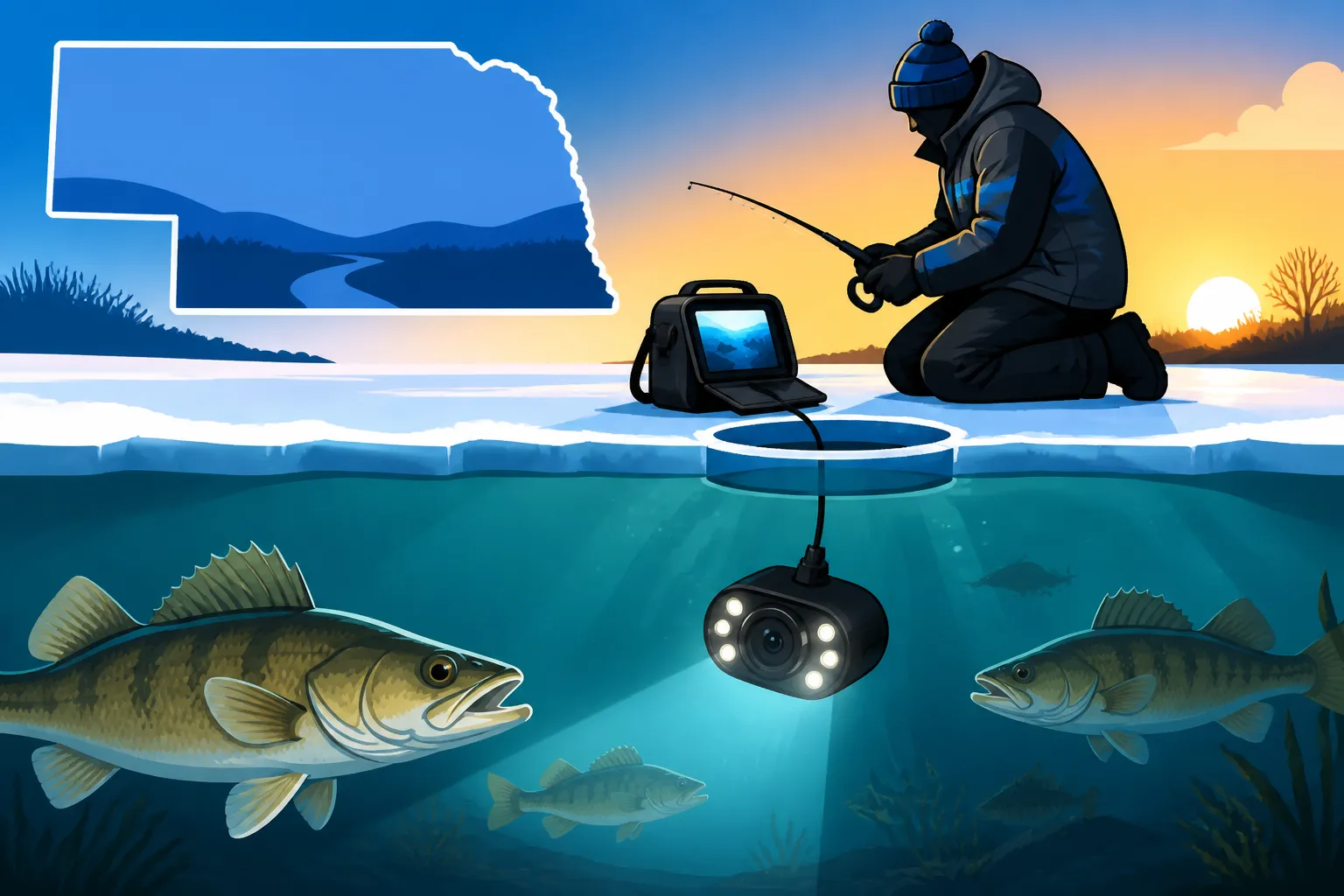
Best Underwater Camera for Ice Fishing
Staring down a dark hole in the ice, wondering if anything is actually swimming beneath your feet, is a common frustration for even the most seasoned Nebraska ice angler. It’s hard to stay motivated when you're just guessing what's going on in the underwater world. This comprehensive guide will illuminate your ice fishing experience, helping you understand the immense benefits of using an underwater camera and how to choose the best one for your winter adventures.
Why an Underwater Camera is a Game-Changer for Ice Fishing
Let's be honest, ice fishing can sometimes feel like a blind game of chance. You drill a hole, drop a line, and just hope for the best. But what if you could actually see what's happening down there? That's where an underwater camera comes in, transforming your guesswork into genuine insight and vastly improving your chances of success. It's not just a gadget; it's an extension of your eyes into the frigid depths, offering a whole new dimension to your time on the ice.
Seeing is Believing: How Cameras Enhance Your Experience
Imagine this: you've been jigging for twenty minutes, and nothing. Before an underwater camera, you'd probably assume no fish were around or they weren't interested. Now, with a camera, you might drop it down and immediately spot a school of crappie just off to the side, maybe a little deeper than your bait. Or perhaps you see a monster walleye slowly cruising through, totally ignoring your lure because it's too big, too small, or simply the wrong color. Suddenly, you have actionable intelligence. You can adjust your depth, change your bait, or even switch holes with purpose, rather than just hoping for a different outcome. It makes the entire process more engaging, turning passive waiting into active observation and problem-solving. It's truly a leap forward from traditional methods, providing instant feedback you just can't get otherwise.
Understanding Fish Behavior in Real-Time
One of the most valuable aspects of an underwater camera is the ability to observe fish behavior. Are they aggressive? Are they curious but hesitant? Do they follow your lure up but refuse to strike? Seeing how fish react to your presentation can teach you more in an hour than days of fishing blindly. For example, you might notice that the perch in a particular Nebraska lake are only hitting baits that are barely moving, or that channel catfish are spooked by fast jigging. This real-time feedback allows you to fine-tune your technique immediately. You can experiment with different jigging motions, bait colors, and retrieve speeds, watching precisely how the fish respond to each change. This learning process is invaluable, not just for the day's catch but for improving your ice fishing skills for years to come. It’s like having a private biology lesson unfold right before your eyes.
Identifying Structure and Cover Beneath the Ice
Beyond just seeing fish, an underwater camera reveals the world they live in. Often, what looks like a flat, featureless bottom on a sonar screen might actually be littered with subtle changes in contour, submerged brush piles, weed beds, or rock formations – all prime hiding spots for fish. This is crucial for species like largemouth bass or northern pike that often relate to structure. You can use your camera to identify exactly where that old sunken Christmas tree has fallen, or pinpoint the edge of a rock pile where walleyes might be ambushing baitfish. Understanding the underwater topography allows you to present your bait more effectively, placing it right in the strike zone instead of casting blindly into open water. This knowledge can also help you avoid snags, saving you time and money on lost tackle. Think of it as mapping out the best real estate for fish, allowing you to target those honey holes with precision.
Essential Features to Consider for Your Ice Fishing Camera
When you're out on a frozen Nebraska lake, battling the elements and trying to entice a bite, your gear needs to be reliable. An underwater camera is no exception. Several key features will make a significant difference in its performance and your overall enjoyment, especially when fishing in cold, demanding conditions.
Display Quality and Size
The display is your window to the underwater world, so its quality is paramount. A larger screen, generally 5 inches or more, provides a much clearer and more comfortable viewing experience, especially if you're sharing the view with a buddy or spending long hours watching. Look for high-resolution displays that offer sharp images, good contrast, and excellent brightness. This is crucial for cutting through glare from the ice and snow, and for making out details in varying light conditions underwater. Some models even come with built-in visors or anti-glare coatings, which are fantastic for sunny days on the ice. A poor screen can turn an exciting fish encounter into a frustrating blur, so invest in the best display you can reasonably afford.
Camera Resolution and Field of View
Just like your smartphone, the camera's resolution determines how clear and detailed the underwater image will be. Higher resolution means you'll discern smaller details, like the fins on a crappie or the subtle movement of a walleye's mouth. A good field of view (FoV) is also important, as it dictates how wide of an area the camera can "see." A wider FoV (e.g., 90-120 degrees) helps you scan larger areas for fish and structure without having to constantly move the camera. However, sometimes a narrower FoV can be beneficial for focusing on your bait and a specific fish. Many cameras offer a good balance, but consider what you'll primarily be using it for – scouting wide areas or pinpointing your lure.
Cable Length and Durability for Icy Conditions
Nebraska lakes can vary significantly in depth, from shallow ponds to deep reservoirs like Lake McConaughy. Therefore, the camera's cable length is a critical factor. Most cameras come with cables ranging from 50 to 100 feet. If you primarily fish shallow waters, 50 feet might suffice. But if you venture into deeper areas, a 75 or 100-foot cable will give you more versatility. More importantly, the cable needs to be durable. It will be dragged across ice, potentially scraped by auger edges, and exposed to freezing temperatures. Look for reinforced, anti-kink cables that are specifically designed for cold weather and rugged use. A flimsy cable is a major point of failure that can ruin your day on the ice.
Battery Life for Cold Weather Use
Cold weather drains batteries faster, a universal truth for electronics. You don't want your camera dying just as the fish start biting. Prioritize cameras with long-lasting battery packs, ideally offering 6-8 hours or more of continuous use. Some premium models boast 10-12 hours, which is fantastic for those all-day excursions. Consider units with external battery packs or those that use readily available, inexpensive batteries you can easily swap out. Having a backup battery is always a smart move. When browsing options, check out reviews on sites like Amazon or ask at your local Bass Pro Shops about models known for their robust battery performance in the cold.
Infrared (IR) or LED Lighting for Low Light
The underwater world, especially beneath a layer of ice and snow, can be surprisingly dark. Even on a sunny day, light penetration can be limited. Many underwater cameras come equipped with either infrared (IR) or LED lights to illuminate the area around the camera.
IR lights are subtle and don't spook fish as much as visible LEDs, providing a black-and-white image. LEDs offer a color image but might make some fish skittish. Consider the clarity of the water you typically fish and your target species. For murky water, stronger lighting might be necessary. For clear water, IR might be sufficient and less intrusive. Some cameras allow you to switch between the two or adjust intensity, offering the best of both worlds.
Portability and Ease of Setup
Ice fishing often involves moving around, drilling multiple holes until you find the fish. A bulky, complicated camera setup will quickly become a nuisance. Look for compact, lightweight designs that are easy to transport, ideally fitting into a bucket or a small sled. The setup should be quick and intuitive – no fumbling with tiny wires or complicated menus with freezing fingers. Features like integrated cable management and a durable carrying case contribute significantly to convenience on the ice. The less time you spend setting up, the more time you spend fishing.
Choosing the Right Type of Underwater Camera for Nebraska Ice
The market offers a few different configurations for underwater cameras, each with its own advantages and ideal scenarios. Understanding these types will help you narrow down the best option for your specific ice fishing style in Nebraska.
Wired Systems: Reliable and Clear
Wired underwater camera systems are the most common and often the most reliable choice for ice fishing. They consist of a camera unit attached to a long cable that connects directly to a monitor.
Pros:
- Reliability: Direct cable connection means no signal interference from other electronics or environmental factors, ensuring a consistent, clear image.
- Power Efficiency: The camera draws power directly from the display unit's battery, often leading to better battery life than wireless counterparts, especially for the camera itself.
- Cost-Effective: Generally, wired systems tend to be more affordable, offering excellent performance for the price.
- Deep Water Performance: Less prone to signal loss in deeper water or through thick ice.
Cons:
- Cable Management: Dealing with a long, wet, and often frozen cable can be a hassle, especially when moving between holes.
- Limited Range: The camera's position is dictated by the cable length and the monitor's location.
Ideal Use: Wired cameras are perfect for anglers who value reliability, plan to stay put over promising spots for extended periods, or frequently fish deeper lakes. They are a workhorse for finding walleye on Lake McConaughy or targeting crappie suspended over brush piles in Branched Oak Lake. Many popular models can be found at retailers like Bass Pro Shops.
Wireless Systems: Convenience on the Ice
Wireless systems offer a more streamlined experience, transmitting the camera's feed to a display unit via Wi-Fi or Bluetooth.
Pros:
- Portability: No long cables to manage, making it much easier to move quickly from hole to hole.
- Flexibility: The display unit can often be positioned further from the camera, allowing for more comfortable viewing in a shelter or while jigging from a different hole nearby.
- Smartphone Integration: Many wireless cameras connect to your smartphone or tablet, reducing the amount of gear you need to carry.
Cons:
- Signal Interference: Wi-Fi or Bluetooth signals can be susceptible to interference, especially in crowded fishing areas or through very thick ice.
- Battery Drain: Both the camera unit and the receiving device (e.g., your phone) consume battery power, which can be an issue in extreme cold.
- Higher Cost: Wireless technology typically comes with a higher price tag.
- Latency: There can sometimes be a slight delay (latency) in the video feed compared to wired systems.
Ideal Use: Wireless cameras are fantastic for highly mobile anglers who prefer a minimalist setup, often hole-hopping for perch or bluegill. They are great for quick scouting or for those who appreciate the convenience of using their existing smartphone as a monitor. When shopping for these, look for robust apps and strong signal range, especially if browsing options on Amazon.
Combining with Fish Finders: The Ultimate Setup
Many anglers choose to integrate their underwater camera with a traditional fish finder, creating a powerful one-two punch for ice fishing.
The fish finder (sonar) excels at quickly locating fish, identifying depth, and showing overall bottom contour across a wider area. It tells you where the fish are generally. The underwater camera then provides the visual confirmation and behavioral insight. It tells you what kind of fish they are, how they're reacting, and what the specific structure looks like.
How it Works in Practice:
You might use your Best Fish Finder for Ice Fishing to quickly scan several holes, identifying promising depth changes or schools of fish. Once you mark something interesting, you then deploy your underwater camera into that hole or a nearby one. This combination allows for rapid scouting and precise targeting. For example, your fish finder might show a blob at 20 feet. Dropping the camera quickly reveals if it's a school of small baitfish, a lurking northern pike, or a monster walleye ignoring your jig. This dual approach dramatically increases efficiency and makes you a much more effective angler on the ice.
Tips for Using Your Underwater Camera Effectively
Having the best underwater camera is only part of the equation; knowing how to use it effectively is what truly unlocks its potential. Ice fishing presents unique challenges, and a few smart strategies can make all the difference in getting the most out of your view into the depths.
Placement and Depth Considerations
Proper camera placement is crucial for a clear view and to avoid spooking fish.
- Separate Holes: Often, it's best to deploy your camera in a separate hole a few feet away from your fishing hole. This prevents the camera from getting tangled in your line and also reduces the chance of fish being scared away by its presence directly over your bait.
- Orientation: Most cameras come with fins or weights to help orient them correctly. You generally want the camera facing horizontally, or slightly angled down, to get the best view of the water column and bottom structure. Some cameras have a "down-view" mode, which can be useful for seeing directly beneath the unit.
- Depth: Start by lowering your camera just above the depth you're fishing or just above the bottom. Observe how the fish react. Sometimes raising or lowering the camera a few feet can dramatically improve the visibility or reveal fish that were just out of frame. If you're targeting suspended crappie, for instance, you'll want your camera at their level, not on the bottom. Remember to adjust for potential thermoclines or changes in fish activity at different depths.
Managing Glare and Water Clarity Challenges
Nebraska's ice fishing conditions can vary from crystal clear to quite murky, and dealing with surface glare is a constant battle.
- Glare Reduction: On bright, sunny days, the reflection off the ice and snow can make your display hard to see. Many camera units come with a built-in sun visor, but if yours doesn't, a simple piece of cardboard or a hat brim can work wonders to shade the screen. Some anglers even build small, portable shanties specifically to house their camera and keep the screen visible.
- Water Clarity: In some Nebraska lakes and ponds, particularly after heavy snowfall or rain, the water might be stained or murky. In these conditions, your camera's visibility will be reduced.
- Use Lighting Wisely: If your camera has adjustable lights, experiment with the intensity. Sometimes less light is better in murky water, as too much can reflect off particles and create a "snow globe" effect. Infrared (IR) lights might also perform better than visible LEDs in stained water, as they tend to cut through murk more effectively.
- Keep it Close: In very poor visibility, you may need to position your camera much closer to your bait, even a foot or two away, to see anything useful. This can be challenging but offers a critical advantage over fishing completely blind.
- Identify Clearer Pockets: Sometimes moving a short distance, even to an adjacent hole, can lead to slightly clearer water, especially if one area has less current or fewer suspended sediments.
Practical Troubleshooting on the Ice
Even the best gear can have hiccups, especially in extreme cold. Being prepared for common issues can save your day.
- Frozen Screen: In sub-zero temperatures, LCD screens can become sluggish or even freeze. Keep your unit in a heated shelter or inside your jacket when not actively watching it. Some anglers use hand warmers near the screen (carefully!) to keep it functioning optimally.
- Cable Kinks: Ice can be sharp, and cables can kink or fray. Always unspool and reel in your cable carefully to prevent damage. A damaged cable is often the end of your camera's usefulness. Consider reinforced cables if you know you'll be fishing in rough conditions.
- Battery Issues: Cold zaps battery life. Always start with a fully charged battery and carry spares. Keep spare batteries in an inner pocket to keep them warm. If your camera dies, letting the battery warm up slightly can sometimes give you a few more precious minutes of power.
- Camera Fogging: Rapid temperature changes can cause the camera lens to fog up underwater. This usually clears on its own, but if it persists, it might indicate a seal issue. Ensure your camera is fully dry before packing it away after each use to prevent moisture from becoming trapped inside.
- No Signal (Wireless): If your wireless camera loses signal, first check the battery levels of both the camera and your receiving device. Then, try moving your receiving device closer to the camera. If interference is suspected, try moving to a less crowded area or rebooting both units.
By mastering these techniques and being mindful of your camera's features, you'll find that ice fishing in Nebraska transforms from a patient waiting game into an exciting, visually rich experience. You'll gain insights into the underwater world that few anglers ever get to see, truly elevating your time on the ice. For even more insights, check out Nebraska Ice Fishing Gear Setup and Essential Gear Checklist for a First Ice Fishing Trip.
| Feature | Wired Underwater Camera | Wireless Underwater Camera |
|---|---|---|
| Reliability | High (direct connection, minimal interference) | Moderate (can be subject to signal interference) |
| Cable Management | Requires careful handling of a physical cable | None (camera unit transmits wirelessly) |
| Portability | Unit + cable can be bulky, less convenient for hole-hopping | High (compact camera, display can be separate or phone-based) |
| Battery Life | Often longer, draws from main display battery | Varies, camera unit and receiving device consume power |
| Deep Water Use | Excellent, no signal degradation with depth | Can be susceptible to signal loss in deep water/thick ice |
| Cost | Generally more affordable | Typically higher price point |
| Display Options | Dedicated monitor | Dedicated monitor or smartphone/tablet app |
| Real-time Feedback | Instant, no latency | Minimal latency, but can sometimes occur |
Disclaimer
This article is for general informational purposes only and does not constitute professional advice. Laws, prices and regulations vary by location and change over time. Consult a qualified professional for guidance on your specific situation.