Best Portable Fish Finder for Ice Fishing
It's a familiar scene for any Nebraska ice angler: you've bundled up, hauled your auger and gear across a frozen lake, drilled a perfect hole, and now you're sitting there, staring into the dark abyss, wondering if there's anything but cold water down below. The sheer guesswork involved can be frustrating, leading to wasted time and missed opportunities. This comprehensive guide will illuminate the world of portable fish finders, detailing how these invaluable tools can transform your ice fishing experience, helping you locate fish, understand underwater structure, and make every minute on the hard water count.
Why a Portable Fish Finder is a Game-Changer for Ice Fishing
Ice fishing presents unique challenges that open-water fishing doesn't. You're often limited to a single hole (or a few, if allowed), and your mobility is restricted. Drilling holes is hard work, and you don't want to do it in vain. This is precisely where a portable fish finder becomes less of a luxury and more of an absolute necessity, offering a clear window into the underwater world beneath your feet.
Beyond Guesswork: Pinpointing Fish Location
Imagine the scenario: you've set up your portable shelter, and it's bitter cold outside. Without a fish finder, you're relying on past experience, intuition, or just plain luck. You drop your line, jig for a while, and nothing. You wonder if there are even any fish in the area. A portable fish finder eliminates this agonizing uncertainty. It instantly shows you if fish are present, how deep they are, and how they're reacting to your bait. This real-time feedback means you're not just fishing blind; you're actively engaging with the fish, adjusting your presentation until you get a bite. It's the difference between hoping for a bite and knowing when one is imminent, drastically increasing your chances of success.
Understanding the Ice Column: Depth and Structure
Beneath the ice, the underwater world is just as complex as it is in open water, filled with ledges, humps, weed beds, and submerged timber. These are the prime locations where fish congregate. A quality portable fish finder not only tells you the depth but also reveals the underwater structure that holds fish. You might drop your transducer into a hole and immediately see a defined drop-off, a school of baitfish holding at a certain depth, or even a lone walleye hugging the bottom. This information allows you to target specific features, understand the contours of the lakebed, and position yourself in the most productive spots, rather than just randomly drilling holes over featureless terrain. Understanding these nuances can be the key to unlocking consistent catches, especially for species like Walleye Fishing in Nebraska or Nebraska Crappie Bag Limits.
Maximizing Your Time on the Ice
Let's face it, ice fishing often involves braving harsh conditions. The last thing you want is to spend precious time on unproductive water. A portable fish finder helps you quickly assess a spot. If you drop your transducer and see no fish or structure, you know within minutes that it's time to pack up your essentials and move to a new hole. This efficiency is invaluable. You can cover more ground, test more spots, and ultimately spend more of your limited time actually fishing where the fish are, rather than wasting it staring at an empty hole. Many units are designed for quick setup and breakdown, making that "run and gun" approach a reality, especially on larger bodies of water like Lake McConaughy Fishing Guide.
Key Features to Look For in a Portable Ice Fishing Fish Finder
When you're outfitting yourself for the hardwater season, choosing the right portable fish finder can feel overwhelming with all the options available. However, focusing on a few critical features will help you narrow down the field and find a unit that perfectly suits your ice fishing adventures.
Transducer Technology: Cone Angles and CHIRP
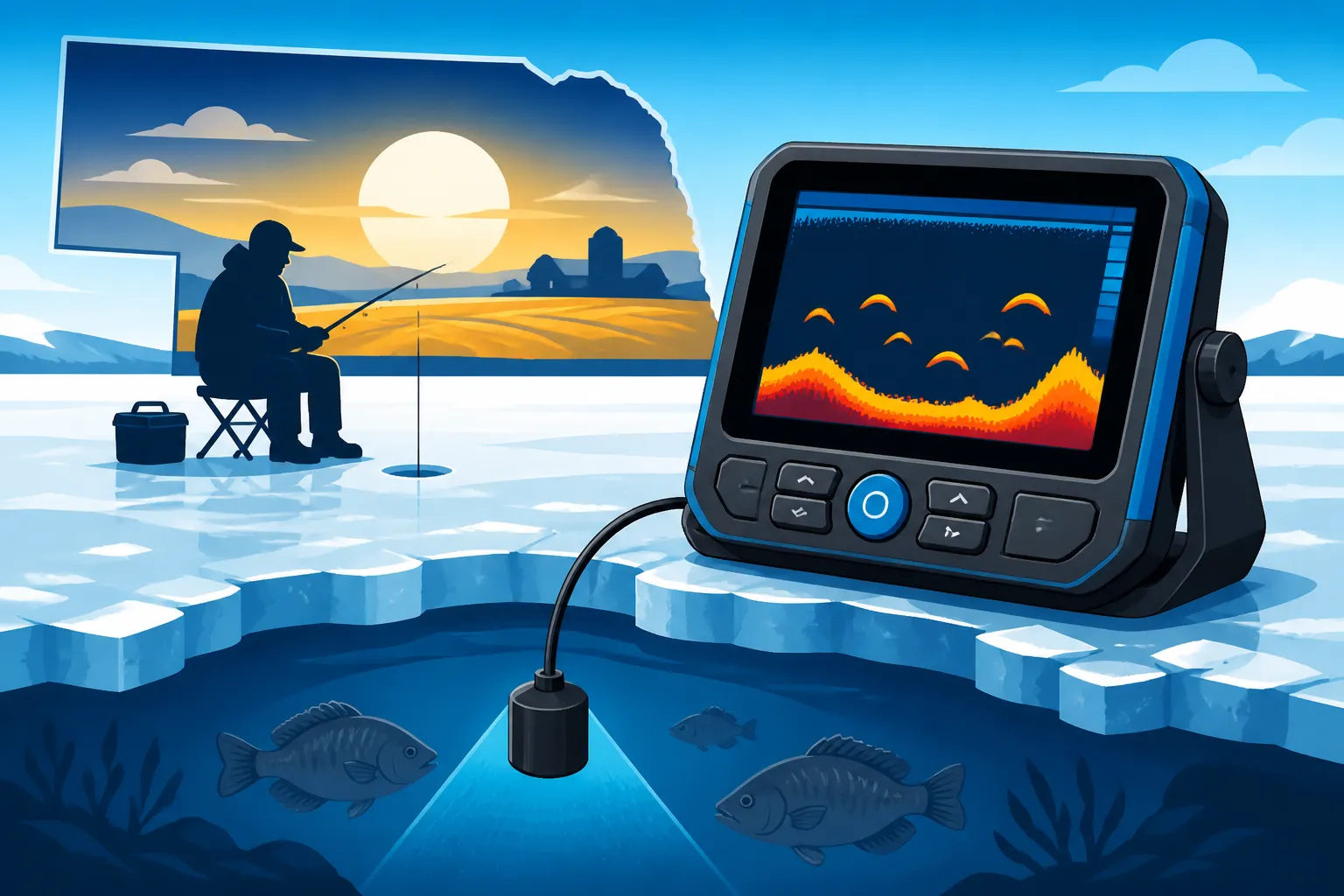
The transducer is the "eye" of your fish finder, sending out sonar waves and listening for echoes. For ice fishing, you'll primarily be dropping a dedicated ice transducer directly into your hole.
- Cone Angle: This refers to the width of the sonar beam. A narrower cone (e.g., 9-20 degrees) gives you more detail directly below your hole, excellent for pinpointing your jig and fish in precise columns. A wider cone (e.g., 20-60 degrees) shows you a larger area, which can be great for locating schools of fish, but might sacrifice some detail on individual targets. Many units offer dual-beam or adjustable cone angles, giving you versatility.
- CHIRP Sonar: Instead of sending a single frequency pulse, CHIRP (Compressed High-Intensity Radar Pulse) sonar sends a continuous sweep of frequencies. This results in much better target separation, allowing you to distinguish between a fish, your jig, and the bottom, even when they're very close together. For identifying different species or understanding how fish are reacting to your bait, CHIRP technology offers a significant advantage, often found in higher-end models from brands like Humminbird or Lowrance.
Display Options: Flashers vs. Digital Screens
This is often the first big decision for ice anglers, as it significantly impacts how you interpret the sonar data.
- Flasher Units: Traditional flashers, like those made by Vexilar or Marcum, use a spinning disc with colored lights to show real-time sonar returns. They're renowned for their instant, lag-free response and extreme durability in cold weather. Green might indicate a weak signal (bottom, small fish), yellow a medium signal, and red a strong signal (large fish, hard bottom). Many seasoned ice anglers swear by flashers for their intuitiveness and ability to see minute changes in depth or fish movement instantly. They don't have a history log like digital screens, but they excel at showing "right now" action.
- Digital LCD/LED Screens: Modern fish finders often feature full-color LCD or LED screens, similar to what you'd use in open water. These screens offer detailed graphical representations, often showing a history of sonar returns, temperature, and sometimes even mapping. They can be easier for beginners to interpret, as fish often appear as "arches" or icons. Brands like Garmin and Humminbird offer excellent portable digital units. While they might have a tiny bit more lag than a flasher, the rich detail and additional features like zoom and split-screen views are a huge plus for many anglers. When considering a unit, remember that screen size and resolution directly impact how much detail you can see.
Battery Life and Power Source
Out on the ice, you don't have access to wall outlets. The battery is the lifeblood of your portable fish finder. Most units come with a 12V lead-acid or lithium-ion battery.
- Lithium-ion batteries are lighter, last longer, and perform better in extreme cold, but they typically come at a higher price point.
- Lead-acid batteries are heavier and can lose power more quickly in freezing temperatures but are more affordable and still widely used.
Check the advertised battery life – you want something that can last a full day of fishing, ideally 8-12 hours or more, especially if you're hitting the ice from dawn till dusk. Some units allow for quick battery swaps, which can be a lifesaver on multi-day trips or for particularly long sessions.
Portability and Durability for Winter Conditions
A truly portable ice fishing fish finder needs to be easy to transport and tough enough to handle the elements.
- Weight and Size: Consider how far you'll be hauling your gear. Lighter, more compact units are a blessing when trekking across a large lake or through deep snow. Look for models that come in a sturdy soft-sided case or a hard-sided shuttle system that protects the unit and holds the battery and transducer.
- Build Quality: Ice fishing is tough on gear. Your fish finder will be exposed to freezing temperatures, snow, slush, and potentially accidental bumps. Look for robust construction, waterproof casing, and controls that are easy to operate with gloved hands. You want a unit that can withstand the rigors of a Nebraska winter.
GPS and Mapping Capabilities
While not strictly necessary for simply finding fish, integrated GPS and mapping can elevate your ice fishing strategy significantly.
- GPS: Allows you to mark productive holes, navigate back to hotspots, and track your movements. This is incredibly useful on big lakes or when whiteout conditions make navigation difficult.
- Mapping: Some advanced units come pre-loaded with detailed lake maps, showing contours, drop-offs, and other features. This lets you scout potential fishing locations before even drilling a hole. Imagine being able to see a submerged hump on Lewis and Clark Lake Fishing Guide from your shelter and knowing exactly where to drill to hit it. Many units also allow you to create your own custom maps as you fish, building a personalized database of hotspots over time. This can be particularly helpful for understanding complex lakebeds.
Types of Portable Fish Finders for Ice Fishing
The world of portable fish finders has expanded dramatically, offering solutions for every style and budget. Understanding the main categories will help you identify which technology best fits your fishing goals and preferences.
Flasher Units: The Traditional Ice Angler's Choice
Flashers are often considered the "classic" ice fishing fish finder, and for good reason. They are renowned for their raw, real-time feedback and rugged simplicity.
- How They Work: A flasher unit displays sonar returns as illuminated segments on a circular dial. The colors usually represent the strength of the signal – often green for weak, yellow for medium, and red for strong. As your jig descends, you'll see a segment appear, and as fish approach, you'll see another. This instantaneous display allows anglers to observe even the slightest movements of fish or bait, making it incredibly effective for vertical jigging. There's virtually no lag, which is crucial for quick reactions to subtle bites.
- Pros: Extreme durability in cold weather, instant real-time feedback, excellent target separation (especially with sensitive models), long battery life, often more affordable at the entry-level. Many veteran anglers feel they offer a superior, unfiltered view of what's happening directly beneath the ice.
- Cons: No historical display (what you see is now), can take a little practice to interpret for newcomers, no mapping or GPS features on most traditional models.
- Ideal User: Anglers who prioritize instant, accurate, real-time feedback for active jigging, who fish frequently in extreme cold, and appreciate a robust, no-frills tool. You'll find models from brands like Vexilar and Marcum widely available, often at retailers like Bass Pro Shops.
Digital Sonar Units: Modern Displays and Features
Digital sonar units bring the advanced capabilities of open-water fish finders to the ice, offering detailed graphical displays and a host of additional features.
- How They Work: These units feature full-color LCD or LED screens that present sonar data in a more visually intuitive way, often showing fish as "arches" or icons, along with a historical view of what has passed under the transducer. Many include advanced sonar technologies like CHIRP, Down Imaging, or Side Imaging (though Side Imaging is less practical for single-hole ice fishing, some units offer it). They often integrate temperature readings, depth, and the ability to zoom in on specific water columns.
- Pros: Easy to interpret with visual fish icons and historical scrolling sonar, often include GPS and detailed mapping, highly versatile for both ice and open water (with appropriate transducers), and offer advanced features like target ID and split-screen views. They are fantastic for new anglers due to the clarity of the display.
- Cons: Can have a slight delay compared to flashers (though modern units have minimized this), battery life might be slightly shorter due to power-hungry screens, and typically come at a higher price point than basic flashers.
- Ideal User: Anglers who want a clear, easy-to-read graphical display, desire GPS and mapping capabilities, appreciate modern features, and potentially want a unit that can pull double duty in their boat during the open-water season. Many popular models are available on Amazon.
Advanced Live Sonar Systems: Seeing the Future
The cutting edge of fishing technology, live sonar systems offer a truly revolutionary perspective on what's happening underwater.
- How They Work: Unlike traditional sonar that sends a single beam down, live sonar (like Garmin's LiveScope or Humminbird's Mega Live) creates real-time, video-like images of fish and structure. With a specialized transducer, you can see not just directly below your hole, but also out to the sides, allowing you to watch fish swim toward or away from your bait in real-time. This is akin to having an underwater camera with incredible range and clarity.
- Pros: Unparalleled real-time visualization of fish movement and reaction, allows you to "see" fish that aren't directly under your hole, incredibly effective for targeting specific fish, and fascinating to watch.
- Cons: Extremely expensive, requires a powerful (often lithium) battery, complex to set up and use, and typically involves a larger, heavier setup that might not be as "portable" as other options. The learning curve is steep.
- Ideal User: Dedicated, serious anglers who demand the absolute latest technology, are willing to invest significantly in their gear, and want every possible advantage to target trophy fish. This is for the angler who wants to take ice fishing to the absolute next level.
Top Considerations When Choosing Your Ice Fishing Fish Finder
Making the final decision on a portable fish finder involves weighing several factors beyond just features. It's about finding the perfect match for your personal fishing style, your budget, and the specific conditions you'll encounter on Nebraska's frozen lakes and rivers.
Your Fishing Style and Target Species
How you fish significantly impacts which unit will serve you best. Are you a stationary angler, content to sit over a single hole for hours targeting Nebraska Channel Catfish Daily Limit? Or are you a mobile "run and gun" enthusiast, constantly drilling new holes and searching for aggressive Nebraska Walleye Spawning Season?
- For stationary anglers, especially those who target deep-dwelling species or fish in thick cover, a sensitive flasher or a digital unit with excellent target separation and zoom capabilities will be invaluable. You'll be watching your jig and individual fish closely.
- For mobile anglers, portability, quick setup, and reliable battery life are paramount. A compact flasher or a lightweight digital unit with GPS to mark your productive holes will be a huge asset. If you're chasing active fish like white bass or crappie, the ability to quickly see if a hole is productive and move on is key.
- Consider the species: If you're primarily after panfish in shallower water, a simpler unit might suffice. If you're pursuing elusive walleye or muskie in deep water, then higher sensitivity, target separation, and potentially advanced mapping become more critical.
Navigating the Price Tags: Budgeting for Your Unit
Portable fish finders range widely in price, from a couple hundred dollars for entry-level flashers to several thousand for advanced live sonar systems.
- Entry-Level (Under $400): You'll typically find basic flashers or simple digital units in this range. These are excellent for beginners or anglers who just need to know "are there fish here and how deep are they?". They provide foundational information without breaking the bank. Look for solid, reliable models from reputable brands.
- Mid-Range ($400-$1000): This is where you get into more advanced flashers with enhanced features, or capable digital units with color screens, CHIRP sonar, and often basic GPS and mapping. These units offer a great balance of performance and features for most serious ice anglers.
- High-End ($1000+): This category includes premium digital units with large, high-resolution screens, advanced sonar technologies, comprehensive mapping, and the top-tier live sonar systems. These are for anglers who demand the best technology and are willing to invest heavily in their passion.
Remember to factor in accessories when budgeting, such as extra batteries, carrying cases, or even a specialized transducer pole for live sonar. You can often find a good selection of all price points at Bass Pro Shops or online through Amazon.
| Feature / Type | Traditional Flasher | Digital Sonar Unit | Advanced Live Sonar System |
|---|---|---|---|
| Real-time Feedback | Instant, lag-free | Very fast, slight delay possible | Video-like, true real-time |
| Display Type | Spinning LED segments | Full-color LCD/LED screen | Full-color LCD/LED screen |
| Target Interpretation | Intuitive color bands | Graphical arches/icons | Video-like fish/structure |
| Portability | Excellent (compact, light) | Good (varies by screen size) | Moderate (larger setup) |
| Mapping/GPS | Typically none | Often included | Usually included |
| Battery Life | Excellent | Good to Moderate | Moderate (requires power) |
| Durability in Cold | Exceptional | Very Good | Very Good |
| Price Range | Entry-level to Mid-range | Mid-range to High-end | High-end / Premium |
| Learning Curve | Moderate | Easy to Moderate | High |
Ease of Use and Learning Curve
Some anglers love tinkering with settings, while others prefer a "set it and forget it" approach. Consider your comfort level with technology.
- Flashers can have a moderate learning curve to interpret the color bands and gain proficiency, but once you "get it," they are incredibly intuitive and require minimal button-pushing.
- Digital units often have a more familiar menu system if you've used other electronics, but they can also have a vast array of settings and options that might feel overwhelming at first. However, many offer a "beginner mode" or automatic settings.
- Live sonar systems have the steepest learning curve, requiring understanding of transducer positioning, gain, range, and other complex adjustments to get the best picture.
It's wise to read reviews, watch demonstration videos, and if possible, try out a unit in person (for example, at an outdoor retailer like Bass Pro Shops) to get a feel for its interface before committing. You want a unit that you'll actually enjoy using, not one that adds frustration to your day. This can significantly impact your overall enjoyment of ice fishing in Nebraska.
After-Sale Support and Warranty
Like any electronic device, fish finders can occasionally have issues. Knowing that you have reliable support can provide peace of mind.
- Warranty: Check the manufacturer's warranty. A good warranty covers defects and provides repair or replacement options. This is especially important for more expensive units.
- Customer Service: Look for brands known for good customer service. If you have questions about operation or need troubleshooting, responsive support can save you a lot of headaches. Check online forums and reviews to see what other anglers say about a brand's reliability and support. When purchasing from large retailers, whether in-store or online from platforms like Amazon, check their return and exchange policies as well, in case you need to switch units. A reliable fish finder should last many seasons, helping you locate fish whether you're targeting Nebraska Trout Season Dates or Nebraska Crappie Daily Limit.
Disclaimer
This article is for general informational purposes only and does not constitute professional advice. Laws, prices and regulations vary by location and change over time. Consult a qualified professional for guidance on your specific situation.