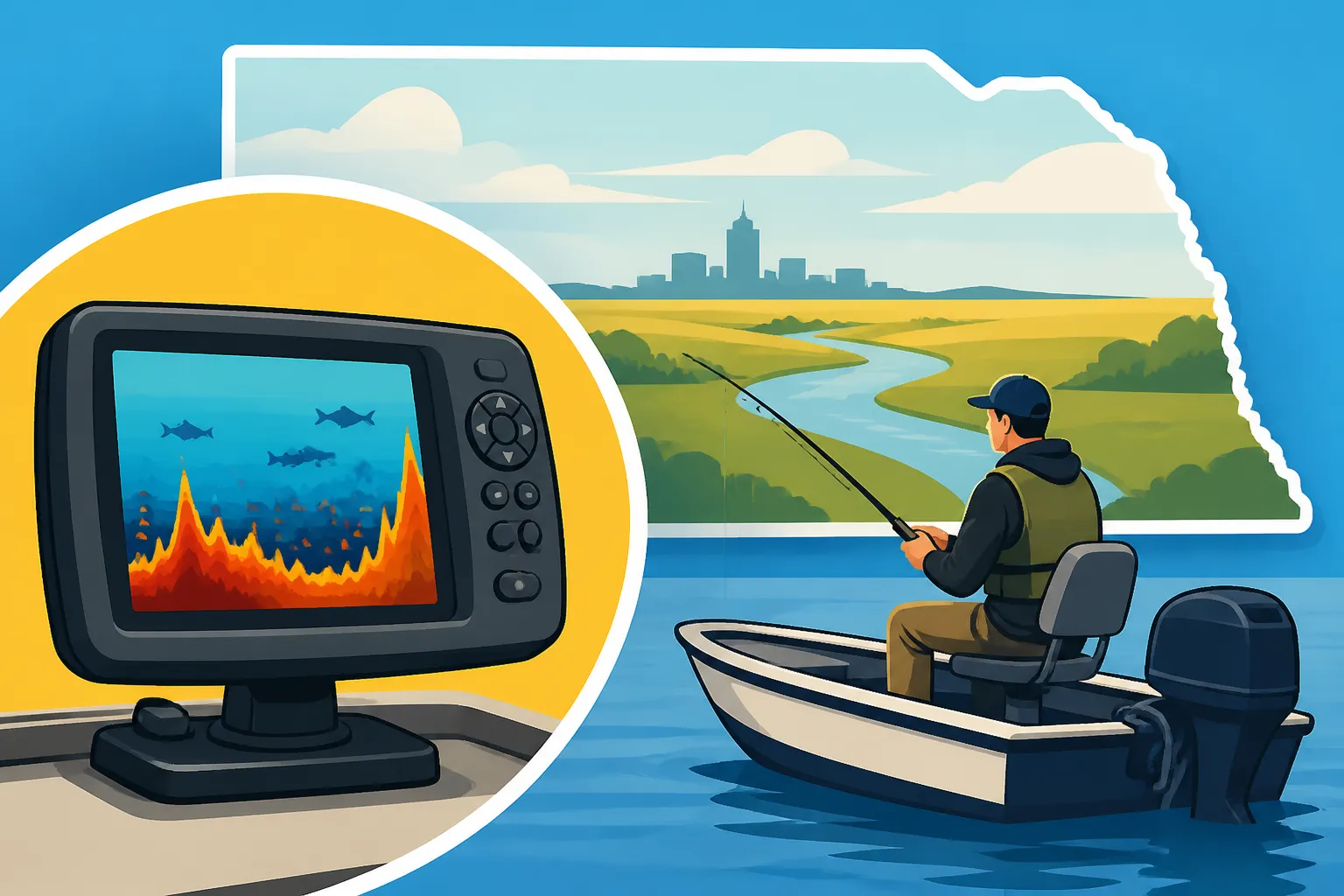
How to Choose a Fish Finder for a Small Boat
The world of fish finders can feel like a labyrinth of technical jargon, especially when you're just trying to get an edge on the water from your modest small boat. Many of us small boat anglers, whether we're in a kayak, canoe, or a trusty jon boat, feel left out of the high-tech conversation, assuming advanced electronics are only for the big bass rigs. But that's just not true! This guide will cut through the noise, helping you understand exactly what to look for in a fish finder that perfectly suits your small craft and your Nebraska fishing adventures.
Understanding Your Small Boat's Unique Needs
When you're out on a little aluminum boat, a kayak, or even a canoe on a Nebraska lake or river, you've got different priorities than someone in a 20-foot fiberglass bass boat. Your fish finder needs to be a companion, not a burden, and choosing the right one starts with recognizing these unique demands.
Portability and Mounting Solutions
The sheer size and weight of a traditional transom-mounted fish finder system can be overkill, or even impossible, for a small craft. You're not looking to drill a dozen holes or manage extensive wiring. For a kayak or canoe, portability is king. You might be carrying your craft down to the water's edge, or perhaps even launching from an awkward spot. A unit that can be easily detached, carried, and re-attached is ideal. Many small boat anglers opt for portable setups that include a transducer mount that clamps to the transom or even suctions to the hull. Some advanced kayak setups integrate transducers into special scupper holes, keeping them protected and out of the way. Think about how you transport your boat and your gear. If you regularly load your kayak onto a roof rack, a cumbersome fish finder that needs to be constantly removed and reinstalled will quickly become a nuisance. You want something that's quick to deploy and pack up.
For jon boats or smaller aluminum boats, you might have a bit more real estate, but still, space is at a premium. Permanent flush-mount installations might be out of the question due to lack of panel space or the desire to keep things flexible. Swivel mounts or RAM mounts that allow for easy adjustment and removal are incredibly popular. They let you position the screen exactly where you need it, then tuck it away when running or trailering. Consider the vibrations and jostling your small boat experiences; a robust mount is non-negotiable to keep your unit secure.
Power Source and Battery Life
A deep-cycle marine battery might be perfect for a large boat, but for a small craft, it's often too heavy and bulky. Your fish finder needs to run efficiently on a smaller, lighter power source. Many portable fish finders are designed to operate on smaller 12V batteries, like those used for powering small trolling motors or even rechargeable lithium-ion packs. These batteries are much easier to tuck into a small dry box or a tackle crate.
When considering a fish finder, pay close attention to its power draw (measured in amps). A unit with a large, bright screen and advanced sonar capabilities will chew through battery life much faster than a simpler model. You need to match your battery capacity to your typical fishing trip duration. There's nothing worse than having your fish finder die two hours into a full day on the water. Many kayak anglers bring a backup battery pack or a solar charger for extended trips. Knowing your power needs upfront can save you a lot of headaches and ensure your electronics are always ready when you are.
Essential Fish Finder Technologies for Small Boats
Don't let the tech talk intimidate you. While some big boats boast a dizzying array of sonar options, small boat anglers can get incredibly effective results with just a few key technologies.
Traditional 2D Sonar
This is the bread and butter of fish finding, and it's what most people picture when they think of a sonar screen. Traditional 2D sonar sends a cone-shaped pulse of sound waves straight down, then interprets the echoes that bounce back. It's fantastic for showing you the bottom contour, structure like submerged trees or rock piles, and, most importantly, fish arches. Think of it as a vertical slice of what's directly beneath your boat.
For small boat anglers, 2D sonar is often all you need to be successful. It's simple to understand, typically less expensive, and highly effective for identifying cover and fish targets. If you're drifting a Nebraska river for catfish, or slowly paddling over a reservoir hump for walleye, 2D sonar will clearly show you what's below. The key is understanding how to interpret those arches and signals. Look for distinct arches, which usually indicate fish, and pay attention to how they relate to bottom structure. A good 2D sonar will give you enough detail to effectively target species in various depths and conditions, making it an indispensable tool for understanding the underwater world. How to Read a Fish Finder for Walleye can help you get started with interpretation.
DownScan and SideScan Imaging
These technologies take sonar to a whole new level by providing photorealistic images of what's below and to the sides of your boat. Instead of traditional cone-shaped beams, DownScan and SideScan use very narrow, high-frequency beams that paint a detailed picture.
-
DownScan Imaging: This gives you a picture-like view of what's directly beneath your boat. You'll see submerged timber, brush piles, rock formations, and even schools of baitfish with incredible clarity, almost like looking at an underwater photograph. Fish appear as bright dots or streaks, making them easy to distinguish from structure. For instance, if you're trying to pick apart a flooded timber area in a lake like Branched Oak Lake Fishing, DownScan will show you individual tree branches, rather than just a blob on 2D sonar. It's excellent for pinpointing specific targets you want to cast to directly beneath you.
-
SideScan Imaging: This is where things get really exciting for covering water. SideScan sends beams out to the left and right of your boat, scanning vast areas and displaying them on your screen. Imagine slowly moving along a shoreline or across a flat, and being able to "see" brush piles, ledges, or even individual fish up to 100 feet or more to either side of your boat. This is incredibly powerful for small boat anglers who might not have the luxury of endless trolling passes. You can quickly scout an area, identify promising structure that might be holding fish, and then maneuver your small boat directly over it for a closer look with DownScan or 2D sonar. It's a fantastic tool for finding those hidden gems on unfamiliar waters or when you're exploring new Best Fishing Spots Near Omaha. While units with SideScan often come at a higher price point, the ability to cover more water efficiently can drastically improve your fishing success.
Key Features for a Small Boat Fish Finder
Beyond the core sonar technologies, several other features can make a significant difference in how effective and enjoyable your fish finder is on a small craft.
Screen Size and Resolution
This is a balancing act. A larger screen provides more detail and is easier to read, but it also means a bigger, heavier unit and a higher power draw. For a small boat, you often don't have a lot of dashboard space. A screen that's too large can obstruct your view, get in the way of paddling or rowing, or simply be overkill. Most small boat anglers find a screen size between 5 to 7 inches diagonal to be a sweet spot. It offers enough real estate to split the screen between different sonar views (like 2D and DownScan) without being cumbersome.
Resolution, measured in pixels (e.g., 800×480), is just as important as screen size. A higher resolution means a sharper, clearer image, which is crucial for distinguishing between fish and structure, especially on DownScan or SideScan. A large screen with low resolution will look pixelated and difficult to interpret. Always prioritize resolution within your chosen screen size. After all, what's the point of a fish finder if you can't clearly see what it's showing you?
GPS and Mapping Capabilities
Integrated GPS with mapping capabilities is a game-changer for any angler, and especially useful for small boat owners exploring new waters. While a basic fish finder just shows you what's below, a GPS-enabled unit shows you where you are and where you've been. This allows you to:
- Mark Waypoints: Found a productive brush pile or a submerged rock formation? Mark it as a waypoint so you can return to it later. This is invaluable when you're drifting or paddling.
- Track Your Path: See your boat's trail on the map. This helps you understand how current or wind is affecting your drift and makes it easier to re-trace a successful path.
- Navigate: Use pre-loaded lake maps (if available) to navigate safely, avoid shallow areas, or find specific features like creek channels or deep drops. Some units allow you to create your own custom contour maps of uncharted waters. This is especially useful in Nebraska's numerous reservoirs or larger river systems where subtle depth changes can hold fish.
While basic GPS will show your position, higher-end units often come with detailed C-MAP or Navionics mapping built-in or available for purchase, providing contour lines, navigation aids, and even points of interest. For anglers fishing places like Lewis and Clark Lake Fishing or Lake McConaughy Fishing Guide, having good mapping can significantly cut down on search time. Some even offer auto-charting features, allowing you to create your own highly detailed maps as you explore. This can be especially useful for Nebraska Fishing Rules for Farm Ponds and Private Lakes where commercial maps might not exist.
Ease of Use and Durability
Let's face it, when you're out on a small boat, you often have your hands full with paddling, steering, or actually fishing! You don't want to be fumbling with complicated menus and tiny buttons. Look for a fish finder with an intuitive interface, easy-to-read controls, and quick access to common functions. Touchscreens are increasingly popular, offering a smartphone-like experience, but ensure they are still responsive when wet or used with gloves.
Durability is another non-negotiable factor. Your small boat is likely going to encounter more bumps, splashes, and rough handling than a larger, more stable vessel. Look for units that are waterproof (check the IPX rating – IPX7 or higher is generally good for marine environments), have rugged construction, and can withstand vibrations. Screen protectors are also a wise investment to prevent scratches. No one wants their investment to fail after a few trips because it couldn't handle the realities of small boat fishing.
Budget and Brand Considerations
Fish finders, like most electronics, come in a vast range of prices. It's easy to get caught up in the desire for the latest and greatest, but for a small boat, sometimes simpler is truly better, and more economical.
Entry-Level vs. Mid-Range Options
-
Entry-Level (Basic 2D Sonar): These units are fantastic for beginners or those on a tighter budget. They typically offer clear 2D sonar, a compact screen (usually 3-5 inches), and a simple interface. Some might include basic GPS for marking waypoints. They're perfect for identifying fish and basic structure, helping you understand the basics of sonar without breaking the bank. Think about them as your first step into electronic fish finding. Brands like Humminbird PiranhaMax or Garmin Striker series often have excellent entry-level options. You might find a great starter unit at a local sporting goods store or browsing online options on Amazon.
-
Mid-Range (2D + DownScan/SideScan + GPS/Mapping): This is where most small boat anglers find the best blend of features and value. These units usually have larger screens (5-7 inches), offer both 2D and either DownScan or SideScan (sometimes both), and come with more robust GPS and mapping capabilities. They provide significantly more detail and information, allowing you to "see" fish and structure with much greater clarity. This range offers the most flexibility for different fishing styles and water types. Many of these units are available at retailers like Bass Pro Shops, where you can often see them in person and compare features directly.
When considering the cost, remember to factor in any additional accessories you might need, such as a specialized battery, transducer pole, or mounting hardware. Sometimes a slightly more expensive unit that includes everything in a "portable kit" can actually be a better value than buying a cheaper head unit and then scrambling for compatible add-ons.
Popular Brands for Small Boat Anglers
Several brands have made a name for themselves by offering reliable and feature-rich fish finders suitable for small boats.
- Lowrance: Known for their excellent imaging technologies, particularly StructureScan (their version of SideScan and DownScan). The Lowrance Hook Reveal and Elite FS series are popular choices, offering a good balance of features and user-friendly interfaces. Their screens often boast high resolution, making those detailed images pop.
- Humminbird: A favorite among many anglers, Humminbird is renowned for its Side Imaging (their version of SideScan) and MEGA Down Imaging. The HELIX series offers a wide range of models, from compact units perfect for kayaks to larger screens for jon boats. Their intuitive menu systems and robust construction make them a solid choice. Many anglers appreciate their "Chirp" sonar for exceptional target separation.
- Garmin: Garmin has a strong presence in the marine electronics market, offering user-friendly devices with excellent GPS and mapping. The Garmin Striker Vivid and Echomap series are very popular with small boat anglers due to their bright, high-contrast displays and clear sonar imagery. Their Quickdraw Contours feature, allowing users to create their own maps, is a huge benefit for exploring new waters.
- Raymarine: While perhaps less common in the entry-level market, Raymarine offers high-quality units with impressive sonar and navigation features. Their Element series brings powerful HyperVision sonar (their advanced imaging) to more accessible price points.
When selecting a brand, it's often helpful to talk to other small boat anglers in Nebraska. Visit local bait shops or fishing forums to see what units people are successfully using on the waters you frequent. Sometimes, regional preferences emerge based on local conditions or prevalent fish species. What works well on Merritt Reservoir Walleye Fishing might be slightly different than what's ideal for Platte River Catfish Fishing.
Comparing Models for Your Needs
To help you visualize the choices, here's a simple comparison of typical features you might consider for a small boat fish finder:
| Feature/Technology | Basic Entry-Level Unit (e.g., Small Striker, PiranhaMax) | Mid-Range Unit (e.g., Hook Reveal, Helix 5, Echomap 7) | Ideal Small Boat Use Case |
|---|---|---|---|
| Screen Size | 3-5 inches | 5-7 inches | Minimal space, quick glances |
| 2D Sonar | Standard | Advanced CHIRP with better target separation | Essential fish & structure identification |
| DownScan/ClearVü | Not available or basic | Yes, high-resolution | Detailed imagery of structure directly below, distinguishing fish |
| SideScan/Side Imaging | Not available | Often available, good range | Scouting wide areas, finding submerged features quickly |
| GPS | Basic waypoints/speed | Advanced mapping (built-in or optional) | Marking hotspots, navigation, creating custom maps |
| Power Draw | Low (long battery life) | Moderate (requires good 12V battery) | Longer trips without recharging |
| Mounting | Portable clamp or basic swivel | Robust swivel/RAM mount, sometimes flush-mount option | Adaptability to different small boat types, secure installation |
| Price Range | Lower | Mid-range | Budget-conscious vs. investing in more features |
Ultimately, the best fish finder for your small boat is one that fits your budget, your vessel, and your fishing style. Don't feel pressured to buy the most expensive unit. A well-understood and properly utilized entry-level unit can be far more effective than a high-end model that you don't know how to operate. Start with what you need, learn to use it effectively, and then consider upgrading as your skills and experience grow. Many resources are available, from online tutorials to helpful staff at places like Bass Pro Shops, to help you make the most of your investment. Good luck out there, and tight lines!
Disclaimer
This article is for general informational purposes only and does not constitute professional advice. Laws, prices and regulations vary by location and change over time. Consult a qualified professional for guidance on your specific situation.