Does Nebraska Recognize Fishing Licenses From Other States?
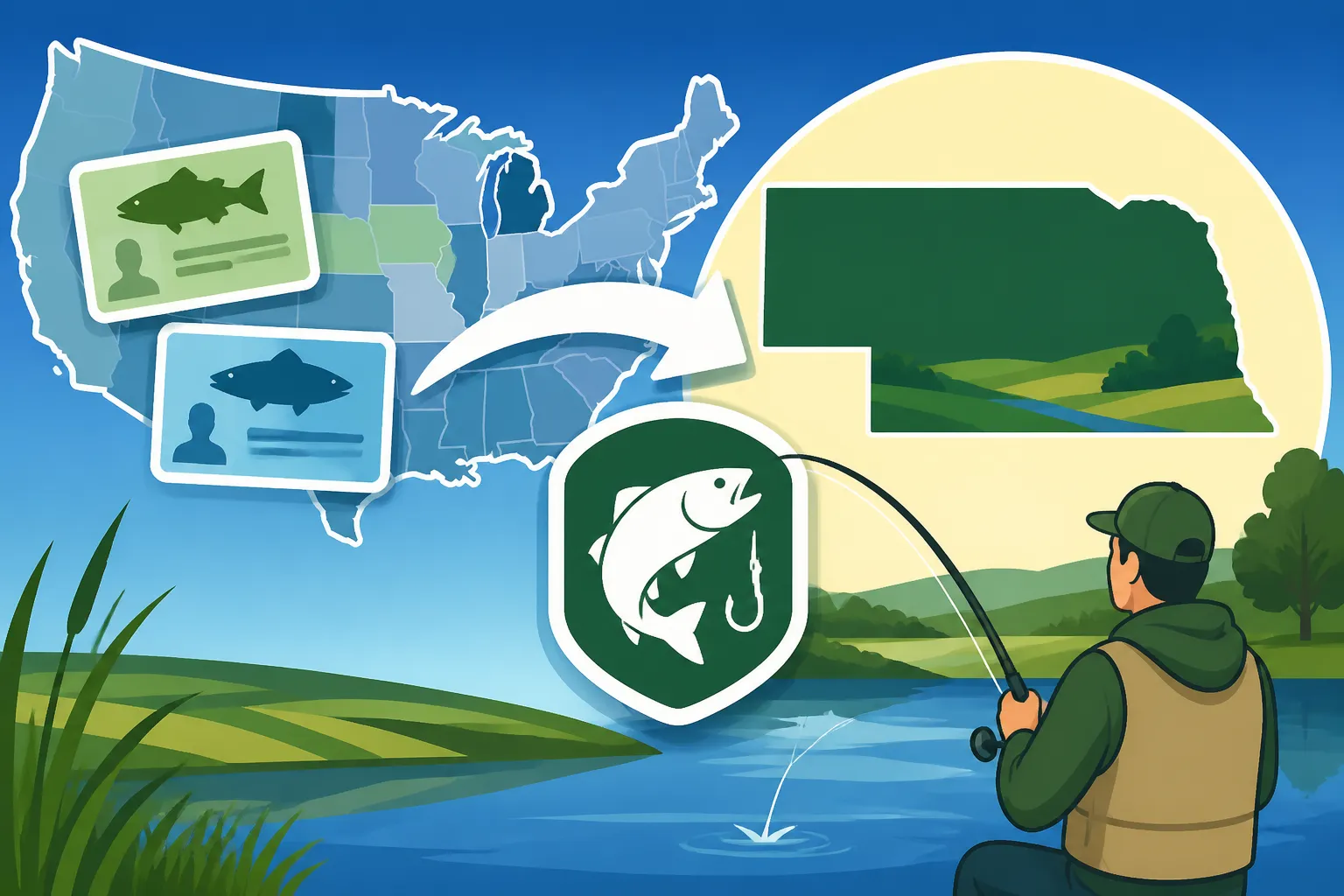
It's a common and completely understandable question: you're planning a fishing trip to a new state, or maybe just passing through, and you wonder if that perfectly valid fishing license from your home state will do the trick. Many anglers assume reciprocity, thinking a license from one state might cover them in another, especially in border areas. Unfortunately, when it comes to Nebraska, the answer for most waters is a pretty straightforward "no." This guide will help clarify the rules around fishing licenses for out-of-state anglers in Nebraska, ensuring you're legal and ready to cast your line without any unwelcome surprises from a game warden.
Does Nebraska Officially Recognize Fishing Licenses From Other States?
Let's cut right to the chase because this is where many people get tripped up. For the vast majority of lakes, rivers, and streams entirely within Nebraska's borders, your fishing license from another state, say Iowa, Kansas, or Colorado, is simply not valid. Nebraska maintains its own distinct fishing license system, and obtaining a Nebraska permit is a fundamental requirement for anyone 16 years of age or older who wishes to angle in its waters.
General Rule for Inland Waters
The Nebraska Game and Parks Commission (NGPC) operates on the principle that funds generated from license sales directly support conservation efforts within the state. When you purchase a Nebraska Fishing License Guide, whether it's an annual permit or a short-term option, those dollars contribute to fish stocking programs, habitat restoration, law enforcement, and public access improvements right here in Nebraska. If Nebraska were to widely recognize licenses from other states for its inland waters, it would essentially be allowing anglers to benefit from these programs without contributing to their funding. This isn't unique to Nebraska; it's a standard practice across most states for this very reason.
Imagine you're driving your family from Missouri for a summer vacation at a beautiful Nebraska reservoir like Branched Oak Lake. You might have a valid Missouri fishing license in your wallet, but if you plan to fish in Branched Oak's abundant crappie or bass waters, you and anyone 16 or older in your party will need to purchase a specific Nebraska fishing permit. Trying to use your Missouri license for fishing within the full jurisdiction of Nebraska could lead to fines and a ruined day on the water. It’s always best to be prepared rather than risk a violation.
Border Waters and Reciprocity Agreements
Now, there are some really important exceptions to this general rule, primarily concerning shared border waters. These specific areas often have reciprocity agreements in place between Nebraska and its neighboring states. These agreements are crucial because they prevent anglers from needing two separate licenses just to fish the same stretch of water that forms a boundary.
The most prominent example of such a reciprocal agreement in Nebraska is the Missouri River. Since the Missouri River forms much of Nebraska's eastern border with Iowa and Missouri, special rules apply. For certain segments of this mighty river, a valid fishing license from either Nebraska or the bordering state (Iowa or Missouri) will typically cover you, regardless of which bank you launched from or which side of the main channel you're fishing. However, it's absolutely vital to understand the exact boundaries of these reciprocal agreements, as they don't extend indefinitely into tributaries or beyond specific navigational markers. We'll delve into these specifics a bit later, but just know that if you're planning on fishing the Missouri, a glimmer of hope for your out-of-state license exists.
Understanding Nebraska's Nonresident Fishing License Requirements
Since your home state license likely won't cut it for most of Nebraska's prime fishing spots, understanding what you do need as an out-of-state angler is paramount. The good news is that Nebraska makes it quite straightforward to obtain a nonresident permit.
Who Needs a Nonresident License
Anyone who doesn't meet Nebraska's definition of a resident and is 16 years of age or older must possess a valid Nebraska fishing license to fish in the state's public waters. This includes visitors, tourists, college students attending school in Nebraska from other states, and military personnel not stationed in Nebraska or claiming Nebraska as their home of record. The definition of a "resident" usually involves living in the state for a continuous period (often 30 to 90 days, depending on specific rules) with the intent to make it your permanent home, so most temporary visitors will fall under the nonresident category.
It's also important to remember that age rules apply uniformly. Even if kids fish for free in your home state until they're 18, in Nebraska, any angler aged 16 or older, including nonresidents, needs a license. This can sometimes catch families off guard, so if you're planning a trip with older teenagers, make sure everyone who needs one is covered. You can find detailed information on these requirements by checking out the Nebraska Nonresident Fishing License Requirements article.
Types of Nonresident Licenses Available
Nebraska offers several types of fishing permits tailored to different needs, which is super helpful for visitors. You don't always have to spring for a full annual license if you're only visiting for a weekend. The options usually include short-term permits, which are perfect for quick getaways. These permits typically include the necessary Aquatic Habitat Stamp, which is a separate purchase required for most annual licenses.
Let's break down the common nonresident options:
- 1-Day Fishing Permit: This is ideal for a quick stopover or a spontaneous fishing excursion. If you're driving through and decide to spend a day on a beautiful Nebraska lake, this permit gets you covered for 24 hours. It's affordable and convenient, allowing you to enjoy the state's angling opportunities without a long-term commitment. For more specifics, see Nebraska 1-Day Fishing Permit Price.
- 3-Day Fishing Permit: A great choice for a long weekend trip or a short fishing vacation. This permit gives you more flexibility than the one-day option and is often a better value if you plan to fish for more than a single day. Many families visiting for a few days find this option to be the perfect balance of cost and coverage. Dive deeper into the specifics with our guide on the Nebraska 3-Day Fishing Permit.
- Annual Fishing Permit: If you anticipate multiple trips to Nebraska throughout the year, or if you're staying for an extended period (but still qualify as a nonresident), the annual permit is your best bet for value. It covers you for the entire calendar year from January 1 to December 31, regardless of when you purchase it. While the initial cost is higher than the short-term permits, it quickly pays for itself if you're a frequent visitor. You can learn more about this comprehensive option in our article on the Nebraska Annual Fishing Permit.
Knowing these options within the larger Nebraska Fishing License Costs and Types framework can save you money and ensure you have the appropriate coverage for your specific trip plans.
How to Ensure You're Legal When Fishing Nebraska Waters
Nobody wants their fishing trip ruined by a run-in with a game warden. Making sure you're properly licensed and aware of the rules is easy if you take a few proactive steps.
Checking Current Regulations
Fishing regulations aren't static; they can change from year to year, and sometimes even during a season, especially concerning things like bag limits, length limits, and special regulations for specific water bodies. Relying on old information or what you think the rules are can lead to unintentional violations. The Nebraska Game and Parks Commission (NGPC) is the official source for all fishing regulations in the state.
Before any fishing trip, whether you're a seasoned local or an out-of-state visitor, always take a few minutes to consult the most current Nebraska Fishing Guide. This guide is usually available digitally on the NGPC website and often in print at license vendors. It's packed with crucial information, from statewide rules to specific lake regulations that might include slot limits or no-wake zones. For example, some lakes might have a specific length limit on largemouth bass or walleye that differs from the general statewide rule. Always refer to the official source for the most up-to-date and accurate information. Our detailed article, Nebraska Fishing Regulations Explained, can serve as an excellent starting point for understanding these rules.
Purchasing Your Nebraska Permit
Once you know what kind of permit you need, actually getting your hands on it is a breeze. Nebraska has made the process incredibly convenient, offering both online and in-person options.
- Online Through GoOutdoorsNE: This is by far the easiest and most popular method for purchasing a Nebraska fishing permit, especially for nonresidents. The GoOutdoorsNE platform is the state's official online portal for all hunting and fishing permits. You can purchase your license from the comfort of your home, print it out immediately, or even keep a digital copy on your phone. This means no scrambling to find a vendor when you arrive in the state. Many anglers use the online portal to research their options and make their purchase ahead of time. Check out our guide on How to Buy a Nebraska Fishing License Online for a step-by-step walkthrough of the process using the GoOutdoorsNE Online Permit System. You can also order various gear, from new fishing line to tackle boxes, through retailers like Amazon, to be ready for your trip.
- In-Person at Authorized Vendors: If you prefer a traditional approach, or if you're already in Nebraska and realize you need a permit, you can purchase one in person. Hundreds of authorized vendors across the state, including many sporting goods stores, bait shops, county clerk offices, and even some Walmarts, sell Nebraska fishing permits. This can be particularly handy if you need to ask a local expert about specific conditions or bait recommendations while you're there. To find a location near you, our guide on Where to Buy a Nebraska Fishing License in Person is an invaluable resource.
Having your license in hand, or readily accessible on your smartphone, is crucial. Game wardens often conduct checks, and being able to quickly produce your valid permit will make for a much smoother experience.
Specific Border Water Scenarios
As mentioned earlier, some specific border waters operate under special reciprocal agreements, which can be a relief for anglers living near the state lines. However, these agreements come with their own set of nuances that are important to understand.
Missouri River Border Water Rules
The Missouri River is a unique and often fished body of water along Nebraska's eastern edge. For much of its length bordering Nebraska, there's a reciprocal agreement in place with Iowa and Missouri. This means that if you possess a valid fishing license from either Nebraska or the adjacent state (Iowa or Missouri), you are generally legal to fish the main channel of the Missouri River and its adjacent chutes and backwaters that are accessible directly from the river.
For example, if you're a resident of Council Bluffs, Iowa, and you want to fish the Missouri River near Omaha, you can use your valid Iowa fishing license. Conversely, if you're from Blair, Nebraska, you can use your Nebraska license to fish the same stretch. However, this reciprocity typically does not extend into tributaries that flow into the Missouri River. If you decide to go up a creek or stream that empties into the Missouri and that waterway is entirely within Nebraska's borders, you would need a Nebraska license. The same applies if you ventured into an Iowa tributary from the Missouri. Always consult the specific map and text in the current fishing guide provided by the NGPC to understand the exact boundaries of these agreements. You can find more specific details on this topic in our dedicated article, Missouri River Border Water Fishing License Rules.
Lewis and Clark Lake Reciprocity with South Dakota
Another significant body of water where reciprocity comes into play is Lewis and Clark Lake, which is shared by Nebraska and South Dakota. This popular reservoir, formed by Gavins Point Dam on the Missouri River, also has an agreement that allows anglers with a valid fishing license from either Nebraska or South Dakota to fish its waters. This is a huge benefit for residents of both states, as it opens up a vast, productive fishery without the need for two separate licenses.
Much like the broader Missouri River agreement, the Lewis and Clark Lake reciprocity is generally limited to the main body of the lake and its immediate connected waters. It usually does not extend into inland tributaries that are entirely within either Nebraska or South Dakota. So, if you're visiting the lake from South Dakota with a South Dakota fishing license, you're good to go on Lewis and Clark itself. But if you decide to take a detour and fish a small pond or creek entirely within Nebraska's borders, you'd need a Nebraska permit. It's always smart to double-check the current regulations for Lewis and Clark Lake to confirm the exact scope of this agreement, especially if you plan to explore beyond the main lake. For a deeper dive, check out our piece on Lewis and Clark Lake License Reciprocity With South Dakota.
Here's a quick reference table summarizing the general reciprocity rules for Nebraska's primary border waters:
| Water Body | Bordering State(s) | Reciprocity? | What It Means | Important Caveats |
|---|---|---|---|---|
| Missouri River | Iowa, Missouri | Yes | Valid NE, IA, or MO license typically covers fishing in the main river channel. | Does NOT extend into tributaries or waters entirely within one state's interior. |
| Lewis and Clark Lake | South Dakota | Yes | Valid NE or SD license covers fishing in the main body of the lake. | Does NOT extend into tributaries or waters entirely within one state's interior. |
| Other Rivers/Lakes | All | No | A Nebraska license is required for all waters entirely within Nebraska's borders. | This is the general rule for most of Nebraska's vast fishing opportunities. |
Remember, this table provides a general overview. Specific rules can be complex and are always subject to change, so consulting the current Nebraska Fishing Guide is always the ultimate authority. You can often find a copy of this guide on the Nebraska Game and Parks Commission website, or pick one up from a local vendor, sometimes even finding fishing-related literature on platforms like Amazon. Stay informed, stay legal, and enjoy your time on Nebraska's waters!
Disclaimer
The information provided in this guide is intended for general informational purposes only and is subject to change. While we strive to provide accurate and up-to-date content, fishing regulations, license requirements, and reciprocal agreements can be modified by the Nebraska Game and Parks Commission or other governing bodies at any time. It is the sole responsibility of each angler to consult the most current official Nebraska Fishing Guide and regulations prior to fishing to ensure compliance with all applicable laws. Failure to do so may result in fines or penalties.