Best Season for Paddlefish Snagging in Nebraska
Paddlefish snagging in Nebraska is one of those unique, thrilling experiences that draws anglers from all over. But if you've ever tried to figure out when the best time to go is, you know it can feel like trying to hit a moving target. Between understanding the specific season dates, permits, and the environmental factors that influence success, it's easy to get overwhelmed. This guide is here to untangle all that, walking you through everything you need to know about the best season for paddlefish snagging in Nebraska, so you can plan your trip with confidence and maximize your chances of a successful outing.
Understanding Nebraska's Paddlefish Season and Regulations
Nebraska's paddlefish fishery is truly special, and it's managed very carefully to ensure these prehistoric giants continue to thrive for future generations. Because of their unique biology and the specific method of harvest (snagging), the season isn't quite like your typical bass or walleye season.
The Allure of Paddlefish Snagging in Nebraska
Let's be honest, there's nothing quite like snagging a paddlefish. These ancient fish, with their long, paddle-like rostrums, can grow to incredible sizes, often exceeding 50 pounds! They don't bite traditional baits; instead, they filter-feed on zooplankton, which is why snagging, a method of hooking them externally, is the primary legal way to harvest them. The fight they put up is legendary, a true test of an angler's strength and gear. It's an adrenaline rush, a primal connection to nature, and an experience you won't soon forget. But because they're so magnificent and vital to our river ecosystems, the Nebraska Game and Parks Commission (NGPC) has put very specific rules in place. It's not just about the thrill; it's about respectful and responsible angling. If you're new to the specific rules, I highly recommend checking out our comprehensive guide on Nebraska Fishing Regulations Explained.
General Season Structure and Key Dates
Unlike many other fish species that have open seasons for months, paddlefish snagging seasons are typically quite short and specific. They are designed to coincide with periods when paddlefish congregate, often during their spawning migrations, making them more accessible to snagging. These seasons are generally set for a limited window, primarily in the spring, focusing on specific stretches of the Missouri River.
The exact dates for the paddlefish snagging season can vary slightly year to year based on river conditions and management assessments by the NGPC. This isn't a "set it and forget it" kind of deal, so always double-check the most current regulations before heading out. Typically, you'll find the season opening in early spring, often around March or April, and running for a few weeks. There might also be a very limited fall season in some specific areas, but the spring run is generally the main event. Keeping an eye on the official NGPC website or grabbing the latest fishing guide is crucial to stay informed about the most current Nebraska Fishing Season Dates and Limits.
The strict season is in place to manage harvest pressure. Paddlefish are long-lived and take many years to reach maturity, making them particularly vulnerable to overfishing if not properly managed. The limited season helps ensure that enough fish can successfully spawn and maintain healthy populations.
Targeting Paddlefish: Prime Seasons, Locations, and Environmental Factors
Successfully snagging paddlefish isn't just about showing up during the open season; it's about understanding when and where they're most likely to be present and active, and how river conditions play a massive role.
The Spring Snagging Run: Missouri River Focus
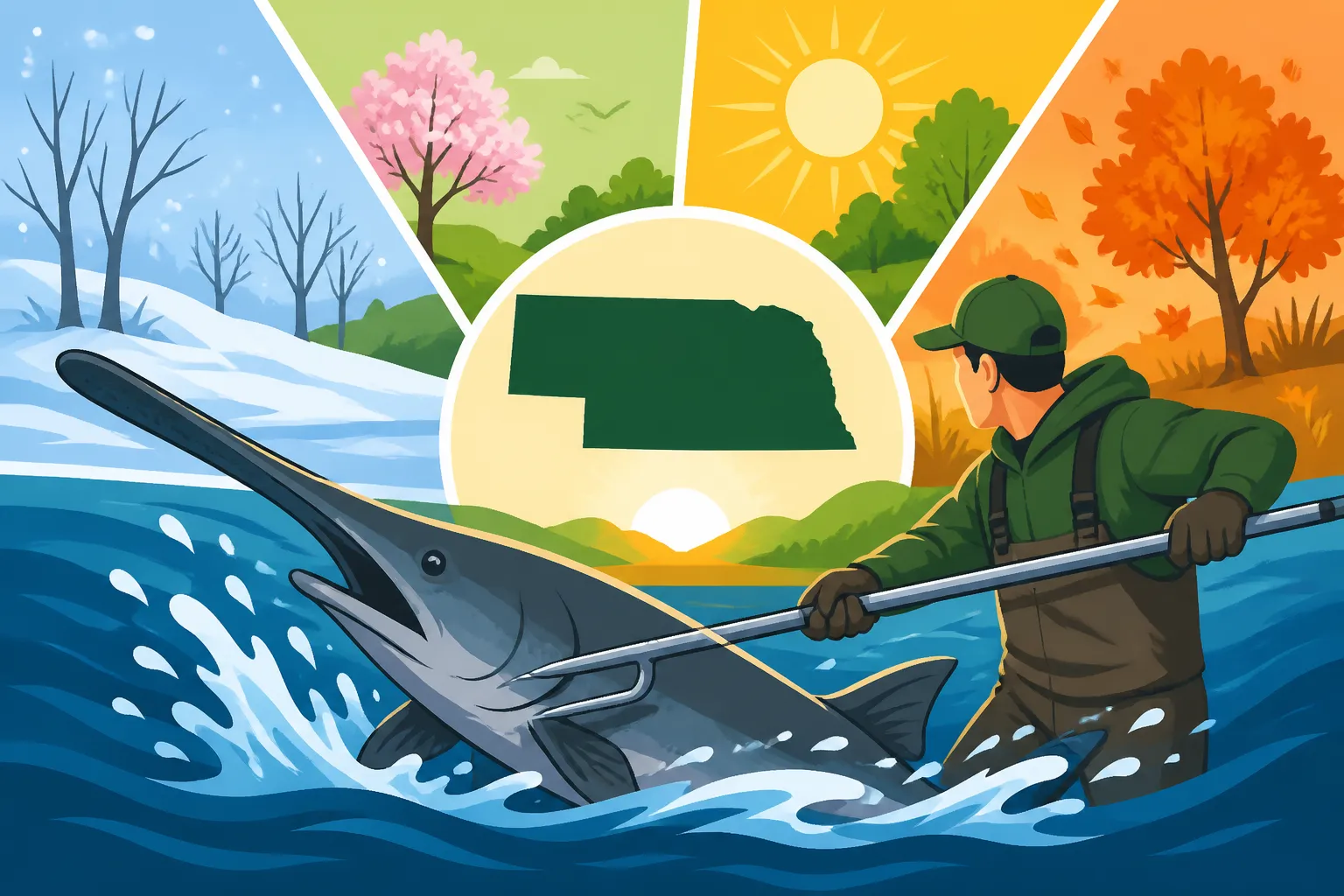
The undisputed "best season" for paddlefish snagging in Nebraska is the spring spawning run on the Missouri River. This is when adult paddlefish, driven by ancient instincts, begin their upstream migration to traditional spawning grounds. They move into concentrated areas, often below dams or in specific river bends, making them prime targets for snagging.
- Timing is Everything: This spring run typically kicks off in March and April, sometimes extending into early May, depending on the year's specific water temperatures and flow. The trigger for this mass movement is usually a combination of rising water temperatures (often hitting the mid-50s Fahrenheit) and increased river flow from snowmelt or spring rains. These conditions tell the fish it's time to reproduce.
- Why the Missouri River?: The Missouri River is the lifeblood for Nebraska's paddlefish population. Large, free-flowing sections, as well as areas below major dams, create the ideal habitat and migratory pathways for these fish. For detailed advice on how to navigate these waters, our guide on How to Snag Paddlefish on the Missouri River is an invaluable resource.
- Behavioral Patterns: During this period, paddlefish congregate in deeper holes, eddies, and channels, especially areas where current breaks offer them a place to rest during their upstream journey. They're not actively feeding, but rather moving, making them more susceptible to snagging techniques.
Fall Opportunities and Reservoir Considerations
While the spring snagging season on the Missouri River is the main event, there have been, or sometimes are, opportunities in the fall. These fall seasons, if offered, are typically much shorter and limited to very specific locations. It's essential to consult the latest regulations to see if a fall snagging season is active for paddlefish, as it's not a consistent annual occurrence in the same way the spring season is.
Regarding reservoirs, it's crucial to understand that paddlefish snagging is almost exclusively a riverine activity in Nebraska. While paddlefish can inhabit large reservoirs, the specific conditions that make them vulnerable to snagging – their concentrated migratory patterns – primarily occur in the river systems. Therefore, don't expect to find designated paddlefish snagging seasons in Nebraska's inland reservoirs. Your focus for snagging should always be the Missouri River.
Water Conditions, Flow, and Temperature
Experienced paddlefish snagging anglers will tell you that paying attention to river conditions is just as important as knowing the season dates. These environmental factors dictate fish behavior and, consequently, your success rate.
- Water Flow (Current): Moderate to slightly elevated river flows are often ideal. Too low, and fish might be dispersed or less active in their migration. Too high, and the current can be dangerous for anglers, make boat control difficult, and disperse the fish, making them harder to locate. A steady, consistent flow that encourages upstream movement without being overwhelming is usually best. The current also dictates where fish will hold, often seeking out breaks and slower water along the main channel.
- Water Temperature: As mentioned, rising water temperatures in the spring are a major trigger. Once the water starts climbing into the mid-50s F, you know the fish are on the move. Sudden drops in temperature can slow things down, just as a prolonged warm spell can kick things into high gear.
- Water Clarity: While not as critical as for sight-fishing species, extremely muddy or turbid water can sometimes make finding and snagging paddlefish more challenging. Clearer, yet still flowing, water is often preferred, allowing for better feel of your tackle and potentially allowing the fish to respond more predictably.
- Gauge Reading Awareness: Smart anglers keep a close eye on river gauge readings for the Missouri River. Websites or apps that track river levels and flow rates can give you a significant edge in planning when and where to go. A sudden rise or fall in the river can change everything, so staying informed right up until your trip is crucial.
Here's a quick look at the ideal factors:
| Factor | Ideal Spring Paddlefish Snagging Conditions |
|---|---|
| Season | Primarily March-April |
| River Flow | Moderate to slightly elevated, consistent current |
| Temperature | Rising, generally mid-50s Fahrenheit |
| Clarity | Moderate, not excessively muddy or crystal clear |
| Location | Missouri River, especially below dams or deep channels |
Essential Gear and Permits for a Successful Snagging Trip
Paddlefish snagging is a demanding sport, both physically and on your equipment. You can't just show up with your ultralight panfish rod and expect to land one of these giants! Specific permits are also non-negotiable.
Permit Requirements and Quotas
Before you even think about casting a line, you need to make sure you've got your paperwork in order. Fishing without the proper permits can lead to hefty Nebraska Fishing Violation Penalties, and nobody wants that.
- Nebraska Fishing License: This is your baseline. Anyone over the age of 16 needs a valid Nebraska fishing license. You can easily purchase one online through the official GoOutdoorsNE Online Permit System.
- Paddlefish Snagging Permit: This is not included with your general fishing license. You'll need a specific paddlefish snagging permit, which often comes with a tag. These permits are typically issued via a lottery system due to the limited quota and high demand. You must apply for this permit well in advance of the season, usually in January or February.
- Paddlefish Tag: The permit usually includes a physical tag that must be immediately attached to any paddlefish you harvest. The regulations will specify exactly where and how to attach it. This tag is your proof of legal harvest and helps the NGPC manage harvest numbers.
- Aquatic Habitat Stamp: Don't forget the Nebraska Aquatic Habitat Stamp Explained. Most anglers purchasing a fishing license will also need this stamp, which helps fund crucial aquatic conservation efforts in the state.
- Quota System: Because paddlefish are so valuable, the NGPC often implements a quota system. This means only a certain number of fish can be harvested during the season. Once that quota is met, the season can close prematurely. This is another reason why staying updated on current news from the NGPC is so important.
Specialized Gear for Paddlefish Snagging
Your everyday fishing tackle simply won't cut it for paddlefish snagging. These fish are powerful, and the technique itself requires robust equipment.
- Heavy-Duty Rods: You'll need a long (8-10 feet), heavy to extra-heavy power rod with a fast action. Think catfishing or saltwater surf rods. This length helps with casting heavy weights and absorbing the shock of a snagged paddlefish. You can find excellent options on online retailers like Amazon, as well as local bait and tackle shops.
- Robust Reels: A large, durable spinning reel (size 8000-12000) or a heavy-duty baitcasting reel capable of holding a substantial amount of heavy line is essential. It needs a strong drag system that can withstand the powerful runs of a big paddlefish.
- Heavy Fishing Line: Forget about 10 or 20-pound test. You're looking at 60 to 100-pound test braided line. Braid is preferred for its strength, lack of stretch (which helps with feeling the snag), and abrasion resistance. A heavy monofilament leader (around 80-100 pound test) can be used to absorb shock, but the main line should be braid.
- Large Treble Hooks: Paddlefish snagging relies on large, barbless treble hooks. The barbless requirement is crucial for the safe release of unintentionally snagged fish or those that don't meet legal harvest requirements. Regulations will specify the maximum hook size allowed.
- Heavy Weights: To get your hook down to where the fish are in strong currents, you'll need heavy lead weights, often 8 to 16 ounces, or even more depending on the current. Pyramid or no-roll sinkers are popular choices to help keep your rig on the bottom.
- Waders and Safety Gear: When fishing from shore or wading, good quality chest waders are essential. The Missouri River can be swift and cold. Always wear a personal flotation device (PFD) if you're in a boat or wading in deep/swift current. A sturdy landing net or a gaff designed for large fish is also helpful for securing your catch. For more general advice on what to bring, check out our guide on the Best Fishing Gear for Nebraska Anglers. You can find a wide array of specialized paddlefish snagging gear, from rods to braided line, available through online vendors like Amazon, or by visiting reputable outdoor stores such as Cabela's or Scheels.
Where to Go: Top Snagging Locations in Nebraska
When it comes to paddlefish snagging in Nebraska, there's really one star of the show: the Missouri River. Its vast waters and specific characteristics make it the prime location for this unique fishery.
Missouri River Hotspots
The Missouri River forms Nebraska's eastern border, and certain stretches become magnets for paddlefish during their spring migration. These areas offer the habitat and flow dynamics that paddlefish seek out.
- Below Gavin's Point Dam: This is arguably the most famous and productive paddlefish snagging area in Nebraska. The turbulent water below the dam, combined with the restriction of upstream movement, creates a natural bottleneck where paddlefish concentrate in large numbers. Anglers can fish from shore in designated areas or from boats, though navigating the current here requires significant skill and proper boat registration, as detailed in our article on Nebraska Boat Registration and Fishing Rules. This area provides consistent action during the peak season.
- Downstream from Gavin's Point: While the immediate tailwaters are popular, paddlefish will continue their migration downstream. Various access points along the river, particularly around areas with deeper channels, eddies, and wing dams, can also be productive. Look for public access points or boat ramps in counties bordering the Missouri River. Exploring different stretches can sometimes lead to less crowded spots, though the paddlefish concentrations might be a bit more spread out.
- Importance of River Access: Access points with boat ramps are critical if you plan to fish from a boat. If you're a bank angler, look for public lands or parks that provide safe, legal access to the river's edge. Always be respectful of private property and know exactly where you're allowed to be. Our guide on the Best Nebraska Rivers for Fishing provides general information about river access, which can be useful.
Other Potential Areas (for snagging)
It's important to clarify: paddlefish snagging seasons in Nebraska are almost exclusively concentrated on the Missouri River. While paddlefish might exist in other large river systems or reservoirs, the specific conditions and regulations for snagging them are nearly always tied to the Missouri River and its migratory runs.
Therefore, if your intent is specifically paddlefish snagging, your focus should remain on the Missouri River during the designated spring season (and any rare, limited fall seasons if announced). Do not assume that because paddlefish are present in a body of water, snagging is permitted there. Always consult the official Nebraska Game and Parks Commission regulations for any specific body of water you plan to fish, particularly for a highly regulated species like paddlefish. Stick to the known hotspots and regulated areas on the Missouri to ensure you're fishing legally and safely.
Table: Key Considerations for Nebraska Paddlefish Snagging Success
To help you quickly reference some of the critical elements for a successful paddlefish snagging trip in Nebraska, here's a handy table:
| Consideration | Details |
|---|---|
| Primary Season | Spring (March-April), coinciding with spawning runs. Limited fall opportunities possible, check regulations. |
| Key Location | Missouri River, especially below Gavin's Point Dam and downstream stretches. |
| Permits Required | Valid Nebraska Fishing License + specific Paddlefish Snagging Permit with tag. Often by lottery. |
| Gear Importance | Heavy-duty rod (8-10ft, H/XH), large durable reel (8000-12000), 60-100lb braided line, large barbless treble hooks, heavy sinkers (8-16oz+). |
| Environmental Triggers | Rising water temperatures (mid-50s F), moderate to elevated river flow. |
| Safety | PFDs (especially in boats or swift current), sturdy waders, know river conditions and hazards. |
| Regulation Check | ALWAYS consult current Nebraska Game and Parks Commission regulations for exact dates, quotas, and rules. |
Snagging paddlefish is an unforgettable experience, but it demands respect for the fish, the regulations, and the powerful river environment. By understanding the seasons, preparing your gear, and knowing where to go, you'll be well on your way to participating in this truly unique Nebraska tradition.
Disclaimer
This article is for general informational purposes only and does not constitute professional advice. Laws, prices and regulations vary by location and change over time. Consult a qualified professional for guidance on your specific situation.