Nebraska Kayak Fishing Techniques
Let's be real: fishing from a traditional boat in Nebraska's vast reservoirs or tight river bends can be a hassle. Launching, trailering, and maneuvering a big rig often limits where you can go and how stealthy you can be. But if you're looking to explore those hard-to-reach honey holes, get closer to the action, and experience a truly intimate connection with the water, then kayak fishing might just be your new obsession. This guide is all about equipping you with the techniques and knowledge to conquer Nebraska's waters from the seat of your paddlecraft.
Why Kayak Fishing in Nebraska is a Game Changer
There's a reason more and more anglers are ditching the big boats for sleek, nimble kayaks here in the Cornhusker State. It's not just a trend; it's a strategic shift that opens up a whole new world of angling opportunities that were previously out of reach or just too much of a pain to access. If you've ever felt limited by concrete boat ramps or noisy outboards, you'll understand the appeal.
Unlocking Hidden Waters
One of the biggest frustrations for any angler is seeing promising water that's just inaccessible. Maybe it's a shallow backwater on the Platte River, a quiet cove on Lake McConaughy with a submerged timberfield, or a small farm pond nestled deep in private property where a jon boat would be too much. This is where the kayak truly shines. Its shallow draft means you can glide over inches of water, getting into those skinny sections where larger boats simply can't venture. Think about those hidden pockets of vegetation that hold giant largemouth bass or quiet oxbows of the Missouri River brimming with big channel catfish. These are often undisturbed sanctuaries, offering incredible fishing because they see so little pressure. Kayaks allow you to paddle or pedal silently into these spots, maintaining a low profile that won't spook the fish, giving you an unparalleled advantage over those fishing from more traditional vessels.
Stealth and Presentation Advantages
Imagine slowly drifting past a weed line on Branched Oak Lake, casting precisely to every pocket and crevice without the constant hum of a trolling motor or the slap of waves against a hull. That's the stealth advantage of kayak fishing. Fish are incredibly sensitive to vibrations and sudden movements. A kayak, especially a pedal-driven model, allows for near-silent approach and precise positioning. This translates directly to more bites. You can hold your position with a pedal drive or a stake-out pole in light current, making multiple, accurate casts to a promising piece of structure. This careful, methodical approach often convinces wary fish to strike when they'd normally bolt from a louder, larger presence. It’s about becoming part of the environment, not just passing through it.
Cost-Effectiveness and Portability
Let's face it, fishing can be an expensive hobby. Buying, maintaining, and fueling a traditional fishing boat can be a significant financial commitment. Kayaks, on the other hand, offer a much lower barrier to entry. You can find excellent fishing kayaks at a fraction of the cost, and their running expenses are practically nil. No gas, no expensive motor maintenance, and often, simpler registration requirements, if any at all – though it's always wise to check if Do Kayaks Need to Be Registered in Nebraska?. Their portability is another huge plus. Many kayaks can be car-topped on almost any vehicle, eliminating the need for a trailer, special hitches, or even a boat ramp. You can launch from almost anywhere there's public access – a quiet shore, a gravel bank, or even the edge of a farm pond. This freedom means you spend less time on logistics and more time actually fishing, exploring new spots, and getting your line wet.
Essential Gear for Nebraska Kayak Anglers
Getting started with kayak fishing doesn't have to break the bank, but having the right gear is crucial for safety, comfort, and, of course, catching fish. It's a blend of traditional fishing tackle and specialized kayak accessories that will make your time on the water more productive and enjoyable. Don't just grab any old kayak; think about what you'll be doing with it.
Choosing the Right Kayak
When it comes to selecting a kayak for fishing in Nebraska, you'll want to consider stability, storage, and propulsion. For most anglers, a "sit-on-top" (SOT) kayak is the preferred choice due to its stability, ease of re-entry if you happen to tip, and ample deck space for gear. Within SOTs, you'll find both paddle and pedal-driven options. Pedal kayaks, like those from Hobie or Old Town, are incredibly popular in Nebraska for their hands-free propulsion, which is a huge advantage when fighting a fish or maintaining position against wind or current. This allows you to constantly adjust your position while still casting or reeling. However, paddle kayaks are often lighter, more affordable, and can get into even shallower water. Think about the types of water you'll be fishing most often – big, windy reservoirs like Lake McConaughy might call for a more stable, pedal-driven model, while smaller rivers and ponds could be perfect for a nimble paddle kayak. For more detailed guidance, check out our guide on the Best Kayaks for Nebraska Fishing.
Must-Have Accessories and Safety Gear
Safety is paramount when you're on the water, especially in a kayak. Always, and I mean always, wear a properly fitted Personal Flotation Device (PFD). Beyond that, a whistle or other sound-producing device is legally required and incredibly useful for signaling. A bright flag on a pole will increase your visibility to other boaters, particularly on larger reservoirs. You'll also want to invest in a good anchor system, especially if you plan on fishing still waters or in light current. A small grapple anchor or a stake-out pole works wonders for holding your position and can be purchased easily on Amazon. For navigation and communication, a waterproof phone case, a small VHF radio, or even a GPS unit can be invaluable, particularly if you venture out alone. Other essential accessories include rod holders (flush-mount or rail-mounted), a paddle leash to prevent losing your paddle, and perhaps a small cooler or fish bag to keep your catch fresh. Remember, Nebraska's weather can change quickly, so a plan to How to Plan a Nebraska Fishing Trip Around Weather is always a good idea, and having the right safety gear is a huge part of that.
Rods, Reels, and Tackle for Kayak Fishing
The beauty of kayak fishing is that you can adapt your existing tackle to a great extent. However, there are some considerations. Shorter rods (6' to 7') are often preferred because they're easier to manage in the confined space of a kayak and allow for more controlled casting, especially if you're seated. For walleye, a medium-light spinning rod paired with a 2500-series reel is a versatile setup. If you're targeting big channel catfish, a medium-heavy baitcasting rod and reel combo will give you the power you need. Consider your line choice too; braided line is popular for its sensitivity and strength, but a fluorocarbon leader is often critical for clear Nebraska waters. When it comes to tackle, prioritize compact and efficient storage. Tackle boxes or bags that fit snugly into your kayak's storage areas are ideal. Think about pre-rigging leaders or having frequently used lures easily accessible to minimize fumbling around. We have an excellent resource on Best Rods and Reels for Nebraska Fishing that dives deeper into specific setups for various species.
Mastering Kayak Fishing Techniques for Nebraska Species
Kayak fishing isn't just about getting to the fish; it's about how you approach them once you're there. The unique advantages of a kayak lend themselves to certain techniques that can be incredibly effective across Nebraska's diverse fisheries.
Walleye Tactics from a Kayak
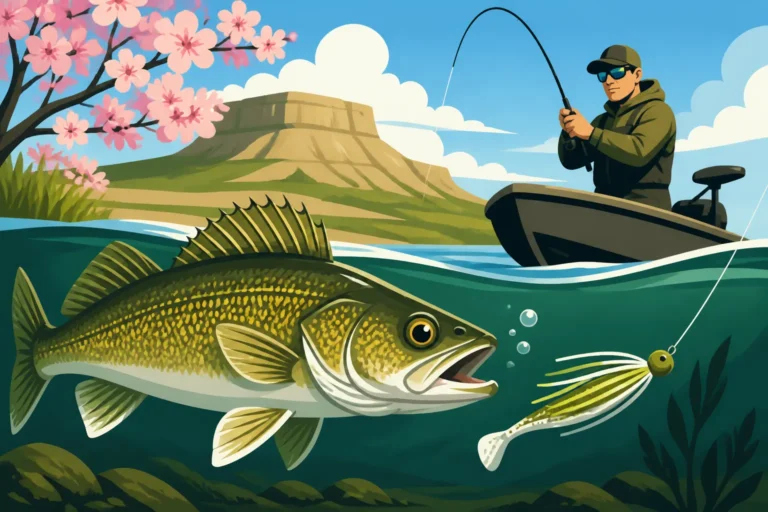
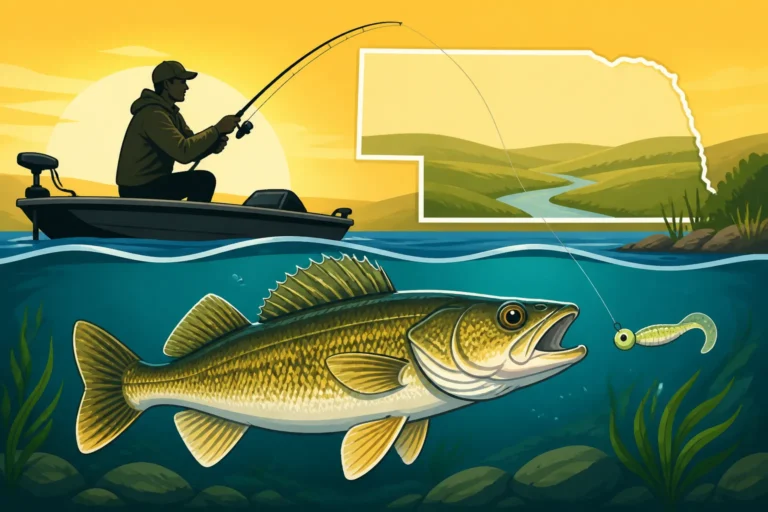
Walleye are a prime target for many Nebraska kayak anglers, especially on lakes like Lake McConaughy, Merritt Reservoir, and Sherman Reservoir. The stealth of a kayak allows for precise trolling and jigging. For trolling, use your pedal drive or a very quiet electric trolling motor (check out some options on Amazon) to move slowly along contours, humps, and points. You can run crankbaits or crawler harnesses behind you, covering water efficiently while maintaining a low profile. Your hands are free to adjust your rod, check your fish finder, or even take a sip of coffee. When jigging, a kayak provides a stable platform for vertical presentations over submerged structure. You can quietly approach a rock pile or brush pile, drop your jig, and work it methodically. The added sensitivity from braided line helps you feel those subtle walleye bites. Don't forget to study Walleye Fishing in Nebraska for more general insights into this prized species.
Chasing Bass and Panfish from Your 'Yak
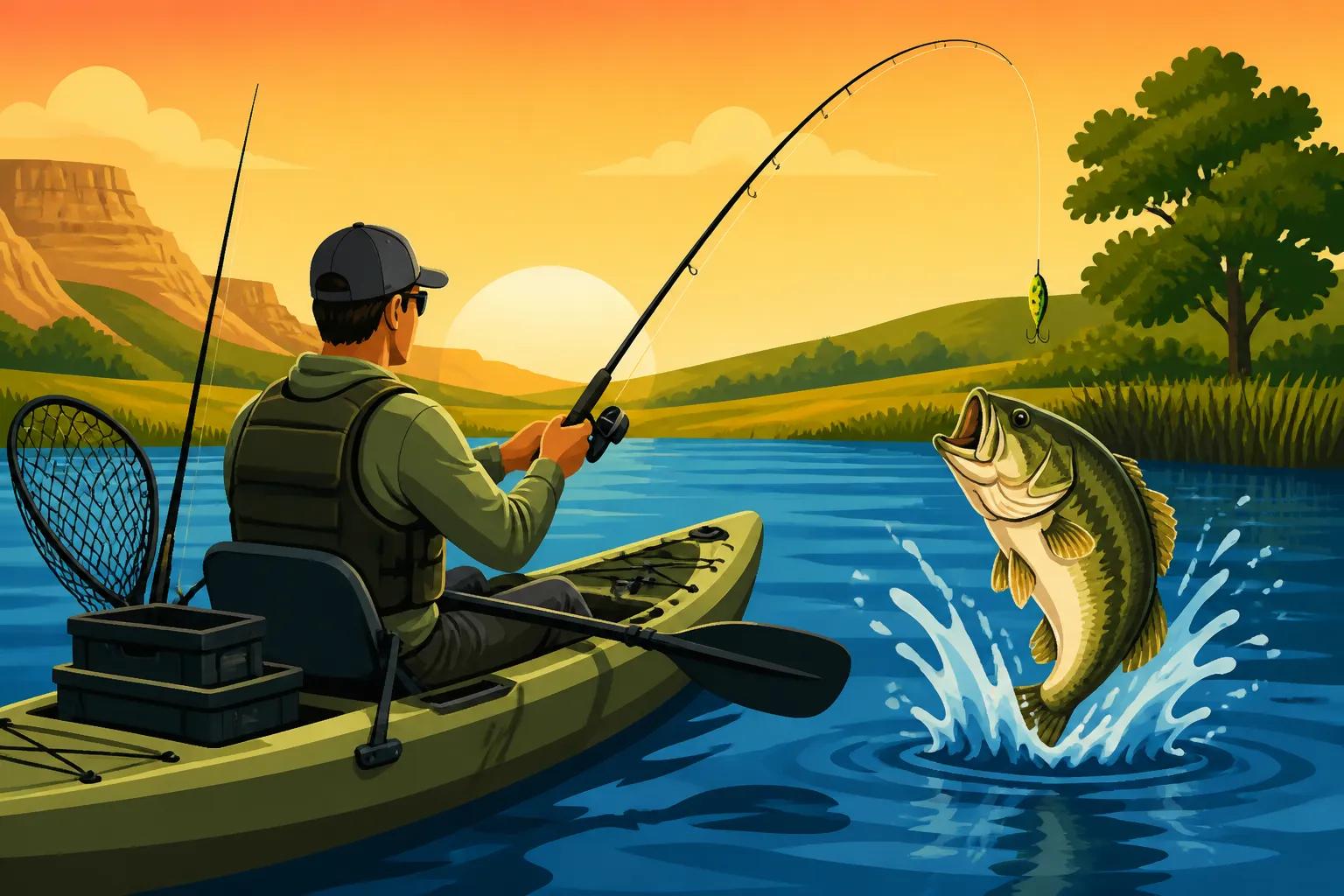
For largemouth and smallmouth bass, and various panfish like crappie and bluegill, a kayak offers unparalleled access to prime habitat. Think about those shallow coves choked with lily pads or flooded timber that a traditional bass boat can't navigate. You can slip into these areas silently, casting topwater frogs into the pads for explosive bass strikes or pitching jigs into the timber for crappie. For bass, try working spinnerbaits, crankbaits, or soft plastics around weed edges, docks, and fallen trees. The ability to cast from multiple angles without repositioning a bulky boat gives you a significant advantage. For panfish, a simple bobber and minnow or a small jig can be deadly when you're able to quietly approach brush piles or weed beds where these schooling fish congregate. Our guide on Largemouth Bass Fishing in Nebraska offers great insights into bass behavior that translates well to kayak tactics.
River Catfishing in a Kayak
Nebraska's rivers, particularly the Platte and the Missouri, offer fantastic catfishing opportunities, and a kayak is an excellent vessel for tackling them. The key here is position and current management. You can anchor upcurrent from a log jam, a deep hole, or a cut bank, allowing your baits (cut bait, worms, or prepared stink bait) to drift naturally into the strike zone. If you're fishing smaller rivers, you can drift downstream, casting to promising structure as you go, and using your paddle or pedals to slow your descent or hold momentarily. For flatheads, silently approaching snags or undercut banks where they lie in ambush can be extremely effective, especially at night. Just make sure you have a reliable anchor system, perhaps even two, if you plan to How to Anchor a Kayak in Current effectively. And for all things whiskerfish, our in-depth article on Channel Catfish Fishing in Nebraska is an absolute must-read.
Navigating Nebraska's Diverse Waters in a Kayak
Nebraska offers a variety of fishing environments, each with its own challenges and rewards for the kayak angler. Understanding how to adapt your strategy to these different settings is key to success.
Reservoir Strategies and Safety
Nebraska's larger reservoirs, like Harlan County or Lewis and Clark Lake, can be incredible for kayak fishing, but they also demand respect. Wind and waves can kick up quickly, turning a calm morning into a challenging paddle. Always check the weather forecast before heading out and be prepared to cut your trip short if conditions deteriorate. For these larger bodies of water, a longer, more stable kayak is often preferred, and a pedal drive can be a lifesaver for covering distance and fighting wind. When fishing these vast waters, focus on key structures: main lake points, submerged humps, creek channels, and riprap shorelines. Utilize your fish finder to locate these features and mark fish. You can troll the edges of these structures or anchor up and cast. Remember that Nebraska Boat Safety Equipment Requirements apply to kayaks as well, so ensure you have all necessary gear.
River Runs and Current Management
Fishing Nebraska's rivers from a kayak is a truly immersive experience, but it requires a different skillset. The current dictates much of your movement and presentation. For larger rivers like the Missouri, understanding wing dams, eddy lines, and current seams is crucial. You can use the current to your advantage by drift fishing, letting your bait or lure present naturally downstream. For smaller, wadable rivers like sections of the Niobrara or Elkhorn, a kayak allows you to access deep holes and runs that are unreachable from shore, or too far for wading. Learning to "read the water" – identifying riffles, pools, and runs – will tell you where fish are likely holding. For static fishing, anchoring properly is paramount, and it's always a good idea to carry a quick-release anchor system in case you need to break free quickly from a snagged anchor in strong current.
Pond Hopping and Small Water Access
One of the biggest joys of kayak fishing in Nebraska is the ability to "pond hop." With many small public and private ponds scattered across the state, a car-toppable kayak makes it incredibly easy to explore these often-overlooked gems. These smaller bodies of water are typically less pressured and can hold surprisingly large fish. The stealth of a kayak is particularly effective here, as fish in smaller ponds are often more aware of their surroundings. You can quietly paddle around the entire perimeter, picking apart every bit of cover – fallen trees, cattails, docks, or brush piles. These spots are fantastic for chasing aggressive largemouth bass or panfish, making them perfect for a quick evening trip or teaching a kid to fish. The simplicity of rigging up and launching from almost anywhere means you can spend more time fishing and less time messing with ramps.
Advanced Tips for Maximizing Your Kayak Fishing Success
Once you're comfortable with the basics, there are several ways to take your Nebraska kayak fishing to the next level, enhancing your efficiency, safety, and overall catch rate.
Using Electronics and Navigation
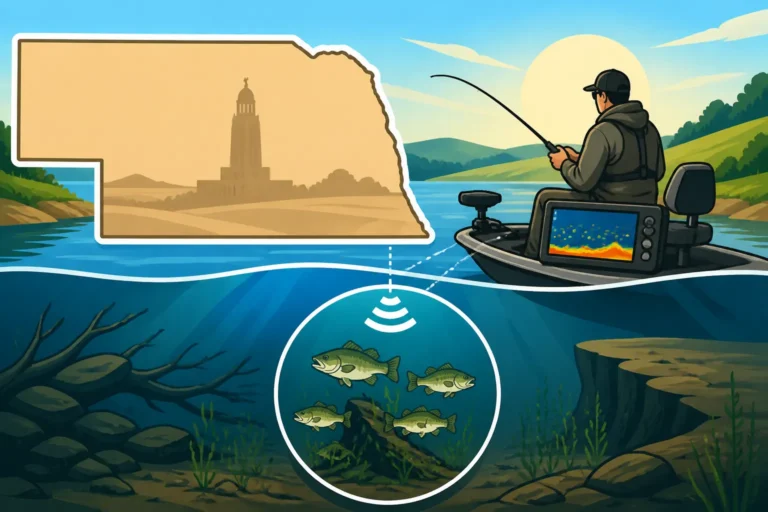
While optional for beginners, adding a fish finder to your kayak can dramatically improve your success, especially on larger reservoirs. Modern compact fish finders offer features like Down Imaging, Side Imaging, and GPS mapping, all of which can be mounted conveniently on your kayak. Knowing the depth, water temperature, bottom contours, and seeing baitfish or target species can help you quickly locate productive areas. Brands like Humminbird, Lowrance, and Garmin offer excellent portable units that are perfect for kayaks. For instance, being able to see a school of walleye hugging a deep breakline with your fish finder can turn a slow day into a productive one. Using the GPS to mark waypoints for productive spots or to navigate back to your launch point is also incredibly useful, especially in low light or foggy conditions. Our guide on How to Read a Fish Finder for Walleye offers great tips applicable to any vessel, including your kayak.
Anchorage and Position Control
Effective position control is often the difference between a good day and a great day of kayak fishing. Beyond a simple anchor, consider a full anchor management system. This might include a trolley system that allows you to move your anchor point from the bow to the stern, letting you swing your kayak to cover a wider area or face the wind/current more comfortably. For shallow water, a stake-out pole is indispensable for silent, quick positioning. For those windy days on larger lakes, a drift sock or sea anchor can slow your drift, keeping you over productive structure for longer. A pedal-driven kayak gives you constant hands-free control, allowing you to creep along structure, hold against a strong breeze, or pivot to make the perfect cast without ever putting your rod down.
Weathering the Elements and Staying Safe
Nebraska weather can be notoriously fickle, and being prepared is vital for kayak fishing. Always dress in layers, even in summer, as temperatures can fluctuate throughout the day. Invest in good rain gear – a waterproof jacket and pants can make a miserable day tolerable. Sun protection is also key: wide-brimmed hats, polarized sunglasses (essential for spotting fish and structure), and high SPF sunscreen are non-negotiables. While kayak fishing is incredibly fun, never underestimate the power of the elements. High winds and sudden thunderstorms can turn dangerous quickly. Have a way to check the weather forecast throughout your trip, perhaps via a marine weather app on your phone. Inform someone of your float plan – where you're going and when you expect to return. Being visible to other boaters with a flag and bright clothing, especially on crowded waters, also goes a long way towards ensuring your safety. Staying aware and prepared means you can focus on the fishing, even when the weather tries to throw a curveball.
Disclaimer
The information provided in this guide is for general informational purposes only and does not constitute legal advice or guarantee specific fishing results. Always consult the most current Nebraska Game and Parks Commission regulations before fishing, as rules and requirements can change. Fishing involves inherent risks; always prioritize safety and wear appropriate personal flotation devices.