What a Nebraska Paddlefish Eats
It's quite common for anglers, especially those new to the incredible world of Nebraska's diverse fisheries, to wonder about the diets of the unique species living in our waters. Many folks are curious about the paddlefish, a truly ancient and fascinating creature, but often scratch their heads, asking, "What does such a bizarre-looking fish actually eat?" This guide will dive deep into the specific dietary habits of the Nebraska paddlefish, unraveling the mysteries of its filter-feeding lifestyle and its crucial role in our aquatic ecosystems.
The Unique World of Nebraska Paddlefish: Understanding a Prehistoric Feeder
When you first lay eyes on a paddlefish, it's unlike almost any other fish you've seen, especially with that long, flattened snout that gives it its name. This isn't just a quirky feature; it's a key to understanding how this prehistoric fish makes a living in the waters of the Missouri River system and its tributaries. While other fish might chase minnows, ambush unsuspecting prey, or root around for worms, the paddlefish operates on an entirely different level, one that's nearly invisible to the naked eye.
What Makes a Paddlefish So Different?
Imagine a fish that has evolved over millions of years, largely unchanged, relying on a feeding strategy that pre-dates many of the modern predatory techniques we see in bass or walleye. That's the paddlefish in a nutshell. They belong to an ancient lineage, often referred to as "living fossils" because their physical form has remained incredibly consistent through geological time. Their smooth, scaleless skin, cartilaginous skeleton, and, of course, that distinct paddle-like rostrum are all hallmarks of this incredible evolutionary stability. But it's not just their looks that set them apart; their entire ecological niche is defined by how they find and consume food. They aren't interested in your lures or live bait, which is why catching them requires very specific, regulated methods, often known as snagging. If you're looking to understand the unique regulations around these fascinating fish, it's worth checking out our guide on Nebraska Paddlefish Snagging.
Beyond their physical appearance, what truly makes them different is their commitment to filter-feeding. Unlike most other large freshwater fish that are apex predators or opportunistic feeders, paddlefish are planktivores. They thrive by sifting microscopic organisms from the water column. This specialized diet means they aren't competing for the same food sources as many sport fish, but it also makes them incredibly sensitive to changes in water quality and the availability of their tiny food supply. This intricate relationship with their environment truly highlights their unique position in Nebraska's aquatic world.
A Filter-Feeder's Niche in Nebraska's Waters
The paddlefish carves out a very specific niche in Nebraska's rivers and reservoirs, particularly within the Missouri River and its connected large bodies of water. Their filter-feeding habit positions them as primary consumers, directly tapping into the energy produced by microscopic plant life (phytoplankton) and then consuming the tiny animals (zooplankton) that feed on that phytoplankton. This makes them a vital link in the aquatic food chain, turning microscopic organisms into a substantial fish that can grow to impressive sizes.
Their presence in a body of water is often a good indicator of overall aquatic health and productivity. If you have a thriving population of paddlefish, it generally suggests that the lower trophic levels of the food web – the plankton – are robust and abundant. They don't typically dwell in clear, unproductive waters, but rather prefer the nutrient-rich, often turbid environments of large rivers and reservoirs where plankton blooms are common. Understanding this niche helps us appreciate the delicate balance of our river systems and the critical role these ancient fish play in maintaining it.
The Paddlefish's Menu: A Microscopic Feast
Forget worms, minnows, or crayfish. The Nebraska paddlefish has a diet that most anglers rarely consider: a bounty of nearly invisible, tiny aquatic organisms. Their entire existence revolves around these microscopic morsels, making them one of the most specialized feeders in our freshwater systems.
The Primary Delicacy: Zooplankton
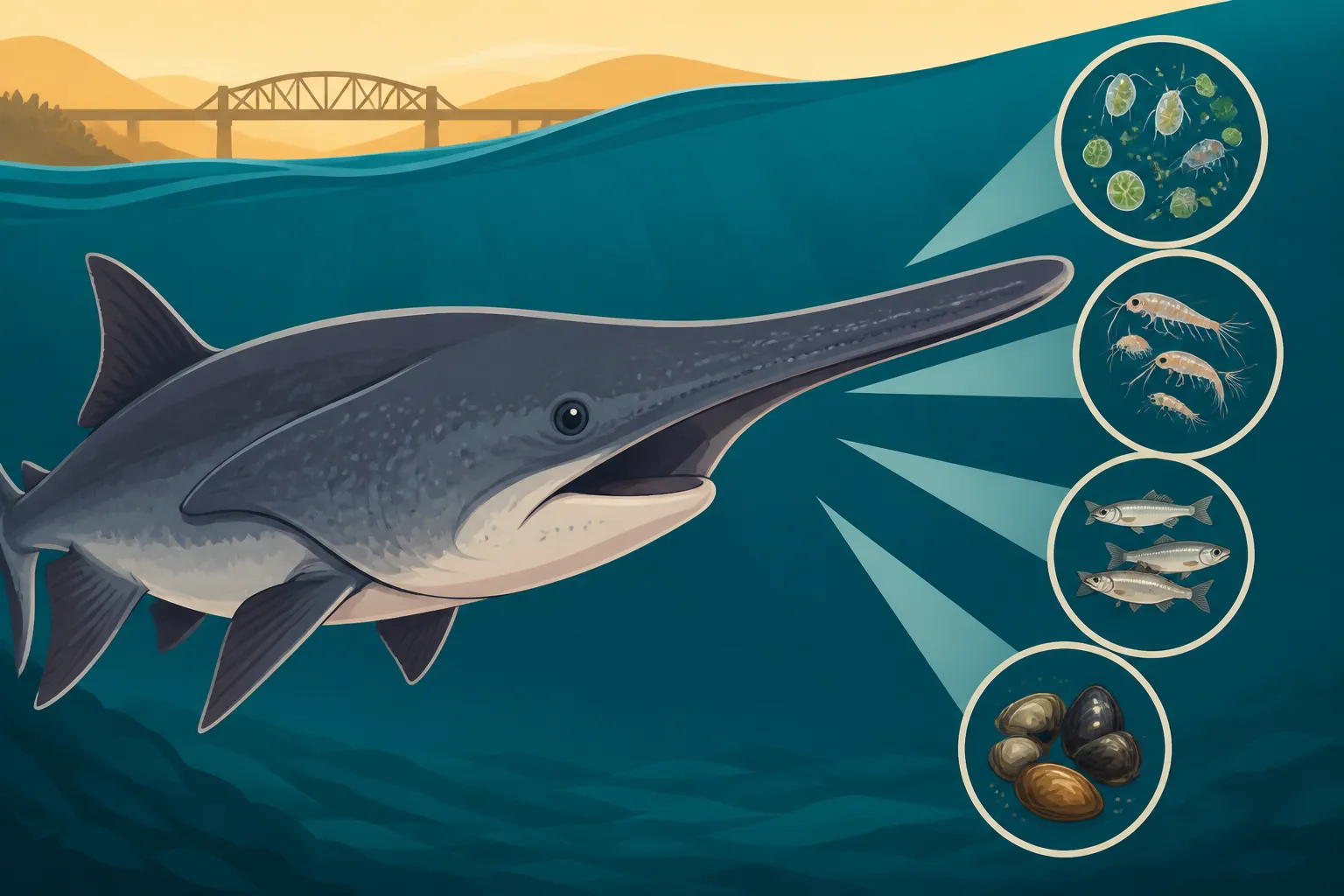
The main course, the absolute staple, for a Nebraska paddlefish is zooplankton. These are microscopic animals that drift in the water column, ranging from tiny crustaceans like copepods and cladocerans (think water fleas) to rotifers. They are too small to be seen individually without a microscope, but collectively, they form a vast, energy-rich soup in productive waters. Paddlefish spend their days swimming with their mouths open, continually straining these tiny creatures from the water.
This constant sifting requires massive quantities of water to pass through their mouths and over their gills to collect enough sustenance to fuel their large bodies. It's a testament to the incredible productivity of our rivers and reservoirs that a fish can grow to be so massive purely by consuming these tiny organisms. The density and composition of zooplankton can vary greatly with seasons, water temperatures, and nutrient levels, directly impacting the health and growth of paddlefish populations.
Occasional Snacks and Environmental Influences
While zooplankton is undeniably the bread and butter of the paddlefish diet, they aren't strictly exclusive. Under certain environmental conditions or at different life stages, their diet might include other tiny suspended particles. For example, very young paddlefish might consume a slightly broader range of smaller aquatic invertebrates before fully transitioning to their adult filter-feeding strategy. However, these are generally minor components.
Environmental factors heavily influence the availability of zooplankton. Flow rates in rivers, water levels in reservoirs, temperature fluctuations, and nutrient runoff can all affect plankton blooms. A strong spring flood, for instance, might bring in nutrients that fuel phytoplankton growth, which in turn leads to a boom in zooplankton, providing a feast for paddlefish. Conversely, prolonged droughts or periods of low nutrient input can reduce plankton availability, putting stress on the paddlefish population. Their entire feeding strategy is intrinsically linked to the health and productivity of the aquatic environment, making them highly susceptible to changes in water quality and habitat. When considering the wider aquatic environment, it's helpful to understand the Nebraska Aquatic Habitat Stamp Explained, as efforts to maintain healthy habitats directly support the food sources paddlefish rely on.
Here's a quick comparison of a paddlefish's diet to some other common Nebraska fish:
| Fish Species | Primary Diet (Adult) | Feeding Strategy |
|---|---|---|
| Paddlefish | Zooplankton, microscopic aquatic invertebrates | Filter-feeder (swims with mouth open) |
| Walleye | Smaller fish (shad, minnows), crayfish, aquatic insects | Predatory (actively hunts prey) |
| Channel Catfish | Smaller fish, crayfish, insects, mollusks, detritus | Opportunistic bottom-feeder, scavenger |
| Largemouth Bass | Fish (bluegill, minnows), frogs, crayfish, large insects | Apex predator (ambush predator) |
| Crappie | Zooplankton (juvenile), small fish, aquatic insects | Opportunistic predator (often targets structure) |
The Ingenious Feeding Mechanism: More Than Just a Paddle
It's truly fascinating to think about how a paddlefish manages to eat microscopic organisms to sustain its large body. It's not just luck; it's a highly specialized and incredibly efficient biological system that has been perfected over millennia. Every part of its anatomy, from its snout to its gills, plays a crucial role in this process.
The Gill Rakers and Their Role
The true heroes of the paddlefish's filter-feeding operation are its gill rakers. These aren't like the gill structures you see in a bass, which are designed for oxygen exchange. Instead, paddlefish possess extremely long, numerous, and finely spaced gill rakers that act like a sieve or a net. As the fish swims with its mouth wide open, water flows in, passes over these gill rakers, and then exits through the gill slits. The gill rakers are designed to trap the tiny zooplankton and other suspended organic matter, preventing them from escaping with the expelled water.
Imagine trying to catch sand with a fishing net – it would just pass right through. But if you had a net with incredibly fine mesh, you could do it. That's essentially what the paddlefish's gill rakers do, but on a microscopic scale. The trapped plankton are then swallowed, providing the paddlefish with its energy. This continuous process of straining water means the paddlefish must constantly be on the move, swimming through areas rich in plankton to gather enough food to survive and grow.
The "Paddle" as a Sensory Tool
While the "paddle" or rostrum of the paddlefish might look like a giant shovel for digging, it's actually a highly sophisticated sensory organ crucial for its feeding strategy. Instead of being used to root in the mud like a sturgeon, this long, flattened snout is covered with thousands of electroreceptors. These specialized cells can detect incredibly faint electrical impulses generated by zooplankton, even when those tiny organisms are barely moving.
Think of it as a biological radar system. As the paddlefish swims, it sweeps its rostrum through the water, effectively "listening" for the faint bioelectrical fields given off by schools of zooplankton. This allows the paddlefish to locate dense patches of its preferred food source, even in turbid or dark waters where vision would be useless. This incredible adaptation helps them maximize their feeding efficiency, ensuring they spend their energy wisely by targeting areas where the microscopic feast is most abundant. This keen sensory ability helps explain why paddlefish thrive in large, often murky river systems like the Missouri, where visibility is often limited.
The Broader Impact: Paddlefish Diet and Ecosystem Health
Understanding what a Nebraska paddlefish eats goes beyond simple biological curiosity; it sheds light on the overall health of our aquatic ecosystems and highlights the interconnectedness of all species within them. The paddlefish's unique diet and feeding behavior make it a crucial indicator of environmental well-being.
Influence on Aquatic Food Webs
As primary consumers of zooplankton, paddlefish play a vital role in regulating the abundance of these microscopic animals, which in turn can influence phytoplankton populations. They essentially act as a bridge, transferring energy from the very base of the food web (plankton) up to a larger vertebrate. Without efficient filter-feeders like the paddlefish, plankton populations could grow unchecked in certain areas, potentially altering water quality and nutrient cycling.
Moreover, their presence contributes to the overall biodiversity and structural complexity of the ecosystem. While they aren't prey for many larger fish once they reach adulthood due to their size, their young can be part of the diet for other predatory fish and birds. Therefore, the health of the paddlefish population, directly tied to the availability of their food, ripples throughout the entire aquatic food web in Nebraska's rivers and reservoirs. For more on the interconnectedness of species, you might be interested in our Nebraska Fish Species Identification Guide.
Conservation Concerns and Dietary Needs
The highly specialized diet of the paddlefish makes them particularly vulnerable to environmental degradation and habitat loss. Any factor that reduces zooplankton populations—such as pollution, changes in water flow regimes, or the introduction of invasive species that compete for plankton—can have a direct and severe impact on paddlefish health and survival. For instance, the spread of invasive zebra mussels, which are also filter-feeders, can compete directly with juvenile paddlefish for plankton, potentially starving them out in localized areas.
Conservation efforts for paddlefish in Nebraska and other states often focus on maintaining water quality, managing river flows to support natural plankton cycles, and preserving suitable spawning and nursery habitats. Ensuring the continued availability of their microscopic food source is paramount to the long-term survival of this magnificent and ancient fish. Anglers who participate in the Nebraska Paddlefish Snagging Season Dates or are keen on understanding how big these fish can get by checking How Big Was the Biggest Paddlefish Ever Caught in Nebraska will appreciate that these incredible fish exist because of a healthy, functioning aquatic environment that provides their unique dietary needs.
Disclaimer
This article is for general informational purposes only and does not constitute professional advice. Laws, prices and regulations vary by location and change over time. Consult a qualified professional for guidance on your specific situation.