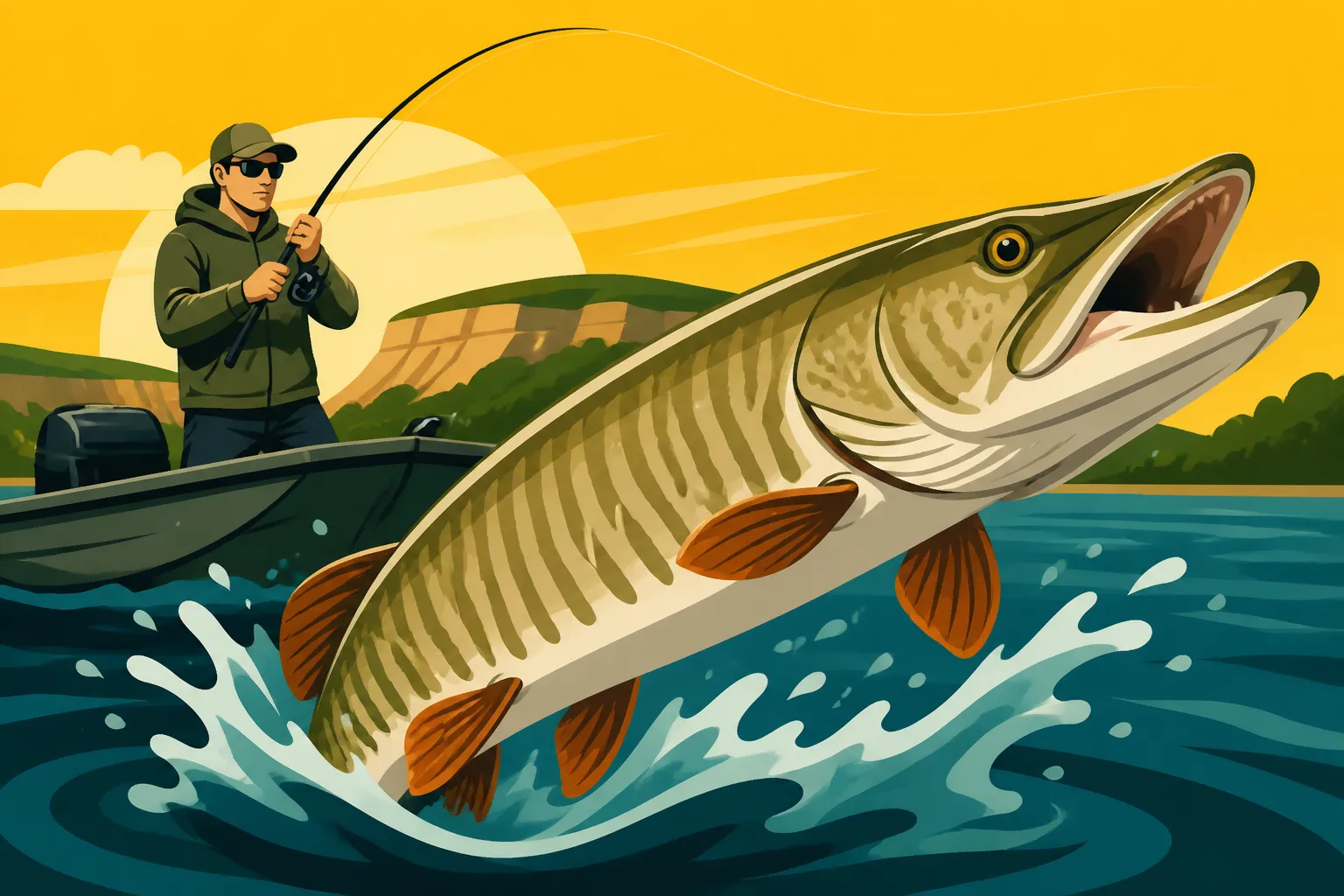
Nebraska Muskellunge Fishing
If you've ever dreamt of battling a true freshwater leviathan, then Nebraska's muskellunge fishing scene might just be calling your name. But let's be honest, chasing muskies isn't for the faint of heart or the easily discouraged; these magnificent predators earned the nickname "the fish of 10,000 casts" for a reason. They are elusive, powerful, and demanding, often testing an angler's patience and skill to their absolute limits. This guide is here to walk you through everything you need to know about pursuing these apex predators in the Cornhusker State, from where they lurk to the specialized gear and techniques that just might help you land that fish of a lifetime.
The Allure and Challenge of Nebraska Muskie Fishing
There's something uniquely captivating about the muskellunge, or "muskie" as most anglers affectionately call them. They are not just fish; they are an experience, often defined by long hours of casting, intense anticipation, and then, in a blink, explosive, heart-stopping action. In Nebraska, this challenge is amplified, making every muskie caught feel like a monumental achievement.
Why Muskies Capture the Imagination (and Frustration)
Imagine a fish that can grow over fifty inches long, boast a sleek, muscular body, and possess a mouth full of razor-sharp teeth designed for tearing into prey. That's a muskie. Their sheer size and power make them one of the most sought-after freshwater game fish. When a muskie hits your lure, it's not a gentle tug; it's a violent strike that can nearly rip the rod from your hands. The fight is typically short but incredibly fierce, with powerful runs, headshakes, and often acrobatic jumps that can throw a hook with surprising ease. This raw power and predatory instinct are what draw so many anglers to their pursuit.
However, the "frustration" part of the equation comes from their infamous elusiveness. Muskies are apex predators and relatively few in number compared to other game fish. They are often solitary, territorial, and can be incredibly picky eaters. You might spend an entire day, or even several days, making thousands of casts without so much as a follow. This requires an almost zen-like patience, an unwavering belief that the next cast could be the one, and a willingness to learn from every missed opportunity. It's a game of wits, strategy, and sheer perseverance.
Understanding Muskie Behavior in Nebraska Waters
Muskies are ambush predators. This means they prefer to lie in wait, hidden amongst cover or near structure, ready to pounce on an unsuspecting meal. In Nebraska's reservoirs, this usually translates to specific types of habitat. They love weed lines, especially thick cabbage beds or stands of submerged timber that provide excellent camouflage and ambush points. Rock piles, sharp drop-offs, points extending into deeper water, and even open water baitfish schools can hold muskies depending on the season and time of day.
Their behavior is heavily influenced by water temperature and baitfish presence. During warmer months, they might be found shallower, patrolling weed edges or suspended over deeper water near schools of shad or other forage fish. As water temperatures drop in the fall, they often enter a "feeding frenzy," bulking up for winter, and can be found aggressively attacking large baits. Understanding these seasonal shifts and their preferred ambush points is key to narrowing down where to focus your efforts. Knowing What a Muskellunge Is and Where They Live in Nebraska can really help you begin to think like one.
Where to Find Nebraska's Elusive Muskies
When it comes to muskie fishing in Nebraska, one name rises above all others: Merritt Reservoir. While there might be occasional sightings or historical notes of muskies in other waters, Merritt is unequivocally the state's muskie Mecca.
Primary Muskie Hotspots: Merritt Reservoir
Merritt Reservoir, nestled in the scenic Sandhills of Nebraska, is renowned for its trophy muskie fishery. This large, deep reservoir offers an ideal habitat for these big predators. It boasts extensive weed beds, significant timber, rocky points, and abundant baitfish like gizzard shad and perch, which contribute to the impressive growth rates of its muskie population. Merritt has been the site of Nebraska's successful muskie stocking program for many years, leading to a healthy and thriving population of large fish.
Anglers targeting muskies at Merritt often focus on several key areas. The numerous bays and coves throughout the lake provide excellent weed growth, creating prime ambush cover. Look for the edges of these weed beds, particularly where they meet deeper water or a channel. Points that jut out into the main lake, especially those with submerged rocks or timber, are also high-percentage spots, as muskies will stage there to intercept baitfish moving along the contours. Don't overlook the main lake basin either; muskies will suspend over open water, especially during the summer, if they're following baitfish schools. Getting familiar with Merritt Reservoir Muskellunge Fishing Tips will give you a significant advantage. The clarity of the water at Merritt can also play a role, often dictating lure color and presentation.
Other Potential Muskie Waters and Stocking Efforts
While Merritt Reservoir is the undisputed king of Nebraska muskie fishing, it's natural for anglers to wonder if other waters might hold these giants. Historically, there have been limited, often experimental, stockings in other Nebraska lakes, but none have developed into a consistent, self-sustaining trophy muskie fishery comparable to Merritt.
Occasionally, you might hear whispers or see reports of a muskie caught incidentally in another large reservoir. These instances are rare and usually represent rogue fish or very limited past stocking efforts that didn't take hold broadly. The Nebraska Game and Parks Commission's focus for muskie management has primarily been on Merritt Reservoir due to its proven success as a habitat for these specific fish. For an angler dedicated to targeting muskies, traveling to Merritt Reservoir will offer the highest probability of success and the best chance at a truly memorable catch. It's crucial for any angler to always check the most current regulations for any specific body of water they plan to fish, as stocking programs and species presence can evolve.
Essential Gear for Nebraska Muskie Anglers
Chasing muskies isn't like panfish fishing; your gear needs to be up to the task of handling a powerful, large, and toothy fish. Skimping on tackle will almost certainly lead to heartbreak.
Rods, Reels, and Line Built for Battle
When selecting a rod for muskie fishing, think power and length. You'll want a heavy or extra-heavy power baitcasting rod, typically 8 to 9 feet long. The length is crucial for casting large, heavy lures, making long sweeps for the figure-eight maneuver at the boat, and providing leverage during the fight. A fast action tip will help with hook sets while the strong backbone allows you to put serious pressure on a big fish. Brands like St. Croix, Shimano, and Daiwa offer excellent muskie-specific rods that can withstand the abuse.
Matching your rod with a robust baitcasting reel is equally important. Look for a low-profile baitcaster or a round baitcaster with a high line capacity and a strong drag system. Gear ratios in the 6.1:1 to 7.1:1 range are common, providing enough speed to work baits effectively. Some popular choices can be found on Amazon, and a quick search for "heavy-duty baitcasting reels" will give you plenty of options designed for big game fish.
Line choice is critical. Braided line is almost universally preferred for muskie fishing due to its incredible strength, minimal stretch, and abrasion resistance. Opt for 65 to 100-pound test braid. While it might seem like overkill, you're not just fighting the fish; you're often pulling heavy lures through weeds and dealing with potential snags. A leader is absolutely essential, as muskies have incredibly sharp teeth that will easily cut through braided line. Use a heavy-duty fluorocarbon or steel leader, typically 100-150 pound test, connected with high-quality swivels and snaps. Getting the right Best Rods and Reels for Nebraska Fishing is foundational.
Lures That Tempt the Toothy Titans
Muskie lures are a sight to behold—often massive, colorful, and designed to grab attention. There's a wide variety, each with its own specific application:
- Bucktails: These are probably the most iconic muskie lures. They consist of a heavy wire shaft, one or more blades (like Colorado or Willowleaf), a bucktail skirt, and usually two large treble hooks. They're designed to be retrieved quickly, creating flash and vibration that muskies can't resist. Double-bladed bucktails are especially popular for their increased presence in the water.
- Crankbaits: Large, deep-diving crankbaits are excellent for covering water, especially when trolling or fishing deeper weed edges and drop-offs. Jointed models can offer an enticing swimming action.
- Jerkbaits & Glide Baits: These lures are fished with a jerk-pause retrieve, mimicking an injured baitfish. They require more angler input but can be incredibly effective at drawing strikes, especially in cooler water. Glide baits, in particular, have a tantalizing side-to-side action.
- Soft Plastics: Large swimbaits and soft plastic jerkbaits can also be very effective. Their lifelike action and ability to be fished at various depths make them versatile. Rigged with heavy jig heads, they can probe deeper structure.
- Topwater Lures: During low-light conditions or over shallow weed beds, noisy topwater lures like prop baits or walk-the-dog style baits can provoke explosive surface strikes.
When selecting lures, consider size (often 8-14 inches), color patterns (natural baitfish, bright contrast, or dark silhouettes depending on water clarity and light conditions), and the specific depth you need to reach. Remember, the hooks on muskie lures are typically huge, so ensure they are sharp and strong.
Critical Accessories for Safety and Success
Muskie fishing isn't just about catching the fish; it's about handling them responsibly and safely for both the angler and the fish. These powerful, toothy creatures require specialized tools:
- Long-handled Pliers: Essential for safely removing hooks from a muskie's mouth without getting your fingers too close to those sharp teeth. Look for heavy-duty models that won't bend under pressure.
- Bolt Cutters: A must-have in case a hook is deeply embedded or goes through your skin or the fish's jawbone. Being able to cut a hook quickly can prevent serious injury or undue stress to the fish.
- Large Landing Net (Cradle Style): Forget your bass net. Muskies require a net with a very large hoop and a deep, rubberized, knotless mesh. Many muskie anglers prefer a cradle-style net that allows the entire fish to be safely cradled in the water, minimizing time out of the water. For more on this, check out Best Landing Nets for Big Fish.
- Heavy Gloves: Protect your hands from teeth, gill plates, and sharp fins when handling the fish.
- Release Tools: Specific tools designed to assist in hook removal, sometimes referred to as "hook-out" tools, can make the process quicker and safer.
These items are not optional; they are critical for ensuring a safe and successful catch-and-release experience. You can find many of these specialized tools, including robust pliers and large nets, available on Amazon.
Mastering Nebraska Muskie Fishing Techniques
Catching a muskie isn't just about having the right gear; it's about executing the right techniques with precision and persistence. Each cast is an opportunity, and every retrieve tells a story.
The Art of Casting and Retrieval
Muskie fishing is an active pursuit, primarily involving repetitive casting. You'll typically be fan-casting, covering a wide area around structure like weed lines, rock piles, or submerged timber. The key is to make accurate casts to these high-percentage spots.
Once your lure hits the water, the retrieve is everything. Vary your retrieve speed and incorporate pauses, twitches, and jerks to mimic a struggling baitfish. Many muskie lures are designed to be fished aggressively with a fast retrieve, creating a strong vibration and flash. Pay close attention to how the lure feels in the water and if it's running true.
Perhaps the most iconic muskie technique is the "figure-eight" at the boat. When you retrieve your lure to the side of the boat, instead of simply lifting it out, plunge your rod tip into the water and trace a large figure-eight pattern with your lure. Muskies often follow a lure right up to the boat, and this maneuver can trigger a strike from a hesitant fish that was just inspecting your bait. It’s an exhilarating moment when a huge muskie appears out of nowhere and engulfs your lure just feet from your rod tip. This takes practice to execute smoothly, especially with long rods.
Trolling for Open Water Muskies
While casting is a popular method, trolling can be incredibly effective, especially for covering large expanses of water and targeting suspended muskies. This technique involves slowly moving your boat while trailing lures behind it at various depths.
Deep-diving crankbaits are usually the lure of choice for trolling. You can run multiple lines, often using planer boards to spread them out and cover a wider swath. Speed is critical; experiment with different trolling speeds until you find what triggers bites. GPS mapping and a good fish finder are invaluable for trolling, allowing you to stay on specific contours, navigate around submerged structure, and identify baitfish schools. You can get familiar with your sonar by reading up on How to Read a Fish Finder for Walleye, as many of the principles apply to finding muskie structure and bait as well. Pay close attention to your electronics for changes in depth, temperature, and baitfish presence, as these often indicate where muskies might be holding. Trolling allows you to present lures to fish that might not be accessible via casting from the bank or even anchored boat, especially in large reservoirs like Merritt.
Seasonal Strategies for Nebraska Muskies
Muskie behavior changes significantly throughout the year, so adapting your approach to the season is paramount. Learning Best Nebraska Fishing Techniques by Season will serve you well.
- Spring: As the ice recedes and water temperatures slowly climb (typically 40s-50s F), muskies become more active but are often still in their pre-spawn or spawning phases. They'll be found in shallower bays and protected areas, often near emergent weeds or warmer incoming water. Slower presentations like jerkbaits or glide baits can be effective, but don't rule out bucktails as they begin to feed more actively.
- Summer: When water temperatures stabilize and climb (60s-70s F), muskies often move to deeper weed edges, submerged humps, rock piles, or suspend over deeper water, following baitfish. Fast-retrieved bucktails, large crankbaits (especially when trolling), and soft plastics are good choices. Look for them to be more active during low-light periods (dawn, dusk) or overcast days, retreating to deeper, cooler water during the heat of midday.
- Fall: This is often considered the prime time for trophy muskie fishing. As water temperatures cool (50s-low 60s F), muskies enter a "feeding frenzy" to build up fat reserves for winter. They become incredibly aggressive and will attack large baits with ferocity. Big bucktails, oversized crankbaits, and large jerkbaits are all excellent choices. Focus on major points, deep weed edges, and areas with abundant baitfish. Fall fishing often means fewer bites, but the fish you do encounter are often larger and more aggressive.
Understanding these seasonal patterns will help you predict where muskies might be and what lures and presentations will be most effective.
Conservation and Responsible Muskie Fishing Practices
Muskies are a precious resource in Nebraska, and their populations are carefully managed. Because they are slow-growing and relatively rare, conservation is not just a good idea—it's essential for the future of the fishery.
Catch and Release: Protecting Nebraska's Muskies
Catch and release is the cornerstone of muskie fishing ethics, particularly in Nebraska. Most muskie fisheries, including Merritt, operate under strict regulations that either prohibit harvest or have very high minimum length limits, effectively making them catch-and-release fisheries. This practice is vital because muskies take many years to reach trophy size, and removing them from the population significantly impacts future generations.
To ensure a high survival rate for released muskies, always prioritize the fish's well-being. Here are some critical handling tips:
- Minimize Time Out of Water: The absolute golden rule. Get pictures quickly, but the fish should be out of the water for mere seconds, if at all. Use a large net or cradle to keep the fish submerged while preparing for a photo.
- Support the Fish: When lifting a muskie for a quick photo, always support its entire body horizontally, especially its belly, with two hands. Never hold a muskie vertically by its head or gills, as this can severely damage its internal organs and spine.
- Use Proper Release Tools: Have your long-handled pliers, bolt cutters, and any other release tools readily accessible. This allows for quick and efficient hook removal.
- Avoid the Gills: Never put your fingers into a muskie's gills. They are incredibly delicate and easily damaged.
- Revive If Necessary: If the fish seems sluggish after release, gently hold it upright in the water, facing into any current, and slowly move it back and forth until it regains its strength and swims away on its own. For more general guidelines, see How to Release a Fish Safely to Survive.
Practicing responsible catch and release not only ensures the future of muskie fishing but also provides a more fulfilling experience knowing you've helped protect these magnificent creatures.
Understanding Nebraska's Muskie Regulations
Before you even think about hitting the water, thoroughly review the current Nebraska Fishing Regulations Explained. Muskie regulations are often among the strictest, and for good reason. These rules are in place to protect the fragile populations and ensure sustainable fishing opportunities.
Typical muskie regulations in Nebraska (and elsewhere) often include:
- High Minimum Length Limits: It's not uncommon for muskie minimum length limits to be 40 inches or even longer. This ensures that fish have a chance to reach maturity and spawn multiple times before being harvested, if harvest is even allowed.
- Low Daily Bag and Possession Limits: Usually, the limit is one fish per day, and often zero, meaning all muskies caught must be released.
- Special Stamps/Permits: In some states or for specific species, an additional stamp might be required. Always verify if any such requirements apply to muskie fishing in Nebraska.
These regulations are subject to change, so always consult the latest Nebraska Fishing Guide published by the Nebraska Game and Parks Commission. Ignorance of the law is no excuse, and violations can result in significant fines and penalties. By understanding and adhering to these rules, you contribute directly to the health and longevity of Nebraska's unique muskie fishery.
Tips for Increasing Your Odds (and Sanity)
Muskie fishing can be a mental game as much as a physical one. It demands dedication, a willingness to learn, and an unwavering belief that success is possible, even when the bites are few and far between.
Patience, Persistence, and Positive Attitude
This might be the most important "gear" you bring with you. The moniker "fish of 10,000 casts" isn't an exaggeration for everyone, every time, but it certainly highlights the need for immense patience. You might cast for hours without a single follow, let alone a strike. It's easy to get discouraged, but the most successful muskie anglers are those who maintain their focus and enthusiasm throughout the day.
Every cast is a new opportunity. Every retrieve has the potential for that explosive strike. Learn to enjoy the process—the rhythm of casting, the anticipation of seeing a dark shape emerge from the depths, the sheer beauty of the water and surrounding nature. Celebrate the small victories, like a follow or a swirl, as they indicate you're doing something right. A positive attitude keeps you engaged and less likely to miss that one critical moment when a muskie finally decides to commit.
Locating Productive Muskie Structure
Muskies are creatures of habit and structure. They don't just swim aimlessly; they relate to specific features in the lake. Your ability to identify and effectively fish these structures will dramatically increase your odds.
- Weed Lines: These are prime ambush points. Look for thick beds of coontail, cabbage, or milfoil, especially where they form distinct edges or pockets. Muskies will often patrol these edges or sit just inside, waiting for prey.
- Rock Piles and Humps: Submerged rock piles, especially those near deeper water, can hold muskies. These areas provide cover and attract baitfish.
- Drop-Offs: The transition zones from shallow to deep water are always high-percentage areas. Muskies will use these contours to move between different depths and ambush prey.
- Submerged Timber and Brush: Old standing timber or brush piles offer excellent cover and are often overlooked. Muskies will relate tightly to these features.
- Baitfish Presence: Ultimately, muskies go where the food is. Use your electronics to locate schools of shad, perch, or other forage fish. If you find the bait, the predators are likely nearby.
Modern boat electronics, including side imaging and down imaging, can be incredibly helpful in locating these underwater structures. Even from shore or a kayak, observing weed patterns, water clarity, and depth changes can provide valuable clues. For more on using your electronics, a guide like How to Read a Fish Finder for Walleye can offer transferable knowledge.
Learning from Others and Local Resources
You don't have to reinvent the wheel. The muskie fishing community, while sometimes tight-lipped about specific spots, is generally passionate about the sport and willing to share knowledge.
- Connect with Other Anglers: Join online forums or social media groups dedicated to muskie fishing in Nebraska or the Midwest. You'll find a wealth of information, tips, and reports from experienced anglers. Respect their privacy and the details they share, but soak up the general wisdom.
- Visit Local Bait Shops: A good bait shop near Merritt Reservoir will be a goldmine of information. The owners and staff are often local anglers who know the current conditions, recent patterns, and what lures have been working. They can also advise on specific retrieves or areas to target.
- Consult NDNR Resources: The Nebraska Game and Parks Commission website often provides fishing reports, stocking information, and lake maps that can be invaluable for planning your trip.
- Hire a Guide: If you're serious about learning quickly or want to maximize your chances on a first trip, consider hiring a reputable muskie fishing guide on Merritt Reservoir. They can teach you techniques, show you productive spots, and drastically cut down on your learning curve.
Combine your own observations with the wisdom of others, and your journey to catching a Nebraska muskie will be all the more rewarding.
Here's a quick comparison of common muskie lure types:
| Lure Type | Common Sizes (inches) | Primary Application | Key Characteristics | Retrieve Style | Notes |
|---|---|---|---|---|---|
| Bucktail | 8-14 | All-around, fast retrieve | Blades create flash/vibration | Fast, steady crank | Great for covering water, figure-eight at boat |
| Crankbait | 6-12+ | Trolling, deep structure, casting | Diving lip, wobbling action | Steady retrieve, varied speed, troll | Effective when muskies are deeper or suspended |
| Jerkbait | 6-12 | Casting, twitching, cooler water | No lip, often jointed | Jerk-pause, erratic action | Mimics injured baitfish, good for subtle bites |
| Glide Bait | 6-10 | Casting, versatile depth | S-shaped swimming action | Steady retrieve with rod sweeps | Attracts curious fish, unique presentation |
| Topwater | 6-12 | Shallow water, low light | Floats, creates surface disturbance | Walk-the-dog, chug, prop | Exciting surface strikes, covers thick cover |
| Soft Plastic | 8-14+ | Deeper water, slow retrieve | Lifelike profile, paddle tail | Slow roll, jigging | Versatile, can be fished at various depths |
Disclaimer
This article is for general informational purposes only and does not constitute professional advice. Laws, prices and regulations vary by location and change over time. Consult a qualified professional for guidance on your specific situation.