Nebraska Fish Species Identification Guide
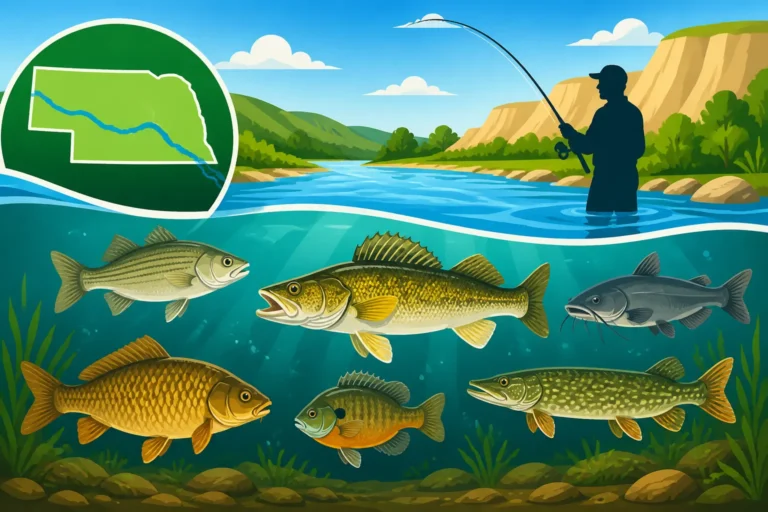
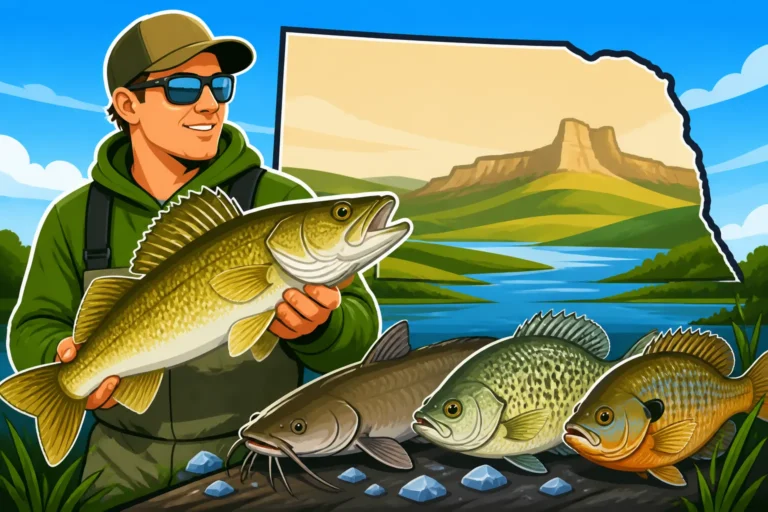
Ever stared into your livewell, scratching your head, trying to figure out if you've got a channel cat or a blue cat? Or perhaps you're wondering if that striped fish is a walleye, a sauger, or something else entirely? Navigating the diverse world of Nebraska fish species can be tricky, even for seasoned anglers. This comprehensive guide is designed to help you confidently identify the fish you catch in Nebraska's lakes, rivers, and ponds, ensuring you stay within regulations and deepen your understanding of the aquatic life around you.
Why Accurate Fish Identification Matters in Nebraska
It might seem like a small detail, but knowing exactly what fish you've caught goes far beyond bragging rights. In a state like Nebraska, with its rich fishing culture and varied ecosystems, precise identification is crucial for several important reasons that impact both your fishing experience and the health of the fishery.
Adhering to Regulations and Limits
This is perhaps the most immediate and practical reason for accurate fish ID. Nebraska has specific daily bag and possession limits, as well as length limits, for many popular species. These regulations are in place to manage fish populations, prevent overharvesting, and ensure sustainable fishing for everyone. Imagine catching a fish that looks like a walleye, but it's actually a sauger. While similar, they can have different size and bag limits. Misidentifying your catch could lead to unintentional violations, which nobody wants. You'll find a lot of these specifics outlined in the annual Nebraska Fishing Regulations Explained booklet, which is your go-to resource for all current rules. It's not just about avoiding fines; it's about being a responsible angler who respects the resource.
Understanding Fish Behavior and Habitat
Every species of fish has its own preferred habitat, diet, and seasonal behaviors. By correctly identifying what you're catching, you start to build a mental map of where certain fish like to hang out and what they might be feeding on. For example, if you consistently catch largemouth bass in weedy coves, but smallmouth bass near rocky points, that knowledge helps you target those areas more effectively in the future. Accurate identification allows you to learn from your experiences and become a more skilled and successful angler. It turns every catch into a lesson, helping you understand the subtle nuances of Nebraska's diverse waterways.
Contributing to Conservation Efforts
When anglers correctly identify fish, it contributes to better data collection for wildlife agencies. If you're participating in a fishing survey or simply reporting your catch, accurate information helps fisheries biologists monitor populations, track changes, and make informed decisions about stocking, habitat improvements, and regulation adjustments. Beyond official reporting, knowing what you've caught also helps you understand the health of the local ecosystem. Catching an invasive species, for instance, immediately signals a potential problem. Anglers are often the first line of defense in spotting environmental shifts, and proper identification empowers them to be active participants in conservation. Understanding the species also helps you practice proper catch and release techniques for vulnerable fish.
Walleye and Their Look-Alikes: Sauger and Wipers
These three fish can often cause confusion, especially for new anglers. While all are exciting to catch in Nebraska, knowing the difference is key to staying legal and understanding your quarry. Walleyes are highly sought after, but sauger and wipers also offer fantastic fishing opportunities.
Spotting a True Walleye
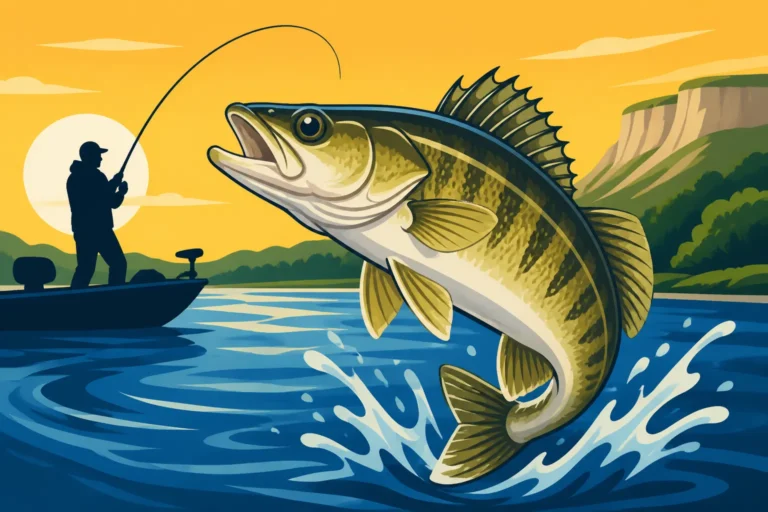
The walleye, named for its large, reflective eyes, is a prized game fish across Nebraska. When you've got a walleye in hand, you'll immediately notice its long, slender body, often with a golden-olive hue on its back, fading to white on its belly. The most defining characteristic, however, is a prominent, milky-white tip on the lower lobe of its tail fin. This "white tip" is a dead giveaway. They also typically have a darker, mottled pattern on their sides, not distinct spots like a sauger. Their dorsal fins have sharp spines, and their mouths are armed with many sharp teeth, so handle with care! Walleye are often found in larger, clearer reservoirs like Lake McConaughy or Merritt, and understanding their Nebraska Walleye Bag Limits is crucial.
You'll usually find walleye congregating around underwater structures like humps, points, and drop-offs, especially during daylight hours. They're visual predators, and their large eyes are perfectly adapted for low-light conditions, making dawn, dusk, and even night fishing highly productive. When you're out there, pay attention to that tail fin. If it's got that stark white patch, you've likely got a walleye. Sometimes, the white tip can be faint, especially on smaller fish or fish from darker water, but it's almost always present in some form. Anglers often target them with jigs, crankbaits, and live bait like minnows or nightcrawlers.
Differentiating Walleye from Sauger
Sauger are another popular sport fish in Nebraska, particularly in rivers, and they are often confused with walleye. While they share a similar body shape, there are clear differences. Unlike the walleye's mottled sides, sauger have distinct, dark spots on their dorsal fin membranes, forming broken bands or rows. Their body coloration is usually more brownish or brassy, with three to four distinct saddle-shaped blotches across their back and sides, giving them a "tiger stripe" appearance. Crucially, sauger do not have the white tip on the lower tail fin lobe. That's your primary identifier!
Sauger also tend to have rougher, more sandpaper-like scales compared to the smoother feel of a walleye. Their habitat preferences can differ too; while walleye prefer clear, open waters, sauger are often found in murkier, current-heavy river systems like the Missouri River or the lower Platte, where they forage near the bottom. If you're fishing a river, especially one with a lot of current, and you catch a fish that looks like a walleye but lacks the white tail tip and has distinct spots on its dorsal fin, you've likely landed a sauger. Double-check your regulations, as sauger might have different length or bag limits than walleye.
Identifying Wipers (Hybrid Striped Bass)
Wipers, also known as hybrid striped bass, are a cross between a striped bass and a white bass. They are often stocked in Nebraska reservoirs and offer a thrilling fight. They can be confused with white bass, and sometimes even smaller striped bass, but distinguishing them from walleye and sauger is usually straightforward due to their distinctly different body shape and markings. Wipers have a deeper body profile than the slender walleye or sauger, and their most noticeable feature is several dark, unbroken horizontal stripes running along their silver sides. These stripes are typically much clearer and more defined than the sometimes broken lines on a pure white bass.
Unlike walleye and sauger, wipers have no teeth on their tongues, and their two dorsal fins are usually separate, whereas walleyes have two distinctly separated dorsal fins. Wipers are voracious predators and are often found schooling in open water, chasing baitfish. If you're catching fast-moving, silver fish with strong, dark stripes in a reservoir like Lake McConaughy or Sherman Reservoir, you're likely into a school of wipers. They grow much larger than white bass and put up a tremendous fight, making them a favorite among many anglers. Remember, their primary distinguishing features are their deep body, separate dorsal fins, and bold, unbroken lateral stripes.
| Feature | Walleye | Sauger | Wiper (Hybrid Striped Bass) |
|---|---|---|---|
| Tail Fin | Milky white tip on lower lobe | No white tip | No white tip |
| Dorsal Fin | No distinct spots on membrane | Distinct dark spots on membrane | Two separate dorsal fins |
| Body Color | Golden-olive, mottled | Brownish/brassy, saddle-shaped blotches | Silvery, bold, unbroken horizontal stripes |
| Body Shape | Slender, elongated | Slender, elongated | Deep-bodied, football-like |
| Tongue Teeth | Present (rough patch) | Present (rough patch) | Absent |
| Habitat | Clearer lakes & reservoirs, low current | Murkier rivers, moderate to strong current | Open water of reservoirs, schooling |
The Catfish Family: Channel, Flathead, and Blue Catfish
Nebraska is a fantastic state for catfishing, with the Channel Catfish being the official state fish! But did you know there are three distinct species of cat you might encounter? Knowing the difference is important for regulations, but also helps you understand their behavior and where to target them.
Characteristics of Channel Catfish
The channel catfish is by far the most common and widespread catfish species in Nebraska, inhabiting nearly every river, lake, and pond. They are easily recognized by their deeply forked tail, making them quite distinct from their flathead and blue cousins. Their body is generally silver-gray to olive-brown on the back, fading to white on the belly, and they often have scattered dark spots on their sides, though these spots can fade or be absent in larger or older fish. They have a smooth, scaleless skin and eight barbels around their mouth (four on the chin, two on the upper jaw, and two nasal barbels), which they use to taste and feel for food.
Channel cats are opportunistic feeders, eating just about anything from insects and crustaceans to smaller fish and even fruits and berries that fall into the water. This adaptability is why they thrive in so many environments, from fast-flowing rivers to stagnant farm ponds. Their size can vary greatly depending on the body of water, but they can grow quite large, offering an exciting fight. You can find specific Nebraska Channel Catfish Daily Limit information in the state fishing guide. They are a favorite for shore anglers and boaters alike, often caught using stink baits, cut bait, or even hot dogs.
Distinguishing Flathead Catfish
Flathead catfish are the true titans of Nebraska's rivers and large reservoirs. Unlike the channel cat's forked tail, the flathead has a square or slightly rounded tail, which is a key identifying feature. Their head is noticeably flattened, living up to their name, and their lower jaw protrudes beyond the upper jaw. Their body coloration is mottled brown, olive, or yellow-brown, often with darker splotches, providing excellent camouflage in the woody debris and dark holes where they prefer to live. They have smaller eyes relative to their body size compared to channel cats, and their barbels are shorter.
Flatheads are primarily piscivorous (fish-eating) predators, preferring live bait. They are solitary and often lurk in deep holes, log jams, and undercuts in rivers like the Platte or Missouri. Catching a flathead is often a deliberate pursuit, requiring heavy tackle and a patient approach, usually with live bait like bluegill or sunfish. If you hook into a truly massive catfish with a flat, shovel-like head, a protruding lower jaw, and a square tail, you've likely tangled with a flathead. These fish can grow to immense sizes in Nebraska, making them a bucket-list species for many anglers.
The Rare Blue Catfish
While blue catfish are abundant in other parts of the country, they are much rarer in Nebraska, primarily found in the lower reaches of the Missouri River and some connected waters. They are the largest species of North American catfish and can reach incredible sizes. The primary identifiers for a blue catfish are its distinctively forked tail, much like a channel cat, but its body is typically a uniform slate blue to gray on the back and sides, without the spots often seen on channel cats. Their head is also more sloped than a channel cat's, and their anal fin is longer and straighter, with more rays (30-36) than a channel catfish (24-29).
If you catch a large, silvery-blue catfish with a deeply forked tail, especially in the Missouri River, it might be a blue cat. However, given their rarity and the possibility of confusion with large, unspotted channel catfish, it's always wise to consult a detailed field guide or someone knowledgeable. Blue cats are primarily bottom feeders, eating fish, mussels, and crustaceans, and can be caught using fresh cut bait or large prepared baits. While less common, the presence of blue catfish adds another layer of excitement for dedicated catfishermen exploring the state's largest river systems. If you're purchasing a fishing guide from Amazon, you'll often find detailed illustrations to help differentiate these three impressive species.
Bass Bonanza: Largemouth, Smallmouth, and White Bass
Nebraska offers excellent bass fishing for several species, each with its own characteristics and preferred habitats. While "bass" is a broad term, knowing the specific type you've hooked can inform your tactics and ensure you comply with specific length limits.
Largemouth Bass: The Classic Green Bass
The largemouth bass is probably the most recognizable and widely distributed bass in Nebraska. You'll find them in almost every lake, pond, and slow-moving river section across the state. They get their name from their large mouth, where the jaw extends beyond the eye when closed. Their body is typically green with a prominent, irregular dark horizontal stripe or blotches along the lateral line, though coloration can vary based on water clarity and habitat. They have a deeply notched dorsal fin, appearing almost as two separate fins, and their bodies are generally robust and powerful.
Largemouth bass are ambush predators, preferring to hide in dense cover like aquatic vegetation, submerged timber, or docks. They love warmer, shallower water and will often strike at a variety of lures, from topwater frogs and plastic worms to spinnerbaits and crankbaits. Fishing for largemouth is a favorite pastime for many Nebraskans, and you'll often hear anglers discussing their favorite "hog" from a farm pond. Understanding the Nebraska Bass Length Limits is crucial, as some areas have slot limits to protect larger fish. If you're casting into lily pads or around fallen trees and pull out a green fish with a huge mouth, you've got a largemouth.
Smallmouth Bass: River and Reservoir Fighters
The smallmouth bass, often called "bronzebacks" for their distinctive coloration, offers an entirely different fishing experience. While not as widespread as largemouths, they are found in several key Nebraska waters, notably the Niobrara River and some of the larger, clearer reservoirs with rocky shorelines, like Lake McConaughy. The most obvious difference from a largemouth is their mouth: when closed, the jaw does not extend beyond the eye. Their body is more torpedo-shaped and typically bronze to brown in color, with vertical bars or blotches on their sides, rather than a horizontal stripe.
Smallmouth bass prefer cooler, clearer water with rocky bottoms and current. They are tenacious fighters, known for their powerful runs and acrobatic leaps when hooked. Unlike the largemouth's ambush tactics, smallmouths often chase down their prey in open water or along rocky structures. If you're fishing a clear, rocky river or reservoir and hook into a hard-fighting, bronze-colored fish with a smaller mouth and vertical bars, you've likely found a smallmouth. They respond well to jigs, tubes, small crankbaits, and crawfish imitations. They are a true prize for any angler seeking a strong fight.
White Bass: Schooling Frenzy Fun
White bass are a schooling fish that can provide incredibly fast-paced action in Nebraska's larger reservoirs and rivers, particularly during their spring spawning runs. They are often confused with young striped bass or wipers. White bass are silvery-white, with several distinct horizontal dark stripes along their sides. The key identifier is that these stripes are usually broken or discontinuous, especially below the lateral line, and they are not as bold or as numerous as on a wiper. Their body shape is also generally deeper and more compressed than a pure striped bass, and they are much smaller, rarely exceeding a few pounds.
White bass are aggressive predators of baitfish and will often create a surface frenzy when they push schools of shad to the top. When you see gulls diving and water boiling, you can bet there are white bass (and often wipers) underneath. They are incredibly fun to catch, often striking almost any fast-moving lure or bait. Look for them in open water, particularly near submerged humps, points, and river mouths, especially in spring. If you're catching numerous silvery, striped fish that are feisty but not enormous, and their stripes are a bit broken, you're likely in a school of white bass. They are excellent table fare and offer fantastic opportunities for high-volume fishing.
Panfish Plethora: Crappie, Bluegill, and Perch
Panfish are the bread and butter of many fishing outings, particularly for families and beginners. They're abundant, relatively easy to catch, and delicious. Nebraska is home to several popular panfish species, and while they all fit the "panfish" category, they each have distinct features.
Telling Apart Black and White Crappie
Crappie are one of Nebraska's most popular panfish, known for their papermouths and delicious fillets. There are two species: black crappie and white crappie, and while similar, they have clear distinguishing characteristics. The easiest way to tell them apart is by counting the spines in their dorsal fin. Black crappie typically have 7 or 8 dorsal spines, while white crappie have 5 or 6 dorsal spines. Additionally, black crappie usually have an irregular, mottled pattern of dark blotches on their silvery-green bodies, which often extends down to their belly.
White crappie, on the other hand, tend to have more organized, vertical bars or stripes on their silvery bodies, with less blotching. They also have a longer, more slender body profile compared to the black crappie's somewhat rounder, deeper body. Both species love cover, such as brush piles, submerged timber, and weed beds, but black crappie often prefer clearer water with more vegetation, while white crappie are more tolerant of turbid conditions. Knowing the difference, like in the guide Nebraska Black Crappie vs White Crappie, can help you understand habitat preferences and choose the right spots. Whether you're targeting them in spring around spawning beds or in winter through the ice, crappie provide endless angling fun.
Bluegill and Other Sunfish Species
Bluegill are arguably the most iconic panfish, instantly recognizable and a favorite for introducing kids to fishing. They have a deep, compressed, disc-shaped body, typically olive-green to dark blue on the back, fading to yellowish on the belly, with a distinct black spot on the posterior edge of the gill cover (the "ear flap"). They also usually have 5-9 dark vertical bars on their sides. A key feature is a small, dark spot at the base of the soft-rayed dorsal fin.
Nebraska is home to several other sunfish species, often lumped together with bluegill. Green sunfish, for instance, have a larger mouth than bluegill and a dark spot on the gill cover that is typically outlined in a lighter color. They also have short, rounded pectoral fins compared to the bluegill's longer, pointed ones. Pumpkinseed sunfish are another colorful species, often identified by wavy blue lines on their cheek and a red spot on the tip of their gill flap. While all are fun to catch, learning to tell them apart adds to your understanding of the aquatic environment. These small but feisty fish are usually caught on worms, small jigs, or flies, especially around docks, fallen trees, and weed edges.
Yellow Perch: Stripes and Spines
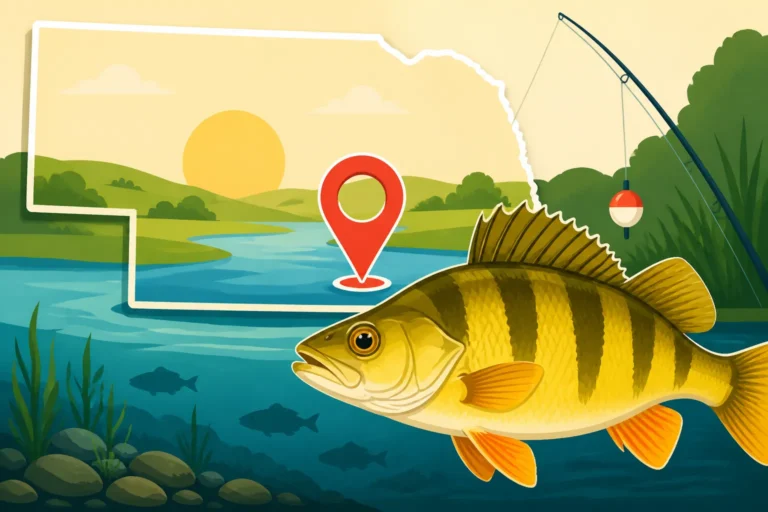
Yellow perch are a distinctive and popular panfish, especially in cooler waters and for ice fishing. They are easily identified by their bright yellow to golden-brown bodies with 6 to 8 dark, vertical bars or stripes that extend from their back down their sides. They have two dorsal fins, the first being spiny and the second soft-rayed, and their fins, particularly the lower ones, often have an orange or reddish tint. Their body is somewhat deeper and less compressed than a crappie, but more elongated than a bluegill.
Yellow perch thrive in cooler, deeper lakes and reservoirs, often schooling over sand and gravel bottoms or around submerged structures. They are voracious eaters, feeding on insects, crustaceans, and small minnows. They are particularly active during the winter months, making them a prime target for ice anglers across Nebraska. If you're pulling a vividly striped, yellow fish through the ice or from a deeper breakline, you've likely caught a yellow perch. They are highly sought after for their delicate, flaky white meat and provide consistent action when a school is located.
Nebraska's Coldwater Contenders: Trout Species
While Nebraska might not be the first state that comes to mind for trout fishing, the state offers some fantastic opportunities, especially in its coldwater streams and stocked lakes. Knowing your trout species helps you appreciate the unique beauty of each and understand their specific habitats.
Rainbow Trout: The Stocking Staple
Rainbow trout are the most commonly stocked trout species in Nebraska, making them accessible to many anglers, even in urban ponds. They are named for the distinctive iridescent pink or red stripe that runs along their lateral line, often shimmering like a rainbow, especially during spawning season or in vibrant, clear water. Their body color typically ranges from olive-green to silvery-blue on the back, fading to white on the belly, and they are covered in numerous small, dark spots on their back, sides, and tail fin.
Rainbows are a favorite among anglers for their willingness to strike and their energetic fights. They thrive in cool, well-oxygenated water, often found in put-and-take fisheries, tailwater below dams, and some spring-fed streams. If you're participating in Nebraska Rainbow Trout Fishing in a recently stocked lake or a cold-water river like the Niobrara, chances are you'll encounter rainbows. They readily take a variety of baits, from corn and powerbait to worms, as well as flies and small spinners. Their widespread availability makes them an excellent target for anglers of all skill levels.
Brown Trout: Elusive and Beautiful
Brown trout are known for their striking beauty, wariness, and challenging nature, making them a highly prized catch for experienced anglers. Their coloration is typically golden-brown to olive on the back, fading to cream or yellowish on the belly. They are covered in distinct dark spots, often with pale halos, and scattered red or orange spots, particularly on their sides. Unlike rainbows, their tail fin usually has few or no spots, and they lack the prominent rainbow stripe.
Brown trout prefer cooler, more pristine waters than rainbows, often found in remote, spring-fed streams or the deeper, colder sections of larger rivers. They are more nocturnal and often hide under undercut banks, logs, and rocky overhangs during the day, making them harder to target. Their diet consists of insects, crustaceans, and increasingly larger fish as they grow. Catching a large brown trout in Nebraska is considered a significant achievement, often requiring finesse tactics with flies or small lures. If you're exploring wilder, colder stream sections and encounter a beautifully spotted, golden-brown trout that puts up a powerful fight, you've likely found a brown.
Brook Trout and Lake Trout: Where to Find Them
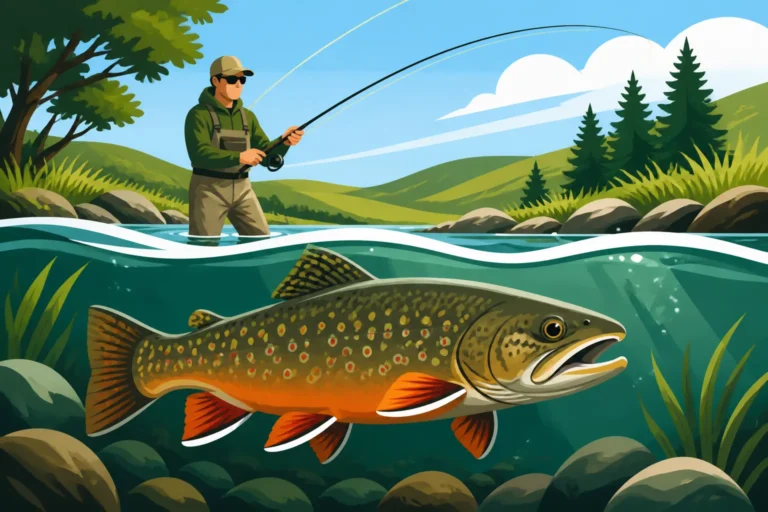
Brook trout are the smallest and perhaps the most strikingly colored of Nebraska's trout species, though they are very rare and typically found only in the coldest, cleanest, spring-fed headwater streams in the Pine Ridge region of the panhandle. They are distinguished by their worm-like markings (vermiform patterns) on their dark olive-green backs and sides, vibrant red spots, often with blue halos, and white leading edges on their lower fins (pelvic, anal, and caudal), often bordered by black. Their tail is square or slightly forked. They are a native species, but their populations are very limited.
Lake trout, on the other hand, are an anomaly in Nebraska's fishing scene. While they are a premier coldwater species in many northern states and Canada, they are not naturally occurring in Nebraska. However, there have been historical and experimental stockings in very specific, deep, cold waters like Lake McConaughy. They are generally dark gray to olive-green, covered in irregular, light-colored spots, and have a distinctly deeply forked tail. Catching a lake trout in Nebraska would be an extremely rare event, often a relic from past stockings. For the most part, Nebraska's trout fishing will involve rainbows, and with luck, a few browns.
Other Notable Nebraska Game Fish and "Rough" Fish
Beyond the most popular species, Nebraska's waters are home to a fascinating array of other fish, from toothy predators to ancient bottom dwellers and often-misunderstood "rough" fish. Knowing these species enhances your appreciation for the state's aquatic biodiversity.
Northern Pike and Muskellunge: Tooth-Filled Predators
Northern pike are formidable predators found in many of Nebraska's larger reservoirs, rivers, and interconnected sloughs. They are easily identified by their elongated, cylindrical bodies, flattened, duck-bill shaped snout, and a mouth full of razor-sharp teeth. Their coloration is typically dark green to olive-brown on the back, fading to yellowish-white on the belly, with distinct light-colored, bean-shaped spots or streaks along their sides. The key feature for identification is that the entire cheek and the upper half of the gill cover are scaled. Their dorsal fin is set far back on their body, almost directly above the anal fin, which aids in their sudden, explosive bursts of speed.
Muskellunge, or "muskie," are the rarer, larger cousins of the northern pike in Nebraska, primarily found in Merritt Reservoir and a few other select waters. They share a similar body shape but grow to much larger sizes. The easiest way to distinguish a muskie from a pike is the scaling pattern: on a muskie, only the upper half of both the cheek and the gill cover are scaled. Muskies also tend to have darker markings on a lighter background, often in the form of vertical bars, spots, or a reticulated pattern, whereas pike have lighter spots on a darker background. Both are ambush predators that strike with incredible force, making them a thrilling catch. Targeting Nebraska Northern Pike Fishing requires heavy tackle and patience, as they are often elusive.
Paddlefish and Gar: Ancient Giants
Nebraska's rivers are home to some truly ancient and unique fish species, including paddlefish and gar. Paddlefish are one of the most distinctive freshwater fish in North America. They are easily identified by their incredibly long, paddle-shaped snout, which can be up to one-third of their total body length. Their bodies are smooth and scaleless, a grayish-blue to black on the back, fading to white on the belly. They are filter feeders, swimming with their mouths open, sifting plankton from the water. Paddlefish are not caught by traditional rod and reel; instead, they are harvested through snagging during specific seasons, primarily in the Missouri River system. Learning about Nebraska Paddlefish Snagging regulations is critical for anyone interested in this unique fishery.
Gar species, particularly the longnose gar, are also ancient and recognizable residents of Nebraska's waters. They have long, cylindrical bodies, hard, diamond-shaped ganoid scales (which are incredibly tough), and distinctively elongated jaws filled with sharp, needle-like teeth. The longnose gar, as its name suggests, has a very long, slender snout, often twice as long as the rest of its head. They are often found lurking in still or slow-moving backwaters, lakes, and rivers, near submerged vegetation or logs. Gar are tenacious fighters, often targeted by bowfishers or anglers using specialized techniques to hook their bony mouths. While not typically eaten, their unique appearance makes them an interesting catch.
Common Carp and Bullheads: Often Overlooked
Often considered "rough" fish, common carp and bullheads are incredibly abundant in Nebraska and provide excellent angling opportunities, especially for those looking for a steady bite. Common carp are identifiable by their large, golden-yellow to olive-brown scales, often with a darker back and yellowish belly. They have two pairs of barbels on their upper jaw and a distinctly protrusible, toothless mouth adapted for bottom feeding. Carp are powerful fighters on a rod and reel and are found in almost every water body in Nebraska. They can grow to impressive sizes and are often overlooked as a sport fish. Many anglers enjoy targeting them with corn, dough balls, or other prepared baits.
Bullheads, typically black, brown, or yellow bullheads, are smaller members of the catfish family but lack the deeply forked tail of a channel cat or the flat head of a flathead cat. Instead, they have a rounded or slightly notched tail and a more robust, "bull-headed" appearance. Their bodies are scaleless, and their color can vary from dark olive to black. They have eight barbels around their mouth, similar to channel cats. Bullheads are incredibly hardy and can tolerate poor water quality, making them common in muddy ponds and slow-moving streams. They are excellent eating, especially smaller ones, and provide consistent action for bait anglers using worms, chicken liver, or cut bait. If you're looking for simple, plentiful fun, bullheads are always a good bet.
Essential Tips for On-the-Water Identification
Even with a detailed guide, identifying fish in the field can be challenging, especially when you're excited about a catch! Having a few reliable methods and tools at your disposal will make the process easier and more accurate.
Using Field Guides and Apps
One of the best tools an angler can have, especially for a new area or when encountering an unfamiliar species, is a reliable field guide. There are excellent printed books specifically for Nebraska or the broader Midwest that provide detailed illustrations, photographs, and key distinguishing features for each species. These are fantastic for a quick comparison right on the boat or shore. You can often find these types of guides on Amazon, and many are compact enough to fit in a tackle box or boat compartment.
In addition to physical books, many excellent smartphone apps are available today that can help with fish identification. Some even use image recognition technology where you can upload a photo of your catch and get instant suggestions. While these apps can be incredibly helpful, always use your best judgment and cross-reference with other sources, as AI recognition isn't always perfect. Having the Where to Find the Nebraska Fishing Regulations Booklet readily available, either physically or digitally, also often includes illustrations of common fish.
Observing Key Body Features
When you land a fish, take a moment to calmly observe its key features before you release it or place it in your cooler. This systematic approach will greatly improve your identification accuracy. Look at:
- Tail Shape: Is it deeply forked (channel catfish, white bass), slightly forked (walleye, rainbow trout), rounded (flathead catfish, bullhead, many sunfish), or square (flathead catfish, brook trout)? This is often the first and easiest identifier.
- Mouth and Jaw: Does the jaw extend past the eye (largemouth bass) or not (smallmouth bass)? Are there barbels (catfish, carp)? Are there visible teeth (pike, walleye)?
- Body Color and Markings: Are there horizontal stripes (white bass, wipers), vertical bars (smallmouth bass, yellow perch, bluegill), irregular blotches (black crappie, largemouth bass), or distinct spots (trout, sauger)?
- Dorsal Fin Spines: Count the spines in the first dorsal fin (crappie) or note if the dorsal fins are connected or separate (bass, wipers).
- Gill Plate and Cheeks: Look at the presence or absence of scales on the gill cover and cheek (pike vs. muskie), or the "ear flap" coloration (bluegill).
Training your eye to quickly spot these details will make you a much more confident identifier. It's a bit like learning to birdwatch – you start with obvious traits and then move to subtle nuances. The more fish you examine, the better you'll become at recognizing patterns.
Photographing for Later Verification
If you're still unsure about a fish's identity, especially if it's a species with a specific length or bag limit, take a clear photograph! Use your phone or a waterproof camera to get several angles. Make sure the entire fish is visible, paying special attention to its tail, fins, mouth, and any unique markings. If you plan to release the fish, do this quickly and keep the fish wet and handled carefully.
Once you're home, you can compare these photos to your field guide, consult online resources, or even ask experienced anglers in online forums or local tackle shops for help. This is a great way to learn without accidentally violating regulations or causing undue stress to the fish. When in doubt about legal requirements, it's always best to practice catch and release or err on the side of caution. Remember, the goal is not just to catch fish, but to understand them and respect the rules that help keep Nebraska's fisheries healthy and thriving for future generations. For more general guidance on fish species in the state, consider looking up How to Identify Nebraska Game Fish.
Disclaimer
This article is for general informational purposes only and does not constitute professional advice. Laws, prices and regulations vary by location and change over time. Consult a qualified professional for guidance on your specific situation.