Best Bait for Catfish in Muddy Water
We've all been there: you wake up early, grab your gear, and head to your favorite Nebraska fishing spot, only to find the water churned up, murky, and looking more like chocolate milk than prime angling territory. It's enough to make you want to pack up and head home, feeling like your chances of landing a decent catfish have washed away with the clarity. But don't despair! Muddy water, while challenging for some species, can actually be fantastic for catfish if you know how to adapt. This guide is dedicated to helping you understand why catfish thrive in low visibility and, most importantly, what baits give you the absolute best chance of success when the water's looking less than pristine.
Understanding Catfish Behavior in Muddy Water
Before we dive into the nitty-gritty of specific baits, it's really helpful to understand why catfish react the way they do to muddy conditions. It's not just about what they can see (or can't see, as the case may be); it's about how their entire physiology and predatory instincts are geared towards sensing their environment in ways that don't rely on clear vision.
Why Muddy Water Matters to Catfish
For many fish species, clear water is a blessing, allowing them to spot prey from a distance and hunt visually. Catfish, however, are a different breed entirely. They've evolved over millennia to be supremely adapted to low-light, turbid, and even downright murky environments. Rivers like the Platte and parts of the Missouri are often naturally silty or can get muddy quickly after a rain, and catfish flourish in these conditions.
When the water gets muddy, a few things happen that actually benefit catfish. First, it reduces the effectiveness of visual predators, giving catfish a bit of an advantage in the food chain. Other fish that rely on sight might struggle to find food, making them less competitive. Second, muddy water often means there's been some rain or runoff, which can wash new food sources into the water, from worms and insects to other organic matter. This influx of nutrients can kick off a feeding frenzy for catfish, provided they can find the buffet.
How Catfish Use Their Senses in Low Visibility
So, if they can't see, how do catfish find their next meal in a muddy river or reservoir? They rely on a remarkable set of alternative senses that are highly developed.
Their most famous attribute, of course, are their barbels – those long, whisker-like protrusions around their mouth. These aren't just for show; they are packed with chemoreceptors, essentially taste buds, that allow the catfish to "taste" the water for dissolved chemicals and scent trails. They can pick up even faint traces of food over a surprisingly wide area. Imagine having taste buds on your fingers that could tell you what was for dinner just by dipping them in the water – that's how a catfish navigates.
Beyond their barbels, catfish also possess an incredible sense of smell. Their nasal cavities are highly sensitive, detecting odors that would be completely imperceptible to humans. This means that a strong, pungent bait released into muddy water can create an irresistible scent plume that travels with the current, drawing in catfish from downstream or even across a wide flat.
Lastly, they have a highly developed lateral line system, a sensory organ running along their flanks. This system detects vibrations and pressure changes in the water, allowing them to "feel" disturbances caused by struggling prey or even the subtle movements of bait. In muddy water, where visual cues are absent, the ability to home in on vibrations becomes critical for locating food sources that might be thrashing around or emitting subtle signals. This is why some baits, beyond just smell, also create attractive vibrations. You can learn more about these fascinating fish by checking out our Channel Catfish Fishing in Nebraska guide.
The Core Principle: Strong Scent and Vibration
Given how catfish perceive their world in murky conditions, our bait selection strategy becomes clear: we need to appeal to their primary senses of smell and vibration. Visual appeal simply won't cut it when the water's thick with sediment.
Prioritizing Scent for Muddy Water Success
When you're fishing in muddy water, a bait that lacks a robust scent signature is almost invisible to a catfish. Think about it: if you're blindfolded in a dark room, you're going to rely heavily on your nose to find something delicious. Catfish are doing the same thing.
The goal is to create a powerful, lingering scent trail that acts like a beacon in the gloom. This means moving away from subtle, naturally scented baits that work well in clear water and embracing those that are overtly pungent, even to our human noses. The stronger and more appealing (to a catfish, anyway) the aroma, the better its chances of being detected. The scent needs to disperse effectively, forming a plume that current can carry, guiding the catfish right to your hook. This is why things like blood, oils, and other strong-smelling components are often key ingredients in successful muddy water catfish baits.
The Role of Vibration and Presentation
While scent is king, don't completely discount vibration. A bait that creates some subtle movement or texture can also trigger a catfish's lateral line system. This doesn't mean your bait needs to be doing a jig on the hook, but a squishy, irregular texture or a bait that flutters slightly in the current can make a difference.
Presentation also plays a crucial role. In clear water, a subtle, natural presentation is often preferred. In muddy water, however, you need to ensure your bait is sitting where a catfish can actually find it. This means using enough weight to get your bait down to the bottom, especially in rivers where current can sweep light baits away. Catfish often hug the bottom, relying on their barbels to scour for food. Furthermore, leaving your bait in place for a good amount of time, allowing that scent trail to develop and spread, is far more effective than constantly retrieving and recasting. Catfish will eventually follow that trail.
Top Baits for Muddy Water Catfish in Nebraska
Alright, let's get down to what you came here for: the best baits to use when Nebraska's waters are looking a little murky. Based on the principles of strong scent and sometimes vibration, these are the heavy hitters.
Natural Baits That Excel
When it comes to natural options, we're looking for things that have a powerful, natural aroma, or can be made to release one.
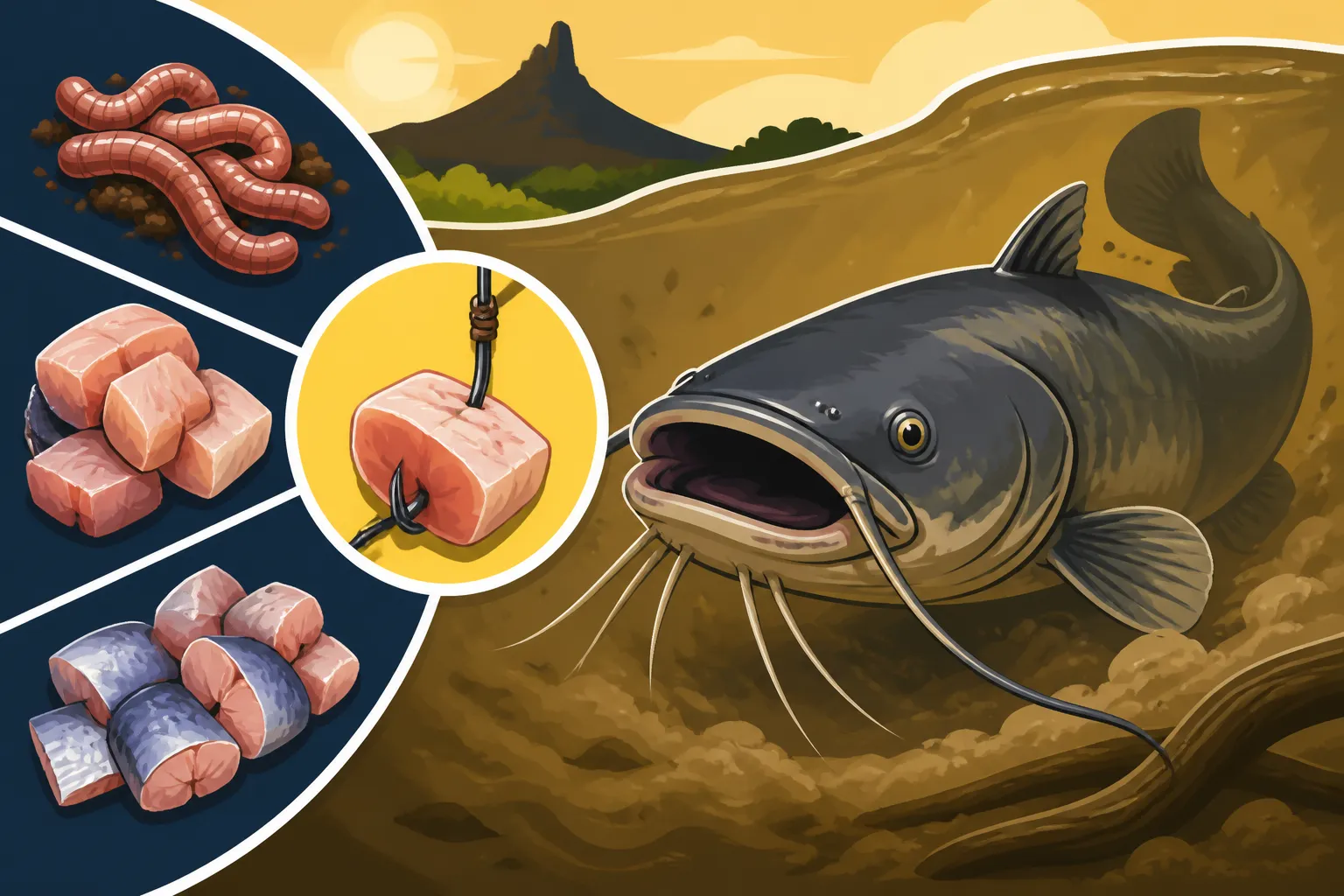
- Cut Bait: This is a classic for a reason, and arguably one of the most effective muddy water catfish baits. The beauty of cut bait is the exposed flesh and blood, which leach oils and scent into the water continuously.
- Types: Oily fish like shad, carp, or even small panfish (where legal to use as bait) make excellent cut bait. Just be sure to check Nebraska Fishing Regulations Explained for rules on baitfish collection. Fresh dead bait is always better than frozen if you can get it.
- Preparation: Cut the fish into chunks, leaving the skin on for durability. The size depends on the catfish you're targeting; smaller chunks for channel catfish, larger for flatheads. Some anglers will even score the flesh to further increase scent dispersion.
- Why it works in muddy water: The blood and internal organs release a potent, natural scent that travels far and wide. The flesh itself is soft enough to break down slowly, keeping the scent trail active for a long time. This is a go-to for many anglers fishing the Platte River or other turbid sections of water.
- Chicken Liver: Oh, chicken liver. It's messy, it's notorious for flying off the hook during a cast, but gosh darn it, catfish love it.
- Preparation: It's best fished fresh. Some anglers will let it "toughen" in the sun for a bit to make it stay on the hook better, or you can wrap it in a small piece of nylon stocking or cheesecloth.
- Why it works in muddy water: The smell is incredibly strong and distinctive. It bleeds a lot, creating a fantastic scent trail. Even when the water is thick, that powerful, iron-rich aroma will pull in catfish. Just make sure you've got a good hook and a gentle cast, or it'll be baiting the birds instead of the fish!
- Worms/Nightcrawlers: While not as pungent as cut bait or liver, a wriggling ball of nightcrawlers can still be effective.
- Why it works in muddy water: The constant movement and natural earthy scent, especially when several are threaded onto a hook, can create enough disturbance and aroma to attract curious catfish. It's not a primary muddy water bait, but if you're desperate, it can still produce.
Prepared and Commercial Baits
The tackle industry knows how much catfish love a good stink. There are tons of manufactured baits designed specifically for their super senses.
- Stink Baits/Dip Baits: These are legendary in the catfishing world for their incredible potency.
- Types: There are various formulations – from strong cheese-based recipes to formulas that mimic decaying fish or other pungent organic matter. Brands like Sonny's, Sudden Impact, and Secret 7 are popular. You can often find a wide variety of these options at Bass Pro Shops or online through Amazon.
- Preparation: Stink baits usually require a "dip worm" or sponge attached to your hook, into which you dip the bait. The sponge soaks up the gooey, smelly stuff and slowly releases it into the water. Punch baits are similar, but usually have a fibrous base that you punch your treble hook into.
- Why it works in muddy water: This is their natural habitat! They are formulated to disperse maximum scent in the water, creating an irresistible aroma trail. The smell is often so overpowering that catfish can't help but investigate.
- Dough Baits: Less common for big cats in muddy conditions, but some specialty dough baits designed for channel catfish can still do the trick.
- Why it works in muddy water: They usually incorporate strong scents like garlic, anise, or even cheese to compensate for the lack of visual appeal. They're more about the intense aroma than anything else.
Creative DIY Options
Sometimes, the best bait is what you've got on hand, or what you can whip up with a little ingenuity.
- Hot Dogs (Marinated): A plain hot dog isn't usually a go-to, but marinate them, and they become a whole new ballgame.
- Preparation: Cut hot dogs into coin-sized pieces. Marinate them in garlic powder, red Kool-Aid (for color and sweetness), or even a bit of fish oil overnight. The goal is to infuse them with extra scent.
- Why it works in muddy water: The hot dog itself has a decent, meaty smell, but the added marination supercharges it with extra aromas that catfish are drawn to.
- Shrimp (Raw & Stinky): Uncooked shrimp, especially if it's been left out for a little while to get extra pungent (within reason, nobody wants to get sick!), can be a surprisingly effective bait.
- Why it works in muddy water: The natural, strong seafood scent is very attractive to catfish. They're also firm enough to stay on the hook well.
Here's a quick comparison of these top baits:
| Bait Type | Scent Strength | Ease of Use | Target Catfish Species | Muddy Water Effectiveness |
|---|---|---|---|---|
| Cut Bait | Very High | Moderate | Channel, Flathead, Blue | Excellent |
| Chicken Liver | Very High | Low (stays on hook) | Channel, Flathead | Excellent |
| Stink/Dip Bait | Extremely High | Moderate | Channel | Excellent |
| Marinated Hot Dogs | High | High | Channel, smaller Flathead | Good |
| Raw Shrimp | High | High | Channel, smaller Flathead | Good |
| Nightcrawlers | Moderate | High | Channel, smaller Flathead | Fair (more for visual) |
Tips for Presenting Your Bait in Murky Conditions
Having the best bait in the world won't do you much good if you don't present it properly. In muddy water, your strategy needs to shift to maximize scent dispersion and ensure your bait stays in the strike zone.
Rigging Strategies for Scent Dispersion
Your goal is to get that powerful scent out there and keep it in front of the catfish.
- Carolina Rig: This is probably one of the most popular and effective rigs for catfishing, especially in muddy water. It features an egg sinker (or similar weight) above a swivel, with a leader (12-24 inches) tied to your hook.
- Why it works: The weight anchors your bait, but the leader allows it to move naturally with the current, creating a subtle dance that helps disperse scent. The sinker also minimizes snags in often debris-laden muddy waters. This rig lets your bait waft just above the bottom, right where bottom-feeding catfish are likely to be. You can pick up all the components for this rig at your local Bass Pro Shops or on Amazon.
- Slip Sinker Rig: Very similar to a Carolina rig, but the sinker slides directly on the main line above a swivel. This allows the fish to take the bait without feeling the weight of the sinker, giving you a better bite indication.
- Why it works: Again, it keeps the bait anchored but free to move slightly, pushing that scent out. The free-sliding sinker is key for shy biters, letting them mouth the bait without feeling resistance.
- Heavy Tackle: Don't be afraid to use heavier line and stronger hooks than you might typically for other species. Catfish in muddy water aren't typically line-shy, and you'll appreciate the extra backbone when you hook a big one. Check out our Best Catfish Gear for Nebraska Rivers for more details on tackle.
Locating Catfish in Muddy Environments
Finding fish in opaque water is certainly more challenging than sight fishing, but it's not impossible. You just need to rely on different cues.
- Structure is Key: Even in muddy water, catfish will relate to structure. Look for submerged logs, rock piles, drop-offs, bends in rivers, and channels. These provide ambush points, current breaks, and areas where food might accumulate.
- Current Breaks: In rivers, pay close attention to areas where the current slows down, such as eddies behind obstacles, deeper holes, or the slack water along shorelines. Catfish will often conserve energy by sitting in these areas, waiting for food to drift by. This is especially true after a heavy rain when the main current might be too strong for them to hold comfortably. Consider where the Platte River Fishing Guide or Missouri River Fishing in Nebraska might offer opportunities in these spots.
- Depth Changes: Catfish will often patrol depth changes or channel edges. If you're fishing a reservoir, use a depth finder if you have one to locate old creek channels or significant humps and drops. Without electronics, you can often feel these changes by slowly dragging your weight along the bottom.
- Patience is a Virtue: In muddy water, it often takes longer for the scent to travel and for the fish to locate your bait. Don't be too quick to move spots. Once you've cast out, give it at least 20-30 minutes, or even longer, for the scent to work its magic before considering a reel-in and recast. Remember, a long soak is often what it takes to get bites when the water is murky. Best Time of Year to Catch Catfish in Nebraska might hint at certain conditions when these fish are more active.
So, the next time you arrive at your favorite fishing hole and the water looks like it's fresh out of a chocolate factory, don't pack it in! Embrace the murk. Arm yourself with the right smelly, potent baits, present them strategically, and lean into the catfish's incredible sensory abilities. With a bit of patience and the right approach, you might just find that muddy water offers some of the most exciting and rewarding catfishing Nebraska has to offer. Happy fishing!
Disclaimer
This article is for general informational purposes only and does not constitute professional advice. Laws, prices and regulations vary by location and change over time. Consult a qualified professional for guidance on your specific situation.