Best Anchor Type for a Rocky Reservoir Bottom
There's nothing quite like dropping anchor in that perfect spot on a Nebraska reservoir, only to have it stubbornly fuse itself to the rocky bottom when it's time to move. We've all been there – tugging, cursing under our breath, trying every trick in the book, sometimes even cutting the line and losing a perfectly good anchor and a chunk of expensive rope. This guide is all about helping you understand the best anchor types and techniques to avoid those frustrating snags when fishing rocky reservoir bottoms across our beautiful Cornhusker State.
The Frustration of a Stuck Anchor on Rocky Bottoms
That moment when your boat is drifting, and you drop the anchor, feeling it "thunk" into place, is usually a good one. But on Nebraska's many rocky reservoirs, that satisfying thunk can turn into a nightmare if you're not prepared. The problem isn't just a lost anchor; it's lost time, potential damage to your boat, and the sheer irritation of it all.
Why Rocky Bottoms Are a Challenge
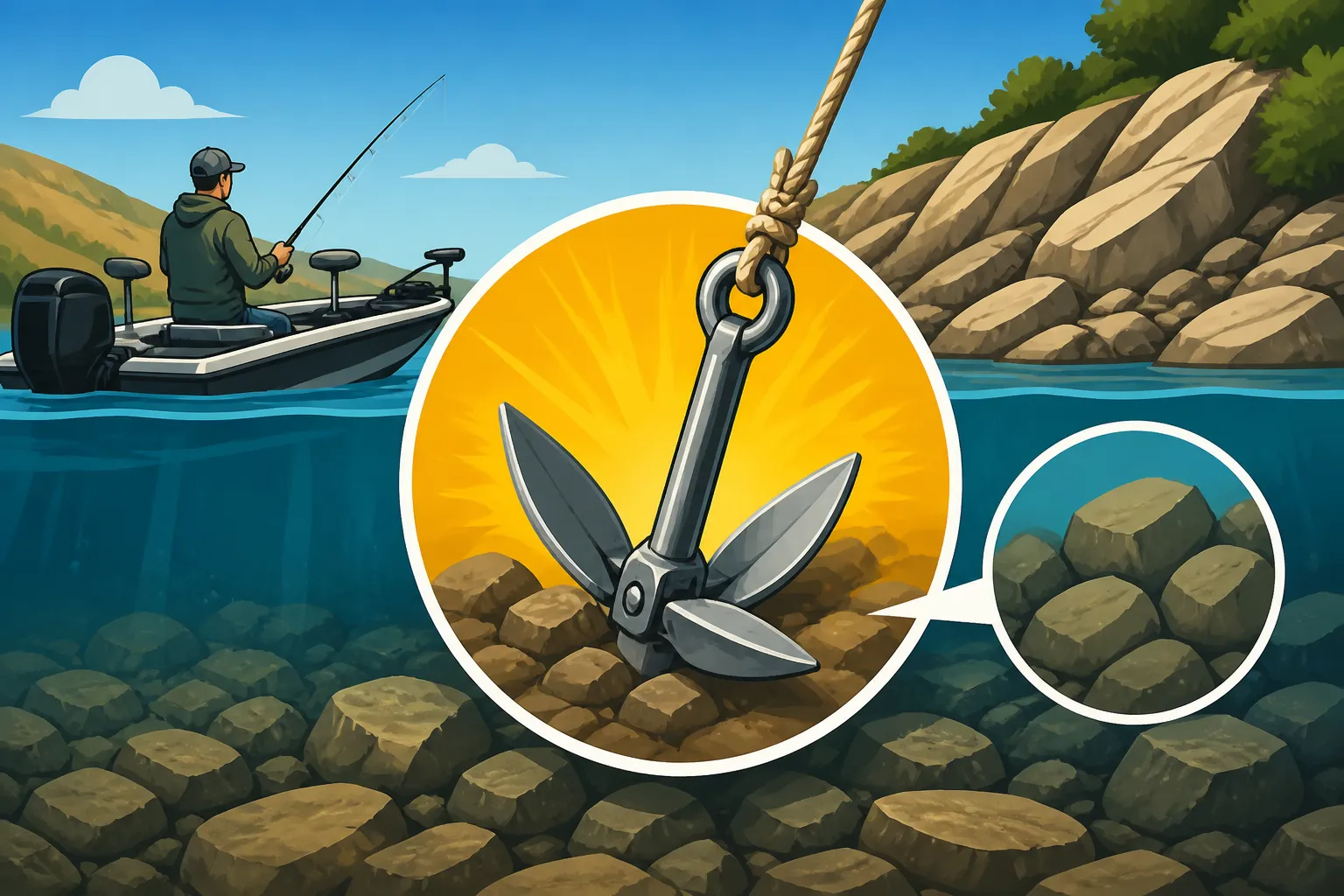
Rocky bottoms are a double-edged sword for anglers. On one hand, rocks and boulders often provide fantastic structure where fish like walleye, bass, and crappie love to hide, feed, and spawn. Finding these rocky veins, points, and humps is key to a successful day on the water. On the other hand, these very features that attract fish are anchor magnets, full of crevices, jagged edges, and immovable obstacles just waiting to swallow your expensive ground tackle.
A standard anchor, designed to dig into mud or sand, often finds a rock, wedges itself in, and refuses to budge. This can lead to snapping anchor lines, damaging your boat's cleats or hull if you try to motor it free, or worse, putting yourself in a risky situation near other boats or shallow hazards. Plus, who wants to spend a good portion of their fishing day struggling with a stuck anchor when you could be reeling in fish? It disrupts the flow of your day and can really sour an otherwise perfect outing.
Common Anchor Types and Their Downfalls on Rocks
Many anglers start with a basic anchor, often one that came with their boat or was a budget-friendly pick. While these work fine on softer bottoms, they often struggle in the unforgiving terrain of a Nebraska reservoir rock pile.
- Fluke (Danforth) Anchors: These are very popular and work incredibly well in mud or sand, with their large, flat flukes digging in. However, on rocky bottoms, those flukes tend to get wedged between rocks or under a slab, making retrieval nearly impossible. They don't have enough weight to break free or a shape that allows them to roll out of snags easily.
- Grapnel (Folding) Anchors: Often favored by kayakers or small boat owners for their compact storage, grapnel anchors have multiple prongs designed to hook onto something. While this might sound good for rocks, the reality is those prongs will hook onto everything – and usually in a way that makes them permanently entangled. Their lighter weight also means they don't have the leverage to break free.
- Pyramid or Navy Anchors: These heavy, basic anchors rely on sheer weight to hold, often having a single point or a few small edges to grab. While their weight can be an advantage, they're still prone to getting jammed in tight spots, and their shape doesn't offer a reliable "break free" mechanism.
Understanding these common pitfalls is the first step toward choosing the right gear and techniques for success on Nebraska's challenging rocky fishing grounds.
Top Anchor Types for Rocky Nebraska Reservoir Bottoms
When you're dealing with the craggy, unyielding landscape of a reservoir bottom, you need an anchor that's either designed to avoid snags or can be modified to escape them. It's not just about holding power, but also about the ability to retrieve it when you're done.
The River Anchor (Mushroom or Pyramid with a Twist)
While traditionally designed for river currents and holding in mud, a heavy river anchor, often shaped like a mushroom or a pyramid, can be surprisingly effective on rocky bottoms if used correctly. Their rounded or blunt edges are less prone to wedging into tight crevices compared to the sharp flukes of a Danforth.
The key here is weight and shape. A heavier river anchor relies on its mass to dig into any softer pockets between rocks or settle onto a relatively flat rock surface. If it does get slightly caught, its smoother profile and lack of sharp, projecting flukes means that a steady, upward pull, often combined with a slight change in the boat's position, can sometimes roll it free. They might not offer the super-strong "bite" of a fluke in ideal conditions, but they offer a much better chance of retrieval on rock. Look for options with a good, solid construction from reputable brands you might find at Bass Pro Shops or online at Amazon.
The Grapple (Grapnel) Anchor – Modified for Rocks
The standard grapnel anchor, as mentioned, is usually a snag waiting to happen. However, with a simple and ingenious modification, it can become one of the best choices for rocky bottoms, especially for lighter boats and kayaks. This modification is often called the "zip-tie breakaway" or "sacrificial link" method.
Here's how it works: Instead of attaching your anchor line directly to the eye at the top of the grapnel anchor, you attach it to the bottom of the anchor, near the flukes. Then, run the anchor line up the shank to the original attachment eye and secure it there with a heavy-duty zip tie or a small piece of lighter cord. When the anchor gets stuck, you pull hard, and the zip tie (or cord) breaks, allowing you to pull the anchor free from the bottom-up, effectively reversing its position and dislodging it from the snag. The flukes, which were dug in, now collapse or release as you pull them in the opposite direction. This simple trick can save you countless anchors and a lot of frustration.
The Bruce/Claw Anchor for Versatility
The Bruce, or Claw, anchor is another excellent contender for varied bottom conditions, including rocky ones. Originally designed for offshore oil rigs, its unique claw-like design allows it to find purchase in a wide range of substrates, from mud and sand to gravel and even some rocky areas.
What makes the Bruce anchor work well on rocks is its ability to "roll" and reset itself. If it lands on a rock in an unfavorable position, a slight drag or shift in the boat's position will often cause it to rotate until one of its "claws" finds a secure spot. While it can still snag, its smooth, curved surfaces are less likely to wedge permanently than a fluke anchor. When retrieving, a direct upward pull often causes it to break free as it rolls over the obstacles. For those fishing reservoirs with a mix of bottom types, a Bruce anchor offers a fantastic balance of holding power and reasonable snag resistance.
Essential Techniques to Minimize Snags and Maximize Retrieval
Having the right anchor is only half the battle. How you deploy and retrieve it is just as crucial, especially when you're trying to fish those productive, yet treacherous, rocky spots in Nebraska's reservoirs. A few smart techniques can make all the difference.
The Anchor Retrieval Ring System
This system is an absolute game-changer for anyone frequently anchoring on rocky or snag-prone bottoms. It works by changing the angle of your pull when retrieving a stuck anchor. Instead of pulling from the top, you effectively pull from the bottom.
Here's how to set it up: You'll need an anchor retrieval ring (a heavy-duty stainless steel ring, often 3-4 inches in diameter), and a retrieval buoy or float.
- Attach a retrieval buoy/float to one end of your anchor line.
- Pass your anchor line through the retrieval ring, then attach the anchor to the end of the line.
- When you want to anchor, deploy the anchor as usual.
- When it's time to retrieve, motor your boat past the anchor's position, allowing the retrieval ring to slide down the line to the anchor. The buoy will remain near the original drop point.
- Continue motoring slowly, keeping the anchor line taut, and the ring will act as a pulley, lifting the anchor from the bottom of its shank. This reversed pull angle often dislodges anchors that would otherwise be hopelessly stuck.
This system is particularly effective on large reservoirs like Lake McConaughy or Branched Oak Lake, where bottom structures can be quite varied and challenging.
The Zip-Tie Breakaway Trick (for Grapnel Anchors)
While we touched on this earlier, it's worth detailing, as it's a budget-friendly and highly effective method, particularly for smaller boats or kayaks using grapnel anchors. It's simple, brilliant, and widely adopted by savvy anglers.
To implement this:
- Locate the bottom ring: Most grapnel anchors have a small ring at the very bottom, opposite the main attachment point where the shank meets the flukes.
- Attach your main anchor line here: Instead of the top, tie your primary anchor rope securely to this bottom ring.
- Run the line up the shank: Now, run the anchor line alongside the anchor's shaft (shank) up to the original attachment point at the top.
- Secure with a sacrificial link: Use one or two strong, but not unbreakable, zip ties to secure the anchor line to the top eye of the anchor. You could also use a lighter gauge of monofilament line or even some waxed dental floss for this. The idea is it needs to be strong enough to hold the anchor under normal tension but weak enough to break under extreme, sustained pull.
- Deployment and Retrieval: Deploy your anchor as usual. If it snags, simply pull steadily and firmly. The force will cause the zip tie(s) to break, and you'll then be pulling the anchor from the bottom. This changes the angle of pull and almost always frees the anchor as the flukes collapse or pivot out of the snag. Remember to keep extra zip ties handy in your tackle box!
This method is fantastic for places like the sandpits and gravel pits that often have exposed concrete or other submerged hazards. Nebraska Fishing Regulations Explained mentions rules that can impact how you retrieve lost gear, so being prepared with these methods is smart.
Understanding Scope and Anchor Line Management
Scope is the ratio of your anchor line length to the depth of the water you're in, plus the height of your boat's bow off the water. A proper scope is crucial for any anchor to hold effectively, but it also plays a role in retrieval. A common rule of thumb is a 7:1 ratio for optimal holding in moderate conditions (e.g., 70 feet of rope for 10 feet of water depth).
- Proper Deployment: Don't just drop your anchor straight down. Instead, motor slowly past your intended anchor spot, dropping the anchor as you go, allowing the line to lay out naturally along the bottom. This helps the anchor set properly and reduces the chance of it falling directly into a deep crevice in a way that makes retrieval difficult.
- Retrieval Angle: When retrieving, always try to motor directly over the anchor. Pulling the anchor line straight up from directly above the anchor (a 1:1 scope) gives you the best chance of dislodging it from a snag. If you pull at a low angle from a distance, you're more likely to just drag it deeper into the snag. Use your boat's engine to slowly move to a position directly overhead, then pull the line hand-over-hand. For heavier anchors, you might need to use a cleat and slowly idle forward to break it free, being careful not to put too much strain on your cleats.
Additional Considerations for Nebraska Reservoir Anglers
Beyond the anchor itself and the techniques for retrieval, there are a few other elements to consider that will help ensure a successful and less frustrating day of fishing on Nebraska's rocky waters.
Anchor Line Material and Length
The rope you use for your anchor is just as important as the anchor itself.
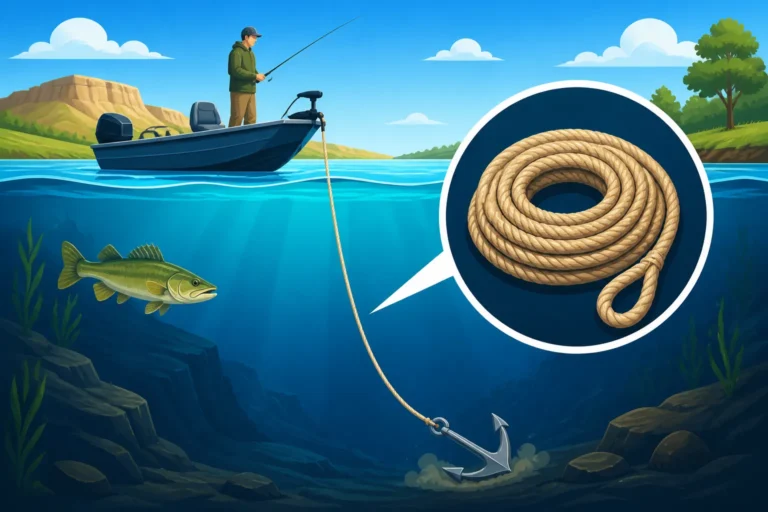
- Material: Nylon rope is generally preferred for anchor lines because it has excellent stretch (shock absorption), which helps cushion the boat against waves and currents, preventing sudden jerks on the anchor and increasing comfort. It's also resistant to UV light and abrasion. Other materials like polypropylene float, which can be useful in some scenarios, but it's less durable and doesn't stretch.
- Chain Leader: Always, always use a short length of chain (typically 3-6 feet) between your anchor and your rope. This chain serves several critical purposes:
- Weight: It helps the anchor lie horizontally, ensuring the flukes or claws dig in properly.
- Abrasion Resistance: The chain protects the critical first few feet of your anchor line from abrasion on rocky bottoms.
- Low Center of Gravity: It keeps the pull angle low to the bottom, which aids in holding power.
- Length: Make sure you have enough anchor line! For a 7:1 scope ratio, you need plenty. On a deep reservoir like Lake McConaughy where you might anchor in 30-40 feet of water, you'd need 210-280 feet of line plus your boat height. Running short of line means your anchor won't set correctly and will likely drag, even on less challenging bottoms. It’s always better to have too much line than not enough. You can find good quality anchor lines and chains at a local Bass Pro Shops or through online retailers like Amazon.
Weight and Holding Power for Different Boats
The size and weight of your boat, coupled with the conditions you're fishing in, dictate the necessary anchor weight. A small kayak in a calm cove will need a much lighter anchor than a 20-foot bass boat on a windy day in the middle of Harlan County Reservoir.
- Boat Size: Generally, heavier boats need heavier anchors. Consult anchor manufacturer charts, which usually provide recommendations based on boat length.
- Wind and Current: Nebraska lakes can get notoriously windy. Strong winds and currents put immense strain on your anchor. On such days, you might need a heavier anchor or a more aggressive anchor type to maintain your position. It's always a good idea to size up if you frequently fish in challenging conditions or on large, open bodies of water like Lewis and Clark Lake Fishing Guide.
- Bottom Type: As we've discussed, rocky bottoms require anchors designed for them, and often a bit more weight can help them settle into stable positions between rocks.
Using Multiple Anchors
For serious anglers who want precise boat positioning, especially when fishing a specific structure or contour line, using two anchors can be incredibly effective.
- Bow and Stern Anchoring: By deploying one anchor off the bow and another off the stern, you can "pin" your boat in place, preventing it from swinging with the wind or current. This is invaluable when you're trying to stay precisely over a brush pile, a submerged hump, or a specific rocky point.
- Controlling Drift: On windy days, even a single anchor might allow some swing. A second anchor, deployed off the opposing side, can greatly reduce this unwanted movement, keeping your presentation in the strike zone longer. This technique is often seen when targeting species like walleye or crappie, where precise boat control can mean the difference between a good day and a great day. How to Fish Deep Structure for Summer Walleye often involves staying right on top of a spot, making multiple anchors a huge advantage.
When you invest in the right anchor and practice these smart techniques, those rocky Nebraska reservoir bottoms will become less of a headache and more of a consistent source of fantastic fishing opportunities.
| Anchor Type | Best for Rocky Bottoms? | Pros on Rocks | Cons on Rocks | Retrieval Ease on Rocks | Recommended Use Case |
|---|---|---|---|---|---|
| River/Mushroom | Moderate | Smooth, heavy, less prone to wedging in tight crevices. | Relies heavily on weight; can still get stuck if heavy enough | Moderate | Larger boats, moderate current, less extreme rock structures. Works by settling into pockets. |
| Grapnel (Modified) | High | Prongs "hook" onto structure; breakaway system works. | Standard version is a snag machine. Breakaway setup required. | High (with modification) | Kayaks, smaller boats, very snaggy areas where other anchors fail. Requires diligent re-tying of zip ties. |
| Bruce/Claw | High | Excellent holding power; rolls to reset on varied bottoms. | Can still wedge, but less likely than fluke. | High | Mid-sized to larger boats, versatile for varied bottom types, including mixed rock and mud. Holds well in wind. |
| Fluke (Danforth) | Low | Excellent in sand/mud. | Easily wedges between rocks, very difficult to retrieve. | Very Low | Not recommended for primary use on known rocky bottoms; best saved for sandy or muddy areas. |
| Pyramid/Navy (Basic) | Moderate | Pure weight can settle; simple design. | Prone to wedging due to blunt points or edges. | Moderate | Emergency anchor, very basic setups, or where extreme weight is available. |
Disclaimer
This article is for general informational purposes only and does not constitute professional advice. Laws, prices and regulations vary by location and change over time. Consult a qualified professional for guidance on your specific situation.