Best Anchor Rope Length for Deep Water
Oh, the age-old question that has puzzled many a boater and angler across Nebraska's vast waters: "How much anchor rope do I really need?" It’s a frustrating mystery, isn't it? You’re out on Lake McConaughy, the wind starts picking up, and suddenly that perfect fishing spot feels like it's drifting away because you're unsure if you've got enough line out to hold firm. This guide is going to pull back the curtain on anchor rope length, especially when you're fishing those beautiful, deep Nebraska reservoirs, ensuring you stay put and enjoy your day.
Understanding the "Scope" of Your Anchor Rope
Anchoring isn't just about dropping a heavy object to the bottom; it's a bit of a science, involving physics and a healthy respect for the forces of nature. The most crucial concept to grasp is "scope."
What Exactly is Scope and Why Does it Matter?
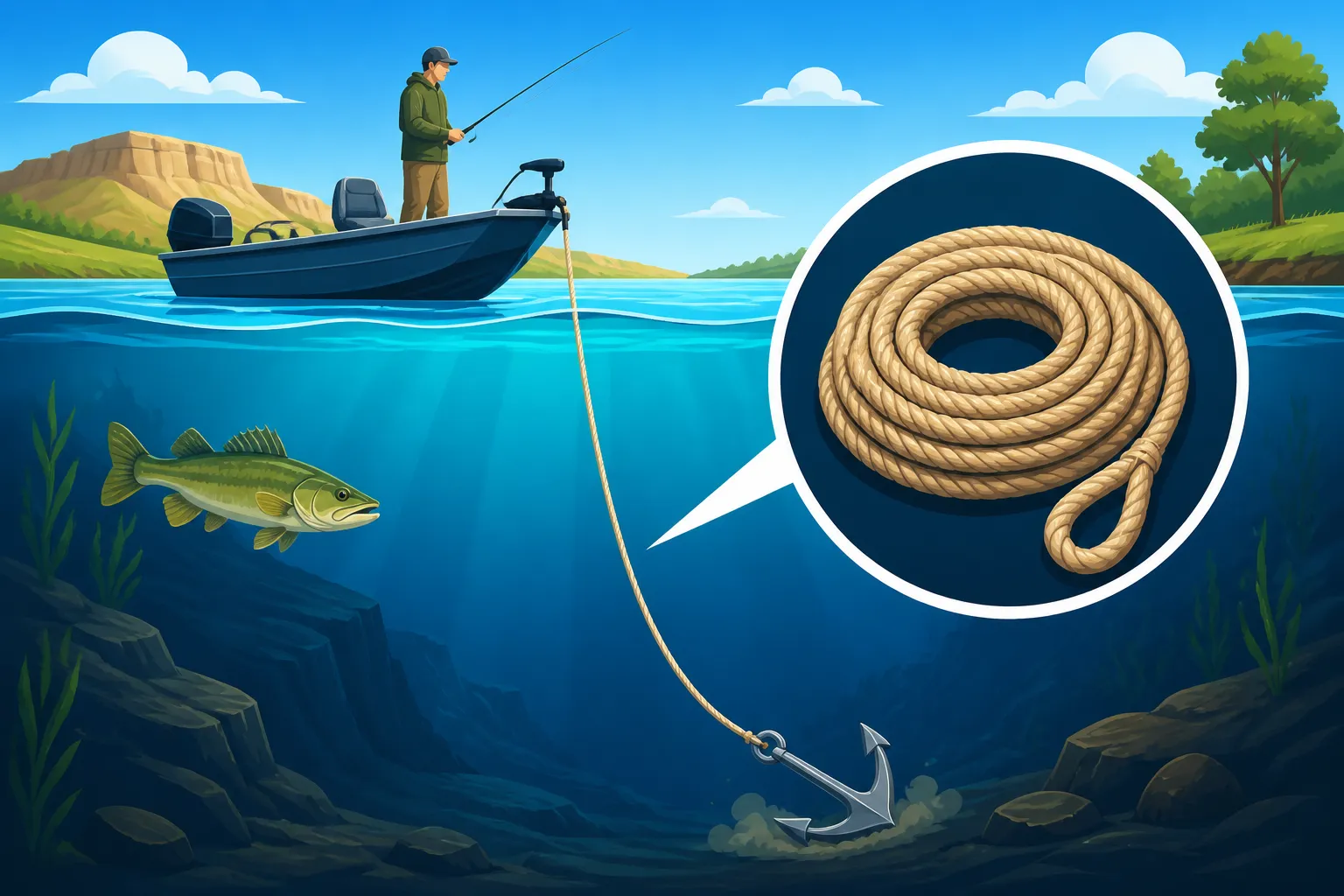
Imagine trying to pull a nail straight out of a piece of wood. It's tough, right? But if you use a pry bar and apply force at an angle, it comes out much easier. Anchoring works on a similar principle, but in reverse. Your anchor wants to dig in and hold, and it does that best when the pull on the anchor shank is as horizontal as possible. This horizontal pull is achieved by having enough anchor rope (or "rode," as the nautical folks say) out to create a relatively shallow angle between your boat, the anchor line, and the lakebed.
This angle is what we call "scope." When you have insufficient scope, the rope pulls the anchor almost vertically. Instead of digging in and staying buried, the anchor tends to skip, drag, or pull out completely. This is why having enough rope out is paramount, particularly in deeper waters like those found in Lake McConaughy Fishing Guide or when tackling currents on the Missouri River Fishing in Nebraska. Without proper scope, even the best anchor in the world will struggle to hold your boat in place, turning a peaceful fishing trip into a constant battle against the drift.
Ideal Scope Ratios for Different Conditions in Nebraska
So, how much rope is "enough"? We talk about anchor scope in terms of a ratio: the length of your anchor rode to the vertical distance from your anchor attachment point on the boat (often the bow roller or cleat) to the lakebed. This vertical distance includes both the water depth and the height of your bow off the water.
Here in Nebraska, where we can experience everything from flat-calm mornings to gusty afternoon winds across our large reservoirs, your ideal scope ratio will vary.
- Minimum (Calm Conditions, Temporary Stops): A 5:1 ratio (5 feet of rope for every 1 foot of vertical depth) is often considered the bare minimum for decent holding power in very calm conditions with a good anchor. However, I rarely recommend this for actual fishing unless you're just dropping it for a few minutes to tie a lure.
- Standard (General Fishing Conditions): A 7:1 ratio is widely accepted as a solid starting point for most average Nebraska fishing days. This provides a good angle for your anchor to dig in effectively against moderate wind or current.
- Heavy Weather (Strong Winds, Currents, Overnight): When the wind really whips up, or you're dealing with a strong current, you'll want to increase your scope to 10:1 or even higher. This extra line ensures the anchor stays buried and your boat doesn't drag, giving you peace of mind and more time to focus on catching that trophy walleye.
Consider a typical day on Branched Oak Lake. A light breeze? 7:1 might do. But if a thunderstorm rolls in with 20 mph gusts, that 7:1 can quickly become 4:1 as your boat gets pulled, and your anchor will likely break free. Always err on the side of caution, especially when fishing unfamiliar waters or expecting weather changes.
Factors Influencing Your Anchor Rope Length Decision
Deciding on the perfect anchor rope length isn't a one-size-fits-all answer. It's a dynamic calculation based on several environmental and equipment factors. Ignoring these can lead to a frustrating day of re-anchoring or, worse, drifting into dangerous situations.
Water Depth: The Obvious Starting Point
This is, of course, the primary component of your vertical distance. You need to know how deep the water is where you plan to anchor. Don't just guess! Use your boat's depth finder or a marked lead line. Remember to account for the depth from the water surface to the bottom plus the height of your boat's bow (where your anchor line attaches) above the water. For many small to medium fishing boats, this bow height might add 3 to 5 feet to your total vertical measurement.
So, if you're in 30 feet of water on Merritt Reservoir Fishing Guide and your bow is 4 feet above the water, your "depth" for calculation purposes is actually 34 feet. This is a critical detail often overlooked, but it significantly impacts your scope ratio.
Wind and Current: Nature's Untamed Forces
Nebraska's weather can be notoriously fickle. A dead calm morning can turn into a blustery afternoon in minutes, especially on large, open bodies of water like Lake McConaughy. Strong winds exert tremendous force on your boat, pushing it against the anchor. Similarly, rivers like the Platte or Missouri have constant currents that add to the strain on your anchor.
The stronger the wind or current, the more horizontal pull you need to maintain on your anchor, which means increasing your scope ratio. If you're using a 7:1 ratio in 20 feet of water (let's say 24 feet vertical from bow to bottom), you'd have about 168 feet of rope out. If the wind picks up significantly, you might want to increase that to 10:1, meaning you'd need 240 feet of rope out for the same depth to ensure a solid hold. It's always better to put out too much rope than too little.
Bottom Composition: Holding Power Matters
The type of bottom your anchor is trying to dig into plays a huge role in its effectiveness and, by extension, how much scope you need.
- Mud or Soft Sand: These bottoms offer good holding power for most anchors, as the anchor can bury itself deeply. You might get away with slightly less scope here (though 7:1 is still recommended for safety).
- Hard Sand or Gravel: Decent holding, but the anchor may not bury as deeply as in mud. A standard 7:1 ratio is a safe bet.
- Rock or Shale: This is where things get tricky. Anchors can get wedged in rocks, or they might just skip along without finding a hold. If you're fishing a rocky bottom, you might need extra scope to give the anchor more chances to find a purchase, or you might consider a specific anchor designed for rocky bottoms, like those discussed in Best Anchor Type for a Rocky Reservoir Bottom. If you're on a notorious snag spot, sometimes even an extreme amount of rope won't help, and you might need to rethink your strategy entirely.
- Weeds: Thick weed beds can prevent your anchor from reaching the bottom and setting properly. Anchoring in heavy weeds is generally discouraged unless you have a specialized weed anchor. Even then, you'll need significant scope to try and get through the vegetation.
Knowing the typical bottom composition of your favorite Nebraska fishing spots is a huge advantage.
Type of Anchor and Boat Size
Not all anchors are created equal, and neither are all boats.
- Anchor Type: A high-quality anchor designed for optimal holding (like a Danforth fluke anchor for sand/mud, or a plow/CQR anchor for various bottoms) will generally set faster and hold better than a cheaper, less efficient design. If your anchor is less effective for the bottom type, you'll need more scope to compensate.
- Boat Size and Weight: A larger, heavier boat has more mass and more surface area for wind and current to push against. Consequently, a heavier boat will require more anchor rode to achieve the same secure hold as a smaller, lighter boat in identical conditions. What works for a small jon boat might be utterly insufficient for a larger bass boat or pontoon. Consider your boat's capabilities and weight when planning your anchoring strategy, which ties into choosing the Best Boats for Nebraska Reservoir Fishing for your needs.
Practical Application: Calculating Your Anchor Rope Length on the Water
Alright, let's get down to brass tacks. How do you actually put this "scope" knowledge into practice when you're out there on the water, trying to position yourself perfectly over that brush pile?
Step-by-Step Calculation for a Stable Hold
Here's a straightforward method to figure out how much anchor rope to deploy:
-
Determine Your Vertical Depth:
- Find the water depth using your fish finder. Let's say it's 30 feet.
- Measure the height from your boat's bow (where the anchor cleat or roller is) to the water's surface. For our example, let's say it's 4 feet.
- Add these together: 30 feet (water) + 4 feet (bow height) = 34 feet total vertical depth.
-
Choose Your Desired Scope Ratio:
- For most fishing in moderate conditions, let's go with a 7:1 ratio. If it's windy, you might bump it to 8:1 or 10:1.
-
Calculate Rope Length:
- Multiply your total vertical depth by your chosen ratio: 34 feet * 7 = 238 feet of anchor rope.
So, in this scenario, you'd want to deploy approximately 238 feet of anchor rope. Yes, that's a lot of rope, especially if you're used to just tossing it out until it feels "right." This is why having enough rope on board is crucial. Many recreational anglers underestimate the amount of rope needed, especially when fishing deeper sections of our larger reservoirs.
Example Scenario: Walleye Fishing on Lake McConaughy
Let's say you're targeting walleye on a deep main-lake point at Lake McConaughy.
- You find a depth of 45 feet where you want to drop your anchor.
- Your boat's bow cleat is 5 feet above the water.
- Total vertical depth: 45 + 5 = 50 feet.
- It's a bit breezy, so you opt for a 8:1 ratio.
- Required rope length: 50 feet * 8 = 400 feet.
That means you'll need a good 400 feet of anchor rode to securely hold your boat in those conditions. It sounds like a lot, but it's what ensures your anchor bites and holds through the afternoon gusts.
When to Deviate from the Rules: Real-World Scenarios
While following the scope ratios is generally the safest and most effective practice, there are times when you might make minor adjustments.
- Very Calm, Temporary Stops: If the water is absolutely glass-calm, there's no current, and you just need to stop for a few minutes to untangle a line or eat a sandwich, you might get away with a 4:1 or 5:1 ratio. But remember, this is a calculated risk. The moment any wind or wake hits, you're at risk of dragging. I only recommend this for situations where you can quickly retrieve and re-anchor if needed.
- Crowded Anchoring Areas: In some heavily fished areas, laying out a full 10:1 scope might put you too close to other boats. In these situations, you might try a 7:1 or 8:1 with a high-holding anchor and a watchful eye. It's always a balancing act between safety and courtesy, but safety should always win. Also, be mindful of Nebraska Fishing Regulations Explained regarding safe distances between boats and any anchoring restrictions.
- Emergency Situations: If you lose power or control, dropping anchor quickly is paramount. In such cases, you just get as much line out as fast as possible to slow your drift, then you can adjust if the situation allows.
The golden rule is: always err on the side of caution. If in doubt, put out more rope. You can always retrieve it, but you can't magically add it if you're dragging.
Rope Material and Maintenance for Longevity
The anchor rope itself matters. Most recreational boats use either nylon or polyester rope for anchoring.
- Nylon: This is a popular choice because it's strong, durable, and has good stretch (elasticity). The stretch acts like a shock absorber, cushioning the tugs and pulls from waves and wind, which helps prevent the anchor from breaking free and reduces strain on your boat.
- Polyester: Less stretch than nylon but very strong and resistant to UV degradation. It can be a good choice for situations where minimal stretch is desired, but for general anchoring, nylon's shock-absorbing qualities are often preferred.
Regardless of the material, proper maintenance is key.
- Inspect Regularly: Before and after each trip, run the rope through your hands, checking for frays, cuts, or worn spots. These weak points can fail under stress.
- Cleanliness: Rinse your rope with fresh water periodically, especially if you've been in silty or muddy conditions. Dirt and grit can cause internal abrasion.
- Proper Storage: Store your anchor rope neatly coiled or flaked in a well-ventilated anchor locker. Avoid leaving it exposed to prolonged sunlight when not in use, as UV rays degrade rope over time.
You can find excellent quality anchor rope, often pre-spliced to a chain (which we'll discuss in a moment), at outdoor retailers like Bass Pro Shops or conveniently online through Amazon. Investing in good quality rope is as important as choosing a good Best Fishing Line for Nebraska Walleye or Monofilament Versus Braided Line for Catfish for your fishing reels.
Essential Anchor Rope Management and Safety Tips
Beyond just knowing how much rope to deploy, there are critical best practices for managing your anchor system effectively and safely on Nebraska's waters.
Marking Your Anchor Rope for Easy Deployment
Guessing how much rope you've deployed is a recipe for disaster. The best way to ensure you're putting out the correct scope is to mark your anchor rope.
- Color-Coded Marks: Use bright, durable paint, colored zip ties, or specific markers to create distinct indicators on your rope. A common system is to mark every 25 feet or 50 feet. For example, you could use a single mark for 25 feet, two marks for 50 feet, three for 75, and so on. Or, use a different color for every 50-foot increment (e.g., yellow at 50, blue at 100, red at 150).
- Measuring and Marking: Measure out your rope on a clear driveway or dock. As you measure, apply your chosen marks. This allows you to quickly count off the required length as you deploy it from your boat. It makes anchoring in 45 feet of water, needing 400 feet of rope, far less of a headache.
Best Practices for Anchoring in Nebraska's Diverse Waters
A secure anchor isn't just about the rope length; it's about the entire process.
- Approach Upwind/Upcurrent: Always approach your desired anchoring spot from upwind or upcurrent. This allows you to stop your boat past the spot, then drift back while deploying your anchor. This way, when the anchor sets, your boat will settle directly over your target.
- Deploy Gradually: Don't just heave the anchor overboard in a tangled mess. Deploy it slowly, feeding the rope out as your boat drifts back. This prevents tangles and ensures the anchor lays out cleanly on the bottom, ready to dig in.
- Feel it Set: Once you've paid out the desired length of rope, cleat it off (securely, with a proper cleat hitch!). Then, put your boat in a slow reverse (or let the wind/current pull it) to apply steady tension to the rope. You should feel the anchor dig in with a distinct "thunk" or a steady resistance. If it just drags, you haven't set properly, and you need to retrieve, move, and try again, potentially with more scope.
- Anchor Chain: A short length (typically 6-10 feet) of galvanized anchor chain between your anchor and your rope is invaluable. The chain helps the anchor lay horizontally on the bottom, improving its ability to set. It also provides abrasion resistance against rocky bottoms. For many anglers, the chain is just as important as the anchor itself.
- Watch for Swing: Once anchored, observe your boat's swing. Ensure you're not going to collide with other boats, docks, or obstacles if the wind or current shifts. This is particularly important in busy areas or narrow channels. Always be aware of your surroundings, following guidelines like those in Nebraska Boat Safety Equipment Requirements.
- Retrieval: When retrieving, motor slowly towards your anchor while pulling in slack. Once you're directly over the anchor, pull straight up to break it free. Never try to power your boat forward while the anchor is still stuck – this can damage your boat, anchor, or rope.
What to Do When Your Anchor Gets Stuck
It happens to the best of us: your anchor is firmly wedged in a rocky crevice or a submerged tree trunk. It's frustrating, but here are some strategies before you resort to cutting your line:
- Try Different Angles: Motor slowly in a wide circle around the anchor, pulling from various directions. Sometimes, a change in angle is all it takes to free a snagged fluke.
- Pull in the Opposite Direction: If you know which way you deployed, try to pull in the exact opposite direction. This might dislodge it.
- Snubber/Anchor Retrieval System: For boats with a bow roller, some anglers use an anchor retrieval ring and buoy. You attach the ring to the anchor line, run the line through it, and attach a buoy to the end. When stuck, you motor past the anchor with the buoy trailing, and the ring slides down the line to the anchor. Continuing to motor pulls the anchor out backward.
- The "Figure-8" Trick: Sometimes, moving in a tight figure-8 pattern around the anchor (if safe and practical) can create enough varied tension to pop it free.
- Cut Your Losses: If all else fails, and you've spent a significant amount of time and effort, sometimes the most economical decision is to cut the anchor line. It's painful, but a lost anchor is better than a damaged boat or a dangerous situation. This is why having a sturdy knife handy on your boat is part of Required Safety Equipment on a Nebraska Boat.
Remember, responsible anchoring is a blend of knowing your gear, understanding your environment, and practicing good seamanship. By mastering the art of anchor scope and following these tips, your time fishing Nebraska's beautiful waters will be much more secure and enjoyable!
Disclaimer
This article is for general informational purposes only and does not constitute professional advice. Laws, prices and regulations vary by location and change over time. Consult a qualified professional for guidance on your specific situation.