Best Ice Fishing Rod Length for Panfish
There's nothing quite like the crisp air and anticipation of dropping a line through a hole in the ice, but let's be honest, choosing the right gear can feel like navigating a maze. One of the most common head-scratchers for panfish enthusiasts is figuring out the ideal ice fishing rod length. It’s not just about what looks good; it profoundly impacts how well you feel those delicate bites and how successfully you bring those delicious Nebraska crappie and bluegill up through the ice. This guide is all about helping you understand why rod length matters and how to pick the perfect one for your next panfish adventure.
Why Ice Rod Length is Crucial for Panfish Success
When you're out on a frozen lake like Branched Oak or Wagon Train, trying to coax finicky panfish into biting, every detail of your setup counts. The length of your ice rod isn't just a matter of convenience; it’s a critical component that affects your sensitivity, hook-setting ability, and overall control. Think about it: you're fishing in a confined space, often through a relatively small hole, and dealing with fish that have mouths the size of your thumbnail. A poorly chosen rod length can turn an enjoyable day into a frustrating exercise in missed opportunities.
The Nuance of Sensitivity and Hooksets
Panfish bites, especially in the dead of winter, can be incredibly subtle. It's rarely a violent strike that rips the rod out of your hand; more often, it's a slight pause in the line, a barely perceptible "tick," or a gentle upward movement of your rod tip. Shorter rods are often lauded for their superior sensitivity. The reduced length means there's less material for vibrations to travel through, allowing those faint signals from a bluegill mouthing your bait to reach your hand with greater clarity. This direct connection is paramount when you're sight fishing in clear water or relying purely on feel in murkier conditions.
Beyond sensitivity, rod length also plays a role in your hookset. A common misconception is that a longer rod gives you more leverage for a powerful hookset. While this might hold true for open-water casting, in the confined world of an ice fishing hole, it's a bit different. With a short rod, you can deliver a quick, snappy hookset with minimal wrist movement, quickly lifting the fish's head and driving the hook home before it can spit the bait. A longer rod can feel unwieldy in this scenario, requiring more arm movement and potentially causing you to overshoot or apply too much force, tearing the hook out of a delicate panfish mouth. It's about precision and responsiveness, not raw power, when you're targeting those small-mouthed panfish.
Maneuverability Around the Ice Hole and in Shelters
Picture yourself bundled up in a portable ice fishing shelter, maybe on Johnson Lake, with your heater humming and a few holes drilled close by. Space is often at a premium in these setups. This is where rod length becomes a practical consideration. A longer rod can constantly bump against the walls or ceiling of your shelter, get tangled with other lines, or simply be awkward to manage when trying to bring a fish up, especially if it makes a run. Shorter rods, typically in the 18 to 28-inch range, fit perfectly within the confines of most pop-up or flip-over shanties, allowing for comfortable jigging and effortless fish handling.
Even when fishing out in the open, without a shelter, a shorter rod can offer better control. When you're kneeling or sitting on a bucket, trying to keep your line directly over the hole and avoid line drift from the wind, a shorter rod is simply easier to manage. You can maintain a more vertical presentation, which is often key for panfish, without having to awkwardly lean or stretch. It makes the entire fishing experience more fluid and less tiring, allowing you to focus on the bite rather than fighting your equipment. Whether you're in a cozy shelter on Pawnee Lake or battling the elements on Box Butte, a rod that matches your fishing environment will significantly enhance your comfort and effectiveness.
Common Rod Lengths for Panfish and Their Uses
Let's dive into the specifics of rod lengths and what they mean for your panfish pursuits. There isn't a one-size-fits-all answer, as different situations and personal preferences can lead you to favor one length over another. However, understanding the general characteristics of each range will arm you with the knowledge to make an informed decision for your next ice fishing expedition across Nebraska.
Short Rods (18-24 inches) for Finesse
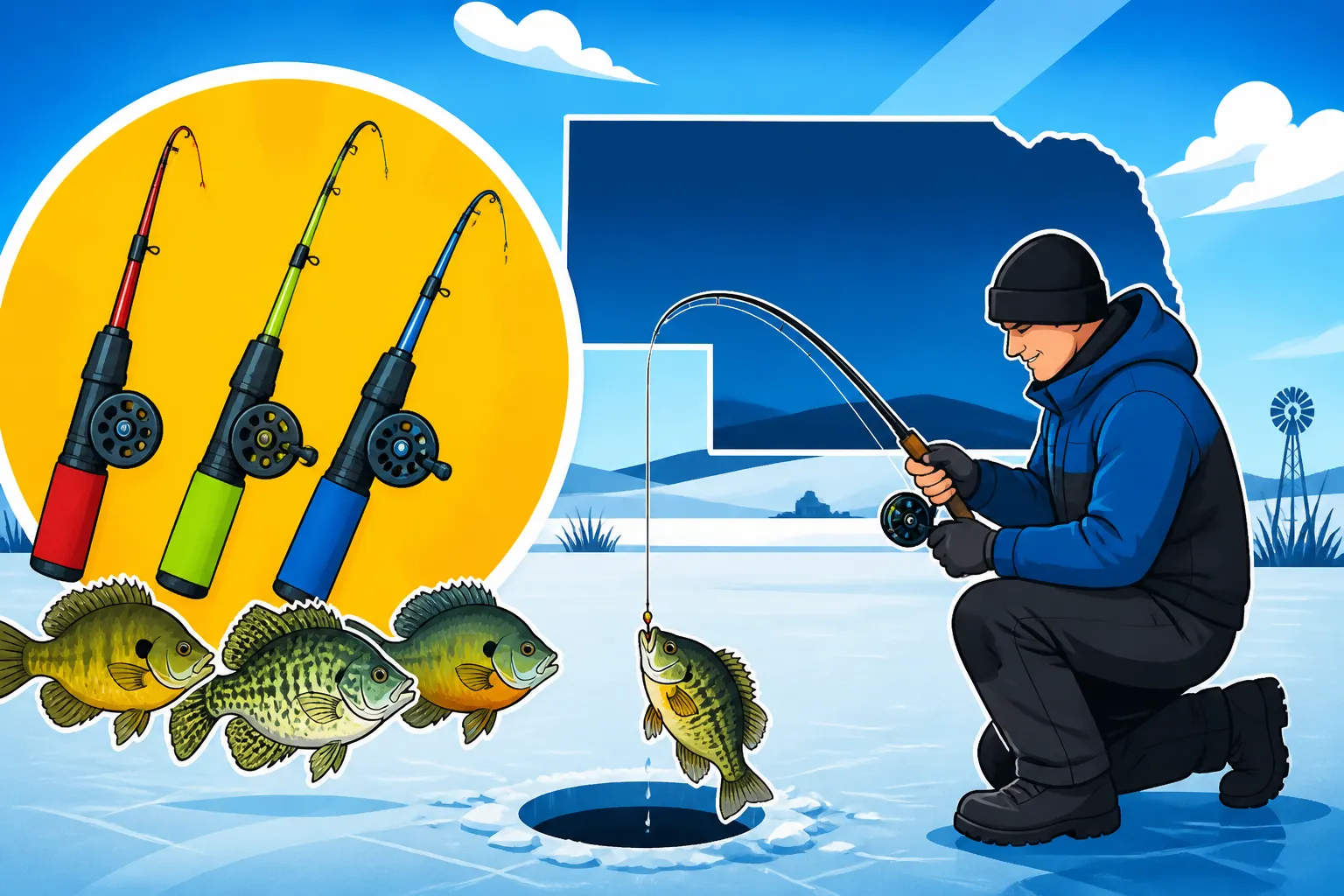
These ultra-short rods are often the darlings of dedicated panfish anglers, particularly those who specialize in sight fishing or targeting incredibly finicky fish. Their primary advantage lies in their unparalleled sensitivity and control over small lures. When you're using tiny tungsten jigs or micro plastics, often weighing just 1/64th or 1/32nd of an ounce, a short rod with a light tip is truly indispensable. It allows you to impart the most subtle action to your lure, making it dance enticingly without over-powering the presentation. This is especially effective when crappie are barely breathing on your bait.
Consider a situation on the Fremont Lakes, where the water is clear, and you can see the bluegill rise to your lure. With an 18-inch rod, you have a direct visual and tactile connection to your bait. You can react instantly to the slightest nudge or inhale. These rods also shine in portable shelters or when fishing inside permanent ice houses, where space is a premium. They minimize the chances of tangling your line or hitting the ceiling, making for a much more comfortable and less frustrating experience. For those who enjoy the pure finesse aspect of panfish ice fishing, and who aren't trying to fight heavy current or deep-water monsters, a short rod from a brand like Bass Pro Shops is a fantastic choice, especially when paired with a tiny reel. Remember, the goal here is precision and feel, allowing you to detect those whispers of a bite.
Medium Rods (26-32 inches) for Versatility
If you're looking for a good all-around rod that can handle a variety of panfish situations without being too specialized, the 26 to 32-inch range is often the sweet spot. These rods strike an excellent balance between sensitivity and a bit more backbone, offering enough length for a slightly longer sweep on the hookset while still maintaining good maneuverability. They are typically available in ultra-light or light power, making them suitable for most panfish species found in Nebraska, from aggressive white bass in deeper water to crappie suspended over brush piles.
This length offers more versatility for different jigging styles and depths. If you're fishing a little deeper, say 25-30 feet at Merritt Reservoir, or dealing with a bit of wind trying to bow your line, the extra length can help you keep your presentation more vertical and control the bait better. It also provides a bit more forgiveness if a larger fish, like a bonus walleye or a substantial wiper, decides to grab your panfish jig – though it's still primarily a panfish setup. Many anglers find this length comfortable for fishing both inside and outside of shelters, hitting that happy medium. You can find a wide array of options in this length category, offering different actions and handle styles, making it a popular choice for anglers who like to cover various scenarios on the ice throughout the season. Checking out detailed product descriptions and reviews on Amazon can often help you find a rod that perfectly matches your specific needs. This range is excellent for the angler who wants one or two rods that can do a little bit of everything.
Longer Rods (34+ inches) for Reach and Control
While less common for pure panfish finesse fishing, longer ice rods, generally 34 inches and above, do have their place, especially for specific techniques or conditions. These rods offer increased reach, which can be beneficial in certain scenarios. For example, if you're standing and fishing multiple holes spread out from your position, a longer rod allows you to reach further without constantly moving. This can be a game-changer if you're trying to cover a wider area, say on the vast expanse of Lake McConaughy, probing for schools of roaming panfish.
The increased length also provides more shock absorption, which can be an advantage when a bigger fish unexpectedly latches onto your panfish offering. While you're targeting crappie, a hefty largemouth bass might decide to join the party, and the extra flex of a longer rod can help absorb those powerful runs, preventing your light line from snapping. They are also favored by some anglers who prefer to stand while fishing, as the longer handle and shaft make it more comfortable to hold and jig from an upright position. However, it's worth noting that these longer rods sacrifice some of the pinpoint sensitivity and compact maneuverability that shorter rods offer. You'll likely notice those delicate panfish bites less readily, and they can be challenging to manage in smaller ice shelters. It’s a trade-off, but for specific styles and open-ice fishing, these rods certainly have their niche.
| Rod Length Category | Typical Length Range | Primary Use Case (Panfish) | Key Advantages | Potential Drawbacks |
|---|---|---|---|---|
| Short Finesse | 18-24 inches | Ultra-finesse, sight fishing, small shelters | Maximum sensitivity, precise jig control, excellent for light bites, easy maneuverability in tight spaces | Limited casting distance, can feel too short for standing, less forgiving for larger incidental catches |
| Medium Versatile | 26-32 inches | All-around panfish, various depths/shelters, general purpose | Good balance of sensitivity & power, versatile for different techniques, comfortable in most shelters | Not as hyper-sensitive as shorter rods, less reach than longer rods |
| Long Reach | 34+ inches | Standing, open-ice, covering multiple holes, larger incidental catches | Extended reach, more shock absorption for bigger fish, comfortable for standing jigging | Reduced sensitivity, unwieldy in small shelters, less precise jig control |
Choosing the Right Length for Your Style and Conditions
Now that we've covered the different categories of ice rod lengths, it's time to think about how you actually fish. Your personal preferences, the type of shelter you use, the water you're fishing, and even the specific panfish species you're targeting can all influence your decision. There's no single "best" length, only the best length for you and your fishing situation.
How Shelter Type Influences Rod Choice
This is perhaps one of the most practical considerations. If you exclusively fish in a small, one-person flip-over shelter on a lake like Holmes Lake near Lincoln, then a super long rod is going to be a constant source of frustration. You'll be hitting the ceiling, tangling your lines, and generally feeling cramped. For these intimate settings, a rod in the 18 to 26-inch range will be your best friend. It allows for comfortable jigging, easy fish handling once you get them through the hole, and minimizes potential snags.
On the other hand, if you primarily fish in a large, walk-in hub-style shelter that offers plenty of head and elbow room, or if you prefer to fish out in the open air, then you have more flexibility. In a spacious shelter or when fishing completely exposed, a 28 to 32-inch rod can still be very manageable, offering that bit of extra reach and power without feeling unwieldy. And if you're one of those brave souls who stands all day on the ice, covering a wide area, even a 36-inch rod might be considered to keep your arms from getting tired and to manage your line effectively without having to bend over constantly. Always consider your most common fishing setup before committing to a rod length.
Matching Rod Length to Water Depth and Fish Behavior
The depth of water you're fishing and how the panfish are behaving can also guide your rod choice. When panfish are holding shallow, say in 5-15 feet of water, and biting aggressively, a shorter, more sensitive rod might not be as critical, but it will still give you excellent control over delicate presentations. However, if you're fishing deeper water, like 30-40 feet in Lewis and Clark Lake, some anglers prefer a slightly longer rod (28-32 inches). The extra length can give you a bit more line control, especially if there's current or wind trying to create slack in your line, making it easier to keep your lure vertical and feel bites from deep-water crappie or perch.
Furthermore, how the fish are biting makes a difference. If the fish are extremely finicky, barely nudging the bait, a shorter, ultra-sensitive rod will help you detect those subtle takes. The less rod you have between your hand and the line, the better you'll feel those light bites. Conversely, if the panfish are hitting aggressively, almost ripping the rod down, then a slightly longer rod with a bit more backbone can provide a more forgiving fight and make it easier to steer a spirited fish away from the edge of the hole. For understanding the various nuances of panfish species and their behaviors, checking out resources like Crappie Fishing in Nebraska or Nebraska Perch Fishing can provide valuable insights.
Personal Preference and Comfort
Ultimately, ice fishing is supposed to be enjoyable, and if your rod isn't comfortable to use, it's going to detract from the experience. Some anglers simply prefer the feel of a shorter rod in their hand, finding it more balanced and responsive. Others might have larger hands or prefer a longer handle for a better grip, which might lead them towards a slightly longer rod. Don't underestimate the power of simply liking the way a rod feels when you're jigging for hours on end.
Think about your arm length, how you hold the rod, and whether you prefer to sit or stand. If you're someone who spends hours kneeling over a hole, a short rod will likely be more comfortable. If you stand and prefer a sweeping motion when jigging, a longer rod might suit your style better. Many experienced anglers have a quiver of different rod lengths, each tailored to specific situations. As you gain more experience ice fishing in Nebraska, you'll likely develop your own preferences and find what feels right for you. It's perfectly fine to experiment with different lengths until you find your personal sweet spot, perhaps by borrowing a friend's rod or trying out various options in a store before making a purchase. You can also explore options for Best Ice Fishing Rods and Reels to see what different configurations are available.
Additional Factors Beyond Length
While rod length is a critical piece of the panfish ice fishing puzzle, it's far from the only factor. To truly optimize your setup, you need to consider how length interacts with other rod characteristics. These elements work in concert to give you the best chance at detecting bites and landing fish.
Rod Action and Power for Panfish
Alongside length, rod action and power are paramount, especially for panfish. Power refers to the rod's strength or backbone, typically ranging from ultra-light to heavy. For panfish, you'll almost always be looking at ultra-light or light power rods. Anything heavier will likely be overkill, making it hard to feel those delicate bites and potentially tearing hooks out of thin panfish lips. An ultra-light rod has a very flexible blank that bends significantly, ideal for protecting light line and absorbing the shock of a fish.
Action describes where the rod bends when pressure is applied. For panfish, a fast or extra-fast action is usually preferred, regardless of length. This means the rod bends primarily in the tip section, while the rest of the blank remains relatively stiff. This fast tip provides incredible sensitivity, transmitting even the lightest tap directly to your hand. It also allows for quick, precise hooksets, which is crucial for the subtle bites of crappie, bluegill, and perch. A fast action tip on a short rod creates an incredibly responsive tool for finesse presentations. Conversely, a slow action rod (which bends through its entire length) would be too mushy for detecting those faint panfish bites and wouldn't allow for quick enough hooksets. Understanding the difference between these can elevate your success tremendously, particularly when conditions are tough, as explained in guides like How to Find Crappie in Cold Water.
Handle Design and Reel Seat
Beyond the blank itself, the handle and reel seat play a significant role in both comfort and sensitivity. For ice fishing, where you're often holding the rod for extended periods in cold conditions, a comfortable handle is non-negotiable. Cork handles are popular for their warmth and tactile feel, especially when your hands are cold. Some newer rods feature foam or composite handles that also provide excellent grip and insulation.
The reel seat should be secure, keeping your tiny panfish reel firmly in place, but also designed to allow your fingers to make direct contact with the rod blank. Many dedicated ice rods feature "exposed blank" reel seats or minimalist designs where the reel is simply taped on, maximizing that direct feel for subtle bites. This direct connection helps transmit vibrations from the line and lure straight to your hand, bypassing any dampening effect of the reel seat. A well-designed handle and reel seat, especially on a short, sensitive rod, truly complete the package for a panfish ice fishing setup. You'll find a range of options when looking for Best Rods and Reels for Nebraska Fishing.
Remember, selecting the perfect ice fishing rod length for panfish is a personal journey, but by considering these factors, you'll be well on your way to more enjoyable and successful days on the hard water of Nebraska.
Disclaimer
This article is for general informational purposes only and does not constitute professional advice. Laws, prices and regulations vary by location and change over time. Consult a qualified professional for guidance on your specific situation.