Nebraska Bag Limit Penalty for Overharvesting
We've all been there: you're out on the water, the fish are biting, and you're having an incredible day. Before you know it, you've got a cooler full, a huge smile, and then a nagging thought creeps in… did I count those right? Did I stay within the limit? Overharvesting, even accidentally, is a real concern for many Nebraska anglers. This comprehensive guide will walk you through what constitutes overharvesting, the penalties you could face, and how to avoid those costly mistakes.
Understanding Nebraska's Fishing Regulations and Bag Limits
Fishing in Nebraska is an absolute joy, with a fantastic variety of waters and fish species, but it comes with a responsibility to understand and abide by the rules. Nobody wants to unintentionally break the law, especially when it comes to something as simple as counting fish. The Nebraska Game and Parks Commission (NGPC) sets these rules not to make your life harder, but to protect our precious natural resources and ensure that everyone has a fair shot at a great fishing experience for years to come.
Why Bag Limits Exist
Think of bag limits as an essential tool for conservation. If everyone kept every fish they caught, especially popular species like walleye or crappie, our lakes and rivers would quickly become depleted. These limits help maintain healthy fish populations, allowing them to reproduce and grow. They also promote fair distribution, ensuring that the resource isn't monopolized by a few, but rather shared among the countless anglers who enjoy Nebraska's waters. It's about sustainability, pure and simple. Without these guidelines, the quality of fishing for everyone, including future generations, would rapidly decline.
How to Find Current Regulations
One of the most common pitfalls for anglers is simply not knowing the current regulations. Rules can change from year to year, and sometimes even within the year, especially for specific water bodies or species. The absolute best place to find up-to-date information is the official Nebraska Fishing Guide, published annually by the NGPC. You can usually pick up a physical copy at local bait shops, sporting goods stores like Cabela's, or NGPC offices. For digital convenience, the entire guide is available online on the official NGPC website. They even have a handy mobile app! Always make it a habit to check the most current guide before your first outing of the season, and certainly before heading to a new fishing spot, as specific local rules can vary wildly. Don't rely on outdated advice from a buddy or last year's regulations booklet.
For a deeper dive into the general rules, check out our guide on Nebraska Fishing Regulations Explained.
Common Bag Limit Scenarios
Nebraska's regulations aren't just a simple "keep X number of fish." They often involve several layers:
- Daily Bag Limit: This is the most straightforward – the maximum number of a specific species you can keep in a single day. For example, you might be allowed to keep four walleye per day. Once you hit that number, any additional fish of that species must be immediately released.
- Possession Limit: This can be a tricky one, especially for multi-day trips. The possession limit is the maximum number of a specific species you can have in your possession at any time, whether it's in your livewell, cooler, freezer at home, or fish shack. Often, the possession limit is twice the daily bag limit, but not always. If you're camping for a weekend at Lake McConaughy and catch your daily limit of walleye on Saturday, you can't go out and catch another daily limit on Sunday if your combined total exceeds the possession limit.
- Length Limits (Minimum, Maximum, Slot): These rules specify the legal size range of fish you can keep.
- Minimum Length: The fish must be at least a certain length to be kept. Keeping anything shorter is a violation.
- Maximum Length: The fish cannot exceed a certain length. This is less common but sometimes used to protect large breeding females.
- Slot Limit: This is where it gets really interesting. A slot limit protects fish within a specific size range, meaning you can only keep fish below a certain size or above another size, but not within the "slot." For example, a 15-20 inch walleye slot limit means you can keep walleye under 15 inches or over 20 inches, but anything between 15 and 20 inches must be released. These are usually designed to protect prime breeding stock. Always have a reliable measuring device on your boat or in your tackle box – an inexpensive folding measuring board from Amazon can save you a lot of headache.
Understanding these nuances is crucial. A quick read of the Nebraska Fishing Daily Bag and Possession Limits will give you a clearer picture of these specific rules.
What Constitutes Overharvesting in Nebraska
Overharvesting isn't always about intentional greed. Often, it's a simple mistake, a miscalculation, or a misunderstanding of the rules. However, ignorance of the law is generally not a valid defense. Let's break down the various ways an angler can find themselves on the wrong side of the regulations.
Exceeding Daily Limits
This is probably the most common form of overharvesting. You're having a banner day, maybe catching some nice walleye at Sherman Reservoir. You've been keeping track in your head, but perhaps you lost count, or you didn't realize you had already reached the limit of four walleye. That fifth walleye in your cooler, even if caught and kept mistakenly, puts you over the daily limit. Even if you plan to release it later, once it's in your possession and not immediately released, it counts toward your limit. This is why it's so important to be vigilant and keep an accurate tally as you fish.
Exceeding Possession Limits
The possession limit often trips up anglers, particularly those visiting from out of state or enjoying a long weekend. Let's say the daily limit for channel catfish is 10, and the possession limit is 20. On Friday, you catch and keep 10 catfish. Great! On Saturday, you go out again and catch another 10. Now you have 20 fish in your cooler or on ice at your campsite. If you then go out on Sunday and catch even one more catfish and keep it, you've exceeded your possession limit of 20, even if you only caught one fish that day. The total number of fish in your immediate control, whether on the water or at your lodging, counts towards this limit. If you’re keeping fish from multiple days, make sure to process and consume some, or give them away (legally, of course), to stay within the possession limit.
Keeping Undersized or Oversized Fish
Length limits are specific to certain species and water bodies, designed to protect different year classes of fish. If a lake has a 15-inch minimum length for bass, and you keep a 14-inch largemouth bass, that's a violation. Similarly, if a water body has a slot limit, such as a protected slot for walleye between 18 and 22 inches, keeping a walleye within that size range is illegal. These rules are particularly common for species like walleye, bass, and sometimes crappie, and they are critical for maintaining healthy, reproducing populations. Always carry a reliable measuring device, like a fish ruler or a tape measure, and use it correctly, measuring from the tip of the snout to the end of the tail with the fish lying flat. If you need details on specific species, our guides on Nebraska Walleye Bag Limits or Nebraska Bass Length Limits can help.
Possession of Illegal Species or Methods
While less common, sometimes anglers might accidentally or intentionally possess a species that is not allowed to be kept, or they might use an illegal method to catch fish. For instance, some protected species might not have a harvest season, or specific gear like snagging hooks might be prohibited for certain fish at certain times or locations. Any fish caught through illegal means, or a species protected from harvest, counts as a serious violation. This goes beyond simple overharvesting and often carries more severe penalties.
Mistakes Due to Misidentification
This happens more often than you'd think, especially with similar-looking species. Imagine you're targeting crappie, but you accidentally keep a rock bass because they look somewhat similar, and the rock bass has a different bag limit or no open season where you are. Or, mistaking a sauger for a walleye, or a white bass for a wiper – the rules can be distinct for each. It's the angler's responsibility to correctly identify their catch and know the specific regulations for that species. If you're unsure, it's always best to release the fish unharmed. A good fish identification guide, which you can find readily on Amazon or from the NGPC, is a valuable tool.
The Legal Ramifications: Penalties for Overharvesting
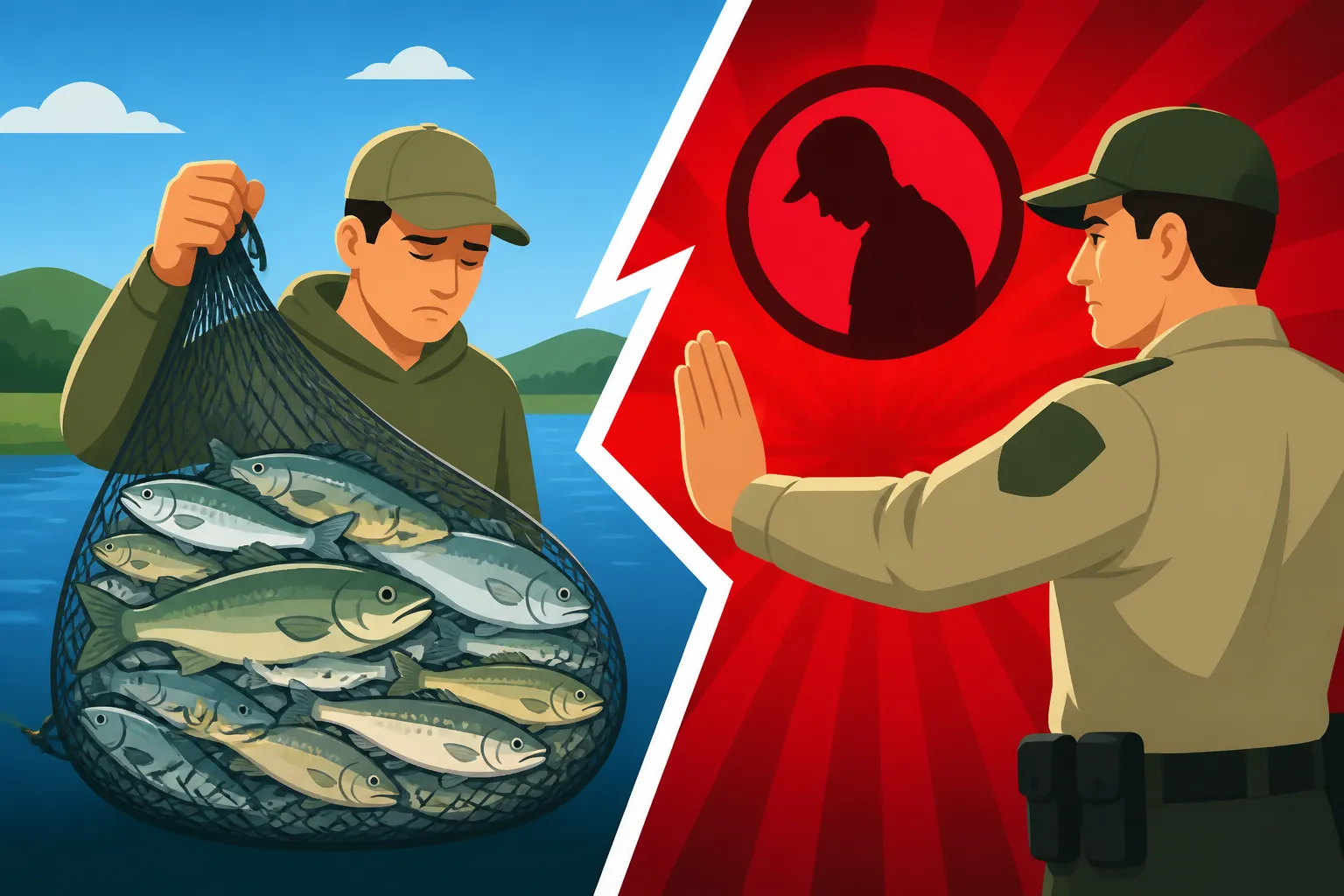
Getting caught overharvesting is more than just a slap on the wrist. Nebraska takes its conservation laws seriously, and the penalties can range from a hefty fine to the loss of your fishing privileges, and even jail time in severe cases. It's not a risk worth taking.
General Penalties
In Nebraska, fishing violations, including overharvesting, are generally classified as misdemeanors. This means they are criminal offenses, not just civil infractions. The specific penalty often depends on the severity of the violation (how many fish over the limit, the species involved, repeated offenses) and the discretion of the court.
You're generally looking at:
- Fines: These are the most common penalties.
- Court Costs: You'll be responsible for court fees in addition to the fine.
- Loss of Privileges: This can mean a temporary suspension or even permanent revocation of your fishing license.
- Jail Time: While less common for a first-time, minor overharvesting offense, it is a possibility, especially for egregious violations or repeat offenders.
Each fish over the limit can also carry its own specific fine, compounding the total penalty.
Specific Fine Ranges and License Impacts
While specific fines can vary greatly based on the judge, prosecutor, and the exact nature of the offense, a common fine for a fishing violation in Nebraska can be anywhere from $100 up to $500 or more per violation, plus court costs. For certain protected or high-value species, or for significant overharvesting, these fines can escalate rapidly.
Beyond the monetary cost, the impact on your fishing license can be devastating for an avid angler. The Nebraska Game and Parks Commission has the authority to suspend or even revoke your hunting and fishing permits for a period of time. This can range from one year for a minor offense to several years, or even a lifetime ban for serious, repeated violations. Imagine not being able to buy a Nebraska Annual Fishing Permit for five years because you got careless with your fish count! This punitive measure is designed to deter future violations and protect the resource. The loss of hunting and fishing privileges extends to all permits, not just the one associated with the violation.
Mandatory Court Appearances
Unlike a simple traffic ticket you might pay by mail, many fishing violations in Nebraska, especially those involving overharvesting, will require a mandatory court appearance. This means you'll have to take time off work, travel to the courthouse, and stand before a judge. This process itself is a significant hassle and a penalty in its own right, adding to the stress and cost of the violation.
Impact on Future Licenses
Even after your suspension period is over, a violation on your record can sometimes make it more difficult to purchase certain types of licenses or participate in special drawings in the future. While not always a direct bar, having a history of violations signals to the NGPC that you might be a higher-risk angler, and this could be considered when reviewing future permit applications.
The financial and personal cost of overharvesting is substantial. For more general information on penalties, check out Nebraska Fishing Violation Penalties.
How Enforcement Works and What to Do If Cited
It’s one thing to know the rules and the penalties, but it’s another to understand how those rules are enforced and what to do if you ever find yourself in a challenging situation with a conservation officer. Staying calm, cooperative, and informed is always your best strategy.
Role of Nebraska Game and Parks Commission Conservation Officers
Nebraska Game and Parks Commission conservation officers are the primary enforcers of fishing and hunting regulations. These dedicated men and women are certified law enforcement officers, just like state troopers or county sheriffs, with full arrest powers. They patrol lakes, rivers, and public access points, often blending in with other anglers or working undercover. Their job is to protect Nebraska's natural resources and ensure fair play among all users.
They often conduct routine checks, which can include:
- Boat Checks: Officers might pull alongside your boat on the water to check your fishing licenses, safety equipment (like life jackets), and your catch.
- Creel Checks: At boat ramps or popular fishing spots, officers may approach you as you're leaving to inspect your cooler and verify your catch against the current bag and length limits.
- Shoreline Patrols: They regularly drive or walk along shorelines, especially at popular spots like Branched Oak Lake or Lake Ogallala, observing angler activity and conducting checks.
- Reporting: A significant number of violations are reported by other concerned citizens or anglers who witness suspicious activity. The NGPC has a dedicated hotline and online portal for reporting violations, which can be found in our How to Report a Fishing Violation in Nebraska guide.
Remember, conservation officers are public servants doing an important job. Treating them with respect and complying with their requests will always lead to a better outcome.
Common Scenarios Leading to Citations
Many citations stem from a few common scenarios:
- Failure to Count Accurately: This is the most frequent. Anglers get excited, lose track, and end up with one or two fish over the limit.
- Misunderstanding Length Limits: Keeping a fish just under or within a slot limit because you didn't measure it carefully or didn't understand the specific rule for that body of water.
- Cleaning Fish Before Leaving the Water: In many cases, you are required to leave fish intact (or at least identifiable as to species and size) until you reach your final destination or home. This allows officers to verify compliance with length and bag limits. Filleting fish on the water or at the ramp can be a violation itself if it prevents species and length identification.
- Using Multiple Poles/Lines Illegally: Nebraska has specific rules on the number of fishing poles per angler. Exceeding this can lead to a citation.
- Fishing Without a License: While not overharvesting, it's another common violation. Always have your Nebraska Fishing License Guide on you, either physically or digitally via the GoOutdoorsNE app.
The Process After Receiving a Citation
If a conservation officer issues you a citation for overharvesting, here's generally what to expect:
- Be Polite and Cooperative: Arguing or being confrontational will not help your situation. Provide any requested identification and cooperate with the officer.
- Receive Your Citation: The officer will issue you a ticket, which is a legal document outlining the alleged violation, the date, time, and location. It will also specify a court date and location.
- Understand Your Options: The citation will usually inform you whether you can pay a fine by mail or if a mandatory court appearance is required. For overharvesting, a court appearance is often mandatory.
- Seek Legal Advice (If Necessary): If you believe there's a misunderstanding, or if the penalties seem severe, it's wise to consult with an attorney who specializes in wildlife and environmental law. They can advise you on your rights and the best course of action.
- Prepare for Court: If you're required to appear, be prepared to present your case. Gather any relevant documentation (e.g., your fishing license, a copy of the regulations you believed applied, photos if relevant).
- Consequences: If found guilty or if you plead guilty, the judge will impose the fines, court costs, and potentially order a license suspension. This information will then be sent to the NGPC, who will enact the license penalties.
Importance of Cooperating and Seeking Legal Advice
Cooperating with a conservation officer doesn't mean admitting guilt, but it does mean being respectful and following instructions. This can sometimes lead to a more lenient outcome if the officer feels you were genuinely mistaken and remorseful.
However, if you feel you were unjustly cited, or if the situation is complex, don't hesitate to seek legal counsel. An attorney can help you navigate the legal system, understand the charges, and represent your interests in court. A small investment in legal advice can potentially save you significant fines and preserve your fishing privileges for the long run.
Ultimately, the best way to avoid all these headaches is to always be informed, keep meticulous track of your catch, measure carefully, and if ever in doubt, practice catch-and-release!
Here's a simplified look at common violation outcomes in Nebraska, though actual penalties can vary:
| Violation Type | Typical Classification | Potential Fines (Approx.) | License Impact |
|---|---|---|---|
| Exceeding Daily Bag Limit | Class II Misdemeanor | $100 – $500+ per fish | 1-3 years suspension |
| Exceeding Possession Limit | Class II Misdemeanor | $100 – $500+ per fish | 1-3 years suspension |
| Keeping Undersized Fish | Class II Misdemeanor | $100 – $500+ per fish | 1-3 years suspension |
| Keeping Oversized/Slot Fish | Class II Misdemeanor | $100 – $500+ per fish | 1-3 years suspension |
| No Fishing License | Class II Misdemeanor | $100 – $250 | Possible 1 year suspension |
| Using Illegal Methods | Class II Misdemeanor | $250 – $1,000+ | 1-5 years suspension |
| Repeated/Egregious Offenses | Class I/II Misdemeanor | $500 – $2,500+ | Extended or Lifetime ban, jail |
Note: These are approximate figures and can vary widely based on the specific circumstances, species involved, judge's discretion, and whether it's a first offense or repeat violation. Always consult official Nebraska Game and Parks Commission resources or legal counsel for precise details.
Disclaimer
The information provided in this guide is for general informational purposes only and does not constitute legal advice. Fishing regulations and penalties can change, and interpretations may vary. Always refer to the most current official Nebraska Game and Parks Commission regulations and consult with legal counsel for specific questions or concerns regarding violations.