Does a Nebraska Fishing License Work in Iowa?
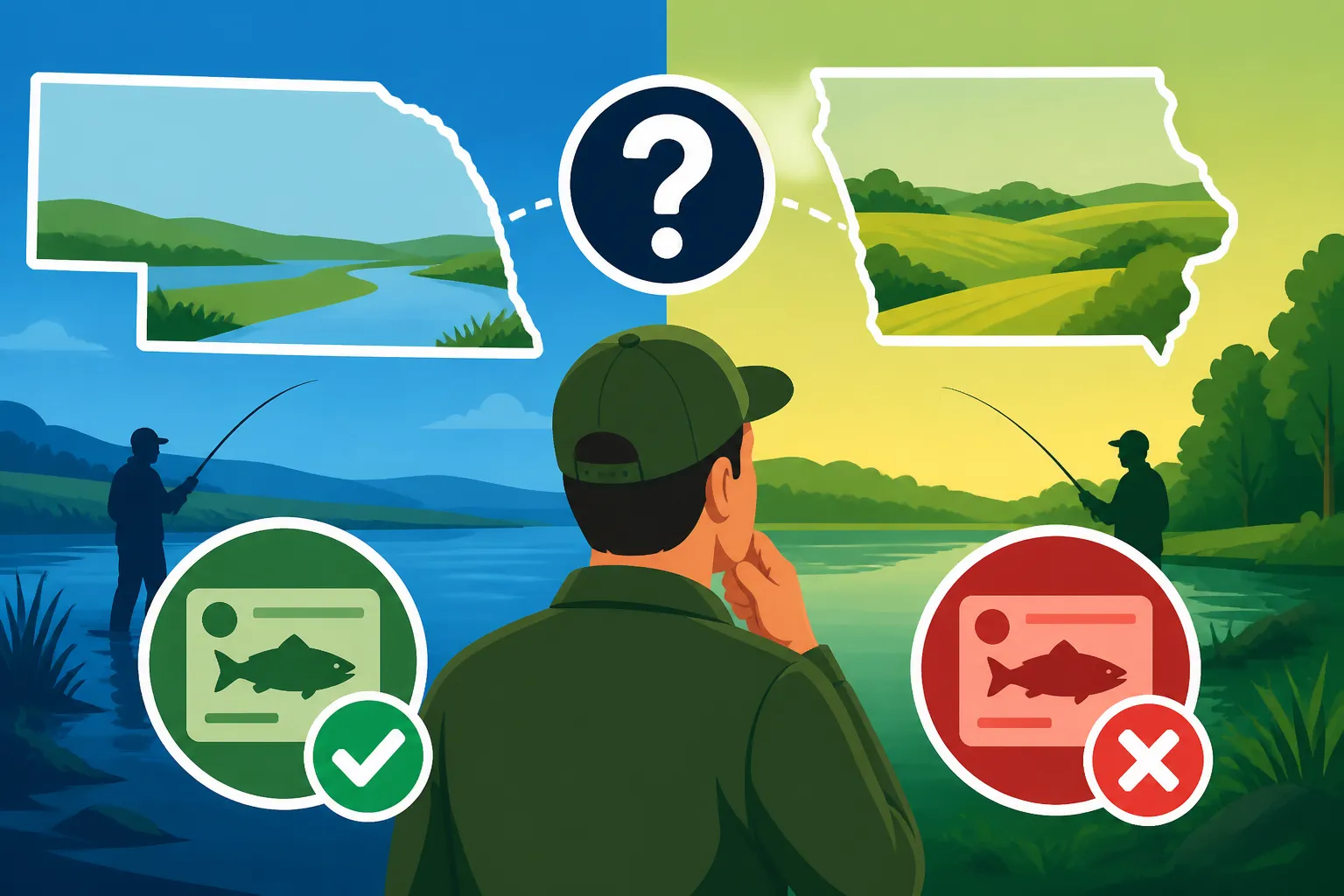
It’s a truly frustrating experience, isn’t it? You’re out on the water, perhaps fishing the mighty Missouri River that carves a path between states, and suddenly a nagging doubt creeps in: "Is my Nebraska fishing license even valid here? What if I drift a little too far east into Iowa territory?" This exact uncertainty plagues countless anglers, and it's a completely valid concern. The rules around interstate fishing licenses, especially on shared waterways, can feel like navigating a legal minefield. This guide is designed to cut through that confusion, giving you a crystal-clear understanding of whether your Nebraska fishing license holds up when you're casting your line near, or even in, Iowa waters.
Understanding Interstate Fishing License Reciprocity
The idea of fishing across state lines with a single license is a dream for many, but the reality is often more complex. States bordering each other, particularly those sharing a significant waterway like a river or a large lake, sometimes enter into what are called "reciprocity agreements." These agreements are essentially a handshake deal between state wildlife agencies, recognizing that it would be incredibly cumbersome for anglers to purchase two separate licenses just to fish one body of water. However, these agreements aren't universal, and they almost always come with very specific stipulations. It's not a blanket pass to fish anywhere in the neighboring state.
The core of the issue stems from the fact that each state manages its own natural resources. This includes everything from setting bag limits and length restrictions for various fish species to funding conservation efforts through license sales. When you buy a Nebraska fishing license, that money goes directly to the Nebraska Game and Parks Commission to support fisheries management, habitat restoration, and enforcement within Nebraska's jurisdiction. Iowa has its own system, funded by its own license sales. So, for one state to honor another's license, there has to be a formal understanding of how to manage shared resources and, often, a mechanism to ensure fairness in terms of revenue and enforcement.
The Nuances of Border Waters Versus Inland Waters
When we talk about whether a Nebraska fishing license works in Iowa, the very first distinction we absolutely must make is between "border waters" and "inland waters." This isn't just a technicality; it's the entire ballgame. Border waters are precisely what they sound like: the specific waterways that form the actual boundary between two states. For Nebraska and Iowa, the most prominent and by far the most significant border water is the Missouri River.
Inland waters, on the other hand, are any lakes, rivers, or streams that are entirely contained within the boundaries of a single state. Even if an oxbow lake is right next to the Missouri River but is officially designated as being entirely within Iowa's borders, it's considered an Iowa inland water. This distinction is critical because reciprocity agreements almost exclusively apply only to the defined border waters. Venturing into inland waters of the adjacent state, even if they're just a stone's throw from the border river, typically requires a separate, valid fishing license from that state. This is where many anglers unknowingly run into trouble, thinking that because they're "near" the border, their license from the other state is sufficient.
Missouri River Border Water Fishing License Rules
Alright, let's get down to brass tacks about the Nebraska-Iowa border. When it comes to fishing the majestic Missouri River, which forms a significant portion of the boundary between these two states, there is a specific reciprocity agreement in place. This is excellent news for anglers who want to explore both sides of the river without doubling up on permits, but it's crucial to understand the exact parameters of this agreement.
The general rule for the Missouri River, from its confluence with the Big Sioux River near Sioux City down to the northern border of Missouri, is that a valid fishing license from either Nebraska or Iowa will allow you to fish the entire main stem of the river. This means if you have a current Nebraska fishing license, you can fish from a boat anywhere on that section of the Missouri River, whether you're closer to the Nebraska bank or the Iowa bank, and you won't need an Iowa fishing license. The same holds true in reverse for Iowa residents holding an Iowa license. This reciprocal agreement is a huge convenience, saving you money and the hassle of buying multiple permits.
Specifics for Anglers on the Shared Missouri River
This agreement covers all methods of legal fishing on the Missouri River itself. Whether you're trolling for walleye near Omaha, bank fishing for catfish below a wing dam near Blair, or casting for white bass from a boat, your single Nebraska fishing license should cover you. It applies to both residents and nonresidents who have purchased the appropriate permit for their originating state. So, a nonresident who has a Nebraska Nonresident Fishing License Guide would also be covered under this reciprocity on the Missouri River.
However, a critical detail to grasp is that while your license grants you the right to fish the entire main stem of the Missouri River, the fishing regulations that apply to you are typically those of the state where you purchased your license. For example, if you have a Nebraska license, you must abide by Nebraska Walleye Daily Bag Limit, length limits, and other specific rules, even if you are technically fishing closer to the Iowa bank. Conversely, an Iowa angler would follow Iowa's regulations. This dual-regulation system can sometimes be confusing, but it's the standard practice for many border water agreements. Always keep a copy of your home state's regulations handy. You can usually find the most up-to-date information through the Nebraska Game and Parks Commission website or the Iowa Department of Natural Resources.
What Happens if You Cross into Non-Border Waters?
This is where many anglers get tripped up and potentially find themselves in hot water. The reciprocity agreement for the Missouri River is strictly limited to the main channel and immediately adjacent backwaters that are directly connected to the river. It does not extend to tributary streams, oxbow lakes, or other impoundments that are entirely within the territorial boundaries of either Nebraska or Iowa, even if they are very close to the Missouri River.
Imagine you're fishing the Missouri, and you decide to take your boat into an old oxbow lake that’s clearly cut off from the main river, now sitting entirely on the Iowa side. Even though you just came from the Missouri River, once you're in that oxbow, you are now in Iowa's inland waters. Your Nebraska fishing license will not be valid there. You would need a separate, valid Iowa fishing license to legally fish in that oxbow. The same applies to any small creek or river that flows into the Missouri; if you venture upstream into that tributary, you're likely entering a non-border water and need the appropriate state's license.
It's similar to situations along the Platte River in Nebraska. While you might be fishing the Platte with your Nebraska license, you wouldn't be able to fish a small pond right next to it if that pond was privately owned or part of a different jurisdiction that required a separate permit. Always verify the specific water body's designation. If there's any doubt about whether a body of water is considered "border water" or an "inland water" of either state, your safest bet is always to possess a valid license for both Nebraska and Iowa. Better safe than sorry when a game warden pulls up!
Navigating the Regulations and Avoiding Penalties
The world of fishing regulations can sometimes feel like a labyrinth, especially when you're dealing with shared resources and interstate agreements. While the Missouri River reciprocity is a boon for anglers, misunderstanding its limits can lead to unwelcome interactions with law enforcement and hefty fines. The key to a stress-free fishing trip is knowing the rules and having easy access to them.
First and foremost, never assume. Always, and I mean always, double-check the current regulations before heading out, especially if it’s a new spot or you haven't fished border waters in a while. Regulations can change, and what was true last year might have been updated. The Nebraska Game and Parks Commission (NGPC) is your go-to for all things Nebraska fishing, and the Iowa Department of Natural Resources (DNR) handles Iowa's regulations. Both agencies provide comprehensive guides, often available online, which can be downloaded to your phone or printed. You can explore the full Nebraska Fishing License Guide and learn about Nebraska Fishing Regulations Explained on the NGPC website.
Practical Steps to Stay Compliant
One of the easiest ways to ensure compliance is to have multiple resources at your fingertips. Many anglers keep a digital copy of both Nebraska and Iowa regulations on their smartphone or tablet. Additionally, using a reliable GPS device or a mapping app on your phone can help identify precisely which body of water you're on, especially near ambiguous areas like oxbows or tributary mouths.
Here's a quick checklist to help you stay compliant:
- Verify Border Water Status: Before casting, confirm if the specific water body you're targeting is truly part of the Missouri River's main stem or a directly connected backwater.
- Know Your Home State's Rules: Remember, even with reciprocity, you typically adhere to the bag and length limits of the state where you bought your license. Keep a copy of the Nebraska Fishing Daily Bag and Possession Limits handy if you're a Nebraska licensee.
- Consider a Dual License: If you frequently fish sections of the Missouri River and its adjacent, potentially ambiguous waters, or if you regularly venture into tributaries and oxbows, investing in an annual license for both Nebraska and Iowa might be the simplest solution. It removes all doubt and allows you maximum flexibility.
- Use Official Resources: Purchase your licenses directly from official state websites like the GoOutdoorsNE Online Permit System, or from authorized vendors. Avoid third-party sites that might not be up-to-date or legitimate.
Penalties for Fishing Without the Correct License
Fishing without a valid license, or fishing in waters where your license isn't recognized, isn't just a minor oversight; it's a legal violation. The penalties can vary but are rarely pleasant. You could face significant fines, potentially hundreds of dollars, depending on the severity and if any other violations (like over-limit catches) occurred. In some cases, your fishing gear, including rods, reels, and even your boat, could be confiscated. Furthermore, a violation can lead to a suspension of your fishing privileges, not just in one state, but potentially across multiple states through interstate compacts. It's simply not worth the risk. Always check the specific Nebraska Fishing Violation Penalties to understand the potential consequences.
Special Considerations and Common Misconceptions
While the Missouri River reciprocity is straightforward for the main channel, there are always those little quirks and common misunderstandings that can trip up even experienced anglers. Being aware of these can save you a lot of headache.
One common misconception is that if you're standing on the Nebraska bank of the Missouri River, you only need a Nebraska license, and if you're on the Iowa bank, you only need an Iowa license. This is generally true for bank fishing on the main stem. However, if you are fishing from a boat on the main stem, the reciprocity agreement allows you to possess either a Nebraska or an Iowa license, regardless of which state's side of the river you are on. The critical part is the water you are fishing, not necessarily the bank you launched from or are closest to. If you are fishing from the bank of a tributary or oxbow that is clearly within Iowa, you need an Iowa license, and vice versa.
Understanding Species-Specific Regulations Across States
Even on the shared Missouri River, while the license itself might be reciprocal, the specific regulations for certain fish species can differ between Nebraska and Iowa. For instance, Nebraska Walleye Daily Bag Limit might be slightly different from Iowa's. If you bought your license in Nebraska, you are bound by Nebraska's regulations, regardless of where on the Missouri River you catch the fish. This means it's possible to legally catch a fish under Nebraska rules that might be over the limit or too small/large under Iowa rules, and vice-versa. This highlights the importance of not only carrying your license but also a copy of the regulations for the state that issued it to you.
This difference in regulations also extends to other specific stamps or permits. For example, some states require a separate Trout Stamp to fish for trout, or an Nebraska Aquatic Habitat Stamp Explained. While your primary fishing license might be reciprocal, additional stamps sometimes are not, or they apply based on your home state's regulations. Always confirm if any specific species or access stamps are required by your licensing state for the type of fishing you plan to do, even on border waters.
Reciprocity Beyond Nebraska and Iowa
It's also worth noting that reciprocity agreements aren't uniform across all state borders. While Nebraska shares the Missouri River with Iowa and has an agreement, its agreements with other neighboring states might be different. For example, some sections of the Missouri River shared with South Dakota might have similar agreements, but it's essential to check those specific details. Don't assume that the Nebraska-Iowa rule applies to Nebraska-South Dakota or Nebraska-Missouri borders without verifying. Each state pair can have a unique arrangement. This is why a simple search for "Does a Nebraska Fishing License Work in South Dakota?" or "Does a Nebraska Fishing License Work in Iowa?" becomes so important, as each answer can be distinct.
Practical Tips for Anglers Fishing Border Waters
Fishing border waters like the Missouri River is an incredible experience, offering diverse fishing opportunities that span two states. To make sure your trips are as enjoyable and hassle-free as possible, a few practical habits can go a long way.
Firstly, always carry your license with you. This might seem like a no-brainer, but it's surprising how often licenses get left behind. Whether it's a physical card or a digital copy on your phone through an app like GoOutdoorsNE, ensure it's accessible. Game wardens can and will ask to see it. If your phone is your primary proof, make sure it's charged and protected from the elements.
Secondly, review maps diligently. Before you head out, pull up detailed maps of the area, especially if you plan to explore side channels or backwaters. Google Maps, navigation apps on your boat's electronics, or even old-fashioned paper maps can clearly show jurisdictional lines or distinguish between the main river and disconnected oxbows. Pay close attention to any "no fishing" zones or areas managed by federal entities like the U.S. Fish and Wildlife Service, which might have their own specific rules beyond state regulations.
Here's a handy table to summarize the key differences for the Missouri River:
| Feature | Nebraska License on Missouri River (Main Stem) | Iowa License on Missouri River (Main Stem) | Fishing Iowa Inland Waters (e.g., Oxbows) | Fishing Nebraska Inland Waters (e.g., Platte River) |
|---|---|---|---|---|
| Required License | Nebraska License (valid for entire main stem) | Iowa License (valid for entire main stem) | Iowa License REQUIRED | Nebraska License REQUIRED |
| Applicable Regulations | Nebraska Fishing Regulations | Iowa Fishing Regulations | Iowa Fishing Regulations | Nebraska Fishing Regulations |
| Reciprocity | Yes, with Iowa on main stem | Yes, with Nebraska on main stem | No Reciprocity | No Reciprocity |
| Common Scenario | Boat fishing entire river, bank fishing NE side | Boat fishing entire river, bank fishing IA side | Fishing a lake entirely within Iowa | Fishing a lake entirely within Nebraska |
For those who enjoy convenience, considering an annual fishing license for both Nebraska and Iowa is a great way to eliminate all doubt. While it's an additional cost, the peace of mind knowing you're covered no matter where you cast your line on or near the border can be invaluable. You can typically purchase these directly from each state's wildlife agency website. Sometimes, online retailers like Amazon might also offer gift cards or other ways to facilitate purchasing licenses, but always double-check the legitimacy and directness of the source.
Finally, don't hesitate to ask questions. If you're ever unsure about a specific area, call the Nebraska Game and Parks Commission or the Iowa Department of Natural Resources. Their conservation officers and staff are there to help anglers understand and comply with the rules. It’s always better to get clarification upfront than to face consequences later. Being informed is your best tool for a successful and legal day on the water.
Disclaimer
The information provided in this guide is for general informational purposes only and is subject to change. Fishing regulations, license requirements, and reciprocity agreements can be updated by state agencies at any time. It is the responsibility of each angler to consult the official websites and publications of the Nebraska Game and Parks Commission and the Iowa Department of Natural Resources for the most current and accurate regulations before engaging in any fishing activities. Failure to comply with current regulations may result in penalties.