Lewis and Clark Lake Walleye Fishing
Lewis and Clark Lake holds a special place in the hearts of many Nebraska anglers, but chasing walleye on such a vast border water can feel like an overwhelming challenge. With its sprawling depths, diverse structure, and the ever-present question of which state's rules apply, it's easy to get frustrated trying to unlock its secrets. This comprehensive guide is designed to cut through that confusion, giving you the solid, actionable insights you need to confidently target and catch walleye at Lewis and Clark Lake.
Understanding Lewis and Clark Lake's Walleye Habitat
Lewis and Clark Lake isn't just a big puddle; it's a dynamic ecosystem, and understanding its unique characteristics is the first step toward consistent walleye success. Walleye are creatures of habit, driven by forage, water temperature, and structure, and Lewis and Clark offers all of these in abundance.
The Lake's Unique Geography and Structure
Spanning the border between Nebraska and South Dakota, Lewis and Clark Lake is actually a reservoir formed by the Gavins Point Dam on the Missouri River. This means it has both riverine characteristics and vast open-water expanses, creating a varied underwater landscape. You'll find everything from submerged creek channels and old roadbeds to rocky points, steep drop-offs, and expansive flats. The main channel of the Missouri River still carves its way through the lakebed, acting as a major highway for fish movement. Look for walleye to orient themselves along the edges of these channels, especially where there's a subtle depth change or some current break. The South Dakota side, particularly around the towns of Yankton and Springfield, often features more immediate deep water access and rocky structure, while the Nebraska side, such as near the Weigand-Burbach Access, offers a mix of shallower bays and submerged features that can hold fish.
Key Walleye Forage and Environmental Factors
Walleye in Lewis and Clark Lake have a rich smorgasbord to choose from, which directly influences their behavior and where you'll find them. The primary forage species include gizzard shad, emerald shiners, yellow perch, and various panfish. When you're trying to locate walleye, you're really trying to locate their food. If you find schools of baitfish on your sonar, walleye are often not far behind, lurking beneath or on the periphery, ready to ambush. Water clarity also plays a significant role. Being a Missouri River impoundment, Lewis and Clark can experience fluctuating water levels and turbidity, especially after heavy rains or significant releases from upstream dams. Walleye are known for their light-sensitive eyes, so in clearer water, they'll often hold deeper or in shaded areas, while in stained or murky conditions, they might push shallower, even feeding actively during daylight hours.
Seasonal Movements of Walleye
Just like us, walleye change their routines with the seasons. Their movements are largely dictated by spawning cycles, water temperature, and the availability of food. In early spring, you'll find them congregating near spawning areas, often rocky points or riprap shoreline where currents help oxygenate eggs. As summer progresses and water temperatures rise, walleye often retreat to deeper, cooler water, seeking out thermal refuges and areas with higher oxygen levels. They'll relate to deep structure like humps, submerged islands, and main channel breaks. Come fall, as temperatures begin to drop, walleye enter a major feeding period, bulking up for winter, and can be found transitioning between deeper haunts and shallower feeding flats, often aggressively chasing baitfish. Understanding these broad seasonal patterns is key to narrowing down your search on such a large body of water.
Best Times and Seasons for Walleye
Lewis and Clark Lake offers year-round walleye fishing, but each season presents unique challenges and opportunities. Knowing when and where to focus your efforts can make all the difference between a slow day and a successful outing.
Spring Spawning Run Strategies
Spring is arguably the most anticipated time for walleye anglers at Lewis and Clark. As ice recedes and water temperatures climb into the 40s and 50s Fahrenheit, walleye migrate to their spawning grounds, which typically occur from late March through April. The areas around the Gavins Point Dam tailwaters and the upstream stretches of the reservoir with rocky bottom and current are prime locations. Male walleye often arrive first, waiting for the females. During this period, vertical jigging with jigs tipped with plastics or live minnows (like shiners) can be incredibly effective. Casting lipless crankbaits or shallow-diving jerkbaits along riprap shorelines and rocky points where fish are staging can also produce aggressive strikes. Remember, while the bite can be fast and furious, it's crucial to be mindful of regulations during this sensitive time. For more on specific spawning periods, check out our guide on Nebraska Walleye Spawning Season.
Summer Deep Water Tactics
Once the spawn is over and water temperatures rise into the 60s and 70s, Lewis and Clark walleye transition to their summer patterns, often holding in deeper water. This is when understanding your electronics becomes paramount. Look for fish suspended over main lake basins, along deep channel edges, or congregated on submerged humps and points. Trolling is a highly effective method during summer. Using crankbaits that dive to different depths, such as Rapala Deep Tail Dancers or Berkley Flicker Shads, can cover a lot of water and help you find active fish. Experiment with different colors and retrieve speeds. Bottom bouncers with crawler harnesses or live bait rigs (like slip-sinker rigs with leeches or nightcrawlers) are also deadly for walleye holding tight to the bottom structure. Focus on depths of 15-30 feet, adjusting based on current conditions and baitfish location. For a deeper dive into summer techniques, our article on Nebraska Summer Catfish Techniques offers some transferable insights on deep-water fishing, though for a different species.
Fall Feeding Frenzy
As summer heat gives way to cooler autumn air and water temperatures begin to drop, Lewis and Clark walleye enter a significant feeding period. They're trying to pack on calories for the long winter ahead, making them very aggressive. This is often when some of the biggest walleye of the year are caught. Walleye will move shallower, often following schools of baitfish into bays, along wind-blown shorelines, and over expansive flats. Trolling crankbaits remains effective, but you can often find success casting jerkbaits or blade baits over shallower structures. Jigging spoons or heavy jigs around deeper transitions where walleye might be staging before moving onto feeding flats can also yield results. The fall bite can extend well into November, especially in milder years, offering some fantastic fishing opportunities before the winter freeze.
Winter Ice Fishing Opportunities
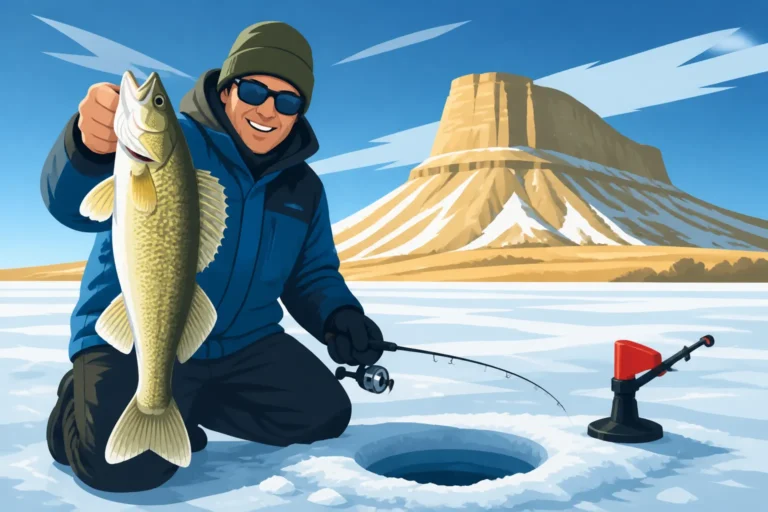
When the cold truly sets in and Lewis and Clark Lake freezes over, a different kind of walleye fishing begins: ice fishing. While challenging, it can be incredibly rewarding. Walleye tend to concentrate in certain areas under the ice, often around main lake points, submerged humps, and areas with access to deeper water but adjacent to shallower feeding zones. Early and late ice are typically the most productive periods. Small jigs tipped with minnow heads or wax worms, fished vertically, are excellent choices. Rattle spoons and lipless crankbaits can also trigger reaction strikes. Always prioritize safety on the ice; knowing How Thick Ice Needs to Be to Fish Safely in Nebraska is absolutely critical. Some popular ice fishing access points include Weigand Marina (on the Nebraska side) and Mid-Way and Lewis and Clark State Recreation Areas (on the South Dakota side), though access can vary depending on conditions.
Essential Gear and Tackle for Lewis and Clark Walleye
Tackling Lewis and Clark Lake for walleye means being prepared with the right equipment. This isn't your backyard pond; the sheer size and diverse conditions demand versatile and robust gear.
Rods, Reels, and Line Choices
For Lewis and Clark walleye, a versatile rod setup is key. Most anglers opt for a medium-light to medium power spinning rod, typically 6'6" to 7'6" in length, with a fast action tip. This provides the sensitivity needed for detecting subtle walleye bites and enough backbone to handle a good-sized fish. Paired with a quality 2500-3000 series spinning reel, spooled with 8-10 lb braided line, you'll have a formidable setup. Braid offers incredible sensitivity and casting distance, which is invaluable on such a large lake. Always remember to use a fluorocarbon leader (6-10 lb test) for abrasion resistance and invisibility, as walleye can be quite line-shy, especially in clearer water. For trolling, a longer, softer rod (like an 8-9 foot medium power trolling rod) is often preferred, absorbing the shock of strikes and helping to keep fish hooked. Check out our guide on Best Rods and Reels for Nebraska Fishing for more detailed recommendations.
Lures, Baits, and Rigs That Produce
Lewis and Clark walleye aren't overly picky, but they do have their favorites. The classic jig-and-minnow combination is a year-round producer, with jig head weights from 1/8 to 1/2 ounce depending on depth and current. Soft plastics like paddle tails or grub bodies on a jig can also be very effective, especially when tipped with a minnow head or a piece of nightcrawler. For trolling, crankbaits are king. Deep-diving models from brands like Rapala, Berkley, and Salmo are excellent for covering open water, while shallower runners work well in spring and fall. Experiment with colors; perch, shad, firetiger, and natural minnow patterns are often reliable. Don't forget crawler harnesses (also known as spinner rigs) for slow trolling or drifting. These rigs, featuring a blade and beads ahead of two hooks for a nightcrawler, are irresistible to many walleye. Live bait options like minnows, leeches, and nightcrawlers are often a must-have, especially during slower bites. If you're looking for more specific bait recommendations, our article on Best Bait for Nebraska Walleye is a fantastic resource.
Electronics and Navigation Tools
Fishing Lewis and Clark without reliable electronics is like navigating a maze blindfolded. A quality fish finder with GPS capabilities is an absolute game-changer. Look for units that offer 2D sonar, Down Imaging, and Side Imaging (or similar technologies like Lowrance's StructureScan or Humminbird's Mega Imaging). These technologies allow you to see fish, bait balls, and critical underwater structure like humps, points, and channel edges that are invisible from the surface. A good GPS will help you mark waypoints of productive spots, navigate safely, and stay within your desired fishing zones. Many modern units also allow you to create custom contour maps, providing an even more detailed view of the lakebed. Additionally, a dependable electric trolling motor with GPS Spot-Lock features can make boat control effortless, allowing you to stay precisely on structure or follow contour lines without constantly adjusting your main engine.
Top Walleye Fishing Techniques on Lewis and Clark
Lewis and Clark Lake demands a range of tactics to consistently catch walleye. Being proficient in a few key techniques will significantly boost your success rate, regardless of the season or conditions.
Trolling and Drifting Strategies
Trolling is undeniably one of the most effective ways to cover water and locate active walleye on a large reservoir like Lewis and Clark. This involves pulling lures or live bait rigs behind your boat at a controlled speed, often using your main engine or a kicker motor. For crankbaits, experiment with trolling speeds between 1.5-2.5 mph, and use planer boards to spread out your lines and cover a wider swath of water, especially when fishing large flats or open water. Pay close attention to your fish finder to identify preferred depths and structure. Drifting, on the other hand, relies on wind or current to move your boat, often used when fishing with bottom bouncers and crawler harnesses or slip bobbers. It allows for a slower, more natural presentation. Consider using a drift sock (sea anchor) to slow down your drift on windy days, giving the walleye more time to react to your bait. Both trolling and drifting are excellent search methods, helping you pinpoint where the fish are holding on any given day.
Jigging and Casting Around Structure
When walleye are concentrated in specific areas, or when conditions don't favor trolling, jigging and casting become your go-to techniques. Vertical jigging is particularly effective in current breaks, around rocky points, or over submerged humps where walleye are holding tight to the bottom. Use jigs tipped with live minnows, soft plastics, or even blade baits, bouncing them enticingly near the bottom. The key is to feel for that subtle "tick" or added weight that signals a bite. Casting crankbaits, jerkbaits, or even heavy jigs to shorelines, riprap, and shallow structures can be incredibly productive, especially during the spring and fall when walleye move shallower to feed. Focus on areas where baitfish might be congregating or where there's a distinct change in bottom composition or depth. Precision casting around these features can often draw strikes from aggressive walleye that might ignore trolled offerings.
Shore Fishing and Wading Access Points
While Lewis and Clark Lake is famous for its boat fishing, you don't always need a boat to find walleye. There are numerous excellent shore fishing opportunities, particularly during the spring and fall. The areas around Gavins Point Dam, including the tailwaters (both Nebraska and South Dakota sides), offer fantastic shore access. The riprap shorelines along the various state recreation areas like Lewis and Clark State Recreation Area (South Dakota) and Weigand Marina (Nebraska) can be hot spots, especially during the spring spawn. Wading can also be an option in certain shallower areas, but always exercise extreme caution, especially near the main river channel or in areas with strong current. For specific access points, it’s always a good idea to consult the Nebraska Game and Parks Commission or South Dakota Game, Fish and Parks websites for updated maps and facility information. Bank anglers can have great success casting jigs, crankbaits, or using slip-sinker rigs with live bait.
Navigating Regulations and Conservation Efforts
Fishing on Lewis and Clark Lake involves understanding a unique set of rules due to its status as a border water. Adhering to these regulations is not just about avoiding fines; it's about contributing to the conservation of this incredible fishery for generations to come.
Nebraska and South Dakota Border Water Rules
This is where it gets a little tricky, but it's crucial to get it right. Lewis and Clark Lake is part of the Missouri River border waters. Anglers can fish the entire lake with either a valid Nebraska or a valid South Dakota fishing license, as long as they abide by the regulations of the state in which they are licensed. This means if you have a Nebraska fishing license, you must follow Nebraska's length and bag limits for all species, even if you're fishing on the South Dakota side of the lake. Conversely, if you hold a South Dakota license, you must follow their rules. It's not uncommon for anglers to hold both licenses for maximum flexibility, but if you only have one, stick strictly to that state's regulations. For the most up-to-date information, consulting the official Nebraska Game and Parks Commission and South Dakota Game, Fish and Parks regulation booklets is always recommended. Our article on Lewis and Clark Lake License Reciprocity With South Dakota provides a more detailed explanation of this complex topic.
Important Bag and Length Limits
Walleye regulations on Lewis and Clark are designed to protect the population and ensure sustainable fishing. Both Nebraska and South Dakota typically have specific bag and length limits for walleye, which can vary from year to year. For example, Nebraska often has a daily bag limit of four walleye, with specific restrictions on the number of fish within a certain slot limit (e.g., only one fish over a certain length). South Dakota may have slightly different rules, so again, always check your specific state's current regulations. These limits are in place for a reason – to allow smaller fish to grow and reproduce, and to manage the harvest of larger, often more reproductively valuable, fish. Disregarding these limits can result in significant fines and penalties, not to mention harming the fishery. For specific details on what you can keep, our guide to the Nebraska Walleye Daily Bag Limit is a great starting point.
Practicing Responsible Catch and Release
Even if you plan to keep some walleye for a delicious meal, practicing responsible catch and release for the rest of your catches is vital for maintaining a healthy fishery. Walleye are a valuable resource, and protecting them ensures future generations can enjoy the same opportunities. When releasing fish, minimize handling time, especially in warm water. Use a rubberized landing net to protect their slime coat, and try to keep them in the water as much as possible while removing the hook. Barbless hooks can make hook removal much easier and less traumatic for the fish. If a fish is deeply hooked, it's sometimes best to cut the line rather than try to extract the hook, as this can cause more internal damage. Always avoid dragging fish over rough surfaces or squeezing them tightly. Taking a moment to revive a fish before releasing it by holding it gently in the water, facing into the current, can greatly increase its chances of survival.
Local Insights and Pro Tips for Success
Beyond the gear and the techniques, some local knowledge and practical tips can really elevate your Lewis and Clark walleye fishing experience. The nuances of a large, complex water body like this often reveal themselves through experience and shared wisdom.
Monitoring Conditions and Reports
Lewis and Clark Lake is ever-changing, and staying on top of current conditions is paramount. Before heading out, always check the weather forecast, paying close attention to wind direction and speed. Strong winds can make fishing difficult and dangerous, especially on such a large, open body of water. Water levels and discharge rates from Gavins Point Dam also influence fish behavior; higher discharge can increase current, often concentrating fish in certain areas. Online fishing forums, local bait shops, and even the Nebraska Game and Parks Commission and South Dakota Game, Fish and Parks websites often provide fishing reports and updates. These reports can give you a crucial starting point, indicating what depths fish are being caught at, what baits are working, and even specific areas that are producing. Don't take reports as gospel, but use them as valuable clues to guide your initial approach.
Hiring a Local Guide
For those new to Lewis and Clark Lake, or anglers looking to drastically cut down on the learning curve, hiring a local walleye fishing guide is an investment that often pays off handsomely. Guides spend hundreds of days a year on the water; they know the lake's ever-changing moods, where the fish are hiding, and what techniques are producing right now. A good guide won't just put you on fish; they'll teach you how to read your electronics, present baits effectively, and understand the walleye's seasonal patterns on Lewis and Clark. This hands-on experience can accelerate your own learning exponentially. Websites like FishingBooker are excellent resources for finding reputable, experienced walleye guides who specialize in Lewis and Clark Lake, allowing you to compare options and read reviews before booking. It's a fantastic way to experience the best of the lake and gain invaluable knowledge.
Staying Safe on the Water
Safety should always be your number one priority, especially on a large body of water like Lewis and Clark Lake. The Missouri River system can be unpredictable, with sudden weather changes, strong winds, and heavy boat traffic during peak seasons. Always wear a life jacket, or at the very least, have readily accessible personal flotation devices (PFDs) for everyone on board. Check your boat's safety equipment (fire extinguisher, horn, navigation lights) before each trip. Inform someone on shore of your float plan, including where you're going and when you expect to return. Be mindful of changing weather; if storms roll in, seek shelter immediately. Carry a fully charged cell phone or marine radio for emergencies. When ice fishing, never go alone and always check ice thickness thoroughly. Being prepared and cautious allows you to focus on the fishing and enjoy your time on the water.
Lewis and Clark Lake Walleye Seasonal Tactics Overview
Here's a quick look at the typical walleye tactics that perform best on Lewis and Clark Lake throughout the year:
| Season | Primary Locations | Recommended Techniques | Key Lures/Baits | Notes |
|---|---|---|---|---|
| Spring | Riprap shorelines, rocky points, dam tailwaters | Vertical jigging, casting | Jigs with minnows/plastics, lipless crankbaits | Focus on spawning staging areas. Water temps 40-55°F. Check current flow near dam. |
| Summer | Deep humps, channel edges, suspended over basins | Trolling, bottom bouncing | Deep-diving crankbaits, crawler harnesses | Target depths 15-30 ft. Use electronics heavily to find suspended fish or deep structure. |
| Fall | Transitional areas, wind-blown flats, shallow points | Trolling, casting, jigging spoons | Crankbaits, jerkbaits, blade baits, jigs | Walleye actively feeding. Can find fish shallower than summer. Experiment with retrieves. |
| Winter | Deep main lake points, submerged humps, channel access | Ice jigging, tip-ups | Small jigs with minnow heads, rattle spoons | Early and late ice are best. Safety on ice is paramount. Often fish congregate in predictable areas. |
Disclaimer
Fishing conditions and regulations in Nebraska, particularly on border waters like Lewis and Clark Lake, can change. While this guide provides comprehensive information, it is essential to consult the most current Nebraska Game and Parks Commission and South Dakota Game, Fish and Parks regulations before you head out. This content is for informational purposes only and does not constitute legal advice. Always prioritize safety and good sportsmanship on the water.