Best Bait for Nebraska Walleye
The quest for Nebraska walleye can feel like a high-stakes game of hide-and-seek, especially when you're trying to figure out what they’re actually willing to bite on. It's frustrating to spend hours on the water, meticulously working your favorite lure, only to come up empty-handed while someone else is reeling in fish. The truth is, walleye can be incredibly finicky, and their preferences shift with the seasons, water conditions, and even the time of day. This comprehensive guide is designed to cut through that frustration, giving you the insider knowledge on the best baits for Nebraska walleye, ensuring your next trip is more productive and a whole lot more fun.
Deciphering the Nebraska Walleye's Palate
Before you even think about tying on a bait, it's crucial to understand what makes a walleye tick in Nebraska's diverse waters. These opportunistic predators are primarily sight feeders, but they also rely heavily on vibration and scent, especially in stained water or low light. Their diet isn't a fixed menu; it's a dynamic spread that changes with the environment and the availability of local forage.
The Forage Factor: What Walleye Are Really After
Walleye in Nebraska, like their counterparts across the Midwest, are creatures of habit when it comes to their meals. They're often keying in on the most abundant and easiest-to-catch baitfish in their immediate surroundings. If you can "match the hatch" – or in this case, match the local forage – you're already a huge step ahead. In many of Nebraska's large reservoirs, gizzard shad are a primary food source. These silvery, high-protein snacks make up a significant portion of a walleye's diet, especially in places like Lake McConaughy or Harlan County Reservoir. When shad are abundant, walleye will often ignore other offerings.
But it’s not just shad. Emerald shiners, especially in river systems, are another common forage. Perch, young panfish like bluegill or crappie, and even juvenile suckers are also on the menu. Consider the body of water you’re fishing: a walleye in a sandpit lake might be accustomed to chasing fathead minnows, while a walleye in the Missouri River could be keying on small drum or various shiner species. Knowing the dominant baitfish in a particular lake or river will heavily influence your choice of artificial lure profile and color, as well as the type and size of live bait you opt for.
Seasonal Appetites: How Walleye Feeding Habits Change
Walleye are incredibly sensitive to changes in water temperature and light conditions, which directly impacts their metabolism and, consequently, their appetite. Their feeding habits are cyclical, tied closely to the seasons.
In the spring, as water temperatures rise, walleye move shallower for their spawning season. During the pre-spawn, they are aggressively feeding, trying to pack on calories for the rigors ahead. This is a fantastic time for active baits like jigs and shallow-running crankbaits. Post-spawn, they might be a bit lethargic but will soon resume feeding heavily to recover. Knowing the Nebraska Walleye Spawning Season can be incredibly helpful for timing your trips.
Summer brings warmer water, often pushing walleye deeper to find cooler, more oxygenated water. They can become somewhat lethargic during the brightest parts of the day, but often feed actively at dawn, dusk, and through the night. This calls for baits presented at specific depths, such as deep-diving crankbaits, bottom-bouncing rigs with live bait, or vertical jigging.
Fall is a prime time for a walleye feeding frenzy. As water temperatures drop, walleye sense the approaching winter and begin to gorge themselves, building up fat reserves. They'll often move back shallower, particularly onto main lake points and humps. This is when aggressive presentations with larger baits, like big crankbaits or substantial live minnows, can be incredibly effective.
Winter, of course, means ice fishing in many parts of Nebraska. Under the ice, walleye metabolism slows down considerably. They don't need to eat as much, and their strikes can be very subtle. Smaller, slower presentations are key, often involving tiny jigs, spoons, or small minnows fished vertically.
Water Conditions and Clarity: Guiding Your Bait Selection
The clarity of the water you're fishing is another significant factor in walleye bait selection. Walleye are primarily sight feeders, but they are also equipped to hunt in low light or turbid conditions.
In clear water, like you might find in some parts of Lake McConaughy, visual appeal is paramount. Natural colors that accurately mimic forage, along with subtle actions, tend to perform best. Fluorocarbon leaders are almost a must to avoid spooking wary fish. In these conditions, silent or softly rattling crankbaits, natural-colored jigs, and perfectly presented live bait often outshine loud, flashy options.
Conversely, in stained or muddy water, such as after heavy rains on the Platte River, walleye rely more on their lateral line to detect vibrations and their sense of smell. This is when louder baits come into their own. High-contrast colors like chartreuse, orange, or firetiger can make a lure more visible. Crankbaits with loud rattles, jigs tipped with scent-impregnated plastics, or strong-smelling live baits like cut bait or strong minnows can be very effective. The current itself also plays a role; in strong currents, heavier baits that can stay in the strike zone without being swept away are essential, often presented with a Nebraska Drift Fishing Techniques for Rivers approach.
Live Bait: The Irresistible Natural Offering
For many seasoned Nebraska walleye anglers, live bait is not just an option; it's a foundation. Nothing quite replicates the natural scent, movement, and texture of a live offering, and there are times when walleye simply won't touch anything else.
Minnows: The Classic Walleye Magnet
If there's one live bait that consistently produces walleye across Nebraska, it's the minnow. Their natural wiggle and subtle vulnerability are often too much for a hungry walleye to resist. Various species of minnows are used, each with its own advantages.
Shiners, whether they're golden shiners, emerald shiners, or fathead minnows, are a go-to. Emerald shiners, in particular, are common forage in many Nebraska waters and are often irresistible when fished on a jig or a slip bobber. Fathead minnows are smaller but very lively, making them excellent for tipping jigs or for use under a small bobber when fish are finicky. Larger species like creek chubs or suckers, typically 4-6 inches long, are fantastic for targeting bigger walleye, especially during the colder months.
When it comes to hooking minnows, the goal is to keep them alive and active while ensuring a good hook set. For jigging, hooking a minnow lightly through the lips allows it to swim naturally and present a tempting target. For slip bobber fishing, hooking them just behind the dorsal fin ensures they stay horizontal and lively. On a Lindy Rig or similar bottom-bouncing presentation, hooking them through the mouth and out one nostril helps them swim freely without spinning. You can usually find a good supply of these at local Nebraska bait shops, and it's always worth checking with them to see what's locally available and performing well.
Nightcrawlers: Versatility on a Hook
The humble nightcrawler is another incredibly versatile and effective bait for Nebraska walleye. While not a typical "baitfish," their wiggling action and scent appeal to walleye, particularly when they are foraging on the bottom.
The most popular way to fish nightcrawlers for walleye is on a crawler harness. This rig typically involves two or three small hooks, a clevis, and a spinner blade, all threaded onto a monofilament or fluorocarbon leader. The crawler is threaded onto the hooks, ensuring it stretches out naturally. The spinner blade provides flash and vibration, mimicking a wounded baitfish, while the wiggling crawler provides scent and texture. Crawler harnesses are deadly when slow-trolling or drifting, especially over flats or along breaklines in reservoirs like Branched Oak Lake.
Nightcrawlers can also be effective on a plain hook, fished under a bobber or on a simple split-shot rig, particularly when walleye are holding tight to structure or when you want a more subtle presentation. Some anglers will even tip a jig with a piece of nightcrawler for added scent and appeal. It's often recommended to use a whole nightcrawler, but sometimes cutting one in half can elicit strikes from finicky fish, or when you're targeting a slightly smaller profile. The key is to keep them lively and present them naturally.
Leeches: A Stealthy, Durable Choice
Leeches are perhaps the most underrated live bait for walleye, especially when the fishing gets tough. Ribbon leeches are the preferred species, known for their durability on the hook and their undulating, almost hypnotic swimming action.
Leeches truly shine in clear water and during the summer months when walleye can be a bit more finicky or when minnows are hard to keep alive. They are incredibly tough; you can catch multiple fish on the same leech, making them economical. Their slow, deliberate movements often attract cautious walleye without spooking them.
The best way to fish a leech is usually on a plain hook (size 4 or 6 octopus hook works well), either under a slip bobber or on a Lindy Rig. Hook them once through the sucker end, allowing them to swim freely. They're excellent for drifting over subtle structure, along weed lines, or when vertical jigging in deeper water. While not always available at every bait shop, especially in colder months, some specialized bait and tackle stores will carry them. For serious leech enthusiasts, you can even find equipment for catching and keeping your own leeches on sites like Amazon.
Artificial Lures: Mimicking Nature and Triggering Strikes
While live bait has its undeniable charm, artificial lures offer versatility, durability, and the ability to cover vast amounts of water quickly. Modern lure designs are incredibly sophisticated, accurately mimicking forage and triggering aggressive strikes from walleye.
Jigs: Precision and Presentation
Jigs are arguably the most versatile and fundamental artificial lure for walleye fishing. Their simplicity belies their effectiveness, allowing for precise presentations that can be deadly.
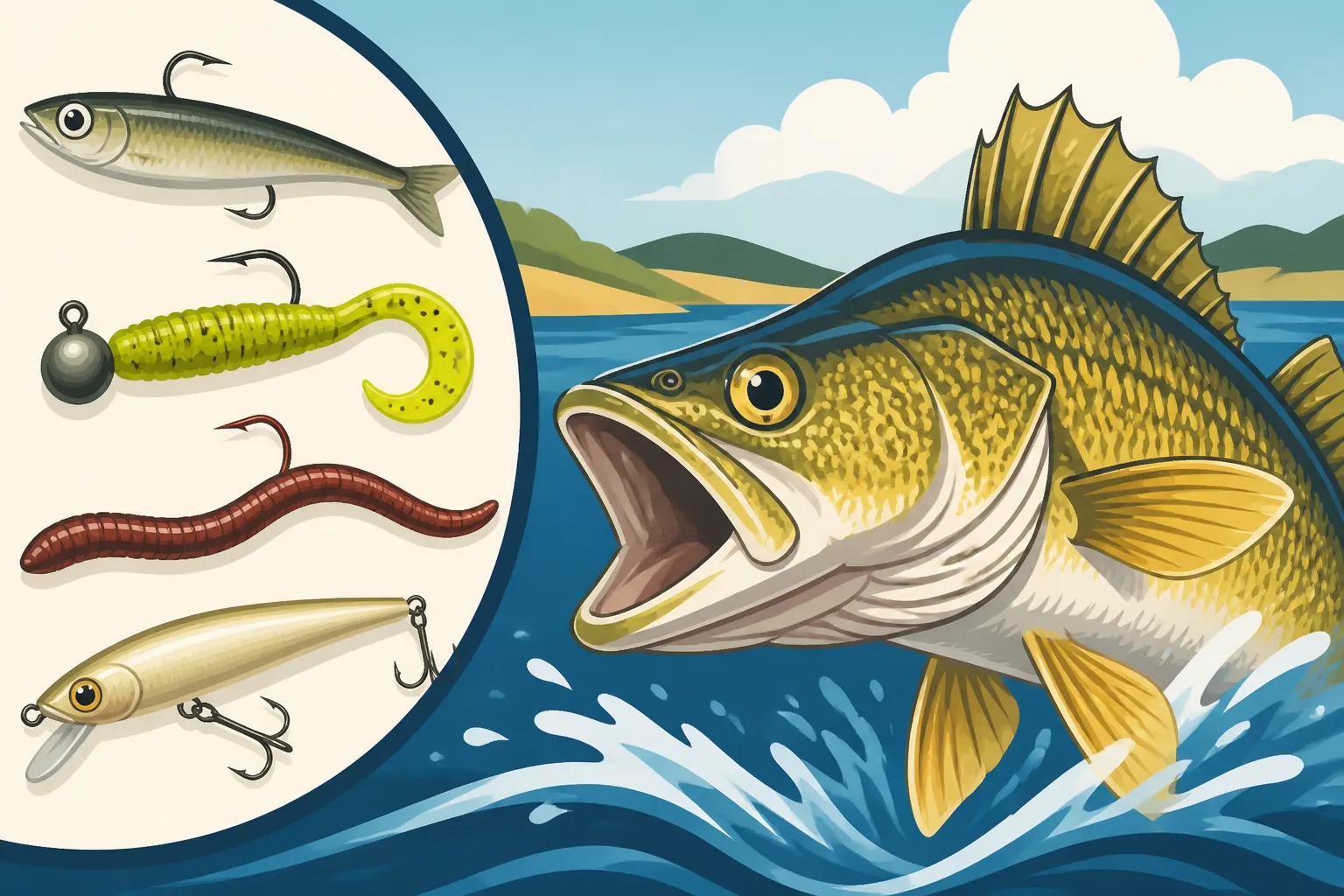
Lead-head jigs come in various shapes and weights, from light 1/16 oz versions for shallow water to heavy 1 oz jigs for deep water or strong current. The "stand-up" jig head is particularly popular for walleye, as it keeps the hook upright when resting on the bottom, reducing snags and improving hook sets. Colors are critical, and having a range from natural (greens, browns, blacks) to bright (chartreuse, orange, pink) is essential. Often, tipping a jig with a live minnow, a piece of nightcrawler, or a soft plastic grub (like a Berkley Gulp! Minnow or a soft plastic twister tail) provides added scent and action that walleye can't resist.
Techniques for jigging are varied:
- Vertical Jigging: Directly beneath the boat, often used in deeper water or when fish are concentrated on structure. A subtle lift and fall is usually best.
- Pitching: Casting the jig out and slowly retrieving it along the bottom, often with small hops or drags.
- Dragging: Using a lighter jig and slowly pulling it along the bottom, keeping it in constant contact with the lakebed.
For a deep dive into how to master this technique, check out our guide on How to Jig for Walleye in Nebraska.
Crankbaits: Covering Water and Attracting Attention
Crankbaits are power fishing tools that allow anglers to cover large areas of water efficiently and target specific depths, making them indispensable for Nebraska walleye, particularly in the big reservoirs.
There are several main types:
- Diving Crankbaits: Characterized by a long lip that helps them dive to specific depths. These are fantastic for trolling open water, along breaklines, or over submerged structure. Examples include Rapala Deep Husky Jerks, Berkley Flicker Shads, or Salmo Hornets. The size of the lip and the retrieve speed determine how deep they run.
- Shallow-Running Crankbaits: With a shorter lip, these run just below the surface to a few feet deep. Ideal for casting to shallow points, weed edges, or over submerged timber. Think Rapala Shad Raps or Bomber Flat A.
- Lipless Crankbaits: These lures sink quickly and vibrate intensely on the retrieve, producing a loud rattle that calls fish in. Excellent for covering vast flats or fishing through sparse weeds. Common choices are the Rapala Rippin' Rap or Bill Lewis Rat-L-Trap.
Whether you're trolling long distances with multiple lines or casting to specific ambush points, crankbaits offer incredible versatility. Colors should mimic local forage (perch, shad, shiner patterns) or be bright and flashy in stained water. Understanding how to use these effectively can dramatically increase your catch rate. For more detailed strategies, our article on How to Troll for Walleye in Nebraska can provide valuable insights.
Spinner Rigs and Blade Baits: Flash, Vibration, and Appeal
Spinner rigs and blade baits are excellent for appealing to a walleye's predatory instincts through flash, vibration, and sometimes, a lifelike profile.
Crawler harnesses, which we touched on earlier with live bait, are essentially spinner rigs designed to be tipped with nightcrawlers. The spinning blade creates a lot of flash and vibration, drawing walleye in, while the crawler provides the irresistible scent. Blades come in various shapes (Colorado, Indiana, Willowleaf) and sizes, each offering a different vibration and lift in the water. Colorado blades create the most vibration and run shallower, while Willowleaf blades provide less vibration but run deeper and faster.
Inline spinners, like a Mepps Aglia or a Blue Fox Vibrax, consist of a blade attached directly to a wire shaft with a weighted body and hook. While often associated with trout or bass, larger inline spinners can be effective for aggressive walleye, particularly when cast and retrieved along weed lines or rocky shorelines.
Blade baits, such as a Johnson Silver Minnow (often tipped with a plastic grub or minnow head) or a Heddon Sonar, are flat metal lures that vibrate intensely on the lift and flutter on the fall. They are incredibly effective for vertical jigging, especially through the ice or in deep open water, providing both flash and a strong thumping vibration that walleye can detect from a distance. These baits are particularly deadly when fished aggressively to trigger reaction strikes.
Tailoring Bait to Nebraska's Diverse Waters and Seasons
Nebraska offers a variety of fishing environments, from vast reservoirs to meandering rivers and smaller sandpits. Adapting your bait choices to these specific conditions is key to consistent walleye success.
Open Water Reservoir Strategies: Deep Tactics and Trolling
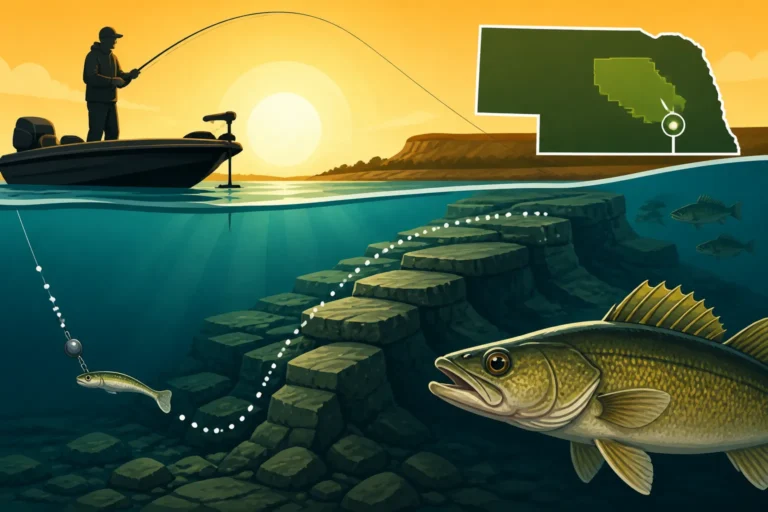
Nebraska's large reservoirs like Lake McConaughy, Harlan County Reservoir, and Branched Oak Lake are prime walleye waters, but their expansive nature can be daunting. Walleye in these lakes often hold to submerged structure, main lake points, and deep flats, especially during the summer and fall.
Trolling is often the most effective strategy to cover water and find active fish in these large bodies. Deep-diving crankbaits are king here, allowing you to present lures at precise depths over vast areas. Depending on the depth walleye are holding, you might be running baits 15, 20, or even 30 feet down. Using a trolling motor with GPS capabilities, like those offered by Minn Kota or MotorGuide (some of which you can find on Amazon), allows for precise speed and course control, crucial for maintaining your lure in the strike zone.
Bottom-bouncing rigs, typically a heavy weight (1-3 oz) followed by a snelled hook tipped with a live minnow or a crawler harness, are also deadly when walleye are hugging the bottom. These rigs allow you to slowly drag bait along contour lines, presenting a natural meal right in front of the fish's nose. For more specific insights on targeting walleye in one of Nebraska's premier spots, check out our Lake McConaughy Walleye Fishing guide.
River and Stream Tactics: Current and Structure
Fishing for walleye in Nebraska's rivers, like the Platte or the Missouri, presents a different set of challenges and opportunities. Current is the defining factor, and walleye will use it to their advantage, positioning themselves in eddies, behind wing dams, or in current seams to ambush baitfish.
Heavier jigs, often 1/2 oz to 1 oz, are essential to maintain bottom contact in river current. Tipping these jigs with large minnows or soft plastic paddletails is a highly effective tactic. Pitching jigs upstream and letting them drift naturally back downstream into current breaks is a classic river walleye technique. Three-way rigs, consisting of a sinker on a dropper line, a leader to a hook, and a main line, are perfect for presenting live bait (like large shiners or suckers) or a crankbait right in the current without getting swept away.
Current-cutting crankbaits, which have a tighter wobble and don't get pushed around as much, can also be trolled or cast in river systems. Look for specific spots like bridge pilings, riprap banks, and the calmer water downstream of confluences. For comprehensive information on how to navigate these waters, consult our guide on Missouri River Fishing in Nebraska.
Ice Fishing for Walleye: Small Baits, Big Results
When Nebraska's lakes freeze over, the game changes to ice fishing. Walleye under the ice are often less active, and their bites can be incredibly subtle. This necessitates a shift to smaller baits and more patient presentations.
Small jigging spoons, typically 1/8 oz to 1/4 oz, like the Northland Forage Minnow or Acme Kastmaster, are highly effective. They flutter enticingly on the fall and can be tipped with a minnow head or a wax worm for added attraction. Jigging Rapalas or similar horizontal jigging lures (like the Clam Leech Flutter Spoon) are also deadly, mimicking baitfish with a darting action.
Live minnows, suspended under a bobber or fished on a small jig, are often the most consistent producers, especially when fish are really finicky. Small fathead minnows or shiner minnows, hooked lightly, can entice wary walleye. A flasher or an underwater camera is almost essential for ice fishing success, allowing you to see your bait and the fish's reaction, helping you detect those incredibly subtle bites. Our How to Ice Fish in Nebraska guide dives deep into tactics and gear for hardwater walleye.
Maximizing Your Bait's Effectiveness
It's not just about what bait you use, but how you use it. Presentation is everything, and even the best bait can fail if not rigged correctly or fished appropriately.
Rigging Techniques for Optimal Action
Proper rigging ensures your bait performs as intended and maximizes your chances of a solid hook set. When using live minnows, hooking them through the lips (for jigging) or just behind the dorsal fin (for slip bobbers) allows them to swim naturally without being hindered. For nightcrawlers on a harness, ensure they are stretched out evenly along the hooks to prevent bunching and ensure the spinner blade rotates freely.
Your choice of fishing line and leader can also impact presentation. Monofilament line offers stretch and can be forgiving, while braided line provides sensitivity and strength. However, in clear water, a fluorocarbon leader is almost a necessity. Fluorocarbon is nearly invisible underwater and has less stretch than mono, giving you better feel while still being stealthy. Using appropriate knots, like a snell knot for live bait rigs or a Palomar knot for jigs and crankbaits, ensures strength and proper lure action.
Speed, Depth, and Color: The Trifecta of Walleye Success
These three elements are dynamic variables that you'll constantly adjust throughout your fishing day.
Speed: Walleye are often particular about the speed of your retrieve or troll. Sometimes they want a fast-moving, aggressive presentation to trigger a reaction strike, especially in cold water. Other times, a slow, methodical retrieve is necessary to entice a lethargic fish. In summer, they might prefer a faster troll, while in spring or fall, a slower presentation might be better. Pay attention to what's working and don't be afraid to experiment.
Depth: This is perhaps the most critical factor. Walleye are often depth-oriented, meaning they'll hold within a specific thermocline, contour, or structure at a certain depth. If your bait isn't at that depth, you won't catch fish. Using a fish finder to locate schools of baitfish or actual walleye, understanding contour maps, and carefully monitoring your lure's running depth are crucial. For more on this, check out Best Water Temperature for Walleye Fishing.
Color: While often debated, color does matter, especially in artificial lures. In clear water and bright conditions, natural baitfish patterns (silver, perch, shad) are usually best. In stained or muddy water, or low light, brighter, high-contrast colors like chartreuse, orange, or firetiger can be more effective. Consider the light penetration: deeper water or overcast days might call for brighter colors, while sunny, shallow water might demand more muted, natural tones. Don't be afraid to change colors frequently until you find what the walleye prefer on any given day.
Reading the Bites: Subtle Nudges to Aggressive Strikes
Walleye bites can range from an aggressive thump that almost rips the rod out of your hand to a subtle "tick" or simply a feeling of heaviness. Many times, it's just a slight pressure or a mushy feeling, especially in cold water or when fish are lethargic.
Developing a sensitive feel for your line and rod is essential. Using sensitive graphite rods and low-stretch braided line (with a fluorocarbon leader) can help you detect these subtle takes. When you feel anything out of the ordinary, don't hesitate. A quick, firm sweep of the rod, rather than a violent yank, is often all that's needed to set the hook, especially with the smaller hooks used on walleye rigs. Remember, walleye have bony mouths, so a solid hook set is important to penetrate that hard tissue.
Where to Find and Store Your Walleye Bait
Having the right bait is only half the battle; knowing where to get it and how to keep it fresh is equally important for a successful Nebraska walleye trip.
Sourcing Quality Live Bait in Nebraska
For live minnows, nightcrawlers, and sometimes leeches, your best bet is always a local Nebraska bait shop. These shops are often excellent resources for current fishing reports, what baits are working best, and what local forage walleye are keying in on. Popular bait shops near major fishing destinations like Lake McConaughy, Merritt Reservoir, or the Fremont Lakes State Recreation Area are usually well-stocked. Supporting these local businesses is also great for the fishing community.
For some items, like specialized bait containers, aerators, or even leech traps, online retailers like Amazon can be a convenient option. However, for live bait itself, purchasing directly from a local vendor ensures the freshest, most lively product.
Keeping Your Live Bait Lively
Once you've got your live bait, keeping it alive and healthy is paramount. A dead minnow or a sluggish nightcrawler is far less effective than a lively one.
- Minnows: A good bait bucket with an aerator is essential. Keep the water cool, adding small amounts of ice (from non-chlorinated water) on hot days. Avoid overcrowding, as this depletes oxygen quickly.
- Nightcrawlers: Store them in a cool, dark place, preferably in a specialized worm container filled with moistened worm bedding (available at bait shops or on Amazon). Don't let them get too warm or too dry.
- Leeches: Keep them in a cool, dark place in a container with clean, non-chlorinated water. Change the water regularly.
Organizing Your Artificial Lure Collection
As you accumulate different jigs, crankbaits, and spinner rigs, organization becomes key. There's nothing worse than fumbling through a messy tackle box when the fish are biting.
Hard-sided tackle boxes, like those from Plano or Flambeau, with adjustable compartments are excellent for keeping jigs, hooks, and smaller lures separated. Soft-sided tackle bags, which hold multiple utility boxes, are great for organizing crankbaits by size, depth, or color. Many of these can be easily found on Amazon. Consider individual lure wraps for expensive crankbaits to prevent hooks from tangling and lures from getting scratched. Keeping everything neatly organized allows for quick changes on the water, letting you adapt to changing conditions and fish preferences with minimal downtime.
By understanding the walleye's diet, adapting to seasonal changes, and selecting the right live or artificial baits with proper presentation, you'll be well on your way to consistent success on Nebraska's walleye waters.
| Bait Type | Pros | Cons | Best Uses |
|---|---|---|---|
| Live Minnows | Natural action & scent, highly effective | Requires care to keep alive, can be expensive | Jigging, slip bobbers, Lindy Rigs, ice fishing, finicky fish |
| Nightcrawlers | Very versatile, great scent trail, durable | Can be messy, smaller profile than some minnows | Crawler harnesses (trolling/drifting), bobber fishing, tipping jigs |
| Jigs | Precise depth control, versatile, sensitive | Requires good feel for bites, can get snagged | Vertical jigging, pitching, dragging, tipping with live bait/plastics |
| Diving Crankbaits | Covers water quickly, attracts aggressive fish | Can be expensive, depth limited by lure design/speed | Trolling open water, targeting deep breaklines and submerged structure |
Disclaimer
The information provided in this guide is for general informational purposes only. Fishing regulations, license requirements, and local conditions can change. Always consult the most current Nebraska Game and Parks Commission regulations before heading out on the water. Stay safe, respect the environment, and practice ethical angling.