Nebraska Fishing Moon Phase Tips
It's a common frustration for us anglers, isn't it? You plan a fishing trip, the weather looks great, you've got your favorite lures, and then the fish just… aren't biting. We've all been there, scratching our heads, wondering what we missed. Many folks turn to the moon, convinced its mysterious pull dictates when fish feed. This guide is here to unravel the truth behind Nebraska fishing and moon phase tips, helping you understand how lunar cycles might influence your success on the water.
Understanding the Lunar Cycle's Influence on Fish
For centuries, anglers and hunters alike have looked to the moon for clues about animal behavior. It feels intuitive, right? The moon controls tides, and fish live in water, so there must be a connection. But when it comes to inland waters like Nebraska's lakes and rivers, the science gets a little murkier, leading to a lot of theories, anecdotes, and even a bit of good-natured debate among us seasoned pros.
The Science (or Lack Thereof) Behind Moon Phase Theories
Let's talk gravity. The moon's gravitational pull is undeniable; it causes the ocean's tides. While its direct tidal effect on a smaller body of water like Branched Oak Lake or even the mighty Platte River is negligible compared to the ocean, some argue that even tiny gravitational shifts can influence fish. The theory suggests these subtle forces could impact the movement of water, the behavior of aquatic insects, or even the internal biological clocks of fish. However, hard scientific evidence proving a direct, consistent correlation between lunar gravitational pull and freshwater fish feeding frenzies is surprisingly scarce. Most studies point to other environmental factors as far more influential. Yet, countless anglers will tell you, based on their personal logbooks and years on the water, that certain moon phases just feel more productive. We can't entirely dismiss that deeply held experience, even if the lab coats haven't fully backed it up yet.
How Light Levels Affect Fish Behavior
Where the moon definitely plays a role is through light. Think about it: a full moon can illuminate a lake almost like twilight. This changes everything for fish, especially for those that are visually oriented predators or prey. On bright moonlit nights, species like walleye, known for their excellent low-light vision, might feed aggressively under the cover of darkness, making them less active during the day. Conversely, the darkest nights of a new moon can create a truly black water environment, which might make some nocturnal predators even more active, while prey might feel safer to move about. This shift in ambient light can dictate when and where fish forage, hide, or become vulnerable. It's not about gravity, but about visibility, and that's a factor we can all observe and adapt to.
The Internal Clocks of Fish and Lunar Rhythms
Fish, like many creatures, have internal biological clocks, or circadian rhythms, that respond to light and dark cycles. But could they also be influenced by lunar rhythms, even subtly? There's ongoing research into how celestial cycles might fine-tune spawning migrations, feeding patterns, and even hormonal changes in certain species. For example, some marine species are known to time their spawning with specific moon phases to maximize dispersal of eggs or avoid predators. While freshwater connections aren't as strong, it's not a stretch to imagine that millennia of lunar cycles could have imprinted some subtle, genetic programming into Nebraska's fish populations. These rhythms might not dictate an exact feeding time down to the minute, but they could contribute to periods of heightened activity or sluggishness over the broader lunar cycle. Understanding these potential biological cues can add another layer to your strategy, especially when targeting specific species like those found in Lake McConaughy Fishing Guide.
Breaking Down the Major Moon Phases for Anglers
Alright, let's get into the nitty-gritty of what the moon phases actually mean for us on the water. It’s not just about "full" or "new"; there’s a whole dance the moon does that can affect your fishing game. Knowing these phases helps you anticipate potential activity levels and adjust your tactics accordingly.
New Moon and Darker Skies
The new moon is often considered a prime time for certain types of fishing, and it’s all about the darkness. During this phase, the moon is between the Earth and the sun, so the side facing us isn't illuminated. This results in the darkest nights of the month. What does this mean for fish in Nebraska? Well, for nocturnal feeders, like the robust channel catfish in the Platte River, these intensely dark nights can be a huge advantage. They feel safer, their camouflage is more effective, and prey fish might be moving around more boldly without the fear of bright moonlight exposing them.
Anglers often report increased nighttime activity for species that rely on scent or vibration rather than sight. If you're out chasing those big flatheads or channel cats, the new moon can create fantastic night fishing opportunities. However, the flip side is that during the daytime following a dark new moon night, some fish might be less active, having fed heavily under the cover of darkness. It’s a trade-off, and one worth considering if you're planning an all-day trip.
Full Moon and Bright Nights
Ah, the full moon – the one everyone talks about! When the moon is full, it's on the opposite side of the Earth from the sun, meaning its entire face is illuminated, bathing Nebraska's landscapes (and waters) in a bright, ethereal glow. This can be a game-changer for fish behavior. For visually dominant predators like walleye, the increased light during the night might mean they are more actively hunting, using that moonlight to spot unsuspecting baitfish.
The common angler's wisdom often suggests that during a full moon, fish feed heavily at night, leading to more sluggish activity during daylight hours. Imagine staying up all night feasting; you'd be pretty tired the next day too, right? This often means early mornings and late evenings around the full moon can still be productive, as fish transition from their nocturnal feasts or begin to gear up for them. During the brightest parts of the day, you might find fish holding deeper, seeking cover, or simply being less willing to chase a lure. This is when patience and presenting baits slowly and precisely can make a difference, especially in clearer waters where light penetrates deeper.
Quarter Moons and Transitional Periods
The quarter moons, specifically the first quarter and last quarter, represent periods of transition. During the first quarter, the moon is half-illuminated, and it's visible in the evening sky. As it waxes towards a full moon, light levels increase steadily. Conversely, the last quarter moon is also half-illuminated but appears in the morning sky, and light levels wane as it heads towards the new moon.
These periods are often considered more stable for fishing. Fish might be establishing more consistent feeding patterns as the light levels gradually change rather than making drastic shifts. Many anglers find these phases to be quite reliable. It’s not the extreme darkness of the new moon or the intense brightness of the full moon; it's a middle ground where fish might be more predictably active throughout the day. This can be a great time to experiment with different techniques and locations, as fish might not be as pressured or as lethargic as during the extreme ends of the lunar cycle.
Minor Phases: Waxing and Waning Crescents/Gibbous
Beyond the major new, full, and quarter moons, we have the minor phases: the waxing and waning crescents and gibbous moons. While less dramatic in their impact than the major phases, these periods represent the steady progression of light. Waxing phases (from new to full) see increasing illumination, while waning phases (from full to new) see decreasing light.
These subtle shifts can still influence fish activity. As the moon waxes, increasing light might gradually push some fish deeper during the day or make them more active at night. As it wanes, the opposite might occur. For most of us, these minor phases are less about making drastic changes to our plans and more about being aware of the general trend. If you notice a particular body of water or species responding strongly to increasing or decreasing light, you can fine-tune your approach. It’s all about gathering those little clues from nature to maximize your time on the water.
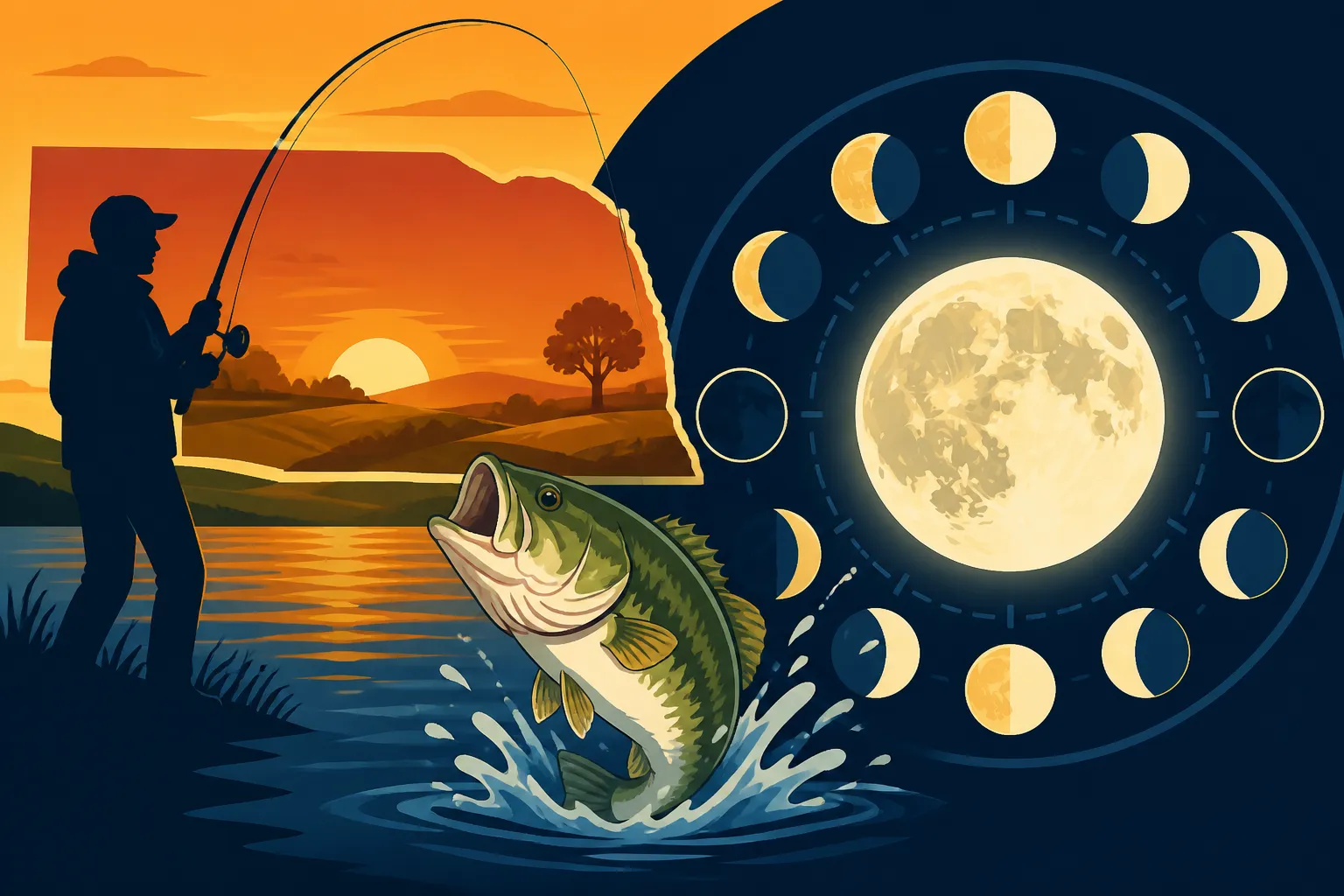
Here's a quick overview of how the major moon phases might generally influence fishing:
| Moon Phase | Light Level at Night | General Fish Activity (Theory) | Recommended Tactics |
|---|---|---|---|
| New Moon | Very Dark | Increased nocturnal feeding | Night fishing for catfish, shallow water during day |
| Waxing Crescent | Gradually Increasing | Consistent, steady feeding | Standard tactics, observe patterns |
| First Quarter | Half Lit | Steady to good feeding | Balanced approach, versatile lures |
| Waxing Gibbous | Brightening | Good, especially morning/evening | Aggressive presentations, deeper water daytime |
| Full Moon | Very Bright | Heavy nocturnal feeding, daytime sluggishness | Early/late bites, deep structure, heavy cover |
| Waning Gibbous | Dimming | Good, especially morning/evening | Similar to Waxing Gibbous, adaptable |
| Last Quarter | Half Lit | Steady to good feeding | Consistent effort, focus on prime times |
| Waning Crescent | Gradually Dimming | Consistent, steady feeding | Standard tactics, watch for shifts |
Note: This table represents general theories and anecdotal evidence. Actual results can vary greatly based on other factors.
Practical Tips for Fishing Each Moon Phase in Nebraska
Understanding the theories is one thing, but knowing how to apply them to your actual fishing trips on Nebraska's waters is where the magic happens. Let's dig into some actionable strategies for each phase, keeping in mind that flexibility is always your best friend.
Maximizing Your Chances During the New Moon
When the new moon casts its darkest spell, that's often your cue to think about night fishing, especially if you're after those hard-fighting channel catfish or flatheads. With minimal natural light, these fish feel bolder moving into shallower water to feed. This is when your glow-in-the-dark baits, or baits with strong scents, really shine. Consider fishing areas with less pressure, like quiet coves on Harlan County Reservoir or slow-moving bends of the Elkhorn River. A common frustration is going out during the day of a new moon and finding things slow; remember, the fish might have been feasting all night! If you must fish during the day, focus on early mornings or late evenings as transitional periods, and try slow presentations near cover or structure where fish might be resting. You can find more specific tips for catching these nocturnal giants in our guide on How to Catch Catfish in Nebraska.
Adapting to the Full Moon's Glow
The full moon, with its bright nights, often requires a different approach. If you're a walleye enthusiast, you might find that the fish are actively feeding under the moonlight, making the daytime bite a bit tougher. When the sun is high and bright, try targeting deeper humps, points, and drop-offs. Walleye might retreat to these cooler, darker zones to escape the light and rest. Use slower presentations, jigs tipped with minnows, or deep-diving crankbaits that mimic a tired baitfish. Early morning and late evening remain prime times, as fish transition from their nighttime activities. For those targeting species like trout in Lake Ogallala, the full moon can make them more wary in clear, shallow waters, so consider using lighter lines and more natural presentations. Remember, sometimes the "best" time to fish around a full moon is often when the moon isn't directly overhead or at its brightest.
Strategies for the Quarter Moons
The first and last quarter moons are often seen as more predictable and consistent fishing periods. These phases offer a moderate amount of moonlight, which means fish aren't experiencing the extreme highs and lows of light levels. This is a great time to stick to your tried-and-true methods. If you've had success with specific lures or techniques at a particular spot on Branched Oak Lake or Lewis and Clark Lake, chances are they'll continue to produce.
During these phases, fish might be more willing to bite throughout the day, not just during specific low-light windows. This offers a fantastic opportunity to really dial in on patterns. Pay close attention to other factors like wind direction, water temperature, and barometric pressure, as these will likely have a more pronounced impact on activity than the moon itself. It's an excellent time for multi-species anglers to explore different techniques for Walleye Fishing in Nebraska or even go after crappie around brush piles.
Species-Specific Moon Phase Considerations
Different fish species react differently to light and lunar cycles.
- Walleye: As mentioned, these keen-sighted predators can be highly active under a full moon at night. During the day, they might be deeper or less aggressive. A new moon, conversely, might mean more consistent daytime action as they haven't been "up all night." For comprehensive walleye strategies, check out our guide on How to Fish for Walleye in Nebraska.
- Catfish: Channel catfish and flatheads are classic nocturnal feeders. The darker the night (new moon), the better for night fishing. They use scent and vibration more than sight, so light isn't as critical as for walleye.
- Bass: Largemouth and smallmouth bass tend to be visual predators active during daylight hours. Extreme full moon brightness might push them into heavier cover or deeper water during the brightest parts of the day. More moderate light, typical of quarter moons or even during the new moon's daytime, often brings consistent action, especially during peak seasons like Spring Fishing in Nebraska.
- Crappie: These panfish are often found around structure. While they can feed at night, particularly during a full moon, they are often a daytime target. Their movements might be subtly influenced by light, pushing them deeper or tighter to cover in very bright conditions.
Ultimately, while the moon phase gives you a general idea, remember that every day on the water is an opportunity to learn and adapt. There's no single magic bullet, but combining these lunar insights with your local knowledge can certainly give you an edge.
Combining Moon Phases with Other Factors for Success
Look, relying solely on moon phases to plan your Nebraska fishing trips is like trying to drive a car with only one wheel. It might work sometimes, but you'll probably end up spinning your tires more often than not. The moon is just one piece of a much larger, more complex puzzle. For true success on the water, you've got to consider how lunar influences interact with other critical environmental factors.
The Critical Role of Barometric Pressure and Weather
If there's one factor that most seasoned Nebraska anglers will tell you trumps the moon, it's barometric pressure and the associated weather. Think about it: a stable, high-pressure system often means clear skies, comfortable temperatures, and, generally, more active fish. Suddenly, a cold front rolls in, the barometer plummets, and fishing often shuts down, regardless of what phase the moon is in. Fish can feel these changes in pressure, and it impacts their swim bladder, their comfort, and their willingness to feed.
It’s a frustration we all share. You've cleared your schedule for a fishing day, the moon phase is perfect according to your app, but a huge storm front is moving in. More often than not, that approaching front, or the stable weather before it, will dictate the bite far more than the sliver of moon in the sky. Our guides on How Barometric Pressure Affects Fishing in Nebraska and Nebraska Fishing Weather and Barometric Pressure Tips delve much deeper into this, and I highly recommend you read them to understand just how crucial this element is.
Water Temperature, Clarity, and Current
Beyond the weather, the actual conditions of the water itself are paramount.
- Water Temperature: This is a huge one. Every fish species has an optimal temperature range for feeding and comfort. Walleye, for instance, might be active at 50-65°F. If the water is suddenly too cold (after a cold snap) or too hot (during a summer heatwave), their activity will decrease, no matter what the moon is doing. You won't find many fish biting when they're simply trying to survive.
- Water Clarity: Clear water means fish can see better, which can make them more wary. Murky water, on the other hand, might make them rely more on scent and vibration. A full moon in clear water could mean fish are easily spooked, whereas in stained water, the lunar phase might have less impact.
- Current: For river fishing, especially on the Missouri or Platte, current is king. Fish position themselves in relation to current to conserve energy and ambush prey. Strong current, low current, or changing current due to dam releases or heavy rains will often dictate where fish are holding and whether they're feeding, overshadowing any moon phase influence. This is especially true for species like catfish.
These physical water conditions are immediate and directly affect fish comfort and feeding opportunities.
Time of Day and Seasonal Patterns
Even within a single day, the time you choose to cast your line often matters more than the moon phase. "Best Time of Day to Catch Walleye in Nebraska" will confirm that dawn and dusk are almost universally productive, regardless of the lunar cycle. These low-light periods offer fish a natural advantage, and they align with their natural biological rhythms.
Furthermore, fishing is profoundly seasonal. "Nebraska Fishing Seasons Explained" is a must-read for any angler. Fish behavior changes drastically from "Spring Fishing in Nebraska" as fish move to spawn, to "Summer Fishing in Nebraska" when they seek cooler, deeper water, and then again into "Fall Fishing in Nebraska" for pre-winter feeding, and finally "Winter Fishing in Nebraska" with ice fishing tactics. You wouldn't use summer techniques during winter, even if the moon phase was theoretically perfect for a bite. These broader seasonal patterns often override subtle lunar influences.
Local Knowledge and Experience
Ultimately, there's no substitute for being on the water and understanding your specific fishing spot. The best fishing spot near Omaha, like Standing Bear Lake, might have different nuances than a remote sandpit pond. What works on Lake McConaughy for walleye might not apply to Merritt Reservoir. Log your trips! Pay attention not just to the moon phase, but to the air temperature, water temperature, wind, pressure, cloud cover, and specific techniques that worked (or didn't).
Over time, your personal experience and detailed logbooks will become your most valuable resource, far more reliable than any generic moon phase calendar. This local knowledge, combined with reliable gear you can find on Amazon, will give you the edge. Our guide on the Best Places to Fish in Nebraska offers a great starting point, but the real wisdom comes from spending time out there, rod in hand.
Common Myths and Realities of Moon Phase Fishing
The world of fishing is rich with folklore, old wives' tales, and age-old wisdom passed down through generations. Moon phase fishing is certainly one of those topics where the lines between established science, anecdotal evidence, and outright myth can get incredibly blurry. It's important to approach it with an open mind, but also a healthy dose of realism.
Separating Fact from Anecdote
Let's be honest, there isn't a mountain of peer-reviewed scientific studies definitively proving that fish bite better during specific moon phases in freshwater environments. The scientific community generally points to factors like barometric pressure, water temperature, light levels, and spawning cycles as far more influential. Yet, walk into any bait shop in Nebraska, chat with an old-timer by the docks at Lake Wanahoo, or scroll through fishing forums, and you'll find countless anglers who swear by moon phases.
Are they all wrong? Not necessarily. What's often at play here is a combination of observational bias, selective memory, and the fact that moon phases are correlated with other factors. For example, a full moon often means clear skies, which can coincide with stable high-pressure systems – conditions that do often lead to good fishing. An angler might attribute the good fishing to the full moon, when it was actually the stable weather. It's easy to remember the times it worked out and forget the times it didn't. This isn't to say that moon phases have no effect, but rather that their direct, isolated impact is often overblown when compared to more tangible environmental variables.
The "Major and Minor" Feeding Times Myth
Many moon phase calendars and apps you'll find online, or even books you might pick up on Amazon, will highlight "major" and "minor" feeding times based on the moon's position relative to the Earth. These are often rooted in Solunar Tables, a theory developed by John Alden Knight in the 1920s, which suggests that fish and game activity peaks when the moon is directly overhead or directly underfoot (major periods), and when the moon is halfway between those points (minor periods).
While these tables are widely published and certainly generate interest, their predictive accuracy for freshwater fishing is highly debated. There's little scientific evidence to support consistent, predictable spikes in feeding activity precisely at these Solunar times across all species and conditions. Again, a "major" feeding period might coincide with dawn or dusk, which are naturally productive times anyway. It's difficult to isolate the moon's specific influence from these other, stronger factors. Some anglers find them useful for planning, others see them as pure superstition. The reality probably lies somewhere in the middle: they might offer a very subtle nudge in activity, but they won't make fish bite when all other conditions are against you.
Why It's Still Worth Considering
So, if the science is shaky and it's full of myths, why even bother with moon phases? Because for many anglers, it adds another layer of intrigue, strategy, and connection to the natural world. Fishing isn't just about catching fish; it's about the experience, the anticipation, and the continuous learning.
- Adds a planning dimension: Even if it's just a subtle nudge, knowing the moon phase can help you think about how fish might be behaving. Are they likely to be feeding at night? Should I focus on low-light periods? This thought process sharpens your overall angling skills.
- Helps you adapt: If the full moon theory suggests fish will be sluggish during the day, it might prompt you to try deeper water, slower presentations, or shift your focus to early mornings. This adaptability is key to success regardless of the moon.
- It's tradition: For many, checking the moon phase is part of the ritual, a way to connect with the wisdom of those who came before us. And there's nothing wrong with that!
Think of moon phases as a complementary tool, not the primary blueprint. They can offer a slight edge or guide your thought process, but they should never override more immediate and impactful factors like the weather, water conditions, and your intimate knowledge of a particular Nebraska fishing hole. Use them to inform your strategy, but always be ready to adapt to what the fish are actually telling you on any given day.
Disclaimer
Please remember that fishing success depends on many factors, including weather, water conditions, angler skill, and fish behavior. While moon phase theories are widely discussed, their scientific backing for freshwater fishing is often limited. Always prioritize safety, follow all Nebraska Fishing Regulations Explained, and use your best judgment on the water.