What Fall Turnover Means for Fishing
There's nothing quite as frustrating as heading out to your favorite Nebraska fishing spot in early fall, expecting the fish to be biting, only to find the bite has completely shut down. One day they're there, the next they've vanished into thin air, and you're left scratching your head, wondering what went wrong. This phenomenon, often mysterious to many anglers, is usually the result of "fall turnover," a natural process that dramatically changes how fish behave and where they can be found. This guide is here to unravel the mystery of fall turnover, explain what it means for your fishing success, and equip you with the strategies you need to keep catching fish even when the lake feels like it's been turned upside down.
Understanding the Autumn Lake Shuffle: What is Fall Turnover?
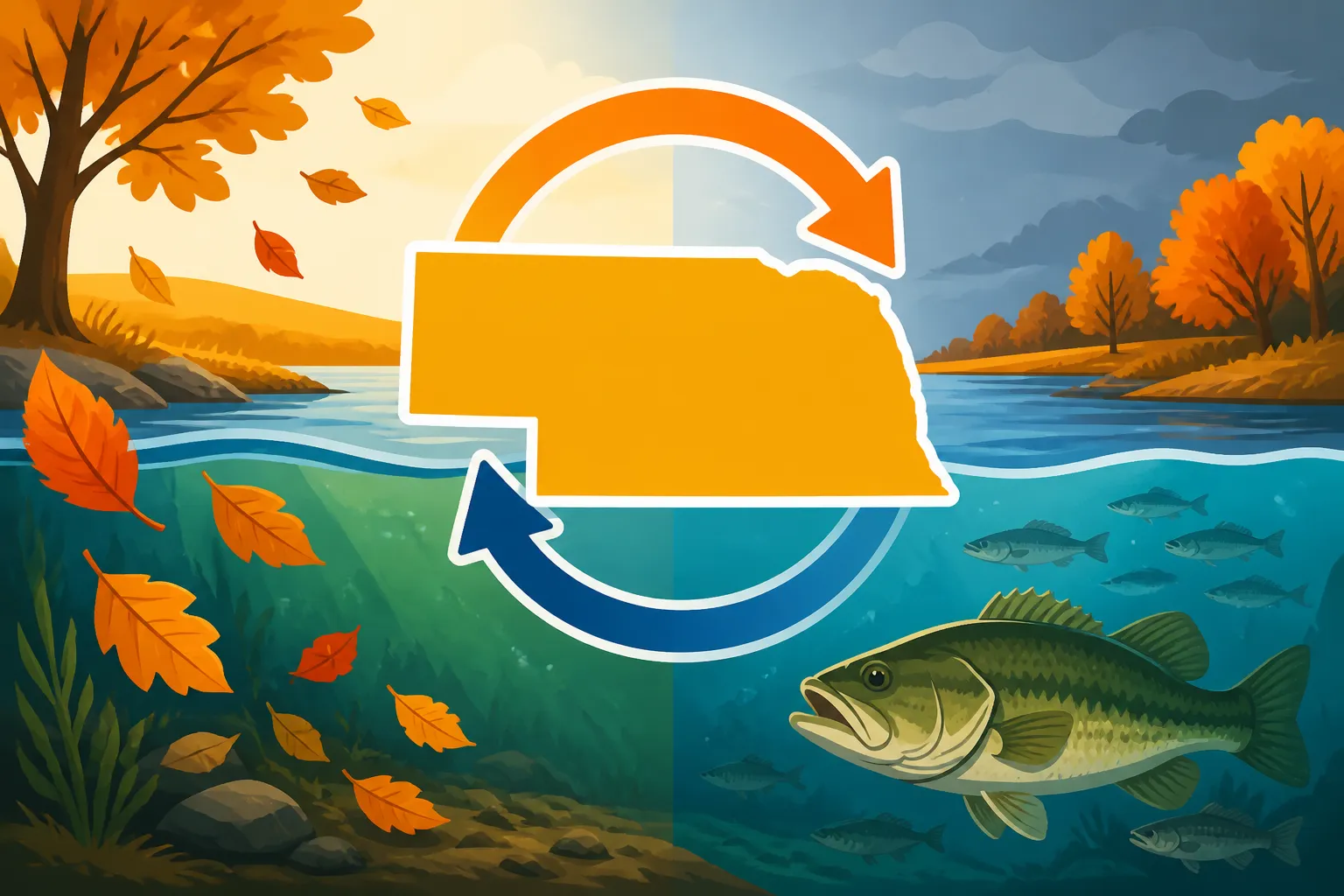
Fall turnover is a critical natural process that occurs in most temperate lakes and reservoirs, including many of those we love to fish right here in Nebraska. It's essentially the lake "mixing itself up," and it happens when the cooler autumn air starts to chill the surface waters. While it might seem like a small detail, this environmental shift has huge implications for where fish live and how they feed.
The Summer Stratification: Layers of Life
To truly grasp fall turnover, we first need to understand what happens in a lake during the summer months. Throughout summer, lakes typically form distinct layers based on temperature and density, a process called thermal stratification.
- Epilimnion: This is the uppermost layer, warmed by the sun. It's the least dense, richest in oxygen, and where most of the plankton and active fish life thrive during summer. Think of it as the comfortable, top-floor apartment.
- Thermocline: Below the epilimnion is the thermocline, a transitional layer where the temperature drops rapidly with increasing depth. Fish often hang out here, seeking a balance between warmer water and cooler, more oxygenated depths. It's like the quiet, climate-controlled middle floor.
- Hypolimnion: The deepest layer, the hypolimnion, remains cold and dense, often with significantly lower oxygen levels as summer progresses due to decomposition of organic matter on the bottom. For most game fish, this area can become a "dead zone" or at least a very uncomfortable place to be. It's the stuffy, unused basement apartment.
This stratified structure dictates where fish can comfortably live. During summer, anglers often target the thermocline or the edges of vegetation in the epilimnion, knowing that's where the best oxygen and food are. But as the seasons change, so does this carefully balanced system.
The Mechanics of the Mix: How it Happens
As the days shorten and the nights grow colder in late summer and early fall, the surface water (epilimnion) begins to cool down. Water is densest at about 39 degrees Fahrenheit (4 degrees Celsius). As the surface water cools, it becomes denser and heavier.
Eventually, this cooler, heavier surface water sinks, displacing the warmer, lighter water below it. This sinking action creates currents that slowly but surely start to break down the distinct layers of the lake. The once-stable thermocline weakens and eventually disappears entirely. The entire water column begins to mix, from top to bottom. This complete mixing of the lake's water is what we call "fall turnover."
Imagine stirring a giant pot of soup; that's essentially what's happening in the lake. It's not usually a violent, sudden event, but a gradual process that can take days or even weeks depending on the size and depth of the lake, and how quickly the air temperatures drop. Shallow ponds and smaller lakes might turn over quickly, sometimes in a matter of days after a cold snap, while massive reservoirs like Lake McConaughy might have a more prolonged or subtle turnover period.
The Angler's Headache: How Turnover Affects Fishing
So, the lake mixes. What's the big deal for fishing? Well, this seemingly simple event completely reshuffles the deck for fish, affecting their location, their metabolism, and their willingness to bite. It's the reason why your reliable summer spots might suddenly become barren.
Dispersal of Fish and Food Sources
One of the most immediate impacts of fall turnover is the dispersal of fish. During summer, fish are concentrated in areas with optimal temperature and oxygen – typically the epilimnion and thermocline. When turnover occurs, the entire water column becomes a more uniform temperature and oxygen level.
This uniformity removes the primary reason for fish to "stack up" in certain layers. Suddenly, they can go anywhere. This means they often scatter, moving into areas they wouldn't normally inhabit during summer. Baitfish also scatter, no longer needing to hold to specific depths for comfort or food. When the baitfish spread out, the predatory game fish that follow them have to work harder to find food, leading to more erratic feeding patterns. This is often why anglers report fish "disappearing" from their usual haunts.
Changes in Water Quality and Clarity
During turnover, the anoxic (low oxygen) or even anaerobic (no oxygen) water from the hypolimnion is brought to the surface. This can lead to a noticeable change in water quality. The lake might appear murkier, and you might even detect a sulfurous, "rotten egg" smell in some areas, caused by gases released from the decaying organic matter on the bottom.
This decrease in clarity can affect fishing in a couple of ways. Fish might rely more on their lateral lines and sense of smell rather than sight. Anglers, in turn, might need to adjust their lure colors or presentations to something more visually appealing in murky water, or use baits that have a stronger scent. Often, brighter or more contrasting colors become more effective, or lures that create more vibration.
Fish Behavior and Metabolism
The sudden changes in temperature and oxygen, even if they stabilize quickly, can temporarily stress fish. This stress often leads to a period of reduced activity and feeding. Fish might become lethargic, less aggressive, and simply not interested in chasing down a lure.
This can be incredibly frustrating for anglers who are used to more predictable bites. It's not that the fish aren't there; it's that their immediate priorities have shifted from feeding to adjusting to their newly mixed environment. For species like walleye, which are already sensitive to environmental changes, this period can be particularly tough. For a deeper dive into walleye behavior, check out our guide on Walleye Fishing in Nebraska.
Navigating the Turnover: Strategies for Success
While fall turnover can be challenging, it's not a reason to pack away your rods! It's an opportunity to adapt your approach and learn new techniques. By understanding what's happening beneath the surface, you can develop strategies to keep catching fish during this tricky transition.
Location, Location, Location: Finding the Fish
When the main lake is turning over, fish often seek out areas that are less affected by the dramatic changes. These "refuge" areas become hotspots.
- Shallow Bays and Flats: These areas are generally shallower and warm up and cool down faster, meaning they don't stratify as intensely and often turn over earlier or more subtly. Fish might move into these areas for more stable conditions and to find baitfish seeking the same. Look for weed beds, submerged timber, or even rocky points in these shallower zones.
- Inflows and Outflows: Rivers, creeks, or even large culverts that feed into the lake can provide a continuous flow of fresh, oxygenated, and often clearer water. Fish will congregate near these areas, finding comfort and often active baitfish being washed in. The water temperature here might also be more stable.
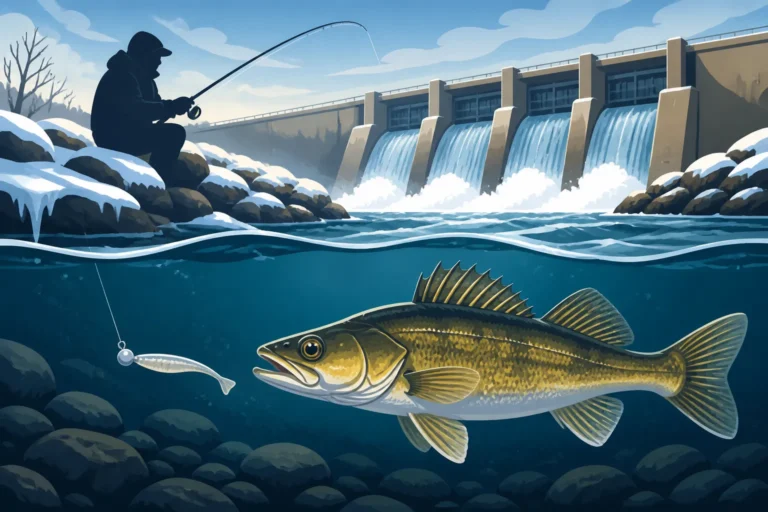
- Dam Areas: Below dams or near spillways, the constant flow of water can also create more stable and oxygen-rich environments. These are natural fish attractors during periods of turnover. However, always be mindful of specific regulations for fishing below dams.
- Wind-Blown Banks: A consistent wind can push warmer surface water and baitfish towards one side of the lake, concentrating both food and predators. These wind-blown banks can be excellent places to target.
- Depth Transitions: Look for fish moving along steep drop-offs, breaks, and channel edges, particularly as they start to settle into their post-turnover patterns. You might find them suspended at new depths or hugging contours they ignored during summer. Using your fish finder, perhaps one you picked up on Amazon, can be crucial for identifying these depth transitions and new holding patterns.
Techniques and Lure Choices: Adapting Your Approach
During turnover, you might need to slow down your presentation or use lures that create more vibration or scent.
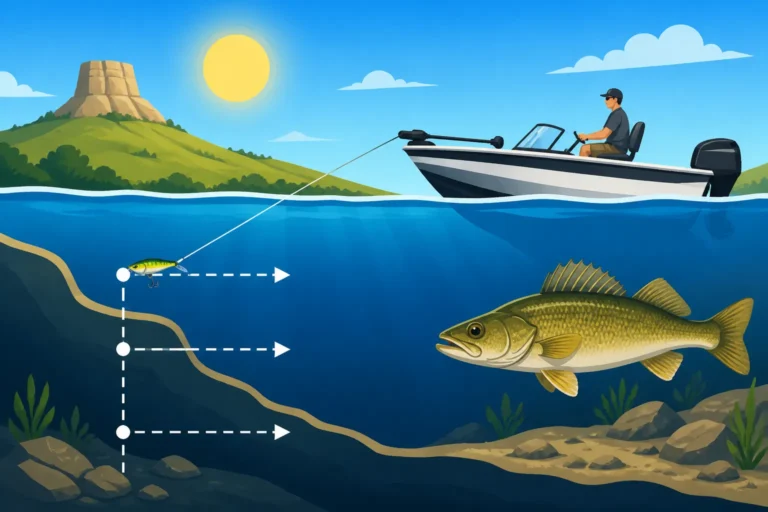
- Slow Presentations: Fish are often less aggressive, so a slow, methodical retrieve can be more effective than a fast-paced one. Jigs, Carolina rigs, or even live bait presentations become go-to options. Experiment with different weights to ensure your bait stays in the strike zone longer.
- Vibrating and Scented Lures: In murky water, lures that create strong vibrations, like lipless crankbaits or spinnerbaits, can help fish locate them. For catfish, which rely heavily on smell, scented baits or cut bait become even more potent. Our guide on Best Lures for Nebraska Bass also highlights some excellent options for vibrations.
- Live Bait: There's no substitute for the real thing when fish are finicky. Minnows, shiners, nightcrawlers, or leeches can often entice a bite when artificial lures fail. Fishing them under a bobber or on a simple bottom rig in those refuge areas can be incredibly effective.
- Power Fishing: Sometimes, the opposite approach works too. If fish are scattered, covering a lot of water quickly with search baits like crankbaits or spinnerbaits can help you find those actively feeding fish that are less affected by the turnover. You can find a huge variety of these on Amazon for quick delivery.
Here's a quick comparison of strategies during different phases:
| Phase | Water Conditions | Fish Behavior & Location | Recommended Strategy |
|---|---|---|---|
| Pre-Turnover | Stratified (Warm surface, cold deep, clear) | Concentrated near thermocline, structure, weed lines | Deep cranking, jigging thermocline, working weed edges, vertical presentations |
| During Turnover | Murky, uniform temperature/oxygen, potentially sulfur smell | Scattered, lethargic, seeking stable water (inflows, shallows) | Slow presentations, scented baits, vibrating lures, focus on shallow bays, inflows, dam areas, wind-blown banks |
| Post-Turnover | Clearer, uniform temperature/oxygen, cooler | Recovering, actively feeding, moving to main lake structure | Resumed aggressive feeding, target main lake points, humps, deep breaks; can be fantastic fishing! |
Reading the Signs: Knowing When It's Happening
You can often tell when a lake is in the throes of turnover or has recently completed it. Keep an eye out for these indicators:
- Uniform Water Temperature: If you have a fish finder with a temperature gauge, you'll notice the temperature reading staying consistent as you drop your transducer deeper. This is a tell-tale sign that stratification has broken down. For more on using your electronics, check out our guide on How to Read a Fish Finder for Walleye.
- Murky Water: As mentioned, the water often becomes cloudy or discolored as the bottom sediments and organic matter are stirred up.
- Unpleasant Odors: A distinct "rotten egg" smell (hydrogen sulfide gas) emanating from the water, especially in sheltered coves, is a strong indicator of gases released from the deoxygenated hypolimnion.
- Debris on the Surface: You might see more suspended debris, leaves, or even mats of decaying algae on the surface, brought up from the depths.
- Erratic Fishing Success: The most obvious sign for anglers is a sudden, inexplicable drop in success, followed by fish that are hard to locate or unwilling to bite.
Knowing these signs will help you prepare and adjust your fishing plans rather than blindly casting into unproductive waters. This knowledge is key to successful Fall Fishing in Nebraska.
Beyond the Mix: Post-Turnover Potential
While the "during turnover" phase can be challenging, the period immediately after turnover can offer some of the best fishing opportunities of the year. Once the lake has fully mixed and settled, the water is uniformly oxygenated and at a cooler, consistent temperature throughout.
Fish are no longer stressed by the mixing and have the entire water column to roam. They'll also be actively feeding to build up reserves for winter. This is when main lake points, humps, deep breaks, and channel edges become prime targets. Fish, like the abundant Channel Catfish Fishing in Nebraska, often move to these areas, sometimes in large schools, making them easier to locate with your electronics.
The clearer, cooler water often triggers aggressive feeding periods for many species. This post-turnover period, lasting until ice forms, is often considered one of the most productive seasons by experienced anglers. It’s also a fantastic time to use a variety of techniques, as fish can be found at various depths and structures. Consider trying different approaches detailed in our Best Nebraska Fishing Techniques by Season guide.
Remember, fishing is all about adapting. Fall turnover might throw a wrench in your usual plans, but with a bit of understanding and a willingness to try new tactics, you can turn a potentially frustrating period into a rewarding angling experience. Make sure your Best Fishing Gear for Nebraska Anglers is ready for these seasonal shifts. And don't forget to check the forecast for stable weather patterns, which are always a plus for fishing, as discussed in our Nebraska Fishing Weather and Barometric Pressure Tips post.
Disclaimer
This article is for general informational purposes only and does not constitute professional advice. Laws, prices and regulations vary by location and change over time. Consult a qualified professional for guidance on your specific situation.