How to Find Walleye on Deep Humps and Points
That frustrating feeling when you’re out on the lake, staring at a seemingly barren expanse of water, knowing the walleye are somewhere but just can’t seem to find them? It’s a common experience, especially when these cunning fish decide to retreat from obvious shallow spots. This guide is your roadmap to consistently locating and enticing walleye holding on those elusive deep humps and points in Nebraska's reservoirs, transforming your fishing frustrations into triumphant hauls.
The Allure of Deep Humps and Points for Walleye
Walleye have a reputation for being finicky, and a big part of that comes from their tendency to shift locations based on environmental factors. Once you understand why they move to deeper structures, finding them becomes less of a mystery and more of a strategic hunt.
Why Walleye Gravitate to Deeper Structure
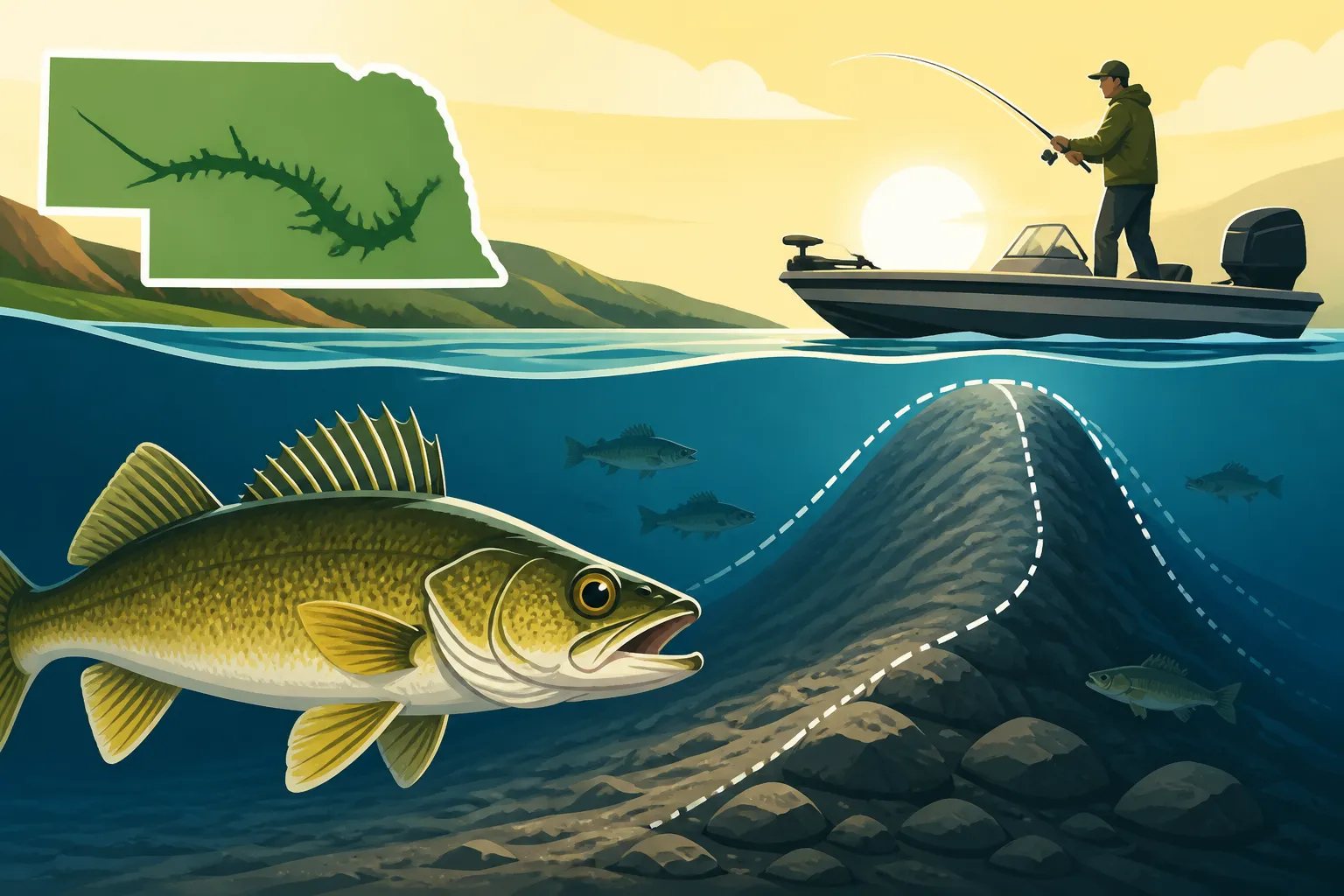
We often picture walleye hugging shallow weed lines or rocky shorelines, especially in the spring or late fall. But as the seasons progress, particularly when the Nebraska sun beats down in summer, those shallow areas can become uncomfortable and unproductive. Deep humps and points, which are essentially underwater hills or projections extending from the shoreline, offer walleye a sanctuary. Here, they find more stable, cooler water temperatures—a critical factor for their comfort and metabolism. Imagine trying to sprint in ninety-degree heat; walleye feel similar in overly warm water. Deeper water allows them to conserve energy and remain active.
Beyond temperature, these structures are often magnets for baitfish. Shad, smelt, and shiners also seek out these deeper zones, creating a consistent food source. So, a deep hump isn't just a place for walleye to rest; it's a bustling underwater cafeteria. They can hold in the comfort of deeper water, moving up onto the tops or edges of the structure to ambush unsuspecting prey. This behavior pattern is a cornerstone of understanding what the Best Time of Day to Catch Walleye in Nebraska truly means. If you've been flailing in shallow water when the sun is high, now you know why the deep bite can be so much more consistent.
Identifying Key Features of Productive Deep Structure
Not every underwater bump is a walleye hotspot. Successful anglers learn to differentiate between ordinary bottom contours and truly productive deep structures. You're looking for specific characteristics that scream "walleye habitat." Proximity to a main lake basin is paramount; walleye want quick access to deeper safety zones. A hump that rises from 40 feet to 20 feet on a major reservoir like Lake McConaughy, especially if it's close to the main river channel, is far more appealing than a similar hump in a shallow, isolated cove.
Beyond depth access, look for irregularities on the structure itself. These are the subtle nuances that create ambush points and shelter. Think about rock piles, submerged timber, subtle depressions on the top of a hump, or distinct transitions from hard bottom (gravel, rock) to soft bottom (mud, sand). These "transition zones" often concentrate baitfish and, consequently, walleye. Even subtle current breaks, common in larger reservoirs, can push baitfish against one side of a point, creating an easy feeding lane for waiting predators. These are the secrets to uncovering prime areas when you're learning How to Find Walleye on Deep Humps and Points. Taking the time to study a detailed contour map, or even just idling over prospective areas, will reveal these critical features.
Essential Electronics for Uncovering Deep Walleye
In the world of deep walleye fishing, your boat’s electronics aren't just helpful; they're absolutely indispensable. Trying to consistently locate these fish on deep humps and points without a good fish finder is like searching for a tiny hidden treasure without a map – you might get lucky, but you’ll mostly just get frustrated.
Mastering Your Sonar and Down Imaging
Your 2D sonar is your primary window into the underwater world directly beneath your boat. Learning to interpret its signals is a skill that directly translates to more fish in the livewell. First, ensure your sensitivity is set correctly; too low, and you'll miss fish; too high, and you'll get too much clutter. Look for distinct "arches" near the bottom or suspended just above structure. These arcs represent individual fish. Walleye often hug the bottom tightly, so sometimes you'll see them as "hooks" or even just slight bumps on the bottom contour, especially if they're relating closely to a hard structure like rocks.
Down imaging, often integrated with modern fish finders from brands like Humminbird or Lowrance, provides a clearer, photo-like view of what's directly below. This technology excels at showing you the exact shape of a rock pile, a submerged tree, or even how tightly a school of baitfish is balled up. This visual detail helps you differentiate between a solid bottom contour and a fish lying right on it. Pay attention to the density of the bottom return: a thick, bright line usually indicates a hard bottom (rock, gravel), which walleye prefer, while a thinner, fuzzier line suggests a soft, muddy bottom. Understanding these nuances is crucial for truly learning How to Read a Fish Finder for Walleye.
Harnessing the Power of Side Imaging and Mapping
While 2D sonar and down imaging show you what's under your boat, side imaging (or side scan) revolutionizes how you search. This technology beams sonar out to the sides, allowing you to scan vast areas of the lake bottom from a single pass. Instead of driving directly over every square foot of a hump, you can idle along its perimeter, scanning hundreds of feet to either side, quickly identifying submerged points, rock reefs, old creek beds, and, most importantly, walleye relating to them. Imagine seeing a school of walleye tucked behind a submerged brush pile 70 feet to your port side – that's the kind of detail side imaging provides.
Combine this with high-definition lake mapping, like those from Navionics or LakeMaster, and you have an unbeatable system. Detailed contour maps provide the blueprint of the lake's bottom, showing you the shape and depth of every hump and point. You can pre-fish entire areas from your couch, marking potential hotspots with waypoints. Then, on the water, you use your side imaging to confirm the structure, locate baitfish schools, and pinpoint the exact position of walleye. When you find a promising spot, immediately mark it on your GPS. You'll thank yourself later when you need to return to that precise location. Many of these advanced fish finders and detailed mapping cards are readily available on platforms like Amazon, making this powerful technology accessible to serious anglers. This pairing truly is the ultimate tool for knowing How to Use Side Imaging Sonar for Structure.
Presentation Perfection: Targeting Deep Walleye
Once your electronics have done their job and you've identified those elusive walleye on deep humps and points, the real fun begins: getting them to bite. The right presentation can make all the difference between a tough day and a great one.
Vertical Jigging and Blade Baits
For walleye that are tightly schooled or holding directly on top of or along the sides of a deep structure, vertical jigging is often the most effective technique. This method involves dropping a jig, typically weighted between 3/8 and 1 ounce (depending on depth, wind, and current), directly down to the fish you've marked. The goal is to mimic a vulnerable baitfish or a crayfish scuttling along the bottom. Use a sensitive rod with a fast tip, preferably spooled with braided line and a fluorocarbon leader for maximum feel. Your retrieve should be a series of subtle lifts and drops, keeping the jig in constant contact with the bottom or hovering just inches above it. Sometimes, a "dead stick" technique, where you let the jig sit motionless for several seconds after a lift, can trigger hesitant bites. This is a foundational aspect of How to Jig for Walleye in Nebraska.
Blade baits are another phenomenal choice for vertical presentations to deep walleye, especially when fish are aggressive. Lures like the Heddon Sonar or various models from Johnson or Vibe are designed to vibrate intensely on the lift and flutter tantalizingly on the fall. Drop them quickly to the bottom, rip them up a foot or two with a sharp snap of the wrist, and then let them fall on a semi-slack line. Most strikes will occur as the bait descends. Experiment with different colors and sizes, but often chrome, gold, or firetiger patterns are productive. The key is to feel for that subtle "thunk" or "tick" as a walleye inhales the bait – it's rarely a violent strike in deep water.
Trolling Deep Diving Crankbaits and Crawler Harnesses
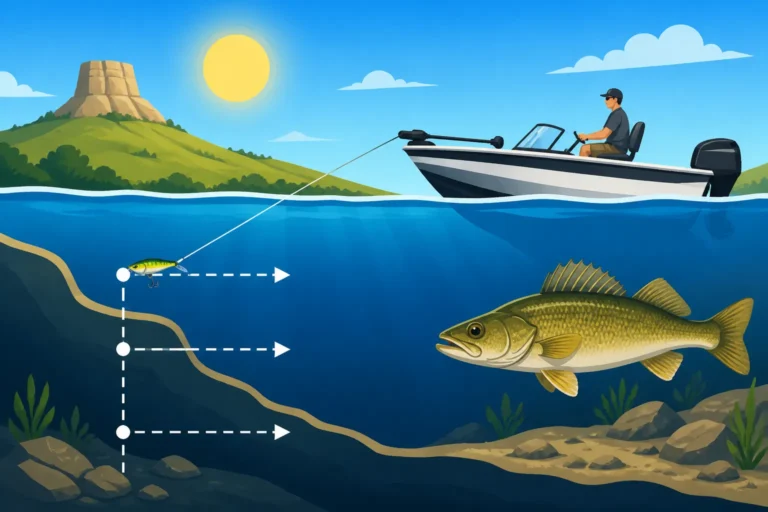
When walleye are more spread out across a large hump or point, or are actively cruising rather than holding tight to a specific piece of structure, trolling is an incredibly efficient way to cover water. Deep diving crankbaits are your go-to lure here. Brands like Rapala (Deep Husky Jerks, Shad Raps), Berkley (Flicker Shads), and Bandit (Walleye Deep) offer a wide range of colors and dive curves. Select a crankbait that will run at or just above the depth the walleye are holding. You want the lure to occasionally "tick" the bottom, stirring up a little commotion, which often triggers reaction strikes. Precision is key, so line counter reels are invaluable for knowing exactly how much line you have out. Varying your trolling speed (typically 1.5-2.5 mph) and making subtle S-turns can also increase strikes, as the lure's action changes with speed and direction. For more specific insights, consult a guide on Best Depth to Troll for Walleye in Summer.
Crawler harnesses are another deadly weapon for deep trolling, especially during the warmer months when walleye are actively feeding on crawlers and baitfish. These rigs typically consist of a spinner blade, beads, and two or three snelled hooks, often fished behind a bottom bouncer or an inline weight. Troll them slowly (0.8-1.5 mph) to allow the spinner to flash and vibrate while the nightcrawler, threaded onto the hooks, provides natural scent and action. The flash and vibration attract curious walleye, while the live bait seals the deal. You can find pre-tied crawler harnesses or the components to tie your own, including various blade colors and bead patterns, at many tackle shops or easily on Amazon.
Live Bait Rigs for Finesse Presentations
Sometimes, despite all your efforts, walleye can be incredibly finicky, especially after a cold front or in highly pressured, clear water. This is when finesse live bait presentations truly shine. The classic slip-sinker rig, often called a Lindy Rig, is hard to beat. It involves a walking sinker that slides freely on your main line, tied to a swivel, which then connects to a fluorocarbon leader (typically 3-6 feet) with a single hook. Present this rig slowly, either by drifting with the wind or current, or by back-trolling just fast enough to keep your bait moving naturally near the bottom.
The beauty of the slip-sinker rig is that when a walleye picks up the bait – be it a lively leech, a shiner minnow, or a plump nightcrawler – it can swim off without feeling the weight of the sinker. This allows the fish to fully commit to the bait before you feel the bite and set the hook. This technique requires patience and a keen sense of feel. You're not looking for a jarring strike, but often just a slight increase in weight or a subtle tap. For different species and conditions, always consider the Best Live Bait for Walleye at Lake McConaughy or other Nebraska waters. Experiment with hook sizes (often octopus or circle hooks in sizes 4-8 are good) to match your bait and ensure proper hook sets.
Seasonal Nuances and Environmental Factors
Walleye aren't robots; their behavior on deep humps and points is heavily influenced by the time of year and prevailing environmental conditions. Ignoring these factors can lead to an empty livewell, even if you’re on the right structure.
Adapting to Seasonal Walleye Movements
The "prime time" for deep walleye fishing often coincides with the summer months when surface waters are warm, pushing fish deeper for comfort and access to bait. After the spring spawn, walleye will often move off their spawning grounds to deeper holding areas, including humps and points, to recover and feed. This is when a deep strategy starts to really pay off. As summer progresses, and the thermocline (the layer where warm surface water meets cooler deep water) sets up, walleye will often orient themselves along this temperature break, especially if it intersects a deep hump or point. Knowing when the Nebraska Walleye Spawning Season ends can give you a head start on this deep-water transition.
Come fall, as water temperatures begin to drop, the lake undergoes a phenomenon known as "fall turnover." During this period, the water column mixes, and fish can be scattered and difficult to locate. Once turnover is complete and water temperatures stabilize, walleye often become incredibly active, making aggressive feeding forays on the tops and shallower edges of these structures, stocking up before winter. This is a fantastic time for the Fall Fishing in Nebraska bite. Even in winter, during ice fishing season, some deep humps can be productive, but the tactics, of course, shift dramatically. Understanding the broader Nebraska Fishing Seasons Explained will give you a significant advantage in predicting these movements.
The Impact of Weather, Wind, and Water Temperature
You can't control the weather, but you can certainly understand how it influences walleye. Wind is often an angler's best friend when chasing deep walleye. A consistent wind blowing across a deep point or hump will push surface water and, critically, baitfish onto the "wind-blown" side of the structure. This creates a current, stirs up the bottom, and can concentrate walleye into tighter feeding windows. Don't let a breezy day deter you; embrace it and target those wind-beaten sides!
Water temperature is another non-negotiable factor. As mentioned, warmer surface temperatures drive walleye deeper. Pay attention to sudden cold fronts. After a front, walleye often become lethargic and will hug the bottom tighter, requiring slower, more subtle presentations. Barometric pressure changes can also influence their mood; a dropping barometer before a storm can sometimes trigger an aggressive bite, while a rapidly rising barometer after a front often leads to a tougher bite. Always check the forecast and factor these elements into your game plan. Knowing the ideal Best Water Temperature for Walleye Fishing will help you dial in the depths and structures where fish are most likely to be active.
Disclaimer
The information provided in this guide is for general informational purposes only and is not a substitute for official regulations. Fishing regulations, license requirements, and safety guidelines can change frequently. Always consult the latest Nebraska Game and Parks Commission regulations booklet or their official website before heading out on the water. Stay safe and fish responsibly!