How to Fish a Trotline in Nebraska
There's a unique satisfaction that comes with checking a trotline and finding a stringer full of robust Nebraska catfish or other impressive non-game fish. While active rod-and-reel fishing has its place, trotlining offers an efficient, often hands-off method for anglers looking to put more fish in the freezer or simply enjoy the thrill of a different kind of angling. However, the world of trotlining in Nebraska is governed by specific rules and requires the right know-how to do it safely, legally, and effectively. This guide is here to walk you through everything you need to know, from regulations to setup, ensuring your trotlining adventures are successful and compliant.
Understanding Nebraska's Trotline Regulations
Before you even think about buying a trotline, it’s absolutely critical to familiarize yourself with Nebraska’s fishing regulations. The Nebraska Game and Parks Commission (NGPC) has clear and stringent rules regarding trotlines, and ignorance is definitely not an excuse if you find yourself facing a violation. These rules are in place to manage fish populations, ensure fair chase, and prevent overharvesting. Trust me, a day on the water can turn sour quickly if you're not squared away on the legalities.
Key Rules and Permit Requirements
First and foremost, you'll need a valid Nebraska fishing license. This is non-negotiable for anyone over the age of 16. You can find comprehensive details in the Nebraska Fishing License Guide. Once you have your permit, you're ready to delve into the specifics of trotlines. In Nebraska, trotlines are primarily permitted for taking certain species, specifically nongame fish like carp, buffalo, and freshwater drum, as well as channel catfish, flathead catfish, and bullheads. This means you can't just set a trotline out for walleye or bass; it's a specialized tool for a specialized catch.
A critical regulation to remember is that each trotline must be checked at least once every 24 hours. This isn't just a suggestion; it's a legal requirement designed to ensure fish don't suffer unnecessarily and that your lines aren't left as "ghost fishing" hazards. Furthermore, every single trotline you deploy must be clearly marked at both ends with a visible float, and each line needs to have a durable tag attached showing your name, address, and current fishing permit number. This allows conservation officers to identify the owner and enforce regulations. Getting caught without proper tagging or failing to check your lines can lead to significant Nebraska Fishing Violation Penalties.
It’s also vital to understand where you can and cannot set a trotline. Many federal reservoirs, state recreation areas, and areas within 200 yards of dam structures are off-limits. For example, popular spots like Branched Oak Lake or Lake McConaughy generally have restrictions on trotlines. Always consult the latest Nebraska Fishing Regulations Explained booklet or the GoOutdoorsNE Online Permit System resources for the most up-to-date information on specific water body restrictions. There might be unique local rules for certain sections of the Platte River Fishing Guide or the Missouri River Fishing in Nebraska, so always double-check.
Legal Trotline Specifications
Beyond the "who, what, and where," there are strict rules about the physical construction and deployment of your trotline. The state has a limit on the number of hooks and the overall length of your lines. You are typically allowed a maximum of 20 hooks per trotline, and an individual angler can deploy no more than five trotlines at any given time. This means if you're out with a buddy, you collectively could have up to ten lines, each with 20 hooks – that’s a lot of potential!
Another critical detail is that game fish cannot be used as bait on a trotline. This rule is designed to protect valuable game fish species. So, while a freshly caught crappie might seem like ideal bait for a big flathead, it's illegal. You'll need to stick to legal baits like cut bait, shad, or prepared baits, which we'll discuss more shortly. Any fish caught on your trotline, even legal species like channel catfish or flathead catfish, must still adhere to the statewide Nebraska Channel Catfish Daily Limit and Nebraska Catfish Bag Limits. No matter how you catch them, the limits are the same.
To give you a clearer picture, here's a summary of the general trotline specifications in Nebraska:
| Specification | Requirement |
|---|---|
| Valid Permit | Required for all anglers 16 years and older. |
| Target Species | Nongame fish, channel catfish, flathead catfish, and bullheads ONLY. |
| Number of Lines | Maximum of 5 trotlines per angler. |
| Number of Hooks | Maximum of 20 hooks per trotline. |
| Line Length | Generally no specific length limit, but practical limits apply based on water body and deployment. |
| Marking | Each end of the trotline must have a visible float. |
| Tagging | Each trotline must have a durable tag with angler's name, address, and permit number. |
| Check Frequency | Must be checked at least once every 24 hours. |
| Bait | No game fish are allowed as bait. |
| Restricted Areas | Prohibited in many federal reservoirs, state recreation areas, and near dam structures (check specific regulations). |
Remember, always consult the official NGPC regulations annually, as rules can change. This table provides a good overview, but it’s not a substitute for the official document.
Essential Gear for Trotlining in Nebraska
Trotlining is a gear-intensive fishing method, but don’t let that intimidate you. Once you have the right setup, it’s a relatively straightforward process. Investing in quality gear from the start will save you headaches and lost fish in the long run. You want equipment that can stand up to the strong currents of a river, the weight of multiple heavy fish, and the general wear and tear of being left in the elements.
Choosing the Right Trotline and Line
The main line of your trotline needs to be incredibly strong and durable. Forget about typical monofilament or even braided fishing line you'd use on a rod. For trotlines, anglers usually opt for heavy-duty braided nylon or tarred trotline cord, often with a test strength in the hundreds of pounds. This stout line can withstand powerful fish, snags, and the forces of water currents. You can find a wide range of trotline kits and individual components on Amazon, or at local tackle shops specializing in commercial or heavy-duty fishing.
When selecting your main line, consider the environment where you'll be fishing. For areas with heavy cover or strong currents, lean towards thicker, more abrasion-resistant line. The length will depend on the water body. For a smaller creek, 50 feet might be plenty. For a wider stretch of the Platte River, you might need hundreds of feet.
The "stagings" or "gangions" are the shorter lines that connect your hooks to the main trotline. These should also be strong, but perhaps slightly lighter than your main line. Many anglers use a heavy monofilament (e.g., 80-150 lb test) or even a slightly lighter braided line for their stagings. The key is that they need to be strong enough to hold a fish but also short enough (typically 12-18 inches) to prevent tangling and to ensure the hook set is effective.
Selecting Hooks and Bait
For trotlining, especially for catfish, circle hooks are generally preferred. They are designed to hook fish in the corner of the mouth, leading to fewer gut-hooked fish and higher survival rates for released fish. They also tend to stay put once a fish is on, reducing the chance of lost fish. Sizes typically range from 5/0 to 9/0, depending on the size of the catfish you're targeting. Larger hooks are great for flatheads, while slightly smaller ones work well for channel cats. Good quality hooks, like those from reputable brands often found on Amazon, are a must. Don't skimp on hook quality, as a dull or weak hook can quickly lead to frustration.
Now, for the delicious part – bait! As mentioned, game fish are off-limits. However, you have plenty of effective options. For channel catfish, cut bait is king. Fresh shad, carp, or even small chunks of bluegill (if caught legally and not used as game fish bait in restricted ways) work wonders. Many anglers swear by specialized catfish baits available on Amazon, like stink bait or prepared dough baits, which disperse scent widely. Chicken liver is another classic, though it can be messy and falls off hooks easily.
For flathead catfish, live bait is usually the most effective, but since you can't use game fish, consider live bluegill, sunfish, or carp (if legal size and obtained legally as baitfish) where regulations allow. Just remember the "no game fish as bait" rule applies to trotlines. For a general "How to Catch Catfish in Nebraska" strategy, live bait is often superior for flatheads, but for trotlines, cut bait can still be highly effective. Understanding the Best Bait for Nebraska Catfish is crucial for maximizing your catch.
Anchors, Floats, and Additional Equipment
You'll need reliable anchors to keep your trotline firmly in place, especially in rivers with strong currents or reservoirs prone to wind. Heavy items like concrete blocks, bricks, or specialized trotline anchors are ideal. The weight will depend on the size of your trotline and the water conditions, but plan on at least 10-20 pounds per anchor for each end of a longer line.
Floats are essential for marking your trotline and making it visible for retrieval and to other boaters. Brightly colored buoys or even repurposed plastic bottles (marked with your name/permit number) can work. Just make sure they're sturdy, highly visible, and large enough to support the line without submerging, especially if you catch a few big fish. You can easily find these floats and suitable anchor weights on Amazon.
Beyond the basics, consider these additional items:
- Gloves: Heavy-duty, puncture-resistant gloves are a lifesaver when handling hooks, bait, and especially feisty catfish.
- Pliers/Hook Remover: A good pair of long-nosed pliers or a specialized hook remover will make unhooking fish much safer and easier.
- Knife: For cutting bait or line if needed.
- Net/Gaff: For landing larger fish safely.
- Cooler: To keep your catch fresh.
- Headlamp/Lantern: If you're setting or checking lines at dawn, dusk, or in the dark. This is essential, particularly if you're looking into How to Fish Overnight for Catfish.
- Measuring Tape/Scale: To ensure you're within bag and length limits for species like channel catfish.
Step-by-Step Guide to Setting Up a Trotline
Setting up a trotline might seem daunting at first, but with a bit of planning and practice, it becomes second nature. The key is to be methodical, safe, and efficient, especially when dealing with multiple hooks and potentially strong currents.
Scouting the Best Locations
Location, location, location! Just like with any other fishing method, where you place your trotline makes all the difference. For catfish, think about their natural habitats. They love structure, current breaks, and areas where food funnels through.
- Rivers: Look for deep holes, outside bends where current carves out deeper channels, submerged log jams (if permitted and you can retrieve your line safely), and areas downstream from tributaries that wash in food. The Platte River and Missouri River offer excellent opportunities, but remember to adhere to specific local regulations for those waterways.
- Reservoirs/Lakes: In larger bodies of water, focus on creek channels, old riverbeds, submerged humps, points that extend into deeper water, and areas with significant timber or rock piles. Catfish often cruise these structures looking for food.
Before deploying, consider access and safety. Can you easily reach both ends of your line to anchor and retrieve it? Will it be in an area that interferes with navigation for other boaters? Always scout your spot, preferably in daylight, to identify potential snags or hazards that could make retrieving your line a nightmare.
Deploying and Anchoring Your Trotline
This is where the real work begins. Many anglers prefer to deploy trotlines from a boat, as it offers the most control and ease, especially for longer lines.
- Anchor One End: Start by securing one end of your main trotline to a heavy anchor. Drop this anchor in your desired starting location, ensuring it's firmly set.
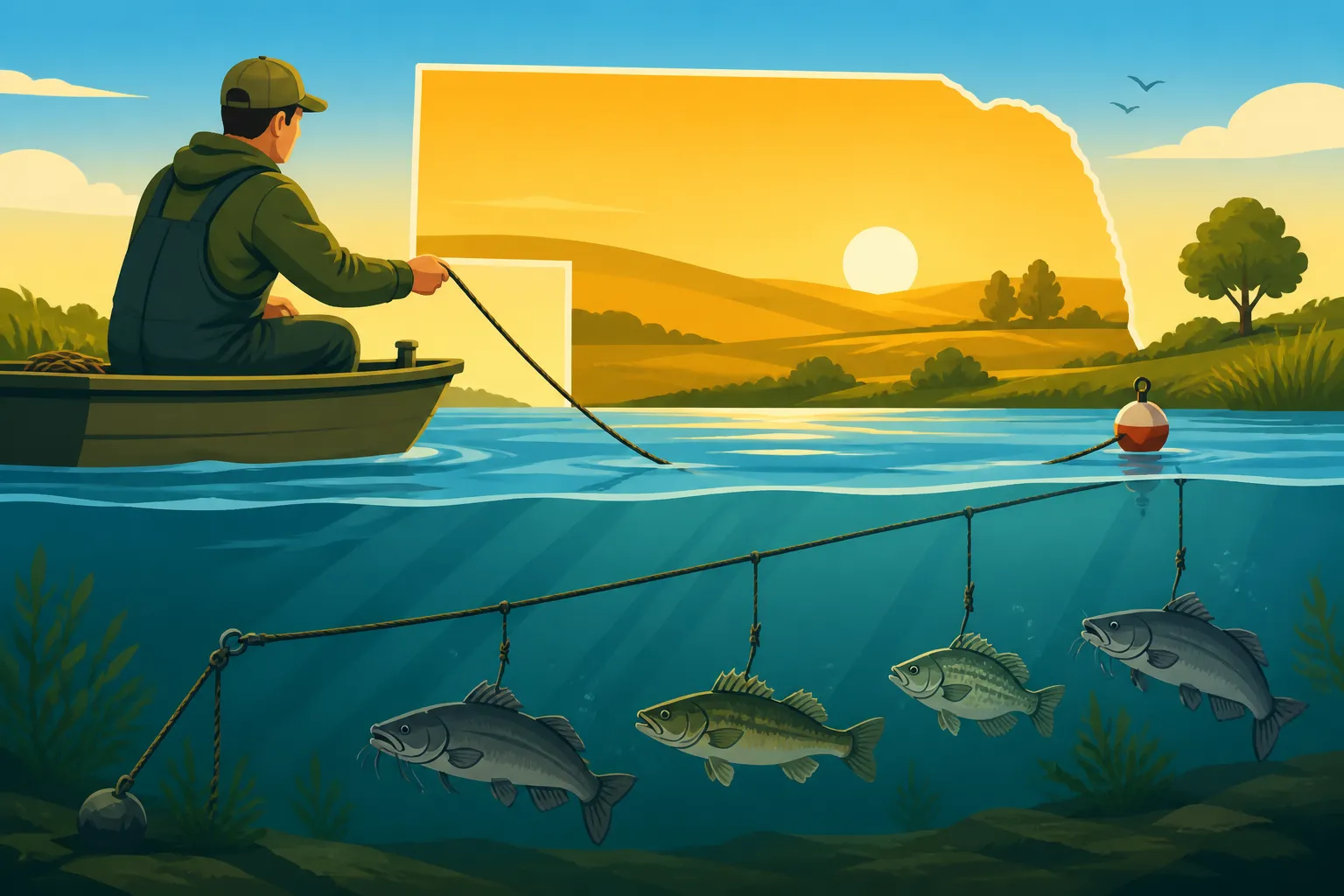
- Unfurl the Line: Slowly motor or paddle away from the first anchor, allowing the main line to unfurl behind you. As you go, attach your stagings (with hooks already tied on) at regular intervals. A common spacing is every 3-6 feet, but this can vary. Ensure the hooks are secure and not tangled.
- Stretch and Anchor the Second End: Once you've reached your desired length and attached all your hooks, stretch the line taut. You want it relatively straight across your target area, but not so tight that it can't absorb the shock of a fighting fish. Drop your second heavy anchor to secure the other end.
- Add Floats and Tags: Attach your clearly visible floats to both ends of the main line. Crucially, affix your legal identification tag (name, address, permit number) to each trotline. This step cannot be overlooked, as it's a primary point of enforcement for Nebraska Trotline Fishing Rules.
For river fishing, it’s often effective to deploy a trotline perpendicular to the current or at an angle that allows the bait to swing naturally in the flow. In lakes, you might run it along a contour line or across a channel. The goal is to present your baited hooks in the path of cruising fish.
Baiting Your Hooks and Waiting
With your trotline deployed and secured, it's time to bait those hooks. This is best done right after deployment to ensure fresh bait. Again, stick to your legal baits. When baiting, make sure the hook point is exposed for a good hook set. Avoid burying the hook deep inside the bait.
Once baited, it's a waiting game. Remember the 24-hour check rule. Many anglers prefer to set their trotlines in the evening and check them first thing in the morning, as catfish are often more active feeders during low light conditions and overnight. If you're hoping for an impressive stringer, knowing the Best Time of Day to Catch Catfish can help you time your checks effectively.
Checking, Maintaining, and Retrieving Your Trotline
The excitement of checking your trotline is what makes all the effort worthwhile. However, this phase also requires careful attention to safety, fish handling, and adherence to regulations.
Safe Retrieval Practices and Fish Handling
Approaching your trotline after a night of fishing can be thrilling. As you pull up to the first float, gently begin to pull the main line in, hand over hand. Be extremely careful when handling the line, as hooks can be sharp and easily snag skin or clothing. This is where those heavy-duty gloves really earn their keep! Investing in a good pair of puncture-resistant gloves, widely available on Amazon, is always a smart move.
When you encounter a fish, handle it with care. For smaller catfish, you might be able to remove the hook with pliers while the fish is still in the water or quickly brought into the boat. For larger, more feisty fish, a sturdy landing net or even a specialized catfish gripper can help you control the fish and safely remove the hook. Always be mindful of their sharp spines. Remember, all fish caught must comply with Nebraska Daily Bag and Possession Limits, so have a cooler ready for legal keepers and be prepared to safely release any fish that are undersized, over the limit, or unwanted.
Re-baiting and Long-Term Use
After checking your line, assess the bait on each hook. Has it been eaten? Washed away? If so, re-bait it with fresh offerings. Even hooks that haven't caught a fish might benefit from fresh bait to maintain maximum scent attraction. You can continue to use your trotline for multiple days, provided you check and re-bait it every 24 hours and it remains in a legal location.
It's also a good idea to inspect the integrity of your line and hooks during each check. Look for frayed sections, bent hooks, or loose stagings. The constant tension, snags, and battles with fish can take their toll. Addressing these issues promptly will prevent lost fish and equipment.
Proper Trotline Storage and Care
When you're ready to pull your trotline for the season or between trips, proper care and storage are essential for its longevity.
- Retrieve Everything: Ensure you retrieve all parts of your trotline, including both anchors and floats. Leaving equipment behind constitutes littering and is harmful to the environment and other anglers.
- Clean Thoroughly: Remove all remaining bait, debris, and any mud or algae from your line and hooks. A good rinse with fresh water is advisable.
- Dry Completely: Hang your trotline to air dry completely. Storing a wet or damp trotline, especially one made of nylon, can lead to mildew, rot, and weakening of the line.
- Organize for Storage: Once dry, neatly coil or spool your main line. You can remove the stagings for storage or keep them attached, just ensure the hooks are safely secured (e.g., in a bucket, on a piece of foam, or in a specialized trotline container) to prevent accidental jabs.
- Inspect for Damage: This is a good time for a thorough inspection. Replace any worn sections of line, rusty hooks, or damaged floats. Proper maintenance means your trotline will be ready for your next Nebraska fishing adventure.
By following these guidelines, you're not only ensuring a legal and effective trotlining experience but also contributing to responsible angling practices in our beautiful state.
Disclaimer
Please be aware that fishing regulations, including those pertaining to trotlines, can change frequently. While this guide provides comprehensive information, it is not a substitute for reviewing the current year's official Nebraska Game and Parks Commission Fishing Guide. Always consult the most up-to-date regulations before heading out on the water.