How Thick Ice Needs to Be to Fish Safely in Nebraska
One of the biggest anxieties for any ice angler in Nebraska, especially as the temperatures fluctuate, is knowing for sure if the ice is truly safe. Stepping onto a frozen lake or pond can be incredibly rewarding, but it comes with inherent risks if you don't understand the ice. This guide will meticulously break down how thick ice needs to be for safe fishing in Nebraska, dispelling myths and providing actionable advice to ensure your winter adventures are both successful and secure.
Understanding the Dynamics of Ice Safety in Nebraska
It’s easy to look out at a vast expanse of white and assume it’s all solid, but ice is a lot more complex than it appears on the surface. Factors you can’t see often play a huge role in its structural integrity, and what might be safe in one spot could be deadly just yards away. Don’t ever take ice for granted; it’s a living, breathing, and constantly changing environment.
Why Ice Varies and Isn't Always What It Seems
The ice on a Nebraska lake or pond is rarely uniform. You might find a foot of solid, clear ice in one area, and then suddenly hit three inches of slushy, weak ice a short distance away. This variation is incredibly common and understanding the reasons behind it is crucial for your safety. For instance, underwater springs can pump warmer water to the surface, creating pockets of dangerously thin ice, even if the surrounding area looks thick and stable. Currents, especially near river inlets, outlets, or even within larger reservoirs like Lake McConaughy, constantly erode the underside of the ice, making it thinner than you’d expect.
Think about a small farm pond near Lincoln or Omaha. The north side, shaded from the sun for most of the day, might freeze solid and retain its thickness, while the south side, exposed to direct sunlight, could have areas that melt and refreeze, creating a weaker, honeycombed structure. Heavy snow cover, while seemingly a good insulator, can actually hinder the ice-making process. A thick blanket of snow traps heat, preventing the ice from thickening further, and its weight can even depress the ice, causing water to seep up through cracks and create slush. This slush then freezes on top, forming a weaker, milky-white ice layer that isn’t nearly as strong as clear, black ice. So, while a foot of snow might make it look like a winter wonderland perfect for Nebraska Ice Fishing Regulations, it could be masking dangerously thin or compromised ice underneath. Always be skeptical of what you see and prioritize testing the ice yourself.
The Official Guidelines for Ice Thickness
The Nebraska Game and Parks Commission (NGPC) provides clear, straightforward guidelines for safe ice thickness, and these are the standards every angler should adhere to. These aren't arbitrary numbers; they are based on years of experience, scientific understanding, and unfortunate incidents. Ignoring them is a gamble you simply shouldn't take. Generally speaking, clear, hard ice is the strongest. Opaque, slushy, or white ice often contains air pockets or has refrozen multiple times, making it considerably weaker than clear ice of the same thickness.
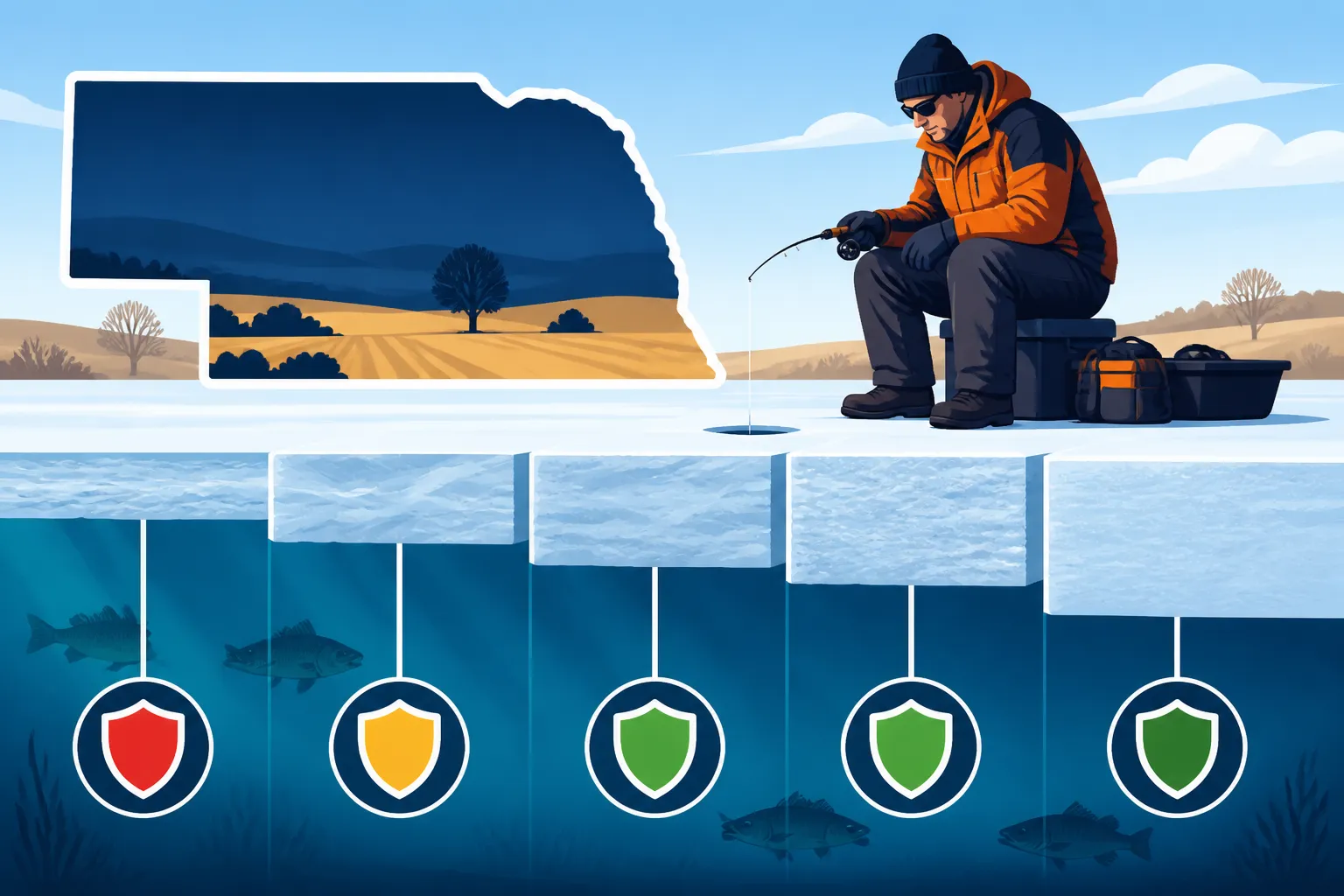
The general rule of thumb from the NGPC for safe ice activities is as follows. Keep in mind, these are minimum recommendations for clear, solid ice under normal conditions. Always add a safety buffer, especially if the ice is questionable, has snow cover, or if you're unfamiliar with the body of water.
| Activity | Minimum Clear, Solid Ice Thickness (Inches) | Notes |
|---|---|---|
| Foot Travel (single) | 4 | Ideal for walking out with basic gear, spreading out is key. |
| Group Activities | 5-7 | For multiple anglers, ice fishing shelters, or larger groups. |
| Snowmobiles/ATVs | 8-12 | Requires significantly more ice due to weight and speed; never drive too fast. |
| Small Car/Light Truck | 12-15+ | Highly discouraged and extremely risky, only in very controlled environments. |
For most ice fishing in Nebraska, you're looking at a minimum of 4 inches for individual foot travel. If you're bringing out a portable shelter, a buddy, or a lot of gear, 5-7 inches is a much safer bet. This extra thickness provides a crucial margin for error and accounts for localized weak spots you might not detect. Remember, these are minimums, not targets. More ice is always better, and you should factor in the type of ice – clear ice is stronger than cloudy or snow-covered ice. When considering When Ice Fishing Season Starts in Nebraska, remember that early season ice is often the most unpredictable.
Essential Gear for Assessing Ice Conditions
You wouldn't go hiking without sturdy boots, and you shouldn't step onto the ice without the right tools to verify its safety. Relying solely on visual cues or someone else’s tracks is a recipe for disaster. Being properly equipped not only helps you measure ice thickness but also provides crucial safety measures should the worst happen.
Tools for Measuring Ice Thickness
The most vital tool in an ice angler's arsenal is something to measure ice thickness. There’s no substitute for actually drilling or cutting through the ice to see what’s beneath your feet. A good hand auger, even a basic one, is invaluable. For instance, a 6-inch hand auger from a brand like Eskimo or StrikeMaster is perfect for drilling test holes as you walk out. These are readily available on Amazon and at local sporting goods stores. You should drill a hole every 15-20 feet as you venture onto the ice, especially in areas you haven't fished before or where conditions might be variable. Don’t just drill one hole near shore and assume the rest of the lake is the same!
For those who prefer a bit more power, a gas or electric power auger can make quick work of drilling multiple test holes. Brands like ION or Jiffy are popular choices and can be found on Amazon, often with varying battery life and auger bit sizes. While a power auger is great for finding fish and setting up your fishing spot, a spud bar is your best friend for initial reconnaissance. A spud bar is a heavy metal bar with a chisel-like end, used to "spud" or strike the ice ahead of you. If the spud bar goes through in one or two hard strikes, the ice is too thin. If it takes several strikes or doesn’t go through at all, it's generally safer. This allows you to check the ice ahead of you without putting your full weight on it. You can learn more about choosing the right tools in our guide on the Best Auger for Nebraska Ice Fishing.
Personal Safety Equipment
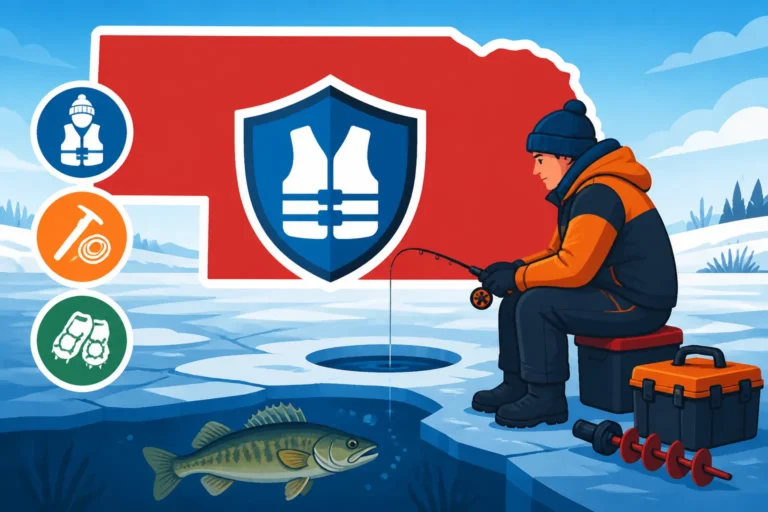
Beyond measuring tools, personal safety equipment is non-negotiable. These items are your lifeline if the ice gives way. First and foremost, a pair of ice picks should be worn around your neck, ready for immediate use. If you fall through, these picks are your best chance to get a grip on the ice edge and pull yourself out. They are inexpensive and can be purchased from almost any fishing tackle retailer or quickly from Amazon.
Next, a throw rope is essential, especially when fishing with a buddy. This is a buoyant rope, often stored in a bag, that can be easily thrown to someone who has fallen through. It’s a simple but incredibly effective rescue tool. Consider a good quality flotation suit or a personal flotation device (PFD) designed for ice fishing. These not only provide buoyancy but also offer insulation, which is critical in frigid water. Many modern ice fishing suits are specifically designed to keep you afloat and warm, greatly increasing your survival chances. Brands like Clam or Ice Armor offer excellent options that provide both warmth and flotation. Even a basic life vest worn under your outer layers is better than nothing. For a comprehensive list of what to bring, check out our Essential Gear Checklist for a First Ice Fishing Trip. You’ll find that being prepared goes a long way in ensuring a safe and enjoyable outing on the hard water.
Practical Steps for Safe Ice Fishing
Getting out on the ice safely involves more than just knowing the numbers; it's about preparation, constant vigilance, and smart decision-making. No fish is worth risking your life over, so take every precaution seriously.
Before You Even Step on the Ice
Preparation starts long before you even leave your driveway. The first step is to check local ice conditions. The Nebraska Game and Parks Commission often provides ice condition updates for popular lakes. Local bait shops, especially those near well-known ice fishing spots like Branched Oak Lake or Merritt Reservoir, are invaluable resources. They often get daily reports from anglers and can tell you where the ice is good, and where it’s questionable. Websites and social media groups dedicated to Nebraska ice fishing can also offer real-time insights, but always cross-reference information.
Secondly, and this is perhaps the most important rule of ice fishing: never go alone. Always fish with at least one buddy. In the event of an emergency, a partner can call for help, throw a rope, or assist in a self-rescue. Make sure your fishing partners also understand ice safety principles. Before heading out, inform someone reliable (a family member, friend, or neighbor) of your exact fishing location and your expected return time. This way, if you don't check in, they know to initiate a search. Finally, consider the recent weather history. A prolonged cold snap with consistently freezing temperatures will build much stronger ice than a few cold nights followed by warmer days. Be extra cautious after periods of warm weather or strong winds, as these can rapidly degrade ice quality. Understanding Nebraska Ice Fishing Safety Tips before you head out is crucial.
On-Ice Protocols and Best Practices
Once you arrive at the lake, don't just dash onto the ice. Start your journey by spudding your way out from shore. Use your spud bar to test the ice every few steps. Listen for solid thuds, not dull crunches or wet cracks. As you move further, drill a test hole with your auger every 10-15 feet, especially when you're entering a new area or if the ice color or texture changes. Measure the ice at each hole. Don’t just eyeball it; use a tape measure or a marked auger shaft.
If you are fishing in a group, spread out your weight. Don't congregate in one small area, especially on thinner ice. This distributes the load and reduces stress on the ice. Avoid any suspicious areas: discolored ice (darker usually means thinner, whiter or slushy means weaker), areas near open water, aerators, inlets, or outlets, and pressure cracks. Pressure cracks can form rapidly due to temperature fluctuations or changes in water levels and are inherently unstable. A crack might be perfectly safe in one spot and a dangerous open water seam just a few feet away. If you encounter a crack, test it thoroughly and consider going around it. Finally, know what to do if someone falls through the ice. The "reach, throw, row, go" principle is vital: first, reach for them with something long; if that's not possible, throw them a rope or a spare tire; if you have a boat or canoe nearby, row it towards them; only as a last resort, and with extreme caution, should you attempt to "go" onto the ice to help, making sure you distribute your weight. Having a plan can be the difference between life and death.
Common Misconceptions and Additional Hazards
Even seasoned anglers can fall prey to common misconceptions or overlook subtle hazards. The ice is an unforgiving environment, and vigilance should be your constant companion.
"Just Because Someone Else Is Out There" Mentality
This is perhaps one of the most dangerous assumptions an ice angler can make. You pull up to a lake, see a few shanties or anglers out on the ice, and think, "Well, if they're out there, it must be safe." This line of thinking is fraught with peril. There are numerous reasons why someone else being on the ice doesn't automatically mean it's safe for you. For starters, those anglers might be lighter than you, distributing less weight. They might have ventured out hours ago when conditions were different, or they might simply be taking an unnecessary risk themselves.
Furthermore, they might know a very specific, safe path to their fishing spot, which isn't obvious to you. Local anglers often have intimate knowledge of a particular body of water – where the springs are, where the current runs, or where the ice typically forms last. You don't have that same institutional knowledge. Their location could also be on a part of the lake with thicker ice, while a different section, perhaps where you're planning to go, could be significantly thinner. Always remember that you are responsible for your own safety and the safety of those with you. Just because a handful of people are fishing Fremont Lakes State Recreation Area Fishing doesn't mean every inch of ice is safe. Take the time to do your own checks, measure the ice, and make your own informed decision.
Factors That Compromise Ice Strength
Several environmental factors can significantly compromise ice strength, even if initial measurements seem adequate. Snow cover is a big one. While a fresh blanket of snow looks idyllic, it acts as an insulator, preventing further ice growth from the top down. Worse, heavy snow can push the ice down, causing water to flood the surface and create a layer of slush that then refreezes into weaker, opaque ice. Snow also hides potential hazards like pressure cracks, open water, or areas of dangerously thin ice.
Pressure cracks are another major concern. These occur when ice expands and contracts due to temperature changes or shifting water levels, creating fissures or ridges in the ice. While some can be stable, others are dynamic and can open up rapidly. Never assume a pressure crack is safe to cross without thoroughly testing it. Flowing water, whether from an inlet stream, an outlet, or even strong underwater currents in larger reservoirs like Harlan County Reservoir, constantly erodes the underside of the ice. This can lead to surprisingly thin spots, often undetectable from above. Always be extra cautious around these areas. Lastly, prolonged warm spells, even a few days of above-freezing temperatures, can rapidly degrade ice. The ice might still look thick, but its internal structure can become honeycombed and weak, losing much of its load-bearing capacity. Always consider the past week's weather, not just today's temperature, when evaluating ice safety. Dressing appropriately for potential water exposure, even if you don't plan on falling in, is part of being prepared; refer to our guide on What to Wear Ice Fishing in Nebraska for more details.
Disclaimer
The information provided in this guide is for general informational purposes only and is not a substitute for professional advice, local regulations, or personal judgment. Ice conditions are highly variable and can change rapidly. Always exercise extreme caution, follow all local laws and regulations, and prioritize safety above all else when venturing onto frozen water.