How to Fish for Walleye in Nebraska
The elusive walleye, with its prized fillets and challenging demeanor, can be one of Nebraska’s most rewarding catches, yet anglers often find themselves struggling to consistently locate and entice these wary predators. Their keen senses and preference for specific conditions can make them seem invisible, leading to frustrating days on the water. This comprehensive guide will unravel the mysteries of walleye fishing in Nebraska, equipping you with the knowledge, techniques, and strategies needed to consistently find and catch these magnificent fish across the state's diverse waters.
Understanding Nebraska Walleye: Habits and Habitat
Before you can hope to consistently catch walleye, you need to understand them. These aren't your typical panfish; walleye are cunning predators with specific needs and behaviors that dictate where and when you'll find them. Learning their habits is the first and most critical step toward success.
Walleye Biology and Behavior
Walleye are masters of their environment, perfectly adapted to their predatory lifestyle. One of their most defining features is their large, light-sensitive eyes, equipped with a reflective layer called the tapetum lucidum. This gives them superior vision in low-light conditions, making dawn, dusk, and cloudy days prime feeding times. You’ll often hear experienced anglers talk about how Best Time of Day to Catch Walleye in Nebraska revolves around these low-light periods, as the walleye gain a significant advantage over their prey. Because of this, they tend to shy away from bright sunlight, seeking out deeper water or shaded areas during the day.
Their diet primarily consists of smaller baitfish like shad, perch, and juvenile panfish, though they aren't above munching on leeches or insect larvae when the opportunity arises. They are ambush predators, often holding tight to structure, waiting for an unsuspecting meal to swim by. Walleye are also known to school, especially in open water or during specific feeding frenzies, so if you find one, there's a good chance more are nearby. Understanding What Walleye Eat in Nebraska Lakes can significantly influence your bait and lure selection.
Furthermore, walleye are quite sensitive to water temperature. They thrive in cooler water, generally preferring temperatures between 60 and 70 degrees Fahrenheit. As temperatures rise in the summer, they'll migrate to deeper, cooler sections of a lake or reservoir. Conversely, in colder months, they might seek out slightly warmer pockets of water or suspend over deep structure. Knowing What Water Temperature Walleye Prefer is key to locating them throughout the year.
Preferred Habitats in Nebraska Waters
Walleye are closely tied to structure, which provides them with ambush points, protection from predators, and access to food. In Nebraska's vast reservoirs and rivers, these structures can vary greatly. Rocky points and humps are classic walleye magnets. These underwater features often extend into deeper water, providing a highway for walleye to move up and down in the water column as light and feeding conditions change. The transition zones where these structures meet the main lake bottom, known as "break lines," are particularly productive.
Submerged timber, brush piles, and old creek channels also offer excellent habitat. These areas often hold baitfish, which in turn attract walleye. In systems like the Missouri River, current breaks created by wing dams, eddies, or channel swings are crucial. Walleye will position themselves just out of the main current, expending minimal energy while waiting for food to be swept past them. Even subtle changes in bottom composition, like a transition from soft mud to hard gravel, can be a walleye hotspot.
Water clarity also plays a significant role. While walleye prefer somewhat turbid or stained water due to their light-sensitive eyes, extremely muddy conditions can disperse baitfish and make feeding difficult. In clearer lakes, they will often be found deeper during the day or feed more aggressively under cloudy skies or at night. Understanding these preferred habitats will guide you directly to where the walleye are holding.
Essential Gear for Nebraska Walleye Fishing
Having the right tools for the job can make all the difference, especially when targeting a finicky species like walleye. While you don't need to break the bank, investing in quality gear tailored to walleye fishing will significantly boost your chances of success.
Rods, Reels, and Line Selection
For walleye, a versatile rod and reel setup is crucial. When it comes to rods, a medium-light to medium power spinning rod, typically 6'6" to 7'6" in length, is a great all-around choice. This length provides good casting distance from shore or boat and enough backbone to handle a fighting walleye, while still being sensitive enough to detect subtle bites. A fast or extra-fast action tip is generally preferred, as it allows for quick hook sets and excellent sensitivity. Many anglers find specific rods designed for Best Walleye Rods for Nebraska Reservoirs to be invaluable, as they balance power and sensitivity perfectly for this species.
For reels, a quality spinning reel in the 2500-3000 size range is ideal. Look for a smooth drag system, which is paramount for fighting a strong walleye without breaking your line, and a good retrieve ratio to keep up with fish or retrieve lures efficiently. While baitcasting setups can be used, especially for heavier trolling or casting large crankbaits, spinning reels offer more versatility for jigging and live bait presentations.
Line selection is another critical component. Many anglers opt for braided line as their main line due to its superior sensitivity and strength-to-diameter ratio. A 8-15 lb test braid is common. However, because braid is highly visible in clear water, it’s almost always paired with a fluorocarbon leader of 6-10 lb test. Fluorocarbon is nearly invisible underwater and offers good abrasion resistance. Monofilament line can also be used, especially for applications like trolling with planer boards, but its stretch can hinder sensitivity. For a deeper dive into choices, check out our guide on Best Fishing Line for Nebraska Walleye. You can find a wide array of options for all these components on platforms like Amazon, making it easy to compare features and prices.
Baits, Lures, and Tackle Box Essentials
Your tackle box for Nebraska walleye should be well-stocked with a variety of options to match different conditions and walleye moods. Live bait is often king, especially when walleye are finicky. Fathead minnows and shiner minnows are perennial favorites, fished on a plain hook under a slip bobber or as part of a jigging spoon setup. Nightcrawlers are another staple, especially when rigged on a crawler harness (like described in How to Use a Crawler Harness for Walleye) or a simple snell. Leeches, though sometimes harder to find, can also be incredibly effective. For Lake McConaughy in particular, understanding Best Live Bait for Walleye at Lake McConaughy can significantly boost your catch rate.
Artificial lures offer versatility and allow you to cover more water. Jigs, in various weights (1/8 oz to 3/8 oz being common) and colors, are indispensable. Tipping a jig with a minnow or a soft plastic grub can be deadly, as detailed in our article on How to Rig a Jig for Nebraska Walleye or a broader guide on Best Jigs for Nebraska Walleye. Crankbaits are essential for trolling and covering large areas, with different models designed to dive to various depths. Colors like firetiger, perch, shad, and chartreuse are generally good starting points. Blade baits, lipless crankbaits, and spoons can also be effective, particularly for vertical jigging over deep structure.
Beyond the baits and lures, ensure your tackle box contains essential accessories. This includes a variety of hooks (jig hooks, snelled hooks, treble hooks), swivels (barrel and snap swivels), sinkers (split shot, bullet weights, bottom bouncers), and a quality pair of pliers for hook removal. Having a sturdy landing net with rubberized mesh helps protect the fish if you plan to practice catch and release. You can easily find these essential items, including dedicated Best Tackle for Nebraska Walleye Fishing kits, on Amazon, ensuring you’re prepared for any situation.
Top Nebraska Walleye Fishing Spots
Nebraska might be a landlocked state, but it boasts some truly fantastic walleye fisheries. Knowing where to go is half the battle, and some locations consistently outshine others in terms of walleye population and size.
Premier Walleye Lakes and Reservoirs
When serious walleye anglers talk about Nebraska, the conversation almost always starts with Lake McConaughy. Often called "Big Mac," this massive reservoir in western Nebraska is truly a walleye powerhouse. Its vast expanse, diverse depths, and abundant baitfish (primarily gizzard shad) create an ideal environment for walleye to thrive and grow to impressive sizes. Early spring sees fish moving shallow for spawning, while summer often means targeting deeper humps and break lines. For an in-depth look, our Lake McConaughy Fishing Guide is a must-read, and specific tactics are covered in Lake McConaughy Walleye Fishing. The best time to hit Big Mac for these giants can often be found by checking Best Time of Year to Fish Lake McConaughy for Walleye, which varies depending on water levels and temperatures.
Merritt Reservoir, located in the Sandhills, is another gem known for its clear waters and healthy walleye population. It offers a different fishing experience than McConaughy, often requiring a more subtle approach. Early morning and late evening bites can be fantastic, and its many fingers and bays provide excellent structure. You can find more detailed information and strategies in our Merritt Reservoir Fishing Guide.
Harlan County Reservoir in south-central Nebraska is consistently productive for walleye, especially for those who enjoy trolling. Its expansive, relatively shallow basins and numerous points are perfect for covering water with crankbaits or bottom bouncers. Keeping an eye on the Harlan County Reservoir Walleye Fishing Report can provide current insights into bite patterns and hot spots.
Lewis and Clark Lake, on the border with South Dakota, also holds a strong walleye population, especially in its deeper sections and around the main river channel influences. This is a unique fishery due to its border water status, so be sure to understand any reciprocal license agreements. Our guide on Lewis and Clark Lake Walleye Fishing provides specific insights for this area.
Other notable walleye lakes include Sherman Reservoir (known for its wiper population but also good walleye, as detailed in Sherman Reservoir Fishing) and Swanson Reservoir, which can also produce respectable walleye catches, especially for those familiar with Swanson Reservoir Walleye Fishing techniques.
River Systems and Smaller Impoundments
While the big reservoirs get most of the attention, Nebraska's river systems, particularly the Missouri River, offer a unique and challenging walleye fishing experience. Walleye in rivers are often incredibly strong due to fighting current their entire lives. Key areas to target include wing dams, scour holes, and current breaks where fish can ambush prey without expending too much energy. Fishing the Missouri requires heavier tackle and a good understanding of river current, but the rewards can be substantial.
Don't overlook the numerous smaller lakes and sandpits scattered across the state. While they may not hold the sheer numbers or trophy potential of the large reservoirs, many are stocked with walleye and can offer fantastic fishing, especially for anglers seeking less crowded waters. These smaller impoundments often require a different approach, focusing more on subtle presentations and targeting weed lines or isolated cover. Always check local regulations, as some smaller waters may have unique rules regarding walleye. These overlooked gems can be a fantastic place to hone your skills before tackling the bigger waters.
Seasonal Strategies for Walleye Success
Walleye behavior changes dramatically with the seasons, driven by factors like spawning urges, water temperature, and baitfish movements. A successful walleye angler understands these shifts and adapts their tactics accordingly.
Spring: Pre-Spawn and Spawn Tactics
Spring is a time of immense anticipation for walleye anglers, marking the start of the open water season and the migration of walleye towards their spawning grounds. As ice-out occurs, walleye often become active in relatively shallow water, particularly on northern shorelines that warm up first. They'll feed aggressively in these areas, preparing for the rigors of spawning. This pre-spawn period is characterized by fish staging in deeper water adjacent to rocky points or riprap where they intend to spawn.
The actual walleye spawn in Nebraska typically occurs when water temperatures reach the low to mid-40s Fahrenheit, usually in April or early May, depending on the specific body of water and yearly weather patterns. Our guide on Nebraska Walleye Spawning Season offers a more detailed breakdown. During the spawn itself, walleye can be notoriously difficult to catch as their focus shifts entirely to reproduction. However, immediately post-spawn, they can be found recovering in nearby deeper water before resuming a more aggressive feeding pattern. Nebraska Spring Walleye Fishing Techniques often focus on vertical jigging or slowly dragging live bait rigs in these staging and post-spawn recovery areas. Targeting the mouths of feeder creeks or wind-blown rocky banks can also be highly productive during this period.
Summer: Deep Water and Night Fishing
As Nebraska heats up and water temperatures climb, walleye retreat to deeper, cooler water. This is often dictated by the thermal stratification of a lake, where a distinct thermocline forms, separating warmer surface water from colder, oxygenated deeper water. Walleye will typically hold just above or within this thermocline, especially during the brightest parts of the day. This is when understanding How to Fish Deep Structure for Summer Walleye becomes paramount. Targeting main lake points, sunken islands, deep humps, and the outer edges of weed lines are common strategies.
Trolling with deep-diving crankbaits or using bottom bouncer rigs with live bait can be incredibly effective for covering these deeper areas. Additionally, summer is prime time for night fishing for walleye. Their superior low-light vision gives them a distinct advantage over baitfish under the cloak of darkness, often leading to very aggressive feeding binges in shallower water than they inhabit during the day. Fishing lighted docks or casting shallow-running crankbaits and jigs near shore can produce excellent results after the sun goes down.
Fall and Winter: Feeding Frenzy and Ice Fishing
Fall sees a dramatic shift in walleye behavior. As water temperatures cool and lakes begin their "fall turnover" process, walleye enter a major feeding frenzy. They know winter is coming and they need to pack on fat reserves. This can be one of the most exciting times to fish for walleye, as they become incredibly aggressive. They will often follow schools of baitfish into shallower bays or relate to prominent points and humps. Trolling, casting crankbaits, or jigging with larger baits can all be effective. Understanding How Fishing Changes From Spring to Summer in Nebraska often means realizing that fish are going to be much more active and spread out in the fall.
Once ice forms, Nebraska offers excellent ice fishing opportunities for walleye. While it presents its own unique challenges and safety considerations (check out How to Ice Fish in Nebraska), dedicated ice anglers can find great success. Walleye are often found relating to similar structures under the ice as they are in open water – deep points, humps, and break lines. Jigging spoons, minnow-tipped jigs, and tip-ups rigged with live minnows are standard ice fishing tactics for walleye. As always, consult local regulations for specific ice fishing rules and safety guidelines before venturing out onto the hard water.
Effective Walleye Fishing Techniques
Catching walleye isn't just about being in the right place; it's about presenting your bait or lure in a way that triggers a strike. Walleye are often subtle biters, so understanding and executing effective techniques is crucial.
Jigging and Live Bait Rigging
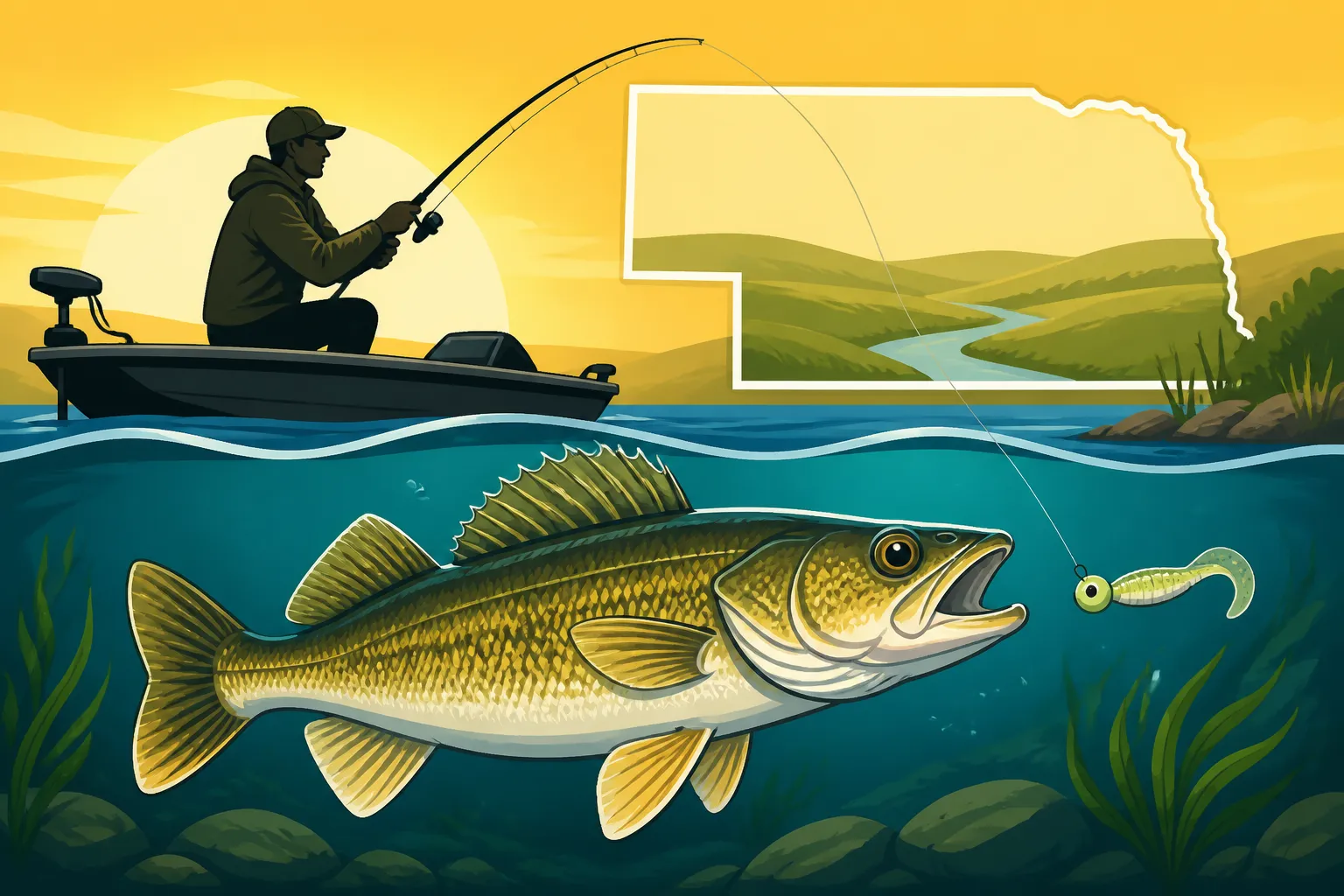
Jigging is perhaps the most fundamental and versatile walleye fishing technique. It involves using a leadhead jig, often tipped with live bait (like a minnow or nightcrawler piece) or a soft plastic grub, to mimic an injured baitfish. Vertical jigging is effective when walleye are concentrated on structure directly beneath the boat. Drop your jig to the bottom, then lift and drop it with a subtle wrist flick, allowing it to fall back on a semi-slack line. Most bites occur on the fall, so watch your line carefully. Our guide on How to Jig for Walleye in Nebraska provides extensive details on this highly effective method. When fish are scattered or holding shallower, casting and retrieving jigs can cover more water, using a slow, hopping retrieve along the bottom.
Live bait rigging is another deadly technique, especially when walleye are finicky. The classic Lindy Rig (or similar slip-sinker rigs) allows your bait to be presented naturally on the bottom, with minimal resistance when a walleye picks it up. It consists of a slip sinker, a swivel, a fluorocarbon leader, and a hook (often a snelled hook or a plain Aberdeen). Bait with a lively minnow, leech, or a nightcrawler (using a Best Nightcrawler Rig for Walleye setup). Dragging these rigs slowly along break lines or across humps is incredibly effective, particularly in deeper water. The key is to present the bait naturally, letting the walleye mouth it without feeling the weight of the sinker.
Trolling for Walleye
Trolling is an incredibly efficient way to cover large expanses of water and locate scattered walleye, particularly in Nebraska's bigger reservoirs. Crankbait trolling is a popular method, where you pull various diving crankbaits behind the boat at specific speeds (typically 1.5-2.5 mph). Different crankbaits are designed to dive to different depths, allowing you to target specific parts of the water column. Our article on How to Troll for Walleye in Nebraska delves into the intricacies of this technique, including how to vary your speed and lure selection. Understanding Best Depth to Troll for Walleye in Summer is crucial as walleye move deeper in warmer months. Pay close attention to your electronics to ensure your lures are running at or just above the depth where you're marking fish.
Bottom bouncer rigs are another popular trolling option, especially for presenting live bait or spinner harnesses. A bottom bouncer keeps your bait or lure near the bottom, even when trolling over uneven terrain. You can attach a crawler harness (like the ones detailed in How to Use a Crawler Harness for Walleye) or a plain snelled hook with a minnow or leech. These rigs are particularly effective when walleye are actively feeding on the bottom and you need to keep your offering in their strike zone. Varying your trolling speed and making subtle turns can often trigger strikes as your lures change depth or action.
Casting and Specialized Tactics
Beyond jigging and trolling, casting can be highly effective in certain situations. Casting crankbaits to prominent points, submerged timber, or weed edges can entice aggressive walleye, especially during low-light periods or when fish are pushed shallow by wind. When walleye are suspended in the water column, perhaps over deep basins, slip bobber fishing with live bait can be deadly. This technique allows you to precisely present your bait at a specific depth, enticing walleye that might ignore traditional jigging or trolling presentations.
For anglers fishing from shore, casting long-distance jigs or crankbaits to reach deeper structure is essential. Even simple rigs like a bottom rig with a weight and a live minnow can be surprisingly effective for walleye if fished in the right location. Blade baits and lipless crankbaits are also excellent for covering water quickly and eliciting reaction strikes, especially in cooler water or when fish are aggressive. These lures can be cast out and retrieved with a series of rips and pauses, mimicking a fleeing baitfish.
Reading the Water: Weather, Structure, and Electronics
Successful walleye fishing is as much about understanding the environment as it is about using the right gear. Learning to "read the water" – interpreting weather patterns, identifying productive structure, and effectively using modern electronics – will turn you into a much more consistent angler.
Environmental Factors and Walleye Behavior
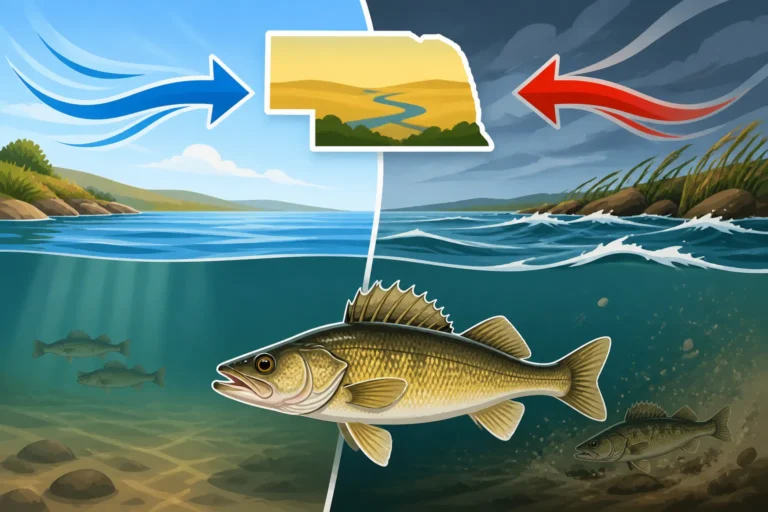
Weather patterns significantly influence walleye behavior. Wind, for instance, can be a walleye angler's best friend. A consistent wind blowing into a bay or across a point creates a "walleye chop," which can disorient baitfish and push them into concentrated areas, making them easier prey. This oxygenates the water and often turns walleye on. Our guide on How Wind Direction Affects Walleye Fishing highlights how different wind patterns can either activate or shut down a bite. However, too much wind can make boat control and presentation difficult.
Barometric pressure is another crucial, though often overlooked, factor. A stable or rising barometer typically indicates fair weather and often corresponds with increased walleye activity. Conversely, a falling barometer, signaling an approaching storm or cold front, can sometimes trigger a pre-front feeding frenzy, followed by a post-front shutdown as walleye become lethargic. You can learn more about this in our article How Barometric Pressure Affects Fishing in Nebraska.
Water clarity and temperature also dictate walleye location and feeding aggressiveness. In very clear water, walleye will often go deeper or be more active during low light. In stained or slightly turbid water, they might be found shallower. Adapting your lure colors (brighter in stained water, more natural in clear) and retrieve speeds to match these conditions is vital. Don't forget the impact of light conditions; cloudy days or periods around dawn and dusk offer the best opportunities due to their light-sensitive eyes.
Interpreting Structure and Using Sonar
Structure is the single most important factor for locating walleye. These fish are almost always associated with some form of underwater feature. Recognizing different types of structure – humps, points (as explored in How to Fish Points and Humps for Walleye), break lines, channels, rock piles, and submerged timber – is crucial. Visualize how a walleye would use these features for ambush or protection.
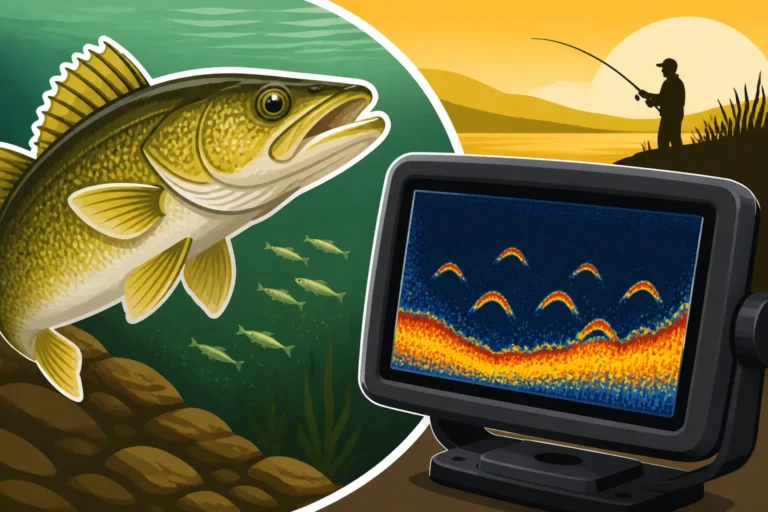
Modern fish finders have revolutionized walleye fishing. Standard 2D sonar helps you identify bottom contours, depth, and individual fish or schools of baitfish. Knowing How to Read a Fish Finder for Walleye can help you differentiate between fish arches and structure. Side imaging (or side scan sonar), covered in depth in How to Use Side Imaging Sonar for Structure, allows you to see out to the sides of your boat, revealing vast areas of bottom structure, weed lines, and even schools of baitfish and walleye that you might otherwise miss. Down imaging provides a more photographic view directly beneath your boat, helping you pinpoint specific pieces of cover.
Pairing your sonar with GPS and mapping is essential. Marking waypoints on productive spots, tracing contours, and understanding your position relative to underwater features will make you incredibly efficient. Many of the latest sonar units, often available on Amazon, come pre-loaded with detailed lake maps or allow for custom mapping, giving you an unparalleled view of the underwater world. Learning to use these tools effectively will dramatically reduce your search time and increase your fishing time in productive zones.
Troubleshooting Common Walleye Fishing Challenges
Even the most experienced walleye anglers face tough days on the water. Walleye can be incredibly finicky, and conditions can change rapidly. Knowing how to adapt and overcome common challenges is key to consistent success.
Dealing with Tough Bites and Changing Conditions
One of the most frustrating scenarios is when walleye seem to have "lockjaw." You're on the right structure, you're seeing fish on your electronics, but they simply won't bite. This often happens after a cold front has pushed through, causing fish to become lethargic and less willing to chase. When this occurs, the best strategy is usually to slow down your presentation dramatically. Instead of aggressive jigging, try subtle lifts and drops, or simply dead-sticking a live minnow on a jig. Downsize your baits and lures, using smaller jigs or lighter line to make your offering seem less intimidating. Experiment with different colors; sometimes a slight variation can make all the difference.
Another challenge is fishing pressured waters. When a lake or reservoir sees a lot of fishing activity, walleye become warier and more sensitive to boat noise, shadows, and obvious presentations. In these situations, try fishing during off-peak hours (midday on a weekday, or later into the evening). Focus on less accessible areas or spots that are difficult to fish, as these often hold less pressured fish. Utilizing natural-colored baits and ultra-finesse presentations can also help trick these educated walleye. Sometimes, it's about going back to basics and remembering that Live Bait Versus Artificial Lures for Walleye can truly matter when the bite is tough.
Finally, always be prepared to adapt to changing conditions. A sudden shift in wind direction, a change in cloud cover, or a fluctuation in water levels (such as during Lake McConaughy Water Level and Fishing Conditions changes) can completely alter the walleye bite. Have a variety of lures and techniques ready to deploy. If one approach isn't working, don't be afraid to switch it up frequently until you find what the fish are responding to.
Safe Handling and Conservation
As dedicated anglers, we have a responsibility to protect our fisheries for future generations. This is especially true with a prized species like walleye. Practicing catch and release best practices is paramount, particularly for larger, older fish that contribute significantly to the breeding population. When you land a walleye, handle it gently with wet hands, supporting its body. Use a de-hooking tool or needle-nose pliers to quickly remove the hook, minimizing time out of the water. If the fish is bleeding or deeply hooked, it may be best to keep it if within regulations, rather than release a fish that won't survive.
Always be aware of and abide by Nebraska fishing regulations, including size limits, daily bag limits, and any special slot limits. Slot limits, for example, often require anglers to release fish within a certain size range to protect critical breeding stock, while allowing harvest of smaller and larger fish. Exceeding Nebraska Fishing Daily Bag and Possession Limits or keeping undersized fish not only harms the fishery but can also lead to significant penalties. These rules are in place to ensure healthy fish populations for everyone to enjoy.
When releasing a fish, gently hold it in the water, facing into the current if possible, until it regains its strength and swims away on its own. Avoid tossing it back. By being mindful of conservation, we ensure that walleye fishing in Nebraska remains a vibrant and rewarding experience for years to come.
Disclaimer
The information provided in this guide is for general informational purposes only. Fishing regulations in Nebraska can change, and it is the responsibility of every angler to consult the latest Nebraska Game and Parks Commission regulations before fishing. Always prioritize safety on the water and be aware of weather conditions.