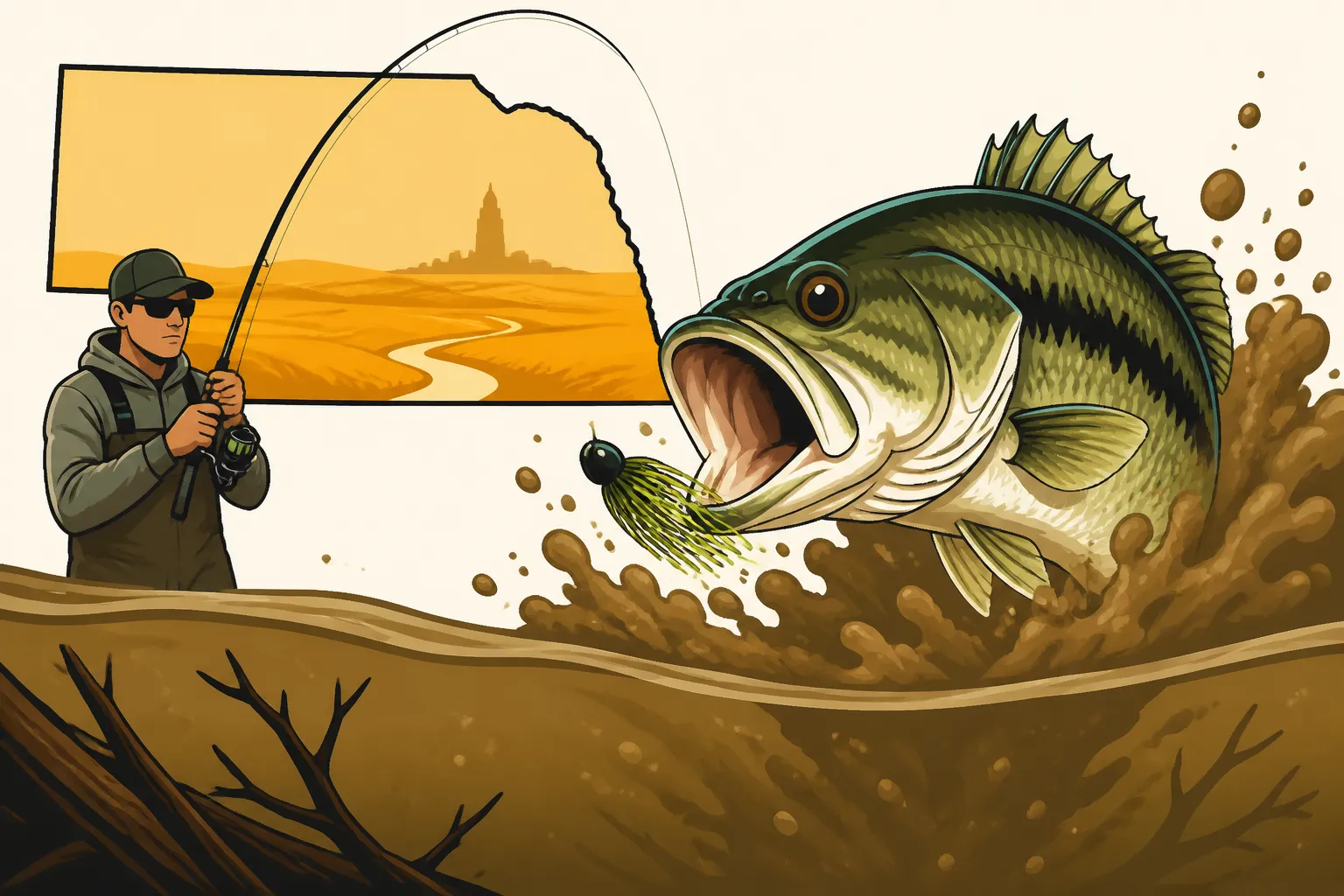
How to Catch Largemouth Bass in Muddy Water
Ever pulled up to your favorite Nebraska fishing spot after a good rain, only to find the water turned a cloudy, opaque brown? That feeling of disappointment is totally understandable. It looks like a completely different world out there, and your usual tactics might feel useless. But don't let that muddy water send you packing! Largemouth bass are still there, still hungry, and with the right adjustments, you can absolutely have a fantastic day on the water. This guide is all about helping you crack the code on catching those elusive largemouths when the visibility drops to zero.
Understanding the Muddy Water Mindset of Largemouth Bass
When the water clarity changes drastically, it’s like someone turned off the lights in a room where bass are used to hunting by sight. This sudden shift forces them to adapt, and understanding these adaptations is your first step to success. It's not just about what lures to throw, but why they respond to certain things.
Why Bass Relocate and React Differently
First off, largemouth bass are primarily ambush predators, and they rely heavily on their eyesight to track down prey. When the water gets murky, that visual advantage is gone. They can't see far, which means their hunting strategy has to change. Instead of cruising open water looking for targets, they're going to gravitate towards areas where they can feel secure and where prey might stumble upon them accidentally. This often means moving shallower, closer to the bank, and getting tighter to heavy cover. Think about it: if you can't see, you'd want to be where things are predictable and where you can easily hide and strike.
Moreover, muddy water often means cooler temperatures and higher water levels from runoff, which can also influence their activity. While clear water might send bass deep to escape the sun, muddy water can actually draw them into the shallows. The sediment absorbs sunlight, warming the shallower water faster, which can be attractive. Plus, the increased water levels can open up new areas of flooded vegetation and shoreline cover that were previously inaccessible, providing fresh hunting grounds and hiding spots. They might feel more comfortable and less exposed in these dense, shallow areas where the lack of visibility gives them an advantage over their prey, even if they can’t see it clearly.
How Bass Utilize Other Senses in Low Visibility
With their eyes less effective, largemouth bass crank up their other senses. Their lateral line, that incredible sensory organ running along their sides, becomes their primary tool for detecting vibrations and pressure changes in the water. This is how they sense baitfish swimming by, or how they pinpoint your lure's location even if they can't see it. Think of it as a built-in radar system.
Beyond their lateral line, their sense of smell and hearing also play a much larger role. Bass have a keen sense of smell, and in muddy water, a strong scent trail can be the difference between a bite and no bite. Similarly, loud, rhythmic sounds can attract curious bass from a greater distance than a subtle, visual presentation ever could. They might hear a commotion, investigate the source using their lateral line, and then use scent to confirm it's food. This multi-sensory approach is key to their survival and, therefore, key to your strategy. You’re essentially trying to overwhelm their non-visual senses to compensate for the lack of sight.
Choosing the Right Lures and Gear for Muddy Water
Now that we know how bass perceive muddy water, we can select our tools accordingly. This isn't the time for finesse and subtlety; it's time to make some noise, throw some big vibrations, and offer a juicy, easy target.
Lure Colors, Vibrations, and Scents That Stand Out
When visibility is low, you need lures that create a strong presence. Forget about natural baitfish patterns for a moment. You want colors that contrast sharply with the murky water, or colors that are naturally dark and silhouetted. Chartreuse, bright orange, hot pink, and pure white are excellent choices because they stand out visually in stained water. Think about how a neon sign pops in the fog – it’s similar for bass. Alternatively, dark colors like black, blue, or junebug create a strong silhouette against the slightly lighter surface light, making them easier for bass to pick out. Many anglers swear by black and blue jigs in dirty water, and for good reason!
Beyond color, vibration and sound are paramount. Lures that displace a lot of water, like spinnerbaits with large thumping blades (especially Colorado blades), chatterbaits, and wide-wobbling crankbaits with internal rattles, are incredibly effective. The vibrations travel through the water and trigger a bass's lateral line, drawing them in even if they can't see the lure. Adding scent to your lures can also be a game-changer. There are many commercially available scents you can apply to soft plastics, jigs, and even crankbaits. Brands like Berkley PowerBait or Yum baits often come pre-scented, giving you an edge. You can find a huge variety of these options on platforms like Amazon, making it easy to stock up before your next trip.
Here's a quick table outlining effective lure characteristics for muddy water:
| Lure Characteristic | Why it Works in Muddy Water | Example Lure Types |
|---|---|---|
| High Contrast Color | Stands out visually against murky water | Chartreuse, white, black, blue, junebug |
| Strong Vibration | Triggers lateral line, helps bass locate | Spinnerbaits (Colorado blades), Chatterbaits, lipless crankbaits |
| Loud Sound | Attracts bass from a distance, stimulates hearing | Rattle traps, crankbaits with internal rattles, jigs with rattles |
| Added Scent | Appeals to sense of smell, provides a target | Scented soft plastics, applied fish attractants |
| Large Profile | Easier for bass to feel and detect | Larger jigs, bulky creature baits |
Rod, Reel, and Line Considerations for Murky Conditions
When you're fishing muddy water, you're generally going to be using heavier, more aggressive baits and targeting bass in dense cover. This means your tackle needs to be up to the task. A medium-heavy to heavy power casting rod, paired with a reliable baitcasting reel, is often the preferred setup. This combination gives you the backbone to cast larger lures, horse fish out of thick cover, and handle the often stronger bites you get in these conditions. If you're just starting out, a Best Rod and Reel Combo for Beginners in Nebraska might be a good place to start, as versatility is key.
Line choice is also critical. Since visibility is low, you don't need to worry as much about bass seeing your line. This frees you up to use stronger, more abrasion-resistant options. Fluorocarbon line in the 15-20lb test range is excellent because it’s nearly invisible in clear water but also has good abrasion resistance for fishing around wood and rocks. However, many anglers prefer braided line (30-50lb test) in truly muddy water due to its incredible strength, lack of stretch (which increases sensitivity to subtle bites), and superior abrasion resistance. You can always tie on a short fluorocarbon leader if you feel it’s necessary, but often, straight braid is perfectly fine. The key is to be confident in your setup to tackle any snag or strong fish you encounter.
Effective Strategies and Techniques for Muddy Water Largemouth
Knowing what lures to use is only half the battle; knowing how and where to present them is where you truly unlock success in muddy water. Patience, precision, and thoroughness become your best friends.
Focusing on Shallow Water and Tight Cover
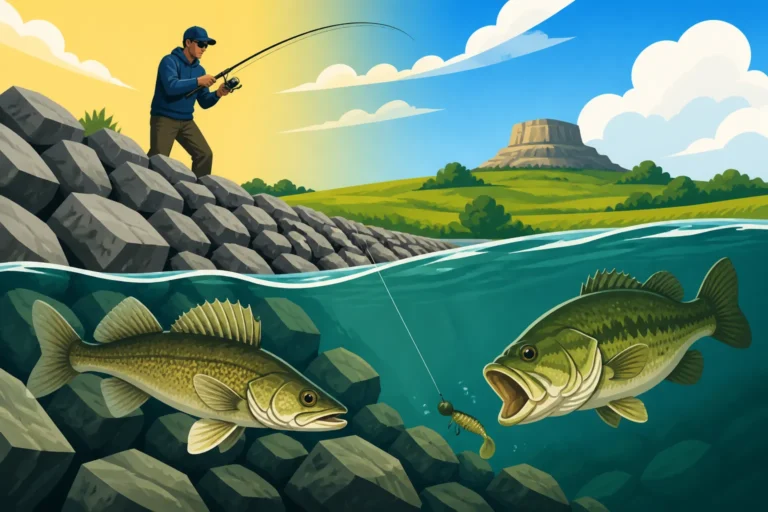
As we discussed, bass will often move shallow when the water turns muddy. This is where the water warms up faster, where new food sources might be washed in, and where dense cover provides perfect ambush points. When you're fishing in Nebraska, this means really concentrating on the banks, especially those with plenty of structure. Look for laydowns, submerged brush piles, weed lines, docks, riprap, and even flooded terrestrial vegetation like bushes or grass. These are all prime locations for bass to hide and wait for an easy meal.
Whether you're How to Fish From the Bank Without a Boat or fishing from a boat, cast as close to this cover as possible. Don't be afraid to put your lure right into the thickest stuff. Often, the bass will be tucked in so tight that a cast that lands a few feet away won't even register on their radar. Multiple casts to the same piece of cover from different angles can also be highly effective. Remember, they can't see well, so you need to practically bonk them on the head with your lure to get their attention. Pay attention to areas where there's a slight current break, as these spots can concentrate baitfish and, consequently, hungry bass.
Slow Presentations and Repetitive Casting
In clear water, a fast retrieve can often trigger a reaction strike. In muddy water, however, bass need more time to locate your bait. Slow down your retrieve significantly. This allows the vibrations and scent from your lure to disseminate more effectively and gives the bass a longer window to find and react to it. For jigs, this might mean slow dragging or hopping them along the bottom. For spinnerbaits and chatterbaits, a slow-rolling retrieve, just fast enough to get the blades or skirts working, is often best.
Don't be afraid to make repetitive casts to the same target area. If you think a bass should be there, keep presenting your lure. It might take several passes before a bass finally detects it and decides to strike. Sometimes, a subtle change in retrieve speed or a slight pause is all it takes to convince a hesitant bass. This isn't the time for covering vast amounts of water quickly; it's about systematically dissecting prime areas with slow, deliberate presentations. Consider How to Catch Largemouth Bass in Farm Ponds During Summer tactics might need to be adjusted; if those ponds turn muddy, slowing down and targeting the edges becomes even more critical.
Maximizing Your Chances and Overcoming Frustration
Fishing in muddy water can test your patience, but a few key practices can make all the difference and help you stay positive.
The Importance of Scent, Noise, and Vibration
We've touched on this, but it bears repeating: don't underestimate the power of scent, noise, and vibration. If your chosen lure isn't making enough commotion or doesn't have a strong scent profile, consider adding some external attractants. Scent sprays, dips, or even injecting scent into soft plastics can significantly increase your chances. For example, a plain black and blue jig is good, but a black and blue jig with a scented soft plastic trailer, and maybe a rattle band added, is even better. You can find a wide array of scent additives and rattling devices on Amazon that can be easily applied to your existing lures.
Always opt for lures that move a lot of water or create distinct thumping, clicking, or rattling sounds. Think about a fish finder in murky conditions – it's mostly useless for visual identification. Your lures need to act as their own "fish finders," emitting signals that bass can detect with their lateral line and ears. Experiment with different sound frequencies and vibration patterns if one isn't working. Sometimes a low thud is better, sometimes a high-pitched rattle.
Reading the Water (Even When It's Murky) and Adjusting to Conditions
Even in muddy water, you can still "read" the environment. Look for subtle changes. Are there areas where the water is slightly less turbid, perhaps in a protected cove or behind a point? These pockets of clearer water can be magnets for bass. Pay attention to current breaks, seams where faster water meets slower water, and any visible structure. These are still high-percentage areas.
The weather can also play a role. Muddy water often comes after heavy rains, which might be accompanied by dropping air pressure. Understanding Nebraska Fishing Weather and Barometric Pressure Tips can give you an edge, as bass often react differently to pressure changes. If the sun comes out after a storm, it might warm the shallow, muddy water further, increasing bass activity. Experiment with different depths and retrieve speeds until you find what the fish are reacting to. Don't be afraid to change lures frequently if you're not getting bites; what worked a few hours ago might not work now.
Patience, Persistence, and Enjoying the Challenge
Ultimately, fishing muddy water requires a lot of patience and persistence. It's easy to get discouraged when you can't see your lure or feel many bites. But remember, the fish are there, and they're still feeding. Your job is to present a compelling enough target that they can't resist.
This challenge can also be incredibly rewarding. When you finally connect with a chunky largemouth after meticulously working a muddy bank, the satisfaction is immense. It proves you've adapted, you've learned, and you've outsmarted the conditions. So, next time you face a chocolate milk lake in Nebraska, don't despair. Embrace the challenge, apply these techniques, and you might just have one of your most memorable fishing trips. And hey, if you're targeting Nebraska Largemouth Bass Fishing specifically, these skills will serve you well across many of the state's diverse waterways.
Disclaimer
Fishing regulations and conditions can change rapidly. Always consult the latest Nebraska Game and Parks Commission regulations before heading out. The information provided in this guide is for general informational purposes only and should not be considered legal advice or a substitute for official regulations. Be aware of local Nebraska Fish Consumption Advisory guidelines, especially in certain bodies of water. Stay safe and enjoy your time on the water!