Best Boat Trailer Tires for Gravel Boat Ramps
There's nothing quite like the crunch of gravel under your tires as you head to a favorite fishing spot, but that familiar sound can quickly turn into a headache when it comes to your boat trailer. Many of Nebraska's hidden gem lakes and river access points, from the Sandhills to the Missouri River, often feature rugged gravel boat ramps and access roads, which can be brutal on standard trailer tires, leading to flats, blowouts, and frustrating delays. This guide will help you understand what makes certain boat trailer tires better equipped to handle these rough conditions, ensuring your journey to the water is smooth and worry-free.
Why Gravel Boat Ramps Are a Menace to Standard Trailer Tires
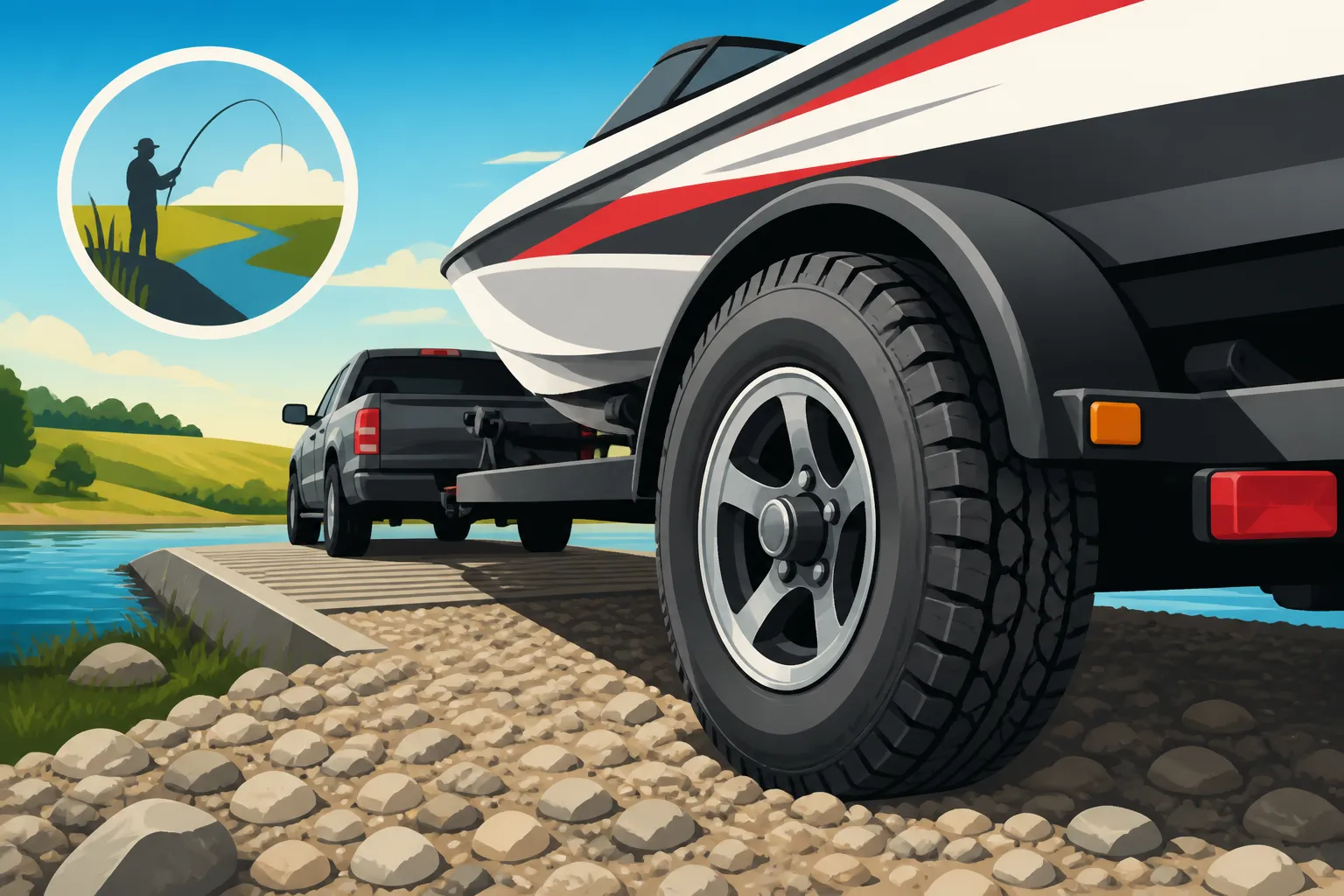
Let's face it, those pristine concrete ramps are a luxury, and in Nebraska, especially when you're seeking out quieter spots, you're bound to encounter more than your fair share of gravel. And gravel, my friends, is not your trailer tire's best friend. It's a relentless adversary that can quickly wear down or outright destroy tires not designed for its specific challenges.
The Abrasive Nature of Loose Stone
Imagine sandpaper, but with sharp, uneven edges. That's essentially what gravel is to your tires. As you drive or back down a gravel ramp, the loose stones act like tiny chisels, constantly scraping and cutting at the tire's tread and sidewalls. This continuous abrasion causes faster wear than smooth pavement ever would. Over time, it thins the rubber, making it more susceptible to punctures. Furthermore, the constant friction can generate heat, especially on a longer tow to a remote lake, weakening the tire's structural integrity.
Puncture Risks and Sidewall Damage
This is the big one. Gravel roads and ramps are littered with sharp rocks, jagged edges, and sometimes even debris like broken glass or rusty nails that get mixed in. A standard highway-rated trailer tire, often with thinner sidewalls and less aggressive tread, is an open invitation for a puncture. A sharp stone can easily slice through a sidewall as you navigate a tight turn or hit an unseen rock. I've seen more than one fishing trip cut short by a tire that just couldn't handle the abuse of a less-maintained access road, costing precious angling time at a place like Lake McConaughy Shoreline Fishing Access. This is why thinking ahead about your tires is just as important as knowing What to Check Before Launching a Boat in Nebraska.
Heat Buildup and Uneven Wear
While the gravel itself can cause heat from friction, the combination of often-underinflated tires (more on that later), heavy loads, and sometimes longer distances on gravel roads means tires work harder. This increased workload generates more heat. Excessive heat can degrade the rubber, lead to tread separation, and contribute to catastrophic blowouts. On gravel, tires also tend to flex more, especially if you're pulling a larger boat, which further intensifies heat production. Uneven surfaces mean parts of the tire are constantly taking more stress than others, accelerating wear in specific spots rather than a uniform pattern.
Essential Characteristics of Durable Boat Trailer Tires for Gravel
When you're choosing tires for your boat trailer, especially with those Nebraska gravel roads and ramps in mind, you need to look beyond just the price tag. Several key characteristics will determine how well a tire stands up to the punishment.
Robust Construction and Ply Rating
The internal construction of the tire is paramount. You want a tire that's built tough from the inside out. This is where the "ply rating" comes into play. The ply rating indicates the strength and load-carrying capacity of the tire's sidewalls and tread. A higher ply rating means more layers of material, usually nylon or polyester cords, reinforced with steel belts. For gravel, you should be looking for tires with a higher ply rating, generally 8-ply or more, especially if you're hauling anything other than a very small jon boat. These extra layers provide superior resistance to punctures and cuts from sharp rocks. While they might ride a little stiffer on pavement, that added resilience is exactly what you need when you're backing down a rough, unpaved ramp at Harlan County Reservoir Fishing.
Aggressive Tread Design
Standard trailer tires often have a fairly smooth, shallow tread pattern designed for highway use. This is precisely what you don't want on gravel. For gravel, an aggressive, deeper tread pattern is crucial.
- Deep Lugs: Look for tires with prominent, blocky tread lugs that can grip loose surfaces. These help the tire shed small stones rather than holding onto them and grinding them into the casing.
- Self-Cleaning Design: Tread patterns with wider grooves are often described as "self-cleaning." This means they're designed to naturally eject small stones and mud as the tire rotates, preventing buildup that could otherwise lead to punctures or loss of traction.
- Shoulder Protection: The outer edge of the tire, or the shoulder, is particularly vulnerable to damage from rocks thrown up by the tow vehicle or from scraping against obstacles. Tires with reinforced, wrap-around tread on the shoulders offer an extra layer of defense against cuts and abrasions.
Adequate Load Capacity
This might seem obvious, but it's often overlooked. Your trailer tires must be rated to safely carry the full weight of your boat, motor, trailer, and all your gear (coolers, tackle boxes, etc.). Exceeding a tire's load capacity, even occasionally, significantly increases its susceptibility to damage, especially on rough surfaces where the tire is already under stress. The extra flexing and heat generated by an overloaded tire make it a prime candidate for a blowout on a bumpy gravel access road. Always check your boat and trailer's Gross Vehicle Weight Rating (GVWR) and compare it against the tire's "ST" (Special Trailer) or "LT" (Light Truck) designation and its maximum load rating. Remember, the load capacity listed on the tire is per tire, so ensure the combined capacity of all your trailer tires exceeds your total loaded weight. This is a fundamental aspect of general boat safety, much like understanding Nebraska Boat Registration and Equipment Requirements.
Types of Tires Best Suited for Gravel Boat Ramps
When it comes to trailer tires, you'll primarily encounter two main categories: Special Trailer (ST) tires and Light Truck (LT) tires. Within these, you'll also decide between bias-ply and radial construction. Making the right choice here can be the difference between a smooth trip and a frustrating roadside repair.
Bias-Ply vs. Radial Tires: A Core Distinction
This is a fundamental choice that impacts performance, durability, and cost.
Bias-Ply Tires
Bias-ply tires have cords that run diagonally from bead to bead, crisscrossing each other in multiple layers.
- Pros for Gravel: They typically have stiffer sidewalls due to their construction, making them more resistant to sidewall punctures and cuts – a huge advantage on sharp gravel. They can also handle heavier loads well and are often more budget-friendly upfront. For shorter trips on very rough, sharp gravel, this sidewall strength can be a lifesaver.
- Cons: The stiffness that protects the sidewalls can also mean they generate more heat and tend to flat-spot when parked for long periods. They also have a less forgiving ride and can wear more quickly on paved roads compared to radials. Their internal friction also means they build heat faster at highway speeds.
- When to Choose: If most of your fishing involves slow speeds on extremely rocky, challenging gravel roads or short hauls to nearby, rough access points, and you prioritize sidewall strength above all else, bias-ply might be a consideration. Think of those really isolated spots that few dare to venture, where you're not going fast anyway.
Radial Tires
Radial tires have cords that run perpendicular to the direction of travel, with stabilizing belts under the tread.
- Pros for Gravel: They offer a much smoother ride and better heat dissipation, which is crucial for longer hauls to spots like Merritt Reservoir Fishing Guide where you might hit gravel after significant highway travel. The tread and sidewalls work independently, allowing the tread to flex and conform better to uneven surfaces, improving traction. While traditionally thought of as more vulnerable in the sidewall, modern radial ST tires with reinforced sidewalls are now quite robust.
- Cons: Can be more expensive than bias-ply. While the tread is generally more resistant to punctures than bias-ply on highways, the sidewalls, traditionally, were seen as a weak point on truly sharp gravel. However, advancements in ST radial tires have largely addressed this concern.
- When to Choose: For a mix of highway driving and gravel, and if you value a smoother ride, better fuel efficiency (marginally), and superior heat management on longer hauls, radials are generally the preferred choice. Many modern boat trailers come with radial tires as standard.
Special Trailer (ST) vs. Light Truck (LT) Tires: Purpose-Built vs. Adapted
Special Trailer (ST) Tires
ST tires are specifically engineered for trailer applications, not passenger vehicles.
- Key Features: They typically have a stiffer sidewall to prevent sway and improve stability, especially with heavy loads. Their construction is designed to withstand the unique stresses of trailering, which involves less turning and more constant straight-line load bearing. They often have high load capacities and are designed to prevent rolling resistance. Many major manufacturers offer robust ST radial options that incorporate gravel-friendly features.
- Pros for Gravel: Good ST radial tires today often have reinforced sidewalls and more aggressive tread patterns than their predecessors, making them much better for gravel. They are designed for the specific demands of trailering, ensuring stability and load capacity. Look for brands known for heavy-duty construction. You can often find excellent options from reputable tire manufacturers at places like Bass Pro Shops or even through online retailers like Amazon, offering specific models designed to handle rougher terrain.
- Cons: Historically, they weren't always designed with aggressive off-road tread in mind, but this is changing with newer models.
Light Truck (LT) Tires
LT tires are designed for light trucks, SUVs, and vans, intended for both carrying heavy loads and providing traction on various terrains.
- Key Features: LT tires, especially "all-terrain" (A/T) or "rugged terrain" (R/T) varieties, boast very aggressive tread patterns and extremely durable sidewalls, often with higher ply ratings (like 10-ply or 12-ply). They are built to withstand off-road abuse and provide excellent traction in mud, dirt, and, yes, gravel.
- Pros for Gravel: This is where LT tires truly shine on gravel. Their robust construction and aggressive tread make them highly resistant to punctures and offer superior grip on loose surfaces. If you frequently navigate truly gnarly, long stretches of gravel road to reach a remote access point, LT tires are a strong contender. They are often "overbuilt" for a boat trailer, which is a good thing when dealing with gravel.
- Cons: They might be overkill for lighter trailers or trailers that rarely see gravel. They can be more expensive than ST tires. Also, some argue that ST tires are designed for trailer-specific stresses (less turning, more vertical load) and LT tires, while robust, aren't optimized for those exact trailer dynamics. However, for sheer gravel durability, they are hard to beat.
- When to Choose: If your fishing adventures consistently take you down unpaved, sharp, and potentially long gravel roads to reach your launch point, and your trailer's weight is appropriate for LT tire sizing, these are an excellent choice for maximum peace of mind.
Here's a quick comparison:
| Feature | Bias-Ply (ST) | Radial (ST) | Light Truck (LT) All-Terrain/Rugged |
|---|---|---|---|
| Construction | Cords crisscross diagonally | Cords run perpendicular, with tread belts | Robust radial construction with aggressive tread |
| Sidewall | Very stiff, good puncture resistance (historically) | More flexible, modern ones reinforced for gravel | Extremely tough, excellent puncture resistance |
| Heat Dissipation | Poorer, can build heat faster | Better, especially for longer highway hauls | Good, designed for varied terrain and loads |
| Ride Quality | Stiffer, can bounce more | Smoother, more compliant | Good on pavement, designed to absorb rough terrain |
| Gravel Traction | Moderate, depends on tread | Good, conforms to surface | Excellent, aggressive tread sheds rocks and grips loose surfaces |
| Wear on Pavement | Can wear faster, flat-spotting possible | Better, more even wear | Very good, designed for mixed use |
| Cost | Generally lower | Mid-range to higher | Higher |
| Best For | Very short, extremely rough, sharp gravel roads | Mix of highway and moderate to rough gravel | Long stretches of very rough, sharp gravel, maximum durability |
Ultimately, for most Nebraska anglers dealing with occasional to frequent gravel ramps, a good quality ST radial tire with a higher ply rating and an all-season or mild all-terrain tread pattern is a fantastic compromise. If you're consistently tackling seriously rugged, long gravel roads, stepping up to an LT all-terrain tire might be worth the investment for the ultimate peace of mind. Remember that ensuring your boat is properly registered and equipped for safety, as discussed in Nebraska Boat Registration and Fishing Rules, is just as important as tire choice.
Maintenance and Best Practices for Gravel Ramp Tires
Even the toughest tires need a little love and attention, especially when they're regularly subjected to the rigors of Nebraska's gravel boat ramps. Proper maintenance and smart practices can significantly extend the life of your tires and prevent unwelcome surprises on your way to the water.
Consistent Tire Pressure is Paramount
This might sound like a broken record, but it's the single most important factor for tire longevity and safety, regardless of the terrain. Always inflate your trailer tires to the maximum PSI (pounds per square inch) indicated on the tire's sidewall. Do not confuse this with the vehicle's recommended tire pressure or some arbitrary number you think looks good. Trailer tires are designed to carry heavy loads, and proper inflation prevents excessive flexing, reduces heat buildup, and provides the necessary rigidity to resist punctures.
- Why it Matters on Gravel: Underinflated tires on gravel will flex more, increasing internal heat and making the sidewalls more vulnerable to cuts from sharp stones. Overinflated tires, while stiff, can become too rigid and prone to sudden impact damage. Sticking to the manufacturer's maximum recommendation ensures the tire is operating within its optimal design parameters for load and durability. Check your pressure before every trip, especially when temperatures fluctuate, as air pressure changes with temperature.
Regular Inspection for Damage
Make it a habit to inspect your trailer tires thoroughly before and after every trip, especially after traversing gravel.
- Look for Cuts and Punctures: Pay close attention to the tread and, most importantly, the sidewalls. Small nicks or cuts can worsen over time, leading to a blowout. If you find a foreign object, assess if it's deeply embedded or just superficial.
- Check for Bulges or Cracks: Any bulges in the sidewall indicate internal damage and mean the tire is unsafe to use. Cracks, particularly around the bead or in the sidewall, suggest dry rot or aging, even if the tread looks good.
- Examine Tread Wear: While a certain amount of wear is normal, look for uneven wear patterns, which could indicate alignment issues or improper inflation. Also, check the tread depth – once it's too shallow, the tire's ability to shed gravel and resist punctures is severely compromised.
- Valve Stems: Don't forget the valve stems! They can crack or corrode, leading to slow leaks.
Load Management and Distribution
Overloading your trailer is a recipe for disaster, especially on rough gravel. Ensure your boat's weight, along with all your gear, does not exceed the combined load capacity of your tires.
- Distribute Weight Evenly: Try to distribute your gear evenly within the boat. Avoid putting all your heavy items on one side or too far forward or back, as this can put undue stress on specific tires and the trailer's axle.
- Tongue Weight: Proper tongue weight (the downward force the trailer exerts on your hitch) is crucial for stable towing. Too little or too much can lead to sway, making your trailer harder to control and potentially causing uneven tire wear, especially when maneuvering on uneven gravel surfaces. Aim for 10-15% of the total trailer weight. This attention to detail contributes to overall towing safety, complementing proper How to Back a Boat Trailer Down a Ramp techniques.
Consider a Spare Tire and Repair Kit
This is non-negotiable for any serious angler, especially one venturing onto gravel roads. A flat tire on a remote gravel road can turn a great fishing day into a miserable ordeal.
- Mounted Spare: Always carry a fully inflated spare tire that matches your trailer's wheels and tires. Ensure it's easily accessible and check its pressure periodically.
- Basic Repair Kit: A tire plug kit and a portable air compressor can be lifesavers for minor punctures, allowing you to get off the gravel and to a proper repair shop. While you're at it, don't forget the tools to actually change the tire – a lug wrench and a jack suitable for your trailer's weight. Many anglers often forget these basic but crucial items.
Proper Driving Habits on Gravel
How you drive on gravel makes a huge difference.
- Slow Down: Reduce your speed significantly on gravel roads and when approaching ramps. This minimizes impact forces and gives you more time to react to obstacles.
- Avoid Sharp Turns and Hard Braking: These actions put immense lateral and longitudinal stress on tires, increasing the risk of punctures and sidewall damage. Take turns wide and brake gently.
- Mind the Edges: When backing down a gravel ramp, be mindful of the edges. Dropping a wheel off the prepared surface onto a sharp, unseen rock can instantly cause a flat. Consider using a spotter, if possible, to guide you safely.
By being proactive with tire choice and diligent with maintenance, you can greatly reduce the chances of a tire-related mishap and ensure your focus remains on catching fish, not fixing flats, whether you're heading to Lake Ogallala Trout Fishing or exploring a quiet bend on the Elkhorn River Fishing.
Disclaimer
This article is for general informational purposes only and does not constitute professional advice. Laws, prices and regulations vary by location and change over time. Consult a qualified professional for guidance on your specific situation.