How to Find Crappie in Cold Water
The dropping temperatures of late fall, winter, and early spring in Nebraska can make crappie fishing feel like a puzzle, with fish seemingly vanishing from their usual haunts. It's a common frustration for anglers who expect those easy summer bites. But don't despair! Crappie are still out there, just in different places and needing a different approach. This guide will help you understand where these popular panfish retreat when the mercury drops, and how to find them even in the chilliest Nebraska waters.
The Cold Reality: Why Crappie Change Their Ways
When water temperatures plummet, crappie don't just disappear; they simply adjust their behavior to conserve energy and find comfort. This understanding is the first step to unlocking consistent cold water crappie success here in Nebraska.
Seeking Thermal Stability
Like most cold-blooded creatures, crappie are highly sensitive to temperature changes. As surface waters cool dramatically, especially during those crisp Nebraska autumn days and throughout the winter, crappie will actively seek out areas where the water temperature is more stable. This often means moving to deeper parts of a lake or reservoir. Deep water acts like an insulator, maintaining a more consistent, albeit cold, temperature than the fluctuating shallows. Think of it as their winter retreat – a place where they don't have to expend as much energy fighting temperature swings.
The Metabolism Slowdown
Cold water drastically slows down a crappie's metabolism. They become less active, their digestion slows, and they don't need to feed as frequently or aggressively. This metabolic shift is crucial to remember because it directly impacts your fishing technique. Fast-moving baits that might have triggered strikes in warmer months will often be ignored. Instead, presentations need to be slow, deliberate, and right in front of the fish's face. They're not going to chase a meal; they'll simply ambush it if it's easy and close.
The Comfort of Cover and Structure
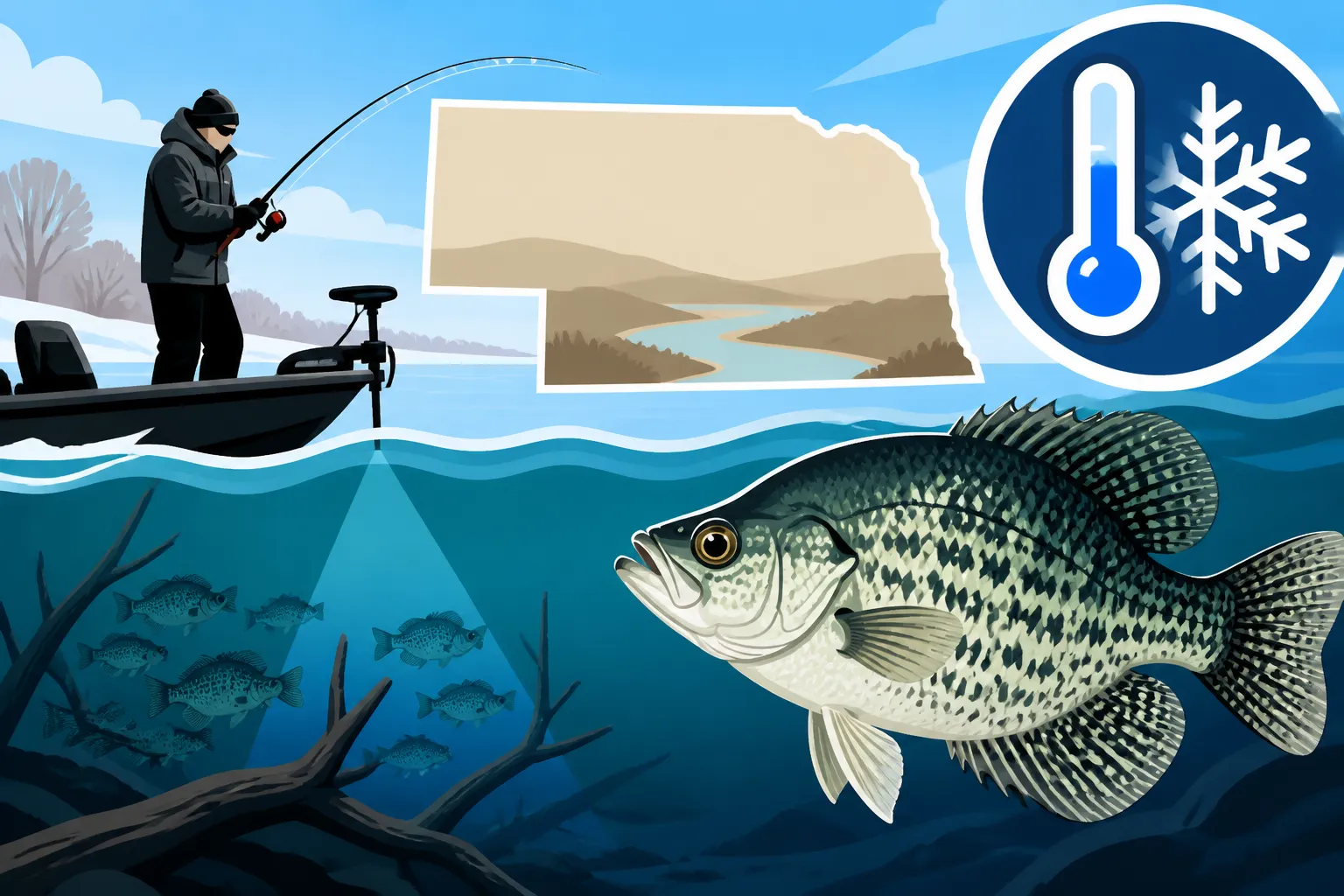
Even in cold water, crappie are creatures of cover and structure. They use submerged trees, brush piles, rock formations, and even bridge pilings for protection from predators and as ambush points for the sparse forage available. The key difference in cold water is that they tend to hug this cover much tighter and deeper. Instead of roaming the edges, they'll often be right in the thickest parts of the structure, almost piled up. Locating these isolated pieces of cover in deeper water is paramount for finding concentrated schools of crappie. Understanding these seasonal shifts is fundamental to successful crappie fishing throughout the year, not just in winter. For a broader perspective on how fish behave with changing seasons, check out our guide on Nebraska Fishing Seasons Explained.
Where to Pinpoint Cold Water Crappie in Nebraska
Knowing why crappie move is one thing, but knowing where to actually find them in Nebraska's diverse waterways is the real challenge. It requires a bit of detective work and an understanding of key topographical features.
Deep Water Channels and Ledges
In Nebraska's larger reservoirs and even some bigger ponds, crappie will often congregate along the deepest channels and ledges. These are the submerged riverbeds or sharp drop-offs that plunge into deeper water. Crappie will stage along the edge of these channels, sometimes suspended just above the bottom or tucked tightly against the break. Areas where a channel makes a sharp bend or converges with another channel can be especially productive, as these create natural current breaks and holding areas. Think about the main lake basin in reservoirs like Branched Oak Lake or Pawnee Lake; these often have distinct old creek channels running through them.
Submerged Timber and Brush Piles
This is arguably the holy grail for cold water crappie anglers. Crappie absolutely love to hide and suspend within submerged timber and man-made brush piles. These structures offer vertical cover and a sense of security. In cold water, they'll often be stacked tightly within the densest parts of these brush piles, sometimes several layers deep. Finding these hidden fish factories can be tough, but they're worth the effort. Look for flooded timber stands that extend into deeper water, or consult lake maps for known brush pile locations. Many local fishing clubs and the Nebraska Game and Parks Commission have worked to establish these havens. For specific tactics related to one of the state's best crappie fisheries, our article on Branched Oak Lake Crappie Fishing offers great insights.
Bridge Pilings and Docks
Man-made structures like bridge pilings and permanent docks with significant depth can also be prime cold water crappie spots. The pilings themselves offer vertical structure, while the shade and cover provided by the dock structure above can also attract baitfish, and thus crappie. Crappie will often suspend close to the pilings, especially on the side that breaks any subtle current. The key here is depth; shallow docks are unlikely to hold crappie in truly cold water. Look for structures in areas where the water is at least 15-20 feet deep.
Creek Mouths and Wintering Holes
In the late fall and early winter, major creek mouths can be excellent crappie locations. Creeks often carry slightly warmer water or nutrients into the main body of water, attracting baitfish and subsequently crappie. As winter progresses, these areas can transition into "wintering holes" – specific deep depressions or protected basins where crappie will gather in large schools. These spots can be gold mines if you can locate them, often holding hundreds of fish. They won't be actively feeding much, but if you drop a bait right on their noses, you can still entice a strike. Many anglers find success in the deeper pockets of lakes like Pawnee Lake Fishing during these colder months.
Tactics for Tempting Nebraska's Cold Water Crappie
Finding the fish is half the battle; getting them to bite is the other, often more challenging, half. Because of their slowed metabolism, cold water crappie require subtle and patient presentations.
The Art of Slow Presentation
Forget aggressive retrieves or fast jigging. In cold water, everything needs to slow down. Imagine your bait barely moving, almost suspended in front of a crappie's face. This could mean letting a jig sit motionless for extended periods, or an incredibly slow retrieve that just makes the tail of a soft plastic quiver. Sometimes, the fish are so lethargic that the bite itself is barely detectable – just a subtle weight or a slight tick on your line. This is why sensitive gear is so important, which we'll discuss later.
Mastering Vertical Jigging
Vertical jigging is often the most effective technique for cold water crappie, especially when they're holding tight to structure or suspended in deep water. This involves positioning your boat (or yourself if ice fishing) directly over the fish or structure you've located on your sonar. Then, you simply drop a small jig or spoon straight down, presenting it at the exact depth the fish are holding. The movement should be minimal: a subtle lift and fall, often just an inch or two, followed by a pause. The pause is critical – sometimes that's when the crappie decides to strike. Experiment with the length of your pauses; sometimes 10-15 seconds of stillness is what it takes. If you're ice fishing for crappie, this technique is absolutely essential, and you can learn more about it in our guide on How to Catch Crappie Through the Ice.
The Power of Live Bait
While artificial lures can be effective, live minnows are often irresistible to cold water crappie. Their natural movement and scent can trigger bites even from the most finicky fish. Rigging a small minnow on a light jig head or a plain hook under a slip bobber is a classic cold water tactic. Make sure your minnows are lively and correctly hooked to maximize their appeal. A small, subtle minnow is usually best, and knowing the Best Minnow Size for Crappie Fishing can make a real difference. Position the minnow just above or right in the middle of the crappie school. Again, a slow, patient approach is key, allowing the minnow's natural movements to do the work.
Leveraging Your Electronics
Modern fish finders are invaluable tools for cold water crappie fishing. They allow you to quickly locate deep water channels, submerged timber, and most importantly, the crappie themselves. Look for arches or schools of dots clustered near structure or suspended in open water. Pay close attention to the depth at which the fish are holding, as this is where you'll want to present your bait. Side imaging and down imaging can help you identify brush piles and timber even before you're directly over them. If you're ice fishing, a flasher or a portable fish finder like those reviewed in Best Portable Fish Finder for Ice Fishing can be a game changer for pinpointing crappie under the ice. Without electronics, you're often just guessing, which can be a very frustrating way to spend a cold day on the water.
Essential Gear for Cold Water Crappie Success
Having the right gear makes a huge difference, especially when you're dealing with light bites and lethargic fish in chilly conditions. Don't underestimate the impact of sensitive equipment.
Sensitive Rods and Reels
For cold water crappie, sensitivity is paramount. You need to feel those incredibly subtle bites. A light or ultralight action spinning rod, typically 5 to 7 feet long, with a fast tip, is ideal. Graphite rods offer the best sensitivity. Pair this with a small, lightweight spinning reel (size 500 to 1000) spooled with 4-6 pound test monofilament or fluorocarbon line. Monofilament has some stretch, which can be forgiving with light line, while fluorocarbon offers excellent sensitivity and low visibility. Some anglers prefer a very fine braided line with a fluorocarbon leader for ultimate sensitivity. For general gear advice that applies to many species, consider our guide on finding the Best Rod and Reel Combo for Beginners in Nebraska.
The Right Lures and Baits
When it comes to lures, smaller is usually better for cold water crappie.
- Jigs: Small plastic tube jigs (1/32 to 1/16 ounce) are consistently effective. Colors like chartreuse, white, black, or combinations (e.g., black and chartreuse) are often productive. The Best Jig Color for Nebraska Crappie often varies by water clarity and local forage, so be prepared to experiment.
- Soft Plastics: Tiny soft plastic crappie baits, resembling minnows or grubs, on a lightweight jig head are another staple. Brands like Bobby Garland or Johnson Crappie Buster offer a wide array of options. You can find a vast selection of these on Amazon, often in multi-packs to cover all your color bases.
- Spoons: Small ice fishing spoons or thin metal spoons can also be effective, especially when jigged vertically.
- Live Minnows: As mentioned, live minnows are hard to beat. Bring plenty of lively ones in a good minnow bucket with an aerator.
Critical Tools for Location
Beyond your rod and reel, a few key tools will significantly increase your odds of finding crappie:
- Fish Finder/Sonar: We've already emphasized this, but it's worth reiterating. Whether it's a boat-mounted unit, a portable ice fishing flasher, or a modern Livescope-style system, electronics are a huge advantage.
- Lake Maps/GPS: Detailed lake maps (physical or on an app) help identify old river channels, humps, and drop-offs. If you can mark brush piles or productive spots on a GPS, even better.
- Temperature Gauge: A simple thermometer can help you find subtle temperature differences, especially near creek mouths, which might attract crappie. Even a slight increase of a degree or two can make a difference.
- Ice Auger: If you're targeting crappie through the ice, a reliable ice auger is essential for cutting holes to fish. Always adhere to Nebraska Ice Fishing Regulations for safety and legality.
Cold Water Crappie Location and Technique Summary
| Location Type | Key Characteristics | Preferred Technique | Recommended Bait/Lure |
|---|---|---|---|
| Deep Channels & Ledges | Steep drop-offs, submerged riverbeds, consistent depth | Vertical Jigging | Small jigs (1/32-1/16 oz), soft plastics, live minnows |
| Submerged Timber/Brush | Dense wood cover, often in 15-30+ feet of water | Vertical Jigging, Slow Drop | Small jigs, live minnows, tube baits |
| Bridge Pilings & Docks | Vertical structure in deeper water, current breaks | Vertical Jigging | Small jigs, tube baits, minnows under a How to Rig a Slip Bobber for Panfish |
| Creek Mouths/Wintering Holes | Deepest parts of lake, protected basins, subtle temp. changes | Slow Vertical Jigging | Live minnows, slow-falling soft plastics |
Finding crappie in cold water in Nebraska isn't about luck; it's about understanding their cold-weather behavior, knowing where they seek refuge, and adapting your tactics to present baits in a way they'll accept. It takes patience and persistence, but the reward of a stringer full of slabs from chilly waters is one of the most satisfying experiences in angling. So bundle up, grab your sensitive gear, and head out to those deeper spots—you might just find your next favorite fishing hole.
Disclaimer
Fishing regulations and conditions can change. Always consult the latest Nebraska Game and Parks Commission regulations before heading out. Be aware of weather conditions and ice safety if fishing in winter. This guide is for informational purposes only.