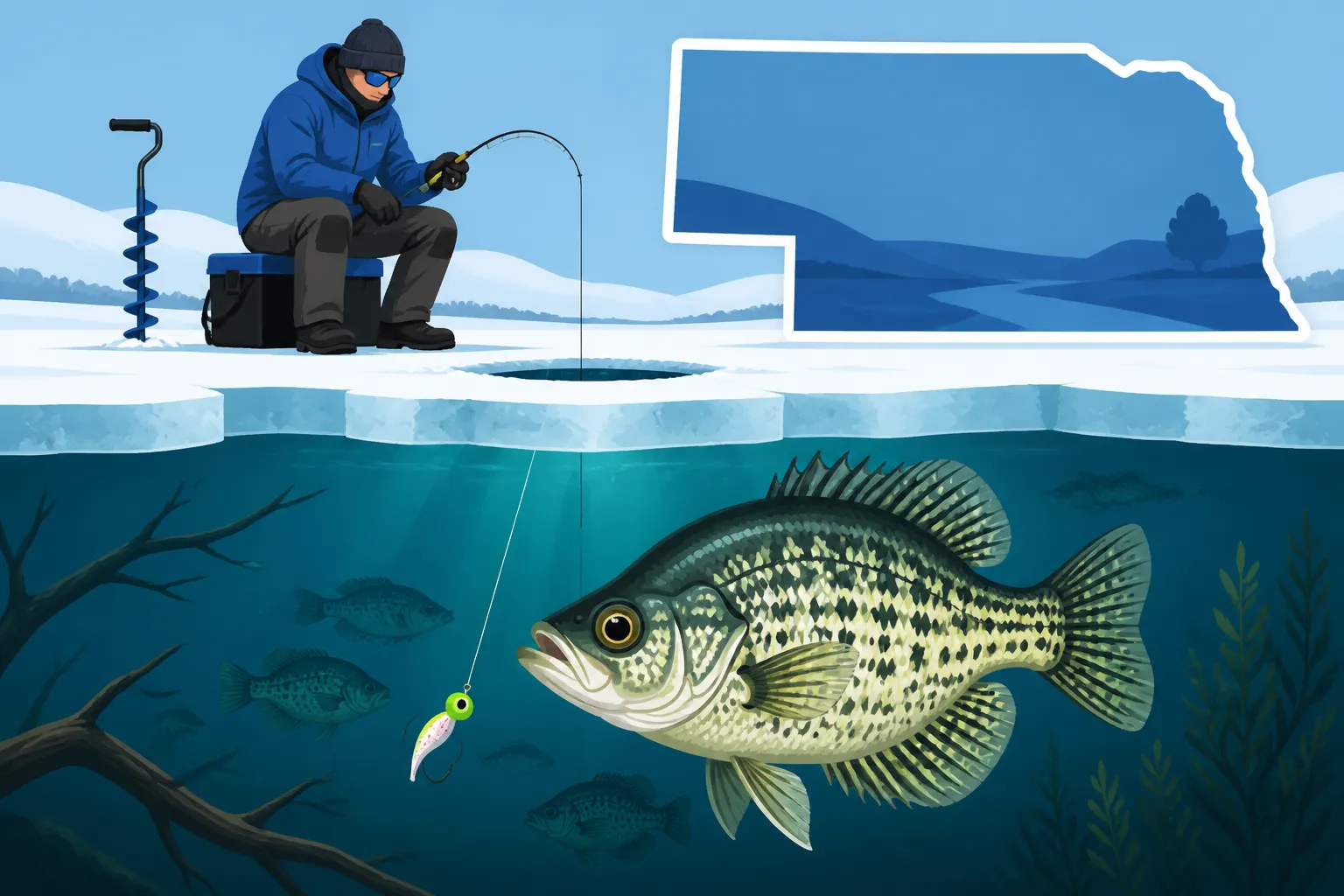
How to Catch Crappie Through the Ice
There's nothing quite like the crisp, still air of a Nebraska winter morning, the crunch of snow underfoot, and the promise of a hot bite through the ice. But let's be real, chasing crappie in these frigid conditions can be incredibly frustrating. You drill hole after hole, battle numb fingers, and sometimes it feels like the fish have simply vanished. This guide is all about cutting through that frustration, giving you the practical strategies and essential knowledge to consistently put Nebraska crappie on the ice.
Understanding Ice Crappie Behavior
When the surface of our beloved Nebraska lakes and reservoirs locks up with ice, the world beneath transforms. Crappie, those feisty panfish we love, don't just disappear; they adapt. Understanding their winter habits is the first crucial step to catching them consistently. They're still there, just playing by different rules.
Where Crappie Hide Under the Ice
Crappie are masters of structure, and that doesn't change when the water freezes over. In fact, their reliance on specific features often becomes even more pronounced. Under a blanket of ice, crappie tend to concentrate in areas that offer both food and protection from predators. Think about submerged timber, brush piles, old weed lines, and sharp drop-offs. In larger reservoirs like Merritt Reservoir or Branched Oak Lake, these could be drowned creek channels, submerged roadbeds, or even standing timber left from when the lake was flooded. Small sandpit lakes might have fewer dramatic features, but even a subtle depression or a cluster of cattails frozen into the ice near the shoreline can hold a school of crappie.
The key is often finding the "edge." Crappie will patrol the edges of weed beds, the lip of a sharp drop-off, or the perimeter of a brush pile. They don't want to expend much energy, so they'll often hold near these features, waiting for an easy meal to pass by. You might find them suspended over deeper water adjacent to structure, or tucked right into the cover itself. It takes a keen eye on your electronics and a bit of drilling to pinpoint these exact locations, but once you find one, you've likely found a whole school.
The Impact of Cold Water on Crappie Activity
Cold water significantly impacts crappie metabolism. Think of it like a human trying to run a marathon in sub-zero temperatures – everything slows down. Crappie become lethargic, their digestion slows, and they don't need to eat as frequently or as aggressively as they do in warmer months. This is why those frantic bites you get in spring and summer are often replaced by incredibly subtle "taps" or even just the feeling of extra weight on your line during ice season.
Their movements become more confined, and they often school up much tighter than usual. This schooling behavior is a protective mechanism, both from predators and to conserve energy. When you find one crappie, there's a very good chance many more are close by. This also means you might have to work a hole for a while, presenting your bait with minimal movement, to entice these sluggish fish. Patience and subtle presentations become paramount, as a fast, aggressive jigging action that works in open water might just spook them through the ice.
Essential Gear for Ice Crappie Success
Trying to catch ice crappie with just any old fishing setup is like trying to chop wood with a butter knife – you'll get frustrated fast. The right gear makes all the difference, enhancing your sensitivity to those notoriously light bites and keeping you comfortable in the elements.
Rods, Reels, and Line Choices
When it comes to ice crappie, finesse is the name of the game. Forget your heavy bass rods; we're talking ultralight gear designed for maximum sensitivity. A good ice fishing rod for crappie will typically be between 24 and 32 inches long, with a very sensitive tip that will show even the lightest tap. These rods are often made of graphite or a blend that transmits vibrations directly to your hand. You can find a fantastic selection of these specialized rods on Amazon, often bundled with small, lightweight spinning reels that are perfect for the task. For more details, check out our guide on Best Ice Fishing Rods and Reels.
Pair these rods with similarly small spinning reels (500 or 1000 size are common) that have a smooth drag. The line choice is equally critical. You want something thin and low-visibility, but with enough strength to handle a decent crappie. Many anglers opt for 2-4 pound test monofilament or fluorocarbon. Monofilament offers a bit of stretch, which can be forgiving with aggressive hooksets on light line, while fluorocarbon offers near-invisibility and less stretch for enhanced sensitivity. Some anglers even use light braided line with a fluorocarbon leader for ultimate sensitivity, though brave is not as popular for crappie as it is for other species.
Baits and Lures That Tempt Icy Crappie
Tiny is the rule for ice crappie baits and lures. Their reduced metabolism means they're not looking for a big meal; they want something small, easy to swallow, and irresistible. Jigs are king here, specifically micro-jigs, often 1/64 to 1/16 ounce. Small tungsten jigs are excellent because their density allows them to get down to depth quickly without a lot of bulk, and they offer better feel. Pair these tiny jigs with equally tiny soft plastics, such as micro-grubs, small tubes, or little panfish plastics in natural colors like clear, smoke, or chartreuse. On a bright day, brighter colors might attract them, but often subtle hues are best.
Live bait is another deadly option, especially when crappie are being finicky. Small minnows (like fatheads or rosies) hooked through the back or lips are hard for a crappie to resist. Maggots, wax worms, or even mealworms also work wonders when threaded onto a tiny jig or a bare hook. Often, tipping a small jig with a single live maggot can be the perfect combination of flash and natural appeal. The subtle movement of live bait is often enough to trigger a bite from a sluggish crappie. You can often find a wide array of these tiny jigs and soft plastics on Amazon, making it convenient to stock up before your next ice fishing adventure. When choosing jig colors, consider our insights on Best Jig Color for Nebraska Crappie.
Key Electronics and Safety Equipment
Beyond your rod and reel, a few pieces of equipment can drastically improve your ice crappie success and, more importantly, your safety. First, a reliable ice auger is non-negotiable. Whether it's a hand auger for thinner ice, a powerful gas-powered unit, or a quiet electric auger, you need to be able to punch plenty of holes quickly and efficiently. For a detailed look at how to use one effectively, check out our guide on How to Auger Through Thick Ice.
Next, electronics are a game-changer. A flasher unit (like a Vexilar or Marcum) or a portable fish finder can show you exactly what's beneath your hole – the depth, your jig, and most importantly, any fish that come by. This instant feedback lets you adjust your depth and presentation until you get a bite. Investing in a good portable fish finder, readily available on platforms like Amazon, is highly recommended. Learn more about choosing the right one in our article on the Best Fish Finder for Ice Fishing.
Finally, safety cannot be stressed enough when venturing onto the ice. Always carry ice picks around your neck; these can be lifesavers if you fall through. Wear appropriate layers to stay warm (our guide on What to Wear Ice Fishing in Nebraska has excellent tips), and consider cleats or ice creepers on your boots for traction. A portable ice fishing shelter, often found with great deals on Amazon, provides much-needed protection from the biting Nebraska wind and snow, making your day on the ice far more enjoyable and productive. And please, always check local conditions and know How Thick Ice Needs to Be to Fish Safely in Nebraska before stepping out.
Mastering Ice Crappie Techniques
Finding crappie under the ice is only half the battle. Presenting your bait in a way that entices these often-finicky biters requires a combination of patience, skill, and understanding their winter moods.
Drilling and Locating Fish
The most successful ice anglers aren't afraid to drill a lot of holes. Crappie often move in schools, and if you're not on them, you're not catching them. A common strategy is to drill a grid pattern or a line of holes across a promising piece of structure, like a point or a drop-off. Start shallower and work your way deeper, or vice-versa, until your electronics light up with fish. Don't be shy about moving around. If a hole isn't producing after 10-15 minutes, move to the next. Remember, it's often more efficient to find active fish than to try to make inactive fish bite.
Once you’ve drilled your holes, use your flasher or fish finder to scan each one. Look for arches or signals that indicate fish. Pay attention to the depth at which they're holding. Sometimes crappie will suspend high in the water column, especially during low-light conditions or over deeper water. Other times, they'll be belly-to-the-bottom, tucked into cover. The ability to quickly locate these schools is paramount, and your auger and electronics are your best friends in this search.
Presentation is Key: Jigs, Baits, and Sensitivity
Crappie through the ice demand a subtle presentation. Their bites are often incredibly light, sometimes feeling like nothing more than a slight pressure or a tiny twitch of your rod tip. This is where your sensitive ultralight rod earns its keep. Drop your tiny jig or live bait down to the depth where you're seeing fish on your electronics. If you don't see any, start at the bottom and work your way up slowly, pausing every foot or so.
Often, less is more when jigging for crappie. Try a very slow, subtle jigging motion – just a tiny shake or a slow lift and drop. Sometimes, just holding the bait perfectly still (known as "dead-sticking") is what it takes. If you're using a bobber, make sure it's a very light, sensitive float that barely offers any resistance when a crappie mouths the bait. Many experienced anglers prefer to watch their line where it enters the water or the tip of their rod, looking for any unnatural movement, rather than relying solely on a bobber. The moment you feel anything out of the ordinary, set the hook with a gentle but firm sweep.
Timing and Environmental Factors
While ice fishing can be productive all day, there are certainly prime windows for crappie activity. Much like open water, early morning and late afternoon/evening often yield the best bites. These low-light periods are when crappie tend to be most active and willing to roam from cover. Overcast days can also provide excellent fishing, as the reduced light penetration often keeps crappie more active throughout the day. Check out our guide on When Ice Fishing Season Starts in Nebraska for typical timing.
Environmental factors like barometric pressure and moon phases can also play a role. Crappie, like many fish, can be sensitive to sharp drops in barometric pressure, which often precede cold fronts. Rising or stable pressure often correlates with more active fish. You can find more specific guidance on this in our article How Barometric Pressure Affects Fishing in Nebraska. While less dramatic than a warm front, some anglers swear by specific moon phases, finding certain periods around the full or new moon to be more productive. For more on this, consult our Nebraska Fishing Moon Phase Tips.
Advanced Tips for Bigger Crappie
Once you've got the basics down and are consistently catching crappie, you might start dreaming of those "slab" crappie – the truly big ones that make for an impressive photo and a fantastic meal. Targeting these larger fish often requires a slight shift in strategy and a whole lot of patience.
Targeting Larger Slabs
Big crappie didn't get big by being careless. They're often more wary, and they tend to relate to structure a bit differently than their smaller counterparts. While smaller crappie might be schooling tightly, the biggest slabs are sometimes found on the fringes of the school, or even by themselves, holding to deeper, heavier cover. They might also suspend higher in the water column over very deep water, away from the main school, taking advantage of passing forage.
To target these larger fish, consider upsizing your bait just a touch. Instead of the smallest micro-jig, try a 1/16 or even a 1/8 ounce jig tipped with a slightly larger minnow or a bigger soft plastic profile. This can deter smaller crappie while appealing to the larger, more opportunistic fish. You might also need to exercise more patience, letting your bait sit for longer periods, or experimenting with even subtler jigging actions. Sometimes, the biggest crappie are the first to approach a bait, but they take their time before committing.
Adapting to Changing Conditions
Nebraska winters are nothing if not unpredictable. One day it's calm and clear, the next a blizzard rolls in. Being able to adapt your strategy to these changing conditions is a hallmark of a successful ice angler. For instance, after a major cold front, crappie might become even more sluggish. In these scenarios, switching to dead-sticking with live minnows or maggots might be more effective than active jigging. The key is to respond to what the fish are telling you.
Pay attention to light levels. On bright, sunny days with clear ice, crappie might push deeper or hold tighter to cover to avoid the light. On dark, overcast days, they might be more willing to roam shallower. Wind can also be a factor, making it harder to feel light bites and keep your line still. This is where a portable shelter really shines, allowing you to fish in comfort and concentrate on those subtle indicators. Continuously experimenting with depth, presentation, and even lure color until you find a pattern is crucial for sustained success. Don't be afraid to try something different if your usual tactics aren't working.
Here's a quick reference for essential ice crappie gear:
| Gear Item | Key Features | Why It's Important for Crappie |
|---|---|---|
| Ice Rod | 24-32 inches, ultralight action, sensitive tip | Detects subtle bites, provides good control over tiny lures |
| Ice Reel | 500-1000 size spinning, smooth drag | Handles light line, balanced with ultralight rod |
| Fishing Line | 2-4 lb test monofilament or fluorocarbon (or braid with fluoro leader) | Low visibility, high sensitivity, minimal line twist |
| Jigs | 1/64 – 1/16 oz tungsten micro-jigs, small spoons | Gets down fast, appeals to finicky crappie, good feel |
| Baits | Small minnows, maggots, wax worms, micro soft plastics (grubs, tubes) | Natural appeal, scent, subtle action |
| Ice Auger | Hand, gas, or electric | Drills holes quickly, essential for mobility and finding fish |
| Fish Finder/Flasher | Portable, shows depth, fish, and lure in real-time | Locates fish, shows bite activity, helps dial in depth |
| Ice Picks | Worn around neck | Essential safety device for self-rescue if falling through |
| Ice Cleats/Creepers | Strapped to boots | Prevents slips and falls on slick ice |
| Portable Shelter | Pop-up or flip-over style | Protection from elements, enhances comfort and focus |
Disclaimer
Fishing conditions and regulations in Nebraska can change. Always consult the latest Nebraska Game and Parks Commission regulations before heading out. This guide is for informational purposes only and does not constitute an endorsement of specific products or brands. Stay safe and fish responsibly.