Nebraska Bowfishing Rules
Stepping into the world of bowfishing in Nebraska can feel like venturing into an exciting, yet often confusing, territory compared to traditional angling. Many enthusiastic archers and anglers alike find themselves scratching their heads over specific regulations, wondering what fish they can legally target and where they can even participate. This comprehensive guide is designed to cut through that confusion, giving you a crystal-clear understanding of Nebraska's bowfishing rules so you can hit the water with confidence and stay on the right side of the law.
Understanding the Basics of Nebraska Bowfishing Regulations
Bowfishing, for the uninitiated, is essentially a hybrid sport, combining elements of archery and fishing. Instead of a rod and reel, anglers use a bow (recurve, compound, or crossbow) to shoot specially designed arrows at fish, often large "rough fish" or invasive species. It's a thrilling, active way to fish, but because it involves a projectile weapon and targets specific fish, it comes with its own unique set of rules that differ significantly from typical hook-and-line fishing. Neglecting these distinct regulations can lead to fines or penalties, putting a serious damper on your outdoor adventure.
The Nebraska Game and Parks Commission (NGPC) is the governing body for all fishing activities, including bowfishing, within the state. Their regulations are designed to manage fish populations, prevent the spread of aquatic invasive species, and ensure angler safety. It’s not just about what you can shoot, but also when and where, and even what equipment is permissible. Always remember that possessing a valid Nebraska Fishing License Guide is the first and most fundamental step before any kind of fishing, including bowfishing, begins.
The Importance of Legal Bowfishing Equipment
Just like you wouldn't use a spinning rod with a fly fishing reel, bowfishing requires specialized gear. You can’t just grab your deer hunting bow and some target arrows. Bowfishing bows are typically set up for quick shots and often have a reel (either a traditional spincast or a specialized bowfishing reel) attached to manage the line that's tied to the arrow. The arrows themselves are distinct, featuring a barbed tip designed to hold fish once shot, and a line attachment point.
Using the correct equipment isn't just about effectiveness; it's a legal requirement. For instance, broadheads – the multi-bladed hunting arrow tips used for big game – are almost universally prohibited for bowfishing due to their excessive damage and potential for harming non-target species. Your bowfishing arrow must be tethered to your bowfishing reel or another device to retrieve the fish. Many anglers look for durable, reliable bowfishing reels and arrows online, often checking platforms like Amazon for reviews and competitive pricing on popular brands such as Muzzy or AMS Bowfishing. Making sure your equipment meets the specifications outlined by the NGPC is crucial before you even think about aiming for a fish.
Why Bowfishing Targets "Rough Fish" and Not Game Fish
One of the most critical distinctions in Nebraska bowfishing is what you can legally shoot. Unlike traditional hook-and-line fishing where nearly all fish species are fair game (within size and bag limits), bowfishing in Nebraska is almost exclusively reserved for what are known as "rough fish" or non-game fish. This isn't just a quirk; it's a fundamental conservation strategy.
Game fish, like walleye, bass, crappie, and trout, are managed very carefully for sport and ecological balance. Shooting them with an arrow has a high mortality rate and doesn't allow for catch-and-release practices, which are vital for maintaining healthy populations. On the other hand, species like common carp, grass carp, drum, and gar are often abundant, sometimes invasive, and generally not sought after by traditional anglers for sport or table fare. Bowfishing these species helps manage their populations and offers a unique recreational opportunity without impacting the more delicate game fish populations. It's a great way to put your archery skills to use while also contributing to ecosystem health. If you're ever unsure about a species, it's always better to err on the side of caution or consult a comprehensive Nebraska Fish Species Identification Guide.
Species and Gear Regulations for Bowfishing
Getting into the specifics, knowing exactly which fish you can target with a bow and what gear is permissible is paramount for a legal and enjoyable outing. The regulations are pretty clear, but sometimes new bowfishers can get caught up in the excitement and overlook crucial details. This section will break down the eligible species and the equipment specifics you need to keep in mind.
Legal Species for Bowfishing in Nebraska
Nebraska's bowfishing regulations primarily focus on what are broadly categorized as "non-game fish" or "rough fish." This includes some of the most common and often large species found in the state's waters. The list is quite generous, allowing for plenty of targets.
Here are the primary species you can legally bowfish in Nebraska:
- Common Carp: These are perhaps the most popular bowfishing target. They are abundant in many Nebraska waters, grow to large sizes, and present a challenging target.
- Grass Carp (White Amur): These herbivorous carp are often stocked to control aquatic vegetation, but they are also fair game for bowfishers.
- Bighead Carp & Silver Carp: These are invasive species that pose a significant threat to aquatic ecosystems. Bowfishing them is highly encouraged to help control their populations, especially in rivers like the Missouri and Platte.
- Drum (Sheepshead): Also known as freshwater drum, these fish are common in many larger lakes and rivers and are a fun target.
- Suckers: Various species of suckers are found throughout Nebraska and are legal bowfishing targets.
- Gar: Longnose gar are prevalent, especially in slower moving rivers and backwaters. Their hard scales make for a tough shot but are a prized target for many bowfishers.
- Buffalo (Smallmouth, Bigmouth, Black): These large members of the sucker family provide a substantial challenge and are excellent eating.
- Gizzard Shad: While smaller, these schooling baitfish are also legal to bowfish.
- Bullhead: All species of bullhead are fair game.
What's not on this list is just as important. You cannot bowfish for game fish like walleye, northern pike, bass (largemouth, smallmouth, striped bass, or wiper), crappie, bluegill, trout, or catfish (channel, flathead, or blue). This distinction is critical, and accidentally shooting a game fish can lead to significant Nebraska Fishing Violation Penalties. Always be sure of your target before you shoot. A good practice is to carry a detailed Nebraska Rough Fish Species Guide with you, either physically or digitally, to confirm species identification on the spot.
Permitted Bowfishing Gear
The gear requirements for bowfishing are straightforward, focusing on safety and the specific nature of the sport.
- Bow: Any conventional bow (recurve, compound) or crossbow is generally acceptable. There are no draw weight restrictions specific to bowfishing in Nebraska.
- Arrows: Arrows must be specially designed for bowfishing. They are typically solid fiberglass or carbon fiber, heavier and more durable than hunting arrows. Critically, they must have a barbed point that allows the arrow to penetrate and hold the fish without passing entirely through and detaching.
- Line: The arrow must be securely tethered to the bow or a reel system with a strong fishing line (often braided line of 80-200 lb test). This ensures you can retrieve the fish after the shot.
- Reel System: This is where the line is stored and deployed. Common types include:
- Spincast Reels: These are adapted from conventional fishing reels and are mounted on the bow. They are easy to use, especially for beginners.
- Bottle Reels (Drum Reels): These are simple, open-faced reels where the line is manually wound onto a bottle-shaped spool. They are very durable and allow for quick line retrieval.
- Retrieval Systems: Some setups use specialized hand-crank or electric winches to retrieve the line and fish, especially for heavy-duty setups or very large fish.
Prohibited items include broadheads or any arrow tips not specifically designed for bowfishing, explosives, or poisons. Remember, the intent is sport and harvest, not indiscriminate killing or damaging other species. When purchasing gear, especially specialized items like bowfishing arrows or a durable bowfishing reel, checking customer reviews on sites like Amazon can provide valuable insights into durability and performance from other Nebraska anglers.
Where and When You Can Bowfish in Nebraska
Knowing the legal species and gear is only half the battle; you also need to understand the geographical and temporal restrictions for bowfishing in Nebraska. Not all waters are open to bowfishing, and certain times of the day or year might have specific rules. Planning your trip means considering these factors carefully.
Permitted Waters for Bowfishing
Many of Nebraska's public waters are open to bowfishing, offering a wide range of opportunities from vast reservoirs to meandering rivers and smaller ponds. However, there are some key exclusions and special considerations:
- General Rule: Most publicly accessible rivers, streams, lakes, and reservoirs not specifically designated as "game fish only" or otherwise restricted are open to bowfishing for legal species.
- Missouri River and Border Waters: The Missouri River, forming Nebraska's eastern border, is a prime location for bowfishing, especially for invasive carp and gar. However, always be mindful of border water agreements. For example, specific areas of Lewis and Clark Lake License Reciprocity With South Dakota might have unique rules, so it's vital to know which state's regulations apply based on your location on the water.
- Platte River: The Platte River also offers excellent bowfishing opportunities, particularly for carp and gar.
- Reservoirs: Large reservoirs like Lake McConaughy, Harlan County Reservoir, and Branched Oak Lake often have good populations of common carp and freshwater drum, making them popular bowfishing destinations.
- Urban Ponds: Generally, bowfishing is prohibited in Nebraska's Urban Fishing Program ponds and other designated "put-and-take" fisheries, which are typically stocked with game fish for traditional angling. Always check specific regulations for city or county parks.
- Private Ponds/Lakes: If you have permission from the landowner, you can typically bowfish on private property, but you still must adhere to statewide regulations regarding species, seasons, and licensing.
- Restricted Areas: Specific areas, such as within 100 yards of designated public swimming beaches, boat docks, or developed recreation areas, may have restrictions for safety reasons. Always look for posted signs.
It's always a good idea to check the latest Nebraska Fishing Regulations Explained booklet or the NGPC website for any specific local restrictions or updates before heading out.
Seasons and Time of Day Regulations
One of the great advantages of bowfishing for rough fish is that it's often a year-round activity, providing opportunities when traditional game fishing might be slower or more restricted.
- Year-Round Opportunity: For most legal species, bowfishing is permitted year-round in Nebraska. There isn't a "closed season" for carp or gar like there might be for walleye or trout.
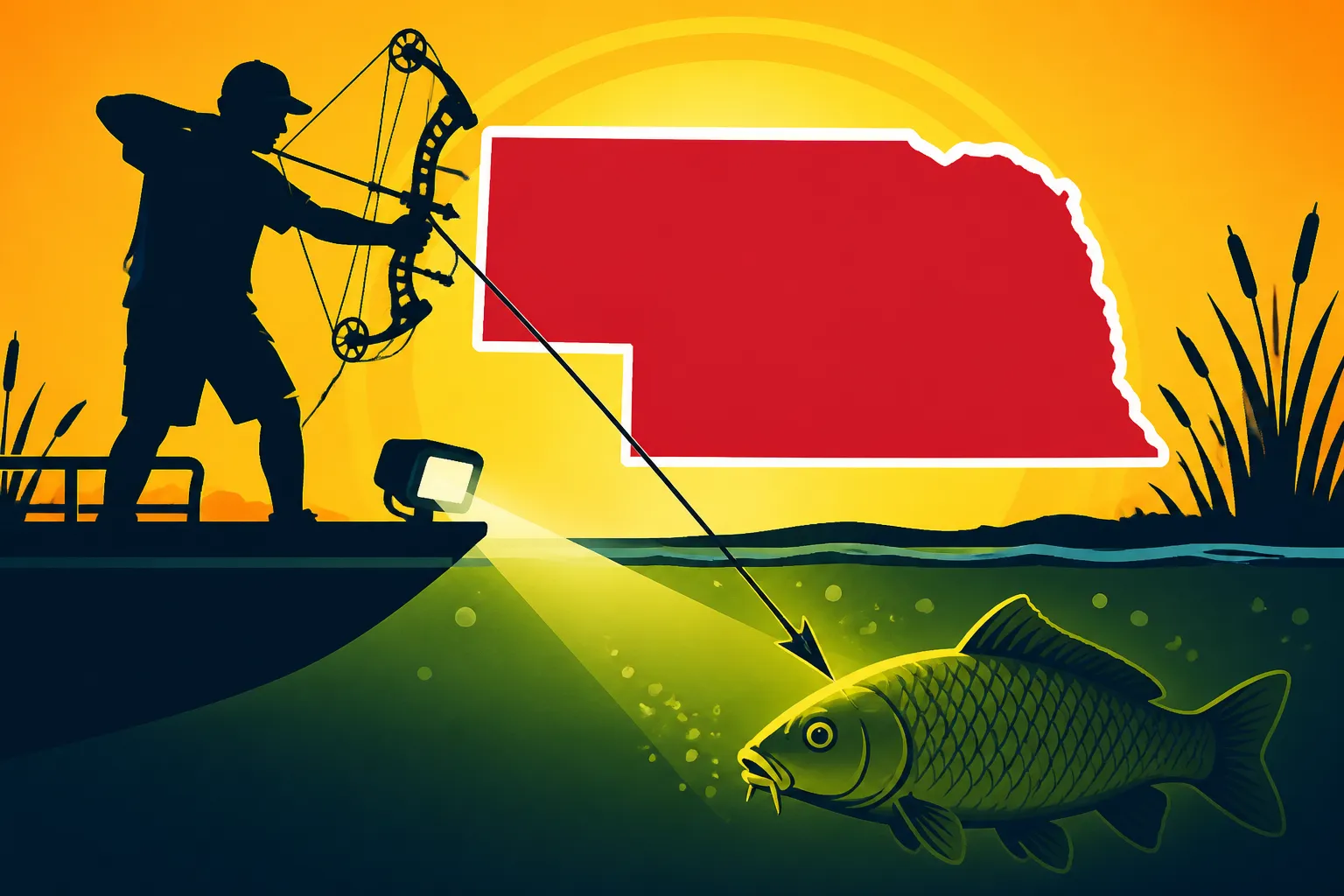
- Day and Night Bowfishing: Bowfishing is also permitted during both daylight hours and at night. Night bowfishing is very popular, especially in warmer months, as carp and other rough fish often move into shallower water to feed. Special lights (often powerful LED arrays) are used to illuminate the water and spot fish. If you're heading out for some Nebraska Night Fishing Rules, ensure your boat is properly lit with navigation lights as required by Nebraska Boat Registration and Fishing Rules, and that you have adequate lighting for spotting fish and handling your gear safely.
When considering when to go, think about fish behavior. Carp and gar are often found in shallow, warm water, making late spring through early fall prime time. They'll frequent weed beds, shallow flats, and flooded timber. Early mornings and evenings can also be productive as fish become more active.
| Species Permitted for Bowfishing | Typical Habitat | Best Time of Year | Day/Night Legality |
|---|---|---|---|
| Common Carp, Grass Carp, Buffalo | Shallow, warm, weedy lakes/rivers | Late Spring – Early Fall | Both Day & Night |
| Bighead Carp, Silver Carp | Main channels of large rivers (Missouri, Platte) | Year-Round, more active in warmer water | Both Day & Night |
| Freshwater Drum | Deeper lakes, slower river sections | Late Spring – Early Fall | Both Day & Night |
| Gar | Stagnant backwaters, slow rivers, shallow areas | Summer (especially warm, still nights) | Both Day & Night |
| Suckers, Gizzard Shad, Bullhead | Varied, often shallow, muddy bottoms | Year-Round | Both Day & Night |
This table provides a quick overview, but fish behavior can vary greatly depending on water temperature, clarity, and other environmental factors.
Important Considerations and Safety for Bowfishing
Bowfishing, while exhilarating, involves unique safety considerations and responsibilities that extend beyond simply not breaking a rule. As you’re combining archery with fishing, you need to be extra vigilant about your surroundings, other water users, and the proper handling of fish.
Safety First: Being a Responsible Bowfisher
Safety should always be your top priority. You are, after all, using a bow and arrow, which can be dangerous if mishandled.
- Target Identification: The absolute most critical safety rule, which also ties into legality, is 100% positive target identification. Never shoot at a ripple, a shadow, or anything you can't clearly identify as a legal species. It’s easy to mistake a prized game fish for a common carp in murky water or low light. Mistaking a paddlefish for a common carp, for example, could lead to a serious violation.
- Backstop Awareness: Just like target shooting with a bow, you need to be aware of your backdrop. Bowfishing arrows can travel a surprising distance, even underwater or after skipping off the surface. Always ensure there are no people, boats, or structures behind your target zone. This is especially important when bowfishing from a boat in popular areas.
- Handling Your Gear: Treat your bowfishing setup with the same respect you would a firearm. Keep arrows un-nocked until you're ready to shoot, and always point the bow in a safe direction. The barb on bowfishing arrows is sharp and can cause injury to you or others if not handled carefully.
- Boat Safety: If you're bowfishing from a boat, ensure all required Nebraska Boat Safety Equipment Requirements are met, including life jackets for everyone on board. Be mindful of casting shadows, as powerful lights at night can disorient other boaters. A sturdy boat, like a Jon boat, is often preferred for stability when standing and shooting. Many anglers consult online communities or even Amazon for reliable lighting setups and boating accessories.
- Wearing Polarized Sunglasses: During the day, polarized sunglasses are invaluable for cutting glare off the water, allowing you to see fish more clearly and identify them correctly.
Ethical Considerations and Fish Disposal
Part of being a responsible angler is also being an ethical one. Bowfishing often deals with large quantities of fish, and proper disposal is a significant consideration.
- Fish Disposal: Unlike catch-and-release traditional angling, bowfishing has a high harvest rate. You are expected to harvest what you shoot. Never leave dead fish on shore, discard them improperly in the water, or dump them in public trash bins if they exceed normal household waste limits. Many bowfishers either consume the fish (carp and buffalo can be excellent table fare, especially if properly prepared), use them for bait (e.g., cut bait for catfish), or process them for fertilizer. Check local regulations regarding disposal. Improper disposal can result in littering fines and gives the sport a bad name.
- Respecting Other Users: Lakes and rivers are shared resources. Be courteous to other anglers, boaters, and recreational users. Keep your distance from traditional anglers, as your activity might disturb their fishing. Minimize noise, especially during night operations.
- Aquatic Invasive Species (AIS) Awareness: When bowfishing, especially for species like invasive carp, you're helping with population control. However, you also have a responsibility to prevent the spread of other AIS. Ensure your boat, trailer, and all gear are cleaned, drained, and dried thoroughly after each outing. This includes removing any mud, weeds, or debris. Learning about the Nebraska Aquatic Invasive Species Stamp Explained and complying with its requirements is a small but vital part of protecting Nebraska's waters.
By following these guidelines, you're not just adhering to the letter of the law but also embodying the spirit of responsible outdoor recreation. Your actions contribute to the reputation of bowfishing as a sustainable and exciting sport in the beautiful state of Nebraska.
Disclaimer
The information provided in this guide is intended for general informational purposes only and is subject to change. While we strive to offer accurate and up-to-date content, fishing regulations, laws, and policies can be updated at any time by the Nebraska Game and Parks Commission. It is always the angler's responsibility to consult the most current official Nebraska Fishing Regulations Guide or the NGPC website before engaging in any fishing activities, including bowfishing. We are not liable for any misinformation or outdated details.