How to Catch Bluegill in Nebraska Ponds
Let's be honest, few things are as universally delightful in Nebraska fishing as pulling in a feisty bluegill. These little sunfish are often the first fish we catch as kids, and they continue to offer endless fun for seasoned anglers too. But even though they seem to be everywhere, sometimes it feels like they vanish, or you just can't get them to bite consistently. This guide is all about demystifying bluegill fishing in Nebraska's abundant ponds, helping you understand their habits, the best gear to use, and proven techniques to ensure your next outing is a bluegill bonanza.
Understanding Nebraska Bluegill: Habits and Hangouts
Bluegill, along with their sunfish cousins, are widespread across Nebraska, thriving in lakes, reservoirs, and especially our countless ponds. They're a fantastic species to target because they’re usually willing biters and can be found close to shore, making them accessible to almost everyone. But to really stack the odds in your favor, you need to think like a bluegill.
Where Bluegill Love to Hide Structure is Key!
If there's one golden rule for catching bluegill, it's to find structure. These fish are masters of camouflage and constantly on the lookout for food and safety. Structure provides both. Think of it from their perspective: a big bass could be lurking anywhere in open water, but a dense weed bed or a submerged tree offers refuge.
Consider a typical Nebraska farm pond. You'll often find bluegill congregating around any sort of cover. This could be the obvious stuff like visible docks, especially the shady undersides where they can ambush insects or small crustaceans. Look for lily pads or cattail stands along the shore; these create natural "bluegill cities" with intricate pathways and ambush points. Fallen trees that have partially submerged are absolute magnets for them, offering vertical cover from the surface down to the pond bottom. Even less obvious things like changes in bottom composition, small humps, or hidden brush piles can hold a surprising number of fish. When you approach a pond, take a moment to scan the water and banks for these prime locations. A good pair of polarized sunglasses, which you can often find a wide selection of on Amazon, can make a huge difference in spotting submerged cover that might otherwise go unnoticed.
Seasonal Movements and What Drives Them
Bluegill are creatures of habit, and their habits are largely dictated by water temperature and their biological drive to spawn or feed. Understanding these seasonal shifts is crucial for knowing where to find them and how to approach your fishing.
In spring, as water temperatures begin to rise from their winter chill, bluegill become incredibly active. This is when they move into shallow water, often the northernmost or westernmost coves of a pond, where the sun warms the water fastest. They're feeding heavily to regain energy lost over winter and prepare for the spawn. Soon after, they'll start building their characteristic "beds" – circular depressions on the bottom, often in sandy or gravelly areas just a few feet deep. Locating these beds can lead to some incredible action, as many fish will stack up together. This is a fantastic time for Spring Fishing in Nebraska.
As summer fully sets in and the water heats up significantly, bluegill will often retreat to deeper, cooler water during the hottest parts of the day. You'll still find them in the shallows during early morning and late evening, but midday might require you to fish deeper edges of weed beds or probe submerged timber. Overcast days can keep them shallower for longer. Think about how the sun hits the water; shade from trees, docks, or even tall bank vegetation can be a key draw for them during midday heat. This transition is important to remember for successful Summer Fishing in Nebraska.
Fall sees bluegill once again becoming very aggressive feeders. As temperatures cool, they know winter is coming and need to bulk up. They'll often school up and move to deeper water where they'll find baitfish and other food sources. Look for them around deeper points, channels, and larger submerged structures. This can be a prime time for targeting bigger bluegill that have had a whole season to grow.
Finally, in winter, especially under the ice, bluegill metabolism slows down considerably. They tend to congregate in deeper holes or basins of the pond, often suspended just above the bottom. Their bites become much more subtle, and you'll need smaller baits and slower presentations. But for those willing to brave the cold, Winter Fishing in Nebraska for bluegill can be incredibly rewarding, especially if you find a good school.
Essential Gear for Nebraska Bluegill Success
One of the beautiful things about bluegill fishing is that it doesn't require a truckload of expensive gear. In fact, simplicity is often the key to success. You want light tackle that allows you to feel those subtle bites and gives the bluegill a fun fight without overpowering them.
Rods, Reels, and Line: Keeping it Light and Right
When it comes to your rod and reel setup, think "ultralight." This means a light rod and a small, responsive reel.
- Rods: An ultralight or light action spinning rod, typically 5 to 6 feet long, is perfect. The light action allows the rod to bend easily, making even a small bluegill feel like a monster. A fast or moderate fast tip will give you enough sensitivity to detect those gentle nibbles. You don't need anything fancy; many excellent beginner combos are available, and you can often find solid options on Amazon for a reasonable price.
- Reels: Pair your rod with a small spinning reel, something in the 500 to 1000 series. These reels are designed for light line and provide smooth casting and retrieval for small baits. The key is smooth drag, which is crucial when a surprisingly large bluegill decides to make a run for it.
- Line: This is where many anglers go wrong by using line that's too heavy. For bluegill, 2 to 4-pound test monofilament or fluorocarbon is ideal. This light line is nearly invisible in the water, allows your small baits to fall naturally, and significantly increases your bite detection. Some experienced anglers might opt for a very light braided line (e.g., 6lb test with a 2lb mono or fluoro leader) for even more sensitivity and casting distance, but for most pond fishing, straight mono or fluoro works wonderfully. Remember to check out our comprehensive Best Fishing Gear for Nebraska Anglers guide for more general gear advice.
The Small Wonders: Hooks, Bobbers, and Weights
Bluegill have small mouths, so your terminal tackle needs to match. This means tiny hooks, appropriately sized bobbers, and just enough weight to get your bait down.
- Hooks: Forget those big bass hooks. For bluegill, you want small hooks, typically size 8, 10, or even 12. Aberdeen hooks are a popular choice because their thin wire makes them less noticeable to the fish and they're less likely to tear the bluegill's mouth, which is helpful for catch and release. For live bait, a small, light wire circle hook can also be effective, often leading to better hookups in the corner of the fish's mouth.
- Bobbers: Your bobber should be small, too. A large bobber creates too much resistance, and a bluegill will feel it and drop the bait. Fixed bobbers (like tiny clip-on floats) are great for shallow water. For fishing deeper or when you need more casting distance, a small slip bobber is incredibly effective. This allows your line to slide freely through the bobber, stopping at a small bobber stop, which means you can fish any depth and cast much further. For a deep dive, check out our guide on How to Rig a Slip Bobber for Panfish.
- Weights: You only need enough weight to get your bait to the desired depth. Tiny split shot sinkers are perfect. Start with one or two small split shots crimped a few inches above your hook. If your bait isn't sinking fast enough or drifting too much in current or wind, add a little more. The goal is a natural presentation.
Best Baits for Bluegill and Sunfish in Nebraska Ponds
Bluegill aren't typically picky eaters, which is why they're so much fun to catch. Both live bait and small artificials can be incredibly effective.
- Live Bait: This is often the go-to for consistent bluegill action, especially for beginners or kids.
- Worms: Red wigglers are fantastic; their wiggling action drives bluegill crazy. Nightcrawlers work too, but you'll usually want to pinch off a small piece to fit their mouths.
- Wax Worms and Mealworms: These are irresistible to bluegill and other panfish. They're small, soft, and easy for bluegill to swallow.
- Crickets and Grasshoppers: During summer, these natural insects can be absolute bluegill magnets, especially when fished near shoreline vegetation.
- You can often find these baits at local bait shops, and some fishing and outdoor retailers on Amazon even sell preserved or artificial versions that mimic live bait effectively. For more details on what bluegill like to eat, consider reading our dedicated guide on Best Bait for Bluegill and Sunfish.
- Artificials: Don't underestimate tiny lures, especially when bluegill are aggressive.
- Micro Jigs: Jigs ranging from 1/64 to 1/32 ounce are stellar. Often tied with chenille or small feathers, they imitate insects or small aquatic critters. You can fish them plain or tip them with a small piece of live bait.
- Soft Plastics: Tiny soft plastics, like those designed for crappie (e.g., crappie nibblers, small grubs, Gulp! maggots), can be threaded onto micro jigs for added attraction. Their subtle movements underwater are very appealing.
- Flies: If you're into fly fishing, small nymphs, dry flies (especially during hatches), or wet flies can be deadly for bluegill.
Techniques to Entice Bluegill Bites
Having the right gear is half the battle; knowing how to use it is the other. Bluegill aren't known for being shy, but a good presentation can make all the difference, especially when they're a bit finicky.
The Classic Bobber and Bait Setup
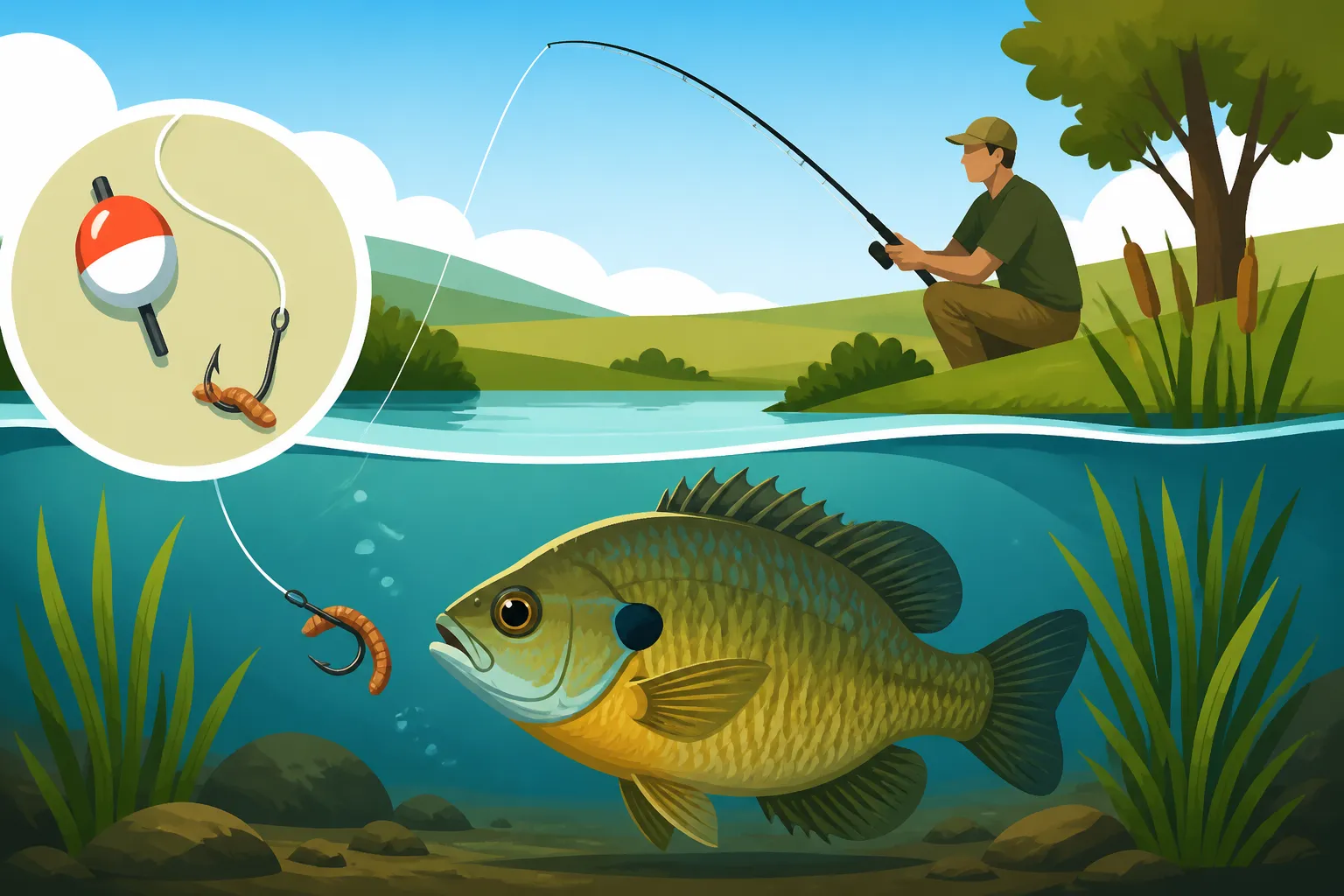
This is the quintessential bluegill fishing method, and for good reason: it's incredibly effective and easy to learn. It involves a simple float (bobber) that suspends your bait at a specific depth.
To rig this up, first, thread your fishing line through a small bobber stop (if using a slip bobber), then through the bobber itself. Tie on your hook, then crimp one or two small split shot weights a few inches above the hook. The bobber stop allows you to adjust your depth – experiment! Start by setting your bait to about 2-3 feet deep, then adjust deeper or shallower if you're not getting bites. Bluegill are often found shallower than you might think.
Once rigged, cast your bait near cover – a dock, a weed line, a submerged log. Watch the bobber like a hawk. Bluegill bites can range from a gentle twitch to the bobber suddenly disappearing underwater. When it goes down, give a gentle but firm sweep of the rod tip to set the hook. This method is incredibly relaxing and provides that classic visual thrill of a bobber disappearing, making it perfect for How to Teach a Kid to Fish in Nebraska. The key is patience, letting the bait sit for a minute or two, then perhaps twitching it gently to impart some action.
Finesse Jigging and How to Work Small Lures
When bluegill are a bit more active, or you want to cover more water, finesse jigging with small artificial lures can be highly productive. This method allows you to be more proactive in seeking out fish rather than waiting for them to come to your stationary bait.
For this technique, you'll want to use those micro jigs (1/64 to 1/32 ounce) or tiny soft plastics. Cast your jig near potential bluegill hangouts. Instead of a bobber, you'll rely on the light rod and line to feel the subtle taps. Allow the jig to sink, watching your line for any twitches or pauses that indicate a bite. Once it's at your desired depth, gently twitch your rod tip, reel in a foot or so of line, and let it fall again. This "lift and fall" motion mimics an injured insect or a small minnow.
You can also slowly retrieve the jig with a steady reel, adding occasional twitches. Experiment with your retrieve speed and depth until you find what the bluegill are responding to. Sometimes a super slow, barely moving presentation is best, while other times a slightly faster twitch-and-pause works wonders. This technique is particularly effective when you suspect bluegill are suspended in the water column or spread out over a wider area.
Targeting Specific Structures for Maximum Catch
Bluegill are creatures of comfort and safety, and structure provides both. Learning to effectively target different types of cover will significantly increase your catch rates.
- Docks and Piers: These are prime bluegill locations. Fish all around the dock posts, paying special attention to the shady side. Cast your bobber rig or jig right up against the posts and let it sink. Often, the biggest bluegill will lurk deeper under the dock.
- Weed Lines and Lily Pads: The edges of submerged weed beds or lily pad fields are excellent ambush points. Cast your bait just outside the weeds, and try to drop it into any pockets or openings within the vegetation. Bluegill will often cruise these edges looking for food.
- Fallen Timber and Brush Piles: These underwater jungles are bluegill heaven. Approach cautiously to avoid spooking fish. Cast your bait as close to the wood as possible without getting snagged. Work both the shallower and deeper sides of the timber. Sometimes, you'll need to drop your bait vertically into a dense brush pile to reach the fish holding tight within the cover. Remember, bluegill will often stack up in these areas, so if you catch one, there are likely more.
Table: Popular Bluegill Baits Comparison
| Bait Type | Pros | Cons | Best For |
|---|---|---|---|
| Red Wigglers | Natural scent/action, readily available | Can be messy, smaller profile | All seasons, especially effective in ponds |
| Wax Worms | Small, easy to rig, irresistible to panfish | Can be delicate, often require refrigerated storage | Finicky eaters, ice fishing |
| Small Jigs | Versatile, cover water, can be tipped with bait | Requires more active presentation, less natural scent | Aggressive fish, searching for schools |
| Gulp! Maggots | Durable, long-lasting, strong scent, convenient | Artificial feel may deter some fish, higher cost | Convenience, covering water, tipping jigs |
Tips for a Rewarding Bluegill Fishing Experience
Beyond the gear and techniques, a few extra tips can truly elevate your bluegill fishing experience, whether you're chasing them solo or introducing a youngster to the sport.
Best Time of Day and Weather Considerations
While bluegill can be caught throughout the day, certain times tend to be more productive. Generally, early morning and late evening are prime times, especially during warmer months. The sun is lower, water temperatures are more comfortable, and bluegill are more active in shallower feeding areas. Overcast days can extend these feeding windows throughout the day, as the low light keeps them from retreating to deeper water.
After a cold front, when the weather suddenly turns cooler and the skies are clear, bluegill can become a bit lethargic and move deeper. During these times, slow down your presentation and focus on deeper structure. Conversely, a stable weather pattern, especially a few days of consistent warmth and sunshine, usually means active fish. Always check the Nebraska Fishing Seasons Explained to get a general idea of what to expect for all species throughout the year.
Responsible Fishing and Conservation
As anglers, we have a responsibility to protect our resources. While bluegill are plentiful, practicing responsible fishing ensures they remain that way for future generations.
- Know Your Limits: Always be aware of the daily bag and possession limits for bluegill in Nebraska. These regulations are in place to maintain healthy fish populations. You can find these details in the Nebraska Fishing Daily Bag and Possession Limits guide. Take only what you plan to eat and consider releasing the rest.
- Handle Fish Carefully: If you're practicing catch and release, handle bluegill gently. Wet your hands before touching them to avoid removing their protective slime coat. Remove hooks quickly with pliers, and if the hook is deep, consider cutting the line rather than tearing the fish's mouth. Get the fish back into the water as quickly as possible.
- Leave No Trace: Always pack out everything you pack in. Dispose of old fishing line, bait containers, and any other trash properly. Let's keep Nebraska's beautiful ponds pristine.
Making it a Family-Friendly Adventure
Bluegill are undeniably the perfect fish to introduce someone, especially a child, to the joys of fishing. Their eager bites and common presence make success almost guaranteed, which is a huge confidence booster for new anglers.
Keep it simple for kids. A basic bobber and worm setup is usually all you need. Focus on teaching them how to cast, how to watch the bobber, and the thrill of feeling that first tug. Patience is key, both for the child learning and for you as the mentor. Celebrating every catch, no matter how small, makes the experience memorable. Consider packing snacks, drinks, and maybe a small bucket for any fish they want to keep. It's not just about catching fish; it's about making memories outdoors. Remember, you might wonder, Do Kids Need a Fishing License in Nebraska? – always check the latest regulations! Bluegill fishing is truly a gateway to a lifelong love of the outdoors and can create cherished family traditions. If you're looking for more general tips for fishing from shore, which is common for pond bluegill, our article on How to Fish From Shore in Nebraska might be helpful.
Disclaimer
This article is for general informational purposes only and does not constitute professional advice. Laws, prices and regulations vary by location and change over time. Consult a qualified professional for guidance on your specific situation.