Does a Full Moon Affect Fishing in Nebraska?
It’s a question as old as time, or at least as old as dedicated anglers staring at the night sky: Does a full moon really affect fishing here in Nebraska? You’ve probably heard the whispers, the old wives' tales, or maybe even seen it yourself—some days the fish are biting like crazy under the bright moonlight, and other times it feels like they’ve vanished into thin air. This guide is here to unravel the mystery, separating myth from potential reality, and giving you practical advice to make the most of your fishing trips, no matter what phase the moon is in.
The Allure and Mystery of Moon Phases in Fishing
For centuries, humans have looked up at the moon, mesmerized by its cyclical dance across the sky. It's only natural that we'd connect its powerful presence to something as fundamental as fishing. Anglers are always looking for an edge, a secret ingredient, or a predictable pattern to improve their chances of a successful outing.
Why Anglers Obsess Over Lunar Cycles
Think about it: the moon controls the tides, influences animal behavior from deer to grunion runs, and casts a significant glow across our lakes and rivers at night. It stands to reason that something so powerful must have an impact on fish, right? Many dedicated anglers swear by specific moon phases, planning their trips around full moons, new moons, or the quarter phases, convinced that these periods offer peak activity or, conversely, a complete shut-down. It's deeply ingrained in fishing culture, passed down through generations of anglers who meticulously track their catches against the lunar calendar, searching for that elusive correlation.
This obsession isn't just about catching more fish; it's about understanding the natural world, feeling connected to the rhythms of the environment, and perhaps finding a sense of control over an inherently unpredictable pursuit. When you've put in the time, cast a thousand times, and still come up empty, it's easy to look for external explanations, and the moon offers a grand, visible one. It gives us something to talk about around the campfire, something to ponder during those quiet moments on the water, and often, a convenient excuse when the bite is slow!
Distinguishing Fact from Folklore in Fishing
While the moon's influence on tides is undeniable, how that translates to landlocked bodies of water like those in Nebraska is where the science gets a bit murky. Many of the theories surrounding moon phases and fishing are anecdotal, based on personal experience and observation rather than rigorous scientific study. It’s hard to isolate the moon’s effect from all the other variables that dictate fish activity: weather patterns, water temperature, barometric pressure, spawning cycles, and even fishing pressure itself.
The challenge is that fish are complex creatures, and their behavior is influenced by a multitude of factors simultaneously. What one angler attributes to a full moon, another might attribute to a sudden drop in temperature or a change in wind direction. Disentangling these variables can be nearly impossible without controlled experiments, which are tough to conduct in a dynamic natural environment. So, while we acknowledge the strong belief many anglers hold, it’s crucial to approach the topic with an open mind, recognizing that "proof" in fishing often comes down to individual success and belief.
How the Full Moon Might (Theoretically) Influence Fish Behavior
Even without oceanic tides, there are several plausible theories about how a full moon could impact fish behavior in Nebraska’s lakes, reservoirs, and rivers. These theories often revolve around light levels and subtle biological triggers.
Tides and Water Movement (Even in Landlocked Nebraska!)
Let's address the elephant in the room: Nebraska is about as far from an ocean as you can get. So, how could lunar tides possibly affect our fishing? While you won't see dramatic tidal swings like on the coast, the moon's gravitational pull does exert a force on all bodies of water, even inland lakes and ponds. These are known as "micro-tides" or "lake tides."
However, these gravitational effects are incredibly subtle, often measured in fractions of an inch, and are typically overshadowed by far more significant forces like wind-driven currents, water levels from rainfall or dam releases, and seiches (oscillating standing waves in enclosed bodies of water). For the average angler on Lake McConaughy or Branched Oak Lake, the impact of these micro-tides on fish behavior is likely negligible compared to a strong north wind or a sudden temperature change. It's fascinating to consider, but probably not the primary driver of whether fish bite.
Enhanced Night Visibility for Predators and Prey
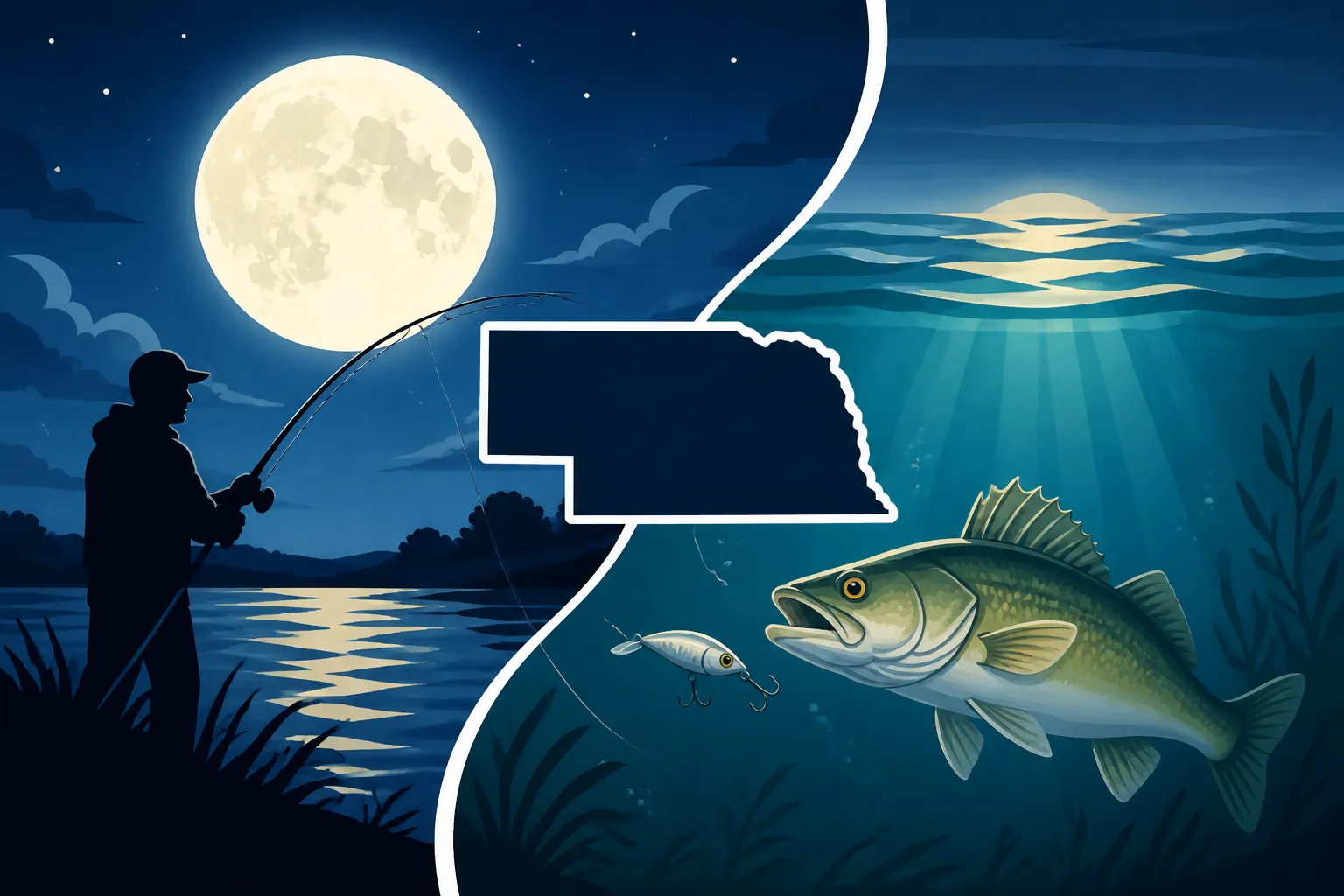
Here's where the full moon's influence becomes much more tangible: light. A bright full moon can illuminate the night sky, casting significant light onto the water's surface, especially on clear nights. This increased visibility can dramatically alter the dynamics between predator and prey.
For predatory fish like walleye, largemouth bass, and even some catfish, a brightly lit night might mean extended feeding opportunities. They can see their prey more clearly, allowing them to hunt more effectively than on a dark, moonless night. This could lead to a burst of feeding activity. Conversely, baitfish might become more active under the moonlight, emboldened by the visibility to forage, but also making them more vulnerable. This enhanced visibility could explain why some anglers report incredible success during full moon nights, especially when targeting species that are primarily nocturnal feeders or those that capitalize on low-light conditions. If you're planning a trip to capitalize on the night bite, be sure to check out our guide on Nebraska Night Fishing Rules to make sure you're compliant!
Hormonal and Spawning Triggers
Another theory posits that the moon, particularly the full moon, could influence the hormonal cycles of fish, potentially impacting spawning or feeding frenzies. Many species, both aquatic and terrestrial, are known to have reproductive cycles tied to lunar phases. For instance, some saltwater species time their spawning around full or new moons, utilizing the increased tidal flow to disperse eggs and larvae.
While direct, widespread evidence for a full moon triggering spawning in specific Nebraska freshwater species is not universally accepted, it's not entirely out of the realm of possibility. Some anecdotal reports suggest increased activity around spawning periods that coincide with full moons, or even elevated feeding aggression. For example, some anglers believe that certain species become more aggressive and therefore easier to catch as they approach their spawning windows, and if the moon plays even a small role in timing those windows, then it could indirectly affect fishing success. Understanding patterns like the Nebraska Walleye Spawning Season can give you an edge, regardless of moon phase.
Practical Implications for Nebraska Anglers During a Full Moon
So, if the full moon might have some effect, what does that mean for your next fishing trip here in Nebraska? It largely comes down to how you adapt your strategy.
Adjusting Your Fishing Strategy for Full Moon Nights
If you're heading out to chase some fish under the glow of a full moon, especially for species that feed by sight, you might want to adjust your approach. The increased light could mean fish are more active in shallower water than on darker nights, or that they are more spread out from traditional cover.
Consider using lures with subtle profiles or natural colors, as they might be more visible and less jarring in the moonlight. Think about a silent approach, as the brighter conditions might make fish more wary. Some anglers also find success with topwater baits during full moon nights, as predators can clearly see the silhouette of a lure on the surface against the bright sky. For those chasing nocturnal feeders like catfish, a full moon could provide just enough light to navigate the banks safely while still allowing you to fish your favorite spots. Our guide on How to Catch Catfish at Night offers plenty of tips for nocturnal angling.
Day Fishing Challenges and Opportunities
While night fishing during a full moon can be exciting, what about fishing during the day? Many anglers subscribe to the theory that if fish have been actively feeding all night under the bright moon, they might be less inclined to feed aggressively during daylight hours. This "nocturnal gorging" could mean a slower bite come sunrise.
If you encounter tough daytime conditions after a full moon night, don't despair. Instead of focusing on aggressive, shallow-water presentations, consider moving to deeper cover, targeting fish that might be resting or retreating from the bright conditions. Slow down your retrieve, use smaller baits, or try different techniques that entice less active fish. Sometimes, simply changing your location or adapting your presentation can make all the difference. Remember that fish still need to eat, even if they've had a midnight snack!
Species-Specific Responses to Lunar Cycles
Different fish species might react to lunar cycles in varying ways. What holds true for walleye might not apply to crappie or bass.
- Walleye: Often nocturnal feeders, walleye might extend their feeding windows on a full moon night. This could mean they're more active later into the morning or start earlier in the evening, but potentially less active during the bright midday. When considering the Best Time of Day to Catch Walleye in Nebraska, a full moon could shift this dramatically.
- Catfish: Channel and flathead catfish are primarily nocturnal, so the extra light might enhance their hunting prowess. This could be a prime time for trotlining or casting cut bait from the bank, especially in rivers like the Platte or Missouri.
- Bass (Largemouth & Smallmouth): Bass often relate to cover. Under a full moon, they might become more active in the open, chasing baitfish, but during the day, they might retreat deeper into heavy cover to escape the brightness and rest.
- Panfish (Crappie, Bluegill): These smaller fish can be active day and night. The full moon might make them more cautious during daylight or cause them to suspend in deeper water during the brightest parts of the day.
| Moon Phase | Potential Fish Behavior (General) | Suggested Strategy |
|---|---|---|
| New Moon | Low light, increased nocturnal feeding | Focus on daytime aggression, low light lures at dawn/dusk |
| First Quarter | Transition period, steady activity | Consistent fishing, explore different depths |
| Full Moon | High nocturnal visibility, potential daytime lull | Target night bite, deeper/slower presentations by day |
| Last Quarter | Decreasing light, fish adjusting | Adapt to changing patterns, try morning bite |
Beyond the Moon: Other Factors That Matter More
While the full moon can be an interesting variable, it’s important to remember that it’s just one piece of a much larger puzzle. Many other environmental factors exert a far more consistent and powerful influence on fish behavior in Nebraska.
The Overwhelming Impact of Weather and Water Conditions
If you ask any seasoned Nebraska angler what truly dictates a successful fishing day, weather and water conditions will almost always come out on top. A sudden cold front, a rapid change in barometric pressure, heavy rains that muddy the water, or extreme heat can shut down a bite quicker than any lunar phase.
Consider a summer day on Sherman Reservoir. If a strong thunderstorm rolls through, bringing cooler temperatures and stirring up the water, the fish will react far more dramatically to that than to whether it's a full moon or a new moon. Similarly, water levels, clarity, and temperature are critical. High, muddy water in the spring on the Platte River will completely change how you approach fishing for catfish compared to clear, stable conditions. It's why paying attention to things like Nebraska Fishing Weather and Barometric Pressure Tips is so crucial. These are the immediate, tangible forces that directly impact a fish's comfort, metabolism, and hunting capabilities.
Understanding Fish Biology and Seasonal Patterns
Fish aren't static; their behavior changes drastically throughout the year, driven by innate biological needs like spawning, foraging, and overwintering. These seasonal patterns are far more predictable and impactful than lunar cycles. For example, during the spring, fish move shallow to spawn, making them more accessible and aggressive. In summer, they often retreat to deeper, cooler water or seek shaded cover. Fall brings a feeding frenzy as they bulk up for winter, and winter means slower metabolism and often a reliance on ice fishing techniques.
Knowing the Best Fishing Months for Multiple Species in Nebraska will give you a much better chance of success than simply timing your trip to a full moon. Understanding the specific biology of your target species—what they eat, where they live, when they spawn—allows you to anticipate their movements and behaviors. The moon might tweak these patterns slightly, but it won't fundamentally alter a species' lifecycle or seasonal migration.
The Importance of Location and Presentation
Ultimately, even on the "best" moon phase, if you're not fishing where the fish are, or presenting your bait in a way they want to eat it, you won't catch anything. The old adage "90% of the fish are in 10% of the water" rings true in Nebraska as much as anywhere else.
Finding the Best Places to Fish in Nebraska and then understanding the specific structure and cover within those locations is paramount. Are you targeting walleye on a deep hump in Lake McConaughy? Or perhaps bass near submerged timber in Branched Oak Lake? Your success hinges on being in the right place. Then, it's about presentation: choosing the right lure, bait, color, size, and retrieve speed. Are you jigging for walleye on a deep structure, or slowly dragging a worm for catfish? Learning How to Fish Deep Structure for Summer Walleye requires specific tactics that transcend lunar phases. These fundamental skills and knowledge will consistently outperform any perceived lunar advantage.
Making the Most of Any Moon Phase in Nebraska
So, should you ignore the moon completely? Not necessarily. It can be a fun variable to consider and might offer a subtle edge, but it shouldn't be your sole focus. The key is to be adaptable, observant, and well-prepared.
Keeping a Fishing Journal to Track Personal Success
One of the best ways to determine if the moon truly affects your fishing success on your favorite Nebraska waters is to keep a detailed fishing journal. This isn't just for fancy folk; it's a powerful tool for learning.
Jot down not just what you caught, but also the date, time, location, species, bait/lure used, water temperature, air temperature, wind direction, cloud cover, and, yes, the moon phase. Over time, you'll start to see patterns emerge that are specific to your fishing spots and techniques. You might notice that for you, crappie bite best on a rising barometer during the first quarter moon, or that the full moon consistently produces bigger catfish catches in your local river. This personalized data is far more valuable than general theories because it's tailored to your unique experiences. You could even use an app like GoOutdoorsNE, if it has a journaling feature, to help keep track of your permits and your catches.
Embracing Flexibility and Experimentation
The most successful anglers are often the most flexible. They don't stick to one rigid plan. If the fish aren't biting as expected during a full moon, they don't pack up and go home; they adapt. This might mean changing lures, moving to a different depth, trying a different technique, or even switching target species.
For example, if the daytime bite is slow after a full moon, instead of giving up, try fishing shaded areas, deeper breaks, or consider Nebraska Night Fishing Rules and stay out after dark to see if the nocturnal feeding is indeed peaking. Experiment with fast retrieves, slow retrieves, natural colors, bright colors. Every trip is a learning opportunity. The moon might influence things, but your willingness to try new things and observe how fish react to different conditions is what truly leads to consistent success on Nebraska's waters.
Disclaimer
This article is for general informational purposes only and does not constitute professional advice. Laws, prices and regulations vary by location and change over time. Consult a qualified professional for guidance on your specific situation.