Best Nebraska Fishing Techniques for Beginners
It can feel incredibly daunting to take that first step into the world of fishing, especially here in Nebraska where there are so many lakes, rivers, and species to learn about. You might find yourself staring at aisles of confusing gear, wondering what license you even need, or just feeling lost on where to even drop a line. This guide is here to cut through all that noise and give you clear, actionable advice on the best Nebraska fishing techniques for beginners, making your first outings enjoyable and successful.
Starting Smart: Essential Gear Without Overwhelm
One of the biggest hurdles for new anglers is the sheer volume of fishing gear out there. Don't fall into the trap of thinking you need the most expensive, high-tech equipment to catch fish. For starting out in Nebraska, simplicity and affordability are your best friends. We're talking about a basic setup that will get you on the water without breaking the bank or making you scratch your head in confusion.
The All-Important Rod and Reel Combo
For beginners, a spinning rod and reel combo is hands-down the way to go. These setups are forgiving, easy to cast, and versatile enough for most of the smaller species you'll target first. You're looking for something in the 6 to 7-foot range, with a medium-light or medium action. This will give you enough backbone to fight a decent fish but still be sensitive enough to feel those lighter bites.
When you're browsing, look for combos that come pre-spooled with line – that's one less thing you have to worry about right away. Many tackle shops and even big retailers like Amazon offer excellent beginner combos for a very reasonable price. Don't get hung up on brand names at this stage; focus on something comfortable in your hand.
Essential Terminal Tackle for Nebraska Newbies
Terminal tackle refers to all the bits and pieces that go at the end of your fishing line. This is where you connect with the fish, and a simple selection is all you need.
- Hooks: Start with a variety of small to medium-sized hooks, like size 6 or 8 for panfish, and perhaps size 2 or 1/0 for catfish. Aberdeen hooks are good for panfish as they're thin and less likely to deeply hook the fish, making catch-and-release easier. Circle hooks are fantastic for catfish because they're designed to hook the fish in the corner of the mouth, which is healthier for the fish and often results in fewer swallowed hooks.
- Sinkers/Weights: You'll need these to get your bait down to where the fish are. A few split shot weights (small, pinch-on weights) and some egg sinkers (which slide freely on your line) in various small sizes will cover most situations.
- Bobbers: Nothing beats the excitement of watching a bobber go under! Small clip-on bobbers are perfect for learning to fish. They help you visualize bites and keep your bait at a consistent depth.
- Pliers: These are crucial for removing hooks from fish and cutting line. A multi-tool with pliers and a line cutter is a great investment.
- Small Tackle Box: A basic plastic tackle box with a few compartments will keep all your small items organized and prevent them from getting lost in your bag. You can find many affordable options, including on Amazon, that are perfect for holding your initial collection.
Remember, you don't need a huge assortment. A small selection of these items will get you catching fish in no time. You can always expand your collection as you gain experience and discover what kind of fishing you enjoy most. For more detailed insights on what rod and reel might suit you best, check out Best Rod and Reel Combo for Beginners in Nebraska.
Friendly Fish for First-Timers: Easiest Catches in Nebraska
When you're just starting, the goal is to catch something to build confidence and excitement. Thankfully, Nebraska is home to several species that are abundant, eager to bite, and relatively easy for beginners to target. Focus on these, and you'll be well on your way to becoming a seasoned angler.
Panfish: The Perfect Starting Point
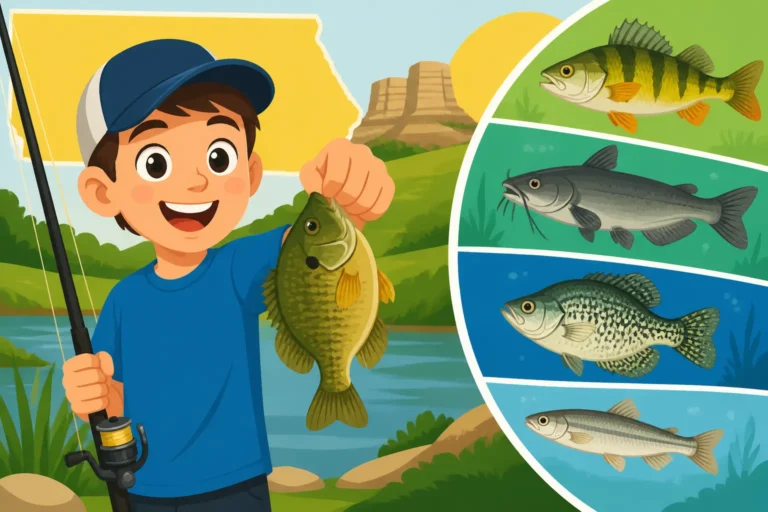
"Panfish" is a general term that includes species like bluegill, sunfish, and crappie. These fish are usually smaller, but they make up for it with their willingness to bite and their widespread presence in most Nebraska waters. They are fantastic for teaching you how to feel bites, set the hook, and handle fish.
Bluegill and sunfish are arguably the easiest. They're often found in large schools, particularly around shallow cover like docks, lily pads, or submerged brush. They're not picky eaters and will readily take small baits. Crappie are also excellent targets, especially in spring and fall, and offer a bit more size and fight. They tend to hang out around submerged trees, brush piles, and other structures. Learning how to find them in these spots is a great skill builder. For more on specific panfish species, you can read What Panfish Species Live in Nebraska Ponds.
Channel Catfish: A Nebraska Staple
If you're looking for a fish with a bit more muscle and a fantastic fight, channel catfish are your go-to. They are incredibly widespread throughout Nebraska's rivers, lakes, and even many urban ponds. What makes them great for beginners? They are often aggressive feeders, especially in warmer months, and they're not particularly shy about what they'll eat.
Channel cats can grow to a respectable size, giving you a real thrill when you hook into one. They're also an excellent eating fish, so you can enjoy the fruits of your labor! You'll often find them cruising the bottom of lakes and rivers, particularly in areas with deeper water or current. This makes them ideal for simple bottom-fishing techniques. If you're keen on targeting these whiskered beauties, be sure to look up Nebraska Channel Catfish Fishing.
Here's a quick comparison of these beginner-friendly species:
| Species | Typical Size (Beginner Catch) | Common Habitat | Recommended Bait (Beginner) | Fight Level | Ease of Catch |
|---|---|---|---|---|---|
| Bluegill/Sunfish | 4-8 inches | Shallow cover, docks, weeds | Worms, crickets, corn, small jigs | Light | Very Easy |
| Crappie | 6-12 inches | Brush piles, submerged trees, docks | Small minnows, jigs, worms | Medium-Light | Easy |
| Channel Catfish | 1-5 lbs | Bottom of lakes/rivers, deeper holes | Cut bait, stink bait, worms, chicken liver | Medium | Easy |
Simple Strategies: Basic Techniques for Immediate Success
Now that you know what gear to use and which fish to target, let's talk about the techniques themselves. The beauty of beginner fishing is that the most effective methods are also the simplest. You don't need complex lures or intricate retrieves; just good bait presentation and patience.
Bobber Fishing for Panfish
This is the classic, quintessential beginner technique, and for good reason: it works! Bobber fishing is incredibly effective for panfish and teaches you how to detect bites visually.
How it works:
- Attach your bobber: Slide a small clip-on bobber onto your fishing line, about 1-3 feet above where your hook will be. The depth depends on how deep the fish are, but starting shallower is usually best for panfish.
- Tie on your hook: Use a simple knot like an improved clinch knot to attach your hook.
- Add weight: Crimp one or two small split shot weights a few inches above your hook. This helps your bait sink and keeps the bobber standing upright.
- Bait your hook: Thread a small piece of worm, a cricket, or a kernel of corn onto your hook. Don't overload it!
- Cast it out: Make a gentle cast towards shallow cover, like a dock or a weed line.
- Watch and wait: The bobber will float on the surface. When a fish bites, it will tug the bobber, causing it to twitch, dip, or completely disappear under the water. That's your cue!
- Set the hook: When the bobber goes down, quickly but gently lift your rod tip up to set the hook. This embeds the hook in the fish's mouth.
This technique is not only effective but also incredibly relaxing. It's a fantastic way to spend an afternoon and build your fundamental fishing skills. If you're looking for the best specific baits, our guide on Best Bait for Bluegill and Sunfish has excellent tips.
Bottom Fishing for Channel Catfish
When targeting channel catfish, you generally want your bait on the bottom, where they often forage. This technique is also very straightforward and doesn't require constant casting or retrieving.
How it works:
- Set up a slip-sinker rig: Thread an egg sinker onto your main line first. Then, tie a small barrel swivel to the end of your main line. Next, tie a leader line (about 12-18 inches of fishing line) to the other end of the swivel, and then tie your hook to the end of the leader. This setup allows the fish to take the bait without immediately feeling the weight of the sinker, making them more likely to commit.
- Bait your hook: Channel catfish love smelly baits! Options like chicken liver, cut bait (pieces of smaller fish), or commercial stink baits are highly effective. Thread a generous piece onto your hook, making sure the hook point is exposed.
- Cast it out and wait: Cast your rig out into a likely catfish spot – a deeper hole, a channel bend, or near some submerged structure. Let the sinker take your bait to the bottom.
- Prop your rod: Place your rod in a sturdy rod holder or prop it up against something stable, with the bail open or clicker engaged if your reel has one. This allows the fish to pull line without dragging your rod into the water. Keep some slack in your line.
- Watch your rod tip: Instead of a bobber, you'll be watching your rod tip. When a catfish bites, the tip will twitch, bend over sharply, or slowly pull down.
- Set the hook: Give the fish a moment to really take the bait, then reel up any slack and set the hook with a firm, upward sweep of your rod.
This method is perfect for relaxing and waiting, making it a great social fishing technique or a way to unwind after a long week. For more advanced tips on catching catfish from the bank, check out How to Catch Channel Catfish From the Bank.
Prime Locations: Finding Beginner-Friendly Fishing Spots in Nebraska
Knowing how to fish is only half the battle; knowing where to fish is equally important. For beginners in Nebraska, the key is to find spots that offer easy access, plenty of fish, and minimal crowds.
Urban Ponds and State Recreation Areas
Nebraska's Urban Fishing Program is a fantastic resource for beginners. These ponds are often regularly stocked with panfish and catfish, and sometimes even trout, meaning there are plenty of fish waiting to be caught. They typically have easy shoreline access, sometimes even fishing piers, and amenities like restrooms and picnic areas. These spots are designed to be family-friendly and accessible.
Examples of such locations include numerous parks within Omaha, Lincoln, and other larger towns. They offer a controlled environment where you can practice your casting and fish-handling skills without the complexities of vast reservoirs or fast-moving rivers. Always check local regulations, but often these urban ponds have very specific rules tailored for frequent use. To find ponds near you, consult Nebraska Urban Fishing Program Stocked Ponds Near Me.
Smaller Lakes and Reservoirs with Easy Access
Beyond the urban ponds, many smaller state recreation areas (SRAs) and lakes across Nebraska offer excellent opportunities for beginners. These often feature boat ramps, but also significant stretches of accessible shoreline where you can easily set up a few rods.
When choosing a lake, look for those known for healthy populations of panfish or channel catfish. Lakes like Branched Oak Lake near Lincoln, Pawnee Lake, or some of the smaller pits at Fremont Lakes State Recreation Area can be fantastic. These waters might be a bit larger than urban ponds, but they still offer a good chance of success without requiring specialized boat equipment. Best Nebraska State Recreation Areas for Fishing is a great resource to explore options.
Patience is Your Best Tool
Regardless of the technique or location, the most important tool a beginner can have is patience. Fishing isn't always about constant action; sometimes it's about enjoying the peace and quiet, the beauty of nature, and the anticipation of that next bite. Don't get discouraged if you don't catch a fish right away. Every cast is a new opportunity, and every outing is a chance to learn something new about the water and the fish that call it home.
Take notes, try different baits, adjust your depth, and observe your surroundings. Even when the fish aren't biting, you're gaining valuable experience that will make you a better angler in the long run. Most importantly, have fun with it! That's what fishing in Nebraska is all about.
Disclaimer
This article is for general informational purposes only and does not constitute professional advice. Laws, prices and regulations vary by location and change over time. Consult a qualified professional for guidance on your specific situation.