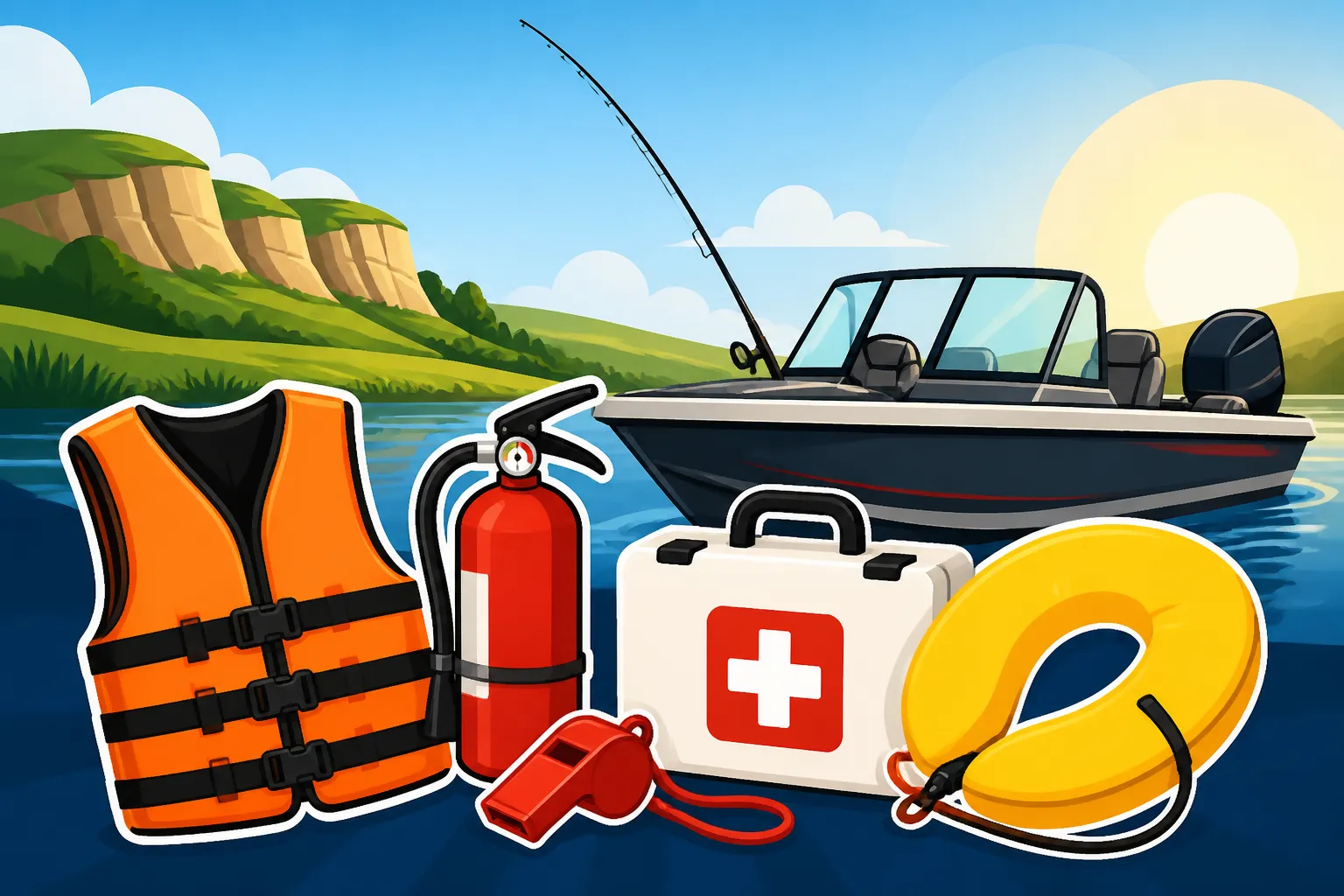
Required Safety Equipment on a Nebraska Boat
Hitting the waters in Nebraska is one of life's greatest pleasures, whether you're chasing walleye on Lake McConaughy or enjoying a peaceful float down the Platte River. But before you launch, understanding the required safety equipment for your boat isn't just a recommendation; it's a critical component of state law and, more importantly, your well-being. This guide will walk you through exactly what you need to have onboard, why each item is important, and how to make sure you're always prepared for a safe and enjoyable day on Nebraska's beautiful waters.
Understanding Nebraska's Boating Safety Mandates: Why They Matter
It can feel a bit overwhelming trying to keep up with all the rules and regulations when you just want to get out and fish. You might think, "I'm a careful boater, I don't need all that fuss!" But Nebraska's boating safety mandates aren't there to complicate your life; they're designed to protect you, your passengers, and everyone else enjoying our lakes and rivers. These laws are built on years of experience, preventing accidents, and ensuring that if something does go wrong, you have the tools to handle it.
Think about it: even on a calm day, an unexpected mechanical issue, a sudden change in weather, or an encounter with another vessel could quickly turn sour. Having the right gear isn't just about avoiding a ticket; it's about being able to signal for help, stay afloat, or put out a small fire before it becomes a disaster. It's about peace of mind, knowing you've taken every reasonable step to ensure a safe return to shore. It's truly an investment in your safety and the safety of those you care about.
These regulations apply to almost all vessels operating on Nebraska waters, from the smallest kayak to the largest pontoon boat. The specific requirements can vary slightly depending on the size and type of your vessel, as well as whether it's motorized or not. Understanding these nuances is key to staying compliant and, most importantly, safe. Always remember that these are minimum requirements; smart boaters often carry extra equipment for enhanced safety and comfort. You can learn more about general requirements in our guide on Nebraska Boat Registration and Fishing Rules.
The Role of Nebraska's Game and Parks Commission
The Nebraska Game and Parks Commission (NGPC) is the authority that sets and enforces these boating safety requirements. They're not just about hunting and fishing; they're dedicated to ensuring safe recreational opportunities across the state's natural resources. Their regulations are aligned with federal standards where applicable, especially for things like personal flotation devices (PFDs) and fire extinguishers.
The NGPC patrols Nebraska's waterways, and their conservation officers conduct safety checks. They're there to help educate boaters and ensure compliance, not just to hand out tickets. If you're ever stopped for a safety check, being prepared, polite, and having all your required equipment in good working order will make the experience smooth and quick. They want everyone to have a good time out there, safely.
These officers are often a fantastic resource if you have questions about specific gear or local waterway rules. Don't be afraid to ask them for clarification when you see them on the water or at a boat ramp. They appreciate boaters who take safety seriously.
The Absolute Essentials: Personal Flotation Devices (PFDs) and Beyond
When it comes to boating safety, some items are non-negotiable. These are the pieces of equipment that can literally save lives and prevent minor incidents from escalating into serious emergencies. Chief among them are personal flotation devices, but they're certainly not the only must-haves.
Personal Flotation Devices PFDs
Hands down, the most important piece of safety equipment on any boat is a U.S. Coast Guard-approved Personal Flotation Device (PFD), or life jacket. Nebraska law requires that you have at least one wearable PFD of the proper size for every person onboard your vessel. And here's the kicker: they must be readily accessible. That means not stowed away in a locked compartment under a pile of gear. They need to be where someone can grab them quickly in an emergency.
For children under 13 years of age, the rules are even stricter: they must wear a U.S. Coast Guard-approved PFD at all times while underway on any vessel. This is a common point of confusion and frustration for parents, but it's crucial. Little ones can slip and fall overboard in a blink, and putting a PFD on them after they're in the water is often too late. Make sure the PFD fits snugly but comfortably. A PFD that's too big can ride up around their ears, actually hindering their ability to stay above water. For more details on this, check out How Many Life Jackets Are Required on a Nebraska Boat?.
There are different types of PFDs, categorized by how much flotation they provide and their intended use. Type I (offshore), Type II (near-shore buoyant), Type III (flotation aid, like a fishing vest), Type IV (throwable cushion), and Type V (special use, like inflatable PFDs) are the common classifications. While Types I, II, and III are acceptable wearable PFDs, Type V PFDs must be worn to count as a legal requirement unless specifically approved otherwise. In addition to the wearable PFDs, vessels 16 feet or longer (excluding canoes and kayaks) must also have at least one Type IV throwable device. This could be a ring buoy or a seat cushion, and it's invaluable for tossing to someone who has unexpectedly gone overboard.
Fire Extinguishers: A Small Flame's Big Threat
No one wants to think about a fire on their boat, but it's a very real risk, especially on motorized vessels. Fuel leaks, electrical issues, or even a carelessly discarded cigarette can ignite quickly. That's why most motorized boats are required to carry a U.S. Coast Guard-approved fire extinguisher.
The specific type and number of extinguishers depend on the size of your boat and whether it has features like enclosed engine compartments, permanently installed fuel tanks, or living spaces. Generally, smaller motorboats (under 26 feet) will need at least one B-I type extinguisher. Larger boats might need more or larger extinguishers. It's essential that the extinguisher is easily accessible, fully charged, and in good working order.
Even if your vessel isn't technically required to have one (like a non-motorized kayak), carrying a small, marine-rated fire extinguisher is an incredibly smart move. You never know when you might need it, whether it's for your own boat or to assist a fellow boater in distress. You can find a range of reliable marine fire extinguishers at outdoor retailers or online, for instance, through Amazon.
Sound-Producing Devices: Your Voice on the Water
Imagine you're out on a foggy morning, or another boat is heading straight for you, and you need to get their attention. That's where a sound-producing device comes in. Every vessel must have some means of making an efficient sound signal.
For vessels under 40 feet, a whistle or horn is sufficient. This could be a handheld air horn, a mounted electric horn, or even a basic pealess whistle. The key is that it's audible for a reasonable distance. For vessels 40 feet or longer, a whistle and a bell are required.
Beyond just signaling other vessels, a sound device is crucial for distress signals. A series of short blasts can alert others to an emergency situation, bringing much-needed attention your way. Don't underestimate the power of a simple whistle in a critical moment. You can learn more about specific requirements for smaller boats in Do You Need a Whistle or Horn on a Nebraska Kayak?.
Here's a quick reference table for common safety items:
| Equipment Type | Applies To | Requirement Details |
|---|---|---|
| Personal Flotation Devices (PFDs) | All vessels | One U.S. Coast Guard-approved wearable PFD for each person onboard, readily accessible. Children under 13 must wear one while underway. |
| Throwable Flotation Device | Vessels 16 feet or longer (excluding canoes and kayaks) | One Type IV U.S. Coast Guard-approved throwable device (e.g., ring buoy, seat cushion). |
| Fire Extinguisher | Motorized vessels (specifics vary by size, engine type, and fuel system) | U.S. Coast Guard-approved, appropriate size/type for vessel. Must be readily accessible and fully charged. Non-motorized vessels are not typically required but it's highly recommended. |
| Sound-Producing Device | All vessels | Whistle or horn for vessels under 40 feet. Whistle and bell for vessels 40 feet or longer. Must be capable of producing an efficient sound signal. |
| Visual Distress Signals (VDS) | Vessels on federal waters (ocean/coastal), recommended for large lakes | Varies, but typically includes flares (pyrotechnic) or an electronic distress signal. While Nebraska's inland lakes don't always require them by state law, they are strongly recommended for larger bodies of water like Lake McConaughy or Lewis and Clark Lake, especially when navigating at night. |
| Navigation Lights | All vessels operating from sunset to sunrise or in restricted visibility | Specific configurations vary by vessel type and size, but generally involve red/green sidelights, a white all-around light, or masthead/stern lights. These ensure visibility to other boats. |
| Pollution Placards/MARPOL | Vessels 26 feet or longer (MARPOL applies to vessels 40 feet or longer) | Display of specific placards indicating waste disposal regulations. Primarily for larger vessels, but good practice for all to understand proper waste disposal. |
| Ventilation (Blower) | Motorized vessels with enclosed engine compartments | For boats built after April 25, 1940, with certain fuel system configurations. Helps remove flammable vapors from the engine compartment before starting. |
| Backfire Flame Arrestor | Motorized vessels with gasoline engines | Required on carburetors of all gasoline engines (except outboards) to prevent ignition of fuel vapors in case of engine backfire. |
| Registration and Numbers | All motorized vessels and sailboats over a certain length | Valid registration certificate onboard, registration numbers properly displayed on the bow, and a valid decal. Check Nebraska Boat Registration and Fishing Rules for specifics. |
| Aquatic Invasive Species (AIS) Stamp | All motorized vessels | Required for motorized vessels on Nebraska waters. Funds programs to prevent the spread of AIS. You can find more about this in Nebraska Aquatic Invasive Species Stamp for Boats. |
Note: This table summarizes general requirements. Always refer to the most current Nebraska Game and Parks Commission regulations for precise details based on your specific vessel type and size.
Visual and Audible Signals: Making Your Presence Known
Beyond PFDs and fire safety, being seen and heard on the water is paramount, especially when conditions are less than ideal. Proper signaling equipment ensures other boaters know you're there, helping to prevent collisions and aiding in rescue situations.
Navigation Lights for Night Operations
If you plan to be out on the water between sunset and sunrise, or during periods of restricted visibility (like fog or heavy rain), you absolutely must have proper navigation lights displayed. This isn't just a suggestion; it's a critical safety rule designed to prevent collisions in low light.
The specific light configuration varies based on your vessel type and size. For many smaller powerboats, this means a red light on the port (left) side, a green light on the starboard (right) side, and a white all-around stern light or a masthead light. The red and green lights help other boaters determine your direction of travel. Non-motorized vessels, such as canoes and kayaks, are generally required to carry a white light (like a flashlight or lantern) to display in time to prevent a collision, though having fixed navigation lights is a safer choice if you plan consistent night operations.
Always double-check your lights before heading out after dark. A quick visual inspection, ensuring bulbs are working and lenses are clean, can save you a lot of trouble. Carry spare bulbs if possible. There's nothing worse than getting caught out after dark with a dead navigation light, creating a hazardous situation for yourself and others.
Visual Distress Signals VDS
While less universally required on Nebraska's inland lakes compared to coastal or federal waters, visual distress signals (VDS) are incredibly important for larger bodies of water like Lake McConaughy or Lewis and Clark Lake, especially if you venture far from shore or plan to be out at night.
A common VDS kit includes pyrotechnic devices like flares (red handheld, red aerial, or orange smoke signals). These are highly effective for attracting attention but have expiration dates and must be stored carefully. As an alternative, or in addition, many boaters opt for an electronic visual distress signal (EVDs), which is a non-pyrotechnic device that flashes an SOS signal. These have a longer lifespan, are less hazardous to store, and are reusable.
Even if not strictly required for your specific body of water by Nebraska law, carrying a VDS is a smart preparedness measure. Imagine breaking down far from shore as dusk approaches – a flare could be the difference between a swift rescue and a long, cold night. When purchasing safety equipment from stores like Bass Pro Shops or through online platforms such as Amazon, you'll find various VDS options.
Preparing for the Unexpected: Emergency Gear and Best Practices
Boating, like any outdoor activity, carries inherent risks. While you hope for smooth sailing, being prepared for emergencies is a sign of a responsible and experienced boater. Beyond the legally required items, there are several pieces of emergency gear and best practices that can make a huge difference in a challenging situation.
Anchoring and Docking Equipment
While not explicitly a "safety device" in the same way a PFD is, having proper anchoring and docking equipment is fundamental for safe boating. An anchor isn't just for stopping to fish; it's vital for holding your position if your engine fails, preventing your boat from drifting into hazards, or helping stabilize you in rough water. Make sure your anchor is appropriate for your boat's size and the bottom conditions you expect to encounter. Carry enough anchor line (rode) – a good rule of thumb is 7:1 scope, meaning seven feet of rope for every foot of water depth.
Dock lines, fenders, and bumpers are also crucial. Dock lines help secure your boat safely to a dock, preventing it from banging into other vessels or the pier. Fenders act as cushions, protecting your hull from damage while docked or rafted up with other boats. Having these items on board helps prevent costly damage and ensures safe mooring, which can itself avert emergency situations.
Consider also a spare anchor, particularly if you plan to navigate larger rivers or more exposed reservoirs. Sometimes a primary anchor can get stuck, or you might need a second anchor to hold your boat's position in strong currents or winds.
First Aid Kit and Emergency Communications
A well-stocked marine first aid kit is an absolute must. Bumps, scrapes, cuts, sunburn, and even more serious injuries can occur on the water. Your kit should be waterproof and include essentials like bandages, antiseptic wipes, pain relievers, motion sickness medication, and any personal medications your crew might need. Regularly check the kit's contents and replace expired items.
Equally important is a reliable way to communicate in an emergency. While cell phones are common, they aren't always dependable on the water, especially in remote areas or during power outages. A marine-band VHF radio is highly recommended for all motorized boats and can be a lifesaver. It allows you to communicate with other boaters, marinas, and the Coast Guard (or Game and Parks in Nebraska) directly. For smaller vessels or as a backup, consider a satellite messenger or a fully charged, waterproof portable radio. Always let someone on shore know your float plan – where you're going, with whom, and when you expect to return. This simple act provides crucial information if you don't check in on time.
For extended trips, or if you are fishing in more remote areas like parts of Merritt Reservoir or Calamus Reservoir, having an emergency blanket, extra water, and some non-perishable snacks can make a big difference if you're stranded longer than anticipated.
Dewatering Devices: Keeping Water Out
Accidental water ingress can happen from a variety of sources: a rogue wave, a leaky seal, or even a sudden downpour. Most powerboats have an automatic bilge pump, but it's wise to have a manual backup. This could be a hand pump or even a simple bucket or bailer.
For non-motorized vessels like canoes or kayaks, a bailer (a plastic scoop or small bucket) is often required and certainly essential. You might be surprised how quickly a small amount of water can accumulate and affect your vessel's stability and performance. Regularly check your bilge and ensure any dewatering devices are easily accessible and in working order. This is one of those items you hope to never use, but are immensely grateful for when you do.
Keeping Your Vessel Legal: Registration, Identification, and Inspections
Beyond the on-board equipment, there are also administrative requirements that keep you legal and help authorities identify your vessel in case of an emergency or other incident. These include proper registration, display of identification, and readiness for inspection.
Boat Registration and Display of Numbers
Every motorized vessel, and any sailboat over a certain length, operating on Nebraska waters must be registered with the Nebraska Game and Parks Commission. Your boat needs a valid registration certificate onboard, proper registration numbers displayed on both sides of the bow, and a current registration decal affixed near the numbers. These numbers must be block characters, at least three inches high, and in a contrasting color to your hull.
This registration is vital for identification. In an emergency, these numbers allow authorities to quickly identify your vessel and potentially contact you or your next of kin. Without proper registration, you could face fines and delays, interrupting your fishing trip. Make sure your registration is current; you can typically renew it online via the GoOutdoorsNE Online Permit System.
For non-motorized vessels like canoes, kayaks, and stand-up paddleboards, registration is not typically required in Nebraska, but always check the most current regulations. Even if not required, clearly marking your vessel with your name and contact information is a smart practice in case it ever drifts away or is recovered after an incident. This is especially useful for those enjoying a quiet paddle on local rivers like the Niobrara.
Aquatic Invasive Species AIS Stamp
Nebraska is committed to protecting its waterways from aquatic invasive species (AIS), like zebra mussels and Eurasian watermilfoil, which can devastate native ecosystems and recreational opportunities. To fund these prevention efforts, all motorized vessels operating on Nebraska waters are required to purchase an Aquatic Invasive Species (AIS) Stamp.
This stamp helps support programs for boat inspections, cleaning stations, and public awareness campaigns. It's a small fee that contributes to a much larger effort to keep Nebraska's lakes and rivers healthy and pristine for generations of anglers and boaters. It’s part of your annual permit process and shows your commitment to protecting our precious natural resources.
Make sure you have your AIS stamp in addition to your regular registration. Conservation officers may check for both during routine patrols. You can get more information on this requirement in Nebraska Aquatic Invasive Species Stamp Explained.
Understanding Boating Under the Influence BUI Laws
While not "equipment," understanding and adhering to Nebraska's Boating Under the Influence (BUI) laws is perhaps the most critical safety practice of all. Just like driving a car, operating a boat while impaired by alcohol or drugs is illegal and extremely dangerous. The consequences for BUI can be severe, including fines, loss of boating privileges, and even jail time.
Impairment significantly reduces your judgment, reaction time, and ability to respond to emergencies. It puts you, your passengers, and everyone else on the water at risk. If you plan to consume alcohol, designate a sober operator. It's simply not worth the risk. Prioritize safety and responsible enjoyment of our waters.
Readiness for Inspections
When a Nebraska Game and Parks conservation officer approaches your vessel for a safety check, they are doing their job to ensure everyone's safety. Be prepared for them to check your PFDs, fire extinguishers, sound devices, navigation lights, registration, and other required items.
Have your documents (registration, fishing licenses, etc.) readily available. Being organized and cooperative will make the inspection quick and efficient. Most importantly, ensure all your safety equipment is in good working order and easily accessible before you leave the dock. A quick pre-launch checklist can save you headaches and potential violations.
Remember, these officers are not just looking for violations; they are also a valuable source of information about local conditions, fishing reports, and further safety tips. Engaging with them respectfully can enhance your overall boating experience.
Disclaimer
This article is for general informational purposes only and does not constitute professional advice. Laws, prices and regulations vary by location and change over time. Consult a qualified professional for guidance on your specific situation.