Best Ice Fishing Shelter for Windy Conditions
There's nothing quite like the excitement of hitting the hard water in Nebraska, but that thrill can quickly turn to misery when the notorious prairie winds kick up, making your ice fishing shelter feel more like a kite than a sanctuary. Battling persistent gusts and plummeting wind chills can utterly ruin a day on the ice, but it doesn't have to be that way. This guide will walk you through exactly what to look for in an ice fishing shelter designed to stand strong against those relentless Nebraska winds, ensuring your comfort, safety, and fishing success.
Why Wind is Such a Challenge on Nebraska Ice
You've probably experienced it firsthand: you step out onto a frozen lake in Nebraska, maybe at Branched Oak or Merritt Reservoir, and the air feels crisp and still. Within an hour, a gust whips through, chilling you to the bone and making it nearly impossible to hold your line steady or even keep your hands warm. The wind isn't just an annoyance; it's a formidable adversary for ice anglers in our state, and understanding why is the first step to conquering it.
The Unforgiving Nature of Nebraska Winters
Nebraska winters are known for their wide-open spaces, and that means nothing to block the wind. Unlike regions with dense forests or mountainous terrain, our flat landscapes offer little protection. When a cold front pushes through, it often brings with it strong, sustained winds that accelerate across frozen fields and lakes without interruption. This creates an incredibly harsh environment, turning even a moderately cold day into a brutal test of endurance. It's not just the air temperature you're fighting; it's the wind chill factor that truly saps your body heat and makes conditions unbearable in an inadequate shelter. You might check the forecast and see a balmy 20 degrees, but with a 20 mph wind, that "feels like" temperature drops dramatically, often into negative territory.
How Wind Impacts Your Comfort and Safety
Beyond the immediate discomfort of a cold face and frozen fingers, strong winds pose real threats to your comfort and safety. A flimsy shelter can shake violently, making it difficult to concentrate on your jigging or even to see your bobber. Trying to light a portable heater in a turbulent environment can be tricky, and the continuous buffeting against thin fabric can wear down even the most patient angler. More critically, a shelter not properly anchored or designed for wind can collapse or even blow away, leaving you exposed to the elements. Imagine being miles out on the ice, your gear scattered, and no protection from the biting wind – it's a scenario no one wants to face. Proper shelter choice is a crucial part of Nebraska Ice Fishing Safety Tips.
Beyond Comfort: Wind's Effect on Fishing Success
It might seem secondary, but the wind can directly impact your ability to catch fish. Constant drafts inside your shelter make it harder to feel subtle bites, especially when targeting finicky panfish or walleye. Your lines can get tangled, small jigs can be blown off course, and maintaining dexterity with numb fingers is nearly impossible. If you're constantly fighting your shelter or shivering uncontrollably, your focus shifts away from the nuances of ice fishing, like feeling that faint tap on your line or subtly working your lure. A secure, comfortable shelter allows you to concentrate on the task at hand, increasing your chances of finding that perfect bite.
Key Features of a Wind-Resistant Ice Shelter
When you're out on a frozen Nebraska lake and the wind starts to howl, your ice fishing shelter needs to be your fortress. It's not just about having walls; it's about having the right walls, built with specific features to resist those powerful gusts. Thinking through these key elements before you buy can save you a lot of headaches – and frostbite – later on.
Robust Frame Construction is Non-Negotiable
The backbone of any good wind-resistant ice shelter is its frame. Forget flimsy aluminum poles or thin fiberglass rods that flex and snap under pressure. You need a frame made from heavy-duty materials, often larger diameter fiberglass or durable metal alloys. Look for frames that are designed to interlock securely, minimizing wobble and maximizing structural integrity. Some shelters feature thicker-gauge aluminum poles that can withstand significant stress. The connection points are just as important; high-quality shelters will have reinforced hubs or robust pivot points that won't give out when the shelter is straining against the wind. When you're setting up on a blustery day, you want to feel confident that your shelter won't fold in on itself.
Heavy-Duty Fabric and Insulation for Durability
The fabric of your shelter isn't just for keeping snow out; it's your primary barrier against the wind. Thin, single-layer fabrics might save on weight and cost, but they offer little resistance to sustained gusts. Look for heavy-denier fabrics, typically 600D (denier) or higher. Denier refers to the thickness of the fibers, so a higher number means a tougher, more tear-resistant material. Beyond sheer strength, insulation is key. Many wind-resistant shelters feature quilted, multi-layer insulated fabric walls. This insulation not only traps heat, keeping you warm with less heater use, but also adds rigidity to the fabric, making it less prone to flapping and tearing in strong winds. This reduces the noise inside the shelter as well, which can be surprisingly comforting when the wind is roaring outside. You can find excellent options with these robust fabrics at retailers like Bass Pro Shops, where you can often compare different denier fabrics firsthand.
Anchorage Systems: Keeping You Grounded
A strong frame and fabric are useless if your shelter isn't firmly attached to the ice. This is where a superior anchorage system comes into play. Most quality shelters come with heavy-duty ice anchors, often shaped like large screws that you drill into the ice. However, the number and quality of these anchors can vary significantly. For windy conditions, you'll want a shelter that includes at least 4-6 robust anchors, and ideally, reinforced tie-down points on the shelter itself. Some larger hub shelters even offer skirt extensions that can be packed down with snow to create an additional seal and anchor point, preventing wind from getting underneath and lifting the shelter. Always use all available anchor points, and consider investing in extra-long or heavy-duty anchors for truly extreme conditions. Don't skimp here; a shelter that blows away can be a serious hazard, both to you and to other anglers on the ice.
Aerodynamic Design and Profile
It might sound fancy, but the shape of your ice shelter can actually make a big difference in how it handles wind. Think about it: a flat, boxy side acts like a sail, catching every gust. Shelters with a more sloped or rounded profile, particularly on the windward side, allow wind to pass over and around them more easily, reducing the overall force exerted on the structure. While not all shelters are designed with extreme aerodynamics in mind, some flip-over models, with their lower profiles, inherently offer less surface area for the wind to grab onto. Even hub shelters can sometimes be oriented strategically to minimize wind impact, presenting their narrowest side to the prevailing gusts. This subtle design consideration contributes significantly to stability and your overall comfort.
Types of Ice Fishing Shelters for Windy Days
Choosing the right type of ice fishing shelter is paramount, especially when you know you'll be battling Nebraska's infamous winds. Each style offers its own set of advantages and disadvantages, and understanding these can help you narrow down the best fit for your fishing habits and the specific conditions you're likely to encounter.
Hub-Style Shelters: Stability and Space
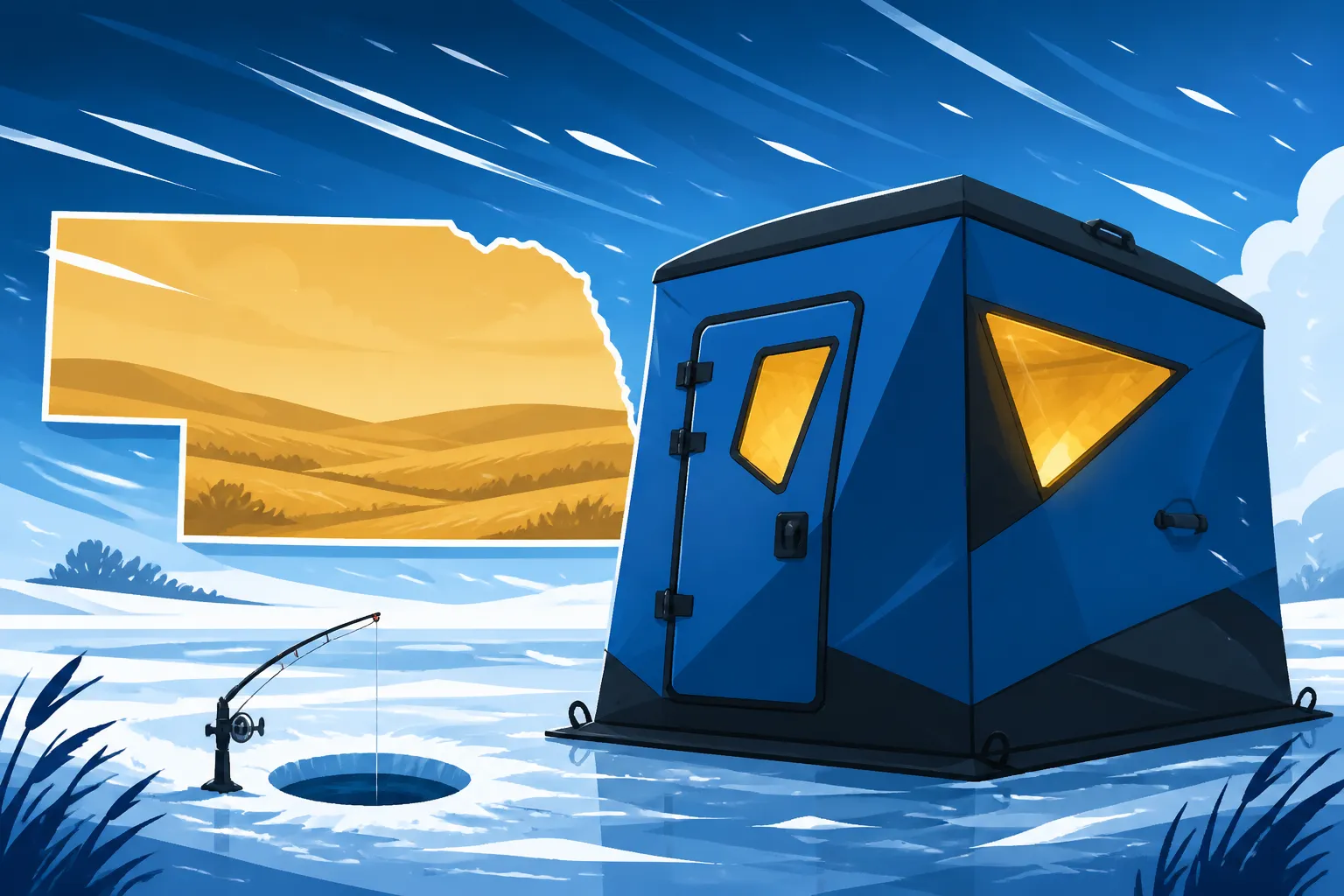
Hub-style shelters are incredibly popular for their generous interior space and relatively quick setup. They get their name from the "hubs" that allow the fiberglass or metal poles to expand outward, creating a spacious cubic or hexagonal footprint. For windy conditions, the key is to look for models with robust, oversized hubs and thick-diameter poles, combined with heavy-duty, insulated fabric.
These shelters offer fantastic interior volume, making them great for groups or solo anglers who like to spread out. The larger footprint also allows for more floor space for heaters, electronics, and multiple holes. When it comes to wind, their strength lies in their ability to be heavily anchored at multiple points. You'll typically have anchor straps on each corner, and sometimes additional mid-panel tie-downs, allowing you to really screw them into the ice. However, their larger, boxier profile can catch more wind if not properly anchored, so setting them up correctly is critical. Always deploy all guy lines and anchors, even if the wind seems calm at first. For stability, I highly recommend models from brands known for quality construction, which you can often find at retailers like Bass Pro Shops or on Amazon, specifically looking for those with high denier ratings and reinforced stitching.
Flip-Over Shelters: Quick Setup and Portability
Flip-over shelters, sometimes called sled-style shelters, are the go-to for anglers who prioritize portability and rapid deployment. They consist of a durable sled base with a canvas tent that flips over the top. When collapsed, the tent packs down into the sled, which can then be pulled across the ice.
Their main advantage in windy conditions is their low profile when set up and their inherent stability provided by the heavy sled base. The sled itself acts as a ballast, and many flip-overs come with skirt material that can be sealed with snow, preventing wind from getting underneath. The smaller overall footprint and typically more aerodynamic shape compared to a large hub tent also mean they present less surface area for the wind to push against. They are incredibly fast to set up and take down, which is a huge plus when a squall suddenly rolls in. However, their interior space is often more limited, especially for taller anglers or multiple people. If you're a solo angler or fish with one buddy and value quick moves and wind resistance, a flip-over is a strong contender. Brands like Eskimo and Clam are well-regarded for their flip-over designs, often available through online marketplaces like Amazon, offering various sizes and insulation levels.
Hybrid and Permanent Structures: Maximum Protection
While less common for casual outings, hybrid shelters and more permanent ice shacks offer the ultimate protection from wind and weather. Hybrid shelters might combine elements of both hub and flip-over designs, or they might be larger, more robust semi-permanent structures that require a bit more effort to set up but offer superior stability and comfort.
Permanent shacks, often built on a skid or wheelhouse chassis, are designed to withstand almost anything Mother Nature throws at them. These are typically insulated with hard walls and often feature windows, doors, and even amenities like built-in benches and heaters. They are exceptionally heavy and, once positioned and secured with ice anchors or chains, are virtually impervious to even hurricane-force winds. The trade-off, of course, is portability. These are usually towed onto the ice by truck or ATV and are not meant for quick moves. If you're planning an extended stay at a prime spot like Lake McConaughy for some Walleye Fishing in Nebraska or a remote location on Merritt Reservoir for some Merritt Reservoir Walleye Fishing, and you want maximum comfort and protection, a permanent shack is the way to go. These are less about a specific brand and more about the custom build or heavy-duty factory design.
Here’s a quick comparison of shelter types for windy conditions:
| Shelter Type | Primary Wind Resistance Feature | Portability | Setup Time | Interior Space | Ideal Scenario |
|---|---|---|---|---|---|
| Hub-Style | Multiple strong anchor points, robust frame, insulated fabric | Good | Moderate | Excellent | Groups, long stays, versatile fishing areas |
| Flip-Over | Low profile, heavy sled base, quick deployment, snow-seal skirt | Excellent | Very Fast | Limited | Mobile anglers, solo/duo fishing, quick escapes |
| Hybrid/Permanent | Hard walls, extreme weight, robust anchoring, custom construction | Poor | Slow/N/A | Very Good | Extended trips, extreme comfort, dedicated spots |
Top Considerations When Choosing Your Shelter for Nebraska Winds
Selecting the perfect ice fishing shelter for Nebraska's often blustery conditions involves more than just picking one that looks good. You need to think about how you fish, where you fish, and what your priorities are. A careful assessment of these factors will lead you to a shelter that serves as a true haven on the ice, not a source of frustration.
Size and Capacity Needs
Before you even start looking at features, consider how many people will typically be fishing with you. Are you a lone wolf who prefers solitude, or do you always bring a couple of buddies, or perhaps take the grandkids out for Nebraska Youth Fishing License Rules?
- Solo Angler: A smaller, single-person flip-over might be perfect. It’s quick to set up and provides ample space for one, plus your gear. It's also easier to heat and less surface area for wind to catch.
- Two Anglers: A larger flip-over or a compact hub shelter (like a 2-3 person model) works well. You'll need enough room for two holes each, a heater, and tackle without feeling cramped.
- Family or Group (3+ Anglers): A spacious hub shelter (4-6 person or larger) is almost essential. This provides enough room for everyone to spread out, manage multiple lines, and stay warm comfortably. The trade-off here is that larger shelters have a greater surface area, making their wind resistance even more dependent on superior frame strength and meticulous anchoring.
Always remember that more people and more gear mean more space is needed, which in turn means the shelter will be a larger target for the wind.
Portability and Ease of Setup
How you get to your fishing spot and how quickly you want to be fishing are critical factors, especially when the wind is kicking up.
- Mobile Angler: If you like to drill a few holes, fish for a bit, and then move to another spot, a lightweight, easy-to-pull flip-over or a quick-deploy hub shelter is ideal. When you're constantly on the move, you don't want to spend precious fishing time battling a complicated setup or wrestling a heavy, cumbersome shelter. The less time your hands are exposed to the cold wind during setup, the better. Consider something you can easily pull by hand or with a snowmobile or ATV.
- Stationary Angler: If you tend to find a spot and stick there for the entire day, or even several days, a heavier, more robust hub or even a semi-permanent shack might be worth the extra effort. While these take longer to set up, they offer superior stability and comfort once deployed. However, even stationary anglers need to be mindful of quick setup times if the weather turns unexpectedly.
Ease of setup also ties directly into fighting the wind. Trying to erect a complicated shelter in high winds is not only frustrating but potentially dangerous. Look for designs that minimize loose parts, have clearly marked poles, and feature intuitive hub mechanisms that snap into place without much fuss.
Budgeting for Durability
Let's be real: ice fishing shelters can be a significant investment. While it might be tempting to go for the cheapest option, particularly when it comes to battling Nebraska winds, cutting corners on quality is a false economy.
- Entry-Level Options: You can find basic, single-layer hub shelters that are quite affordable. These might suffice on calm days or for very short trips, but they will struggle in strong winds, offering minimal insulation and potentially less durable frames.
- Mid-Range Choices: This is where you'll find the sweet spot for many Nebraska anglers. Insulated hub shelters and well-regarded flip-overs with durable frames and fabrics typically fall into this category. These provide a good balance of features, comfort, and wind resistance for most conditions you'll encounter. You'll definitely want to spend a bit more here to get that insulated fabric and a stronger frame.
- Premium Models: The top-tier shelters offer the best materials, most robust frames, and superior insulation. They might include additional features like extra windows, integrated seating, or more advanced anchoring systems. If you fish frequently, in all conditions, or prioritize maximum comfort, these are worth the investment. Think of it as investing in your enjoyment and safety on the ice. Check out options from reputable brands known for their durability on sites like Amazon or at your local Bass Pro Shops. The initial outlay might be higher, but the longevity and performance in adverse conditions will pay off in the long run.
Accessories and Added Features
Sometimes, it's the little things that make a big difference, especially in windy conditions.
- Anchoring Kit: Ensure your chosen shelter comes with a good set of ice anchors. If not, budget to buy heavy-duty aftermarket ones. Some anglers even use additional tie-downs or sandbags on the inside for extra stability.
- Skirts and Snow Flaps: Many shelters feature extended fabric "skirts" around the base. These are crucial for packing snow onto, creating a seal that blocks drafts and provides an additional anchor point against the wind trying to lift the shelter.
- Ventilation: Even in cold, windy conditions, proper ventilation is essential to prevent carbon monoxide buildup from heaters. Look for adjustable vents that allow for airflow without letting too much cold air in or compromising the shelter's integrity in the wind.
- Portability Enhancements: Consider if the shelter comes with a durable carry bag, shoulder straps, or an attached sled. If it's a hub style, wheels on the bag can be a godsend for getting your gear across the ice, especially if you have a lot of other Nebraska Ice Fishing Gear Guide to haul.
- Internal Storage: Pockets, mesh netting, or gear hammocks can help keep your tackle and essentials organized and off the ice, preventing them from blowing away if the door is open or if drafts get inside.
By meticulously evaluating these considerations, you'll be well-equipped to choose an ice fishing shelter that transforms those blustery Nebraska days into enjoyable, productive fishing experiences. A good shelter is an investment in your passion, allowing you to focus on the fish, not the freezing gale.
Disclaimer
This article is for general informational purposes only and does not constitute professional advice. Laws, prices and regulations vary by location and change over time. Consult a qualified professional for guidance on your specific situation.