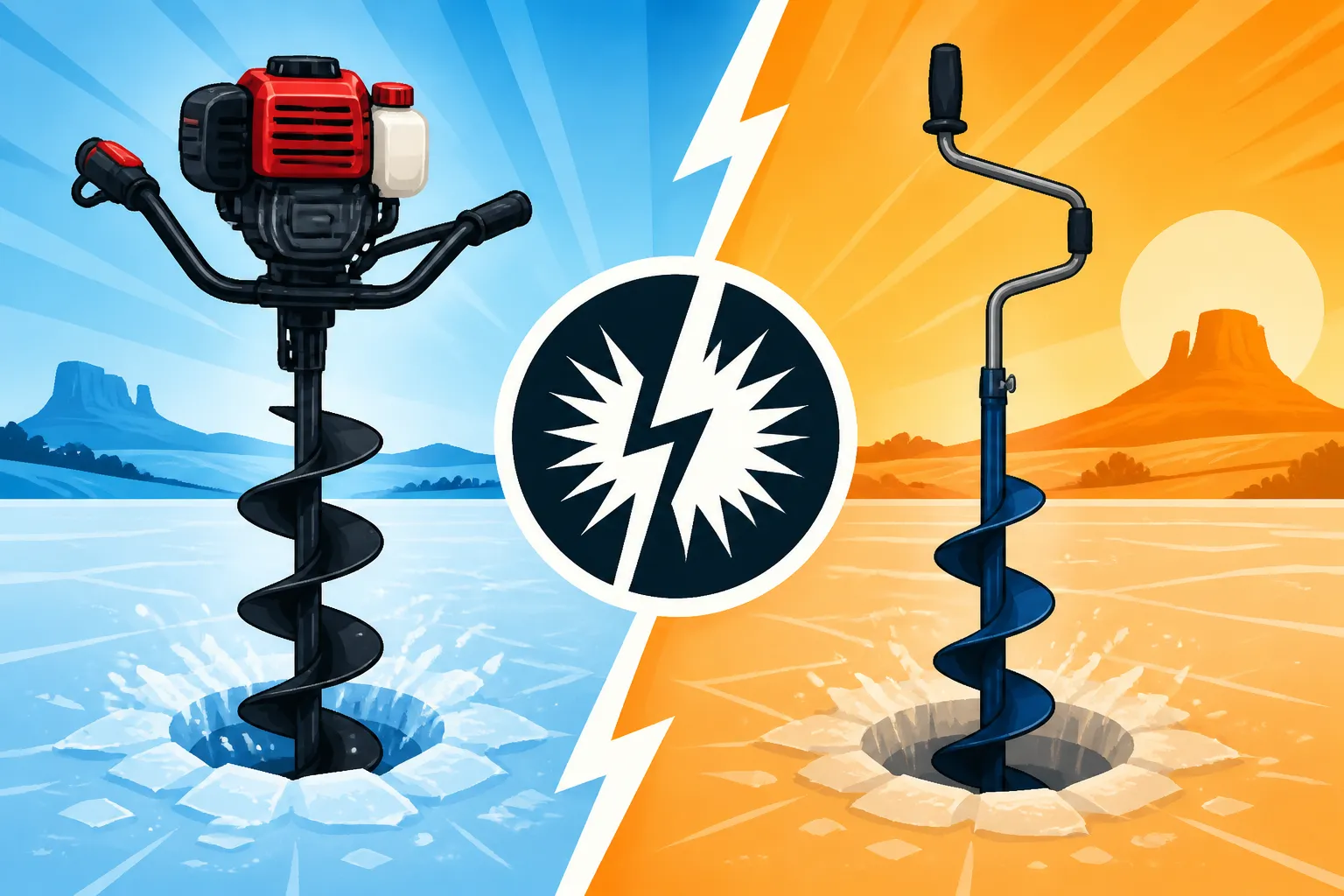
Gas Auger Versus Hand Auger for Ice Fishing
Oh, the age-old debate among ice anglers! Trying to decide between a gas auger and a trusty hand auger can feel like choosing between a leisurely stroll and a sprint, especially when you're looking at a solid sheet of Nebraska ice. It's a common struggle, weighing the convenience against the cost, the power against the portability. This guide is here to cut through the confusion and help you decide which type of auger will best serve your ice fishing adventures across our beautiful Cornhusker State.
Understanding the Fundamentals: Hand Augers for the Determined Angler
Let's start with the classic, the manual labor of love: the hand auger. For many of us who grew up ice fishing on smaller Nebraska ponds or were just starting out, a hand auger was our first introduction to punching through the hard water. It's essentially a giant corkscrew with a handle, designed for you to manually twist and push your way through the ice.
The Undeniable Appeal of Simplicity and Silence
The beauty of a hand auger lies in its sheer simplicity. There are no engines to prime, no pull cords to yank, no fuel to mix or worry about spilling. You just extend it, lock it into place, and start turning. This makes them incredibly lightweight and easy to carry, especially if you're hiking a fair distance to your favorite secluded coves on larger reservoirs or smaller, walk-in-only spots. Think about trekking across a snow-covered Pawnee Lake Fishing or a small, quiet sandpit lake – a hand auger is a breeze to transport.
Another massive perk is the silence. There's something truly peaceful about ice fishing, and a hand auger lets you maintain that tranquility. No roaring engine to spook fish or disturb fellow anglers. This quiet operation can be particularly effective when targeting wary fish like panfish or even some early-season walleye that might be sensitive to vibrations and noise. Plus, they’re generally more environmentally friendly, with no exhaust fumes to worry about. For those just starting out, a hand auger is often a more budget-friendly entry point into the world of hard water. Learning How to Ice Fish in Nebraska often begins with mastering the hand auger.
The Physical Realities and Limitations of Manual Drilling
However, let's be realistic: a hand auger demands physical effort. While it's great for drilling a few holes, or for thinner, early-season ice, punching through 18-24 inches of late-season ice, especially if you want to drill a dozen exploratory holes, can become quite a workout. Your arms and back will feel it! This is especially true if you're fishing with kids or if you're planning a long day on the ice and need to move frequently to locate fish.
Blade sharpness is absolutely crucial for a hand auger. Dull blades on a hand auger feel exponentially worse than on a power auger, turning a manageable task into an exhausting chore. Also, if you frequently fish very thick ice, say 2 feet or more, a hand auger might struggle, requiring multiple passes to clear the slush. It's a fantastic tool for the right situations and for anglers who don't mind putting in the elbow grease.
Powering Through the Ice: Gas Augers for Efficiency and Volume
Now, let's talk about the workhorses of the ice-fishing world: gas-powered augers. These machines are built for speed and efficiency, making quick work of even the most formidable ice sheets.
The Unmatched Speed and Power Advantage
The primary draw of a gas auger is its sheer power and speed. With a good gas auger, you can rip through feet of ice in mere seconds. This is a game-changer when the ice is really thick, or when you're fishing expansive bodies of water like Lake McConaughy Fishing Guide or Merritt Reservoir Fishing Guide where you might need to drill dozens of holes to find active fish. Instead of spending precious fishing time and energy drilling, you're getting lines in the water faster.
For anglers who cover a lot of ground, either by snowmobile, ATV, or even just walking, and who need to drill many holes quickly, a gas auger is incredibly efficient. Imagine a cold, blustery day out on Harlan County Reservoir Fishing, and you're trying to locate a school of crappie or walleye. Being able to quickly drill a grid of holes to find that sweet spot without breaking a sweat makes a huge difference in your enjoyment and success. They're built for performance, and they deliver.
The Trade-Offs: Weight, Noise, and Upkeep
While powerful, gas augers come with their own set of considerations. First and foremost, they are heavier and bulkier than hand augers. Lugging one around, especially without a sled or an ATV, can be cumbersome. Then there's the noise. When that engine fires up, it's not exactly subtle. The roar of a gas auger can be disruptive to the peaceful atmosphere of ice fishing and may even temporarily spook fish in shallow areas.
Maintenance is another factor. Gas augers require fuel (often a gas-oil mix), regular tune-ups, spark plug changes, and winterization for proper storage. You'll need to carry extra fuel, which adds to your load. There's also the exhaust smell, which isn't for everyone. The initial investment is significantly higher than a hand auger, and running costs (fuel, oil, maintenance) are ongoing. If you're concerned about Nebraska Aquatic Invasive Species Stamp requirements for your boat, remember that power augers also represent a piece of equipment that needs to be properly maintained and clean to avoid spreading anything.
Making the Choice: Factors to Consider for Nebraska Ice Fishing
Deciding between a gas and a hand auger isn't about one being inherently "better" than the other; it's about finding the best fit for your specific fishing style and the conditions you typically encounter in Nebraska.
Ice Thickness and Number of Holes: Your Drilling Demands
The first thing to consider is the ice itself. Nebraska's ice can vary wildly from year to year and even from lake to lake. Early season, you might only have 6-8 inches of ice, which a hand auger can handle with ease. But by mid-to-late winter, you could be looking at 18 inches, 2 feet, or even more on some of our larger, colder lakes. If you frequently fish these thicker conditions, or if you're the type of angler who drills 20+ holes in a day to actively search for fish (especially popular for finding Nebraska Crappie Bag Limits or Nebraska Walleye Daily Bag Limit), a gas auger will save your energy and significantly increase your fishing time. For just a few holes on thinner ice, a hand auger is perfectly adequate.
Portability and Weight: How You Get to Your Spot
Think about how you usually access your ice fishing spots. Do you park right next to the lake, or do you have a long hike across snow and slush to get to your favorite hidden coves? If you're walking a considerable distance, especially if you're pulling a sled full of other gear, every pound counts. A lightweight hand auger or a compact, smaller gas auger (if you must have power) might be your best friend. Many serious anglers use snowmobiles or ATVs to get across large lakes like Big Mac, making the weight of a gas auger less of a concern. However, if you're focused on Best Nebraska Lakes for Shore Fishing Without a Boat or smaller urban ponds, portability will be king.
Budget and Maintenance: Weighing the Costs
Let's talk dollars and cents. Hand augers are significantly cheaper to purchase upfront. You can find a good quality hand auger for a fraction of the cost of even an entry-level gas auger. There are no fuel costs, no spark plugs, no oil changes. It's a one-time investment in the tool itself.
Gas augers represent a more substantial initial outlay. On top of that, you'll have ongoing costs for fuel, two-stroke oil, and potential maintenance like blade sharpening, carb cleanings, and replacement parts over time. If you're only going out a few times a season, the economics might favor a hand auger. If you're a hardcore ice angler hitting the ice every weekend, the time and effort saved by a gas auger might justify the higher investment and running costs. You can often find a good selection of both at retailers like Bass Pro Shops or online at Amazon.
Here’s a quick comparison to help you visualize the differences:
| Feature | Hand Auger | Gas Auger |
|---|---|---|
| Initial Cost | Lower | Higher |
| Weight | Lighter, easier to carry | Heavier, requires more effort/transport |
| Speed | Slower, depends on angler's strength | Very fast, drills holes in seconds |
| Effort | High physical effort | Low physical effort |
| Noise | Silent | Loud |
| Maintenance | Minimal (blade sharpening, drying) | Regular (fuel, oil, spark plugs, winterization) |
| Fuel Required | No | Yes (gas/oil mix) |
| Environmental | Zero emissions | Exhaust fumes |
| Best Use | Thinner ice, fewer holes, quiet spots, budget anglers | Thick ice, many holes, efficiency-focused anglers, large lakes |
Noise and Environmental Impact: Personal Preferences
For some anglers, the sound of an engine is a non-issue. For others, it completely detracts from the experience. If you cherish the quiet solitude of ice fishing, a hand auger is the obvious choice. If you're sensitive to exhaust fumes or want to minimize your carbon footprint, a hand auger (or an electric auger, which we'll briefly touch on) is more aligned with those values. Most anglers agree that safety is paramount, no matter what auger you choose. Always review Nebraska Ice Fishing Safety Tips before heading out on the hard water.
Maximizing Your Auger's Performance and Longevity
No matter which type of auger you choose, proper care and usage will ensure it serves you well for many seasons.
Blade Care: The Sharp Truth
The blades are the business end of your auger, and keeping them razor-sharp is crucial for optimal performance, especially for hand augers. Dull blades will turn any auger into a wrestling match. Always protect your blades with a cover when transporting and storing your auger. Avoid drilling into dirt, rocks, or anything other than ice. If your blades hit something hard, they can become nicked or dull very quickly. Many local bait shops in Nebraska offer blade sharpening services, or you can find replacement blades at Bass Pro Shops or on Amazon. Proper care of your blades ensures you can focus on How to Catch Crappie Through the Ice or other species without struggling to drill.
Storage and Transport: Protecting Your Investment
For hand augers, simply keep the blades covered and ensure they are dry before storing to prevent rust. For gas augers, storage is a bit more involved. Before storing for the off-season, always add a fuel stabilizer to your gas tank and run the engine for a few minutes to circulate it. This prevents fuel from breaking down and gumming up the carburetor, which is a common cause of starting issues next season. Store your auger in a dry place, preferably upright, to prevent oil leaks and maintain proper lubrication. When transporting, secure your auger properly to prevent it from bouncing around, which can damage the engine or the blades.
Safety First: Every Time You Hit the Ice
Always prioritize safety when operating any auger. Wear appropriate clothing and safety glasses, especially with power augers, as ice chips can fly. Keep your hands and feet clear of the spinning blades. Never allow children or inexperienced individuals to operate a power auger without direct supervision. When you're done drilling a hole, immediately put the blade guard back on or stand the auger upright in a secure position. Ice fishing itself has its own set of dangers, so knowing How Thick Ice Needs to Be to Fish Safely in Nebraska is just as important as knowing your gear.
A Quick Word on Electric Augers: The Modern Alternative
While the core query focuses on gas versus hand, it's worth a brief mention that electric augers have become increasingly popular. They offer the quietness of a hand auger with the power and speed of a gas auger, without the fumes or complicated maintenance. They run on rechargeable batteries, offering a fantastic middle-ground solution for many anglers. If you're leaning towards a gas auger but are put off by the noise and fumes, an electric auger might be the perfect fit for your Nebraska ice fishing expeditions. They are often a top recommendation in a Best Ice Fishing Auger for Thick Nebraska Ice discussion.
Conclusion
Ultimately, the best choice between a gas auger and a hand auger for your Nebraska ice fishing adventures boils down to a few key questions: How often do you go? How thick is the ice you typically encounter? How many holes do you like to drill? How far do you need to travel to your spots? And what's your budget and tolerance for noise and maintenance?
If you're an occasional angler who fishes smaller waters with relatively thin ice, or you truly value the peace and quiet, a hand auger is a fantastic, reliable, and economical choice. If you're a dedicated ice enthusiast, covering vast frozen landscapes, chasing specific species on thick ice, and prioritizing efficiency, a gas auger will be an invaluable tool that saves your energy and maximizes your time on the water. Consider your personal style, assess the conditions you'll face, and choose the auger that will make your time on the ice the most enjoyable and productive.
Disclaimer
This article is for general informational purposes only and does not constitute professional advice. Laws, prices and regulations vary by location and change over time. Consult a qualified professional for guidance on your specific situation.