Merritt Reservoir Walleye Fishing
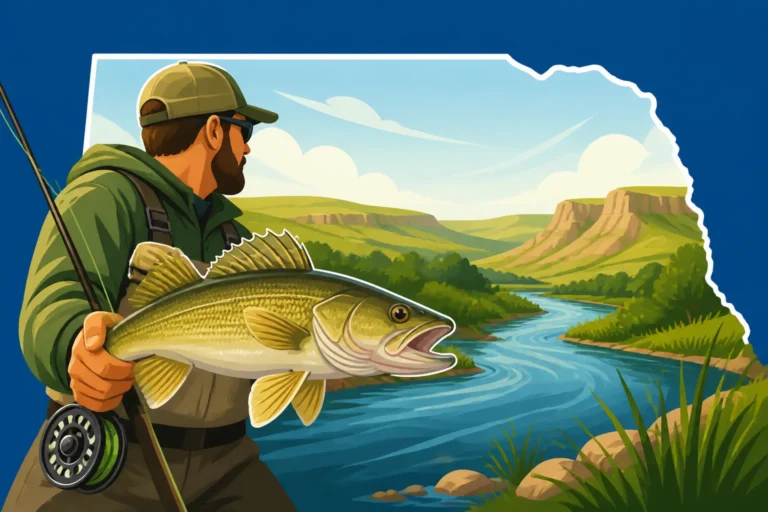
There's nothing quite like the thrill of chasing walleye, especially when you're casting your line into a gem like Merritt Reservoir. Many anglers feel the pressure of figuring out the "secret sauce" for walleye success, navigating everything from the right bait to the best time of day, and it can frankly be overwhelming. This guide is dedicated to demystifying Merritt Reservoir walleye fishing, offering practical, in-depth advice to help you hook into those elusive, tasty fish.
Why Merritt Reservoir is a Walleye Haven
Merritt Reservoir, nestled deep within the Sandhills of Nebraska, isn't just a pretty face; it's a phenomenal walleye fishery, consistently ranking among the best in the state. Anglers from all over flock here for good reason, and it's not by accident. The unique characteristics of this lake create an ideal environment for walleye to thrive, offering both ample forage and excellent habitat.
Unique Habitat and Forage Base
Merritt Reservoir boasts a sprawling, complex underwater landscape that walleye absolutely adore. Unlike some other more uniform lakes, Merritt has a diverse bottom structure with sharp drop-offs, submerged timber, rocky points, deep weed lines, and vast flats. These varied features provide walleye with plenty of ambush points to hunt, as well as crucial cover for protection and spawning. The clean, clear water of the reservoir, typical of Sandhills lakes, also plays a significant role in walleye health and growth, supporting a robust ecosystem.
Beyond the structure, the forage base in Merritt Reservoir is incredibly rich and diverse. Walleye are predators, and they need a consistent food supply to grow to impressive sizes. Merritt delivers on this front with an abundance of gizzard shad, emerald shiners, yellow perch, and various panfish species. This natural smorgasbord means the walleye are well-fed, healthy, and often willing to strike a well-presented bait. Understanding what walleye eat in Nebraska lakes is crucial, as mimicking their natural prey is often the key to success. Anglers often find that when these baitfish schools are active, the walleye are not far behind.
Stocking Programs and Population Health
The health and vitality of Merritt's walleye population aren't left to chance. The Nebraska Game and Parks Commission (NGPC) actively manages the fishery through regular stocking programs. Each year, millions of walleye fingerlings are introduced into Merritt, supplementing natural reproduction and ensuring a strong, sustainable population for anglers to enjoy. This dedicated effort means that despite heavy fishing pressure, the reservoir consistently produces good numbers of quality walleye.
These stocking efforts are combined with careful monitoring of the walleye population's health, growth rates, and age structure. Biologists conduct surveys to assess how well the fish are growing and reproducing, which in turn helps inform management decisions, including bag and length limits. This proactive approach ensures that Merritt remains a premier walleye destination for years to come, offering a fantastic experience for both seasoned anglers and newcomers alike. It's truly a testament to thoughtful fishery management that a place like Merritt can sustain such a productive walleye fishery.
Best Times to Target Walleye at Merritt
Walleye fishing at Merritt Reservoir is a year-round affair, but understanding the seasonal movements and behaviors of these fish is absolutely critical for consistent success. Each season presents unique opportunities and challenges, requiring different strategies and approaches. Don't fall into the trap of thinking one technique works all the time; adapting to the conditions is what separates the casual angler from the consistent catcher.
Spring Spawning Run Strategies
Ah, spring! This is arguably one of the most exciting times to target walleye at Merritt. As ice recedes and water temperatures climb into the 40s and 50s Fahrenheit, walleye instinctively move shallower to spawn. This pre-spawn and spawn period, typically from late March through May, concentrates fish in predictable areas, making them more accessible. You'll find them congregated around rocky shorelines, riprap banks, and shallow points, especially those exposed to warmer sunlight or wind-blown areas that push warmer surface water.
During this time, slow presentations are often key. Jigs tipped with live minnows or soft plastics are deadly when fished slowly along the bottom or near structure. Trolling crankbaits that mimic baitfish in shallow water can also be incredibly effective, especially during low light conditions or at night. The fish are often aggressive as they feed up for or recover from spawning, making it a prime time for trophy potential. Remember to check the Nebraska Walleye Bag Limits and length limits, as regulations can sometimes be more restrictive during spawning periods to protect the population.
Summer Deep Water Tactics
Once the spring spawn is over and water temperatures rise into the 60s and 70s, Merritt's walleye generally transition to deeper, cooler waters, often suspending over open water or relating to deep structures like submerged humps, points, and old river channels. This is when your electronics really shine. Learning how to read a fish finder for walleye can drastically improve your odds, helping you locate schools of baitfish and the walleye lurking beneath them.
Trolling becomes a dominant strategy in summer. Long-lining crankbaits or pulling spinner rigs tipped with nightcrawlers (often called "crawler harnesses") at specific depths where fish are suspended is a proven method. Downriggers or leadcore line can help you precisely present your lures in the thermal layers where walleye are most comfortable. Jigging spoons or blade baits vertically over deep structure can also entice bites from lethargic fish. Early mornings, late evenings, and even night fishing can be incredibly productive during the hot summer months as walleye move shallower to feed under the cover of darkness. Don't forget your bug spray!
Fall Feeding Frenzy and Pre-Ice Fishing
As summer gives way to fall, and water temperatures begin to drop, Merritt's walleye enter a major feeding period. They know winter is coming, and they're aggressively bulking up. This "fall feeding frenzy" can offer some of the most consistent and exciting fishing of the year. Walleye will often return to shallower depths, especially around prominent points, humps, and flats adjacent to deep water, where they gorge on baitfish.
Trolling crankbaits and spinner rigs continues to be effective, but don't overlook casting stickbaits or large jigs around rocky areas and submerged cover. As temperatures continue to fall and the water approaches freezing, walleye activity might slow, but they remain catchable. This period also leads into the exciting prospect of ice fishing. While we're talking about open water now, many of the same fall hotspots will hold fish as the ice forms. You can find more detailed information on Merritt Reservoir Ice Fishing Conditions for when the hard water season arrives. The key in fall is to follow the baitfish, as the walleye will be right on their tails, looking for an easy meal before the long winter.
Essential Gear and Techniques for Merritt Walleye
Getting serious about walleye fishing at Merritt means having the right tools and knowing how to use them effectively. It's not about having the most expensive gear, but rather understanding what works best for the local conditions and the specific behaviors of Merritt's walleye. A little preparation goes a long way.
Rods, Reels, and Line for Walleye
When it comes to rods and reels, versatility is your friend for walleye fishing. For most applications like jigging, casting, and light trolling, a medium-light to medium power spinning rod, 6'6" to 7'6" in length, with a fast action tip is a great all-around choice. This setup provides the sensitivity needed to detect subtle walleye bites and enough backbone to handle a good fight. Pair it with a reliable 2500 or 3000 series spinning reel spooled with 8-10 pound test braided line. Braided line offers superior sensitivity and casting distance, which is a huge advantage when you're trying to feel those light taps in deep water or retrieve a lure from far away. Always use a fluorocarbon leader (6-10 lb test) between your braid and your lure; it's nearly invisible underwater and provides abrasion resistance, which is crucial around Merritt's rocky areas.
For heavy trolling or fishing with larger presentations like big crankbaits or heavier bottom bouncers, a longer (7'6" to 9'0"), medium-heavy power trolling rod paired with a line-counter baitcasting reel is invaluable. This allows you to precisely control your lure's depth and track exactly how far back your lines are, which is key when trying to replicate a successful trolling pass. For more specific recommendations, our guide on Best Rod Setup for Nebraska Walleye can provide even deeper insights.
Top Baits and Lures for Success
Merritt Reservoir walleye aren't overly picky if you present the right offering. Live bait is often king, especially when fish are lethargic or pressured. Fresh shiners, fathead minnows, leeches, and nightcrawlers are consistent producers. These can be fished on jigs, slip bobber rigs, or pulled behind bottom bouncers. For many anglers, understanding the Best Bait for Nebraska Walleye often involves experimenting with these live options.
When it comes to artificials, crankbaits are a cornerstone of Merritt walleye fishing. Brands like Rapala, Berkley, and Salmo are popular choices. Diving crankbaits for trolling, lipless crankbaits for casting over flats, and shallow-running stickbaits for low-light conditions all have their place. Jigs, usually 1/8 to 1/2 ounce, dressed with soft plastics like paddle tails, grubs, or scented worms, are incredibly versatile. Blade baits and jigging spoons can also be highly effective for vertical jigging over deeper structure. Color choices can vary, but generally, natural colors like greens, browns, and silvers work well in clear water, while brighter colors like chartreuse or orange can shine in stained conditions or during aggressive bites.
Effective Fishing Techniques Trolling, Jigging, Drifting
Mastering a few key techniques will give you a significant advantage on Merritt. Trolling is a highly effective search pattern, especially over vast areas or when fish are scattered. It allows you to cover a lot of water and present your bait at a consistent depth and speed. Different methods exist, including flat-lining, using planer boards, or employing leadcore line or downriggers for deeper presentations. Our guide on How to Troll for Walleye in Nebraska delves into this extensively. Speed is crucial, often between 1.0 and 2.5 mph, depending on water temperature and fish mood.
Jigging is perfect for targeting specific structures, like humps, points, or weed edges, and is often the go-to when fish are concentrated. Whether vertical jigging over a marked school or casting and retrieving, jigs offer precise control. Vary your retrieve, from slow lifts and drops to more aggressive snaps, until you find what triggers a strike.
Drifting with the wind or current, often with bottom bouncers and spinner rigs or jigs, is another excellent way to cover ground and present bait naturally. It's particularly effective on flats or along contours, allowing you to stay in contact with the bottom. When you find a productive drift, repeat it! Sometimes anchoring up on a specific piece of structure and casting around it can also be very effective, especially if you're marking fish on your sonar. Using a service like FishingBooker can help you connect with local guides who are experts in these techniques for Merritt.
Navigating Merritt: Access Points and Hotspots
Merritt Reservoir is a big body of water, and knowing where to launch your boat, find a good shore fishing spot, or understand the best underwater features can make all the difference in your walleye quest. It can be intimidating to face such a large lake for the first time, but a little local knowledge goes a long way to making it feel manageable.
Public Access and Boat Ramps
Merritt Reservoir State Recreation Area provides excellent public access for anglers, making it relatively easy to get your boat in the water. There are several well-maintained boat ramps strategically located around the reservoir. The main boat ramp near the Merritt Dam is often a popular choice due to its easy access and proximity to deeper water. Other ramps like the Powderhorn or Beaver Creek ramps offer access to different sections of the lake, which can be advantageous depending on wind conditions or where the fish are holding.
These ramps are generally paved and suitable for various boat sizes, from small jon boats to larger multi-species rigs. However, it's always a good idea to check water levels, especially during dry years, as some ramps might become difficult to use at low water. Adequate parking is usually available, though it can get crowded during peak fishing seasons or holiday weekends. Remember to adhere to all boating regulations, including having all required safety equipment and ensuring your vessel is properly registered according to Nebraska Boat Registration and Fishing Rules.
Key Structures and Submerged Features
Merritt Reservoir is renowned for its diverse underwater topography, which is a big part of why it's one of the Best Nebraska Lakes for Walleye. Walleye are structure-oriented fish, so understanding these features is paramount. The old river channel of the Snake River, which flows into Merritt, snakes its way through the reservoir, creating deep troughs and adjacent shelves that are magnets for walleye. Follow this channel, especially where it intersects with points or humps, for prime fishing.
Submerged timber and old weed lines, particularly those that drop off into deeper water, are also excellent holding areas. Walleye will use this cover for ambush and protection. Rocky points and riprap banks, especially on the north side of the reservoir, are crucial during the spring spawn and can hold fish year-round. Don't overlook the myriad of humps and subtle depth changes throughout the main body of the lake. These "walleye magnets" might not always be obvious on a map, but a good fish finder and plenty of time on the water will help you uncover these productive zones.
Shoreline Fishing Opportunities
You don't need a fancy boat to catch walleye at Merritt. While much of the focus is on boat fishing, there are legitimate shoreline fishing opportunities, particularly during the spring and fall. The riprap areas near the dam and along some of the accessible points can be very productive during the spring walleye spawn. Anglers casting jigs, crankbaits, or even fishing with live minnows under a slip bobber can do very well from shore here.
Other areas around the campgrounds and picnic spots offer scattered shoreline access, though not all areas are equally productive for walleye. Many of these spots are better suited for general panfish or catfish, but it's always worth a try, especially if you scout out deeper water access from the bank. For those without a boat, targeting the easily accessible points and rocky sections, especially around dawn and dusk, can yield surprising results. Remember that even from shore, you still need a valid Nebraska Fishing License Guide and should be aware of all local regulations, including the Nebraska Walleye Minimum Length Limit.
Regulations and Conservation for Sustainable Fishing
Fishing in Nebraska, especially for a prized species like walleye, comes with responsibilities. Understanding and respecting the regulations isn't just about avoiding a fine; it's about ensuring that future generations can enjoy the same fantastic fishing opportunities we have today. Merritt Reservoir's walleye fishery thrives because of these thoughtful rules.
Understanding Walleye Bag and Length Limits
The Nebraska Game and Parks Commission sets specific bag and length limits for walleye in Merritt Reservoir, which are designed to protect the population and promote healthy fish growth. These limits can change, so it's absolutely vital to consult the most current Nebraska Fishing Regulations Explained booklet or the official NGPC website before heading out. Generally, walleye often have a daily bag limit (how many you can keep in a day) and a possession limit (how many you can have on hand, including those at home).
Length limits are also common and are usually aimed at protecting smaller, younger fish to allow them to mature and spawn, or sometimes to protect larger "trophy" fish as brood stock. For instance, there might be a slot limit, where fish within a certain size range must be released, or a minimum length limit. Failing to adhere to these rules can result in significant penalties, and more importantly, it can negatively impact the long-term health of the fishery. Always measure your fish carefully and release those that don't meet the legal requirements promptly and safely.
Importance of Catch and Release
While catching walleye for a delicious meal is certainly a joy, practicing responsible catch and release, especially for larger fish or those outside the legal harvest limits, is a cornerstone of conservation. Trophy walleye contribute significantly to the genetic strength of the population, and releasing them allows them to spawn again and grow even larger. The same goes for undersized fish; letting them grow ensures a continuous supply of future catches.
When practicing catch and release, handle fish with wet hands to protect their slime coat, which is their primary defense against disease. Use pliers or a dehooker to quickly remove hooks. If the fish is deeply hooked, it's often best to cut the line rather than try to extract the hook, especially if it's in the gills or throat. Minimize air exposure, support the fish horizontally, and release it gently. Investing in a good, knotless rubber landing net can also greatly reduce stress and injury to the fish. Every fish we carefully release contributes to the sustained bounty of Merritt Reservoir.
Planning Your Merritt Walleye Adventure
A successful fishing trip to Merritt Reservoir involves more than just knowing where to cast your line; it's also about planning the logistics. From finding a place to stay to deciding if a fishing guide is right for you, preparation ensures a smooth and enjoyable experience.
Accommodations and Local Services
Merritt Reservoir is a bit off the beaten path, which is part of its charm, but it means you need to plan your accommodations. The Merritt Reservoir State Recreation Area offers excellent camping opportunities, ranging from primitive tent sites to electrical hookups for RVs. Many anglers prefer to stay right on the lake, enjoying the convenience and immersing themselves in the natural beauty of the Sandhills. These campsites often fill up quickly, especially during peak season, so booking well in advance is highly recommended.
For those who prefer not to camp, the nearest towns with lodging options are Valentine (about 25 miles north) and Ainsworth (about 40 miles east). Both offer hotels, motels, and sometimes cabin rentals. These towns also provide essential services like grocery stores, bait shops, and restaurants where you can fuel up after a long day on the water. Make sure to stock up on supplies before heading to the reservoir, as services directly at the lake are limited. Many bait shops in Valentine can provide up-to-date local fishing reports and the specific bait that's been working recently.
Hiring a Guide or Planning Solo
Deciding whether to hire a fishing guide is a personal choice, but for a large, complex lake like Merritt, it can be an invaluable investment, especially for your first few trips. A good local guide has spent countless hours on the water, knows the current patterns, and understands where the fish are holding and what they're biting. They often provide all the necessary gear and expertise, saving you time and frustration. A professional guide can quickly put you on fish and teach you techniques specific to Merritt, drastically shortening your learning curve. If you're looking to book a guided trip, platforms like FishingBooker can connect you with experienced walleye guides in the Merritt area.
If you prefer to plan a solo trip or fish with your own crew, that's absolutely achievable and incredibly rewarding. The key is thorough research and preparation. Study maps, check recent fishing reports, and be prepared to adapt. Investing in quality electronics like a good fish finder is highly recommended, as is being familiar with various techniques for different conditions. Ultimately, whether you go with a guide or venture out on your own, the goal is to enjoy the incredible walleye fishing that Merritt Reservoir has to offer. Just remember to secure your Nebraska Fishing License Renewal before you head out!
Disclaimer
Please note that fishing regulations, including bag and length limits, can change. Always consult the latest Nebraska Game and Parks Commission fishing guide or website before you go fishing to ensure you are in compliance with current rules and regulations. This guide is for informational purposes only and does not constitute legal advice.