Best Rod and Reel Combo for Beginners in Nebraska
Stepping into the world of fishing can feel like a fantastic adventure, but for many beginners in Nebraska, that excitement can quickly turn into a headache when faced with the overwhelming array of rods, reels, and tackle. It's easy to get lost in all the jargon and specialized equipment, making it tough to even know where to start without feeling like you need to take out a second mortgage. This guide is here to cut through the confusion and help you, a new angler, confidently choose the best rod and reel combo that’s perfect for getting your feet wet in Nebraska's diverse waters, all without breaking the bank or feeling like you've bought the wrong thing.
Why Choosing the Right Beginner Combo Matters for Nebraska Anglers
When you're just starting out, your fishing gear shouldn't be another hurdle. It should be a helping hand, making the learning process smoother and more enjoyable. Think of your first rod and reel combo as your entry ticket to countless peaceful mornings on the lake or exciting afternoons by the river.
Overcoming the Initial Overwhelm
Let's be honest: walking into a large sporting goods store like Bass Pro Shops or browsing the endless options on Amazon for fishing gear can be utterly paralyzing. There are rods of every length, power, and action, and reels with different gear ratios, bearings, and drag systems. For a beginner, it's a lot. The problem isn't just the sheer volume of choices, but the fear of making the "wrong" one. You might worry about buying a combo that's too flimsy for a feisty catfish, or too heavy for delicate panfish. The right beginner combo simplifies this by offering a versatile, user-friendly setup that can handle a variety of situations you'll encounter across Nebraska. It's about getting you fishing confidently, not bogged down in technical specifications.
Setting the Foundation for Success
Your first experiences fishing are crucial for fostering a lifelong love of the sport. A poorly matched or difficult-to-use combo can quickly lead to frustration – tangled lines, missed bites, and an inability to cast effectively. Imagine trying to learn to drive a car with a tricky clutch and unresponsive steering; it would be a nightmare! The same goes for fishing. A balanced, easy-to-handle rod and reel combo makes casting much simpler, allowing you to focus on technique rather than fighting your gear. It also helps you feel those subtle tugs and taps that indicate a fish is biting, and provides the backbone you need to successfully reel in your catch. This early success builds confidence and encourages you to keep coming back for more. After all, isn't catching fish what it's all about?
Versatility for Nebraska's Diverse Waters
Nebraska might be known for its cornfields, but it's also home to an incredible array of fishing opportunities. From the massive reservoirs like Lake McConaughy and Branched Oak Lake to the winding rivers like the Platte and the Niobrara, and countless smaller ponds and urban lakes, there's a fish out there for everyone. You could be targeting plump bluegill one day, feisty largemouth bass the next, or even a respectable channel catfish. A beginner combo needs to be versatile enough to tackle many of these different scenarios. You don't want a hyper-specialized setup when you're still figuring out what kind of fishing you enjoy most. A good general-purpose combo allows you to explore various species and fishing spots across the state without needing a different rod for every outing. You'll find that having a solid all-around choice will serve you well as you discover your favorite Nebraska fishing adventures. You might find a good starting point by checking out Best Fishing Gear for Nebraska Anglers.
Key Considerations When Selecting Your First Combo
Alright, now that we understand why a good beginner combo is so important, let's dive into the practical aspects of picking one out. Don't worry, we're going to keep this straightforward and focused on what truly matters for new anglers.
Spinning Combo vs. Baitcasting Combo
This is often the first big decision, and for beginners, the answer is almost always clear.
Spinning Combo: Your Best Starting Point
A spinning combo consists of a spinning rod and a spinning reel, where the reel hangs under the rod and has an open-faced spool. This setup is incredibly user-friendly and forgiving, making it the hands-down best choice for new anglers. Here's why:
- Ease of Use: Spinning reels are simple to cast. You just open the bail, hold the line, cast, and close the bail.
- Reduced Backlash: "Backlash" is when the fishing line gets tangled in a bird's nest on the reel spool, and it's a common, frustrating issue with baitcasting reels. Spinning reels are much less prone to this, which means less time untangling and more time fishing.
- Versatility: They handle a wide range of lure weights, from tiny jigs for panfish to medium-sized crankbaits for bass or walleye, and are excellent for live bait fishing.
- Good for Lighter Line: Spinning reels excel with lighter fishing lines, which are often preferred for panfish and finicky bass.
Seriously, if you're just starting, do yourself a huge favor and get a spinning combo. You won't regret it.
Baitcasting Combo: Best Left for Later
Baitcasting combos involve a reel that sits on top of the rod, with a closed spool that rotates when you cast. While they offer excellent accuracy, power, and control for experienced anglers throwing heavier lures, they have a much steeper learning curve. The primary culprit is backlash. A slight miscalculation in your cast or thumb pressure on the spool can result in a magnificent tangle that will make you want to throw your rod into the nearest river. Save the baitcaster for when you've mastered the basics with a spinning reel and are looking for a new challenge or specific technique.
Rod Power and Action
These two terms describe how a rod behaves, and they're crucial for matching your rod to the fish you're targeting and the techniques you'll use.
Power (Light, Medium, Medium-Heavy, Heavy)
Rod power refers to the amount of force it takes to bend the rod blank. Think of it as the rod's strength or backbone.
- Light/Ultra-Light: These rods bend easily and are perfect for catching smaller fish like bluegill, crappie, and small trout using very light lines and tiny baits. They make even a small fish feel like a trophy. If you’re really focused on panfish, a light power rod is fantastic.
- Medium/Medium-Light: This is often the sweet spot for a versatile beginner combo in Nebraska. A medium power rod can handle a good range of fish, from larger panfish and bass to average-sized walleye and channel catfish. It's robust enough for a decent fight but sensitive enough to feel bites. This is a great choice for general-purpose fishing across many of Nebraska's lakes and ponds.
- Medium-Heavy/Heavy: These rods are designed for bigger, stronger fish like large catfish, pike, or striped bass, and for throwing heavier lures. They have a lot of backbone but might be overkill for everyday beginner fishing and can make smaller fish feel like nothing on the line.
For a beginner, I’d strongly recommend a Medium or Medium-Light power rod. It’s the Goldilocks choice – just right for most situations you’ll encounter.
Action (Fast, Moderate, Slow)
Rod action describes where the rod bends when pressure is applied.
- Fast Action: The rod bends mostly in the top third of the blank. This gives you excellent sensitivity to feel bites and quick power to set the hook. It's a popular choice for many types of fishing, especially with artificial lures.
- Moderate Action: The rod bends in the top half of the blank. This offers a good balance of sensitivity and a smoother, more parabolic bend, which can be great for casting lighter baits a bit further and for keeping fish hooked once they bite.
- Slow Action: The rod bends almost all the way down to the handle. These are often used for very light panfish setups or specific techniques, offering a softer feel.
For a versatile beginner combo, a Moderate-Fast or Fast action rod is ideal. It provides the sensitivity you need to detect bites and the quick hook-setting power that will help you land more fish.
Reel Size and Gear Ratio
The reel is where your line lives, and its size and gear ratio impact how it performs.
Reel Size (e.g., 1000, 2000, 3000 Series)
Spinning reels are typically sized by numbers, with smaller numbers (e.g., 1000) indicating smaller reels for lighter line and smaller fish, and larger numbers (e.g., 4000+) for heavier lines and bigger fish.
- For general purpose fishing in Nebraska, a 2500 or 3000 series spinning reel is a fantastic choice. These are robust enough for most game fish like bass, walleye, and channel catfish, but not so large that they feel clumsy. They balance well with medium-light to medium power rods.
- If you're really focusing on smaller panfish with light line, a 1000 or 2000 series reel could be considered. You can learn more about specific reel choices in Best Spinning Reels for Panfish.
Gear Ratio (e.g., 5.2:1, 6.1:1)
The gear ratio tells you how many times the spool rotates with one full turn of the handle.
- Lower Ratios (e.g., 5.0:1 to 5.4:1): These reels retrieve line slower but provide more cranking power. They are good for techniques where you need to retrieve slowly or fight powerful fish.
- Higher Ratios (e.g., 6.0:1 to 6.4:1): These reels retrieve line faster. They're great for quickly bringing in slack line, working fast-moving lures, or making lots of casts in a short period.
For a beginner, a versatile mid-range gear ratio (around 5.2:1 or 5.7:1) is perfect. It gives you a good balance of retrieval speed and cranking power for various fishing styles.
Line Selection for Beginners
Don't overthink your line choice when starting out. Simplicity is key.
- Monofilament (Mono): This is the best choice for beginners. It's affordable, easy to tie knots with, has good stretch (which acts as a shock absorber when a fish strikes), and is generally more forgiving than other line types. For a medium power combo, 6-10 pound test monofilament is a great all-around choice. You can always adjust this later as you gain experience. If you’re fishing for specific species, you might consider specialized lines, like those discussed in Best Fishing Line for Nebraska Walleye.
- Fluorocarbon/Braided Line: These lines have specific advantages (low visibility, no stretch for fluorocarbon; extreme strength, thin diameter for braid), but they can be more challenging for beginners to manage, especially with knot tying and avoiding tangles. Stick with mono for now!
Budget-Friendly Options
You absolutely do not need to spend a fortune to get a great beginner combo. Many reputable brands offer excellent entry-level spinning combos that are durable, reliable, and perform well. You can find fantastic options at your local sporting goods store or online retailers. Sometimes, sales on previous year's models can offer even better value. The goal is to get a functional, balanced setup, not necessarily the most expensive one on the shelf. Look for combos in the beginner-friendly price range, and don't hesitate to ask store associates for their recommendations. Both Bass Pro Shops and Amazon have a wide selection of these.
Recommended Rod and Reel Combos for Nebraska Beginners
Let's get down to some practical recommendations based on the considerations we just discussed. Remember, these are general guidelines, and personal preference will play a role as you gain experience.
The All-Around Workhorse: Your Go-To for Most Nebraska Fishing
If you're looking for one combo to do it all – to try your hand at bass in a local pond, chase walleye at Harlan County Reservoir, or even tangle with a channel catfish in the Platte River – this is your huckleberry.
Imagine a 6-foot to 6-foot-6-inch spinning rod with a Medium power and a Moderate-Fast action. This length offers a good balance between casting distance and maneuverability in various environments, whether you're fishing from the bank at Branched Oak Lake or from a small boat. The Medium power gives you enough backbone to handle a surprising variety of fish, while the Moderate-Fast action ensures you can feel those subtle bites and effectively set the hook. Pair this with a 2500 or 3000 series spinning reel and spool it up with 8-pound test monofilament line. This setup is incredibly forgiving and versatile. It's capable of casting lighter jigs and bobber rigs for crappie, medium-sized crankbaits and soft plastics for largemouth bass, and even a chunk of cut bait for a decent channel cat. You can often find combos like this pre-packaged from well-known brands, making the selection process even simpler. Look for these types of combos at any major outdoor retailer, including Bass Pro Shops, or with a quick search on Amazon. This versatile choice is covered in more detail in Best Rods and Reels for Nebraska Fishing.
Panfish Perfection: Delicate Fun for Smaller Fish
If your primary goal, especially if you're fishing with kids, is to catch bluegill, crappie, or other panfish, a slightly lighter setup can make the experience even more enjoyable. Panfish might be small, but they can put up a spirited fight on appropriate tackle.
Consider a 5-foot-6-inch to 6-foot spinning rod with a Light or Ultra-Light power and a Moderate action. A lighter rod makes even a small bluegill feel like a heavyweight, greatly enhancing the fun factor. The moderate action helps prevent small hooks from pulling out of a fish's mouth and provides a softer cast for tiny lures or bait. Couple this rod with a 1000 or 2000 series spinning reel spooled with 4-pound or 6-pound test monofilament. This lighter line is less visible to wary panfish and casts tiny jigs and small pieces of worm or corn with ease. This combo is ideal for places like Fremont Lakes State Recreation Area or any small farm pond. It's also fantastic for introducing children to fishing, as they can easily handle the lightweight gear and feel every wiggle of a panfish. For more on getting kids involved, check out How to Teach a Kid to Fish in Nebraska.
Stepping Up for Bigger Catfish: When the Whiskers Call
While our "all-around workhorse" combo can certainly handle smaller channel catfish, if you specifically know you want to target larger flatheads or bigger channel cats, particularly in rivers like the Missouri or Platte, you might consider a slightly more robust option after you've gotten comfortable with the basics.
For serious catfishing, a 7-foot medium-heavy power spinning rod with a moderate-fast action and a 4000 series spinning reel spooled with 15-20 pound test monofilament or braided line would be more appropriate. This setup provides the extra power needed to cast heavier weights and baits, and to really muscle in a big catfish from strong currents or heavy cover. However, this is usually a second combo purchase once you have a good handle on general fishing. Start with the all-around combo, and if you find yourself dreaming of giant catfish, then you can upgrade! More specific gear for this pursuit can be found in Best Catfish Gear for Nebraska Rivers.
Here's a quick comparison table to help visualize these beginner-friendly options:
| Combo Type | Rod Length | Rod Power | Rod Action | Reel Size (Spinning) | Recommended Line (Mono) | Primary Target Species | Notes |
|---|---|---|---|---|---|---|---|
| All-Around | 6' – 6'6" | Medium | Moderate-Fast | 2500 – 3000 | 8 lb | Largemouth Bass, Walleye, Crappie, Channel Catfish | Excellent first choice for most Nebraska waters. |
| Panfish Specific | 5'6" – 6' | Light/Ultra-Light | Moderate | 1000 – 2000 | 4-6 lb | Bluegill, Crappie, Perch, Small Trout | Great for sensitive bites and making small fish feel bigger, ideal for kids. |
| Heavier Catfish | 6'6" – 7' | Medium-Heavy | Moderate-Fast | 4000+ | 15-20 lb | Large Channel Catfish, Flathead Catfish, Northern Pike | Consider as a second combo for dedicated big fish angling. |
Getting Started: Setting Up and Caring for Your New Combo
So, you've chosen your first rod and reel combo – congratulations! Now, let's make sure you know how to set it up correctly and keep it in tip-top shape for many fishing trips to come.
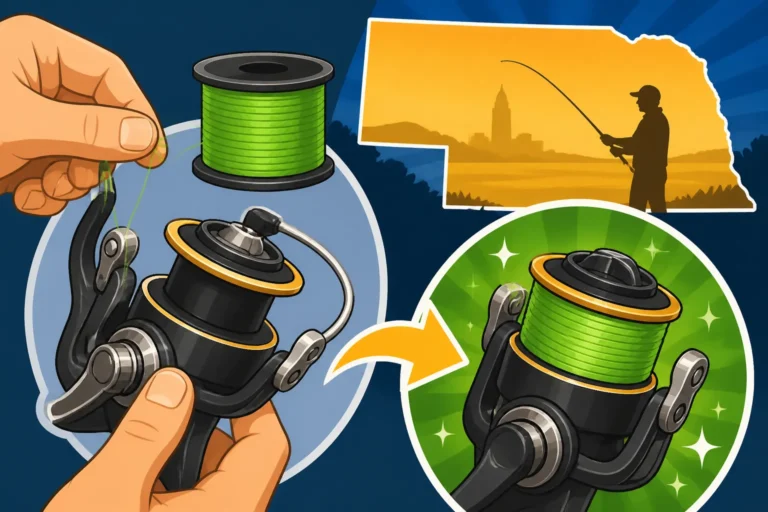
Spooling Your Reel: The Foundation of Good Fishing
Properly spooling your fishing line onto your new spinning reel is critical. If done incorrectly, you'll have endless frustrating line twists and tangles.
- Attach the Reel to the Rod: First, securely attach your spinning reel to the reel seat on your rod.
- Thread the Line: Open the bail of your spinning reel. Take the end of your monofilament line and thread it through the guides on your rod, starting from the closest guide to the reel, all the way to the tip.
- Tie to the Spool: Tie the line to the spool of the spinning reel using an arbor knot or a simple overhand knot around the spool, then another overhand knot to cinch it down. Make sure it's snug so the line doesn't slip.
- Close the Bail: Flip the bail closed.
- Start Winding: Hold the line with a bit of tension between your fingers (not too tight, just enough to apply light pressure) and begin reeling. As you reel, watch how the line comes off the filler spool.
- Check for Twists: Most important: if the line twists excessively (it'll look like little coils are forming on the line before it gets to your reel), flip the filler spool over. Sometimes, line is wound onto the filler spool in a specific direction, and if you wind it onto your reel in the opposite direction, you'll get twists.
- Fill to the Edge: Fill the spool until the line is about 1/8 to 1/16 of an inch from the edge of the spool. Don't overfill, or you'll get tangles when casting. Don't underfill either, as this will reduce your casting distance. You can find a more detailed step-by-step guide in How to Spool a New Reel With Line.
Essential Knots to Learn: Your Connection to the Fish
You don't need to know dozens of knots, but mastering a couple of reliable ones is essential.
- Improved Clinch Knot: This is probably the most popular knot for tying your fishing line to a hook, swivel, or lure. It's strong and relatively easy to learn. Practice it at home until you can tie it quickly and reliably.
- Palomar Knot: Many anglers consider the Palomar knot to be one of the strongest and most reliable knots for tying terminal tackle (hooks, lures, swivels) to your line. It's also excellent for braided line, should you ever decide to venture into that territory.
- Loop Knot (e.g., Rapala Knot): While not essential for every beginner, a loop knot creates a small loop at the end of your line, allowing a lure to have more freedom of movement, which can improve its action in the water. This is a good one to learn once you're comfortable with the basics.
There are many great tutorials online (YouTube is fantastic for visual learners!), or you can pick up a small knot-tying guide. Practice truly makes perfect here.
Basic Maintenance for Longevity: Keep Your Gear Happy
A little care goes a long way in making your fishing combo last and perform well for years.
- Rinse After Use: After every outing, especially if you've been fishing in sandy, muddy, or even slightly brackish water (like some areas along the Missouri River), give your rod and reel a light rinse with fresh water. Focus on the reel, as grit can get into its moving parts. Do not spray directly into the reel's drag or handle. Simply let a gentle stream of water flow over it, then wipe it clean.
- Dry Thoroughly: After rinsing, use a soft cloth to wipe down your rod and reel. Allow them to air dry completely before storing to prevent corrosion and mildew.
- Lubricate Sparingly: Occasionally, a tiny drop of specialized reel oil on the reel's moving parts (like the handle knobs and bail arm pivots) can keep things smooth. Refer to your reel's manual for specific lubrication points, but don't overdo it – a little goes a long way.
- Store Properly: Store your rod and reel combo in a cool, dry place, away from direct sunlight. Rods should ideally be stored vertically or horizontally to prevent warping. Avoid leaving your gear in a hot car trunk for extended periods, as this can weaken fishing line and damage sensitive reel components.
- Check Line Regularly: Before each trip, inspect your fishing line for nicks, abrasions, or excessive coiling. If you find any damage, cut off the affected section or consider respooling your reel. Weak line means lost fish!
By following these simple steps, your first rod and reel combo will be a trusted companion on many fantastic Nebraska fishing adventures. Happy fishing!
Disclaimer
This article is for general informational purposes only and does not constitute professional advice. Laws, prices and regulations vary by location and change over time. Consult a qualified professional for guidance on your specific situation.