How to Spool a New Reel With Line
There's nothing quite like the excitement of getting a brand new fishing reel, shiny and pristine, ready for its inaugural cast on one of Nebraska's beautiful lakes or rivers. But that excitement can quickly turn into frustration if you don't know how to properly spool it with line. A poorly spooled reel can lead to tangles, dreaded "wind knots," lost lures, and even lost fish, turning a promising day on the water into a headache. This comprehensive guide will walk you through the essential steps for spooling different types of fishing reels, ensuring your line lays perfectly for smooth casting and successful retrieves, setting you up for countless enjoyable fishing trips across the Cornhusker State.
Why Proper Line Spooling is Your First Step to Fishing Success
Think of your fishing line as the direct connection between you and the fish of your dreams. If that connection isn't sound from the very beginning, all your casting practice, bait selection, and fish-finding efforts could be for naught. Many anglers, especially those just starting out or upgrading their gear, rush this crucial step, not realizing the significant impact it has on their overall fishing experience. It's not just about getting line on the reel; it's about getting it on correctly.
The Hidden Costs of Poor Spooling
When your line isn't spooled correctly, you're not just dealing with minor annoyances; you're actively hindering your ability to fish effectively. Line that's too loose or too tight, or that has been introduced with significant twist, behaves erratically. You'll find yourself battling persistent tangles and backlash, particularly with baitcasting reels. Spinning reels, while often more forgiving, can develop severe line twist if not spooled correctly, leading to massive coils springing off the reel and creating frustrating "wind knots" mid-cast. This not only wastes valuable fishing time trying to untangle knots but also weakens your line, potentially leading to breaks when you least expect them. Imagine hooking into a trophy walleye at Lake McConaughy Fishing Guide only for your line to snap because of an improperly spooled knot or weak spot!
Setting Yourself Up for Smooth Casting and Longer Line Life
Proper spooling ensures your line comes off the reel smoothly and consistently, maximizing your casting distance and accuracy. It also helps prevent line memory – that annoying tendency for monofilament line to retain the shape of the spool, creating coils. By applying the right tension and paying attention to how the line is fed onto the spool, you extend the life of your fishing line, reducing wear and tear. This means less frequent re-spooling, saving you both time and money in the long run. Whether you're targeting Nebraska Channel Catfish Daily Limit on the Platte River or seeking out a monster bass in a farm pond, a well-spooled reel is the foundation for a flawless presentation and a confident fight.
Essential Gear for Spooling Your Reel
Before you even think about unwrapping that fresh spool of line, it's wise to gather a few simple tools. Having everything at hand will make the process much smoother and prevent those mid-spooling scrambles that can lead to mistakes. You might even discover some tricks that become indispensable parts of your fishing routine.
What You'll Absolutely Need
First and foremost, you'll need your new or empty fishing reel, the fresh spool of fishing line you intend to use, and a pair of sharp scissors or a line cutter. Beyond these basics, a few optional but highly recommended items can make a world of difference.
- Your Reel: This seems obvious, but make sure it's clean and ready. If it's not brand new, consider checking for any old line remnants or grit that could affect the new line.
- Fresh Fishing Line: Choose the right type and pound test for your target species and fishing style in Nebraska. Are you planning on light tackle for panfish at Pawnee Lake Crappie Fishing or heavy-duty braid for snagging paddlefish? Ensure the line is suitable for your reel's capacity.
- Scissors or Line Cutter: Essential for neat cuts and trimming tags. A good quality pair designed for fishing line will make clean cuts without fraying, which is important for knot strength.
- Small Towel or Cloth (damp): This is your secret weapon for applying consistent tension and keeping your fingers from getting friction burns, especially when spooling monofilament or fluorocarbon.
- Arbor Knot Material: A small piece of electrical tape or a band-aid can be useful for securing the arbor knot on some spools, preventing slippage.
- Line Winder (Optional but Recommended): While not strictly necessary, a dedicated line winder makes the process incredibly easy, especially if you spool many reels. You can find various models at stores like Bass Pro Shops or even simpler, affordable ones on Amazon. These devices hold the line spool, allowing you to control tension and prevent twist with precision.
Choosing the Right Line for Your Nebraska Adventures
The type of line you put on your reel is just as important as how you put it on. Different lines excel in different situations, and Nebraska offers a vast array of fishing experiences that call for specific choices. Understanding the basic characteristics of monofilament, fluorocarbon, and braided line will help you make an informed decision for your next outing. For instance, if you're chasing Nebraska Walleye Bag Limits in clear reservoirs, fluorocarbon's invisibility might be key.
| Line Type | Pros | Cons | Best For Nebraska Fishing Scenarios |
|---|---|---|---|
| Monofilament | Affordable, good knot strength, stretches, easy to cast. | High memory, UV degradation, less sensitive. | All-around general fishing, especially for beginners or when targeting species like channel catfish in muddy rivers, panfish, or bass in murky ponds. Its stretch can be forgiving for aggressive strikes or when using treble hooks. Great for bobber fishing at Fremont Lakes State Recreation Area Fishing. |
| Fluorocarbon | Nearly invisible underwater, high abrasion resistance, sinks. | Less knot strength than mono, more expensive, less stretch. | Clear water situations, finesse fishing for wary walleye or trout, leader material for braided lines. Excellent sensitivity for detecting subtle bites. Ideal for Lake Ogallala Trout Fishing where presentation is key. |
| Braided Line | No stretch, incredibly strong for its diameter, very sensitive, long-lasting. | Highly visible, poor abrasion resistance on rough structure, can be tough on knot tying, cuts easily. | Heavy cover fishing for bass, catfishing in rivers with strong currents, deep water jigging for walleye, or when maximum sensitivity and strength are needed. Often paired with a fluorocarbon leader. Consider this for Nebraska Catfish Bag Limits in the Missouri River. |
Always consider what you're fishing for, where you're fishing, and the conditions you expect to encounter before deciding on your line. Sometimes, a combination (braid main line with a fluorocarbon leader) is the most effective approach.
Step-by-Step: How to Spool Different Reel Types
Now for the main event! While the basic principle is the same – getting line from the factory spool onto your fishing reel – each reel type has its own nuances that, if understood, will save you a ton of grief. We'll break down the process for spinning, baitcasting, and fly reels, so you can tackle whatever Nebraska waters throw at you.
Spooling a Spinning Reel: Conquering the "Twist" Dilemma
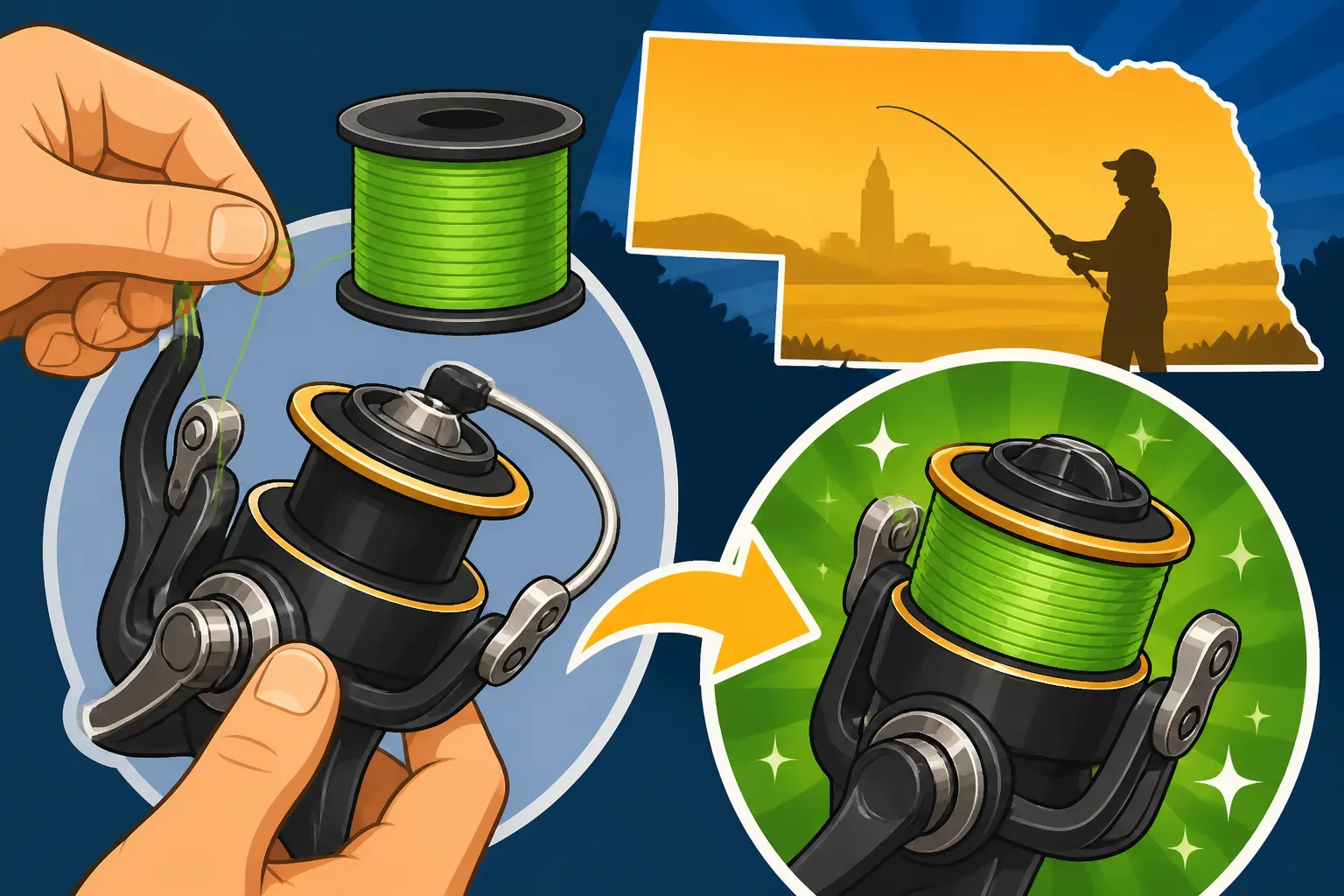
Spinning reels are incredibly popular in Nebraska for their ease of use, making them a favorite for targeting everything from panfish to larger game fish. However, they are notorious for developing line twist if not spooled correctly. This happens because the line comes off the factory spool in a different direction than it goes onto the spinning reel's stationary spool. The key is to minimize this twist from the get-go.
-
Attach the Line to Your Reel's Spool:
- Start by opening the bail on your spinning reel.
- Take the end of your fishing line and tie an arbor knot around the reel's spool. The arbor knot is simple and effective:
- Wrap the line around the reel spool.
- Tie an overhand knot in the tag end around the main line.
- Tie another overhand knot in the tag end itself.
- Pull both the main line and the standing line to tighten the knot securely around the spool.
- Trim the tag end closely, leaving just a tiny bit. For added security, some anglers put a small piece of electrical tape over the knot on the spool to prevent it from slipping, especially with slicker lines like braid.
-
Position the Line Spool Correctly: This is where the magic happens for preventing twist.
- Place the factory spool of line on the floor, label side up.
- Crucially, the line should be coming off the factory spool in the same direction it will go onto your reel. For most spinning reels, this means laying the factory spool flat on the ground with the label facing up. As you reel, watch how the line comes off the factory spool. If it starts to introduce twist (you'll see loops forming in the line as it comes off the spool), flip the factory spool over so the label is facing down. Experiment a little; sometimes it's one way, sometimes the other.
- Alternatively, if you have a friend, they can hold the factory spool on a pencil, allowing it to spin freely. This is often the best method to avoid twist altogether. Or, if you invested in a line winder, follow its instructions for proper spool orientation.
-
Applying Tension and Reeling:
- With the bail open, thread the line through the first guide on your rod. If the rod isn't assembled, just hold the line with your non-reeling hand.
- Close the bail.
- Apply light, consistent tension to the line with your non-reeling hand. A damp towel or cloth wrapped around the line (holding it tightly, but not so tight it burns) works perfectly for this. This tension is vital for a tight, even retrieve.
- Start reeling slowly and steadily. Watch how the line lays on your reel's spool. It should be even, not piling up on one side or the other. Most modern spinning reels have excellent line lay, but if it looks uneven, check for spacers that might need adjustment under the spool (consult your reel's manual).
- Periodically check for twist: Every 20-30 turns of the handle, stop reeling, let the line go slack for a moment, and watch the line between your rod tip and the factory spool. If you see coils or "pigtails" forming, it means you're introducing twist. Flip the factory spool over on the floor and continue reeling.
-
Filling the Spool:
- Continue reeling until the line is about 1/8 to 1/16 inch (about 2-3 millimeters) from the rim of the spool. Do not overfill! An overfilled spool is a guaranteed recipe for tangles and wind knots on the water. It's better to slightly under-fill than over-fill.
- Cut the line from the factory spool. You're ready to tie on your leader or directly to your lure!
Spooling a Baitcasting Reel: The Art of Control
Baitcasting reels are powerful tools, favored by many for their accuracy and backbone when targeting larger species or fishing with heavier lures. While they don't suffer from line twist in the same way spinning reels do, the key to successful baitcasting spooling is consistent tension and an even lay. A new angler often finds their initial attempts at using a baitcaster challenging, and improper spooling will only amplify those difficulties.
-
Attach the Line to Your Reel's Spool:
- Run the line through the line guide on the front of the baitcaster.
- Wrap the line around the reel spool.
- Tie an arbor knot, just like with a spinning reel, making sure it's snug. Trim the tag end. Again, a small piece of tape can help prevent slippage, particularly with braid on smooth metal spools.
-
Position the Line Spool for Optimal Tension:
- For baitcasting reels, the factory spool should be set up so the line comes off the side of the spool, not flat on the floor. You want it to unroll like toilet paper from a holder.
- You can have a friend hold it on a pencil, or use a line winder. If doing it yourself, hold the factory spool between your knees or place it in a box where it can roll freely but with some resistance.
-
Applying Tension and Reeling with Even Line Lay:
- Thread the line through the guides of your rod (if assembled).
- With your non-reeling hand, pinch the line tightly with a damp cloth or towel as it comes off the factory spool and goes towards your reel. This is where you control the crucial tension. You need enough tension so the line lays tightly on the spool, but not so much that it's difficult to reel or could damage the line.
- As you reel, use your thumb (or a friend's finger) to guide the line evenly across the reel's spool, mimicking the action of the reel's level wind system. You want the line to lay in nice, even wraps from side to side. While the level wind mechanism will do this during actual fishing, manually assisting during spooling ensures optimal initial lay.
- Reel at a moderate, consistent pace. Avoid fast, erratic reeling.
-
Filling the Spool:
- Fill the spool until the line is about 1/8 inch (about 3 millimeters) from the rim of the spool. Overfilling a baitcaster is a guaranteed path to severe backlash (bird's nests), especially when learning to cast. An under-filled spool will also reduce casting distance, so aim for that sweet spot.
- Cut the line from the factory spool.
Spooling a Fly Reel: Backing Up Your Game
Fly reels are a bit different from spinning and baitcasting reels because the fly line itself is typically too bulky to fill the entire spool. This is where "backing" comes in – a strong, thin line that takes up space on the arbor, provides extra line if a big fish runs, and acts as a foundation for your fly line. Many Nebraska fly anglers chasing trout in places like the Niobrara River will appreciate having plenty of backing.
-
Attach Backing to the Reel Spool:
- Take your backing line and tie an arbor knot around the fly reel's arbor (the inner core of the spool). Trim the tag end.
- Reel on the desired amount of backing. Typically, 50-100 yards is sufficient for most freshwater applications, but consult your fly reel and rod recommendations. Apply light tension with your fingers or a damp cloth to ensure the backing lays evenly and tightly. Don't overfill the backing, as you need room for your fly line and leader.
-
Connect Fly Line to Backing:
- Once the backing is on, take the butt end of your fly line (it will usually have a loop or a smaller diameter section) and connect it to the end of your backing using a strong, smooth knot like an Albright knot or a nail knot. These knots are designed to pass smoothly through rod guides. Ensure the knot is neat and secure.
-
Reel on the Fly Line:
- With the fly line securely connected, begin reeling it onto the spool, applying light, consistent tension with your non-reeling hand. Again, a damp cloth can help.
- Ensure the fly line lays evenly across the spool. Take your time, making sure there are no loose spots or crossovers that could snag later.
-
Attach the Leader:
- Once the entire fly line is on the reel, you'll need to attach your tapered leader to the front end of the fly line. The preferred knot here is usually a nail knot or a loop-to-loop connection if your fly line has a welded loop.
- The leader typically ranges from 7 to 12 feet, tapering from a thicker butt section down to a fine tippet. You can then tie your fly directly to the tippet or add another section of tippet material.
Common Spooling Mistakes and Troubleshooting Tips
Even experienced anglers occasionally run into issues when spooling a new reel. Don't get discouraged if your first attempt isn't perfect! Learning to troubleshoot these common problems will make you a more confident and capable angler.
The Dreaded Line Twist
Problem: Your spinning reel line constantly throws off coils, creates knots, and generally misbehaves, even after just a few casts.
Cause: Most likely, the factory spool was oriented incorrectly during spooling, or you reeled too fast without proper tension.
Fix:
- Preventative: Always check the factory spool orientation for spinning reels (as detailed above). Have a friend hold the spool on a pencil, or use a line winder.
- Reactive: If the twist is already there and severe, the best remedy is often to strip all the line off the reel. You can do this by trolling it behind a boat (without a lure!) for a few minutes, letting the water untwist it, or by simply stretching it out in an open area, allowing the twist to release. Then, respool carefully, paying close attention to the factory spool's orientation.
Uneven Line Lay
Problem: The line on your reel is noticeably piled up on one side of the spool or in the middle, creating a cone shape instead of a uniform cylinder.
Cause: Insufficient or inconsistent tension during spooling, or issues with your reel's oscillation system (for spinning reels) or level wind (for baitcasting reels).
Fix:
- Preventative: Apply consistent, firm tension during the entire spooling process, using a damp cloth. For spinning reels, check your reel's manual for any spool shims (small washers) that can be added or removed under the spool to adjust line lay.
- Reactive: If the unevenness is minor, it might correct itself somewhat with use. If severe, strip the line off and respool, focusing heavily on tension. For spinning reels, ensure you've installed any necessary shims.
Not Enough or Too Much Line on the Spool
Problem: Your spool is either noticeably under-filled (far from the rim) or visibly over-filled (line spilling over the edge).
Cause: Misjudging the amount of line needed or simply not paying attention to the fill level during spooling.
Fix:
- Under-filled: This isn't as critical as overfilling but will reduce casting distance. You can either live with it, or if it's really bothering you, you can tie on some more line with a strong knot (like a blood knot for similar diameter lines) or just respool with a fresh, fuller spool.
- Over-filled: This is a major issue, leading to frequent tangles, especially with spinning reels. You must remove some line. Carefully unspool some line until it's at the recommended 1/8 to 1/16 inch from the rim, then cut it. It feels wasteful, but it's far better than constant frustration on the water.
Line Memory and Coiling
Problem: Your monofilament line springs off the spool in tight coils, making it difficult to cast smoothly or keep slack out of the line.
Cause: This is inherent to monofilament, but it's exacerbated by improper spooling (too loose) or leaving the line on the reel for too long, especially in extreme temperatures.
Fix:
- Preventative: Always spool with good, consistent tension. When storing your reels, keep them out of direct sunlight and extreme heat.
- Reactive: For minor memory, try stretching the line before fishing by tying it to a fixed object and walking back, then pulling firmly but gently until you feel it stretch. Line conditioners can also help. If the memory is severe, it's probably time to replace the line entirely. Consider How Often to Replace Fishing Line for optimal performance.
By understanding these common pitfalls and knowing how to prevent or fix them, you'll be well on your way to a hassle-free and enjoyable fishing experience every time you hit the waters of Nebraska. Remember, taking the time to spool your line correctly is an investment in your fishing success!
Disclaimer
This article is for general informational purposes only and does not constitute professional advice. Laws, prices and regulations vary by location and change over time. Consult a qualified professional for guidance on your specific situation.