Does a Fish Finder Help From the Bank?
It's a familiar feeling for many bank anglers: you're standing on the shore, casting out into the great unknown, and you can't help but wonder what's lurking beneath the surface. You see boaters with their fancy electronics, scanning the depths, and a little voice inside asks, "Could a fish finder help me from the bank?" This guide is here to tackle that very question, exploring the real benefits, limitations, and practical applications of using a fish finder when your feet are firmly planted on solid ground in Nebraska.
The Allure of Fish Finders for Bank Anglers
When you're fishing from the bank, especially on larger Nebraska lakes or rivers, there's a significant information gap. You can feel the bottom with your sinker, sure, and you might spot a log here or there, but the vast majority of the underwater world remains a mystery. This lack of insight can be incredibly frustrating, leading many anglers to consider technology that might level the playing field.
What Traditional Bank Angling Lacks and a Fish Finder Promises
Think about it: from a boat, anglers can motor around, scan vast areas, identify submerged humps, weed lines, and sudden depth changes – all prime locations for fish. As a bank angler, your reach is limited to how far you can cast. You're essentially blind to anything beyond your immediate casting range and the visible shoreline. You can spend hours casting to seemingly barren water, constantly second-guessing your spot.
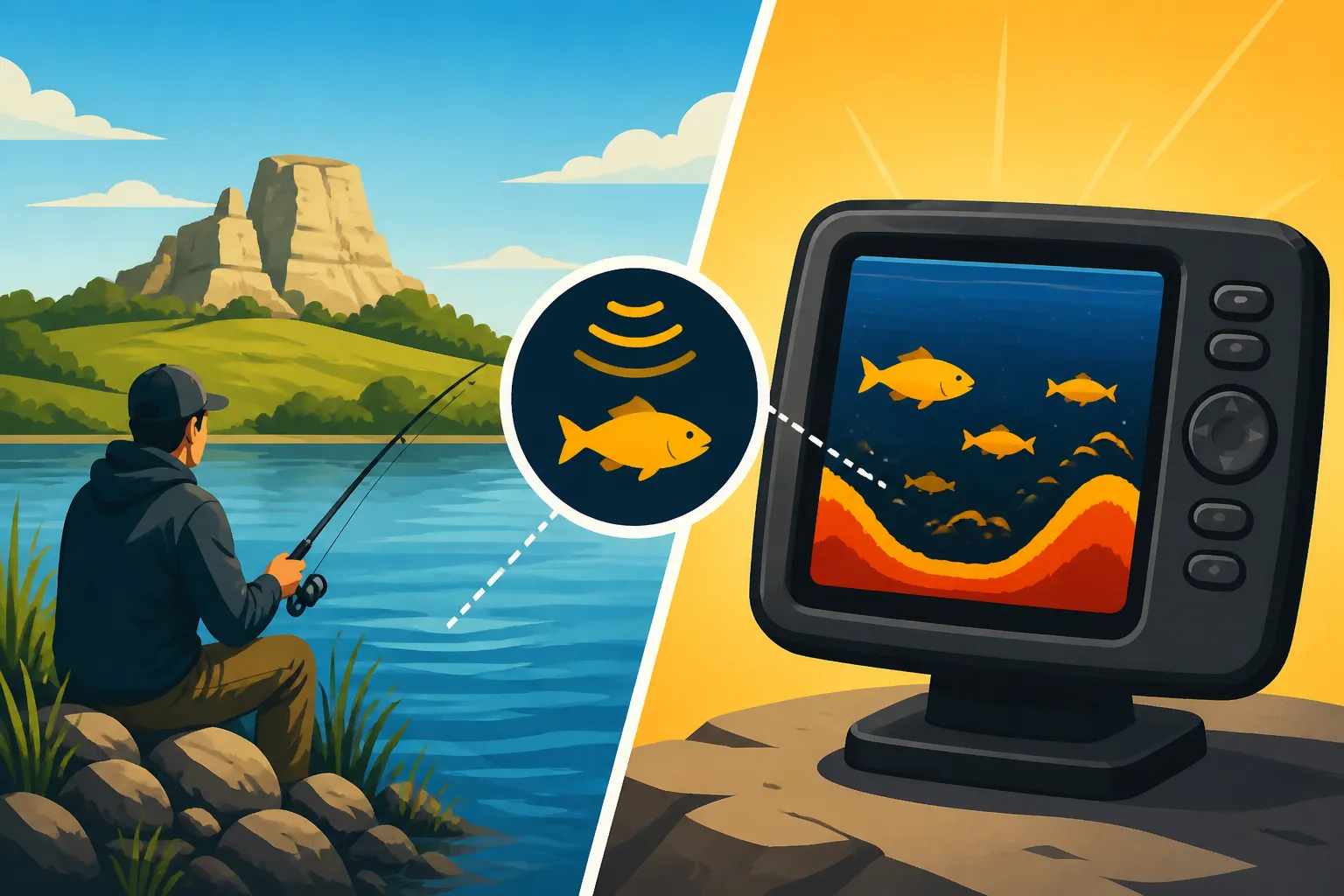
A fish finder, even a portable one, promises to peel back that watery veil. It offers the enticing possibility of locating those hidden rock piles, deciphering contours, and yes, even seeing those little fish icons on the screen, giving you a sense of direction and purpose. The dream is to cast precisely to where the fish are holding, rather than just hoping they stumble upon your bait. This can be a huge motivator, especially when you've had a few slow days and feel like you're just throwing darts in the dark.
The Mental Game: Hope vs. Information
Fishing is as much a mental game as it is a physical one. When you're fishing "blind" from the bank, you're relying heavily on hope, intuition, and perhaps a bit of luck. Did I pick a good spot? Is my bait in the right depth? Are there any fish even here? This constant questioning can wear you down, especially if bites are few and far between.
Introducing a fish finder, even a basic model, changes that dynamic. It transforms pure hope into informed strategy. While it won't guarantee a catch, seeing a change in depth, a promising piece of structure, or even a few fish arches on your screen can significantly boost your confidence. It gives you concrete data to work with, allowing you to adjust your cast, retrieve, or bait presentation based on what you're seeing. This shift from blind casting to targeted effort can make your time on the water more engaging and ultimately, more successful. It helps to turn those frustrating moments into learning opportunities, even if the fish aren't biting right then and there.
How Fish Finders Can Help from the Bank and Their Limitations
Alright, let's get down to the nitty-gritty. While a boat-mounted fish finder offers a comprehensive view, bank anglers need specific types of units designed for their unique challenges. These aren't perfect solutions, but they do offer distinct advantages.
Portable and Castable Units: Bridging the Gap
For bank anglers, the two main types of fish finders that make sense are portable units with a separate transducer or, more commonly, castable fish finders.
-
Castable Fish Finders: These are typically small, spherical, or egg-shaped devices that you literally cast out with your rod and reel. They connect to your smartphone or tablet via Bluetooth or Wi-Fi, displaying the sonar readings on your device's screen. Brands like Deeper and Lowrance make popular castable models. The beauty here is their portability and ease of use. You can cast them to various spots, retrieve them slowly to map contours, or let them sit to monitor a specific area. They're excellent for scouting a new pond or finding submerged features that aren't visible from shore. You might find these readily available at a Bass Pro Shops or through online retailers like Amazon.
-
Portable Units with Separate Transducer: These are more akin to traditional boat fish finders but are housed in a portable case, often with a small display screen. The transducer, the part that sends and receives sonar waves, is usually attached to a pole or mount that you can temporarily clamp to a dock, pier, or even a specialized bank fishing tripod. These often offer more powerful sonar and larger, clearer displays than castable units. While less convenient for "scouting" vast areas from shore than a castable unit, they can provide a more continuous, detailed readout in a fixed location.
Here's a quick comparison to help you weigh your options:
| Feature | Castable Fish Finder | Portable Unit (Fixed Transducer) |
|---|---|---|
| Portability | Excellent (fits in tackle box, no wires) | Good (often in a case, but transducer needs mounting) |
| Ease of Use | High (casts like a lure, app-based display) | Moderate (requires setup, external battery usually) |
| Coverage | Can scout wide areas by casting and retrieving | Best for fixed locations (docks, piers, specific spots) |
| Data Display | Smartphone/tablet screen (requires battery) | Dedicated screen (often larger, more robust) |
| Battery Life | Typically shorter, relies on phone battery too | Generally longer for the display unit |
| Range | Limited by Bluetooth/Wi-Fi signal and casting distance | Limited by transducer cable length, but often more powerful |
| Cost | Generally affordable entry point | Can vary, some robust models can be pricier |
One key limitation to remember with both types is range. You're limited by how far you can cast the unit or the transducer's effective signal strength. You also won't get the same continuous, high-speed mapping you would from a moving boat.
Understanding the Readouts: Structure, Depth, and Potential Fish
Once you have a fish finder in hand, the real trick is interpreting what it's telling you. It's not just about seeing little fish symbols, though those are certainly exciting!
-
Depth and Bottom Contour: This is arguably the most valuable information for a bank angler. Knowing the precise depth where you're casting, and more importantly, identifying changes in depth like drop-offs, humps, or ditches, is crucial. Fish often congregate around these transitions, as they provide cover, ambush points, and access to different water temperatures. A good fish finder will clearly show you the bottom composition, helping you distinguish between hard bottom (good for walleye and bass) and soft muck (often preferred by catfish). For example, finding a deep channel near a shallow flat can be a game-changer for How to Fish a Drop-Off From the Bank.
-
Structure: This refers to anything underwater that isn't just flat bottom – rocks, brush piles, submerged trees, old foundations, or even subtle changes in vegetation. Fish love structure for cover, shade, and food sources. Your fish finder will show these as irregular shapes or darker areas on the screen. Identifying a submerged brush pile just beyond your casting range could tell you exactly where to aim for crappie or bass. This kind of insight is invaluable for improving your Best Bank Fishing Rigs for Nebraska Reservoirs.
-
Fish Arches/Icons: Yes, fish finders do show fish! They typically appear as "arches" (when a fish passes through the sonar cone) or as stylized "fish icons" on simpler units. Don't get too fixated on these, though. A small arch could be a baitfish, a large arch could be a big carp, or it could be debris. Use them as indicators that something is in the area, but combine this with depth and structure information. If you see arches consistently around a brush pile at a certain depth, you're likely onto something. The size and thickness of the arch can give you clues about the size of the fish, but it's not an exact science.
By understanding these readouts, you can move beyond just randomly casting and start making informed decisions about where and how to fish. It's about using technology to inform your "old-school" fishing instincts, rather than replacing them entirely.
Practical Applications and Realistic Expectations
So, is a fish finder a must-have for every bank angler in Nebraska? Not necessarily, but it certainly has its moments. Let's look at where it really shines and where its utility might be overstated.
Situations Where a Fish Finder Shines from Shore
There are definitely scenarios where a portable or castable fish finder can be a true asset for the bank-bound angler:
-
Scouting Unfamiliar Waters: Heading to a new lake or pond in Nebraska? A castable fish finder can quickly give you a lay of the land (or, rather, the lake bottom). You can cast it around to identify immediate drop-offs, submerged humps, weed beds, or rock piles without ever getting wet. This is incredibly helpful for finding Best Nebraska Lakes for Shore Fishing Without a Boat. Instead of spending half your day guessing, you can quickly identify promising areas and focus your fishing efforts.
-
Locating Deep Structure and Cover: Many fish, especially walleye, crappie, and bass, relate heavily to underwater structure. From the bank, this structure is often invisible. Using a castable unit, you can slowly retrieve it over an area, drawing a map of the bottom on your phone. If you find a submerged timber pile or a significant rock cluster, you know exactly where to cast your jig or crankbait. This is particularly useful in reservoirs like Branched Oak Lake or Pawnee Lake, where structure can be key.
-
Determining Optimal Depth: Fish often prefer specific depth ranges depending on the time of day, season, and water temperature. A fish finder can tell you not just the overall depth, but also where schools of baitfish or game fish are holding in the water column. If you see fish consistently suspended 10 feet down in 20 feet of water, you know to adjust your bobber or lure depth accordingly. This precision can make a huge difference, especially when How to Find Crappie in Cold Water.
-
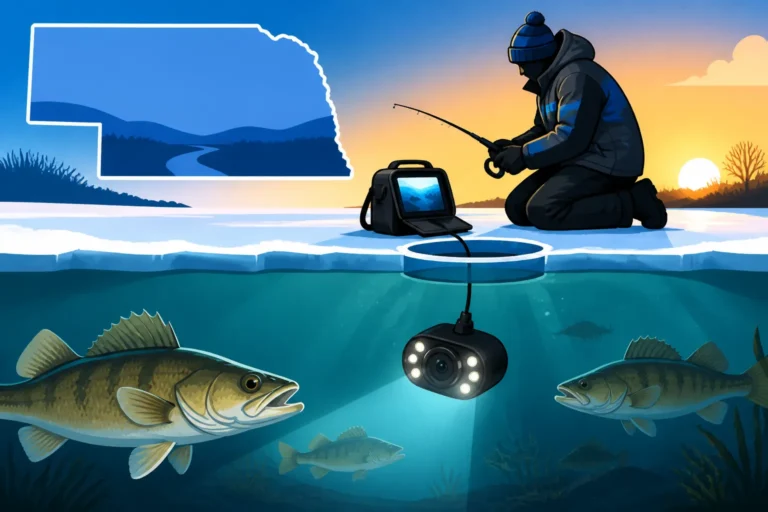
Ice Fishing: While technically not "bank" fishing, a portable fish finder (or specialized ice fishing flasher) is practically essential for ice fishing. You drill a hole, drop the transducer down, and get instant, real-time feedback on depth, bottom content, and any fish swimming beneath you. It allows you to see fish approaching your lure, helping you detect subtle bites and adjust your presentation. For anyone serious about How to Ice Fish in Nebraska, a good fish finder is a game-changer.
When a Fish Finder Might Be Overkill or a Distraction
While valuable, fish finders aren't always the magic bullet. There are times when their benefits are minimal, or they might even detract from the fishing experience:
-
Shallow, Visually Clear Water: In very shallow water, especially ponds with clear visibility, you can often see the bottom, structure, and sometimes even the fish themselves. In these situations, a fish finder might not add much value. Your eyes become your best fish finder.
-
Small Ponds or Farm Ponds: For many Nebraska Farm Pond Fishing Permission and Access spots, the water body is small enough that you can effectively cover it with just a few casts. There might not be complex structure that a fish finder would reveal, or the fish might be everywhere. In these cases, spending time with a fish finder might be less productive than just fishing.
-
Focusing on Basic Skills: For beginners, learning the fundamentals of casting, knot tying, bait presentation, and How to Set the Hook on a Catfish Bite might be more beneficial than getting bogged down in electronics. A fish finder can add another layer of complexity that might overwhelm a new angler. Sometimes, simply enjoying the outdoors and the meditative act of fishing is the primary goal.
-
Battery Life and Connectivity Issues: Castable fish finders rely on your smartphone's battery and a stable wireless connection. If your phone dies, or you're in an area with poor signal, your fish finder becomes useless. This can be a frustration when you're trying to stay focused on the fishing. Always remember to pack a portable power bank if you plan to rely on your phone for fishing tech.
Ultimately, the decision to use a fish finder from the bank depends on your fishing style, the type of water you're fishing, and your personal goals. It's a tool, not a guarantee.
Maximizing Your Bank Fishing Success (With or Without a Fish Finder)
Whether you decide to invest in a fish finder or stick to traditional methods, there are always ways to improve your bank fishing success in Nebraska. Combining smart gear choices with honed observation skills is key.
Essential Bank Fishing Gear Beyond Electronics
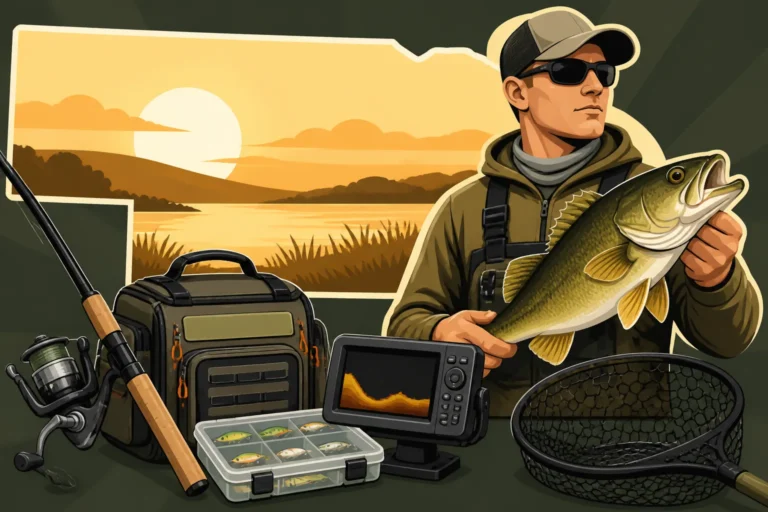
A fish finder might be a neat gadget, but it's just one piece of the puzzle. There's a whole host of Best Fishing Gear for Nebraska Anglers that will serve you well from the bank, irrespective of your electronics.
- Comfortable Seating and Shelter: Bank fishing often means long waits. A comfortable folding chair or bucket can make a huge difference, especially if you're targeting slow-biting species like catfish overnight. A good umbrella or pop-up shelter can offer protection from sun or unexpected rain, keeping you focused on the fishing.
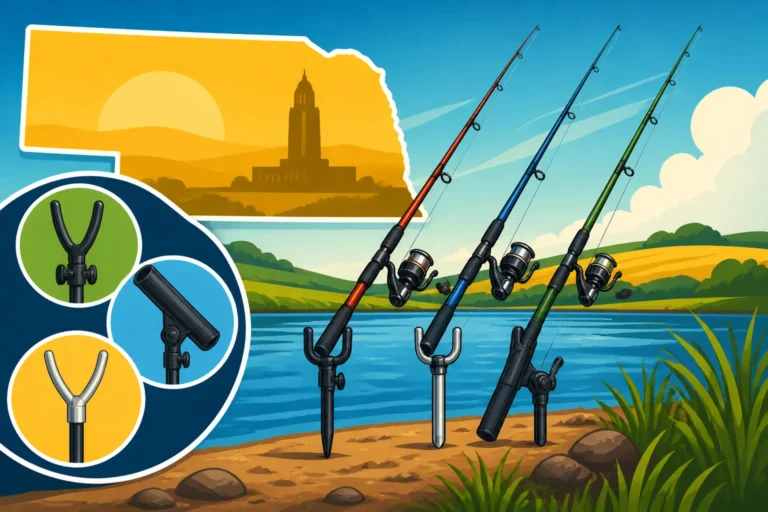
- Rod Holders: These are non-negotiable for bank fishing, especially if you're using multiple rods or fishing for catfish. Simple spike rod holders that push into the ground keep your rods secure and pointed at the water, ensuring you don't miss a bite when you look away for a second. There are many great Best Rod Holders for Bank Fishing options available.
- Tackle Management: Keeping your tackle organized and easily accessible is crucial. A small backpack or tackle bag with multiple compartments will help you carry baits, hooks, weights, and tools efficiently. Consider a bag specifically designed for What Gear to Pack for a Full Day of Bank Fishing.
- Proper Rod and Reel: Choose a versatile rod and reel combo that can handle the species you're targeting. A medium-heavy spinning rod (7-8 feet) is often a great all-around choice for Nebraska bank fishing, allowing for decent casting distance and the ability to handle a variety of baits and fish sizes. For casting farther, you might look into How to Cast Farther From Shore techniques and matching your line type.
- Landing Net: Don't lose a big fish at your feet! A long-handled landing net is indispensable for safely bringing in larger fish from the bank, especially if there's a steep bank or riprap.
Reading the Water: Old-School Skills That Still Reign Supreme
Even with the fanciest electronics, nothing beats the ability to "read the water" using your senses and experience. These are the skills that separate consistently successful anglers from those who just get lucky. If you're looking for How to Locate Fish Without Electronics, these tips are gold.
- Observe the Surface: Look for subtle clues on the water's surface. Rising fish creating ripples, schools of baitfish flickering, or even predatory fish (like white bass during a run) breaking the surface. Also, pay attention to diving birds or feeding wildlife, which can indicate baitfish activity below.
- Identify Structure and Cover: Even if you can't see below the surface, look for signs of submerged structure. Overhanging trees, fallen logs near the bank, changes in shoreline vegetation, or even subtle currents and eddies can indicate good holding spots for fish. Pay attention to how the wind is hitting the water; it can push baitfish and warm surface water, attracting game fish.
- Understand Depth Changes: While a fish finder gives you precise numbers, you can often infer depth changes. Look for areas where the shoreline drops off steeply, or where there are visible changes in water color. Fishing near dams or spillways can also tell you a lot about How to Fish Below a Dam in Nebraska.
- Factor in Weather and Season: Fish behavior is heavily influenced by the elements. Best Fishing Weather and Barometric Pressure Tips are crucial. On a hot summer day, fish might be deeper; in spring, they might be in shallower, warmer water. Understanding these seasonal and weather patterns is more important than any electronic gadget.
- Listen to Local Knowledge: Don't underestimate the power of talking to other anglers, bait shop owners, or checking local fishing reports. They often have invaluable insights into current conditions, hot spots, and effective techniques for specific areas.
A fish finder can be a powerful supplemental tool for bank anglers, offering insights into the underwater world that were once exclusive to boaters. However, it's not a magic wand. Its effectiveness is maximized when combined with a solid foundation of traditional fishing skills, an understanding of local waters, and appropriate gear. So, if you're curious, give a portable or castable fish finder a try, but never stop honing those timeless angling instincts.
Disclaimer
This article is for general informational purposes only and does not constitute professional advice. Laws, prices and regulations vary by location and change over time. Consult a qualified professional for guidance on your specific situation.